The Project Gutenberg eBook of A guide to Plymouth and its history,
by Helen T. Briggs
This eBook is for the use of anyone anywhere in the United States and
most other parts of the world at no cost and with almost no restrictions
whatsoever. You may copy it, give it away or re-use it under the terms
of the Project Gutenberg License included with this eBook or online at
www.gutenberg.org. If you are not located in the United States, you
will have to check the laws of the country where you are located before
using this eBook.
Title: A guide to Plymouth and its history
Authors: Helen T. Briggs
Rose T. Briggs
Illustrator: Raymond C. Dreher
Release Date: February 15, 2023 [eBook #70046]
Produced by: Steve Mattern, Karin Spence and the Online Distributed
Proofreading Team at https://www.pgdp.net
*** START OF THE PROJECT GUTENBERG EBOOK A GUIDE TO PLYMOUTH AND ITS
HISTORY ***
A GUIDE TO
PLYMOUTH
_And Its History_
Compiled from Inscriptions on TABLETS, MONUMENTS
& STATUES erected in Honor of Its Founders
_THE PILGRIMS_, or given in prose or verse
on Occasions of Memorial Celebrations
[Illustration]
_By_ HELEN T. BRIGGS _and_ ROSE T. BRIGGS
_Illustrated by_ RAYMOND C. DREHER
[Illustration]
PUBLISHED BY
THE PILGRIM SOCIETY
_and_
THE PLYMOUTH ANTIQUARIAN SOCIETY
_Copyright, 1938_
BY THE PLYMOUTH ANTIQUARIAN SOCIETY
THE MEMORIAL PRESS
PLYMOUTH, _Massachusetts_
Illustration]
_FOREWORD_
Plymouth preserves with loyal respect the places which are associated
with her Forefathers, the Pilgrims.
In the town they founded, tablets, statues, and public monuments bear
witness to the veneration that historical societies, the State, and
the Nation, hold for the memory of that small group of men and women,
simple in their origin, exalted in their purpose, who were destined to
prove themselves great among the greatest, and whose example of a free
commonwealth and a free faith, is one of the far-reaching influences in
history.
Many questions are asked by visitors to Plymouth about Plymouth
history and the localities of Pilgrim Life. It is the purpose of this
short guide to review the Pilgrim story and give in the words of
permanent inscriptions, the public estimation of the Pilgrims and their
accomplishment.
Plymouth, 1938.
[Illustration: PILGRIM HALL
In grateful memory
Of our ancestors
Who exiled themselves from their
native country
for the sake of Religion
And here successfully laid the
foundation
of Freedom and Empire
December XXII A.D. MDCCCXX
their descendants the Pilgrim Society
have raised this edifice
August XXXI MDCCCXXIV]
_PLYMOUTH_
“Forever honored be this, the place of our fathers’ refuge!
Forever remembered the day which saw them, weary and distressed,
broken in everything but spirit, poor in all but faith and
courage, at last secure from the dangers of wintry seas, and
impressing this shore with the first footsteps of civilized man!”
--DANIEL WEBSTER
From the oration delivered
at Plymouth December 22,
1820, in commemoration of
the first settlement of New
England.
[Illustration]
_CONTENTS_
PAGE
FOREWORD i
THE PILGRIMS OF THE MAYFLOWER 9
List of Mayflower Passengers 10
THE COMPACT 13
Signers of the Compact 14
FROM PLYMOUTH, ENGLAND TO PLYMOUTH, MASSACHUSETTS 15
Departure and Landfalls
Inscriptions at:
Southampton 15
Provincetown 15
Exploration 16
Plymouth Rock 16
The Monument over Plymouth Rock 17
COLES HILL. The First Burying Ground 18
List of Those Who Died in the First Winter 19
Statue of Massasoit 20
Memorial Seats 20
THE FIRST STREET (Leyden Street) 21
Common House 22
TOWN BROOK--THE BREWSTER GARDENS 24
BURIAL HILL 26
The Fort 26
The Guns 27
The Pilgrim Progress 28
The Graves 29
THE MEMORIAL TO THE PILGRIM WOMEN 33
List of Women and Girls Who Came in the Mayflower
THE NATIONAL MONUMENT TO THE FOREFATHERS 34
THE FIRST CHURCH IN PLYMOUTH 36
The Covenant 36
The Elders 37
The Congregation--from Dr. Charles W. Eliot’s inscription
on the Standish Monument in Duxbury 37
The Meetinghouses 38
THE COLONY AND TOWN RECORDS (1620–1691)
The Pilgrim Citizen--from “The Pilgrim Spirit” by
George P. Baker 40
The Colony and Town Records, and the Records of the
New England Confederacy 41
THE PILGRIM SOCIETY
Its establishment and purpose 43
Its history 43
Its collections 44
THE OLD COLONY CLUB 47
Its celebration of Forefathers’ Day
THE PLYMOUTH ANTIQUARIAN SOCIETY 48
THE ANTIQUARIAN HOUSE 51
THE HARLOW HOUSE: A 17TH CENTURY HOME 53
THE HOWLAND HOUSE 55
THE SPARROW HOUSE 56
AUTHORITIES 57
[Illustration: THE MAYFLOWER]
[Illustration]
The Pilgrims _of the_ Mayflower
“So they left that goodly and pleasant city which had been their
resting place near twelve years; but they knew that they were
Pilgrims, and looked not much on these things, but lifted up
their eyes to the heavens, their dearest country, and quieted
their spirits.”
BRADFORD: _History of Plymouth Plantation_
The little ship Mayflower of about 120 tons burden according to the
present register, Capt. Christopher Jones commanding, set sail from
Plymouth, England, on September 16, 1620.
She carried a crowded company: men with their wives and children, young
men and maidens, eager with a sober spirit to found a colony, and make
their permanent homes in the new world of America. Because of religious
differences, they had already separated themselves from the established
Church of England, and in consequence had suffered persecution, fines,
and imprisonment.
Their small congregations had met in secret that they might worship
according to their own principles and ideals.
Some of them had previously left their homes in the villages of York,
Nottinghamshire, and Lincolnshire, and had spent twelve years of exile
in Holland, where they found hospitable and friendly tolerance in the
cities of Amsterdam and Leyden.
But after long and serious debate, it was decided that they must
seek greater liberty for themselves and their children; so banding
together part of the congregation in Leyden with others in England,
the passengers of the Mayflower sailed, not as conquerors of a new
province, or adventurers of fortune, but as Pilgrims with a fixed
purpose to secure civic and religious freedom in a new land.
THE MAYFLOWER PASSENGERS
“The names of those who came over first in
the year 1620
and were by the blessing of God the first
beginners and (in a sort) the foundation
of all the Plantations and Colonies
in New England.”
*Died the first winter
*Mr. John Carver
*Katharine, his wife
Desire Minter
John Howland, servant
*Roger Wilder, servant
William Latham, a boy
a maid-servant
*Jasper More, a child
Mr. William Brewster
Mary, his wife
Love Brewster, their son
Wrestling Brewster, their son
Richard More, a child
*His brother, a child
Mr. Edward Winslow
*Elizabeth, his wife
George Soule, servant
*Elias Storey, servant
*Ellen More, a child
William Bradford
*Dorothy, his wife
Mr. Isaac Allerton
*Mary, his wife
Bartholomew Allerton
Remember Allerton (daughter)
Mary Allerton
*John Hooke, servant
Mr. Samuel Fuller (surgeon)
*William Button, servant (died at sea)
*John Crackston
John Crackston, his son
Captain Myles Standish
*Rose, his wife
*Mr. Christopher Martin
*his wife
*Solomon Prower, servant
*John Langmore, servant
*Mr. William Mullins
*his wife
*Joseph Mullins
Priscilla Mullins
*Robert Carter, servant
*Mr. William White
Susanna, his wife
Resolved, their son
Peregrine, their son (born off Provincetown)
*William Holbeck, servant
*Edward Thompson, servant
Mr. Stephen Hopkins
Elizabeth, his wife
Giles Hopkins
Constance Hopkins
Damaris Hopkins (daughter)
Oceanus Hopkins (born at sea)
Edward Doty (Doten), servant
Edward Lister, servant
Mr. Richard Warren
John Billington
Ellen, his wife
John Billington, their son
Francis Billington, their son
*Edward Tilley
*Ann, his wife
Henry Sampson, cousin; child
Humility Cooper, cousin; little girl
*John Tilley
*his wife
Elizabeth Tilley
Francis Cooke
John Cooke, his son
*Thomas Rogers
Joseph Rogers, his son
*Thomas Tinker
*his wife
*his son
*John Rigdale
*Alice, his wife
*James Chilton
*his wife
Mary Chilton
*Edward Fuller
*his wife
Samuel, their son
*John Turner
*his two sons
Francis Eaton
*Sarah, his wife
Samuel Eaton, their infant son
*Moses Fletcher
*John Goodman
*Thomas Williams
*Degory Priest
*Edmond Margeson
Peter Brown
*Richard Britteridge
*Richard Clarke
Richard Gardiner
Gilbert Winslow
John Alden, cooper
*John Allerton, seaman
*Thomas English, seaman
William Trevor, seaman, (hired for one year)
---- Ely, seaman, (hired for one year)
[Illustration:
“Immortal scroll! the first where men combined
From one deep lake of common blood to draw
All rulers, rights and potencies of law.”
--JOHN BOYLE O’REILLEY
Poem read at the dedication
of the National Monument
to the Forefathers August 1, 1889.]
[Illustration]
The Pilgrims held a charter issued to a member of a company of London
merchants who had agreed to support their venture.
They intended to make a settlement somewhat to the north of the already
established colony in Virginia, but storms buffeted the little ship,
and head winds drove her from her course. When at last land was sighted
after a weary voyage, they found themselves many leagues further north
than they had intended.
With winter upon them, they knew that they must establish themselves at
once, outside of the territory originally granted them, and that their
charter would not cover this emergency. They determined to act for
themselves.
In the cabin of the Mayflower before they came to anchor in “Cape
Codd” bay, on Nov. 21, 1620 (N.S.), the men of the Company drew up and
signed a compact for their government, electing their own officers, and
binding themselves to work together for their common good and their
common faith.
From this simple mutual agreement, took form the first American
commonwealth, the beginning “of government of the people, by the
people, for the people.”
THE COMPACT
“In the name of God, Amen. We, whose names are underwritten,
the loyal subjects of our dread sovereign lord, King James, by
the grace of God, of Great Britain, France and Ireland king,
defender of the faith, etc., having undertaken, for the glory
of God, and advancement of the Christian faith, and honor of
our king and country, a voyage to plant the first colony in the
northern parts of Virginia, do, by these presents, solemnly and
mutually, in the presence of God and one of another, covenant
and combine ourselves together into a civil body politic, for
our better ordering and preservation, and furtherance of the
ends aforesaid; and by virtue hereof to enact, constitute and
frame such just and equal laws, ordinances, acts, constitutions,
and offices, from time to time, as shall be thought most meet
and convenient for the general good of the colony; unto which we
promise all due submission and obedience. In witness whereof we
have hereunder subscribed our names, in the year of the reign of
our sovereign lord, King James of England, France, and Ireland
the eighteenth, and of Scotland the fifty-fourth, anno Domini
1620.”
[Illustration]
SIGNERS OF THE COMPACT
John Carver
William Bradford
Edward Winslow
William Brewster
Isaac Allerton
John Alden
Myles Standish
Samuel Fuller
Christopher Martin
William Mullins
William White
Richard Warren
John Howland
Stephen Hopkins
Edward Tilley
John Tilley
Francis Cooke
Thomas Rogers
Thomas Tinker
John Rigdale
Edward Fuller
John Turner
Francis Eaton
James Chilton
John Crackston
John Billington
Moses Fletcher
John Goodman
Degory Priest
Thomas Williams
Gilbert Winslow
Edmund Margeson
Peter Brown
Richard Britteridge
George Soule
Richard Clarke
Richard Gardner
John Allerton
Thomas English
Edward Doten
Edward Lester
The “Compact” was succeeded, in law, if not in the respect of the
colonists, by a regular patent taken out in the name of one of the
Adventurers (the English investors) in 1621. This is now in Pilgrim
Hall. It was superseded by another, also to the Adventurers; and
finally, in 1629, after the colonists had bought out the English
investors, by one to “Wm. Bradford and associates,”--that is, the
freemen of the colony. By thus transferring the “home office” of
the company from London to America, the colony became an all but
independent government. Consciously or unconsciously, it had from the
beginning exercised most of the functions of a sovereign state, and
continued to do so, except during the “tyranny” of Sir Edmund Andros,
until it merged with the Massachusetts Bay Colony in 1691.
[Illustration]
From Plymouth, England
_to_
Plymouth, Massachusetts
[Illustration]
_In England_:
“On the 25th of August 1620
From the West Quay near this spot
The famous Mayflower began her voyage
Carrying the little company of
Pilgrim Fathers
Who were destined to be the founders
Of the New England States of America.”
Memorial tablet at Southampton, England. Placed by the
Massachusetts Society of the Colonial Dames of America.
_At Provincetown_:
“They established and maintained on the bleak and barren edge of a
vast wilderness, a state without a king or a noble, a church without a
bishop or a priest, a democratic commonwealth the members of which were
‘straightly tied to all care of each other’s good, and for the whole by
every one.’
“With long suffering devotion and sober resolution they illustrated for
the first time in history the principles of civic and religious liberty
and the practices of a genuine democracy.
“Therefore the remembrance of them shall be perpetual in the vast
republic that has inherited their ideals.”
From the inscription written by Dr. Charles W. Eliot, President
Emeritus of Harvard, for the Memorial Monument to the Pilgrims
in Provincetown, Massachusetts.
_Exploration_:
While the Mayflower lay at anchor in Cape Cod bay, two exploring
parties had been sent out to search for a suitable place for a
settlement.
On Wednesday, Dec. 16 (N.S.) the third expedition sailed along the
shore in the shallop owned by the Pilgrim company. There were eighteen
men on board: two officers, the master-gunner, and three seamen from
the Mayflower, and ten Pilgrim volunteers. These were Gov. Carver,
Capt. Standish, William Bradford, Edward Winslow, John Tilley, Edward
Tilley, John Howland, Stephen Hopkins, Edward Dotey, Richard Warren,
and two of the Pilgrims’ own seamen, John Allerton and Thomas English.
The weather was cold and rough, and the voyage proved an adventurous
and memorable one.
On the second day, they escaped unharmed a sudden and violent attack
from a band of Indians on the shore. When they resumed their voyage a
storm arose, and in the blinding snow, with high winds and a rough sea,
they were nearly shipwrecked.
At last in the darkness they found shelter in the lee of a small island
at the mouth of Plymouth harbor, and passed the night safely on shore.
When the sun shone the next morning, they dried their soaked clothing,
looked after their firearms, repaired the damaged shallop, and gave
thanks to God “for his mercies in their manifold deliverances.” “And
this being the last day of the week, they prepared there to keep the
Sabbath.”
_Plymouth Rock_:
On Monday, December 21, they crossed to the mainland, finding a channel
“fit for shipping” and a sheltered harbor. There they made their first
landing on a rock on the shore.
The situation seemed promising. They marched into the land and found
deserted corn fields “and little running brooks.” “A place fit for
situation; at least it was the best they could find.” “So they returned
to their ship again, with this news to the rest of their people, which
did much comfort their hearts.”
The Mayflower then weighed anchor for Plymouth, where three days were
spent in anxious deliberation. They asked Divine Guidance on the
momentous question of the settlement, and it was at last decided to
accept the first site considered, and build their houses on the bank of
the brook running into the sea, near the rock where they first landed.
Thus Plymouth Rock became “the stepping-stone of a nation.” The Rock
has long been fully identified; notably in 1741 by Elder Thomas Faunce,
who, at the age of ninety-five, in the presence of his sons and many
spectators, declared his knowledge of it was received from his father
and the Pilgrims still living in his boyhood.
THE MONUMENT OVER PLYMOUTH ROCK
For the 300th anniversary of the landing of the Pilgrims, the National
Society of the Colonial Dames of America built a beautiful portico of
Doric columns over the Rock.
This replaced the “monumental canopy,” whose corner stone had been laid
Aug. 2, 1859, under the care of the Pilgrim Society.
At the beginning of the Revolution, a large section, split from the
main rock, had been carried by the patriots of Plymouth with great
ceremony and enthusiasm to the Town Square, and there placed beneath a
Liberty Pole to rouse and maintain patriotic feeling.
In 1834 this fragment was removed to the front of Pilgrim Hall, and
surrounded by an iron railing inscribed with the names of the Pilgrim
Fathers. It was returned to the shore again in 1880, and the severed
fragment fitted into its original position.
Finally in 1921, all parts of the Rock were strongly cemented together,
and now rest, where the tide reaches it, under the new portico on the
shore.
The park reservation surrounding the Rock, from the roadway eastward to
the water, is the property of the Commonwealth of Massachusetts, and is
cared for and controlled by the State.
“Plymouth Rock does not mark a beginning or an end. It marks a
revelation of that which is without beginning and without end,
a purpose shining through eternity with a resplendent light,
undimmed even by the imperfections of men, and a response, an
answering purpose from those who oblivious, disdainful of all
else, sought only an avenue for the immortal soul.”
--CALVIN COOLIDGE
Address read at the opening of the
Tercentenary Celebration at Plymouth,
Dec. 21, 1920.
[Illustration]
COLE’S HILL
The first Burying Ground.
“But what was most sad and lamentable was, that in two or three
months half of their number died, being the depth of winter, and
wanting houses and other comforts.”
--from WILLIAM BRADFORD’S
_Of Plymouth Plantation_
Before the Mayflower left Cape Cod, and while she lay at anchor in
Plymouth harbor, a violent and fatal sickness broke out among her
passengers.
Confinement in their close and crowded cabin, the hardship of a long
and stormy voyage, poor food, and the exposure of building their first
houses on shore, caused many of the Pilgrim company to lose their
lives, in sight of the promised land they had ventured so much to gain.
Hardly a family but lost one or two of its members; wives, their
husbands, children, their parents; before spring came, one half of the
little colony had perished and were secretly buried on this hill by the
shore.
Three hundred years later, the General Society of Mayflower Descendants
placed a handsome sarcophagus to honor and receive these dead from
their nameless graves, which time and accident had disturbed, and the
Massachusetts Tercentenary Commission set aside a park reservation
on the crest of the hill, to surround the monument. It was formally
dedicated September 8, 1921.
On the side facing the street, the inscription reads:
“This Monument marks the First Burying Ground in Plymouth of the
Passengers of the Mayflower.
“Here under cover of darkness the fast dwindling company laid
their dead, levelling the earth above them lest the Indians
should know how many were the graves.
“Reader! History records no nobler venture for faith and freedom
than that of this Pilgrim band.
“In weariness and painfulness, in watchings often, in hunger and
cold they laid the foundations of a state wherein every man,
through countless ages should have liberty to worship God in his
own way.
“May their example inspire thee to do thy part in perpetuating
and spreading the lofty ideals of our republic throughout the
world!”
At one end of the memorial is inscribed:
“The Bones of the Pilgrims found at various times in or near this
enclosure and preserved for many years in the canopy over the Rock were
returned at the time of the Tercentenary celebration and are deposited
within this monument.”
“Erected by the General Society of
Mayflower Descendants A.D. 1920.”
On the opposite end of the monument is:
“About a hundred sowls came over in this first ship, and began this
work which God in his Goodness hath hithertoe Blessed. Let his Holy
Name have ye praise.”
BRADFORD 1650.
THOSE WHO DIED IN THE FIRST WINTER
On the opposite side of the monument, facing the sea, is a list of the
Pilgrims who died in the first winter, as follows:
“of the hundred and four passengers these died in Plymouth during the
first year:
John Allerton
Mary, first wife of Isaac Allerton
Richard Britteridge
Robert Carter
John Carver and
Katherine, his wife
James Chilton’s wife
Richard Clarke
John Crackston, Sr.
Sarah, first wife of Francis Eaton
Thomas English
Moses Fletcher
Edward Fuller and
his wife
John Goodman
William Holbeck
John Hooke
John Langmore
Edmund Margeson
Christopher Martin and
his wife
Ellen Moore and a brother (children)
William Mullins
Alice, his wife
Joseph, their son
Solomon Prower
John Rigdale and
Alice, his wife
Thomas Rogers
Rose, first wife of Myles Standish
Elias Story
Edward Tilley and
Ann, his wife
John Tilley and
his wife
Thomas Tinker
his wife and
son
John Turner and
two sons
William White
Roger Wilder
Elizabeth, first wife of Edward Winslow
Thomas Williams”
The following died before reaching Plymouth:
Dorothy, first wife of William Bradford
William Button
James Chilton
Jasper Moore
Edward Thompson
STATUE OF MASSASOIT
Not far from the Sarcophagus stands a fine statue of the Indian Sachem
Massasoit. It was modeled by the sculptor Cyrus E. Dallin, and given by
the National Order of Red Men. It was unveiled September 5, 1921, and
dedicated in October of same year.
Massasoit, the grand sachem of the confederated tribes of Pokanoket,
visited Plymouth on a fine spring day, April 1st, 1621. He was received
with ceremony, a feast and gifts. A treaty of peace and friendship was
drawn up and signed by him and the Pilgrims. He remained their loyal
friend, and preserved peace with the colony for half a century.
MEMORIAL SEATS
Two stone seats have also been given as memorials, and placed on the
hill, one near the statue of Massasoit, and the other under the great
linden tree at the northern end. This was dedicated August 31st, 1921,
and inscribed:
Presented by
The Pennsylvania Society
of
New England Women
To commemorate the Tercentenary
of the
Landing of the Pilgrims
1620–1920
The inscription of the other seat reads:
In Memory
of
The Pilgrim Fathers and Mothers whose
heroic idealism established the basic principles
of the government of our land.
Presented by
The Society of Daughters of Colonial Wars
Commonwealth of Massachusetts
Seated here, with the wide view of harbor, Plymouth Beach, and distant
ocean spread before them
“Let musing strangers view the ground,
Here seek tradition’s lore,
Where Pilgrims walked on holy ground
With God in days of yore.”
SAMUEL DAVIS
[Illustration]
The First Street
NOW LEYDEN STREET
Since it was the twenty-first of December when the first exploring
party landed in Plymouth, and winter was fast closing in, the first
work to be undertaken by the men of the Mayflower was to provide
shelter for their families and a storage place for their supplies.
A Common House was the first to be built, and other houses were added
as those who survived the fatal epidemic were able “in their great
weakness” to accomplish the heavy task. They tenderly cared for the
sick and dying, and toiled through the winter weather with incredible
courage, and an unshaken faith; when spring came the Mayflower sailed
on her homeward voyage, but not one of the Pilgrim Company relinquished
his fixed purpose and returned to England. The women bravely supported
the men, and were determined to make and maintain their homes and rear
their children in this new land of opportunity for civil and religious
liberty.
Along the bank of the brook, the Pilgrims found cleared land, the
abandoned cornfields of a tribe of native Indians who had perished
about three years before in another mysterious epidemic. High land rose
from the shore to a hill beyond, and following the ascent, the first
street was laid out.
Along this pathway, Governor Carver portioned to each person a lot of
land, each plot to be of the same size: three rods long and half a rod
wide. The company was divided into nineteen families, and each family
was to build its own house, which was to front the street, with a
garden behind, those on the south side sloping down to the brook. The
lots were to be inclosed with high palings for protection. The houses
are described as built of hewn plank, the roofs thatched with swamp
grass.
A partial plan of the location of the allotments was roughly drawn
by William Bradford, and may still be seen at the Registry of Deeds
on Russell St. in Plymouth. Seven houses were built during the first
winter. It was not until March that the last of the women and children
who had been sheltered during the winter on the Mayflower, were brought
on shore to live.
The Common House was the first to be finished. It sheltered the men
working on shore; the community assembled there on the Sabbath, until
the lower room in the Fort was ready for this purpose; there the Colony
business was transacted, and the first “Court Days”, from which the
New England institution of the Town Meeting was to develop, were held.
It was used, too, as a hospital for the sick, and after the dwelling
houses were built, it served as a store house. It is marked with a
tablet:
COMMON HOUSE
This tablet is erected by the Commonwealth
of Massachusetts to mark
the site of the first house built by
The Pilgrims
In that house on the 21st of February 1621 (New Style) the right
of popular suffrage was exercised and Myles Standish was chosen
Captain by a majority vote. On or near this spot, April 1, 1621,
the memorable treaty with Massasoit was made.
Next to the Common House came that of Peter Brown, and third, that of
John Goodman. Farther up the street, at its intersection by the path
to the Indian ford over the brook, was the house and land of William
Brewster, Elder and spiritual leader of the Colony.
Across the path, continuing up the hill, were the houses of John
Billington, Francis Cooke, and Edward Winslow. On the opposite side,
conveniently near his duties at the fort, was the house of Captain
Myles Standish. Next to that, descending the hill again towards the
shore, was the large lot and house of the Governor, William Bradford.
Part of his garden was used in 1637 for the site of the first Meeting
House. Next to Bradford’s house came those of Stephen Hopkins, and
of the faithful physician, Dr. Samuel Fuller. On most of these lots,
descriptive tablets have been placed by the Town of Plymouth.
Six years after the first labor of building the settlement had been
accomplished, the Colony received a visitor from the Dutch trading post
at Manhattan, which sent its Secretary, Isaac De Rasiere, to confer
with them about their respective trading transactions.
In a letter to Holland after his return from Plymouth, he describes
vividly and minutely the town as he saw it in October 1627.
“New Plymouth lies on the slope of a hill, stretching east
toward the seacoast, with a broad street about a cannon shot
of about eight hundred feet long leading down the hill.... The
houses are constructed of hewn plank, with gardens also enclosed
behind and at the sides with hewn planks, so that their houses
and court yards are arranged in very good order, with a stockade
against a sudden attack; and at the ends of the street are three
wooden gates.
In the center at the cross street stands the Governor’s house,
before which is a square enclosure upon which four patteros are
mounted so as to flank along the streets.”
The old street, following unchanged its original direction, has been
in constant use for more than three hundred years, and its present
inhabitants number several descendants of the first dwellers.
[Illustration]
Town Brook
_and_
The Brewster Gardens
“The meersteads and garden plottes of those which came first,
layed out 1620.”
To honor the memory of the courageous men and women who established
their homes and made their gardens along the Town Brook in 1621–22,
Mrs. William Forbes of Milton, with the co-operation of the Town,
created in 1920–22, a beautiful little park on the site of the first
meersteads.
The land apportioned to Elder Brewster was half way up the hill, and
his garden sloped down to the brook. A flowing spring in the hollow
has been reclaimed for a drinking fountain, and a branch has also been
piped to the Main Street in front of the Government Building which was
built on Brewster land.
The inscription on the fountain reads:
“Pilgrim Spring
on the Meerstead
set off to
Elder William Brewster
in the original allotment
December, 1620
erected by the Town 1915
“Freely drink and quench your thirst
Here drank the Pilgrim Fathers first.”
Near a little pool below the spring stands a fine statue of a Pilgrim
Maiden, by H. H. Kitson. It is inscribed:
“To those intrepid English women whose courage, fortitude, and
devotion brought a new nation into being, this statue of the
Pilgrim maiden is dedicated.”
Presented to the Town of Plymouth by the
National Society of New England Women.
The statue is full of life, vigorous and alert, typical of the strength
and cheerful courage with which the youthful Pilgrims met the hardships
and dangers of their new homes.
Above the spring, on the upward path to the street, the National
Society of Daughters of the American Colonists have placed a stone seat
in remembrance of the women who came in the ship Ann in 1623. From here
the brook in its little valley can be seen winding to the sea; on its
banks, the gardens which still bloom behind the old houses on Leyden
Street, occupy the same ground as those “garden plottes” where the
Pilgrim women cultivated the herbs which they consigned to England,
three hundred years ago. Perhaps no gardens in America can claim a
longer history of continuous use.
At the mouth of the brook was the herring weir, built before 1627 to
control the annual run of herring up the stream to the fresh water
ponds above. The herring still run in the spring through a similar
weir, and are still a source of revenue to the town.
The Town Brook with its springs of “sweet water,” the herring fishing,
and the ford which lead to the Indian encampment on the southern hill,
made one of the important centers of the community life, and the
gardens and sunny exposures of the little houses on the bank, protected
by the guns on the Fort Hill above them, must have given some quiet and
happy moments to the anxious and homesick Pilgrim women.
[Illustration]
Burial Hill
Called Fort Hill until 1698
THE FORT
On the top of the hill, beyond the row of the first houses, and
overlooking the town, the Pilgrims in 1622–23 built with great labor, a
fort and stockade; Governor Bradford describes it:
“A fort of good timbers, both strong and comely, which was a good
defense, made with a flat roof, and battlements, and on which their
ordinance was mounted, and where they kept constant watch, especially
in time of danger.”
In 1633, he further says--“Our ancient work of fortification, by
continuance of time is decayed, and Christian wisdom teaches us to
depend upon God in the use of all good means for our safety.” It was
therefore ordered by the Governor that the fort should be repaired, and
the stockade enlarged. In 1635 and in 1642, it was again repaired, and
in 1643 a watch tower was built nearby. This was of brick, two stories
high, and contained a fireplace with a chimney.
Though hostile Indians never attacked the town, both they and the
neighboring friendly tribes held the white men in increased respect for
this protection.
During the first winter, the Pilgrims elected Capt. Myles Standish
their military leader. He organized and trained his little army of
twelve men, led their marches, protected the town, and rendered valiant
service for thirty-five years.
“The only trained soldier
In the Pilgrim Community
Always their military Commander
But also a valuable civil servant
And a wise promoter
Of the business interests
Of the Pilgrim Stock Company.
In fight fearless impetuous and resolute
In civil affairs cautious and firm
In business shrewd just and far-seeing
A conscientious and high-minded leader
Of devout men and women
Who founded in a wilderness
A tolerant church and a free state.”
From
Standish Monument
Duxbury, Massachusetts
DR. CHARLES W. ELIOT
THE GUNS
On the side hill near the site of the fort now stand two ancient
cannon; they were presented to Plymouth Oct. 4, 1921, by the British
Government, through the good offices of the Honorable Artillery Company
of London (chartered in 1537) and the Ancient and Honorable Artillery
Company of Massachusetts (chartered in 1638).
Col. Sidney Hedges, speaking at the presentation of the guns, said:
“While we are not sure that they are the original pieces, which stood
on the spot in 1621, they certainly are of the same type and age: one
is called a Minion, manufactured in 1557, and the other a Sackeret,
manufactured in 1550.”
Bradford and Winslow mention such guns.
“The master came on shore with many of his sailors, and brought with
him one of the great pieces, called a minion, and helped us to draw it
up the hill, with another piece that lay on shore, and mounted them,
and a saller (saker, or sackeret) and two bases (very small pieces).”
At the presentation ceremony, Oct. 4, 1921, Mr. Joseph Smith read an
original poem which contained these lines:
“Minion and Sackeret, bravely done.
Guns of a king and queen,
Brazen and bold in the autumn sun,
Mute on the hill grass-green,
Moulded in strength by skillful hands,
Fashioned in beauty for war’s demands,--
The terrible beauty that Death commands,--
And the nod of king and queen.
Here will they stand at the dead man’s gate
Where the Pilgrims sleep and dream and wait
For the day when the lowly and the great
Are as one at the throne serene.
* * * * *
The land that holds the bones of all their sires
The land they loved despite their hapless lot,
Has kindled once again ancestral fires
And tells these dead they have not been forgot.
And here she sends to her dead exiled sons
To guard their sanctuaries, these ancient guns.”
The Pilgrim Progress
More far reaching than the voice of the guns, was the message to the
future from the small lower room of the fort, where the Pilgrims held
their services of worship. Here their Elder, William Brewster, extolled
freedom of thought and conscience; here were read letters received from
their beloved pastor in Leyden, John Robinson; here they sang hymns of
praise and thanksgiving; but still surrounded by danger, “they must
constantly be on their guard, night and day.”
“With arms they gathered in the congregation to worship Almighty God.
But they were armed, that in peace they might seek divine guidance in
righteousness: not that they might prevail by force, but that they
might do right though they perished.”
--CALVIN COOLIDGE
Plymouth, Dec. 21, 1920
The congregation assembled “at beat of drum,” and marched together from
their homes on Leyden Street, protected by the muskets of the men.
“They march three abreast, and are led by a sergeant.--Behind comes
the Governor in a long robe, beside him on the right hand comes the
preacher with his cloak on, and on the left hand the captain with his
side arms.”
The women with babes in their arms and their children clinging to them,
the boys and young men and the maidens follow,--“and so they march in
good order, and each sets his arms down near him.”
It is minutely described in a letter written in 1627, by Isaac de
Rasieres, a visitor of state from the Dutch colony at Manhattan.
This “Pilgrim Progress” is yearly reproduced by a memorial service to
the Pilgrims on the site of the first fort-meeting house.
On successive Fridays in August, at five o’clock, a group of men,
women and children, many of them still bearing the names of their
Pilgrim forefathers, wearing the white caps and kerchiefs, the
steeple-crowned hats and cloaks of the congregation of 1621, assemble
again on the first street, and mount the hill, where a short service of
commemoration is held. Old hymns are sung, among them those which the
Pilgrims brought with them from Leyden.
“Bow down thine ear, Jehovah, answer me:
For I am poor, afflicted, and needy.
Keep Thou my soul, for merciful am I;
My God, Thy servant save, that trusts in Thee.”
Psalm 68 from the Psalm book, published in Amsterdam by Henry
Ainsworth, and used by the Pilgrim congregation in Leyden and at
Plymouth.
The Graves
“Here sleep the dead, their sacred dust is laid
Beneath the grass-green bosom of this hill;
They lived in faith, they faced death unafraid,
They wrought in pain, nor deemed their labors ill.”
--JOSEPH SMITH
Oct. 4, 1921
As the Pilgrims established themselves more firmly in the wilderness,
there was no further need of secret burials on Cole’s Hill, and the
hill about the fort was early used for the graves of the colony.
Though there are many ancient graves on Burial Hill, most of the
resting-places of the Pilgrims of the Mayflower are not to be found
in Plymouth, but in the later settlements of Kingston, Duxbury,
Marshfield, Eastham, Middleboro, and Dartmouth, whither they had
followed their sons, or established themselves again as pioneers from
the first settlement.
A small granite shaft on the brow of the hill bears the name of
Governor Bradford, and it is believed that he is buried here, near the
grave of his son, Major William Bradford. The inscription on the north
side of the monument reads:
“Beneath this stone rests the ashes
of William Bradford
A zealous puritan and sincere Christian
Gov. of Ply. Col. from April 1621 to 1657
aged 69, except 5 years which he declined.
Qua patris difficilime
Adapti sunt nolite turpiter relinquere.”
(What your fathers with so much difficulty
attained, do not basely relinquish.)
and on the south side:
“William Bradford of Austerfield, Yorkshire, England, was the
son of William and Alice Bradford. He was Governor of Plymouth
Colony from 1621 to 1633, 1635, 1637, 1639 to 1643, 1645 to
1657.”
The inscription on the tomb-stone of his son Major William Bradford
reads:
“Here lies the body of
Honorable Major William Bradford
who expired Febr. ye 20th 1703/4 aged 71 years.
He lived long, but still was doing good
& in his country’s service lost much blood.
After a life well spent, he’s now at rest.
His very name and memory is blest.”
Major Bradford lived in Kingston. At the time of his funeral, the roads
were obstructed by deep snow. He was carried by bearers along the sea
shore from Jones River to Plymouth, to be buried at his wish beside his
father on Burial Hill.
Near the site of the Old Fort, is the grave stone of Elder Thomas
Cushman, with the inscription:
“Here lyeth buried ye body of that precious servant of God, Mr. THOMAS
CUSHMAN, who after he had served his generation according to the will
of God, and particularly the church of Plymouth for many years in the
office of a ruling elder fell asleep in Jesus, Decmr. ye 10, 1691 & ye
84. year of his age.”
Here is also a monument erected Aug. 15, 1855, to Robert Cushman, Elder
Thomas Cushman, his son, and Elder Cushman’s wife, Mary Allerton, of
the Mayflower.
On the east is inscribed:
“Erected by
The descendants of
Robert Cushman
In memory of their Pilgrim Ancestors,
XVI--September, MDCCCLVIII.”
North side:
“Fellow-exile with the Pilgrims in Holland,
Afterwards their chief agent in England,
Arrived here--IX--November,--MDCXII,
With Thomas Cushman his son:
Preached--IX--December,
His memorable sermon on ‘The Danger of self-love
And the sweetness of true friendship:’
Returned to England--XIII--December,
To vindicate the enterprise of Christian emigration;
And there remained in the service of the Colony Till--
MDCXXV,
When, having prepared to make Plymouth His permanent
home,
Continued west side:
He died, lamented by the forefathers as ‘their ancient
friend,--who was as their right hand with their friends the
adventurers, and for divers years had done and agitated all
their business with them to their great advantage.’”
South side:
“THOMAS CUSHMAN.
Son of Robert, died--X--December, MDCXCI,
Aged nearly--LXXXIV--years.
For more than XLII--years he was
Ruling Elder of the First Church in Plymouth,
By whom a tablet was placed to mark his grave on
this spot,
Now consecrated anew by a more enduring
memorial.
MARY,
widow of Elder Cushman, and daughter of Isaac
Allerton,
Died--XXVIII--November, MDCXCIX, aged about--XC--
years,
The last survivor of the first comers in the Mayflower.”
Another important Pilgrim landmark is the grave of JOHN HOWLAND which
is situated on the westerly slope of the hill, near the rear entrance
to the cemetery. Near it are three other old graves; that of Edward
Gray, 1681, whose stone is the oldest on Burial Hill; that of William
Crowe, 1683–84; and that of Thomas Clark, 1697, who came over in the
ship “Ann”.
John Howland’s grave is marked by a modern stone, ornamented with a bas
relief of the “Mayflower”. On it is inscribed this excerpt from the
Town Records:
“Hee was a godly man & an ancient professor in the wayes of
Christ. Hee was one of the first comers into this land & was
the last man that was left of those that came over in the Shipp
called the Mayflower that lived in Plymouth.”
There is no more peaceful and beautiful burying place than this green
hill, crowned with elm trees, overlooking the lovely view of town
and sea. Hundreds of quaint and interesting stones appeal to the
antiquarian and the scholar, and the site of the Pilgrim’s fort, and
the graves of the Pilgrims, connect it for all time with the nation’s
“first beginnings.”
* * * * *
“And when we sail as Pilgrim’s sons and daughters
The spirit’s Mayflower over seas unknown,
Driving across the waste of wintry waters
The voyage every soul shall make alone,
The Pilgrim’s faith, the Pilgrim’s courage grant us;
Still shines the truth that for the Pilgrim shone.
We are his seed; nor life nor death shall daunt us.
The port is Freedom! Pilgrim heart, sail on!”
--L. B. R. BRIGGS
December 21, 1920
From the ode read at the celebration
of the 300th anniversary of the
Landing of the Pilgrims.
[Illustration]
The Memorial _to the_ Pilgrim Women
On the corner of North Street and the Water side, not far from Plymouth
Rock, is a small park enclosed by hedges of box and privet; in the
center against a background of lilac trees, a tall granite fountain
supports on the front, a standing figure representing a Pilgrim woman.
Capable, courageous and devoted, steadfast in her faith and to her
duties though a life-long exile from the home of her birth, through
dangers and privations she made possible the domestic comfort and the
permanence of the Pilgrims’ homes in the wilderness.
On the curb of the pool an inscription reads:
“Erected by the National Society
Daughters of the American Revolution
In memory of the heroic
Women of the Mayflower
1620–1920”
and on the back of the fountain:
“They brought up their families
in sturdy virtue and a living faith in
God without which nations perish.”
On the shaft is given the names of the women who came in the Mayflower.
“Mary Norris Allerton
Mary Allerton
Remember Allerton
Eleanor Billington
Mary Brewster
---- Chilton
Mary Chilton
Sarah Eaton
Susannah Fuller White
Dorothy Bradford
Katherine Carver
Maid servant of the Carvers,
name unknown
Humility Cooper
---- Martin
---- Fuller
Elizabeth Hopkins
Constance Hopkins
Damaris Hopkins
Alice Mullens
Priscilla Mullens
Elizabeth Tilley
---- Tilley
Desire Minter
Ellen Moore
Alice Rigdale
Rose Standish
Ann Tilley
---- Tinker
Elizabeth Winslow”
[Illustration]
The National Monument to the Forefathers
“This Monument
Where Virtue, Courage, Law and Learning sit
Calm Faith above them, grasping Holy Writ;
White hand upraised o’er beauteous trusting eyes,
And pleading finger pointing to the skies.”
--JOHN BOYLE O’REILLY
Poem read at the dedication of the
Monument to the Forefathers
August 1, 1889.
“What of her by the western sea,
Born and bred as the child of Duty,
Sternest of them all?
She it is, and she alone
Who built on faith as her corner stone;
Of all the nations, none but she
Knew that the truth shall make us free.”
Tercentenary Ode
--L. B. R. BRIGGS
On the summit of a hill, back of the center of the town, stands the
National Monument to the forefathers. Surmounting the pedestal, a
figure of Faith, of heroic size, raises her arm with her forefinger
pointing to heaven. Beneath her are seated Liberty, Law, Education, and
Morality, representative of the Pilgrim ideals; below them are marble
bas-reliefs of episodes in Pilgrim history. “The Departure from Delft
Haven,” “The Signing of the Compact,” “The Landing of the Pilgrims,”
and “The Treaty with Massasoit.”
Around the level plateau on which the monument stands, a wide view
unrolls itself like a scroll of Pilgrim history. There lies the town
of their founding; beyond it, the distant line of the ocean horizon
seems almost as empty as when the Mayflower ploughed through the winter
storms three hundred years ago. Her anchorage was inside the long,
low strip of the beach, where she rode till the spring of 1621; a
protection to the colonists, and a shelter for the women and children
until houses could be built for them on shore.
Beyond the point of the beach is Clark’s Island, where the exploring
party from the Mayflower spent the first Sabbath in Plymouth history.
Still beyond, Saquish, the Gurnet, and the line of the coast had been
mapped and charted by Capt. John Smith in 1615 and were known to
earlier voyagers, as well as to the Pilgrims.
To the left stretch the Kingston shores where Elder Brewster, John
Howland, and others soon took grants from the first colony. To
Captain’s Hill, in Duxbury, Myles Standish retired after his long
service, to spend the remainder of his life. His doughty figure on a
granite pillar raised in his honor, looks across the bay to the statue
of the Pilgrims’ Faith.
At the right, rises the headland of the Manomet hills; among them
were also many Pilgrim land grants and house holdings. Behind, toward
the sunset, the lights of the town fade into miles of still sparsely
settled woodland, the remains of the old unbroken forest.
This site, well chosen by the Pilgrim Society, was acquired by them in
fulfillment of the purpose expressed in their original charter of 1819:
“to procure in the town of Plymouth a suitable lot, or plot of land for
the erection of a monument to perpetuate the memory of the virtues, the
enterprise, and unparalleled sufferings of their ancestors.”
The erection of a monument upon this ground, became a national
undertaking, and subscriptions came from all parts of the country. The
donations were acknowledged by engraved certificates; those above a
certain amount, with a small bronze replica of the monument.
The original design by Hammatt Billings of Boston, was of huge size,
but the pedestal was somewhat reduced when finally built. The figure of
Faith is 36 ft. high, and the pedestal 45 ft.
The corner stone was laid Aug. 2, 1859, and thirty years later the
monument was completed. It was dedicated Aug. 1, 1889, with great
enthusiasm, in the presence of many distinguished people.
[Illustration]
The First Church in Plymouth
“The story of heroic adventure, fortitude, and endurance, of
which this church is the permanent memorial, does not belong to
one age or one country. It has become the treasured heritage of
all congregations founded upon freedom and self-government.”
--REV. JOHN CUCKSON
_History of the First Church
in Plymouth._
From This Church
Scrooby 1606 Plymouth 1620
Were Founded the
First Church in Duxbury 1632
„ „ „ Marshfield 1632
„ „ „ Eastham 1646
„ „ „ Plympton 1698
„ „ „ Kingston 1717
Second Church in Plymouth 1738
Third Church in Plymouth 1801
Now Church of the Pilgrimage
COVENANT OF THE FIRST CHURCH OF PLYMOUTH
“In ye name of our Lord Jesus Christ, and in obedience to his holy will
and devine ordinances, wee being by ye most wise and good providence
of God brought together in this place, and desirous to unite ourselves
with this congregation or church under the Lord Jesus Christ our head,
that it may be in such sort as becometh all those whom he hath redeemed
and sanctified to himself, wee doe hereby solemnly and religiously as
in His most holy presence, avouch the Lord Jehovah ye only true God,
to be our God and ye God of ours, and do promise and bind ourselves
to walk in all our ways according to ye rules of ye gospel and in all
sincere conformity to his holy ordinances, and in mutual love to and
watchfulnesse over one another.”
ELDERS OF THE FIRST CHURCH
WILLIAM BREWSTER
1620–1644
THOMAS CUSHMAN
1649–1691
THOMAS FAUNCE
1699–1746
[Illustration]
THE CONGREGATION
The Pilgrim Fathers
Were Separatists
From the English Church
They held that any convenient
Number of believers
Might form themselves
Into a church
And choose their own officers
They entered into a
Covenant of the Lord
By which they joined themselves
While in England
Into a church society
In the fellowship
Of the Gospel
To walk in all His ways
Made known or
To be made known unto them
According to
Their best endeavors
Whatsoever it should cost them.
Standish Monument
Duxbury, Massachusetts
1918
(DR. CHARLES W. ELIOT)
THE SUCCESSIVE MEETING HOUSES IN PLYMOUTH
1623–1899
[Sidenote: THE FORT MEETING-HOUSE 1623]
The lower room of the fort, which the Pilgrims toiled to build “in
their time of wants and great weakness,” served as their place of
worship, “and was fitted to that use.”
[Sidenote: FIRST MEETING-HOUSE 1648]
In 1648 the first church was built, on land back of the garden of Gov.
Bradford, fronting that part of the first street which is now the Town
Square.
[Sidenote: SECOND MEETING-HOUSE 1683]
“In 1683, it was decided to build a new structure, larger and handsomer
than the last” at the head of the Town Square. The records state that
“it had an unceiled Gothic roof, diamond windows, and a bell.”
[Sidenote: THIRD MEETING-HOUSE 1744]
After more than 60 years, the society again erected a new building in
the same spot. After its use for 87 years, the last services were held
there on April 10, 1831.
[Sidenote: FOURTH MEETING-HOUSE 1831]
In December, the new building was dedicated “to the worship and service
of God.” To the great sorrow of the community, this was burned to the
ground, November 22, 1892.
[Sidenote: FIFTH MEETING-HOUSE 1896, 1899]
On the 19th of June, 1893, plans were considered for a new church.
The corner-stone was laid June 29, 1896, and the building dedicated
December 21, 1899.
* * * * *
The architecture of the present church is of English Norman type, and
bears some resemblance to the ancient church at Scrooby. The tower
contains the town bell cast by Paul Revere in 1801, which hung in the
old church, and sounded the alarm of fire before it fell among the
blazing ruins.
Gifts came from all parts of the country to help build or beautify the
new church.
Three fine windows of painted glass at the back of the pulpit were
given by the Society of Mayflower Descendants of New York; the central
window represents the signing of the Compact in the cabin of the
Mayflower; on either side are seated figures of Civil and Religious
Liberty. The window opposite the pulpit shows John Robinson delivering
his farewell address to the departing Pilgrims. This window was the
gift of Mr. Edward G. Walker.
Near it is set as a memento, a piece of the doorstep from the ancient
church in Delft-haven.
In the vestibule are windows showing Pilgrim history, and tablets
giving the Elders, the Ministers, and the Covenant of the First church.
The building is a tribute from the spiritual heirs of this Covenant, to
the Pilgrim Congregation of 1620.
One of the hymns sung at the dedication of the new church, was written
by Rev. John Pierpont for the dedication of the previous meeting-house,
December 14, 1831. It contains these lines:
“What have we Lord to bind us
To this, the Pilgrim shore!--
Their hill of graves behind us,
Their watery way before,
The wintry surge that dashes
Against the rock they trod,
Their memory and their ashes,--
Be Thou their guard, O God!”
[Illustration]
[Illustration]
The Pilgrim Citizen
“These artisan farmers, these Pilgrims,
Steadied by precepts from Robinson,
Trained by their leaders
Who studied their Bibles for guidance,
Shaped here at Plymouth
Liberty’s fabric.
Grappled in small way
Problems of States,
Because of their wisdom
Trusting in God, believing in Man,
Knew not the havoc of Indian warfare;
Taught the new comer
Gain must be theirs
At the price of their labor;
Punished the traitor
Yet pitied the culprit.
This is your heritage
All you Americans.
Do ye maintain it?”
--GEORGE P. BAKER
From “The Pilgrim Spirit,” a pageant written by George P. Baker,
produced at Plymouth during the Tercentenary Celebration of the
Landing of the Pilgrims, 1921.
[Illustration]
The Colony and Town Records
1620
1691
Long antedating the inscriptions of bronze and stone, are the early
written records of the settlement, both of the Colony and of the Town.
From them may be traced the affairs of the Plymouth community from its
beginning.
Nothing can give a more vivid description of the details of Pilgrim
life, or the self-reliance with which the infant colony attacked the
problems of an independent state, than the yellowed manuscripts in the
handwriting of Gov. Bradford and Gov. Winslow. They record questions
debated and decided by the assembled freemen of the Colony, who chose
their officers of government, and made their laws, under the Compact
framed by the Pilgrims before leaving the Mayflower.
The first dated record is a rough drawing of the First Street, with the
intersecting path crossing the brook. (This intersection is now the
Town Square.) This diagram gives a partial list of the house lots, or
meersteads, portioned out of the different families, and the names of
the builders of the first houses.
By another memorable record, the system of trial by jury is established.
“Dec. 17, 1623. It was ordained by the court that criminals, debtors,
and trespassers should be tried by the verdict of 12 honest men,
impanelled by authority in form of a jury upon their oaths.”
Only two cases of witchcraft were ever brought to trial in Plymouth.
In both, the accused was acquitted; in one, moreover, the accuser was
found guilty of defamation of character, and obliged to apologize and
pay the costs of the case.
Many of the records deal with agricultural matters. The first entry
on the Town records describes the earmarks of the cattle, the first
of which were brought by Winslow from England in March 1623. Bounties
were voted for killing blackbirds who stole the sprouting grain in
the cornfields. Bounties were also granted for the pelts of marauding
wolves.
Petitions soon appeared for grants of lands in distant parts of the
colony.
In 1691, when the Plymouth colony was merged with the colony of
Massachusetts Bay, it was voted “that the Books, Records and Files of
the General Court of the late Colony of New Plymouth be committed to
the care of the Clerk of the Inferior Court, to be kept and lodged in
Plymouth.”
These early records consist of eighteen manuscript volumes, in which
may be traced the handwriting of Gov. Bradford, and Gov. Edward
Winslow, as well as those of Nathaniel Morton and other Clerks of the
Colony. They cover such matters as the proceedings of the General Court
and Court of Assistants; Deeds; Wills and Inventories; Judicial Acts
of the Court; Treasurers’ Accounts; Laws; and Births, Marriages, and
Deaths. They begin with the year 1633.
They are now deposited in the Plymouth Registry of Deeds, on Russell
St. In 1820 a commission was chosen to copy such portions as they
thought desirable, and these are kept in the office of the Secretary
of the Commonwealth in the State House in Boston. In 1855, they were
published by the Commonwealth of Massachusetts.
Plymouth Colony’s copy of the proceedings of the New England
Confederacy, a federation of the New England colonies which in many
ways foreshadowed our present Federal Union, is deposited in the
Registry of Deeds. The New England Confederacy was undertaken in 1643
for mutual protection against the Indians, and was dissolved by the
Royal Governor, Sir Edmund Andros in 1685.
The early records of the Town, as distinct from the Colony, are kept
by the Town Clerk in the Plymouth Town House. In 1889, the Records,
from 1636 to 1783, were published by the order of the Town, and may be
consulted in the Public Library and elsewhere.
All these early records will repay the research of the student of
American history.
“But this must stand above all fame and zeal:
The Pilgrim Fathers laid the ribs and keel.
On their strong lines we base our social health--
The man--the home--the town--the Commonwealth.”
--JOHN BOYLE O’REILLY
Poem read at the dedication of the National Monument to the
Forefathers August 1, 1889
[Illustration]
The Pilgrim Society
“This society was established in 1820 by the descendants of the
first settlers at Plymouth and by such others as are desirous of
perpetuating their principles, and commemorating their virtues,
... The stated meetings of the society are held in Pilgrim Hall,
...”
--JAMES THATCHER, M.D.
_History of Plymouth._
1832.
On the 9th of November, 1819, a meeting of a number of Plymouth
gentlemen was held at the house of Mr. Joshua Thomas, “to take into
consideration the expediency of forming a society to commemorate the
landing of the Fathers in the town of Plymouth.”
It was there voted that such a society be formed; the Pilgrim Society
was incorporated, and the first meeting held at the Court House in
Plymouth, May 18th, 1820.
The purpose of the Society was to do honor to the memory of their
ancestors, the Pilgrim Fathers; its object, to hold property, to
provide a suitable site for a monument, and “to erect a public building
to accommodate the meetings of the associates.”
Mr. Thomas was elected President in 1820, and Mr. John Watson followed
him in 1821. Thus began a succession of prominent citizens and able men
to hold that office.
On Forefathers Day, 1820, Daniel Webster delivered a famous oration
before the newly formed Pilgrim Society; and at their invitation on
that anniversary eloquent addresses have been given by statesmen,
orators, and scholars, in honor of the Pilgrims.
The building planned as a Memorial was begun in the summer of 1824. The
corner stone was laid Sept. 1. The Hall was finished and dedicated on
Forefathers’ Day of the same year.
In 1880, it was remodeled and made fireproof through the generosity of
Mr. Joseph Henry Stickney of Baltimore, and in 1904 a wing was added
to house the very valuable collection of documents, books, and papers
pertaining to the Pilgrims.
The architect of the original building was Alexander Parris, who
designed the Cathedral Church of St. Paul in Boston in 1820.
On July 8, 1922, a granite facade and portico replaced the earlier
one of wood, and was then dedicated and presented by the New England
Society in the City of New York. It was accepted by the President, Hon.
Arthur Lord, who gave an interesting account of the work accomplished
during the century of the Society’s existence.
This work, invaluable alike to Plymouth, to the student of history,
and to the people of the nation, has been the preservation, the
restoration, and the care of localities and objects connected with an
important episode of American history. It includes with the help of
generous gifts and subscriptions, the provision of a site for a great
National Monument to the Pilgrims; the building of Pilgrim Hall, and
the formation of its collections; the grading of Cole’s Hill and Burial
Hill; and the assumption of ownership and trusteeship to maintain
these in order and dignity; also for many years, the observance with
addresses and orations of the anniversary of the Landing of the
Pilgrims.
ITS COLLECTIONS
The collections of the Pilgrim Society are of great historical value.
In Pilgrim Hall are preserved personal and household belongings of the
Pilgrims, documents with their signatures, their books and Bibles,
and the only known portrait of one of their number. Here is the
patent issued to the Plymouth Colony in 1621, and the swords of their
Governor, Carver, and their Captain, Myles Standish. Near by, a bit of
woman’s embroidery, a baby’s shoe--great things and small,--the human
element of a great transitional epoch, saved by reverential descendants
to become an inheritance for another epoch.
A copy of the Bible translated for the Indians by John Eliot; an
agreement with an Indian Sachem, drawn up and signed by John Alden; and
a large collection of Indian relics and arrowheads, bear witness here
to the life of the wilderness which the Pilgrims assailed with treaty,
faith, and sword.
The handsome library contains books, documents, and pamphlets relating
to Pilgrim history, with many original records, and affords great
opportunities for quiet research. Its windows look down into a shady
garden belonging to the Hall, where visitors may rest and refresh
themselves by a little fountain presented to the Pilgrim Society by the
General Society of the Daughters of the Revolution on September 20th,
1921.
As they loiter, they may mark the flight of time on a sun dial,
presented by the Society of the Colonial Daughters of the 17th Century.
It was dedicated in September, 1921.
The collections can best be studied with the help of the curator and
the catalogue, but some of the most interesting objects connected with
the early Pilgrims are those which belonged to:
GOVERNOR CARVER--His sword and armchair.
GOVERNOR BRADFORD--His “Dialogue” in his own handwriting.
A book given to him by John Robinson, and afterwards given by
him to the First Church.
A Bible printed in Geneva in 1592.
A plate.
ELDER BREWSTER--His sword, christening bowl, and a copy of Seneca from
his library.
CAPTAIN MYLES STANDISH--His sword, with an Arabic inscription which was
translated in 1881 by Prof. James Rosedale, to read--“With peace God
ruled his slaves, and with the judgement of his arm, He troubled the
iniquity of the wicked.” An iron pot and pewter trencher, a fragment of
a quilt which belonged to his wife, Rose Standish, and an embroidered
sampler worked by his daughter, Lora; her baby’s cap and bib.
GOVERNOR EDWARD WINSLOW--Part of a chest, a mortar, a silver canteen,
and several pewter plates, bearing the family coat of arms, his
portrait painted in England, and the great table which stood in the
Council Chamber when Winslow governed the Colony.
MISTRESS SUSANNAH WHITE, _afterward wife of_ GOVERNOR WINSLOW--A cape
and a slipper.
WILLIAM WHITE--A cabinet, and a candlestick.
PEREGRINE WHITE--Signature on a deed.
JOHN ALDEN--His Bible printed in 1661, a halberd found in his house in
Duxbury, a deed with his signature.
TWO BABY’S CRADLES, one belonging to Peregrine White, the first child
born in the Colony, and the other to the Fuller family.
Among the books and documents are:
A copy of John Eliot’s Indian Bible.
A volume of John Robinson’s “Observations,” printed in Leyden in
1625.
A copy of the Psalms, with paraphrases and music; compiled by
Henry Ainsworth, and used by the Pilgrim congregation in Holland
and at Plymouth.
A pamphlet by Sir Edwin Sandys, marking a noted ecclesiastical
controversy. Sir Edwin Sandys was a patron of New England
colonization.
A Commission from Oliver Cromwell to Edward Winslow, 1654.
Deeds and bonds with the signatures of John Alden and Peregrine
White.
State Document--The oldest in New England and probably in the
United States;--the charter granted to the Plymouth colonists by
the Northern Virginia Company, dated June 1, 1621. Granted to
John Pierce and sent over in the Fortune.
Indian arrow heads and relics.
Paintings of the Mayflower, and a beautiful modern model of the ship.
Paintings, drawings, and photographs illustrative of early Pilgrim
history, and hundreds of objects showing the growth and continuance of
the Colony.
[Illustration]
The Old Colony Club
A bronze tablet affixed to a boulder on the lawn of the Old Colony Club
declares:
The Old Colony Club
Organized January 13 1769
Founders
Isaac Lothrop
Pelham Winslow
Elkanah Cushman
John Thomas
Edwards Winslow Jr.
John Watson
Corneilius White
Alexander Scammel
Thomas Mayhew Jr.
Samuel Adams
This Club had the distinction of holding the first public observance of
Forefathers’ Day, on Dec. 22, 1769. At one of the first meetings it was
voted: “that Friday, December 22 be kept by this Club in commemoration
of the landing of our worthy ancestors in this place.”
The day was celebrated by the firing of a cannon, the display of
a handsome flag upon the Club house, a procession of the members,
who were greeted by a volley of small arms and a patriotic song by
assembled school children, a dinner, and an evening entertainment.
The next year, 1770, at the anniversary celebration, Edward Winslow Jr.
delivered a short address, which may be considered the first public
commemoration of the Pilgrims. This inaugurated a series of speeches
and orations given for many years by prominent men, sponsored at
first by the Old Colony Club, later by the town and the parish of the
First Church, and continued by the Pilgrim Society and the Plymouth
Antiquarian Society.
Due to an error in reckoning the date, December 22 was long celebrated
as Forefathers’ Day. The anniversary actually falls on December 21, and
is now so observed.
The Old Colony Club was dissolved just before the Revolution, due to
the conflicting politics of its members. It was later reorganized, and
is one of the leading clubs of the town.
[Illustration]
The Plymouth Antiquarian Society
The Plymouth Antiquarian Society was founded in 1920 by a group of
women whose aims are:
“To preserve buildings and personal and household property of
Antiquarian value;
To acquire knowledge of their original use, and of the records and
unwritten traditions of Plymouth;
And so far as is possible by accurate representation of the life,
surroundings, and pursuits of bygone generations, to give the Present a
better understanding of the Past.”
In pursuance of these aims, the Plymouth Antiquarian Society has
established and maintains two museum Houses, the Antiquarian House
1809–30 and the Harlow House 1677. Each is arranged to give visual
expression to whatever can be learned, by record, by tradition, and by
the preservation of household luxuries and necessities, of the daily
life of a Plymouth family at the time in which it was built. Each
endeavors also, by the accumulation of notes, publications, photographs
etc., to be a useful source of information on the subjects within its
field.
The first undertaking of the Plymouth Antiquarian Society, was to
preserve the fine old house, built in 1809 by Maj. William Hammatt, and
later occupied for nearly a hundred years by Mr. Thomas Hedge and his
family.
In 1920, this estate had been lately bought by the Town as a site for
a Memorial Hall, and it was necessary to remove or tear down the house
and its picturesque barn and outbuildings. The Society was willing to
undertake their preservation, and accepted all the buildings as a gift
from the Town, to be used for this purpose. They were successfully
moved to their present position on Water St., and are maintained by the
Society as a typical example of a prosperous Plymouth home of the early
19th century.
A few years later, the Antiquarian Society undertook the restoration
and preservation of the Wm. Harlow House, long one of the Pilgrim
landmarks of the town, on account of the fact that it contains beams
and timber from the Fort on Burial Hill. These were granted to Serj.
William Harlow for use in building his “new house” when the Fort was
dismantled at the close of King Philips’s war. The Society uses this
house as the background for a study of the living conditions and
household industries of the last quarter of the Pilgrim century. Not
only is the visitor here introduced to the spinning, weaving, dyeing,
cooking, and candle-making which made up so much of the daily lives of
the pioneer women of New England, but demonstrations are given, and
classes held, both for children and for older students who find the
knowledge of these homely arts gives a stimulating background to their
study of colonial history.
The facilities of the Antiquarian Society are much used by the Plymouth
Schools, and also by other schools, sometimes at a considerable
distance. Both houses also give much pleasure, and a better
understanding of Plymouth and New England, to the many visitors who see
them each summer.
“Advance then, ye future generations! We would hail you, as you
rise in your long succession to fill the places which we now
fill.
We bid you welcome to this pleasant land of the fathers. We bid
you welcome to the healthful skies and the verdant fields of New
England. We greet your accession to the great inheritance which
we have enjoyed.
We welcome you to the immeasurable blessings of rational
existence, and the light of everlasting truth!”
DANIEL WEBSTER
Plymouth, Dec. 22, 1820.
[Illustration: THE ANTIQUARIAN HOUSE]
[Illustration]
The Antiquarian House
The Antiquarian House, which serves as headquarters for the Plymouth
Antiquarian Society, was built in 1809 by Maj. William Hammatt, a
successful merchant and ship owner. Soon after the house was built,
the Embargo Act temporarily interrupted New England commerce, and Maj.
Hammatt suffered financial reverses. The house was sold, and about 1830
was purchased by Mr. Thomas Hedge, whose family occupied it for nearly
a hundred years.
The architecture of the house has the characteristic grace and delicacy
of the Federal period, and its interesting octagonal plan shows the
influence of the fashion set by Thomas Jefferson, who was not only a
statesman but an observant and original architect.
Inside the house, the furniture, the books, papers, and ornaments,
the glass, china, and household utensils, of a family of the period,
are all in their proper places, and are shown by a hostess in the
charming dress of the 1830’s. There is also a handsome and interesting
collection of dresses and accessories of the 19th century, and a
library where books, papers, newspapers, and personal letters make a
valuable record of the time.
The house is surrounded by handsome grounds, and a garden of the old
fashioned flowers in favor when it was built.
Thus in architecture, decoration and furniture, even in such details as
the clothes in the closets, the toys in the nursery, and the roses in
the garden, the Antiquarian House presents a lively and human picture
of the opening years of the 19th century, and shows the influence of
growing industry and commerce, the adventurous “China Trade,” and all
the hopeful activity and expansion of a nation, founded in hardship,
but destined to great prosperity and achievement.
[Illustration: THE WM. HARLOW HOUSE]
[Illustration]
The Wm. Harlow House
A 17TH CENTURY HOME
“_As one candle may light a thousand, so the light here
kindled hath shown to many, yea, in some sort to our whole
nation._”
The dim lights burning in the few houses first built by the Pilgrims
on the banks of the Town Brook, increased to the brighter lights of a
small town by the close of the 17th Century. (Population, 1620--102;
1700--1200.)
Ships came from England bringing new colonists, who were always
welcomed, though at times there was hardly food enough to spare from
the scanty harvests. “In weariness and painfulness, in watchings
often,” but with reliance upon themselves and faith in the help
of God, the Pilgrims and their descendants established at last a
self-supporting and respected commonwealth, still owning allegiance to
the King of England.
They built permanent homes on the edge of an unbroken wilderness; they
built a church and a free school; they inaugurated the town meeting,
where every freeman, or householder, had a voice in the affairs of
the community. They elected their own Governor and selectmen and town
officials, and maintained a small band of soldiers under a Captain and
military officers. They made treaties with the Indians, and agreements
for trade with their neighbors, the Dutch of Manhattan. Most important
of all, they established freedom of speech and conscience in their
religion, and liberty for their civil rights.
Cattle, sheep, and goats were early brought from England. Woolen cloth
was woven on cottage looms, and linen spun from the flax raised in the
fields.
Though the first houses were too rudely built to be long lasting,
they soon became more substantial and comfortable, and many had “trim
gardens.”
Several houses of the 17th century are still standing in Plymouth. One
of these, the Harlow House, was built in 1677. It has been carefully
restored, and shows in architecture and contents the characteristics of
its times. The timbers which form its frame and beams were first used
in the fort built on Burial Hill.
The close co-operation of family life, and the thrift and industry
necessary to supply a household with food, light and clothing, by its
own labor, can be well studied here, where household utensils and
furniture are used as they were made to be used by the builder of the
house, William Harlow, and his wife, fifty years after the Pilgrims
built their first houses on the first street. Some of the Pilgrims
were then still living in Plymouth, or its neighborhood; and since the
process of household industries changed very little, it is easy to form
a true picture of the domestic life of the Pilgrims from this home of
their descendants.
Flax is spun on the wheels, and woolen cloth woven on the loom, dyed
with plants from field and wood; candles are dipped from the wax of
the bayberries, and the corn or maize of the Indian squaws is grown in
the garden patch, dried, pounded, and cooked in iron kettles over the
wood fire on the hearth. From a home like this, the next generation
took grants of land in more distant parts of the colony, and became the
pioneers of other new settlements; the frontier was pushed onward into
the forests, and along the river banks. Thus the growth of a nation was
continued.
The Plymouth Antiquarian Society is the owner of the Harlow House, and
takes great thought and interest in reviving there the human element in
daily life in a momentous episode of history,--the settlement of the
Plymouth Colony.
“In a short time other causes sprung up to bind the Pilgrims
with new cords to their chosen land. Children were born, and the
hopes of a future generation arose, in the spot of their new
habitation.
The second generation found this the land of their nativity, and
saw they were bound to its fortunes.
They beheld their fathers’ graves around them, and while they
read the memorials of their toils and labors, they rejoiced in
the inheritance which they found bequeathed to them.”
DANIEL WEBSTER
Plymouth, Dec. 22, 1820
[Illustration]
The Howland House
The old records of Plymouth pay tribute at his death to John Howland.
He came as a lusty youth among the Pilgrims of the Mayflower, and after
an arduous life spent for the Colony, was the last of that valiant
company to die in Plymouth.
His grave stone repeats the record of the town, “He was a godly man and
an ancient professor in the ways of Christ.”
John Howland and his wife, Elizabeth Tilley, had a large family of sons
and daughters to inherit and transmit his good name, which after the
passage of three hundred years, may be found in every state of that
republic to whose beginnings he had given his youth and manhood.
Today the Society of Howland Descendants has preserved one of the
earliest of the 17th century houses in Plymouth as a memorial to the
founder of their family.
The house where Jabez Howland, son of John, the Pilgrim, lived, was
built in 1667 by Jacob Mitchell. It was of one room with an attic and a
great chimney at one end--a very usual type of building at that time.
Successive generations have enlarged it by adding rooms on each side of
the chimney, and a “lean to,” and by lifting the roof for upper rooms,
the original structure still remains as part of the completed house.
In these oldest rooms John Howland and his wife, no doubt, visited his
son and his family, and around the great fire place, which is still
existing, memorable tales must have been told of the adventures and
experiences of the Pilgrims in their old English homes, their sojourn
in Holland, and the early days of the Plymouth settlement. With this
historical background the gradual evolution of such a house to meet
the changing circumstances and conditions of two centuries is an
interesting study of American life.
The Society of Howland Descendants, holds its annual reunions in the
old house, and have furnished and filled the rooms with antiquarian
collections given by its members, or preserved in groups as individual
memorials.
The house with its associations is interesting to visitors, and to
the Howland family a lesson of veneration from the Past to future
generations.
[Illustration]
The Sparrow House
When the Plymouth Colony Trust undertook the rehabilitation of a
number of old houses on Summer St., many of them were found to contain
architectural features of unusual interest. Notable among them, is
the Richard Sparrow house. This house is an excellent example of 17th
century building, and clearly shows how it was enlarged, a few years
after it was built, from the “one-room” to the “lean-to” or “salt-box”
type. Its great fireplace, with rounded inner corners and 17th century
oven, is remarkable. If, as is believed, the house was built by
Richard Sparrow in 1640, it is probably the oldest house now standing
in Plymouth. It was therefore decided to restore it to its original
appearance, and open it to the public.
The Sparrow House is now the headquarters of the Plymouth Potters, a
group of local craftsmen doing very attractive and original work with
local clay. They maintain a workshop and showroom at the Sparrow House.
An old water wheel turns in the brook at the foot of the garden and the
firing kiln on the shady bank presents much of interest to craftsmen
and artists.
[Illustration]
Authorities
The history of the Plymouth Colony may be read in considerable detail
in the words of its founders.
The most important of these contemporary accounts is Governor
Bradford’s history “Of Plymouth Plantation,” covering the years
1602–1647. This has been republished at various times, notably by the
Commonwealth of Massachusetts (1898) and the Massachusetts Historical
Society (1912).
In his “Chronicles of the Pilgrim Fathers” (1847), Alexander Young has
gathered together and republished a number of contemporary accounts,
including “Mourt’s Relation,” so called, which is actually a journal of
1620–21, written by Gov. Bradford and Edward Winslow, and originally
published in London in 1622, with a preface signed “G. Mourt”; “Good
News from New England,” Winslow’s journal of 1622–23, published
in London, 1624; and various other interesting documents, such as
Cushman’s discourse on “The Sin and Danger of Self-Love,” a letter
referring to the first Thanksgiving; and Winslow’s account of the
church in Leyden, including John Robinson’s farewell sermon.
The “Colony Records” have been published by the Commonwealth of
Massachusetts, and the “Town Records” by the town of Plymouth. They
contain much information invaluable to the student.
Other 17th century writers who mention Plymouth are Thomas Morton, the
genial but disorderly founder of “Merrymount”; John Pory; and Isaac
de Rasieres, whose description of Plymouth in 1629 is quoted in most
of the modern histories. Concerning the “Bay Colony” (Massachusetts)
Alexander Young has reprinted much original matter, in a volume similar
to his “Chronicles of the Pilgrim Fathers.”
Among later histories, the following are very helpful.
“The Pilgrim Republic”--John A. Goodwin
“The Pilgrims and their History”--Roland G. Usher
“Plymouth and the Pilgrims”--Arthur Lord
[Illustration]
PILGRIM HALL
[Illustration]
A Museum of Pilgrim History and Relics. Open mornings and
afternoons and in the summer, open evenings.
[Illustration]
PILGRIM SOCIETY
_Founded 1820_
THE PLYMOUTH ANTIQUARIAN SOCIETY
_presents_
THE ANTIQUARIAN HOUSE
[symbol] 1809 [symbol]
126 WATER STREET
THE WILLIAM HARLOW HOUSE
[symbol] 1677 [symbol]
119 Sandwich Street
_Museums That Might Be Lived In_
[Illustration: PLYMOUTH POTTERY
SPARROW HOUSE]
CRAFTSMEN AT WORK
_using local clay_
[Illustration]
UNIQUE SOUVENIRS
THE JABEZ HOWLAND HOUSE
[symbol] 1667 [symbol]
_Pilgrim John Howland Society_
Sandwich Street, opposite Water Street
_Open to Visitors_
[Illustration]
Built
in
1674
[Illustration]
Admission
25c
THE MAJ. JOHN BRADFORD HOUSE
LANDING ROAD · KINGSTON, MASS.
_Originally a part of Plymouth_
_Visit the_
JOHN ALDEN HOUSE
DUXBURY :: MASS.
APTUCXET
First Trading Post of Plymouth Colony
[symbol] 1627 [symbol]
Reconstructed on the original foundations to illustrate the beginnings
of American commerce.
On the Cape Cod Canal near the South end of the Bourne Bridge on the
Gray Gables Road.
_Visit the_
HISTORIC WINSLOW HOUSE
MARSHFIELD
Careswell Street Route 139
Home of Hon. Isaac Winslow, son of Gov. Josiah Winslow and grandson of
Gov. Edward Winslow.
_Built 1699 and one of the finest mansions
of its period now standing._
OPEN JUNE 17–SEPT. 15 ADMISSION 25 CENTS
OLD DARTMOUTH HISTORICAL
SOCIETY
FOUNDED 1903
To create and foster an interest in the history of that portion of
the Plymouth Plantations set off as the Town of Dartmouth in 1664, a
territory, at present, embracing the towns of Fairhaven, Acushnet,
Dartmouth, Westport, and the City of New Bedford.
The Society, dedicated to historical research, maintains an
extensive and unique Whaling Museum, together with a Museum
of Domestic Articles illustrative of the past history of Old
Dartmouth.
The Museums are open to the public during the week, except on Mondays.
(Admission 25 cents) and on Sunday afternoons free.
JOHNNY CAKE HILL
New Bedford Massachusetts
WILLIAM H. TRIPP, _Secretary and Curator_
STATE STREET TRUST COMPANY
BOSTON, MASS.
[Illustration]
_A New England Institution
for
Every Banking and Trust Service_
[Illustration]
CHARLES FRANCIS ADAMS
_Chairman of the Board_
ALLAN FORBES
_President_
_Member Federal Deposit Insurance Corporation_
MASSACHUSETTS BONDING AND
INSURANCE COMPANY
HOME OFFICE: BOSTON
T. J. FALVEY, _President_
[Illustration]
Transacts business throughout the United States.
[Illustration]
FIDELITY _and_ SURETY BONDS _and_ CASUALTY INSURANCE
A simple way to secure Dependable Insurance at fair price is
to ask your agent or broker for a policy in a sturdy old New
England Company--either the BOSTON INSURANCE COMPANY or the OLD
COLONY INSURANCE COMPANY.
[Illustration]
_Home Offices_:
87 KILBY STREET, BOSTON, MASSACHUSETTS
Transcriber’s Notes:
1. Obvious printers’, punctuation and spelling errors have been
corrected silently.
2. Some hyphenated and non-hyphenated versions of the same words have
been retained as in the original.
3. Italics are shown as _xxx_.
*** END OF THE PROJECT GUTENBERG EBOOK A GUIDE TO PLYMOUTH AND ITS
HISTORY ***
Updated editions will replace the previous one--the old editions will
be renamed.
Creating the works from print editions not protected by U.S. copyright
law means that no one owns a United States copyright in these works,
so the Foundation (and you!) can copy and distribute it in the
United States without permission and without paying copyright
royalties. Special rules, set forth in the General Terms of Use part
of this license, apply to copying and distributing Project
Gutenberg™ electronic works to protect the PROJECT GUTENBERG™
concept and trademark. Project Gutenberg is a registered trademark,
and may not be used if you charge for an eBook, except by following
the terms of the trademark license, including paying royalties for use
of the Project Gutenberg trademark. If you do not charge anything for
copies of this eBook, complying with the trademark license is very
easy. You may use this eBook for nearly any purpose such as creation
of derivative works, reports, performances and research. Project
Gutenberg eBooks may be modified and printed and given away--you may
do practically ANYTHING in the United States with eBooks not protected
by U.S. copyright law. Redistribution is subject to the trademark
license, especially commercial redistribution.
START: FULL LICENSE
THE FULL PROJECT GUTENBERG LICENSE
PLEASE READ THIS BEFORE YOU DISTRIBUTE OR USE THIS WORK
To protect the Project Gutenberg™ mission of promoting the free
distribution of electronic works, by using or distributing this work
(or any other work associated in any way with the phrase “Project
Gutenberg”), you agree to comply with all the terms of the Full
Project Gutenberg™ License available with this file or online at
www.gutenberg.org/license.
Section 1. General Terms of Use and Redistributing Project
Gutenberg™ electronic works
1.A. By reading or using any part of this Project Gutenberg™
electronic work, you indicate that you have read, understand, agree to
and accept all the terms of this license and intellectual property
(trademark/copyright) agreement. If you do not agree to abide by all
the terms of this agreement, you must cease using and return or
destroy all copies of Project Gutenberg™ electronic works in your
possession. If you paid a fee for obtaining a copy of or access to a
Project Gutenberg™ electronic work and you do not agree to be bound
by the terms of this agreement, you may obtain a refund from the
person or entity to whom you paid the fee as set forth in paragraph
1.E.8.
1.B. “Project Gutenberg” is a registered trademark. It may only be
used on or associated in any way with an electronic work by people who
agree to be bound by the terms of this agreement. There are a few
things that you can do with most Project Gutenberg™ electronic works
even without complying with the full terms of this agreement. See
paragraph 1.C below. There are a lot of things you can do with Project
Gutenberg™ electronic works if you follow the terms of this
agreement and help preserve free future access to Project Gutenberg™
electronic works. See paragraph 1.E below.
1.C. The Project Gutenberg Literary Archive Foundation (“the
Foundation” or PGLAF), owns a compilation copyright in the collection
of Project Gutenberg™ electronic works. Nearly all the individual
works in the collection are in the public domain in the United
States. If an individual work is unprotected by copyright law in the
United States and you are located in the United States, we do not
claim a right to prevent you from copying, distributing, performing,
displaying or creating derivative works based on the work as long as
all references to Project Gutenberg are removed. Of course, we hope
that you will support the Project Gutenberg™ mission of promoting
free access to electronic works by freely sharing Project Gutenberg™
works in compliance with the terms of this agreement for keeping the
Project Gutenberg™ name associated with the work. You can easily
comply with the terms of this agreement by keeping this work in the
same format with its attached full Project Gutenberg™ License when
you share it without charge with others.
1.D. The copyright laws of the place where you are located also govern
what you can do with this work. Copyright laws in most countries are
in a constant state of change. If you are outside the United States,
check the laws of your country in addition to the terms of this
agreement before downloading, copying, displaying, performing,
distributing or creating derivative works based on this work or any
other Project Gutenberg™ work. The Foundation makes no
representations concerning the copyright status of any work in any
country other than the United States.
1.E. Unless you have removed all references to Project Gutenberg:
1.E.1. The following sentence, with active links to, or other
immediate access to, the full Project Gutenberg™ License must appear
prominently whenever any copy of a Project Gutenberg™ work (any work
on which the phrase “Project Gutenberg” appears, or with which the
phrase “Project Gutenberg” is associated) is accessed, displayed,
performed, viewed, copied or distributed:
This eBook is for the use of anyone anywhere in the United States and
most other parts of the world at no cost and with almost no
restrictions whatsoever. You may copy it, give it away or re-use it
under the terms of the Project Gutenberg License included with this
eBook or online at www.gutenberg.org. If you are not located in the
United States, you will have to check the laws of the country where
you are located before using this eBook.
1.E.2. If an individual Project Gutenberg™ electronic work is
derived from texts not protected by U.S. copyright law (does not
contain a notice indicating that it is posted with permission of the
copyright holder), the work can be copied and distributed to anyone in
the United States without paying any fees or charges. If you are
redistributing or providing access to a work with the phrase “Project
Gutenberg” associated with or appearing on the work, you must comply
either with the requirements of paragraphs 1.E.1 through 1.E.7 or
obtain permission for the use of the work and the Project Gutenberg™
trademark as set forth in paragraphs 1.E.8 or 1.E.9.
1.E.3. If an individual Project Gutenberg™ electronic work is posted
with the permission of the copyright holder, your use and distribution
must comply with both paragraphs 1.E.1 through 1.E.7 and any
additional terms imposed by the copyright holder. Additional terms
will be linked to the Project Gutenberg™ License for all works
posted with the permission of the copyright holder found at the
beginning of this work.
1.E.4. Do not unlink or detach or remove the full Project Gutenberg™
License terms from this work, or any files containing a part of this
work or any other work associated with Project Gutenberg™.
1.E.5. Do not copy, display, perform, distribute or redistribute this
electronic work, or any part of this electronic work, without
prominently displaying the sentence set forth in paragraph 1.E.1 with
active links or immediate access to the full terms of the Project
Gutenberg™ License.
1.E.6. You may convert to and distribute this work in any binary,
compressed, marked up, nonproprietary or proprietary form, including
any word processing or hypertext form. However, if you provide access
to or distribute copies of a Project Gutenberg™ work in a format
other than “Plain Vanilla ASCII” or other format used in the official
version posted on the official Project Gutenberg™ website
(www.gutenberg.org), you must, at no additional cost, fee or expense
to the user, provide a copy, a means of exporting a copy, or a means
of obtaining a copy upon request, of the work in its original “Plain
Vanilla ASCII” or other form. Any alternate format must include the
full Project Gutenberg™ License as specified in paragraph 1.E.1.
1.E.7. Do not charge a fee for access to, viewing, displaying,
performing, copying or distributing any Project Gutenberg™ works
unless you comply with paragraph 1.E.8 or 1.E.9.
1.E.8. You may charge a reasonable fee for copies of or providing
access to or distributing Project Gutenberg™ electronic works
provided that:
• You pay a royalty fee of 20% of the gross profits you derive from
the use of Project Gutenberg™ works calculated using the method
you already use to calculate your applicable taxes. The fee is owed
to the owner of the Project Gutenberg™ trademark, but he has
agreed to donate royalties under this paragraph to the Project
Gutenberg Literary Archive Foundation. Royalty payments must be paid
within 60 days following each date on which you prepare (or are
legally required to prepare) your periodic tax returns. Royalty
payments should be clearly marked as such and sent to the Project
Gutenberg Literary Archive Foundation at the address specified in
Section 4, “Information about donations to the Project Gutenberg
Literary Archive Foundation.”
• You provide a full refund of any money paid by a user who notifies
you in writing (or by e-mail) within 30 days of receipt that s/he
does not agree to the terms of the full Project Gutenberg™
License. You must require such a user to return or destroy all
copies of the works possessed in a physical medium and discontinue
all use of and all access to other copies of Project Gutenberg™
works.
• You provide, in accordance with paragraph 1.F.3, a full refund of
any money paid for a work or a replacement copy, if a defect in the
electronic work is discovered and reported to you within 90 days of
receipt of the work.
• You comply with all other terms of this agreement for free
distribution of Project Gutenberg™ works.
1.E.9. If you wish to charge a fee or distribute a Project
Gutenberg™ electronic work or group of works on different terms than
are set forth in this agreement, you must obtain permission in writing
from the Project Gutenberg Literary Archive Foundation, the manager of
the Project Gutenberg™ trademark. Contact the Foundation as set
forth in Section 3 below.
1.F.
1.F.1. Project Gutenberg volunteers and employees expend considerable
effort to identify, do copyright research on, transcribe and proofread
works not protected by U.S. copyright law in creating the Project
Gutenberg™ collection. Despite these efforts, Project Gutenberg™
electronic works, and the medium on which they may be stored, may
contain “Defects,” such as, but not limited to, incomplete, inaccurate
or corrupt data, transcription errors, a copyright or other
intellectual property infringement, a defective or damaged disk or
other medium, a computer virus, or computer codes that damage or
cannot be read by your equipment.
1.F.2. LIMITED WARRANTY, DISCLAIMER OF DAMAGES - Except for the “Right
of Replacement or Refund” described in paragraph 1.F.3, the Project
Gutenberg Literary Archive Foundation, the owner of the Project
Gutenberg™ trademark, and any other party distributing a Project
Gutenberg™ electronic work under this agreement, disclaim all
liability to you for damages, costs and expenses, including legal
fees. YOU AGREE THAT YOU HAVE NO REMEDIES FOR NEGLIGENCE, STRICT
LIABILITY, BREACH OF WARRANTY OR BREACH OF CONTRACT EXCEPT THOSE
PROVIDED IN PARAGRAPH 1.F.3. YOU AGREE THAT THE FOUNDATION, THE
TRADEMARK OWNER, AND ANY DISTRIBUTOR UNDER THIS AGREEMENT WILL NOT BE
LIABLE TO YOU FOR ACTUAL, DIRECT, INDIRECT, CONSEQUENTIAL, PUNITIVE OR
INCIDENTAL DAMAGES EVEN IF YOU GIVE NOTICE OF THE POSSIBILITY OF SUCH
DAMAGE.
1.F.3. LIMITED RIGHT OF REPLACEMENT OR REFUND - If you discover a
defect in this electronic work within 90 days of receiving it, you can
receive a refund of the money (if any) you paid for it by sending a
written explanation to the person you received the work from. If you
received the work on a physical medium, you must return the medium
with your written explanation. The person or entity that provided you
with the defective work may elect to provide a replacement copy in
lieu of a refund. If you received the work electronically, the person
or entity providing it to you may choose to give you a second
opportunity to receive the work electronically in lieu of a refund. If
the second copy is also defective, you may demand a refund in writing
without further opportunities to fix the problem.
1.F.4. Except for the limited right of replacement or refund set forth
in paragraph 1.F.3, this work is provided to you “AS-IS”, WITH NO
OTHER WARRANTIES OF ANY KIND, EXPRESS OR IMPLIED, INCLUDING BUT NOT
LIMITED TO WARRANTIES OF MERCHANTABILITY OR FITNESS FOR ANY PURPOSE.
1.F.5. Some states do not allow disclaimers of certain implied
warranties or the exclusion or limitation of certain types of
damages. If any disclaimer or limitation set forth in this agreement
violates the law of the state applicable to this agreement, the
agreement shall be interpreted to make the maximum disclaimer or
limitation permitted by the applicable state law. The invalidity or
unenforceability of any provision of this agreement shall not void the
remaining provisions.
1.F.6. INDEMNITY - You agree to indemnify and hold the Foundation, the
trademark owner, any agent or employee of the Foundation, anyone
providing copies of Project Gutenberg™ electronic works in
accordance with this agreement, and any volunteers associated with the
production, promotion and distribution of Project Gutenberg™
electronic works, harmless from all liability, costs and expenses,
including legal fees, that arise directly or indirectly from any of
the following which you do or cause to occur: (a) distribution of this
or any Project Gutenberg™ work, (b) alteration, modification, or
additions or deletions to any Project Gutenberg™ work, and (c) any
Defect you cause.
Section 2. Information about the Mission of Project Gutenberg™
Project Gutenberg™ is synonymous with the free distribution of
electronic works in formats readable by the widest variety of
computers including obsolete, old, middle-aged and new computers. It
exists because of the efforts of hundreds of volunteers and donations
from people in all walks of life.
Volunteers and financial support to provide volunteers with the
assistance they need are critical to reaching Project Gutenberg™'s
goals and ensuring that the Project Gutenberg™ collection will
remain freely available for generations to come. In 2001, the Project
Gutenberg Literary Archive Foundation was created to provide a secure
and permanent future for Project Gutenberg™ and future
generations. To learn more about the Project Gutenberg Literary
Archive Foundation and how your efforts and donations can help, see
Sections 3 and 4 and the Foundation information page at
www.gutenberg.org
Section 3. Information about the Project Gutenberg Literary
Archive Foundation
The Project Gutenberg Literary Archive Foundation is a non-profit
501(c)(3) educational corporation organized under the laws of the
state of Mississippi and granted tax exempt status by the Internal
Revenue Service. The Foundation's EIN or federal tax identification
number is 64-6221541. Contributions to the Project Gutenberg Literary
Archive Foundation are tax deductible to the full extent permitted by
U.S. federal laws and your state's laws.
The Foundation's business office is located at 809 North 1500 West,
Salt Lake City, UT 84116, (801) 596-1887. Email contact links and up
to date contact information can be found at the Foundation's website
and official page at www.gutenberg.org/contact
Section 4. Information about Donations to the Project Gutenberg
Literary Archive Foundation
Project Gutenberg™ depends upon and cannot survive without
widespread public support and donations to carry out its mission of
increasing the number of public domain and licensed works that can be
freely distributed in machine-readable form accessible by the widest
array of equipment including outdated equipment. Many small donations
($1 to $5,000) are particularly important to maintaining tax exempt
status with the IRS.
The Foundation is committed to complying with the laws regulating
charities and charitable donations in all 50 states of the United
States. Compliance requirements are not uniform and it takes a
considerable effort, much paperwork and many fees to meet and keep up
with these requirements. We do not solicit donations in locations
where we have not received written confirmation of compliance. To SEND
DONATIONS or determine the status of compliance for any particular
state visit www.gutenberg.org/donate
While we cannot and do not solicit contributions from states where we
have not met the solicitation requirements, we know of no prohibition
against accepting unsolicited donations from donors in such states who
approach us with offers to donate.
International donations are gratefully accepted, but we cannot make
any statements concerning tax treatment of donations received from
outside the United States. U.S. laws alone swamp our small staff.
Please check the Project Gutenberg web pages for current donation
methods and addresses. Donations are accepted in a number of other
ways including checks, online payments and credit card donations. To
donate, please visit: www.gutenberg.org/donate
Section 5. General Information About Project Gutenberg™ electronic works
Professor Michael S. Hart was the originator of the Project
Gutenberg™ concept of a library of electronic works that could be
freely shared with anyone. For forty years, he produced and
distributed Project Gutenberg™ eBooks with only a loose network of
volunteer support.
Project Gutenberg™ eBooks are often created from several printed
editions, all of which are confirmed as not protected by copyright in
the U.S. unless a copyright notice is included. Thus, we do not
necessarily keep eBooks in compliance with any particular paper
edition.
Most people start at our website which has the main PG search
facility: www.gutenberg.org
This website includes information about Project Gutenberg™,
including how to make donations to the Project Gutenberg Literary
Archive Foundation, how to help produce our new eBooks, and how to
subscribe to our email newsletter to hear about new eBooks.

A guide to Plymouth and its history
Download Formats:
Excerpt
The Project Gutenberg eBook of A guide to Plymouth and its history,
by Helen T. Briggs
This eBook is for the use of anyone anywhere in the United States and
most other parts of the world at no cost and with almost no restrictions
whatsoever. You may copy it, give it away or re-use it under the terms
of the Project Gutenberg License included with this eBook or online at
www.gutenberg.org. If you are not located in the United States, you
will have to check the laws of the country where you...
Read the Full Text
— End of A guide to Plymouth and its history —
Book Information
- Title
- A guide to Plymouth and its history
- Author(s)
- Briggs, Helen T. (Helen Taber), Briggs, Rose T. (Rose Thornton)
- Language
- English
- Type
- Text
- Release Date
- February 15, 2023
- Word Count
- 16,599 words
- Library of Congress Classification
- F001
- Bookshelves
- Browsing: History - American, Browsing: History - General, Browsing: Travel & Geography
- Rights
- Public domain in the USA.
Related Books
The Pilgrim fathers of New England
by Martyn, W. Carlos (William Carlos)
English
1712h 45m read
Plymouth memories of an octogenarian
by Davis, William T. (William Thomas)
English
3383h 3m read
The Mayflower Society House - Being the story of the Edward Winslow House, the Mayflower Society, the Pilgrims
by Pratt, Walter Merriam
English
100h 51m read
Address of President Roosevelt on the Occasion of the Laying of the Corner Stone of the Pilgrim Memorial Monument, Provincetown, Massachusetts, August 20, 1907
by Roosevelt, Theodore
English
85h 46m read
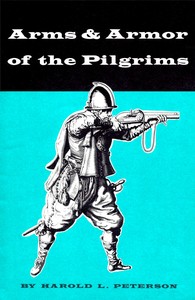
Arms and Armor of the Pilgrims, 1620-1692
by Peterson, Harold L. (Harold Leslie)
English
125h 51m read
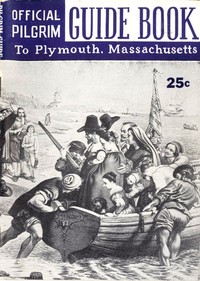
Pilgrim Guide Book to Plymouth, Massachusetts - With a Brief Outline of the Pilgrim Migration and Settlement at Plymouth
by Atwood, William Franklin
English
213h 50m read