*** START OF THE PROJECT GUTENBERG EBOOK 73843 ***
A VOICE FROM HARPER’S FERRY.
A
NARRATIVE OF EVENTS
AT
HARPER’S FERRY;
WITH
INCIDENTS PRIOR AND SUBSEQUENT TO ITS CAPTURE BY
CAPTAIN BROWN AND HIS MEN.
BY
OSBORNE P. ANDERSON,
ONE OF THE NUMBER.
BOSTON:
PRINTED FOR THE AUTHOR.
1861.
PREFACE.
My sole purpose in publishing the following Narrative is to save from
oblivion the facts connected with one of the most important movements
of this age, with reference to the overthrow of American slavery. My
own personal experience in it, under the orders of Capt. Brown, on
the 16th and 17th of October, 1859, as the only man alive who was at
Harper’s Ferry during the entire time--the unsuccessful groping after
these facts, by individuals, impossible to be obtained, except from
an actor in the scene--and the conviction that the cause of impartial
liberty requires this duty at my hands--alone have been the motives for
writing and circulating the little book herewith presented.
I will not, under such circumstances, insult nor burden the intelligent
with excuses for defects in composition, nor for the attempt to give
the facts. A plain, unadorned, truthful story is wanted, and that by
one who knows what he says, who is known to have been at the great
encounter, and to have labored in shaping the same. My identity as a
member of Capt. Brown’s company cannot be questioned, successfully, by
any who are bent upon suppressing the truth; neither will it be by any
in Canada or the United States familiar with John Brown and his plans,
as those know his men personally, or by reputation, who enjoyed his
confidence sufficiently to know thoroughly his plans.
The readers of this narrative will therefore keep steadily in view
the main point--that they are perusing a story of events which have
happened under the eye of the great Captain, or are incidental thereto,
and _not_ a compendium of the “plans” of Capt. Brown; for as his
plans were not consummated, and as their fulfilment is committed to
the future, no one to whom they are known will recklessly expose all
of them to the public gaze. Much has been given as true that never
happened; much has been omitted that should have been made known; many
things have been left unsaid, because, up to within a short time, but
two could say them; one of them has been offered up, a sacrifice to
the Moloch, Slavery; being that other one, I propose to perform the
duty, trusting to that portion of the public who love the right for an
appreciation of my endeavor.
O. P. A.
A VOICE FROM HARPER’S FERRY.
CHAPTER I.
THE IDEA AND ITS EXPONENTS--JOHN BROWN ANOTHER MOSES.
The idea underlying the outbreak at Harper’s Ferry is not peculiar to
that movement, but dates back to a period very far beyond the memory of
the “oldest inhabitant,” and emanated from a source much superior to
the Wises and Hunters, the Buchanans and Masons of to-day. It was the
appointed work for life of an ancient patriarch spoken of in Exodus,
chap, ii., and who, true to his great commission, failed not to trouble
the conscience and to disturb the repose of the Pharaohs of Egypt with
that inexorable, “Thus saith the Lord: Let my people go!” until even
they were urgent upon the people in its behalf. Coming down through the
nations, and regardless of national boundaries or peculiarities, it has
been proclaimed and enforced by the patriarch and the warrior of the
Old World, by the enfranchised freeman and the humble slave of the New.
Its nationality is universal; its language every where understood by
the haters of tyranny; and those that accept its mission, every where
understand each other. There is an unbroken chain of sentiment and
purpose from Moses of the Jews to John Brown of America; from Kossuth,
and the liberators of France and Italy, to the untutored Gabriel, and
the Denmark Veseys, Nat Turners and Madison Washingtons of the Southern
American States. The shaping and expressing of a thought for freedom
takes the same consistence with the colored American--whether he be
an independent citizen of the Haytian nation, a proscribed but humble
nominally free colored man, a patient, toiling, but hopeful slave--as
with the proudest or noblest representative of European or American
civilization and Christianity. Lafayette, the exponent of French honor
and political integrity, and John Brown, foremost among the men of
the New World in high moral and religious principle and magnanimous
bravery, embrace as brothers of the same mother, in harmony upon the
grand mission of liberty; but, while the Frenchman entered the lists in
obedience to a desire to aid, and by invitation from the Adamses and
Hamiltons, and thus pushed on the political fortunes of those able to
help themselves, John Brown, the liberator of Kansas, the projector and
commander of the Harper’s Ferry expedition, saw in the most degraded
slave a man and a brother, whose appeal for his God-ordained rights
no one should disregard; in the toddling slave child, a captive whose
release is as imperative, and whose prerogative is as weighty, as
the most famous in the land. When the Egyptian pressed hard upon the
Hebrew, Moses slew him; and when the spirit of slavery invaded the fair
Territory of Kansas, causing the Free-State settlers to cry out because
of persecution, old John Brown, famous among the men of God for ever,
though then but little known to his fellow-men, called together his
sons and went over, as did Abraham, to the unequal contest, but on the
side of the oppressed white men of Kansas that were, and the black men
that were to be. To-day, Kansas is free, and the verdict of impartial
men is, that to John Brown, more than any other man, Kansas owes her
present position.
I am not the biographer of John Brown, but I can be indulged in giving
here the opinion common among my people of one so eminently worthy of
the highest veneration. Close observation of him, during many weeks,
and under his orders at his Kennedy-Farm fireside, also, satisfies me
that in comparing the noble old man to Moses, and other men of piety
and renown, who were chosen by God to his great work, none have been
more faithful, none have given a brighter record.
CHAPTER II.
PRELIMINARIES TO INSURRECTION--WHAT MAY BE TOLD AND WHAT NOT--JOHN
BROWN’S FIRST VISIT TO CHATHAM--SOME OF THE SECRETS FROM THE
“CARPET-BAG.”
To go into particulars, and to detail reports current more than a year
before the outbreak, among the many in the United States and Canada
who had an inkling of some “practical work” to be done by “Osawattomie
Brown,” when there should be nothing to do in Kansas,--to give facts
in that connection, would only forestall future action, without
really benefitting the slave, or winning over to that sort of work
the anti-slavery men who do not favor physical resistance to slavery.
Slaveholders alone might reap benefits; and for one, I shall throw none
in their way, by any indiscreet avowals; they already enjoy more than
their share; but to a clear understanding of all the facts to be here
published, it may be well to say, that preliminary arrangements were
made in a number of places,--plans proposed, discussed and decided
upon, numbers invited to participate in the movement, and the list of
adherents increased. Nine insurrections is the number given by some
as the true list of outbreaks since slavery was planted in America;
whether correct or not, it is certain that preliminaries to each
are unquestionable. Gabriel, Vesey, Nat Turner, all had conference
meetings; all had their plans; but they differ from the Harper’s
Ferry insurrection in the fact that neither leader nor men, in the
latter, divulged ours, when in the most trying of situations. Hark
and another met Nat Turner in secret places, after the fatigues of a
toilsome day were ended; Gabriel promulged his treason in the silence
of the dense forest; but John Brown reasoned of liberty and equality in
broad daylight, in a modernized building, in conventions with closed
doors, in meetings governed by the elaborate regulations laid down by
Jefferson, and used as their guides by Congresses and Legislatures; or
he made known the weighty theme, and his comprehensive plans resulting
from it, by the cosy fireside, at familiar social gatherings of chosen
ones, or better, in the carefully arranged junto of earnest, practical
men. Vague hints, careful blinds, are Nat Turner’s entire make-up
to save detection; the telegraph, the post-office, the railway, all
were made to aid the new outbreak. By this, it will be seen that
Insurrection has its progressive side, and has been elevated by John
Brown from the skulking, fearing cabal, when in the hands of a brave
but despairing few, to the highly organized, formidable, and to very
many, indispensable institution for the security of freedom, when
guided by intelligence.
So much as relates to prior movements may safely be said above; but who
met--when they met--where they met--how many yet await the propitious
moment--upon whom the mantle of John Brown has fallen to lead on the
future army--the certain, terribly certain, many who must follow up the
work, forgetting not to gather up the blood of the hero and his slain,
to the humble bondman there offered--these may not, must not be told!
Of the many meetings in various places, before the work commenced, I
shall speak just here of the one, the minutes of which were dragged
forth by marauding Virginians from the “archives” at Kennedy Farm; not
forgetting, however, for their comfort, that the Convention was one
of a series at Chatham, some of which were of equally great, if not
greater, importance.
The first visit of John Brown to Chatham was in April, 1858. Wherever
he went around, although an entire stranger, he made a profound
impression upon those who saw or became acquainted with him. Some
supposed him to be a staid but modernized Quaker; others, a solid
business man, from “somewhere,” and without question a philanthropist.
His long white beard, thoughtful and reverent brow and physiognomy, his
sturdy, measured tread, as he circulated about with hands, as portrayed
in the best lithograph, under the pendant coat-skirt of plain brown
Tweed, with other garments to match, revived to those honored with his
acquaintance and knowing to his history, the memory of a Puritan of the
most exalted type.
After some important business, preparatory to the Convention, was
finished, Mr. Brown went West, and returned with his men, who had been
spending the winter in Iowa. The party, including the old gentleman,
numbered twelve,--as brave, intelligent and earnest a company as could
have been associated in one party. There were John H. Kagi, Aaron D.
Stevens, Owen Brown, Richard Realf, George B. Gill, C. W. Moffitt, Wm.
H. Leeman, John E. Cook, Stewart Taylor, Richard Richardson, Charles
P. Tidd and J. S. Parsons--all white except Richard Richardson, who
was a slave in Missouri until helped to his liberty by Captain Brown.
At a meeting held to prepare for the Convention and to examine the
Constitution, Dr. M. R. Delany was Chairman, and John H. Kagi and
myself were the Secretaries.
When the Convention assembled, the minutes of which were seized by
the slaveholding “cravens” at the Farm, and which, as they have been
identified, I shall append to this chapter, Mr. Brown unfolded his
plans and purpose. He regarded slavery as a state of perpetual war
against the slave, and was fully impressed with the idea that himself
and his friends had the right to take liberty, and to use arms in
defending the same. Being a devout Bible Christian, he sustained
his views and shaped his plans in conformity to the Bible; and when
setting them forth, he quoted freely from the Scripture to sustain his
position. He realized and enforced the doctrine of destroying the tree
that bringeth forth corrupt fruit. Slavery was to him the corrupt tree,
and the duty of every Christian man was to strike down slavery, and to
commit its fragments to the flames. He was listened to with profound
attention, his views were adopted, and the men whose names form a part
of the minutes of that in many respects extraordinary meeting, aided
yet further in completing the work.
MINUTES OF THE CONVENTION.
CHATHAM, (Canada West,) }
Saturday, May 8, 1858--10, A. M. }
Convention met in pursuance to a call of John Brown and others, and
was called to order by Mr. Jackson, on whose motion, Mr. William C.
Munroe was chosen President; when, on motion of Mr. Brown, Mr. J. H.
Kagi was elected Secretary.
On motion of Mr. Delany, Mr. Brown then proceeded to state the object
of the Convention at length, and then to explain the general features
of the plan of action in the execution of the project in view by the
Convention. Mr. Delany and others spoke in favor of the project and
the plan, and both were agreed to by general consent.
Mr. Brown then presented a plan of organization, entitled “Provisional
Constitution and Ordinances for the People of the United States,” and
moved the reading of the same.
Mr. Kinnard objected to the reading until an oath of secrecy was
taken by each member of the Convention; whereupon Mr. Delany moved
that the following parole of honor be taken by all the members of the
Convention--“I solemnly affirm that I will not in any way divulge any
of the secrets of this Convention, except to persons entitled to know
the same, on the pain of forfeiting the respect and protection of this
organization;” which motion was carried.
The President then proceeded to administer the obligation, after
which the question was taken on the reading of the plan proposed by
Mr. Brown, and the same carried.
The plan was then read by the Secretary, after which, on motion of
Mr. Whipple, it was ordered that it be now read by articles for
consideration.
The articles from one to forty-five, inclusive, were then read and
adopted. On the reading of the forty-sixth, Mr. Reynolds moved to
strike out the same. Reynolds spoke in favor, and Brown, Munroe, Owen
Brown, Delany, Realf, Kinnard and Kagi against. The question was then
taken and lost, there being but one vote in the affirmative. The
article was then adopted.
The forty-seventh and forty-eighth articles, with the schedule, were
then adopted in the same manner. It was then moved by Mr. Delany that
the title and preamble stand as read. Carried.
On motion of Mr. Kagi, the Constitution, as a whole, was then
unanimously adopted.
The Convention then, at half-past one o’clock, P. M., adjourned, on
motion of Mr. Jackson, till three o’clock.
* * * * *
THREE O’CLOCK, P. M. Journal read and approved.
On motion of Mr. Delany, it was then ordered that those approving of
the Constitution as adopted sign the same; whereupon the names of all
the members were appended.
After congratulatory remarks by Messrs. Kinnard and Delany, the
Convention, on motion of Mr. Whipple, adjourned at three and
three-quarters o’clock.
J. H. KAGI, _Secretary of the Convention_.
The above is a journal of the Provisional Constitutional Convention
held at Chatham, Canada West, May 8, 1858, as herein stated.
* * * * *
CHATHAM, (Canada West,) Saturday, May 8, 1858.
SIX, P. M. In accordance with, and obedience to, the provisions of the
schedule to the Constitution for the proscribed and oppressed people
“of the United States of America,” to-day adopted at this place, a
Convention was called by the President of the Convention framing
that instrument, and met at the above-named hour, for the purpose of
electing officers to fill the offices specially established and named
by said Constitution.
The Convention was called to order by Mr. M. R. Delany, upon whose
nomination, Mr. Wm. C. Munroe was chosen President, and Mr. J. H.
Kagi, Secretary.
A Committee, consisting of Messrs. Whipple, Kagi, Bell, Cook and
Munroe, was then chosen to select candidates for the various offices
to be filled, for the consideration of the Convention.
On reporting progress, and asking leave to sit again, the request was
refused, and Committee discharged.
On motion of Mr. Bell, the Convention then went into the election of
officers, in the following manner and order:--
Mr. Whipple nominated John Brown for Commander-in-Chief, who, on the
seconding of Mr. Delany, was elected by acclamation.
Mr. Realf nominated J. H. Kagi for Secretary of War, who was elected
in the same manner.
On motion of Mr. Brown, the Convention then adjourned to 9, A. M., on
Monday, the 10th.
* * * * *
MONDAY, May 10, 1858--9, A. M. The proceedings of the Convention on
Saturday were read and approved.
The President announced that the business before the Convention was
the further election of officers.
Mr. Whipple nominated Thomas M. Kinnard for President. In a speech of
some length, Mr. Kinnard declined.
Mr. Anderson nominated J. W. Loguen for the same office. The
nomination was afterwards withdrawn, Mr. Loguen not being present, and
it being announced that he would not serve if elected.
Mr. Brown then moved to postpone the election of President for the
present. Carried.
The Convention then went into the election of members of Congress.
Messrs. A. M. Ellsworth and Osborn Anderson were elected.
After which, the Convention went into the election of Secretary of
State, to which office Richard Realf was chosen.
Whereupon the Convention adjourned to half-past two, P. M.
2 1-2, P. M. Convention again assembled, and went into a balloting for
the election of Treasurer and Secretary of the Treasury. Owen Brown
was elected as the former, and George B. Gill as the latter.
The following resolution was then introduced by Mr. Brown, and
unanimously passed:--
_Resolved_, That John Brown, J. H. Kagi, Richard Realf, L. F. Parsons,
C. P. Todd, C. Whipple, C. W. Moffit, John E. Cook, Owen Brown,
Stewart Taylor, Osborn Anderson, A. M. Ellsworth, Richard Richardson,
W. H. Leeman and John Lawrence be and are hereby appointed a Committee
to whom is delegated the power of the Convention to fill by election
all the offices specially named in the Provisional Constitution which
may be vacant after the adjournment of this Convention.
The Convention then adjourned, _sine die_.
J. H. KAGI, _Secretary of the Convention_.
NAMES OF MEMBERS OF THE CONVENTION, WRITTEN BY EACH PERSON.
William Charles Munroe, President of the Convention; G. J. Reynolds,
J. C. Grant, A. J. Smith, James M. Jones, George B. Gill, M. F.
Bailey, William Lambert, S. Hunton, C. W. Moffit, John J. Jackson,
J. Anderson, Alfred Whipple, James M. Buel, W. H. Leeman, Alfred M.
Ellsworth, John E. Cook, Stewart Taylor, James W. Purnell, George
Aiken, Stephen Dettin, Thomas Hickerson, John Caunel, Robinson
Alexander, Richard Realf, Thomas F. Cary, Richard Richardson, L. F.
Parsons, Thomas M. Kinnard, M. H. Delany, Robert Vanvanken, Thomas M,
Stringer, Charles P. Tidd, John A. Thomas, C. Whipple, I. D. Shadd,
Robert Newman, Owen Brown, John Brown, J. H. Harris, Charles Smith,
Simon Fislin, Isaac Holler, James Smith, J. H. Kagi, Secretary of the
Convention.
CHAPTER III.
THE WORK GOING BRAVELY ON--THOSE COMMISSIONS--JOHN H. KAGI--A LITTLE
CLOUD--“JUDAS” FORBES--ETC.
Many affect to despise the Chatham Convention, and the persons who
there abetted the “treason.” Governor Wise would like nothing better
than to engage the Canadas, with but ten men under his command. By that
it is clear that the men acquainted with Brown’s plans would not be a
“breakfast-spell” for the chivalrous Virginian. In one respect, they
were not formidable, and their Constitution would seem to be a harmless
paper. Some of them were outlaws against Buchanan Democratic rule
in the Territories; some were colored men who had felt severely the
proscriptive spirit of American caste; others were escaped slaves, who
had left dear kindred behind, writhing in the bloody grasp of the vile
man-stealer, never, never to be released, until some practical, daring,
determined step should be taken by their friends or their escaped
brethren. What use could such men make of a Constitution? Destitute
of political or social power, as respects the American States and
people, what ghost of an echo could they invoke, by declamation or
action, against the peculiar institution? In the light of slaveholding
logic and its conclusions, they were but renegade whites and insolent
blacks; but, aggregating their grievances, summing up their deep-seated
hostility to a system to which every precept of morality, every tie of
relationship, is a perpetual protest, the men in Convention, and the
many who could not conveniently attend at the time, were not a handful
to be despised. The braggadocio of the Virginia Governor might be eager
to engage them with ten slaveholders, but John Brown was satisfied with
them, and that is honor enough for a generation.
After the Convention adjourned, other business was despatched with
utmost speed, and every one seemed in good spirits. The “boys” of
the party of “Surveyors,” as they were called, were the admired of
those who knew them, and the subject of curious remark and inquiry
by strangers. So many intellectual looking men are seldom seen in
one party, and at the same time, such utter disregard of prevailing
custom, or style, in dress and other little conventionalities. Hour
after hour they would sit in council, thoughtful, ready; some of them
eloquent, all fearless, patient of the fatigues of business; anon, here
and there over the “track,” and again in the assembly; when the time
for relaxation came, sallying forth arm in arm, unshaven, unshorn, and
altogether indifferent about it; or one, it may be, impressed with the
coming responsibility, sauntering alone, in earnest thought, apparently
indifferent to all outward objects, but ready at a word or sign from
the chief to undertake any task.
During the sojourn at Chatham, the commissions to the men were
discussed, &c. It has been a matter of inquiry, even among friends, why
colored men were not commissioned by John Brown to act as captains,
lieutenants, &c. I reply, with the knowledge that men in the movement
now living will confirm it, that John Brown did offer the captaincy,
and other military positions, to colored men equally with others, but a
want of acquaintance with military tactics was the invariable excuse.
Holding a civil position, as we termed it, I declined a captain’s
commission tendered by the brave old man, as better suited to those
more experienced; and as I was willing to give my life to the cause,
trusting to experience and fidelity to make me more worthy, my excuse
was accepted. The same must be said of other colored men to be spoken
of hereafter, and who proved their worthiness by their able defence of
freedom at the Ferry.
JOHN H. KAGI.
Of the constellation of noble men who came to Chatham with Capt. Brown,
no one was greater in the essentials of true nobility of character and
executive skill than John H. Kagi, the confidential friend and adviser
of the old man, and second in position in the expedition; no one was
held in more deserved respect. Kagi was, singularly enough, a Virginian
by birth, and had relatives in the region of the Ferry. He left home
when a youth, an enemy to slavery, and brought as his gift offering to
freedom three slaves, whom he piloted to the North. His innate hatred
of the institution made him a willing exile from the State of his
birth, and his great abilities, natural and acquired, entitled him to
the position he held in Capt. Brown’s confidence.
Kagi was indifferent to personal appearance; he often went about
with slouched hat, one leg of his pantaloons properly adjusted, and
the other partly tucked into his high boot-top; unbrushed, unshaven,
and in utter disregard of “the latest style”; but to his companions
and acquaintances, a verification of Burns’ man in the clothes; for
John Henry Kagi had improved his time; he discoursed elegantly and
fluently, wrote ably, and could occupy the platform with greater
ability than many a man known to the American people as famous in these
respects. John Brown appreciated him, and to his men, his estimate of
John Henry was a familiar theme.
Kagi’s bravery, his devotion to the cause, his deference to the
commands of his leader, were most nobly illustrated in his conduct at
Harper’s Ferry.
* * * * *
Scarcely had the Convention and other meetings and business at Chatham
been concluded, and most necessary work been done, both at St.
Catherines and at this point, when the startling intelligence that the
plans were exposed came to hand, and that “Judas” Forbes, after having
disclosed some of our important arrangements in the Middle States,
was on his way to Washington on a similar errand. This news caused an
entire change in the programme for a time. The old gentleman went one
way, the young men another, but ultimately to meet in Kansas, in part,
where the summer was spent. In the winter of that year, Capt. Brown, J.
H. Kagi, A. D. Stevens, C. P. Tidd and Owen Brown, went into Missouri,
and released a company of slaves, whom they eventually escorted to
Canada, where they are now living and taking care of themselves. An
incident of that slave rescue may serve to illustrate more fully the
spirit pervading the old man and his “boys.” After leaving Missouri
with the fugitives, and while yet pursuing the perilous hegira, birth
was given to a male child by one of the slave mothers. Dr. Doy, of
Kansas, aided in the accouchement, and walked five miles afterwards to
get new milk for the boy, while the old Captain named him John Brown,
after himself, which name he now bears. At that time, a reward from the
United States government was upon the head of Brown; United States
Marshals were whisking about, pretendedly eager to arrest them; the
weather was very cold, and dangers were upon every hand; but not one
jot of comfort or attention for the tender babe and its invalid mother
was abated. No thought for their valuable selves, but only how best
might the poor and despised charge in their keeping be prudently but
really nursed and guarded in their trial journey for liberty. Noble
leader of a noble company of men! Yes, reader, whether at Harper’s
Ferry, or paving the way thither with such deeds as the one here told,
and well known West, the old hero and that company were philanthropists
to the core. I do not know if the wicked scheme of Forbes may not be
excused a little, solely because it afforded the occasion for the
great enterprise, growing out of this last visit to Kansas; but Forbes
himself must nevertheless be held guilty for its inception, as only
ambition to usurp power, and his great love of pelf, (peculiar to
him, of all connected with Capt. Brown,) made him dissatisfied, and
determined to add falsehood to his other sins against John Brown.
“JUDAS” FORBES.
This Forbes, who, though pretending to disclose some dangerous
hornet’s nest, was careful enough of his worthless self to tell next
to nothing, but to resort to lies, rather from a clear understanding
of the consequences, if caught, is an Englishman. When information
came, it was not known how much he had told or how little; therefore
Brown’s precaution to proceed West. From the spring of ’58 to the
autumn of ’59, getting no intelligence of him, it was said he had left
America; but instead of that, he lurked around in disguise, feeling, no
doubt, that he deserved the punishment of death. Before his defection,
he entered into agreement with Capt. Brown to work in the cause of
emancipation upon the same terms as did the others, as I repeatedly
learned from Brown and his associates, who were acquainted with the
matter, and whose veracity stands infinitely above Forbes’ word. From
Brown, Kagi and Stevens, I learned that the position of second in the
organization under the Captain was to be held by “Judas,” because of
his acquaintance with military science. He was to be drill-master
of the company, but not to receive one particle of salary more than
the youngest man in the company. But having once gained a secure
foothold, he sought to carry out his evil design to make money out of
philanthropy, or destroy the movement for ever, could he not be well
paid to remain quiet. Money was his object from the first, though
disguised; and when he failed to secure that, he raised the question of
leadership with Capt. Brown, and that was his excuse for withdrawing
from the movement. His heart was clearly never right; but he only
delayed, he did not stop the work. When the outbreak occurred, he
figured for a little while, though very cautiously, and finally fled to
Europe, another Cain, whose mark is unmistakable, and who had better
never been born than attempt to stand up among the men he so greatly
wronged.
CHAPTER IV.
THE WAY CLEAR--ACTIVE PREPARATIONS--KENNEDY FARM--EMIGRANTS FOR THE
SOUTH--CORRESPONDENCE--THE AGENT.
Throughout the summer of 1859, when every thing wore the appearance of
perfect quiet, when suspicions were all lulled, when those not fully
initiated thought the whole scheme was abandoned, arrangements were in
active preparation for the work. Mr. Brown, Kagi, and a part of the
Harper’s Ferry company, who had previously spent some time in Ohio,
went into Pennsylvania in the month of June, and up to the early
part of July, having made necessary observations, they penetrated the
Keystone yet further, and laid plans to receive freight and men as they
should arrive. Under the assumed name of Smith, Captain Brown pushed
his explorations further south, and selected
KENNEDY FARM.
Kennedy Farm, in every respect an excellent location for _business_ as
“head-quarters,” was rented at a cheap rate, and men and freight were
sent thither. Capt. Brown returned to ----, and sent freight, while
Kagi was stationed at ----, to correspond with persons elsewhere, and
to receive and despatch freight as it came. Owen, Watson, and Oliver
Brown, took their position at head-quarters, to receive whatever
was sent. These completed the arrangements. The Captain labored and
travelled night and day, sometimes on old Dolly, his brown mule, and
sometimes in the wagon. He would start directly after night, and travel
the fifty miles between the Farm and Chambersburg by daylight next
morning; and he otherwise kept open communication between head-quarters
and the latter place, in order that matters might be arranged in due
season.
John H. Kagi wrote for freight, and the following letter, before
published in relation to it, was written by a co-laborer:
WEST ANDOVER, Ohio, July 30th, 1859.
JOHN HENRIE, Esq.:
DEAR SIR,--I yesterday received yours of the 25th inst., together with
letter of instructions from our mutual friend Isaac, enclosing draft
for $100. Have written you as many as three letters, I think, before
this, and have received all you have sent, probably.
The heavy freight of fifteen boxes I sent off some days ago. The
household stuff, consisting of six boxes and one chest, I have put in
good shape, and shall, I think, be able to get them on their way on
Monday next, and shall myself be on my way northward within a day or
two after.
Enclosed please find list of contents of boxes, which it may be well
to preserve.
The freight having arrived in good condition, John Henrie replies.
As the Kennedy Farm is a part of history, a slight allusion to its
location may not be out of place, although it has been so frequently
spoken of as to be almost universally known. The Farm is located in
Washington County, Maryland, in a mountainous region, on the road from
Chambersburg; it is in a comparatively non-slaveholding population,
four miles from Harper’s Ferry. Yet, among the few traders in the
souls of men located around, several circumstances peculiar to the
institution happened while the party sojourned there, which serve to
show up its hideous character. During three weeks of my residence
at the Farm, no less than four deaths took place among the slaves;
one, Jerry, living three miles away, hung himself in the late Dr.
Kennedy’s orchard, because he was to be sold South, his master having
become insolvent. The other three cases were homicides; they were
punished so that death ensued immediately, or in a short time. It was
the knowledge of these atrocities, and the melancholy suicide named,
that caused Oliver Brown, when writing to his young wife, to refer
directly to the deplorable aspect of slavery in that neighborhood. Once
fairly established, and freight having arrived safely, the published
correspondence becomes significant to an actor in the scene. Emigrants
began to drop down, from this quarter and the other. Smith writes to
Kagi:--
WEST ANDOVER, Ashtabula Co., O., Wednesday, 1859.
FRIEND HENRIE,--Yours of the 14th inst. I received last night--glad to
learn that the “Wire” has arrived in good condition, and that our “R”
friend was pleased with a view of those “pre-eventful shadows.”
Shall write Leary at once, also our other friends at the North and
East. Am highly pleased with the prospect I have of doing something
to the purpose now, right away, here and in contiguous sections,
in the way of getting stock taken. I am devoting my whole time to
our work. Write often, and keep me posted up close. [Here follow
some phonographic characters, which may be read: “I have learned
phonography, but not enough to correspond to any advantage. Can
probably read any thing you may write, if written in the corresponding
style.”]
Faithfully yours,
JOHN SMITH.
Please say to father to address [phonographic characters which might
read “John Luther”] when he writes me. I wish you to see what I have
written him.
J. S.
THE AGENT.
In the month of August, 1859, John Brown’s Agent spent some time in
Canada. He visited Chatham, Buxton, and other places, and formed
Liberty Leagues, and arranged matters so that operations could be
carried on with excellent success, through the efficiency of Messrs.
C., S., B., and L., the Chairman, Corresponding Secretary, Secretary
O., and Treasurer of the Society. He then proceeded to Detroit, where
another Society is established. So well satisfied was Captain Brown
with the work done, that he wrote in different directions: “The fields
whiten unto harvest;” and again, “Your friends at head-quarters want
you at their elbow.” This was an invitation by the good old man to
as brave and efficient a laborer in the cause of human rights as the
friends of freedom have ever known; and to one who must yet bear the
beacon-light of liberty before the self-emancipated bondmen of the
South.
CHAPTER V.
MORE CORRESPONDENCE--MY JOURNEY TO THE FERRY--A GLANCE AT THE FAMILY.
Preparations had so far progressed, up to the time when incidents
mentioned in the preceding chapter had taken place, that Kagi wrote to
Chatham and other places, urging parties favorable to come on without
loss of time. In reply to the letter written to Chatham, soliciting
volunteers, the appended, from an office-bearer, referred to my own
journey to the South:--
DEAR SIR,--Yours came to hand last night. One hand (Anderson) left
here last night, and will be found an efficient hand. Richardson is
anxious to be at work as a missionary to bring sinners to repentance.
He will start in a few days. Another will follow immediately after, if
not with him. More laborers may be looked for shortly. “Slow but sure.”
Alexander has received yours, so you see all communications have come
to hand, so far. Alexander is not coming up to the work as he agreed.
I fear he will be found unreliable in the end.
Dull times affect missionary matters here more than any thing else;
however, a few active laborers may be looked for as certain.
I would like to hear of your congregation numbering more than “15 and
2” to commence a good revival; still, our few will be adding strength
to the good work.
Yours, &c.,
J. M. B.
To J. B., Jr.
As set forth in this letter, I left Canada September 13th, and reached
----, in Pennsylvania, three days after. On my arrival, I was surprised
to learn that the freight was all moved to head-quarters, but a few
boxes, the arrival of which, the evening of the same day, called forth
from Kagi the following brief note:--
CHAMBERSBURG, ----, ----
J. SMITH & SONS,--A quantity of freight has to-day arrived for you
in care of Oaks & Caufman. The amount is somewhere between 2,600 and
3,000 lbs. Charges in full, $25.98. The character is, according to
manifest, 33 bundles and 4 boxes.
I yesterday received a letter from John Smith, containing nothing of
any particular importance, however, so I will keep it until you come
up.
Respectfully,
J. HENRIE.
CHAMBERSBURG, Pa., Friday, Sept. 16, 1859, }
11 o’clock, A. M. }
J. SMITH AND SONS,--I have just time to say that Mr. Anderson arrived
in the train five minutes ago.
Respectfully,
J. HENRIE.
P. S. I have not had time to talk with him.
J. H.
A little while prior to this, * * went down to ----, to accompany
Shields Green, whereupon a meeting of Capt. Brown, Kagi, and other
distinguished persons, convened for consultation.
On the 20th, four days after I reached this outpost, Capt. Brown,
Watson Brown, Kagi, myself, and several friends, held another meeting,
after which, on the 24th, I left Chambersburg for Kennedy Farm. I
walked alone as far as Middletown, a town on the line between Maryland
and Pennsylvania, and it being then dark, I found Captain Brown
awaiting with his wagon. We set out directly, and drove until nearly
day-break the next morning, when we reached the Farm in safety. As a
very necessary precaution against surprise, all the colored men at the
Ferry who went from the North, made the journey from the Pennsylvania
line in the night. I found all the men concerned in the undertaking
on hand when I arrived, excepting Copeland, Leary, and Merriam; and
when all had collected, a more earnest, fearless, determined company
of men it would be difficult to get together. There, as at Chatham, I
saw the same evidence of strong and commanding intellect, high-toned
morality, and inflexibility of purpose in the men, and a profound and
holy reverence for God, united to the most comprehensive, practical,
systematic philanthropy, and undoubted bravery in the patriarch
leader, brought out to view in lofty grandeur by the associations
and surroundings of the place and the occasion. There was no milk
and water sentimentality--no offensive contempt for the negro, while
working in his cause; the pulsations of each and every heart beat in
harmony for the suffering and pleading slave. I thank God that I have
been permitted to realize to its furthest, fullest extent, the moral,
mental, physical, social harmony of an Anti-Slavery family, carrying
out to the letter the principles of its antetype, the Anti-Slavery
cause. In John Brown’s house, and in John Brown’s presence, men
from widely different parts of the continent met and united into one
company, wherein no hateful prejudice dared intrude its ugly self--no
ghost of a distinction found space to enter.
CHAPTER VI.
LIFE AT KENNEDY FARM.
To a passer-by, the house and its surroundings presented but
indifferent attractions. Any log tenement of equal dimensions would
be as likely to arrest a stray glance. Rough, unsightly, and aged, it
was only those privileged to enter and tarry for a long time, and to
penetrate the mysteries of the two rooms it contained--kitchen, parlor,
dining-room below, and the spacious chamber, attic, store-room, prison,
drilling room, comprised in the loft above--who could tell how we lived
at Kennedy Farm.
Every morning, when the noble old man was at home, he called the
family around, read from his Bible, and offered to God most fervent
and touching supplications for all flesh; and especially pathetic were
his petitions in behalf of the oppressed. I never heard John Brown
pray, that he did not make strong appeals to God for the deliverance of
the slave. This duty over, the men went to the loft, there to remain
all the day long; few only could be seen about, as the neighbors were
watchful and suspicious. It was also important to talk but little
among ourselves, as visitors to the house might be curious. Besides
the daughter and daughter-in-law, who superintended the work, some one
or other of the men was regularly detailed to assist in the cooking,
washing, and other domestic work. After the ladies left, we did all the
work, no one being exempt, because of age or official grade in the
organization.
The principal employment of the prisoners, as we severally were when
compelled to stay in the loft, was to study Forbes’ Manual, and to
go through a quiet, though rigid drill, under the training of Capt.
Stevens, at some times. At others, we applied a preparation for
bronzing our gun barrels--discussed subjects of reform--related our
personal history; but when our resources became pretty well exhausted,
the _ennui_ from confinement, imposed silence, etc., would make the men
almost desperate. At such times, neither slavery nor slaveholders were
discussed mincingly. We were, while the ladies remained, often relieved
of much of the dullness growing out of restraint by their kindness.
As we could not circulate freely, they would bring in wild fruit and
flowers from the woods and fields. We were well supplied with grapes,
paw-paws, chestnuts, and other small fruit, besides bouquets of fall
flowers, through their thoughtful consideration.
During the several weeks I remained at the encampment, we were under
the restraint I write of through the day; but at night, we sallied
out for a ramble, or to breathe the fresh air and enjoy the beautiful
solitude of the mountain scenery around, by moonlight.
Captain Brown loved the fullest expression of opinion from his men,
and not seldom, when a subject was being severely scrutinized by Kagi,
Oliver, or others of the party, the old gentleman would be one of the
most interested and earnest hearers. Frequently his views were severely
criticised, when no one would be in better spirits than himself.
He often remarked that it was gratifying to see young men grapple
with moral and other important questions, and express themselves
independently; it was evidence of self-sustaining power.
CHAPTER VII.
CAPTAIN BROWN AND J. H. KAGI GO TO PHILADELPHIA--F. J. MERRIAM, J.
COPELAND AND S. LEARY ARRIVE--MATTERS PRECIPITATED BY INDISCRETION.
Being obliged, from the space I propose to give to this narrative, to
omit many incidents of my sojourn at the Farm, which from association
are among my most pleasant recollections, the events now to be recorded
are to me invested with the most intense interest. About ten days
before the capture of the Ferry, Captain John Brown and Kagi went to
Philadelphia, on business of great importance. How important, men
there and elsewhere _now_ know. How affected by, and affecting the
main features of the enterprise, we at the Farm knew full well after
their return, as the old Captain, in the fullness of his overflowing,
saddened heart, detailed point after point of interest. God bless the
old veteran, who could and did chase a thousand in life, and defied
more than ten thousand by the moral sublimity of his death!
On their way home, at Chambersburg, they met young F. J. Merriam, of
Boston. Several days were spent at C., when Merriam left for Baltimore,
to purchase some necessary articles for the undertaking. John Copeland
and Sherrard Lewis Leary reached Chambersburg on the 12th of October,
and on Saturday, the 15th, at daylight, they arrived, in company with
Kagi and Watson Brown. In the evening of the same day, F. J. Merriam
came to the Farm.
Saturday, the 15th, was a busy day for all hands. The chief and every
man worked busily, packing up, and getting ready to remove the means of
defence to the school-house, and for further security, as the people
living around were in a state of excitement, from having seen a number
of men about the premises a few days previously. Not being fully
satisfied as to the real business of “J. Smith & Sons” after that,
and learning that several thousand stand of arms were to be removed
by the Government from the Armory to some other point, threats to
search the premises were made against the encampment. A tried friend
having given information of the state of public feeling without, and
of the intended process, Captain Brown and party concluded to strike
the blow immediately, and not, as at first intended, to await certain
reinforcements from the North and East, which would have been in
Maryland within one and three weeks. Could other parties, waiting for
the word, have reached head-quarters in time for the outbreak when it
took place, the taking of the armory, engine house, and rifle factory,
would have been quite different. But the men at the Farm had been so
closely confined, that they went out about the house and farm in the
day-time during that week, and so indiscreetly exposed their numbers
to the prying neighbors, who thereupon took steps to have a search
instituted in the early part of the coming week. Capt. Brown was not
seconded in another quarter as he expected at the time of the action,
but could the fears of the neighbors have been allayed for a few days,
the disappointment in the former respect would not have had much weight.
The indiscretion alluded to has been greatly lamented by all of us,
as Maryland, Virginia, and other slave States, had, as they now have,
a direct interest in the successful issue of the first step. Few
ultimately successful movements were predicated on the issue of the
first bold stroke, and so it is with the institution of slavery. It
will yet come down by the run, but it will not be because huzzas of
victory were shouted over the first attempt, any more than at Bunker
Hill or Hastings.
CHAPTER VIII.
COUNCIL MEETINGS--ORDERS GIVEN--THE CHARGE--ETC.
On Sunday morning, October 16th, Captain Brown arose earlier than
usual, and called his men down to worship. He read a chapter from the
Bible, applicable to the condition of the slaves, and our duty as their
brethren, and then offered up a fervent prayer to God to assist in
the liberation of the bondmen in that slaveholding land. The services
were impressive beyond expression. Every man there assembled seemed to
respond from the depths of his soul, and throughout the entire day, a
deep solemnity pervaded the place. The old man’s usually weighty words
were invested with more than ordinary importance, and the countenance
of every man reflected the momentous thought that absorbed his
attention within.
After breakfast had been despatched, and the roll called by the
Captain, a sentinel was posted outside the door, to warn by signal
if any one should approach, and we listened to preparatory remarks
to a council meeting to be held that day. At 10 o’clock, the council
was assembled. I was appointed to the Chair, when matters of
importance were considered at length. After the council adjourned, the
Constitution was read for the benefit of the few who had not before
heard it, and the necessary oaths taken. Men who were to hold military
positions in the organization, and who had not received commissions
before then, had their commissions filled out by J. H. Kagi, and gave
the required obligations.
In the afternoon, the eleven orders presented in the next chapter
were given by the Captain, and were afterwards carried out in every
particular by the officers and men.
In the evening, before setting out to the Ferry, he gave his final
charge, in which he said, among other things:--“_And now, gentlemen,
let me impress this one thing upon your minds. You all know how dear
life is to you, and how dear your life is to your friends. And in
remembering that, consider that the lives of others are as dear to them
as yours are to you. Do not, therefore, take the life of any one, if
you can possibly avoid it; but if it is necessary to take life in order
to save your own, then make sure work of it._”
CHAPTER IX.
THE ELEVEN ORDERS GIVEN BY CAPTAIN BROWN TO HIS MEN BEFORE SETTING OUT
FOR THE FERRY.
The orders given by Captain Brown, before departing from the Farm for
the Ferry, were:--
1. Captain Owen Brown, F. J. Merriam, and Barclay Coppic to remain at
the old house as sentinels, to guard the arms and effects till morning,
when they would be joined by some of the men from the Ferry with teams
to move all arms and other things to the old school-house before
referred to, located about three-quarters of a mile from Harper’s
Ferry--a place selected a day or two beforehand by the Captain.
2. All hands to make as little noise as possible going to the Ferry,
so as not to attract attention till we could get to the bridge; and to
keep all arms secreted, so as not to be detected if met by any one.
3. The men were to walk in couples, at some distance apart; and should
any one overtake us, stop him and detain him until the rest of our
comrades were out of the road. The same course to be pursued if we were
met by any one.
4. That Captains Charles P. Tidd and John E. Cook walk ahead of the
wagon in which Captain Brown rode to the Ferry, to tear down the
telegraph wires on the Maryland side along the railroad; and to do the
same on the Virginia side, after the town should be captured.
5. Captains John H. Kagi and A. D. Stevens were to take the watchman
at the Ferry bridge prisoner when the party got there, and to detain
him there until the engine house upon the Government grounds should be
taken.
6. Captain Watson Brown and Stewart Taylor were to take positions at
the Potomac bridge, and hold it till morning. They were to stand on
opposite sides, a rod apart, and if any one entered the bridge, they
were to let him get in between them. In that case, pikes were to be
used, not Sharp’s rifles, unless they offered much resistance, and
refused to surrender.
7. Captains Oliver Brown and William Thompson were to execute a similar
order at the Shenandoah bridge, until morning.
8. Lieutenant Jeremiah Anderson and Adolphus Thompson were to occupy
the engine house at first, with the prisoner watchman from the bridge
and the watchman belonging to the engine-house yard, until the one on
the opposite side of the street and the rifle factory were taken, after
which they would be reinforced, to hold that place with the prisoners.
9. Lieutenant Albert Hazlett and Private Edwin Coppic were to hold the
Armory opposite the engine house after it had been taken, through the
night and until morning, when arrangements would be different.
10. That John H. Kagi, Adjutant General, and John A. Copeland,
(colored,) take positions at the rifle factory through the night, and
hold it until further orders.
11. That Colonel A. D. Stevens (the same Captain Stevens who held
military position next to Captain Brown) proceed to the country with
his men, and after taking certain parties prisoners bring them to the
Ferry. In the case of Colonel Lewis Washington, who had arms in his
hands, he must, before being secured as a prisoner, deliver them into
the hands of Osborne P. Anderson. Anderson being a colored man, and
colored men being only _things_ in the South, it is proper that the
South be taught a lesson upon this point.
John H. Kagi being Adjutant General, was the near adviser of Captain
John Brown, and second in position; and had the old gentleman been
slain at the Ferry, and Kagi been spared, the command would have
devolved upon the latter. But Col. Stevens holding the active military
position in the organization second to Captain Brown, when order eleven
was given him, had the privilege of choosing his own men to execute it.
The selection was made after the capture of the Ferry, and then my duty
to receive Colonel Washington’s famous arms was assigned me by Captain
Brown. The men selected by Col. Stevens to act under his orders during
the night were Charles P. Tidd, Osborne P. Anderson, Shields Green,
John E. Cook, and Sherrard Lewis Leary. We were to take prisoners, and
any slaves who would come, and bring them to the Ferry.
A few days before, Capt. Cook had travelled along the Charlestown
turnpike, and collected statistics of the population of slaves and the
masters’ names. Among the masters whose acquaintance Cook had made,
Colonel Washington had received him politely, and had shown him a
sword formerly owned by Frederic the Great of Prussia, and presented
by him to Genl. Washington, and a pair of horse pistols, formerly
owned by General Lafayette, and bequeathed by the old General to Lewis
Washington. These were the arms specially referred to in the charge.
At eight o’clock on Sunday evening, Captain Brown said: “Men, get on
your arms; we will proceed to the Ferry.” His horse and wagon were
brought out before the door, and some pikes, a sledge-hammer and
crowbar were placed in it. The Captain then put on his old Kansas
cap, and said: “Come, boys!” when we marched out of the camp behind
him, into the lane leading down the hill to the main road. As we
formed the procession line, Owen Brown, Barclay Coppic, and Francis J.
Merriam, sentinels left behind to protect the place as before stated,
came forward and took leave of us; after which, agreeably to previous
orders, and as they were better acquainted with the topography of the
Ferry, and to effect the tearing down of the telegraph wires, C. P.
Tidd and John E. Cook led the procession. While going to the Ferry, the
company marched along as solemnly as a funeral procession, till we got
to the bridge. When we entered, we halted, and carried out an order to
fasten our cartridge boxes outside of our clothes, when every thing was
ready for taking the town.
CHAPTER X.
THE CAPTURE OF HARPER’S FERRY--COL. A. D. STEVENS AND PARTY SALLY OUT
TO THE PLANTATIONS--WHAT WE SAW, HEARD, DID, ETC.
As John H. Kagi and A. D. Stevens entered the bridge, as ordered in the
fifth charge, the watchman, being at the other end, came toward them
with a lantern in his hand. When up to them, they told him he was their
prisoner, and detained him a few minutes, when he asked them to spare
his life. They replied, they did not intend to harm him; the object was
to free the slaves, and he would have to submit to them for a time, in
order that the purpose might be carried out.
Captain Brown now entered the bridge in his wagon, followed by the rest
of us, until we reached that part where Kagi and Stevens held their
prisoner, when he ordered Watson Brown and Stewart Taylor to take the
positions assigned them in order sixth, and the rest of us to proceed
to the engine house. We started for the engine house, taking the
prisoner along with us. When we neared the gates of the engine-house
yard, we found them locked, and the watchman on the inside. He was told
to open the gates, but refused, and commenced to cry. The men were
then ordered by Captain Brown to open the gates forcibly, which was
done, and the watchman taken prisoner. The two prisoners were left in
the custody of Jerry Anderson and Adolphus Thompson, and A. D. Stevens
arranged the men to take possession of the Armory and rifle factory.
About this time, there was apparently much excitement. People were
passing back and forth in the town, and before we could do much, we had
to take several prisoners. After the prisoners were secured, we passed
to the opposite side of the street and took the Armory, and Albert
Hazlett and Edwin Coppic were ordered to hold it for the time being.
The capture of the rifle factory was the next work to be done. When we
went there, we told the watchman who was outside of the building our
business, and asked him to go along with us, as we had come to take
possession of the town, and make use of the Armory in carrying out our
object. He obeyed the command without hesitation. John H. Kagi and John
Copeland were placed in the Armory, and the prisoners taken to the
engine house. Following the capture of the Armory, Oliver Brown and
William Thompson were ordered to take possession of the bridge leading
out of town, across the Shenandoah river, which they immediately did.
These places were all taken, and the prisoners secured, without the
snap of a gun, or any violence whatever.
The town being taken, Brown, Stevens, and the men who had no post in
charge, returned to the engine house, where council was held, after
which Captain Stevens, Tidd, Cook, Shields Green, Leary and myself
went to the country. On the road, we met some colored men, to whom we
made known our purpose, when they immediately agreed to join us. They
said they had been long waiting for an opportunity of the kind. Stevens
then asked them to go around among the colored people and circulate
the news, when each started off in a different direction. The result
was that many colored men gathered to the scene of action. The first
prisoner taken by us was Colonel Lewis Washington. When we neared
his house, Capt. Stevens placed Leary and Shields Green to guard the
approaches to the house, the one at the side, the other in front. We
then knocked, but no one answering, although females were looking from
upper windows, we entered the building and commenced a search for the
proprietor. Col. Washington opened his room door, and begged us not to
kill him. Capt. Stevens replied, “You are our prisoner,” when he stood
as if speechless or petrified. Stevens further told him to get ready to
go to the Ferry; that he had come to abolish slavery, not to take life
but in self-defence, but that he _must_ go along. The Colonel replied:
“You can have my slaves, if you will let me remain.” “No,” said the
Captain, “you must go along too; so get ready.” After saying this,
Stevens left the house for a time, and with Green, Leary and Tidd,
proceeded to the “Quarters,” giving the prisoner in charge of Cook and
myself. The male slaves were gathered together in a short time, when
horses were tackled to the Colonel’s two-horse carriage and four-horse
wagon, and both vehicles brought to the front of the house.
During this time, Washington was walking the floor, apparently much
excited. When the Captain came in, he went to the sideboard, took
out his whiskey, and offered us something to drink, but he was
refused. His fire-arms were next demanded, when he brought forth one
double-barrelled gun, one small rifle, two horse-pistols and a sword.
Nothing else was asked of him. The Colonel cried heartily when he
found he must submit, and appeared taken aback when, on delivering up
the famous sword formerly presented by Frederic to his illustrious
kinsman, George Washington, Capt. Stevens told me to step forward and
take it. Washington was secured and placed in his wagon, the women of
the family making great outcries, when the party drove forward to Mr.
John Allstadt’s. After making known our business to him, he went into
as great a fever of excitement as Washington had done. We could have
his slaves, also, if we would only leave him. This, of course, was
contrary to our plans and instructions. He hesitated, puttered around,
fumbled and meditated for a long time. At last, seeing no alternative,
he got ready, when the slaves were gathered up from about the quarters
by their own consent, and all placed in Washington’s big wagon and
returned to the Ferry.
One old colored lady, at whose house we stopped, a little way from the
town, had a good time over the message we took her. This liberating the
slaves was the very thing she had longed for, prayed for, and dreamed
about, time and again; and her heart was full of rejoicing over the
fulfilment of a prophecy which had been her faith for long years. While
we were absent from the Ferry, the train of cars for Baltimore arrived,
and was detained. A colored man named Haywood, employed upon it, went
from the Wager House up to the entrance to the bridge, where the train
stood, to assist with the baggage. He was ordered to stop by the
sentinels stationed at the bridge, which he refused to do, but turned
to go in an opposite direction, when he was fired upon, and received a
mortal wound. Had he stood when ordered, he would not have been harmed.
No one knew at the time whether he was white or colored, but his
movements were such as to justify the sentinels in shooting him, as he
would not stop when commanded. The first firing happened at that time,
and the only firing, until after daylight on Monday morning.
CHAPTER XI.
THE EVENTS OF MONDAY, OCT. 17--ARMING THE SLAVES--TERROR IN THE
SLAVEHOLDING CAMP--IMPORTANT LOSSES TO OUR PARTY--THE FATE OF
KAGI--PRISONERS ACCUMULATE--WORKMEN AT THE KENNEDY FARM--ETC.
Monday, the 17th of October, was a time of stirring and exciting
events. In consequence of the movements of the night before, we were
prepared for commotion and tumult, but certainly not for more than we
beheld around us. Gray dawn and yet brighter daylight revealed great
confusion, and as the sun arose, the panic spread like wild-fire.
Men, women and children could be seen leaving their homes in every
direction; some seeking refuge among residents, and in quarters further
away, others climbing up the hill-sides, and hurrying off in various
directions, evidently impelled by a sudden fear, which was plainly
visible in their countenances or in their movements.
Capt. Brown was all activity, though I could not help thinking that at
times he appeared somewhat puzzled. He ordered Sherrard Lewis Leary,
and four slaves, and a free man belonging in the neighborhood, to join
John Henry Kagi and John Copeland at the rifle factory, which they
immediately did. Kagi, and all except Copeland, were subsequently
killed, but not before having communicated with Capt. Brown, as will be
set forth further along.
As fast as the workmen came to the building, or persons appeared in the
street near the engine house, they were taken prisoners, and directly
after sunrise, the detained train was permitted to start for the
eastward. After the departure of the train, quietness prevailed for a
short time; a number of prisoners were already in the engine house, and
of the many colored men living in the neighborhood, who had assembled
in the town, a number were armed for the work.
Capt. Brown ordered Capts. Charles P. Tidd, Wm. H. Leeman, John E.
Cook, and some fourteen slaves, to take Washington’s four-horse
wagon, and to join the company under Capt. Owen Brown, consisting of
F. J. Merriam and Barclay Coppic, who had been left at the Farm the
night previous, to guard the place and the arms. The company, thus
reinforced, proceeded, under Owen Brown, to move the arms and goods
from the Farm down to the school-house in the mountains, three-fourths
of a mile from the Ferry.
Capt. Brown next ordered me to take the pikes out of the wagon in which
he rode to the Ferry, and to place them in the hands of the colored
men who had come with us from the plantations, and others who had come
forward without having had communication with any of our party. It was
out of the circumstances connected with the fulfilment of this order,
that the false charge against “Anderson” as leader, or “ringleader,” of
the negroes, grew.
The spectators, about this time, became apparently wild with fright
and excitement. The number of prisoners was magnified to hundreds,
and the judgment-day could not have presented more terrors, in its
awful and certain prospective punishment to the justly condemned for
the wicked deeds of a life-time, the chief of which would no doubt be
slaveholding, than did Capt. Brown’s operations.
The prisoners were also terror-stricken. Some wanted to go home to see
their families, as if for the last time. The privilege was granted
them, under escort, and they were brought back again. Edwin Coppic,
one of the sentinels at the Armory gate, was fired at by one of the
citizens, but the ball did not reach him, when one of the insurgents
close by put up his rifle, and made the enemy bite the dust.
Among the arms taken from Col. Washington was one double-barrel gun.
This weapon was loaded by Leeman with buckshot, and placed in the hands
of an elderly slave man, early in the morning. After the cowardly
charge upon Coppic, this old man was ordered by Capt. Stevens to arrest
a citizen. The old man ordered him to halt, which he refused to do,
when instantly the terrible load was discharged into him, and he fell,
and expired without a struggle.
After these incidents, time passed away till the arrival of the United
States troops, without any further attack upon us. The cowardly
Virginians submitted like sheep, without resistance, from that
time until the marines came down. Meanwhile, Capt. Brown, who was
considering a proposition for release from his prisoners, passed back
and forth from the Armory to the bridge, speaking words of comfort and
encouragement to his men. “Hold on a little longer, boys,” said he,
“until I get matters arranged with the prisoners.” This tardiness on
the part of our brave leader was sensibly felt to be an omen of evil by
some us, and was eventually the cause of our defeat. It was no part of
the original plan to hold on to the Ferry, or to parley with prisoners;
but by so doing, time was afforded to carry the news of its capture to
several points, and forces were thrown into the place, which surrounded
us.
At eleven o’clock, Capt. Brown despatched William Thompson from the
Ferry up to Kennedy Farm, with the news that we had peaceful possession
of the town, and with directions to the men to continue on moving the
things. He went; but before he could get back, troops had begun to pour
in, and the general encounter commenced.
CHAPTER XII.
RECEPTION TO THE TROOPS--THEY RETREAT TO THE BRIDGE--A PRISONER--DEATH
OF DANGERFIELD NEWBY--WILLIAM THOMPSON--THE MOUNTAINS ALIVE--FLAG OF
TRUCE--THE ENGINE HOUSE TAKEN.
It was about twelve o’clock in the day when we were first attacked by
the troops. Prior to that, Capt. Brown, in anticipation of further
trouble, had girded to his side the famous sword taken from Col.
Lewis Washington the night before, and with that memorable weapon, he
commanded his men against General Washington’s own State.
When the Captain received the news that the troops had entered the
bridge from the Maryland side, he, with some of his men, went into the
street, and sent a message to the Arsenal for us to come forth also.
We hastened to the street as ordered, when he said--“The troops are on
the bridge, coming into town; we will give them a warm reception.” He
then walked around amongst us, giving us words of encouragement, in
this wise:--“Men! be cool! Don’t waste your powder and shot! Take aim,
and make every shot count!” “The troops will look for us to retreat on
their first appearance; be careful to shoot first.” Our men were well
supplied with fire-arms, but Capt. Brown had no rifle at that time; his
only weapon was the sword before mentioned.
The troops soon came out of the bridge, and up the street facing us, we
occupying an irregular position. When they got within sixty or seventy
yards, Capt. Brown said, “Let go upon them!” which we did, when several
of them fell. Again and again the dose was repeated.
There was now consternation among the troops. From marching in solid
martial columns, they became scattered. Some hastened to seize upon
and bear up the wounded and dying,--several lay dead upon the ground.
They seemed not to realize, at first, that we would fire upon them, but
evidently expected we would be driven out by them without firing. Capt.
Brown seemed fully to understand the matter, and hence, very properly
and in our defence, undertook to forestall their movements. The
consequence of their unexpected reception was, after leaving several of
their dead on the field, they beat a confused retreat into the bridge,
and there stayed under cover until reinforcements came to the Ferry.
On the retreat of the troops, we were ordered back to our former post.
While going, Dangerfield Newby, one of our colored men, was shot
through the head by a person who took aim at him from a brick store
window, on the opposite side of the street, and who was there for the
purpose of firing upon us. Newby was a brave fellow. He was one of my
comrades at the Arsenal. He fell at my side, and his death was promptly
avenged by Shields Green, the Zouave of the band, who afterwards met
his fate calmly on the gallows, with John Copeland. Newby was shot
twice; at the first fire, he fell on his side and returned it; as he
lay, a second shot was fired, and the ball entered his head. Green
raised his rifle in an instant, and brought down the cowardly murderer,
before the latter could get his gun back through the sash.
There was comparative quiet for a time, except that the citizens seemed
to be wild with terror. Men, women and children forsook the place in
great haste, climbing up hill-sides and scaling the mountains. The
latter seemed to be alive with white fugitives, fleeing from their
doomed city. During this time, Wm. Thompson, who was returning from
his errand to the Kennedy Farm, was surrounded on the bridge by the
railroad men, who next came up, taken a prisoner to the Wager House,
tied hand and foot, and, at a late hour of the afternoon, cruelly
murdered by being riddled with balls, and thrown headlong on the rocks.
Late in the morning, some of his prisoners told Capt. Brown that they
would like to have breakfast, when he sent word forthwith to the
Wager House to that effect, and they were supplied. He did not order
breakfast for himself and men, as was currently but falsely stated at
the time, as he suspected foul play; on the contrary, when solicited to
have breakfast so provided for him, he refused.
Between two and three o’clock in the afternoon, armed men could
be seen coming from every direction; soldiers were marching and
counter-marching; and on the mountains, a host of blood-thirsty
ruffians swarmed, waiting for their opportunity to pounce upon the
little band. The fighting commenced in earnest after the arrival of
fresh troops. Volley upon volley was discharged, and the echoes from
the hills, the shrieks of the townspeople, and the groans of their
wounded and dying, all of which filled the air, were truly frightful.
The Virginians may well conceal their losses, and Southern chivalry may
hide its brazen head, for their boasted bravery was well tested that
day, and in no way to their advantage. It is remarkable, that except
that one foolhardy colored man was reported buried, no other funeral
is mentioned, although the Mayor and other citizens are known to have
fallen. Had they reported the true number, their disgrace would have
been more apparent; so they wisely (?) concluded to be silent.
The fight at Harper’s Ferry also disproved the current idea that
slaveholders will lay down their lives for their property. Col.
Washington, the representative of the old hero, stood “blubbering” like
a great calf at supposed danger; while the laboring white classes and
non-slaveholders, with the marines, (mostly gentlemen from “furrin”
parts,) were the men who faced the bullets of John Brown and his men.
Hardly the skin of a slaveholder could be scratched in open fight; the
cowards kept out of the way until danger was passed, sending the poor
whites into the pitfalls, while they were reserved for the bragging,
and to do the safe but cowardly judicial murdering afterwards.
As strangers poured in, the enemy took positions round about, so as to
prevent any escape, within shooting distance of the engine house and
Arsenal. Capt. Brown, seeing their manœuvres, said: “We will hold on to
our three positions, if they are unwilling to come to terms, and die
like men.”
All this time, the fight was progressing; no powder and ball were
wasted. We shot from under cover, and took deadly aim. For an hour
before the flag of truce was sent out, the firing was uninterrupted,
and one and another of the enemy were constantly dropping to the earth.
One of the Captain’s plans was to keep up communication between his
three points. In carrying out this idea, Jerry Anderson went to the
rifle factory, to see Kagi and his men. Kagi, fearing that we would be
overpowered by numbers if the Captain delayed leaving, sent word by
Anderson to advise him to leave the town at once. This word Anderson
communicated to the Captain, and told us also at the Arsenal. The
message sent back to Kagi was, to hold out for a few minutes longer,
when we would all evacuate the place. Those few minutes proved
disastrous, for then it was that the troops before spoken of came
pouring in, increased by crowds of men from the surrounding country.
After an hour’s hard fighting, and when the enemy were blocking up the
avenues of escape, Capt. Brown sent out his son Watson with a flag of
truce, but no respect was paid to it; he was fired upon, and wounded
severely. He returned to the engine house, and fought bravely after
that for fully an hour and a half, when he received a mortal wound,
which he struggled under until the next day. The contemptible and
savage manner in which the flag of truce had been received, induced
severe measures in our defence, in the hour and a half before the next
one was sent out. The effect of our work was, that the troops ceased to
fire at the buildings, as we clearly had the advantage of position.
Capt. A. D. Stevens was next sent out with a flag, with what success
I will presently show. Meantime, Jeremiah Anderson, who had brought
the message from Kagi previously, was sent by Capt. Brown with another
message to John Henrie, but before he got far on the street, he was
fired upon and wounded. He returned at once to the engine house, where
he survived but a short time. The ball, it was found, had entered the
right side in such manner that death necessarily ensued speedily.
Capt. Stevens was fired upon several times while carrying his flag of
truce, and received severe wounds, as I was informed that day, not
being myself in a position to see him after. He was captured, and taken
to the Wager House, where he was kept until the close of the struggle
in the evening, when he was placed with the rest of our party who had
been captured.
After the capture of Stevens, desperate fighting was done by both
sides. The marines forced their way inside the engine-house yard, and
commanded Capt. Brown to surrender, which he refused to do, but said
in reply, that he was willing to fight them, if they would allow him
first to withdraw his men to the second lock on the Maryland side.
As might be expected, the cowardly hordes refused to entertain such
a proposition, but continued their assault, to cut off communication
between our several parties. The men at the Kennedy Farm having
received such a favorable message in the early part of the day,
through Thompson, were ignorant of the disastrous state of affairs
later in the day. Could they have known the truth, and come down in
time, the result would have been very different; we should not have
been captured that day. A handful of determined men, as they were, by
taking a position on the Maryland side, when the troops made their
attack and retreated to the bridge for shelter, would have placed the
enemy between two fires. Thompson’s news prevented them from hurrying
down, as they otherwise would have done, and thus deprived us of able
assistance from Owen Brown, a host in himself, and Tidd, Merriam and
Coppic, the brave fellows composing that band.
The climax of murderous assaults on that memorable day was the final
capture of the engine house, with the old Captain and his handful of
associates. This outrageous burlesque upon civilized warfare must
have a special chapter to itself, as it concentrates more of Southern
littleness and cowardice than is often believed to be true.
CHAPTER XIII.
THE CAPTURE OF CAPTAIN JOHN BROWN AT THE ENGINE HOUSE.
One great difference between savages and civilized nations is, the
improved mode of warfare adopted by the latter. Flags of truce are
always entitled to consideration, and an attacking party would make a
wide departure from military usage, were they not to give opportunity
for the besieged to capitulate, or to surrender at discretion. Looking
at the Harper’s Ferry combat in the light of civilized usage, even
where one side might be regarded as insurrectionary, the brutal
treatment of Captain Brown and his men in the charge by the marines on
the engine house is deserving of severest condemnation, and is one of
those blood-thirsty occurrences, dark enough in depravity to disgrace a
century.
Captain Hazlett and myself being in the Arsenal opposite, saw the
charge upon the engine house with the ladder, which resulted in opening
the doors to the marines, and finally in Brown’s capture. The old hero
and his men were hacked and wounded with indecent rage, and at last
brought out of the house and laid prostrate upon the ground, mangled
and bleeding as they were. A formal surrender was required of Captain
Brown, which he refused, knowing how little favor he would receive,
if unarmed, at the hands of that infuriated mob. All of our party who
went from the Farm, save the Captain, Shields Green, Edwin Coppic and
Watson Brown, (who had received a mortal wound some time before,) the
men at the Farm, and Hazlett and I, were either dead or captured before
this time; the particulars of whose fate we learned still later in the
day, as I shall presently show. Of the four prisoners taken at the
engine house, Shields Green, the most inexorable of all our party, a
very Turco in his hatred against the stealers of men, was under Captain
Hazlett, and consequently of our little band at the Arsenal; but when
we were ordered by Captain Brown to return to our positions, after
having driven the troops into the bridge, he mistook the order, and
went to the engine house instead of with his own party. Had he remained
with us, he might have eluded the vigilant Virginians. As it was, he
was doomed, as is well-known, and became a free-will offering for
freedom, with his comrade, John Copeland. Wiser and better men no doubt
there were, but a braver man never lived than Shields Green.
CHAPTER XIV.
SETTING FORTH REASONS WHY O. P. ANDERSON AND A. HAZLETT ESCAPED
FROM THE ARSENAL, INSTEAD OF REMAINING, WHEN THEY HAD NOTHING TO
DO--TOOK A PRISONER, AND WHAT RESULTED TO THEM, AND TO THIS
NARRATIVE, THEREFROM--A PURSUIT, WHEN SOMEBODY GOT KILLED, AND OTHER
BODIES WOUNDED.
Of the six men assigned a position in the arsenal by Captain Brown,
four were either slain or captured; and Hazlett and myself, the only
ones remaining, never left our position until we saw, with feelings of
intense sadness, that we could be of no further avail to our commander,
he being a prisoner in the hands of the Virginians. We therefore,
upon consultation, concluded it was better to retreat while it was
possible, as our work for the day was clearly finished, and gain a
position where in the future we could work with better success, than to
recklessly invite capture and brutality at the hands of our enemies.
The charge of deserting our brave old leader and of fleeing from danger
has been circulated to our detriment, but I have the consolation of
knowing that, reckless as were the half-civilized hordes against whom
we contended the entire day, and much as they might wish to disparage
his men, they would never have thus charged us. They know better. John
Brown’s men at Harper’s Ferry were and are a unit in their devotion to
John Brown and the cause he espoused. To have deserted him would have
been to belie every manly characteristic for which Albert Hazlett, at
least, was known by the party to be distinguished, at the same time
that it would have endangered the future safety of such deserter or
deserters. John Brown gave orders; those orders must be obeyed, so
long as Captain Brown was in a position to enforce them; once unable
to command, from death, being a prisoner, or otherwise, the command
devolved upon John Henry Kagi. Before Captain Brown was made prisoner,
Captain Kagi had ceased to live, though had he been living, all
communication between our post and him had been long cut off. We could
not aid Captain Brown by remaining. We might, by joining the men at
the Farm, devise plans for his succor; or our experience might become
available on some future occasion.
The charge of running away from danger could only find form in the
mind of some one unwilling to encounter the difficulties of a Harper’s
Ferry campaign, as no one acquainted with the out-of-door and in-door
encounters of that day will charge any one with wishing to escape
danger, merely. It is well enough for men out of danger, and who could
not be induced to run the risk of a scratching, to talk flippantly
about cowardice, and to sit in judgment upon the men who went with John
Brown, and who did not fall into the hands of the Virginians; but to
have been there, fought there, and to understand what _did_ transpire
there, are quite different. As Capt. Brown had all the prisoners
with him, the whole force of the enemy was concentrated there, for
a time, after the capture of the rifle factory. Having captured our
commander, we knew that it was but little two of us could do against
so many, and that our turn to be taken must come; so Hazlett and I
went out at the back part of the building, climbed up the wall, and
went upon the railway. Behind us, in the Arsenal, were thousands of
dollars, we knew full well, but that wealth had no charms for us, and
we hastened to communicate with the men sent to the Kennedy Farm. We
travelled up the Shenandoah along the railroad, and overtook one of the
citizens. He was armed, and had been in the fight in the afternoon.
We took him prisoner, in order to facilitate our escape. He submitted
without resistance, and quietly gave up his gun. From him, we learned
substantially of the final struggle at the rifle factory, where the
noble Kagi commanded. The number of citizens killed was, according
to his opinion, much larger than either Hazlett or I had supposed,
although we knew there were a great many killed and wounded together.
He said there must be at least seventy killed, besides wounded. Hazlett
had said there must be fifty, taking into account the defence of the
three strong positions. I do not know positively, but would not put
the figure below thirty killed, seeing many fall as I did, and knowing
the “dead aim” principle upon which we defended ourselves. One of
the Southern published accounts, it will be remembered, said twenty
citizens were killed, another said fifteen. At last it got narrowed
down to five, which was simply absurd, after so long an engagement. We
had forty rounds apiece when we went to the Ferry, and when Hazlett and
I left, we had not more than twenty rounds between us. The rest of the
party were as free with their ammunition as we were, if not more so. We
had further evidence that the number of dead was larger than published,
from the many that we saw lying dead around.
When we had gone as far as the foot of the mountains, our prisoner
begged us not to take his life, but to let him go at liberty. He said
we might keep his gun; he would not inform on us. Feeling compassion
for him, and trusting to his honor, we suffered him to go, when he
went directly into town, and finding every thing there in the hands
of our enemies, he informed on us, and we were pursued. After he had
left us, we crawled or climbed up among the rocks in the mountains,
some hundred yards or more from the spot where we left him, and hid
ourselves, as we feared treachery, on second thought. A few minutes
before dark, the troops came in search of us. They came to the foot
of the mountains, marched and counter-marched, but never attempted
to search the mountains; we supposed from their movements that they
feared a host of armed enemies in concealment. Their air was so
defiant, and their errand so distasteful to us, that we concluded to
apply a little ammunition to their case, and having a few cartridges on
hand, we poured from our excellent position in the rocky wilds, some
well-directed shots. It was not so dark but that we could see one bite
the dust now and then, when others would run to aid them instantly,
particularly the wounded. Some lay where they fell, undisturbed, which
satisfied us that they were dead. The troops returned our fire, but it
was random shooting, as we were concealed from their sight by the rocks
and bushes. Interchanging of shots continued for some minutes, with
much spirit, when it became quite dark, and they went down into the
town. After their return to the Ferry, we could hear the drum beating
for a long time; an indication of their triumph, we supposed. Hazlett
and I remained in our position three hours, before we dared venture
down.
CHAPTER XV.
THE ENCOUNTER AT THE RIFLE FACTORY.
As stated in a previous chapter, the command of the rifle factory was
given to Captain Kagi. Under him were John Copeland, Sherrard Lewis
Leary, and three colored men from the neighborhood. At an early hour,
Kagi saw from his position the danger in remaining, with our small
company, until assistance could come to the inhabitants. Hence his
suggestion to Captain Brown, through Jeremiah Anderson, to leave. His
position being more isolated than the others, was the first to invite
an organized attack with success; the Virginians first investing the
factory with their hordes, before the final success at the engine
house. From the prisoner taken by us who had participated in the
assault upon Kagi’s position, we received the sad details of the
slaughter of our brave companions. Seven different times during the
day they were fired upon, while they occupied the interior part of
the building, the insurgents defending themselves with great courage,
killing and wounding with fatal precision. At last, overwhelming
numbers, as many as five hundred, our informant told us, blocked up
the front of the building, battered the doors down, and forced their
way into the interior. The insurgents were then forced to retreat the
back way, fighting, however, all the time. They were pursued, when
they took to the river, and it being so shallow, they waded out to a
rock, mid-way, and there made a stand, being completely hemmed in,
front and rear. Some four or five hundred shots, said our prisoner,
were fired at them before they were conquered. They would not surrender
into the hands of the enemy, but kept on fighting until every one was
killed, except John Copeland. Seeing he could do no more, and that
all his associates were murdered, he suffered himself to be captured.
The party at the rifle factory fought desperately till the last, from
their perch on the rock. Slave and free, black and white, carried out
the special injunction of the brave old Captain, to make sure work of
it. The unfortunate targets for so many bullets from the enemy, some
of them received two or three balls. There fell poor Kagi, the friend
and adviser of Captain Brown in his most trying positions, and the
cleverest man in the party; and there also fell Sherrard Lewis Leary,
generous-hearted and companionable as he was, and in that and other
difficult positions, brave to desperation. There fought John Copeland,
who met his fate like a man. But they were all “honorable men,” noble,
noble fellows, who fought and died for the most holy principles. John
Copeland was taken to the guard-house, where the other prisoners
afterwards were, and thence to Charlestown jail. His subsequent mockery
of a trial, sentence and execution, with his companion Shields Green,
on the 16th of December--are they not part of the dark deeds of this
era, which will assign their perpetrators to infamy, and cause after
generations to blush at the remembrance?
CHAPTER XVI.
OUR ESCAPE FROM VIRGINIA--HAZLETT BREAKS DOWN FROM FATIGUE AND
HUNGER--NARROW ESCAPE IN PENNSYLVANIA.
I have said elsewhere, that Hazlett and I crossed over to the Maryland
side, after the skirmish with the troops about nightfall. To be
more circumstantial: when we descended from the rocks, we passed
through the back part of the Ferry on the hill, down to the railroad,
proceeding as far as the saw-mill on the Virginia side, where we
came upon an old boat tied up to the shore, which we cast off, and
crossed the Potomac. The Maryland shore once gained, we passed along
the tow-path of the canal for some distance, when we came to an
arch, which led through under the canal, and thence to the Kennedy
Farm, hoping to find something to eat, and to meet the men who had
been stationed on that side. When we reached the farm-house, all our
expectations were disappointed. The old house had been ransacked and
deserted, the provisions taken away, with every thing of value to the
insurgents. Thinking that we should fare better at the school-house,
we bent our steps in that direction. The night was dark and rainy,
and after tramping for an hour and a half, at least, we came up to
the school-house. This was about two o’clock in the morning. The
school-house was packed with things moved there by the party the
previous day, but we searched in vain, after lighting a match, for
food, our great necessity, or for our young companions in the struggle.
Thinking it unsafe to remain in the school-house, from fear of
oversleeping ourselves, we climbed up the mountain in the rear of it,
to lie down till daylight.
It was after sunrise some time when we awoke in the morning. The first
sound we heard was shooting at the Ferry. Hazlett thought it must be
Owen Brown and his men trying to force their way into the town, as they
had been informed that a number of us had been taken prisoners, and we
started down along the ridge to join them. When we got in sight of the
Ferry, we saw the troops firing across the river to the Maryland side
with considerable spirit. Looking closely, we saw, to our surprise,
that they were firing upon a few of the colored men, who had been armed
the day before by our men, at the Kennedy Farm, and stationed down at
the school-house by C. P. Tidd. They were in the bushes on the edge
of the mountains, dodging about, occasionally exposing themselves to
the enemy. The troops crossed the bridge in pursuit of them, but they
retreated in different directions. Being further in the mountains, and
more secure, we could see without personal harm befalling us. One of
the colored men came towards where we were, when we hailed him, and
inquired the particulars. He said that one of his comrades had been
shot, and was lying on the side of the mountains; that they thought
the men who had armed them the day before must be in the Ferry. That
opinion, we told him, was not correct. We asked him to join with us in
hunting up the rest of the party, but he declined, and went his way.
While we were in this part of the mountains, some of the troops went
to the school-house, and took possession of it. On our return along
up the ridge, from our position, screened by the bushes, we could see
them as they invested it. Our last hope of shelter, or of meeting our
companions, now being destroyed, we concluded to make our escape
North. We started at once, and wended our way along until dark, without
being fortunate enough to overtake our friends, or to get any thing to
eat. As may be supposed, from such incessant activity, and not having
tasted a morsel for forty-eight hours, our appetites were exceedingly
keen. So hungry were we, that we sought out a cornfield, under cover
of the night, gathered some of the ears,--which, by the way, were
pretty well hardened,--carried them into the mountains,--our fortunate
resource,--and, having matches, struck fire, and roasted and feasted.
During our perilous and fatiguing journey to Pennsylvania, and for
some time after crossing the line, our only food was corn roasted in
the ear, often difficult to get without risk, and seldom eaten but at
long intervals. As a result of this poor diet and the hard journey,
we became nearly famished, and very much reduced in bodily strength.
Poor Hazlett could not bear the privations as I could; he was less
inured to physical exertion, and was of rather slight form, though
inclined to be tall. With his feet blistered and sore, he held out as
long as he could, but at last gave out, completely broken down, ten
miles below Chambersburg. He declared it was impossible for him to go
further, and begged me to go on, as we should be more in danger if seen
together in the vicinity of the towns. He said, after resting that
night, he would throw away his rifle, and go to Chambersburg in the
stage next morning, where we agreed to meet again. The poor young man’s
face was wet with tears when we parted. I was loth to leave him, as
we both knew that danger was more imminent than when in the mountains
around Harper’s Ferry. At the latter place, the ignorant slaveholding
aristocracy were unacquainted with the topography of their own grand
hills;--in Pennsylvania, the cupidity of the pro-slavery classes would
induce them to seize a stranger on suspicion, or to go hunting for our
party, so tempting to them is the bribe offered by the Slave Power.
Their debasement in that respect was another reason why we felt the
importance of travelling at night, as much as possible. After leaving
young Hazlett, I travelled on as fast as my disabled condition would
admit of, and got into Chambersburg about two hours after midnight.
I went cautiously, as I thought, to the house of an acquaintance,
who arose and let me in. Before knocking, however, I hid my rifle a
little distance from the house. My appearance caused my friend to
become greatly agitated. Having been suspected of complicity in the
outbreak, although he was in ignorance of it until it happened, he was
afraid that, should my whereabouts become known to the United States
Marshal, he would get into serious difficulty. From him I learned that
the Marshal was looking for Cook, and that it was not only unsafe for
me to remain an hour, but that any one they chose to suspect would be
arrested. I represented to him my famished condition, and told him I
would leave as soon as I should be able to eat a morsel. After having
despatched my hasty meal, and while I was busy filling my pockets
with bread and meat, in the back part of the house, the United States
Marshal knocked at the front door. I stepped out at the back door to
be ready for flight, and while standing there, I heard the officer say
to my friend, “You are suspected of harboring persons who were engaged
in the Harper’s Ferry outbreak.” A warrant was then produced, and they
said they must search the house. These Federal hounds were watching
the house, and, supposing that who ever had entered was lying down,
they expected to pounce upon their prey easily. Hearing what I did, I
started quietly away to the place where I left my arms, gathered them
up, and concluded to travel as far as I could before daylight. When
morning came, I went off the road some distance to where there was a
straw stack, where I remained throughout the day. At night, I set out
and reached York, where a good Samaritan gave me oil, wine and raiment.
From York, I wended my way to the Pennsylvania railroad. I took the
train at night, at a convenient station, and went to Philadelphia,
where great kindness was extended to me; and from there I came to
Canada, without mishap or incident of importance. To avoid detection
when making my escape, I was obliged to change my apparel three times,
and my journey over the railway was at first in the night-time, I lying
in concealment in the day-time.
CHAPTER XVII.
A WORD OR TWO MORE ABOUT ALBERT HAZLETT.
I left Lieut. Hazlett prostrate with fatigue and hunger, the night
on which I went to Chambersburg. The next day, he went into the town
boldly, carrying his blanket, rifle and revolver, and proceeded to
the house where Kagi had boarded. The reward was then out for John E.
Cook’s arrest, and suspecting him to be Cook, Hazlett was pursued. He
was chased from the house where he was by the officers, dropping his
rifle in his flight. When he got to Carlisle, so far from receiving
kindness from the citizens of his native State,--he was from Northern
Pennsylvania,--he was arrested and lodged in jail, given up to the
authorities of Virginia, and shamefully executed by them,--his
identity, however, never having been proven before the Court. A report
of his arrest at the time reads as follows:--
“The man arrested on suspicion of being concerned in the insurrection
was brought before Judge Graham on a writ of _habeas corpus_ to-day.
Judge Watts presented a warrant from Governor Packer, of Pennsylvania,
upon a requisition from the Governor of Virginia for the delivery of
the fugitive named Albert Hazlett. There was no positive evidence to
identify the prisoner.”
Hazlett was remanded to the custody of the Sheriff. The Judge appointed
a further hearing, and issued subpœnas for witnesses from Virginia, &c.
No positive evidence in that last hearing was adduced, and yet Governor
Packer ordered him to be delivered up; and the pro-slavery authorities
made haste to carry out the mandate.
CHAPTER XVIII.
CAPT. OWEN BROWN, CHARLES P. TIDD, BARCLAY COPPIC, F. J. MERRIAM, JOHN
E. COOK.
In order to have a proper understanding of the work done at Harper’s
Ferry, I will repeat, in a measure, separately, information concerning
the movements of Capt. O. Brown and company, given in connection with
other matter.
This portion of John Brown’s men was sent to the Maryland side previous
to the battle, except Charles P. Tidd and John E. Cook, who went with
our party to the Ferry on Sunday evening. These two were of the company
who took Col. Washington prisoner, but on Monday morning, they were
ordered to the Kennedy Farm, to assist in moving and guarding arms.
Having heard, through some means, that the conflict was against the
insurgents, they provided themselves with food, blankets, and other
necessaries, and then took to the mountains. They were fourteen days
making the journey to Chambersburg. The weather was extremely bad
the whole time; it rained, snowed, blew, and was freezing cold; but
there was no shelter for the fugitive travellers, one of whom, F. J.
Merriam, was in poor health, lame, and physically slightly formed. He
was, however, greatly relieved by his companions, who did every thing
possible to lessen the fatigue of the journey for him. The bad weather,
and their destitution, made it one of the most trying journeys it is
possible for men to perform. Sometimes they would have to lie over a
day or two for the sick, and when fording streams, as they had to do,
they carried the sick over on their shoulders.
They were a brave band, and any attempt to arrest them in a body would
have been a most serious undertaking, as all were well armed, could
have fired some forty rounds apiece, and would have done it, without
any doubt whatever. The success of the Federal officers consisted in
arresting those unfortunate enough to fall into their clutches singly.
In this manner did poor Hazlett and John E. Cook fall into their power.
Starvation several times stared Owen Brown’s party in the face. They
would search their pockets over and over for some stray crumb that
might have been overlooked in the general search, for something to
appease their gnawing hunger, and pick out carefully, from among the
accumulated dirt and medley, even the smallest crumb, and give it to
the comrade least able to endure the long and biting fast.
John E. Cook became completely overcome by this hungry feeling. A
strong desire to get salt pork took possession of him, and against the
remonstrances of his comrades, he ventured down from the mountains
to Montaldo, a settlement fourteen miles from Chambersburg, in quest
of it. He was arrested by Daniel Logan and Clegget Fitzhugh, and
taken before Justice Reisher. Upon examination, a commission signed
by Captain Brown, marked No. 4, being found upon his person, he was
committed to await a requisition from Governor Wise, and finally, as
is well-known, was surrendered to Virginia, where he was tried, after
a fashion, condemned, and executed. It is not my intention to dwell
upon the failings of John E. Cook. That he departed from the record,
as familiar to John Brown and his men, every one of them “posted” in
the details of their obligations and duties, well-knows; but his very
weakness should excite our compassion. He was brave--none could doubt
that, and life was invested with charms for him, which his new relation
as a man of family tended to intensify; and charity suggests that the
hope of escaping his merciless persecutors, and of being spared to his
friends and associates in reform, rather than treachery to the cause he
had espoused, furnishes the explanation of his peculiar sayings.
Owen Brown, and the other members of the party, becoming impatient at
Cook’s prolonged absence, began to suspect something was wrong, and
moved at once to a more retired and safer position. Afterwards, they
went to Chambersburg, and stopped in the outskirts of the town for
some days, communicating with but one person, directly, while there.
Through revelations made by Cook, it became unsafe in the neighborhood,
and they left, and went some miles from town, when Merriam took the
cars for Philadelphia; thence to Boston, and subsequently to Canada.
The other three travelled on foot to Centre County, Pennsylvania,
when Barclay Coppic separated from them, to take the cars, with the
rifles of the company boxed up in his possession. He stopped at
Salem, Ohio, a few days, and then went to Cleveland; from Cleveland
to Detroit, and over into Canada, where, after remaining for a time,
he proceeded westward. Owen Brown and C. P. Tidd went to Ohio, where
the former spent the winter. The latter, after a sojourn, proceeded to
Massachusetts.
CHAPTER XIX.
THE BEHAVIOR OF THE SLAVES--CAPTAIN BROWN’S OPINION.
Of the various contradictory reports made by slaveholders and their
satellites about the time of the Harper’s Ferry conflict, none
were more untruthful than those relating to the slaves. There was
seemingly a studied attempt to enforce the belief that the slaves were
cowardly, and that they were really more in favor of Virginia masters
and slavery, than of their freedom. As a party who had an intimate
knowledge of the conduct of the colored men engaged, I am prepared to
make an emphatic denial of the gross imputation against them. They were
charged specially with being unreliable, with deserting Captain Brown
the first opportunity, and going back to their masters; and with being
so indifferent to the work of their salvation from the yoke, as to have
to be forced into service by the Captain, contrary to their will.
On the Sunday evening of the outbreak, when we visited the plantations
and acquainted the slaves with our purpose to effect their liberation,
the greatest enthusiasm was manifested by them--joy and hilarity
beamed from every countenance. One old mother, white-haired from age,
and borne down with the labors of many years in bonds, when told of
the work in hand, replied: “God bless you! God bless you!” She then
kissed the party at her house, and requested all to kneel, which we
did, and she offered prayer to God for His blessing on the enterprise,
and our success. At the slaves’ quarters, there was apparently
a general jubilee, and they stepped forward manfully, without
impressing or coaxing. In one case, only, was there any hesitation.
A dark-complexioned free-born man refused to take up arms. He showed
the only want of confidence in the movement, and far less courage than
any slave consulted about the plan. In fact, so far as I could learn,
the free blacks South are much less reliable than the slaves, and
infinitely more fearful. In Washington City, a party of free colored
persons offered their services to the Mayor, to aid in suppressing our
movement. Of the slaves who followed us to the Ferry, some were sent
to help remove stores, and the others were drawn up in a circle around
the engine-house, at one time, where they were, by Captain Brown’s
order, furnished by me with pikes, mostly, and acted as a guard to the
prisoners to prevent their escape, which they did.
As in the war of the American Revolution, the first blood shed was a
black man’s, Crispus Attuck’s, so at Harper’s Ferry, the first blood
shed by our party, after the arrival of the United States troops, was
that of a slave. In the beginning of the encounter; and before the
troops had fairly emerged from the bridge, a slave was shot. I saw
him fall. Phil, the slave who died in prison, with fear, as it was
reported, was wounded at the Ferry, and died from the effects of it. Of
the men shot on the rocks, when Kagi’s party were compelled to take to
the river, some were slaves, and they suffered death before they would
desert their companions, and their bodies fell into the waves beneath.
Captain Brown, who was surprised and pleased by the promptitude with
which they volunteered, and with their manly bearing at the scene of
violence, remarked to me, on that Monday morning, that he was agreeably
disappointed in the behavior of the slaves; for he did not expect
one out of ten to be willing to fight. The truth of the Harper’s
Ferry “raid,” as it has been called, in regard to the part taken by
the slaves, and the aid given by colored men generally, demonstrates
clearly: First, that the conduct of the slaves is a strong guarantee
of the weakness of the institution, should a favorable opportunity
occur; and, secondly, that the colored people, as a body, were well
represented by numbers, both in the fight, and in the number who
suffered martyrdom afterward.
The first report of the number of “insurrectionists” killed was
_seventeen_, which showed that several slaves were killed; for there
were only _ten_ of the men that belonged to the Kennedy Farm who lost
their lives at the Ferry, namely: John Henri Kagi, Jerry Anderson,
Watson Brown, Oliver Brown, Stewart Taylor, Adolphus Thompson, William
Thompson, William Leeman, all eight whites, and Dangerfield Newby and
Sherrard Lewis Leary, both colored. The rest reported dead, according
to their own showing, were colored. Captain Brown had but seventeen
with him, belonging to the Farm, and when all was over, there were four
besides himself taken to Charlestown, prisoners, viz: A. D. Stevens,
Edwin Coppic, white; John A. Copeland and Shields Green, colored. It
is plain to be seen from this, that there was a proper per centage of
colored men killed at the Ferry, and executed at Charlestown. Of those
that escaped from the fangs of the human bloodhounds of slavery, there
were four whites, and one colored man, myself being the sole colored
man of those at the Farm.
That hundreds of slaves were ready, and would have joined in the
work, had Captain Brown’s sympathies not been aroused in favor of the
families of his prisoners, and that a very different result would have
been seen, in consequence, there is no question. There was abundant
opportunity for him and the party to leave a place in which they held
entire sway and possession, before the arrival of the troops. And
so cowardly were the slaveholders, proper, that from Colonel Lewis
Washington, the descendant of the Father of his Country, General George
Washington, they were easily taken prisoners. They had not pluck enough
to fight, nor to use the well-loaded arms in their possession, but were
concerned rather in keeping a whole skin by parleying, or in spilling
cowardly tears, to excite pity, as did Colonel Washington, and in
that way escape merited punishment. No, the conduct of the slaves was
beyond all praise; and could our brave old Captain have steeled his
heart against the entreaties of his captives, or shut up the fountain
of his sympathies against their families--could he, for the moment,
have forgotten them, in the selfish thought of his own friends and
kindred, or, by adhering to the original plan, have left the place, and
thus looked forward to the prospective freedom of the slave--hundreds
ready and waiting would have been armed before twenty-four hours had
elapsed. As it was, even the noble old man’s mistakes were productive
of great good, the fact of which the future historian will record,
without the embarrassment attending its present narration. John Brown
did not only capture and hold Harper’s Ferry for twenty hours, but he
held the whole South. He captured President Buchanan and his Cabinet,
convulsed the whole country, killed Governor Wise, and dug the mine and
laid the train which will eventually dissolve the union between Freedom
and Slavery. The rebound reveals the truth. So let it be!
[From the New York Tribune.]
HOW OLD JOHN BROWN TOOK HARPER’S FERRY.
A BALLAD FOR THE TIMES.
[_Containing ye True History of ye Great Virginia Fright._]
John Brown in Kansas settled, like a steadfast Yankee farmer,
Brave and godly, with four sons--all stalwart men of might;
There he spoke aloud for Freedom, and the Border-strife grew warmer,
Till the Rangers fired his dwelling, in his absence in the night--
And Old Brown,
Osawatomie Brown,
Came homeward in the morning, to find his house burned down.
Then he grasped his trusty rifle, and boldly fought for Freedom;
Smote from border unto border the fierce invading band;
And he and his brave boys vowed--so might Heaven help and speed
’em!--
They would save those grand old prairies from the curse that
blights the land;
And Old Brown,
Osawatomie Brown,
Said--“Boys, the Lord will aid us!” and he shoved his ramrod down.
And the Lord _did_ aid these men, and they labored day and even,
Saving Kansas from its peril--and their very lives seemed charmed;
Till the Ruffians killed one son, in the blesséd light of heaven--
In cold blood the fellows slew him, as he journeyed all unarmed;
Then Old Brown,
Osawatomie Brown,
Shed not a tear, but shut his teeth, and frowned a terrible frown.
Then they seized another brave boy--not amid the heat of battle,
But in peace, behind his plough-share--and they loaded him with
chains,
And with pikes, before their horses, even as they goad their cattle,
Drove him, cruelly, for their sport, and at last blew out his
brains;
Then Old Brown,
Osawatomie Brown,
Raised his right hand up to Heaven, calling Heaven’s vengeance down.
And he swore a fearful oath, by the name of the Almighty,
He would hunt this ravening evil, that had scathed and torn him
so--
He would seize it by the vitals; he would crush it day and night: he
Would so pursue its footsteps--so return it blow for blow--
That Old Brown,
Osawatomie Brown,
Should be a name to swear by, in backwoods or in town!
Then his beard became more grizzled, and his wild blue eye grew
wilder,
And more sharply curved his hawk’s nose, snuffing battle from
afar;
And he and the two boys left, though the Kansas strife waxed milder,
Grew more sullen, till was over the bloody Border War,
And Old Brown,
Osawatomie Brown,
Had grown crazy, as they reckoned, by his fearful glare and frown.
So he left the plains of Kansas and their bitter woes behind him--
Slipt off into Virginia, where the statesmen all are born--
Hired a farm by Harper’s Ferry, and no one knew where to find him,
Or whether he had turned parson, and was jacketed and shorn,
For Old Brown,
Osawatomie Brown,
Mad as he was, knew texts enough to wear a parson’s gown.
He bought no ploughs and harrows, spades and shovels, or such
trifles,
But quietly to his rancho there came, by every train,
Boxes full of pikes and pistols, and his well-beloved Sharp’s
rifles;
And eighteen other madmen joined their leader there again.
Says Old Brown,
Osawatomie Brown,
“Boys, we have got an army large enough to whip the town!
“Whip the town and seize the muskets, free the negroes, and then arm
them--
Carry the County and the State; ay, and all the potent South;
On their own heads be the slaughter, if their victims rise to harm
them--
These Virginians! who believed not, nor would heed the warning
mouth.”
Says Old Brown,
Osawatomie Brown,
“The world shall see a Republic, or my name is not JOHN BROWN!”
’Twas the sixteenth of October, on the evening of a Sunday--
“This good work,” declared the Captain, “shall be on a holy
night!”
It was on a Sunday evening, and before the noon of Monday,
With two sons, and Captain Stevens, fifteen privates--black and
white--
Captain Brown,
Osawatomie Brown,
Marched across the bridged Potomac, and knocked the sentinel down;
Took the guarded armory building, and the muskets and the cannon;
Captured all the country majors and the colonels, one by one;
Scared to death each gallant scion of Virginia they ran on,
And before the noon of Monday, I say, the deed was done.
Mad Old Brown,
Osawatomie Brown,
With his eighteen other crazy men, went in and took the town.
Very little noise and bluster, little smell of powder, made he;
It was all done in the midnight, like the Emperor’s _coup d’etat_:
“Cut the wires: stop the rail-cars: hold the streets and bridges!”
said he--
Then declared the new Republic, with himself for guiding star--
This Old Brown,
Osawatomie Brown!
And the bold two thousand citizens ran off and left the town.
Then was riding and railroading and expressing here and thither!
And the MARTINSBURG SHARPSHOOTERS, and the CHARLESTOWN VOLUNTEERS,
And the SHEPHERDSTOWN and WINCHESTER MILITIA hastened whither
Old Brown was said to muster his ten thousand grenadiers!
General Brown,
Osawatomie Brown!
Behind whose rampant banner all the North was pouring down.
But at last, ’tis said, some prisoners escaped from Old Brown’s
durance,
And the effervescent valor of Ye Chivalry broke forth,
When they learned that nineteen madmen had the marvellous
assurance--
Only nineteen--thus to seize the place, and drive them frightened
forth;
And Old Brown,
Osawatomie Brown,
Found an army come to take him encamped around the town.
But to storm with all the forces we have mentioned was too risky;
So they hurried off to Richmond for the GOVERNMENT MARINES--
Tore them from their weeping matrons--fired their souls with Bourbon
whiskey--
Till they battered down Brown’s castle with their ladders and
machines;
And Old Brown,
Osawatomie Brown,
Received three bayonet stabs, and a cut on his brave old crown.
Tallyho! the old Virginia gentry gathered to the baying!
In they rush and kill the game, shooting lustily away![A]
And whene’er they slay a rebel, those who come too late for slaying,
Not to lose a share of glory, fire their bullets in his clay;
And Old Brown,
Osawatomie Brown,
Saw his sons fall dead beside him, and between them laid him down.
How the conquerors wore their laurels--how they hastened on the
trials--
How Old Brown was placed, half-dying, on the Charlestown
Court-House floor--
How he spoke his grand oration, in the scorn of all denials--
What the brave old madman told them--these are known the country
o’er.
“Hang Old Brown,
Osawatomie Brown,”
Said the Judge, “and all such rebels!” with his most judicial frown.
But, Virginians, don’t do it! for I tell you that the flagon,
Filled with blood of Old Brown’s offspring, was first poured by
Southern hands:
And each drop from Old Brown’s life-veins, like the red gore of the
dragon,
May spring up a vengeful Fury, hissing through your slave-worn
lands;
And Old Brown,
Osawatomie Brown,
May trouble you more than ever, when you’ve nailed his coffin down!
FOOTNOTES:
[A] “The hunt was up--woe to the game enclosed within that fiery
circle! The town was occupied by a thousand or fifteen hundred men,
including volunteer companies from Shepherdstown, Charlestown,
Winchester, and elsewhere; but the armed and unorganized multitude
largely predominated, giving the affair more the character of a great
hunting scene than that of a battle. The savage game was holed beyond
all possibility of escape.”--_Virginia Correspondent of Harper’s
Weekly._
[From the Boston Liberator.]
JOHN BROWN OF OSAWATOMIE.
BY G. D. WHITMORE.
So you’ve convicted old John Brown! brave old Brown of Osawatomie!
And you gave him a _chivalrous_ trial, lying groaning on the floor,
With his body ripped with gashes, deaf with pain from sabre slashes,
Over the head received, when the deadly fight was o’er;
Round him guns with lighted matches, judge and lawyers pale as
ashes--
For he might, perhaps, come to again, and put you all to flight,
Or surround you, as before!
You think, no doubt, _you_’ve tried John Brown, but he’s laid there
trying _you_,
And the world has been his jury, and its judgment’s swift and true:
Over the globe the tale has rung, back to your hearts the verdict’s
flung,
That you’re found, as you’ve been always found, a brutal, cowardly
crew!
At the wave of his hand to a dozen men, two thousand slunk like
hounds;
He kennelled you up, and kept you too, till twice you saw through
the azure blue,
The day-star circle round.
No longer the taunt, our history’s new, “our hero is yet to come”--
We’ve suddenly leaped a thousand years beyond the rolling sun!
And, sheeted round with a martyr’s glory, again on earth’s renewed
the story
Of bravery, truth, and righteousness, a battle lost and won;
A life laid down for the poor and weak, the immortal crown put on;
The spark of Luther’s touched to the pile--swords gleam--black
smoke obscures the sun--
And the slave and his master are gone!
Ages hence, when all is over that shocks the sense of the world
to-day,
Pilgrims will mount the western wave, seeking the new Thermopylæ;
Then, for that brave old man with many sons, mangled and murdered,
one by one,
Whose ghosts rise up from Harper’s gorge, Missouri’s plains, and
far away
Where Kansas’ grains wave tinged with their blood, will the column
rise!
The Poet’s song and History’s page will the deeds prolong of John
of Osawatomie,
The Martyr to Truth and Right!
[From the New York Independent.]
THE VIRGINIA SCAFFOLD.
Rear on high the scaffold altar! all the world will turn to see
How a man has dared to suffer that his brothers may be free!
Hear it on some hill-side looking North and South and East and West,
Where the wind from every quarter fresh may blow upon his breast,
And the sun look down unshaded from the chill December sky,
Glad to shine upon the hero who for Freedom dared to die!
All the world will turn to see him;--from the pines of wave-washed
Maine
To the golden rivers rolling over California’s plain,
And from clear Superior’s waters, where the wild swan loves to sail,
To the Gulf-lands, summer-bosomed, fanned by ocean’s softest gale,--
Every heart will beat the faster in its sorrow or its scorn,
For the man nor courts nor prisons can annoy another morn!
And from distant climes and nations men shall westward gaze, and
say,
“He who perilled all for Freedom on the scaffold dies to-day.”
Never offering was richer, nor did temple fairer rise
For the gods serenely smiling from the blue Olympian skies;
Porphyry or granite column did not statelier cleave the air
Than the posts of yonder gallows with the cross-beam waiting
there;
And the victim, wreathed and crownéd, not for Dian nor for Jove,
But for Liberty and Manhood, comes, the sacrifice of Love.
They may hang him on the gibbet; they may raise the victor’s cry,
When they see him darkly swinging like a speck against the sky;--
Ah! the dying of a hero, that the right may win its way,
Is but sowing seed for harvest in a warm and mellow May!
Now his story shall be whispered by the firelight’s evening glow,
And in fields of rice and cotton, when the hot noon passes slow,
Till his name shall be a watch-word from Missouri to the sea,
And his planting find its reaping in the birthday of the Free!
Christ, the crucified, attend him, weak and erring though he be;
In his measure he has striven, suffering Lord! to love like Thee;
Thou the vine--thy friends the branches--is he not a branch of
Thine,
Though some dregs from earthly vintage have defiled the heavenly
wine?
Now his tendrils lie unclaspéd, bruised and prostrate on the sod,--
Take him to thine upper garden, where the husbandman is God!
“OLD JOHN BROWN.”
BY REV. E. H. SEARS.
Not any spot six feet by two
Will hold a man like thee;
John Brown will tramp the shaking earth,
From Blue Ridge to the sea,
Till the strong angel comes at last,
And opes each dungeon door,
And God’s “Great Charter” holds and waves
O’er all his humble poor.
And then the humble poor will come,
In that far-distant day,
And from the felon’s nameless grave
They’ll brush the leaves away;
And gray old men will point the spot
Beneath the pine-tree shade,
As children ask with streaming eyes
Where “Old John Brown” is laid.
DIRGE
_Sung at a Meeting in Concord, Mass., Dec. 2, 1859._
To-day, beside Potomac’s wave,
Beneath Virginia’s sky,
They slay the man who loved the slave,
And dared for him to die.
The Pilgrim Fathers’ earnest creed,
Virginia’s ancient faith,
Inspired this hero’s noblest deed,
And his reward is--Death!
Great Washington’s indignant shade
For ever urged him on--
He heard from Monticello’s glade
The voice of Jefferson.
But chiefly on the Hebrew page
He read Jehovah’s law,
And this from youth to hoary age
Obeyed with love and awe.
No selfish purpose armed his hand,
No passion aimed his blow;
How loyally he loved his land,
Impartial Time shall show.
But now the faithful martyr dies,
His brave heart beats no more,
His soul ascends the equal skies,
His earthly course is o’er.
For this we mourn, but not for him,--
Like him in God we trust;
And though our eyes with tears are dim,
We know that God is just.
* * * * *
Transcriber’s note
Minor punctuation errors have been changed without notice.
Inconsistencies in hyphenation have been standardized. Except for the
errors listed below, spelling has been retained as originally published.
The following printer errors has been changed:
Page 4: “been loft unsaid” “been left unsaid”
Page 16: “aided in the accouchment” “aided in the accouchement”
Page 42: “would all evacute the” “would all evacuate the”
Page 51: “to blusn at the” “to blush at the”
*** END OF THE PROJECT GUTENBERG EBOOK 73843 ***
A voice from Harper's Ferry; a narrative of events at Harper's Ferry
Download Formats:
Excerpt
INCIDENTS PRIOR AND SUBSEQUENT TO ITS CAPTURE BY
CAPTAIN BROWN AND HIS MEN.
My sole purpose in publishing the following Narrative is to save from
oblivion the facts connected with one of the most important movements
of this age, with reference to the overthrow of American slavery. My
own personal experience in it, under the orders of Capt. Brown, on
the 16th and 17th of October, 1859, as the only man alive who was at
Harper’s Ferry during the entire time--the unsuccessful groping...
Read the Full Text
— End of A voice from Harper's Ferry; a narrative of events at Harper's Ferry —
Book Information
- Title
- A voice from Harper's Ferry; a narrative of events at Harper's Ferry
- Author(s)
- Anderson, Osborne P. (Osborne Perry)
- Language
- English
- Type
- Text
- Release Date
- June 16, 2024
- Word Count
- 21,139 words
- Library of Congress Classification
- E300
- Bookshelves
- Browsing: History - American, Browsing: History - General
- Rights
- Public domain in the USA.
Related Books
A Yankee in Canada, with Anti-slavery and reform papers.
by Thoreau, Henry David
English
1496h 46m read
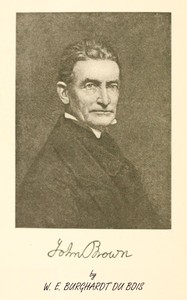
John Brown
by Du Bois, W. E. B. (William Edward Burghardt)
English
1659h 19m read
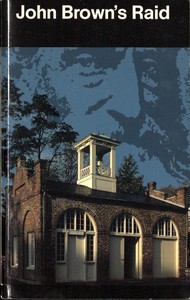
John Brown's Raid
by United States. National Park Service
English
333h 36m read
John Brown the Hero: Personal Reminiscences
by Winkley, J. W. (Jonathan Wingate)
English
254h 46m read

John Brown, Soldier of Fortune: A Critique
by Wilson, Hill Peebles
English
2333h 53m read
The Strange Story of Harper's Ferry, with Legends of the Surrounding Country
by Barry, Joseph
English
1303h 55m read