*** START OF THE PROJECT GUTENBERG EBOOK 55997 ***
[Illustration: _Mount Vernon, the Home of George Washington
Purchased (in 1858), restored and maintained by the
Mt. Vernon Ladies’ Association of the Union_]
[Illustration: _Houdon’s Bust of Washington
Made at Mount Vernon, 1785_]
Copyright, 1928, by the
Mount Vernon Ladies’ Association
[Illustration: _Portrait of George Washington
By Chas. Wilson Peale
Bequeathed to the Mount Vernon Ladies’ Association by the late Miss
Jane Boudinot, in whose family’s possession the portrait has been
since 1788, when it was painted (from life) for Elias Boudinot_]
_An Illustrated Handbook of Mount Vernon_
_Contents_
The Home of Washington 3
Entrance Gateway 6
West Front 7
North Lodge Gate 8
West Lodge Gate 9
Mount Vernon Mansion 10
Portico 11
Mansion Interior, Central Hall 12
West Parlor 13
Miss Custis’s Music Room 14
Family Dining Room 15
Banquet Hall 16
Kitchen 17
Mrs. Washington’s Sitting Room 18
Library 19
Washington’s Room 20
Mrs. Washington’s Room 21
Second Floor 22
Third Floor 23
Flower Garden 24
Servants’ Quarters 24
Kitchen Garden 25
The Carpenter Shop 26
The Spinning House 26
The Barn 27
Summer House 28
Mount Vernon Wharf 29
Old Tomb 30
New Tomb 31
The Regents and Vice-Regents of the Mount Vernon Ladies’
Association of the Union 32
Pohick Church 34
_The Home of Washington_
In the year 1674, by Grant of Lord Culpeper, a tract of 5,000 acres
situated on the west bank of the Potomac River, fifteen miles south of
the present city of Washington, became the property of John Washington
and Nicholas Spencer. Half of this tract, or 2,500 acres, descended to
Lawrence Washington, who, in 1743, built a residence, and named the
estate Mount Vernon, after the British Admiral under whom he had served.
At Lawrence Washington’s death (1752) the estate passed to the ownership
of his half brother, George Washington, who subsequently extended the
boundaries of his plantation until they included nearly 8,000 acres.
In 1799, when George Washington died, the property passed as a life
interest to his widow, by whose will most of the household effects in
the Mansion were, after her death, divided among her four grandchildren.
Thus was the original furniture of Mount Vernon eventually scattered.
Bushrod Washington, John Augustine Washington, and John A. Washington,
Jr., followed in succession as owners of Mount Vernon.
These gentlemen furnished the Mansion according to their individual
tastes and made such minor changes as papering or painting the interior
to preserve it.
Mr. John A. Washington, Jr., the last-named owner, in accordance with
the wishes of his family, to effect a permanent preservation of the
property, offered to sell it to the National Government. This project
failed, as did likewise an attempt to sell to the Commonwealth of
Virginia.
At this juncture the Mount Vernon Ladies’ Association of the Union was
(in 1856) organized by Miss Pamela Cunningham, of South Carolina. Her
appeal to the patriotism of all American women (December, 1853) resulted
in the accomplishment of her noble project in spite of many obstacles.
The purchase money was raised by contributions from thirty-three States
of the Union, materially aided by Hon. Edward Everett, of Massachusetts,
in lecturing for the benefit of the Mount Vernon Fund, his contributions
amounting to $68,294.59. In 1858, this Association was thus enabled to
buy from Mr. John A. Washington, Jr., and his heirs, 202 acres of the
Mount Vernon estate, including the Tomb, the Mansion, attendant
buildings, the wharf, etc., the price paid being $200,000 and interest.
In 1887, an important addition of 33½ acres was achieved through the
generosity of the late Mr. Jay Gould, of New York; in 1893 Mr. Christian
Heurich, of Washington, D. C., gave three acres, and in 1925 Mr. and
Mrs. Hugh McK. Landon, of Indianapolis, kindly donated about 23 acres
more, thus making the total area owned by the Mt. Vernon Ladies’
Association approximately 260 acres.
Among the many who visit Mount Vernon few are aware of what an expensive
undertaking is involved in its restoration and preservation, nor do they
realize on entering its gates that they, too, contribute their mite
toward the maintenance of this historic place. To retain the appearance
of that simplicity which characterized the home life of Washington, to
preserve the reverence of his hallowed shrine and at the same time meet
the protective requirements incident to increasing wear and tear, has
been a problem to be mastered.
[Illustration: _Mt. Vernon when purchased by the Mt. Vernon Ladies’
Association of the Union_]
While the employment of modern appliances has become a necessity, they
are masked as much as possible to avoid glaring contrast with the more
primitive methods of olden times. For instance: to guard against
accidents by fire all former and dangerous means of heating the
buildings have given place to a hot water system, the mains of which
pass through subterranean conduits from a distant (underground) boiler
room, and all buildings are lighted by a system of low voltage
electricity installed under the direction of Mr. Edison.
Fire engines—both chemical and steam—are at hand for instant use, and
guards are on constant watch both day and night. Powerful modern pumps
(electrically driven) supply water from an artesian well for household
purposes, and keep the emergency reservoirs filled. Sanitary drainage is
an essential improvement. Bogs and swamps have been reclaimed to make
the place more healthful.
Threatening landslides near the Mansion and old Tomb were averted by the
costly expedient of tunneling the hill to drain the water-bearing sands,
the source of disastrous surface movements which had caused Washington
much alarm.
The Association owes to the interest and patriotism of Prof. Charles
Sprague Sargent, of Arnold Arboretum, the replacement and listing of
many trees planted at Mount Vernon during Washington’s lifetime. A plan
with the position of all historic trees is shown in the guide book.
Successful efforts have been made to replant both the grounds of the
Mansion and the surrounding woods according to Washington’s original
idea as expressed in his diary.
The repair and safeguarding of buildings and their contents, attention
to the old trees Washington loved, his roads, walks, gardens and
grounds, continually tax the energy and resources of the Association.
That the steadfast aim and purpose, thus successfully achieved, is
appreciated by those who are familiar with it, is admirably expressed in
the concluding chapter of Owen Wister’s “Seven Ages of Washington.” The
following is a brief quotation:
“_Everything, every subject, every corner and step, seems to bring him
close. It is an exquisite and friendly serenity which bathes one’s
sense, that seems to be charged all through with some meaning or
message of beneficence and reassurance, but nothing that could be put
in words. Turn into his garden and look at the walls and walks he
planned, the box hedges, the trees, the flower beds, the great order
and the great sweetness everywhere. You may spend an hour, you may
spend a day, wandering, sitting, feeling this gentle power of the
place; you may come back another time, it meets you, you cannot dispel
it by familiarity. And as you think of this you bless the devotion of
those whose piety and care treasure the place and keep it sacred and
beautiful._
[Illustration: Pistol]
_Unless otherwise designated all the tailpieces in this book represent
original furnishings in use at Mount Vernon during the lifetime of
General Washington._”
_Entrance Gateway_
[Illustration: Entrance Gateway]
Through this gateway Washington and his guests were accustomed to pass
from the main road. The original paving of cobble stones has been found
intact and now visitors to Mount Vernon enter as in Washington’s time.
An attractive bowling-green extends from the gateway nearly to the
Mansion. To the left are the flower gardens, and occupying a similar
area to the right is the kitchen garden. These gardens are surrounded by
brick walls, the coping of which was restored, in 1895, by Mrs.
Christine Blair Graham, late Vice-Regent for Missouri.
Many of the old trees still bordering the original driveway have been
identified from Washington’s diary as having been planted by him or his
guests. Notably among them may be seen, near the Flower Garden entrance,
two handsome tulip poplars—the tallest trees of the group.
On the lawn facing the Potomac are three large pecan trees which, as
seedlings, came from Thomas Jefferson and were planted by Washington.
[Illustration: _Sword worn by General Washington when he resigned
Command of the Army in 1783, when he was inaugurated first President
of U.S. 1789 and on all subsequent State occasions_]
_West Front_
[Illustration: West Front]
The west front of the Mansion was the point of approach for visitors, as
indicated by the large central door bearing the original brass knocker.
On this side is a spacious court, flanked by several frame buildings—to
the right, the kitchen, butler’s house, smoke-house, laundry and coach
house, while to the left are the office, the gardener’s house, carpenter
shop and spinning house.
The kitchen and office are joined to the main building by colonnades,
which were rebuilt in 1874 by the combined efforts of the late
Vice-Regents for six States, as follows: Mrs. Hannah Blake Farnsworth,
Michigan; Miss Lily Lytle Macalester, Pennsylvania; Miss Emily L.
Harper, Maryland; Mrs. Lucy H. Pickens, South Carolina; Mrs. Maria
Brooks, New York, and Mrs. Nancy Wade Halstead, New Jersey.
The sun-dial in the center of the court marks where one stood in the
days of Washington. The posts and chains are a restoration of an
original feature, accomplished in 1917 by the Vice-Regent for Oregon.
[Illustration: _Sword worn by Col. Washington as aide to General
Braddock_]
_North Lodge Gate_
[Illustration: North Lodge Gate]
In 1892, when the Electric Railway located its terminal station near the
north boundary of the estate, an entrance at that point had to be
arranged for visitors. It is called the North Lodge Gate to distinguish
it from the private entrance half a mile away. To provide an appropriate
walkway to and from the Mansion, funds were raised, in 1894, by the late
Vice-Regent for Pennsylvania—Mrs. Lippincott—and stone flagging laid the
entire distance of 1,100 feet.
In 1900 the Vice-Regent for Texas, with financial aid from Masons and
other patriotic citizens of her State, erected the present lodges and
gateway.
The Vice-Regent for Texas and Mrs. Charles Denby, late Vice-Regent for
Indiana, in 1905, jointly arranged for the building of a brick wall
along the boundary next the North Lodge Gate, copying walls built
elsewhere on the estate by General Washington.
The gradual extension of this wall is being accomplished through
contributions of individual members of the Association.
[Illustration: _Dress sword worn by General Washington_]
_West Lodge Gate_
[Illustration: West Lodge Gate]
This was the main approach, in olden times, from the much-traveled
highway to the homestead, which can be faintly discerned through a vista
cleared by Washington. A carriage road winds through intervening valleys
to the Mansion, nearly a mile distant. Extending from this gateway to
the Potomac River is the part of the estate purchased in 1858 by the
Mount Vernon Ladies’ Association.
In 1890 Mrs. Martha Mitchell, late Vice-Regent for Wisconsin, provided
funds for renovating these ancient lodges which once sheltered
Washington’s gatekeepers.
[Illustration: _Duplicate of the coach in which General Washington
made his tour of the South in 1791. The coach shown at Mount Vernon
is a contemporary replica made by the same maker._]
_Mount Vernon Mansion
Construction_
[Illustration: Mount Vernon Mansion]
George Washington enlarged the original residence, built in 1743 by
Lawrence Washington, by increasing its length and height, completing
these improvements in 1786. In construction, its foundation walls are of
stone and brick; the framework oak; the sheathing Virginia pine, cut,
painted, and sanded to resemble stone. The roof is of cypress shingles.
A spacious and well-drained cellar underlies the whole house.
When the Mount Vernon Ladies’ Association came into possession of this
property, the Mansion and other buildings were found unfurnished and
greatly in need of repairs. The story of the restoration cannot be
adequately told in this short sketch.
The work was divided by allotting to each Vice-Regent a room or some
other feature to be restored. Gradually many articles of original
furniture and personal effects of the Washingtons were recovered, some
by gift, others by purchase, while several articles had only been
loaned. The work has been attended with gratifying success and still
progresses. Every effort is directed toward the complete restoration of
each feature and condition as it existed in the days of Washington.
The “Ha Ha” wall, shown in illustration, was, in 1896, rebuilt upon its
original foundations through funds raised by Miss Amy Townsend, late
Vice-Regent for New York.
_Portico_
[Illustration: Portico]
The east portico extends the full length of the Mansion, and its roof is
supported by eight square wooden columns reaching a height of two
stories. An ornamental balustrade surmounts the porch roof and adds
height to its pleasing effect. The tiles with which the floor is still
paved were imported from England by Washington and laid in 1786. In
1915, 1512 tiles were obtained from the original quarry to replace those
so badly worn as to be unsafe. The dimensions of the pavement are:
length, 95 feet 5 inches; width, 14 feet 6 inches, and, according to
Washington’s own measurements, this pavement is 124 feet 10½ inches
above the river level. The columns and balustrade are faithful
reproductions of the original, the foundations of the building have been
strengthened, weakened timbers renewed, and steel girders hidden between
floors and ceiling for increased stability.
In 1895 accurate architectural drawings of interior and exterior details
were secured by Mrs. Mary T. Leiter, late Vice-Regent for Illinois, and
placed in safe deposit vaults in Washington.
In 1909 a skeleton model of the Mansion, showing its unique
construction, was lodged for safe keeping with the National Museum.
The outlook from the porch commands extensive and picturesque views of
the broad Potomac.
_Mansion Interior, Central Hall_
[Illustration: Mansion Interior, Central Hall]
The view of the hall is from the East, showing the main stairway. To the
right, doors open into the Music Room and Parlor; to the left are Mrs.
Washington’s Sitting Room and the Family Dining Room. The paneling of
the hall is as Washington improved it in 1775, and the original colors
are restored. The pattern of wall paper above the stairs has been worked
out from recently discovered fragments of what was originally there. The
key of the Bastile, presented to Washington by Lafayette, in 1789, hangs
in a glass case between the doors on the left, while opposite may be
seen the brass hunting horn received from the same friend.
Four of Washington’s swords are shown: one he used during the Braddock
campaign; his dress sword (damaged by rust); a sword made for him at the
Solingen Armory in Prussia; the silver-mounted blade he wore when
resigning command of the army (1783) and at his inauguration in 1789. In
the case with the swords is the sash worn by General Braddock when he
was wounded, and given by him to Col. George Washington, who was then
his aide-de-camp.
By his will, Washington bequeathed to each of his nephews one of his
five swords, with the following injunction: “Not to unsheathe them for
the purpose of shedding blood except it be in self-defence or in the
defence of their country and its rights, and in the latter case to keep
them unsheathed and prefer falling with them in their hands to the
relinquishment thereof.”
[Illustration: Clock]
The clock on the stairs belonged to Lawrence Washington, the founder of
Mount Vernon, and the hall lantern was given to him (1745) by Admiral
Vernon, for whom the estate was named.
The marble top table belonged to Washington, and the engravings are
reprints of originals. The restoration of the hall is due to the
Vice-Regents for Michigan and Alabama.
_West Parlor_
[Illustration: West Parlor]
The finish of this room—its wall panels, mantel and ceiling
decoration—is a restoration of the original. Washington’s coat of arms
is carved above the mantel, and his crest and initials are cast in the
heavy fireback. An old painting empaneled over the mantel is said to
represent a part of Admiral Vernon’s fleet at Cartagena, and was sent by
the Admiral to Lawrence Washington in 1743 as an acknowledgment of
Washington’s courtesy in naming the estate for him.
The rug in the room is particularly interesting. It was woven by order
of Louis XVI, and sent by him as a present to General Washington.
The curtain cornices are original, also the mirror, now restored to its
former position between the windows, and two rosewood stands for vases
of flowers.
[Illustration: _Key of the Bastile_]
Among articles of interest gathered by Mrs. Mary T. Leiter, late
Vice-Regent for Illinois, are several of the old chairs and a reprint of
an engraving of Louis XVI.
The old piano and handsome French clock are contemporaneous but did not
belong to the Washingtons.
[Illustration: Tripod stand]
_Miss Custis’s Music Room_
[Illustration: Miss Custis’s Music Room]
The prominent feature here is the harpsichord which General Washington
presented to Nellie Custis. The stool belonged to Nellie Custis. There
is also some of her embroidery on an old tambour frame. Here may be seen
Washington’s flute, and two of his chairs; also a citra, or guitar, and
a card table, which belonged to relatives of Washington. A quaint old
music book has been found, bearing the autograph of Martha Parke Custis,
the step-daughter of Washington.
This room is in the care of the Vice-Regent for Ohio.
[Illustration: _Tambour Frame_]
_Family Dining Room_
[Illustration: Family Dining Room]
The Vice-Regent for South Carolina has furnished this room. The
Heppelwhite sideboard is original. All the furniture is of ancient form.
The rug is of the Washington period, as are also the handsome brass
andirons and fender. In the corner cupboard may be seen a reproduction
of the set of china presented to Mrs. Washington by the officers of the
French fleet. The stucco ornamentation of the ceiling is the same as
applied in 1775. An iron fireback bearing the Fairfax coat of arms,
stands in the fireplace. It was at the Fairfax home, “Belvoir,”
adjoining Mount Vernon. The clock and rose jars were Lafayette’s.
[Illustration: Fireplace]
A pair of handsome pitchers, Washington’s wine chest, two wine decanters
and glass, all of which are authentic, have been lately added, also a
chair Washington owned at Cambridge.
Here also is a portrait of David Rittenhouse, which he presented to
Washington.
The memorial tablet to Miss Cunningham, of South Carolina, founder of
the Mount Vernon Ladies’ Association, has been appropriately given place
here with her portrait.
_Banquet Hall_
[Illustration: Banquet Hall]
This well-proportioned room was planned by Washington for the banquet
hall, and this addition, in 1776, completed the enlargement of his
house—now dignified by the name of Mansion. The decoration throughout is
as he designed it; the present fresh appearance of which is the result
of restorations (1884) by Mrs. Justine Van Renssalaer Townsend, then
Vice-Regent for New York. An attractive feature is the handsome marble
mantel presented to Washington in 1785 by an English admirer, Mr. Samuel
Vaughan. The model of the Bastile is made from a stone from the renowned
French prison and was sent over by Lafayette in 1793. A plateau for
ornamenting his dining table was imported by Washington. Among original
relics recovered for this room are the clock, candlesticks and vases,
two quaint silver bracket lamps, a footstool from Washington’s pew in
Old Trinity Church, N. Y., and paintings of the Great Falls of the
Potomac. There are portraits of Washington by Gilbert Stuart and C. W.
Peale, also a supposed portrait of Washington at the age of twenty-one,
recently sent over from Glasgow as a loan.
[Illustration: Fireplace]
_Kitchen_
[Illustration: Kitchen]
A tour of inspection among the several buildings develops points of
interest at every turn. The family kitchen bears evidence, in the
proportions of its huge fireplace with ponderous crane and bake-oven
near by, of what feasts were prepared therein. The interior of this room
was renovated by Miss Amy Townsend, late Vice-Regent for New York, who
obtained for it furnishings of contemporaneous date. The smoke-house
stood near, and in season was filled with hams and meats for smoking.
The larder was well stocked, tradition states, as indeed it must have
been, to feed so many guests in addition to the regular household and
large retinue of servants.
[Illustration: _Powder Horn used by one of the “Minute Men” at the
Battle of Concord
Charleville Musket brought by General Lafayette in 1777
Shot Gun sometime used by General Washington_]
_Mrs. Washington’s Sitting Room_
[Illustration: Mrs. Washington’s Sitting Room]
The sitting room is in the care of the Vice-Regent for Georgia. The card
table and mirror are original Washington articles of considerable
interest. The silver candlestick was owned by Col. William Washington, a
nephew of the General. It was presented by Mrs. Georgia Page Wilder,
late Vice-Regent for Georgia. The four prints representing the siege of
Gibraltar are those which hung at Mount Vernon in the days of
Washington. The window curtains and hangings are of the type of that
period. A mahogany chair, presented to Washington by Lafayette, is a
recent acquisition. One of the candles moulded for the illumination of
Yorktown in 1776 is a relic of unique character. A couch which once
belonged to Nellie Custis has recently been added.
[Illustration: Candlestand]
[Illustration: Candle chimney]
[Illustration: Candlestand]
_Library_
[Illustration: Library]
This is one of the rooms General Washington added. It was designed for
his study, as shown by the old book shelves built in the wall. Back of
opposite doors were shelf rooms for his maps and manuscripts. The bulk
of Washington’s library he bequeathed to Judge Bushrod Washington, from
whose nephews the books were purchased by a syndicate (1848) and
deposited in the Boston Athenæum, where they still are. Some scattered
volumes recovered by the Mount Vernon Ladies’ Association include
several bearing the genuine signature of George Washington. The names of
his mother and members of his family appear upon others. An ancient
Bible presented to Washington by the Bishop of Sodor and Man, together
with twenty volumes of French History of Travel, sent him by Rochambeau,
besides many duplicates of Washington’s books, give interesting
character to the present collection. Mrs. Washington’s Prayer Book, and
a Family Bible with record of George Washington’s birth and baptism,
have lately been acquired.
The “tambour desk” and chair, which Washington used in this room, and
left by his will to Dr. Craik, were purchased and restored to Mount
Vernon in 1905.
An original mahogany bookcase and a globe are valued relics. The
pictures, tambour desk and articles of old-fashioned furniture have been
assembled by the Vice-Regent for Massachusetts.
A map of Mount Vernon, and of one of Washington’s plantations, carefully
platted by himself, are to be seen here, likewise “rubbings” of brasses
on tombs of the Washingtons in England.
_Washington’s Room_
[Illustration: Washington’s Room]
The room in which Washington died (December 14, 1799) deservedly
attracts special notice. The items of original furniture and personal
effects assembled here add much to the impressive character. A piece
associated with Washington’s childhood is his mother’s arm chair.
Washington’s bureau, washstand, mirror, etc., are shown. Most prominent
of all is the bedstead on which the great and good man breathed his
last.
The mahogany shaving stand presented to Washington by the first French
minister to this country was recently recovered.
Washington’s crest and initials are wrought in the old fireback. Above
the mantel hangs an engraving, one of a set of five entitled “Sorrows of
Werther,” which belonged to the General. The arm chair at the foot of
the bed was used in this room when Washington died.
The two small rooms connecting with the bed-chamber were used
respectively as linen closet and dressing room. Between the doors of
these rooms now hangs the frame of Washington’s thermometer.
To the efforts of the late Mrs. Emma Reed Ball, for 44 years the
Vice-Regent for Virginia, is due, in great measure, the restoration of
this room.
[Illustration: Chest]
_Mrs. Washington’s Room_
[Illustration: Mrs. Washington’s Room]
The only room on the third floor historically interesting is the one in
which Mrs. Washington died. It must be explained that, following a
custom then prevalent, Washington’s room was closed after his death, and
his widow selected this attic room because from its only window she
could see the tomb where her husband’s body lay. Mrs. Washington died
here, May 22, 1802.
Until recently, the only original relics in this room were the washstand
presented by Mrs. Martha Mitchell, late Vice-Regent for Wisconsin, and
dressing glass presented by Mrs. George R. Goldsborough, late
Vice-Regent for Maryland. Now have been added a tea set owned by Mrs.
Washington, a christening bowl which belonged to Mrs. Washington’s
family—the Dandriges—and an old bed quilt believed to have been used at
Mount Vernon.
The care of this room fell to the Vice-Regent for Wisconsin.
[Illustration: Basket]
_Second Floor_
Ascending by the stairway, from the main hall to the second floor, six
bedrooms are found—the Lafayette Room, River Room, Guest Chamber, Nellie
Custis Room, Green Room and Mrs. Washington’s Room. These are in charge
of the Vice-Regents representing, respectively, the following States:
New Jersey, Pennsylvania, Delaware, Maryland, West Virginia and
Virginia. The first five rooms contain but little original furniture,
although all the articles are of historic importance and represent the
correct type of the Colonial period.
In the Nellie Custis Room are a table cover and footstool embroidered by
her.
[Illustration: LAFAYETTE ROOM]
[Illustration: RIVER ROOM]
[Illustration: GUEST ROOM]
[Illustration: GREEN ROOM]
[Illustration: NELLIE CUSTIS ROOM]
[Illustration: Candlestick]
_Third Floor
Spare rooms, third floor, furnished by States named_
The four spare rooms on this floor are furnished appropriately after the
old style, by the Vice-Regents for District of Columbia, Connecticut,
North Carolina and Maine. Formerly the Washingtons found these rooms
useful as spare chambers for the accommodation of guests. The good old
custom of keeping “open house” attracted to Mount Vernon hosts of their
friends traveling North and South, and doubtless the Mansion was often
taxed to its fullest capacity.
In the linen room on this floor may be seen Washington’s military chest,
and camp equipments used by his troops when serving with General
Braddock.
One of the chairs in the room furnished by Mrs. Mary T. Barnes, the late
Vice-Regent for District of Columbia, belonged to Washington.
[Illustration: FOOTSTOOL—CRIB IN NELLIE CUSTIS ROOM]
[Illustration: SPARE ROOM]
[Illustration: SPARE ROOM]
[Illustration: SPARE ROOM]
[Illustration: SPARE ROOM]
[Illustration: Urns]
_Flower Garden_
[Illustration: Flower Garden]
Among all of the charms and attractions of the home of Washington, not
one can excel the beautiful flower garden—an ideal spot—with its
memories of General and Lady Washington who planned it, the prim box
hedges indelibly marking the walks and flower beds now as in the past.
Distinguished guests were invited to plant trees, shrubs and flowers,
mementos of their visits, many of which plantings have been perpetuated.
Lafayette and Jefferson have leafy monuments here, while the roses named
by Washington for his mother and Nellie Custis are daily sought by
pilgrims.
At the end of the long walk in the garden is a little octagonal
structure known as the school room, in which it is supposed the Custis
children were taught their early lessons.
The greenhouse restorations are due to the efforts of Mrs. Martha
Mitchell, Mrs. Lucy H. Pickens and Miss Mary Lloyd Pendleton, late
Vice-Regents, respectively, for Wisconsin, South Carolina and Ohio.
_Servants’ Quarters_
Two long, red-roofed buildings adjoin the conservatory. These were the
quarters for a limited number of servants needed at the Mansion.
Comfortable cabins to house the rest of the negroes were located at
convenient distances about the plantation. Both these quarters were in
ruins, but have been restored—the West Quarters by Mrs. Jennie Meeker
Ward, late Vice-Regent for Kansas in 1890, and the East Quarters by Miss
Amy Townsend, late Vice-Regent for New York in 1897. While in exterior
form these buildings are identical with their original appearance, the
interior of each has been somewhat changed to meet existing
requirements.
_Kitchen Garden_
[Illustration: Kitchen Garden]
George Washington’s fondness for experimental gardening is shown by the
care with which he arranged these terraced beds for growing small fruits
and vegetables for the use of his household. His diary is evidence
enough of the eagerness with which he selected the best-known seed and
exploited, with more or less success, the latest improvements in
horticulture.
Sheltered by the walls he built, scions of original fig bushes still
flourish, while bordering the cross walk to the gate, the box hedge he
planted has developed to unusual proportions.
[Illustration: _Compass_]
[Illustration: _Spy Glass_]
[Illustration: _Tripod_]
_The Carpenter Shop_
[Illustration: The Carpenter Shop]
In Washington’s day this building was the center of much activity, it
being the all-essential tool-shop for general repairs.
In outward appearance its original character and purpose are still
preserved.
Its interior arrangement, however, has been altered to meet the urgent
need of a fireproof repository for valuable records of the Association.
_The Spinning House_
The spinning house, north of the court, is where much material was
prepared for clothing the servants, and where rag carpets and other
fabrics were woven for the use of the family. Flax, cotton, wool and
silk were there put through the various processes of spinning and
weaving by skilled servants. The old loom, wheels, reels, and flaxbrake
were recovered by Mrs. Rebecca B. Flandrau, late Vice-Regent for
Minnesota, 1892.
[Illustration: _Hunting Horn_]
[Illustration: _Presented to General Washington by Agricultural
Society of South Carolina as a Premium for raising the largest
Jackass
1790_]
_The Barn_
[Illustration: The Barn]
The oldest building here is the barn, erected in 1733 by Washington’s
father. The bricks are said to have been brought from England, and they
were laid in strong mortar made of oyster-shell lime. The shingle roof
of this building was renewed in 1874, the cost being shared by all the
members of the Association. Substantial renovations of the interior were
effected in 1896-7 by Mrs. William Ames, the late Vice-Regent for Rhode
Island.
Here were stabled the coach horses and saddle horses. Washington’s
famous traveling coach, the “White Chariot,” as he called it, was kept
in the coach house near by. This coach house was restored in 1894 by the
Vice-Regent for Michigan, who was also instrumental in obtaining (1901)
the ancient vehicle now here, a duplicate of the original carriage owned
by Washington. From well-founded tradition it is believed that General
and Mrs. Washington frequently rode in this coach.
[Illustration: WAGON JACK MADE IN 1764 BY PETER MOHR
YORK, PA.
USED IN REPAIRING WASHINGTON’S CARRIAGES AT MT. VERNON]
An original feature restored as Washington had it, was a “Ha Ha” wall
extending from opposite the barn to the summer house, also a screen wall
flanking the road from the barn to the kitchen.
_Summer House_
[Illustration: Summer House]
On the brow of the steep hillside, south of the Mansion, overlooking the
river, is the summer house. It commands a beautiful view of the broad
Potomac, with the Maryland hills beyond, and doubtless was a favorite
resort in “ye olden time.” It was restored in 1886, the funds being
raised by the Vice-Regent for Louisiana, Mrs. Ida A. Richardson, through
the school children of her State. The deep cellar under the summer house
was intended for an ice house, but it is believed to have been abandoned
as such when another was constructed in a more convenient locality north
of the Mansion.
The wooded slope below the summer house was utilized by Washington for
his deer paddock, which was restored and stocked with Virginia deer, in
1887, by the sons of the late Mrs. Robert Campbell, Vice-Regent for
Missouri.
[Illustration: _Telescope_]
_Mount Vernon Wharf_
[Illustration: Mount Vernon Wharf]
Washington shipped much of his farm produce and supplies by water—and
today are landed at the wharf many pilgrims to the home and tomb of the
“Father of His Country.” The custom of tolling a bell as a mark of
respect to his memory is hallowed by its observance for more than a
century.
The present covering of the wharf was provided in 1891 by Mrs. Phoebe A.
Hearst, late Vice-Regent for California. The parapet for protection of
the public was given by the Vice-Regent for the State of Washington, and
the Iron Gates by the Vice-Regent for Oregon.
Mrs. Hearst also caused to be built the substantial stone sea-wall as a
necessary protection to the wooded shore against wave-wash during
storms. This important improvement has enabled the Association to
complete the filling of neighboring ravines and swamps, thus
accomplishing a valuable reclamation now utilized as meadow land.
From the wharf a road and walk lead to the Tomb and Mansion.
[Illustration: _Land Barometer_]
[Illustration: _Ship Barometer_]
_Old Tomb_
[Illustration: Old Tomb]
On the edge of the hill, midway down the road leading to the wharf, an
iron-railed enclosure marks where Washington’s remains rested from 1799
until 1831. This vault was constructed by George Washington, but later,
believing it to be insecure, he planned another tomb, which his
executors built. In April, 1831, all bodies in the old vault were
transferred to the new tomb.
The cause of apprehension as to safety of the old structure, resulting
in its abandonment, was the frequency of landslides near it.
Extensive repairs to the old tomb were made in 1887 by the Vice-Regent
for Michigan. The iron railing was found necessary for protection.
In 1908 the broad flight of brick steps was completely rebuilt, the
original material, suitable for the purpose, being used again.
[Illustration: Washington Family]
_New Tomb_
“_Within this enclosure rest the remains of General George Washington._”
[Illustration: New Tomb]
This plain statement empaneled above the doorway of the rigidly simple
brick vault at once marks its importance. Within the doubly ironed
portals may be seen two marble sarcophagi; that on the right contains
the body of General Washington and the one on the left the remains of
his wife. At the rear of this open vault, and connected with it through
a square iron door, is an inner vault containing the remains of many of
the Washington family. To the memory of Bushrod Washington and John
Augustine Washington, successors of the General (whose bodies are within
the vault), marble shafts were erected in front of the tomb, while to
the east are the graves of Nellie Custis and her daughter.
Washington selected this site for the vault only a few months before he
died. His executors carried out his explicit directions as to
construction, which accounts for its extreme simplicity. Because of
Washington’s distaste for display, the character of this tomb should
never be changed. Extensive repairs for the preservation of the original
structure were made by the Association in 1886. To this hallowed spot
come pilgrims from every land.
[Illustration: Within this Enclosure Rest the remains of _Gen^l
George Washington_.]
_The Regents and Vice-Regents of the Mount Vernon Ladies’ Association
of the Union Since its Organization, with Dates of Appointment_
MISS ANN PAMELA CUNNINGHAM, _Regent_, 1853-1873
(Resigned, 1873; Died, May 1, 1875)
_Vice-Regents_
1858— 1 Mrs. Anna Cora Ogden Ritchie resigned 1866 Virginia
2 Mrs. Alice H. Dickinson resigned 1859 North Carolina
3 Mrs. Philoclea Edgeworth Eve died 1889 Georgia
4 Mrs. Octavia Walton Levert died 1877 Alabama
5 Mrs. Catharine A. McWillie died 1872 Mississippi
6 Mrs. Margaretta S. Morse resigned 1872 Louisiana
7 Mrs. Mary Rutledge Fogg died 1872 Tennessee
8 Mrs. Elizabeth M. Walton resigned 1858 Missouri
9 Miss Mary Morris Hamilton resigned 1866 New York
10 Mrs. Louisa Ingersoll resigned 1865 Massachusetts
Greenough
11 Mrs. Abba Isabella Little resigned 1866 Maine
12 Mrs. Catherine Willis Murat died 1867 Florida
13 Mrs. Mary Booth Goodrich resigned 1864 Connecticut
14 Miss Phœbe Ann Ogden died 1867 New Jersey
15 Mrs. Alice Key Pendleton resigned 1863
died 1885 Ohio
16 Mrs. Abby Wheaton Chace died 1892 Rhode Island
17 Mrs. Jane Maria van Antwerp died 1870 Iowa
18 Mrs. Margaret Ann Comegys died 1888 Delaware
19 Mrs. Hannah Blake Farnsworth died 1879 Michigan
20 Mrs. Sarah King Hale resigned 1861 New Hampshire
21 Mrs. Martha Mitchell died 1902 Wisconsin
22 Mrs. Rosa Vertner Johnson died 1894 Kentucky
Jeffries
Mrs. Janet M. C. Riggs, District of
_Acting Vice-Regent_ Columbia
1859— 23 Mrs. Elizabeth Willard Barry died 1883 Illinois
24 Mrs. Sarah J. Sibley died 1869 Minnesota
25 Mrs. Mary Pepperell Jarvis resigned 1878 Vermont
Cutts
26 Miss Lily Lytle Macalester died 1891 Pennsylvania
27 Mrs. Magdalen G. Blanding resigned 1884 California
28 Mrs. Harriet B. Fitch died 1880 Indiana
29 Mrs. Sarah H. Johnson died 1866 Arkansas
30 Mrs. Letitia Harper Walker died 1908 North Carolina
1860— 31 Mrs. Ann Lucas Hunt died 1878 Missouri
32 Mrs. Mary Chesnut died 1867 South Carolina
1866— 33 Mrs. Margaret J. M. Sweat died 1908 Maine
34 Miss Emily L. Harper died 1891 Maryland
35 Mrs. Lucy H. Pickens died 1899 North Carolina
36 Mrs. M. E. Hickman resigned 1874 Nevada
37 Mrs. M. A. Stearns resigned 1873 New Hampshire
38 Mrs. Emily R. M. Hewson resigned 1872 Ohio
39 Miss Ella Hutchins resigned 1872 Texas
1867— 40 Mrs. Janet M. C. Riggs resigned 1868
died 1871 District of
Columbia
41 Mrs. Maria Brooks resigned 1876 New York
42 Mrs. Matilda W. Emory resigned 1873 District of
Columbia
1868— 43 Mrs. Nancy Wade Halsted died 1891 New Jersey
44 Mrs. Nannie C. Yulee died 1884 Florida
1870— 45 Mrs. Susan E. Johnson Hudson died 1913 Connecticut
46 Mrs. Ella Bassett Washington died 1898 West Virginia
1872— 47 Mrs. Betsy C. Mason died 1873 Virginia
48 Mrs. A. P. Dillon resigned 1873
died 1898 Iowa
49 Mrs. C. L. Scott resigned 1878 Arkansas
1873— 50 Mrs. William Balfour resigned 1875 Mississippi
51 Mrs. Mary T. Barnes died 1912 District of
Columbia
52 Mrs. David Urquehart resigned 1876 Louisiana
53 Miss M. E. Maverick resigned 1873 Texas
MRS. LILY LYTLE MACALESTER BERGHMAN, _Second Regent_
(Made Acting Regent, 1873; Regent, June, 1874; Died, 1891)
1874— 54 Mrs. Emma Read Ball died 1918 Virginia
55 Mrs. Aaron V. Brown died 1889 Tennessee
1875— 56 Mrs. Elizabeth Lytle died 1890 Ohio
Broadwell
57 Mrs. John P. Jones resigned 1876 Nevada
1876— 58 Mrs. Jennie Meeker Ward died 1910 Kansas
59 Mrs. Justine van Rensselaer died 1912 New York
Townsend
1878— 60 Mrs. J. Gregory Smith resigned 1884 Vermont
1879— 61 Miss Alice M. Longfellow Massachusetts
62 Mrs. Robert Campbell died 1882 Missouri
1880— 63 Mrs. Ida A. Richardson died 1910 Louisiana
1882— 64 Mrs. Ella S. Herbert died 1884 Alabama
_Vice-Regents_
1885— 65 Mrs. Elizabeth B. Adams resigned 1919
Rathbone
died 1923 Michigan
66 Mrs. Mary T. Leiter died 1913 Illinois
67 Mrs. Janet de Kay King died 1896 Vermont
68 Mrs. Elizabeth Woodward died 1987 Kentucky
1888— 69 Miss Harriet Clayton Comegys Elected 1909 Delaware
Regent
70 Mrs. Fannie Gilchrist Baker died 1901 Florida
1889— 71 Mrs. Alice Hill died 1908 Colorado
72 Mrs. Rebecca B. Flandrau died 1912 Minnesota
73 Mrs. Phœbe A. Hearst died 1919 California
1890— 74 Mrs. A. R. Winder died 1906 New Hampshire
1891— 75 Mrs. Georgia Page Wilder died 1914 Georgia
MRS. JUSTINE Van RENSSELAER TOWNSEND, _Third Regent_
(Elected Temporary Regent, December, 1891; Regent, June, 1892; Died, 1912)
1893— 76 Mrs. Geo. R. Goldsborough resigned 1904
died 1906 Maryland
77 Mrs. J. Dundas Lippincott died 1894 Pennsylvania
78 Miss Mary Lloyd Pendleton resigned 1897 Ohio
79 Mrs. Philip Schuyler resigned 1894 New York
80 Mrs. Christine Blair Graham died 1915 Missouri
81 Mrs. Francis Stevens Conover died 1914 New Jersey
82 Mrs. Mary Polk Yeatman Webb died 1917 Tennessee
1894— 83 Miss Lelia Herbert died 1897 Alabama
1895— 84 Mrs. Robert H. Clarkson resigned 1900
died 1902 Nebraska
85 Mrs. William Ames died 1904 Rhode Island
86 Miss Amy Townsend died 1920 New York
1896— 87 Mrs. Charles Custis Harrison died 1922 Pennsylvania
88 Mrs. Thomas S. Maxey Texas
1897— 89 Mrs. James E. Campbell resigned 1902 Ohio
1900— 90 Mrs. Robert D. Johnston Alabama
91 Mrs. Charles F. Manderson died 1916 Nebraska
92 Mrs. Eugene van Rensselaer died 1924 West Virginia
1901— 93 Mrs. John Julius Pringle died 1921 South Carolina
94 Mrs. William F. Barret died 1920 Kentucky
95 Mrs. Charles Denby died 1906 Indiana
1905— 96 Mrs. Henry W. Rogers Maryland
1907— 97 Mrs. Lewis Irwin died 1916 Ohio
98 Miss Mary F. Failing Oregon
99 Mrs. Eliza Ferry Leary Washington
100 Mrs. Frances Jones Ricks resigned 1914 Mississippi
101 Mrs. J. Carter Brown Rhode Island
1909— 102 Mrs. A. B. Andrews died 1915 North Carolina
MISS HARRIET CLAYTON COMEGYS, _Fourth Regent_
(Elected, May, 1909; Resigned, May, 1927; Died, August, 1927)
1911— 103 Mrs. Alice H. Richards Maine
104 Miss Mary Evarts resigned 1923 Vermont
105 Mrs. Antoine Lentilhon Foster Delaware
1912— 106 Miss Annie Ragan King Louisiana
107 Miss Jane A. Riggs District of
Columbia
1913— 108 Mrs. Horace Mann Towner Iowa
109 Mrs. Thomas Palmer Denham Florida
1914— 110 Miss Harriet L. Huntress died 1922 New Hampshire
111 Mrs. Charles Eliot Furness Minnesota
112 Mrs. Benjamin D. Walcott Indiana
113 Mrs. Lucien M. Hanks Wisconsin
1915— 114 Miss Annie Burr Jennings Connecticut
115 Mrs. Willard Hall Bradford New Jersey
1916— 116 Mrs. Charles Nagel Missouri
117 Mrs. George A. Carpenter Illinois
118 Miss Mary Govan Billups Mississippi
119 Mrs. John V. Abrahams resigned 1921 Kansas
1919— 120 Mrs. William Ewen Shipp North Carolina
121 Mrs. Horton Pope Colorado
122 Mrs. Charles J. Livingood Ohio
123 Mrs. Jefferson Randolph Georgia
Anderson
124 Mrs. Celsus Price Perrie resigned 1922 Arkansas
1920— 125 Mrs. Horace van Deventer Tennessee
126 Mrs. Charles Stetson Wheeler California
1921— 127 Mrs. William Ruffin Cox died 1925 Virginia
1922— 128 Mrs. Henry Gold Danforth New York
1923— 129 Miss Mary Mason Scott Kentucky
130 Mrs. Alexander C. Troup Nebraska
131 Mrs. John Reynolds Shelton Kansas
132 Mrs. Edward H. Parker died 1924 Michigan
1924— 133 Miss Mary Evarts Vermont
1924— 134 Miss Virginia Leigh Porcher South Carolina
135 Mrs. William R. Mercer resigned 1928 Pennsylvania
136 Miss Constance Lee Peterkin West Virginia
1925— 137 Mrs. Benjamin S. Warren Michigan
1927— 138 Mrs. Fairfax Harrison Virginia
MRS. ALICE H. RICHARDS, _Fifth Regent_
(Elected, May, 1927)
_Pohick Church_
[Illustration: Pohick Church]
The parish church of Mount Vernon, six miles distant from the Mansion,
was built during the years 1768-70 from the plans drawn by General
Washington, who was a member of the building committee. He was a
vestryman of the parish for twenty years, and for the greater part of
that time was a regular attendant at service, never permitting, as
Bishop Meade says, “the weather or company to keep him from church.”
Subsequently Washington became connected with Christ Church, Alexandria,
where today his family pew may be seen as he used it.
Pohick Church, during the Civil War, was occupied at times by Federal
troops and all the interior furnishings were destroyed. The late
Vice-Regent for Michigan, Mrs. E. B. A. Rathbone, worked untiringly in
the interest of the church, and to her are due the large additions to
its endowment fund. Through the efforts of Miss Amy Townsend, former
Vice-Regent for New York, both interior and exterior have been
faithfully restored to their original appearance at the time of
Washington.
[Illustration: _To The
Unknown Dead
of
Pohick Church
This
Tribute of Respect
is paid the
Many Parishioners
Buried in this Hallowed Churchyard
The Records are Lost & the Graves
Cannot now be Identified
1925_]
[Illustration: MOUNT VERNON
Modification of an original map drawn by George Washington]
[Illustration: MAP OF THE ESTATE OF MOUNT VERNON, VA.
Photographed, Engraved and Printed by The Beck Engraving Co.,
Phila.]
Transcriber’s Notes
—Retained publication information from the printed edition: this eBook
is public-domain in the country of publication.
—Corrected a few palpable typos.
—In the text versions only, text in italics is delimited by
_underscores_.
End of the Project Gutenberg EBook of An Illustrated Handbook of Mount Vernon, by
Mount Vernon Ladies' Association
*** END OF THE PROJECT GUTENBERG EBOOK 55997 ***
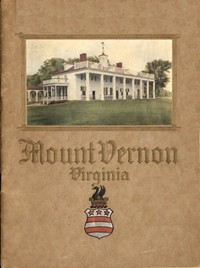
An Illustrated Handbook of Mount Vernon, the Home of Washington
Subjects:
Download Formats:
Excerpt
[Illustration: _Mount Vernon, the Home of George Washington
Purchased (in 1858), restored and maintained by the
Mt. Vernon Ladies’ Association of the Union_]
[Illustration: _Houdon’s Bust of Washington
Made at Mount Vernon, 1785_]
Copyright, 1928, by the
Mount Vernon Ladies’ Association
[Illustration: _Portrait of George Washington
By Chas. Wilson Peale
Bequeathed to the Mount Vernon Ladies’ Association by the late Miss
Jane...
Read the Full Text
— End of An Illustrated Handbook of Mount Vernon, the Home of Washington —
Book Information
- Title
- An Illustrated Handbook of Mount Vernon, the Home of Washington
- Author(s)
- Mount Vernon Ladies' Association of the Union
- Language
- English
- Type
- Text
- Release Date
- November 19, 2017
- Word Count
- 7,015 words
- Library of Congress Classification
- E300
- Bookshelves
- Browsing: Culture/Civilization/Society, Browsing: History - American, Browsing: Travel & Geography
- Rights
- Public domain in the USA.
Related Books
Famous Colonial Houses
by Hollister, Paul M. (Paul Merrick)
English
674h 28m read
Signers of the Declaration - Historic Places Commemorating the Signing of the Declaration of Independence
English
1388h 48m read
Quaint and Historic Forts of North America
by Hammond, John Martin
English
1259h 2m read
Historic Shrines of America - Being the Story of One Hundred and Twenty Historic Buildings and the Pioneers Who Made Them Notable
by Faris, John T. (John Thomson)
English
1790h 54m read

Homes of American Statesmen; With Anecdotical, Personal, and Descriptive Sketches
by Various
English
2095h 54m read

George Washington: Farmer - Being an Account of His Home Life and Agricultural Activities
by Haworth, Paul Leland
English
1137h 33m read