*** START OF THE PROJECT GUTENBERG EBOOK 73891 ***
THE LETTERS
OF
ROBERT BROWNING
AND
ELIZABETH BARRETT BARRETT
1845-1846
_WITH PORTRAITS AND FACSIMILES_
IN TWO VOLUMES
VOL. II.
SECOND IMPRESSION
LONDON
SMITH, ELDER, & CO., 15 WATERLOO PLACE
1899
[All rights reserved]
[Illustration: Walker & Boutall ph. sc.
=_Elizabeth Barrett Browning_=
_From an oil painting by Gordigiani_
London: Published by Smith, Elder & Co. 15, Waterloo Place.]
ILLUSTRATIONS
PORTRAIT OF ELIZABETH BARRETT BROWNING _Frontispiece_
_After the picture by Gordigiani_
FACSIMILE OF LETTER OF ELIZABETH BARRETT BARRETT 566
THE LETTERS OF
ROBERT BROWNING
AND
ELIZABETH BARRETT BARRETT
1845-1846
_R.B. to E.B.B._
Wednesday.
[Post-mark, March 25, 1846.]
You were right to bid me never again wish my poor flowers were
‘diamonds’—you could not, I think, speak so to my heart of any diamonds.
God knows my life is for you to take just as you take flowers:—these last
please you, serve you best when plucked—and ‘my life’s rose’ ... if I
dared profane _that_ expression I would say, you have but to ‘stoop’ for
it. Foolish, as all words are.
You _dwell_ on that notion of your being peculiarly isolated,—of
any kindness to you, in your present state, seeming doubled and
quadrupled—what do I, what could anyone infer from _that_ but, most
obviously, that it was a very fortunate thing for such kindness, and that
the presumable bestower of it got all his distinction from the fact that
no better ... however, I hate this and cannot go on. Dearest, believe
that under ordinary circumstances, with ordinary people, all operates
differently—the _imaginary_ kindness-bestower with his ideal methods of
showing and proving his love,—_there_ would be the rival to fear!
Do not let us talk of this—you always beat me, beside, turn my own
illustrations into obscurations—as in the notable case of the _cards_ and
stakes and risks—I suppose, (to save my vanity!) that if I knew anything
about cards, I might go on, a step at least, with my argument. I once
heard a dispute in the street between the proprietor of an oyster-stall
and one of his customers—_who_ was in the wrong ... that is, _who_ used
the clenching argument you shall hear presently, I don’t remember; but
_one_ brought the other to this pass—‘_Are_ there three shells to an
oyster?’—Just that! If there _were not_—he would clearly be found in the
wrong, that was all!—‘_Why_,’ ... began the other; and I regret I did
not catch the rest—there was such a clear possibility contained in that
‘_Why_ ... an oyster _might_ have three shells!’
Note the adroitness,—(calm heroic silence of the _act_ rather than
a merely attempted _word_,) the mastery with which, taking up Ba’s
implied challenge, I _do_ furnish her with both ‘amusement and
instruction’—moreover I will at Ba’s bidding amuse and instruct the world
at large, and make them know all to be known—for my purposes—about ‘Bells
and Pomegranates’—yes, it will be better.
I said rather hastily that my head ‘ached’ yesterday: that meant, only
that it was more observable because, after walking, it is usually
well—and I had been walking. To-day it is much better; I sit reading
‘Cromwell,’ and the newspaper, and presently I shall go out—all will be
better now, I hope—it shall not be my fault, at least, depend on that.
All my work (work!)—well, such as it is, it is done—and I scarcely care
_how_—I shall be prouder to begin one day—(may it be soon!—) with your
hand in mine from the beginning—_that_ is a very different thing in
its effect from the same hand touching mine _after_ I had begun, with
no suspicion such a chance could befall! I repeat, both these things,
‘Luria’ and the other, are _manqué_, failures—the life-incidents ought to
have been acted over again, experienced afresh; and I had no inclination
nor ability. But one day, my siren!
Let me make haste and correct a stupid error. I spoke to my father
last night about that tragedy of the _studs_—I was wholly _out_ in the
story—the sufferer was his _uncle_, and the scene should have been laid
on the Guinea coast. À propos of errors—the copyright matter is most
likely a case of copy-_wrong_ by reporters—I never heard of it before—to
be sure, I signed a petition of Miss Martineau’s superintending once on a
time—but long ago, ‘I, I, I’—how, dear, all important ‘I’ takes care of
himself, and issues bulletins, and corrects his wise mistakes, and all
this to ... just ‘one of his readers of the average intelligence.’ Are
you that, so much as that, Ba? I will tell you—if you do not write to
me all about _your_ dear, dearest self, I shall sink with shame at the
recollection of what this letter and its like prove to be—_must_ prove to
be! Dear love, tell me—that you walk and are in good spirits, and I will
try and write better. May God bless my own beloved!—Ever her own
R.
I think, am all but sure, there is a _Mrs._ Hornblower something!
Just a minute to say your second note has come, and that I _do_ hate
_hate_ having to write, not kiss my answer on your dearest mouth—kindest,
dearest—to-morrow I will try—and meantime—though Ba by the fire will not
be cold at heart, cold _of_ heart, at least, and I will talk to _her_ and
more than talk—My dearest, dearest one!
_E.B.B. to R.B._
Wednesday Evening.
[Post-mark, March 26, 1846.]
But if people half say things,—intimate things, as when your disputant in
the street (you are felicitous, I think, in your street-_experiences_)
suggested the possible case of the ‘three oyster shells to an
oyster,’—why you must submit to be answered a little, and even confuted
at need. Now just see—
... ‘Got all his distinction from the fact that no better’ ... That is
precisely _the fact_ ... _so_ ... as you have stated it, and implied ...
‘The fact that no better’ ... _is to be found in the world—no better_ ...
_none_. There, is the peculiar combination. The isolation on one side,
and the best in the whole world, coming in for company! And I ‘dwell’
upon it, never being tired ... and if _you_ are tired already, you must
be tired of _me_, because the ‘dwelling’ has grown to be a part of me and
I cannot put it away. It is my especial miracle _à moi_. ‘No better?’ No,
indeed! not in the seven worlds! and just _there_, lies the miraculous
point.
But you mean it perhaps otherwise. You mean that it is a sort of _pis
aller_ on my part. A _pis aller_ along the Via lactea ... is _that_ what
you mean?
Shall I let you off the rest, dearest, dearest? though you deserve ever
so much more, for implying such monstrous things, and treading down all
my violets, so and so. What did I say to set you writing so? I cannot
remember at all? If I ‘dwell’ on anything, beloved, it is that I feel
it strongly, be sure—and if I feel gratitude to you with the other
feelings, you should not grudge what is a happy feeling in itself, and
not dishonouring (I answer for _that_) to the object of it.
Now I shall tell you. I had a visitor to-day—Mrs. Jameson; and when she
went away she left me ashamed of myself—I felt like a hypocrite—_I_, who
was not born for one, I think. She began to talk of you ... talked like
a wise woman, which she is ... led me on to say just what I might have
said if I had not known you, (she, thoroughly impressed with the notion
that we two are strangers!) and made me quite leap in my chair with a
sudden consciousness, by exclaiming at last ... ‘I am really glad to
hear you speak so. Such appreciation’ &c. &c. ... imagine what she went
on to say. Dearest—I believe she rather gives me a sort of credit for
_appreciating you_ without the jealousy ‘_de métier_.’ Good Heavens ...
how humiliating some conditions of praise are! She _approved_ me with
her eye—indeed she did. And this, while we were agreeing that you were
the best ... ‘none better’ ... none so good ... of your country and age.
Do you know, while we were talking, I felt inclined both to laugh and to
cry, and if I had ‘given way’ the least, she would have been considerably
astounded. As it was, my hands were so marble-cold when she took leave
of me, that she observed it and began making apologies for exhausting
me. Now here is a strip of the ‘world,’ ... see what colour it will turn
to presently! We had better, I think, go farther than to your siren’s
island—into the desert ... shall we say? Such stories there will be! For
certain, ... I shall have seen you just once out of the window! Shall you
not be afraid? Well—and she talked of Italy too—it was before she talked
of _you_—and she hoped I had not given up the thoughts of going there.
To which I said that ‘I had not ... but that it seemed like scheming
to travel in the moon.’ She talked of a difference, and set down the
moon-travelling as simple lunacy. ‘And simply lunatical,’ ... I said, ...
‘my thoughts, if chronicled, would be taken to be, perhaps’—‘No, no, no,!
...’ she insisted ... ‘as long as I kept to the earth, everything was to
be permitted to me.’
How people talk at cross-purposes in this world ... and act so too! It’s
the very spirit of worldly communion. Souls are gregarious in a sense,
but no soul touches another, as a general rule. I like Mrs. Jameson
nevertheless—I like her _more_. She appreciates you—and it is _my_ turn
to praise for that, now. I am to see her again to-morrow morning, when
she has the goodness to promise to bring some etchings of her own, her
illustrations of the new essays, for me to look at.
Ah—your ‘_failures_ in “Luria” and the “Tragedy”’—Proud, we should all
be, to fail exactly so.
Dearest, are you better indeed? Walk ... talk to the Ba in the chair ...
go on to be better, ever dearest. May God bless you! Ah ... the ‘I’s.’
You do not see that the ‘I’s’—as you make them, ... all turn to ‘yous’
by the time they get to me. The ‘I’s’ indeed! How dare you talk against
my eyes? For me, I was going down-stairs to-day, but it was wet and
windy and I was warned not to go. If I am in bad or good spirits, judge
from this foolish letter—foolish and wise, both!—but not melancholy,
_anywise_. When one drops into a pun, one might as well come to an end
altogether—it can’t be worse with one.
Nor can it be better than being
Your own
‘_No better_’!!.
_R.B. to E.B.B._
Thursday Morning.
[Post-mark, March 26, 1846.]
Sometimes I have a disposition to dispute with dearest Ba, to wrench her
simile-weapons out of the dexterous hand (that is, try and do so) and
have the truth of things my way and its own way, not hers, if she _be_
Ba—(observe, I say nothing about ever meeting with remarkable success in
such undertakings, only, that they _are_ entered on sometimes). But at
other times I seem as if I must lie down, like Flush, with all manner of
coral necklaces about my neck, and two sweet mysterious hands on my head,
and so be forced to hear verses on me, Ba’s verses, in which I, that am
but Flush of the lower nature, am called loving friend and praised for
not preferring to go ‘coursing hares’—with ‘other dogs.’ So I will lie
now, as you will have it, and say in Flush-like tones (the looks that
are dog’s tones)—I don’t _don’t_ know how it is, or why, or what it all
will end in, but I am very happy and what I hear must mean right, by the
music,—though the meaning is above me,—and here _are_ the hands—which
I may, and will, look up to, and kiss—determining not to insist any
more this time that at Miss Mitford’s were sundry dogs, brighter than
‘brown’—See where, just where, Flush stops discreetly! ‘Eternity’ he
would have added, ‘but stern death’ &c. &c.
I treat these things lightheartedly, as you see—instead of seriously,
which would at first thought seem the wiser course—‘for after all, she
will find out one day’ &c. _No_, dearest,—I do not fear that! Why make
uneasy words of saying simply I shall continue to give you my best
flowers, all I can find—if I bring violets, or grass, when you expected
to get roses,—you will know there were none in my garden—that is all.
And for you—as I may have told you once,—as I tell myself always—you are
_entirely_ what I love—not just a rose plucked off with an inch of stalk,
but presented as a rose should be, with a green world of boughs round:
all about you is ‘to my heart’—(to my mind, as they phrase it)—and were
it not that, of course, I know _when_ to have done with fancyings and
merely flitting permissible ‘inly-sayings with heart-playing,’ and when
it is time to look at the plain ‘best’ through the lock of ‘good’ and
‘better’ in circumstances and accident—I _do_ say—were the best blessing
of all, the blessing I trust and believe God intends, of your perfect
restoration to health,—were _that_ not so palpably best,—I should catch
myself desirous that your present state of _unconfirmed_ health might
never pass away! Ba _understands_, I know! After all, it will always
stay, that luxury,—if but through the memory of what has been, and _may_
recur, that deepest luxury that makes my very heartstrings tremble in the
thought of—that I shall have a right, a duty—where in another case, they
would be uncalled for, superfluous, impertinent. Tapers ordinarily burn
best _let alone_, with all your light depending on the little flame, the
darkest night but for it—why, stand off—what good can you do, so long as
there is no extraordinary evil to avert, breaking down of the candlestick
to prevent? But _here_—there will be reason as well as a delight beyond
delights in always learning to close over, all but holding the flame in
the hollow of one’s hand! I shall have a right to think it is not mere
pleasure, merely for myself, that I care and am close by—and that which
thus is called ‘not for myself’ _is_, after all, in its essence, _most_
for myself,—why it is a luxury, a last delight!—
In the procurement of which there will be this obstacle, or grave matter
to be first taken into consideration,—that the world will ‘change
colour’ about it, will have its own thoughts on the subject I have my
own thoughts, on _its_ subject, the affairs of the world and pieces of
perfect good fortune it approves of, and stamps for enviable—and on the
whole the world has quite a right to treat me unceremoniously,—I having
begun it. As for the ‘seeing out of the window once’—those who knew
nothing about us but our names had better think _that_ was the way, than
most others; and the half-dozen who knew a little more, may hear the true
account if they please, when they hear anything—those who know _all_, all
necessary to know, will understand my 137 letters here and my 54 visits
... see, I write as if this were to be pleaded to-night—would it were! As
if you had to write the _meeting_ between Hector and Andromache, not the
parting! By the way, dearest, what enchanted poetry all your translations
for Miss Thomson are—as Carlyle says! ‘Nobody can touch them, get at
them!’ How am I the better for Nonnus, and Apuleius? Now, do you serve me
well _there_?
I shall hear to-morrow of Mrs. Jameson’s etchings and discourses? and
more good news of you, darling? I am _quite_ well to-day—going out with
my sister to dine next door—then, over to-morrow, and the letter, will
come Saturday, my day.
Bless you, my own best, dearest—I am your own.
R.
_E.B.B. to R.B._
Thursday.
[Post-mark, March 27, 1846.]
Not the ‘dexterous hand’—say rather the good cause. For the rest, when
you turn into a dog and lie down, are you not afraid that a sorcerer
should go by and dash the water and speak the formula of the old tales.
‘If thou wert born a dog, remain a dog, but if not’.... If not ... _what_
is to happen? Aminè whipped her enchanted hounds ever so often in the day
... ah, what nonsense happens!
Dear, dearest, how you ‘take me with guile,’ or with stronger than guile,
... with that divine right you have, of talking absurdities! You make it
clear at last that I am so much the better for being bad ... and _I_ ...
shall I laugh? _can_ I? is it possible? The words go too deep ... as deep
as death which cannot laugh! And I am forbidden to ‘dwell’ on the meaning
of them—I! There are ‘_I’s_’ to match yours!
I shall have the right of doing one thing, ... (passing to _my_ rights).
I shall hold to the right of remembering to my last hour, that _you_, who
might well have passed by on the other side if we two had met on the road
when I was riding at ease, ... _did not_ when I was in the dust. I choose
to remember _that_ to the end of feeling. As for _men_, you are not to
take me to be quite ignorant of what they are worth in the gross. The
most blindfolded women may see a little under the folds ... and I have
seen quite enough to be glad to shut my eyes. Did I not tell you that I
never thought that any man whom _I_ could love, would stoop to love _me_,
even if I attained so far as the sight of such. Which I _never attained_
... until ... until! Then, that _you_ should care for me.!! Oh—I hold
to my rights, though you overcome me in most other things. And it is my
right to love you better than I could do if I were more worthy to be
loved by you.
Mrs. Jameson came late to-day, ... at five—and was hurried and could
not stay ten minutes, ... but showed me her etchings and very kindly
left a ‘Dead St. Cecilia’ which I admired most, for its beautiful
lifelessness. She is not to be in town again, she said, till a month
has gone—a month, at least. Oh—and ‘quite uneasy’ she was, about my
‘cold hands’—yesterday—she thought she had put me to death with
over-talking!—which made me smile a little ... ‘subridens.’ But she
is very kind and affectionate; and you were right to teach me to like
her—and now, do you know, I look in vain for the ‘steely eyes’ I fancied
I saw once, and see nothing but two good and true ones.
Well—here is an end till Saturday. It is too late ... or I could go on
writing ... which I do not hate indeed. Talking of hating, ... ‘what you
love entirely’ means _that you love entirely_ ... and no more and no
less. If it did not mean so, I should be unhappy about the _mistake_ ...
but to ‘love entirely’ is not a mistake and cannot pass for one either on
earth or in Heaven. May God bless you, ever dearest. Such haste I write
in—as if the angels were running up Jacob’s ladder!—or _down_ it, rather,
at this close!
Your own
BA.
_R.B. to E.B.B._
Friday.
[Post-mark, March 27, 1846.]
‘Qui laborat, orat’; so they used to say, and in that case I have been
devotional to a high degree this morning. Seven holes did I dig (to keep
up inversions of style)—seven rose-trees did I plant—(‘Brennus’—and
‘Madame Lafarge’! are two names I remember; very characteristic of old
Gaul and young France—) and, for my pains, the first fruits, first
blossoms some two or three months hence, will come, and will go to
dearest Ba who first taught me what a rose really _was_, how sweet it
might become with superadded memories of the room and the chair and the
vase, and the cutting stalks and pouring fresh water ... ah, my own
Ba!—And did you think to warn me out of the Flush-simile by the hint of
Aminè’s privilege which it would warrant? If the ‘ever so much whipping’
should please you!... And beside it was, if I recollect, for the
creature’s good, those poor imprisoned sisters, all the time. Moreover, I
_was_ ‘born’ all this and more, that you _will_ know, at least—and only
walked glorious and erect on two legs till dear Siren, an old friend of,
and deep in the secrets of Circe, sprinkled the waters ... perhaps on
those roses—No, before that!—
Well, to-morrow comes fast now—and I shall trust to be with you my
beloved—and, first, you are to show me the portrait, remember.
I am glad you like Mrs. Jameson—do not _I_ like her all the better, much
the better! But it is fortunate I shall not see her by any chance just
now—she would be sure to begin and tell me about _you_—and if my hands
did not turn cold, my ear-tips would assuredly turn red. I daresay that
St. Cecilia is the beautiful statue above her tomb at Rome; covered with
a veil—affectingly beautiful; I well remember how she lies.
Now good-bye; and to-morrow! Bless you, ever dear, dearest Ba—
Your own
R.
_R.B. to E.B.B._
Sunday Afternoon.
Now, I think, if I had been ‘pricked at the heart’ by dear, dearest Ba’s
charge yesterday,—if I did not _certainly_ know why it might sometimes
seem better to be silent than to speak,—should I not be found taking
out three or four sheets of paper, and beginning to write, and write!
My own, dearest and best, it is _not_ so,—not wrong, my heart’s self
tells me,—and tells you! But, for the rest, there shall never pass a day
till my death wherein I will not write to you, so long as you let me,
excepting those days I may spend with you, partly or ... altogether—Love,
shall I have very, very long to be hating to write, yet writing?
You see sometimes how I _talk_ to you,—even in mere talking what a
strange work I make of it. I go on thinking quite another way; so,
generally, I often have thought, the little I _have_ written, has been
an unconscious scrawling with the mind fixed somewhere else: the subject
of the scrawl may have previously been the real object of the mind on
some similar occasion,—the very thing which _then_ to miss, (finding in
its place _such another_ result of a still prior fancy-fit)—which then to
see escape, or find escaped, was the vexation of the time! One cannot,
(or _I_ cannot) _finish up_ the work in one’s mind, put away the old
projects and take up new. Well, this which I feel on so many occasions,
do you wonder if—if!
I should write on _this_ for ever! It is all so strange, such a dream as
you say!
Indeed, love, the picture is not like, nor ‘flattered’ by any means,
yet I don’t know how it is, I cannot be cross with it—there is a touch
of truth in the eyes,—would one have believed _that_? I know my own way
with portraits; how I let them master eventually my most decided sense
of their _unlikeness_—and _this_ finds me very prepared—still—it seems
already more faithful than last night ... how do I determine where the
miraculousness ends? (My Mother was greatly impressed by it—and my
sister, coming (from my room) into the room where I was with a visitor,
before whom she could not speak English, said ‘_È molto bella_’!)
Here is my ‘proof’—I found it as I expected. I fear I must put you
to that trouble of sending the other two acts—I hate to think of so
troubling you! But do not, Ba, hurry yourself—nor take extraordinary
pains—what is worth your pains in these poor things? I like Luria
better now,—it may do, now,—probably because it _must_; but, as I said
yesterday, I seriously hope and trust to shew my sense of gratitude for
what is promised my future life, by doing some real work in it; work of
yours, as through you. I have felt, not for the first time now, but from
the beginning vexed, foolishly vexed perhaps, that I could not without
attracting undesirable notice, ‘dedicate,’ in the true sense of the word,
this or the last number to you. But if any really worthy performance
_should_ follow, then my mouth will be unsealed. All is forewritten!
I wonder if you have ventured down this sunny afternoon—tell me how you
are, and, once again, do not care about those papers; any time will do.
So, bless you, my own—my all-beloved Ba.
Your R.B.
_E.B.B. to R.B._
Sunday Evening.
[Post-mark, March 30, 1846.]
Dearest, I have been trying your plan of thinking of you instead of
writing, to-day, and the end is that I am driven to the last of the
day and have scarcely room in it to write what I would. Observe if you
please, how badly ‘the system works,’ as the practical people say. Then
Mr. Kenyon came and talked,—asked when I had seen you, ... and desired,
‘if ever I saw you again,’ (ah, what an ‘if ever’!) that I would enquire
about the ‘blue lilies’ ... which I satisfied him were of the right
colour, on your authority.
But, to go to the ‘Tragedy’—I am not to admire it ... am I? And you
really think that anyone who can think ... feel ... could help such an
admiration, or ought to try to help it? Now just see. It is a new work
with your mark on it. That is ... it would make some six or sixteen
works for other people, if ‘cut up into little stars’—rolled out ...
diluted with rain-water. But it is your work as it is—and if you do not
care for _that, I_ care, and shall remember to care on. It is a work
full of power and significance, and I am not at all sure (not that it
is wise to make comparisons, but that I want you to understand how I am
impressed!)—I am not at all sure that if I knew you now first and only by
these two productions, ... ‘Luria’ and the ‘Tragedy,’ ... I should not
involuntarily attribute more power and a higher faculty to the writer
of the last—I _should_, I think—yet ‘Luria’ is the completer work....
I know it very well. Such thoughts, you have, in this second part of
the Tragedy! a ‘Soul’s Tragedy’ indeed! No one _thinks_ like you—other
poets talk like the merest women in comparison. Why it is full of hope
for both of us, to look forward and consider what you may achieve with
that combination of authority over the reasons and the passions, and
that wonderful variety of the plastic power! But I am going to tell
you—Certainly I think you were right (though you know I doubted and cried
out) I think now you were right in omitting the theological argument you
told me of, from this second part. It would clog the action, and already
I am half inclined to fancy it a little clogged in one or two places—but
if this is true even, it would be easy to lighten it. Your Ogniben (here
is my only criticism in the ways of objection) seems to me almost too
wise for a crafty worldling—tell me if he is not! Such thoughts, for the
rest, you are prodigal of! That about the child, ... do you remember how
you brought it to me in your first visit, nearly a year ago?
Nearly a year ago! how the time passes! If I had ‘done my duty’ like the
enchanted fish leaping on the gridiron, and seen you never again after
that first visit, you would have forgotten all about me by this day. Or
at least, ‘that prude’ I should be! Somewhere under your feet, I should
be put down by this day! Yes! and my enchanted dog would be coursing
‘some small deer’ ... some unicorn of a ‘golden horn,’ ... (_not_ the
Kilmansegg gold!) out of hearing if I should have a mind to whistle ever
so, ... but out of harm’s way perhaps besides.
Well, I do think of it sometimes as you see. Which proves that I love
you better than myself by the whole width of the Heavens; the sevenfold
Heavens. Yet I think again how He of the heavens and earth brought us
together so wonderfully, holding two souls in His hand. If my fault was
in it, my _will_ at least was not. Believe it of me, dear dearest, that
I who am as clear-sighted as other women, ... and not more humble (as
to the approaches of common men), was quite resolutely blind when _you_
came—I could not understand the possibility of _that_. It was too much
... too surpassing. And so it will seem to the end. The astonishment, I
mean, will not cease to be. It is my own especial fairy-tale ... from the
spells of which, may you be unharmed...! How one writes and writes over
and over the same thing! But day by day the same sun rises, ... over, and
over, and nobody is tired. May God bless you, dearest of all, and justify
what has been by what shall be, ... and let me be free of spoiling any
sun of yours! Shall you ever tell me in your thoughts, I wonder, to get
out of your sun? No—no—Love keeps love too safe! and I have faith, you
see, as a grain of mustard-seed!
Your own
BA.
_Say how you are ... mind!_
_R.B. to E.B.B._
Monday.
[Post-mark, March 30, 1846.]
‘The system,’ Ba?—Were _you_ to stop writing, as if for my reasons? Could
_I_ do without your letters, on any pretence? You say well—it was a
foolish fancy, and now—have done with it!
And do you think you _could_ have refused to see me after that visit? I
mean, do you think I did not resolve so to conduct myself; so to ‘humble
myself and go still and softly all my days’; that your suspicion should
needs insensibly clear up ... (if it had been _so_ pre-ordained, and that
no more was in my destiny,) and at last I should have been written down
your friend for ever, and let come and stay, on that footing. But you
really think the confirmation of that sentence must have been attended
with such an effect—that I should have forgotten you or _so_ remembered
you? You think that on the strength of such a love as _that_, I would
have ventured a month of my future life ... much less, the whole of it?
_Not you_, Ba,—my dearest, dearest!
How you surprise me (what ever may you think) by liking that ‘Tragedy’!
It seems as if, having got out of the present trouble, I shall never fall
into its fellow—I will strike, for the future, on the glowing, malleable
metal; afterward, _filing_ is quite another process from hammering, and a
more difficult one. Note, that ‘filing’ is the wrong word,—and the rest
of it, the wrong simile,—and all of it, in its stupid wrongness very
characteristic of what I try to illustrate—oh, the better, better days
are before me _there_ as in all else! But, do you notice how stupid I am
to-day? My head begins again—that is the fact; it is better a good deal
than in the morning—its œconomy passes my comprehension altogether, that
is the other fact. With the deep joy in my heart below—this morning’s
letter here—what _does_ the head mean by its perversity? I will go out
presently and walk it back to its senses.
Dearest, did you receive my ‘proof’ this morning? Do not correct nor
look at it, nor otherwise trouble yourself—there is plenty of time. But
what day is ours to be? Of that you say nothing, and of my poems a great
deal, ‘O _you_ inverter!’ But _I_ am, rather, a _re_verter—and _you_
shall revert, and mind the natural order of things, and tell me first of
all—(in to-night’s letter, dearest?)—that it is to be on—?
Now let me kiss you here—my own Ba! Being stupid makes _some_ difference
in me—I am no poet, nor prose-writer, nor rational ‘Christian, pagan
nor man’ this afternoon—but I _am_ now—as yesterday—as the long ‘year
ago’—your own, utterly your own! May God bless you! (I wondered yesterday
if you had gone down-stairs—‘_no_’ I infer!)
_E.B.B. to R.B._
Monday.
Dearest, I send you back the two parts of the ‘Soul’s Tragedy,’ and the
proof. On a strip of paper are two or three _inanities_ in the form of
doubts I had in reading the first part. I think upon the whole that you
owe me all gratitude for the help of so much high critical wisdom—of
which this paper is a fair proof and expression.
The proof, the printed ‘Luria’ I mean, has more than pleased me. It
is noble and admirable; and grows greater, the closer seen. The most
exceptionable part, it seems to me, is Domizia’s retraction at the last,
for which one looks round for the sufficient motive. But the impression
of the whole work goes straight to the soul—it is heroic in the best
sense.
I write in such haste. Oh—I should have liked to have read again the
second part of the ‘Tragedy,’ but dare not keep it though you give me
leave. I think of the printers—and you will let me have the proof, in
this case also.
Your letter shall be answered presently. Your sister’s word about the
picture proves very conclusively how wonderfully like it must be as a
portrait! _That_ would settle the question to any ‘Royal Commission’ in
the world—only we need not go so far.
Dearest I end here—to begin again in another half hour. Ah—and you
promise, you promise—
No time—but ever your own
BA.
_E.B.B. to R.B._
Monday Evening.
[Post-mark, March 31, 1846.]
Ah now, now, you _see_! Held up in _that_ light, it _is_ ‘a foolish
fancy,’ and unlawful, besides! ‘Not on any _pretence_’ will you do
without letters ... _you_! And you count it among the imaginations of
your heart that _I_ could do without them better perhaps ... _I_ ... to
whom they are sun, air, and human voices, at the very lowest calculation?
Why seriously you don’t imagine that your letters are not a thousand
times more to _me_, than letters ever in the world were before, ... since
‘Heaven first brought them to some wretch’s aid.’ If you _do_, that _is_
the foolishest fancy of all.
So foolish as to be unspeakable. We will ‘have done with it,’ as you say.
I only ‘revert’ and innocently,—I do not reproach, even ignorantly,—I
am grateful rather. What you said in the letter this morning made me
grateful, ... and oh, so glad! so glad! what you said, I mean, of writing
to me on every day that we did not meet on otherwise. That promise seemed
to bring us nearer (see how I think of letters!), nearer than another
word _could_, though you went for it to the end of the universe, ...
that other word. So I accept the promise as a promise of pure gold, and
thank _you_, as pure gold too, which you are, or rather far above. Only
my own dearest, you shall not write long letters ... long letters are out
of the agreement.... I never feel the need of length _as long as_ the
writing is _there_ ... just the little shred of the Koran, to be gathered
up reverently ... (Inshallah!)—and then, you shall not write at all when
you are not well ... no, you shall not. So remember from henceforth!
Shall I whip my enchanted dog when he is so good and true?—not to say
that the tags of the lashes (do you call them _tags_?) would swing round
and strike me on the shoulders? Dearest, you are the best, kindest in
the world—such a very, very, _very_ ‘little lower than the angels!’ If
ever I could take advantage of your goodness and tenderness, to teaze and
vex you, ... what should _I_ be, I have been seriously enquiring to-day,
head on hand, when I had sent away ‘Luria.’ For I sent it away, and the
‘Tragedy’ with it, and I hope you will have all to-morrow morning at the
furthest, ... before you get this letter. There was a note too in the
parcel.
As to dedications ... believe me that I would not have them if I could
... that is, _even if there were no dangers_. I could not bear to have
words from you which the world might listen to ... I mean, that to be
commended of you in _that_ way, on _that_ ground, would make me feel cold
to the heart. Oh no, no, no! It is better to have the proof-sheet as I
had it this morning: it is the better glory ... as glory!
‘Not worthy of my pains’ ... you are right! But infinitely worthy of my
_pleasures_—such pleasure as I could gather from nothing else, except
from your letters and your very presence. Do you think that anything
beside in the whole world could bring pleasure to me, as pleasure goes,
... anything like reading your poetry? My ‘pains’ indeed! It is a
felicitous word—‘je vous en fais mon compliment.’
And all this time, while I write lightly, you are not well perhaps—you
were unwell when you wrote to me; you were unwell a little yesterday
even. Say how you are to-morrow—do not forget. For the cause of the
unwellness, _I_ see it, if _you_ do not. It was _the proof-correcting_—I
expected that you would be unwell—it is no worse than was threatened to
my thoughts. The comfort is that all this wrong work is coming to an
end, and that it is covenanted between us for you to _rest absolutely_
from henceforth. Say how you are, dearest dearest. And walk, walk. For
me, I have not been down-stairs. It has been cold—too cold for _that_, I
thought.
Oh—but I wanted to say one thing! That wonderful picture, which is
not much like a unicorn or even ‘a whale’ ... but rather more perhaps
than like _me_, you may keep for weeks or months, if you choose; if it
continues ‘not to make you cross.’ Because _it_ does not flatter, and
because _you_ do not flatter (in such equal proportions!): the sympathy
accounts for the liking ... or absence of dislike; on your part.
Now I must end. _Thursday_ is our day, I think:—and it is easier to say
‘Thursday’ on Monday than on Saturday ... a discovery of mine, _that_, as
good as Faraday’s last!
Say how you are. Do not forget. I had to say.... What I cannot, to-night.
But I am your own
BA.
_R.B. to E.B.B._
Tuesday
[Post-mark, March 31, 1846.]
Dear, dear, Ba, what shall I say or not say? On a kind of principle, I
have tried before this to _subdue_ the expression of gratitude for the
material, _worldly_ good you do me—for my poor store of words would all
pay themselves away here, at the beginning, and so leave the higher,
peculiar, _Ba’s own_ gifts even without a _cry_ of _acknowledgment_, not
to say of thanks. But somehow you, you my dearest, my Ba, look out of
all imaginable nooks and crevices in the materiality—I see you through
your goodness,—I cannot distinguish between your acts now,—the greater,
indeed, and the lesser! Which _is_ the ‘lesser’? _With you_ all their
heap of work seems no more than——. (I cannot even think of what may serve
for some lesser act of kindness! _That_ is just what I wanted to say—‘the
effect defective comes by cause’ here—there _is_ no ‘lesser’ blessing in
your power, as I said!)
Now, darling,—it is late in the afternoon, as posts go—I have been out
all the morning in town, and while I was happy with one letter (found
waiting my return)—the parcel comes—so I will just say this much, (this
_little_, this _least_)—this word now—and by to-night all shall be
corrected, I hope, and got rid of fairly. And to-morrow, I will have you
to myself, my best one, and will write till you cry out against me. I go
now. God bless you and reward you—prays your very own
R.B.
_E.B.B. to R.B._
Tuesday Evening,
[Post-mark, March 31, 1846.]
If people were always as grateful to other people for being just kind
to _themselves_, ... what a grateful world we should have of it! The
actual _good_ you get out of me, may be stated at about _two commas and a
semi-colon_—do I overstate it, I wonder? _You_, on the other side, never
overstate anything ... never enlarge ... never exaggerate! In fact, the
immense ‘worldly’ advantages which fall to you from _me_, are plain to
behold. Dearest, what nonsense you talk some times, for a man so wise!
nonsense as wonderful in its way for ‘Robert Browning’ as the dancing
of polkas! The worst is, that it sets me wishing impotently, to do some
really good helpful thing for you—and I cannot,—cannot. The good comes to
me from you, and will not go back again. Even the loving you, ... which
is all I can, ... have I not had to question of it again and again....
“Is _that_ good?” Now see.
I shall be anxious to hear your own thoughts of the ‘Soul’s Tragedy’ when
you have it in print. You liked ‘Luria’ better for seeing it printed—and
I must have you like the ‘Tragedy’ in proportion. It _strikes_ me.
It is original, as they say. There is something in it awakening ...
striking:—and when it has awakened, it won’t let you go to sleep again
immediately.
And of yourself, not a word. You might have said _one_ word—but you
have been in London which makes me hope that you are perhaps a little
better ... or at least not worse. Oh, I do not hope _much_ while you are
about this printing. You are sure not to be well. That is to be accepted
as a necessary consequence—it cannot be otherwise. The comfort is,
that the whole will be put away in a week or ten days, and that then
I may set myself to hope for you, as the roses to blow in June. Fit
summer-business, _that_ will be! And you will help me, and walk and take
care.
What do you think I have been doing to-day to Mr. Kenyon? Sending him
the ‘enchanted poetry’ which such as _you_ are never to see ... the
translation about Hector and Andromache!—yes, really. Yet after all it
is not that I like him so much better than you ... I do not indeed ...
it is just that Miss Thomson and her book are of consequence to him, and
that he hears through Miss Bayley and herself of the attempt here and the
failure there, ... and so, being interested altogether, he asked me to
let him see what I did with Homer. And it is not much. Old Homer laughs
his translators to very scorn ... and he does not spare _me_, for being
a woman. Surpassingly and profoundly beautiful that scene is. I have
tried it in blank verse. About a year ago, when I had a sudden fit of
translating, I made an experiment on the first fifty lines of the Iliad
in a rhymed measure which seemed to me rather nearer to the Greek cadence
than our common heroic verse. Listen to what I remember—
Thus he spake in his prayer: and Apollo gave ear to the whole;
And came down from the steep of Olympus, with wrath in his soul;
On his shoulder the bow, and the quiver fast woven by fate,
And the darts hurtled on, as he trod, with the thrill of his hate
And the step of his godhead. Like night did he travel below—
And he sate down afar from the ships, and drew strong to the bow—
And so we get to the arrows you talked of ... ah, do you remember ... do
you remember? ... which were to kill dogs and mules, you said! But they
didn’t. I have an enchanted dog (‘which nobody _can_ deny’!) and am not
far to seek in my Apollo.
To-day I had a letter from Miss Mitford who says that, inasmuch as she
does not go to Paris, she shall come for a fortnight to London and ‘see
me every day.’!! No time is fixed—but I look a little aghast. _Am I not
grateful and affectionate?_ Is it right of you, not to let me love anyone
as I used to do? Is it in _that_ sense that you kill the dogs and mules?
Perhaps. The truth is, I would rather she did not come—far rather. And
she may not, after all— ... now I am ashamed of myself thoroughly
I have not been down-stairs to-day—the weather seemed so doubtful.
To-morrow, if it is possible, I will ... must ... do it. So ... goodbye
till the day after—Thursday. May God bless you every day! and if only as
I think of you ... you would not lose much!
Your BA.
_R.B. to E.B.B._
[Post-mark, April 1, 1846.]
_Now_—dear, dearest Ba—let me begin the only way!—And so you are kissed
whether you feel it or not—through the distance, what matter? Dear love,
I return from town—my writing has gone away—you remain, and we are
together—as I said, it _would_ be, so it is! And here is your letter,
and here are recollections of all the letters for so long, all the
perfect kindnesses which I did not answer, meaning to answer them one
day—and, one day, look to receive (I may write you) a huge sheetful of
answers to bygone interrogatories,—sins of omission remedied according
to ability—and you will stare like a man, I read of somewhere, who asked
his neighbour ‘how he fed that mule of his, so as to keep it in such
good case?’—and then, struck by some other fancy, went on to talk of
other matters till the day’s end—when, on alighting at their Inn (for
these two were journeying, and the talk began with the stirrup-cup)—the
other, who had been watching his opportunity, breaking silence for the
first time, answered—‘With oats and hay.’ Observe that the only part of
the story I parallel is the _surprise_ at the end—for I am not going
to get whipped before I deserve, Aminè (_Ba mine_). At all events I
will answer this last dear note. The ‘good’ you do me, I see you cannot
see nor understand _yet_—there is my answer! Here, in this instance, I
corrected everything,—altered, improved. Did you notice the alterations
(curtailments) in ‘Luria’? Well, I put in a few phrases in the second
part of the other,—where Ogniben speaks—and hope that they give a little
more insight as to his character—which I meant for that of a man of wide
speculation and narrow practice,—universal understanding of men and
sympathy with them, yet professionally restricted claims for himself,
for his own life. _There_, was the theology to have come in! He should
have explained, ‘the belief in a future state, with me, modifies every
feeling derivable from this present life—I consider _that_ as dependent
on foregoing _this_—consequently, I may see that your principles are
perfectly right and proper to be embraced so far as concerns this world,
though I believe there is an eventual gain, to be obtained elsewhere,
in either opposing or disregarding them,—in not availing myself of the
advantages they procure.’ Do you see?—as a man may not choose to drink
wine, for his health’s sake, or from a scruple of conscience &c.—and
yet may be a good judge of what wine should be, how it _ought_ to
taste—something like this was _meant_—and when it is forgotten almost,
and only the written thing with a shadow of the meaning stays,—you
wonder that the written thing gets to look better in time? Do you think
if I could forget _you_, Ba, I should not reconcile myself to your
picture—which already I love better than yesterday—and which, to revenge,
I know I shall by this time to-morrow like less, so far less. Well, and
then there is Domizia—I _could not_ bring her to my purpose. I left the
neck stiff that was to have bowed of its own accord—for nothing graceful
could be accomplished by pressing with both hands on the head above! I
meant to make her leave off her own projects through love of Luria. As
it is, they in a manner fulfil themselves, so far as she has any power
over them, and then, she being left unemployed, sees Luria, begins to
see him, having hitherto seen only her own ends which he was to further.
Oh, enough of it! I have told you, and tell you and will tell you, my Ba,
because it is simple truth,—that you have been ‘helping’ me to cover a
defeat, not gain a triumph. If I had not known you _so far_ THESE works
might have been the _better_:—as assuredly, the greater works, I trust
will follow,—they would have suffered in proportion! If you take a man
from prison and set him free ... do you not probably cause a signal
interruption to his previously all ingrossing occupation, and sole labour
of love, of carving bone-boxes, making chains of cherry-stones, and
other such time-beguiling operations—does he ever take up that business
with the old alacrity? No! But he begins ploughing, building—(castles he
makes, no bone-boxes now). I may plough and build—but there,—leave them
as they are!
Here an end till to-morrow—my best dearest. I am very well to-day—I
forgot to say anything yesterday. You did not go down-stairs, for all
your good intentions, I hope—this morning I mean: observe how the days
are made—the mornings are warm and sunny—after gets up such a wind as now
howls—what a sound! The most melancholy in the whole world I think.
No—I can’t do what I had set down—keep my remonstrance and upbraiding on
the Homer-subject till to-morrow and then speak arrows. What do you mean,
Ba, by ‘remembering’ those lines you give me—have you no more written
down, _Quite_ happy and original they are—but to-morrow this is waited
for—dearest, bless you ever! your
R.
_E.B.B. to R.B._
Friday
[Post-mark, April 3, 1846.]
Dearest, your flowers make the whole room look like April, they are
so full of colours ... growing fuller and fuller as we get nearer to
the sun. The wind was melancholy too, all last night—oh, _I_ think the
wind melancholy, just as _you_ do,—or _more_ than you do perhaps for
having spent so many restless days and nights close on the sea-shore in
Devonshire. I seem now always to hear the sea _in_ the wind, voice within
voice! But I like a sudden wind not too loud,—a wind which you hear the
rain in rather than the sea—and I like the half cloudy half sunny April
weather, such as we have it here in England, with a west or south wind—I
like and enjoy _that_; and remember vividly how I used to like to walk
or wade nearly up to my waist in the wet grass or weeds, with the sun
overhead, and the wind darkening or lightening the verdure all round.
But none of it was happiness, dearest dearest. Happiness does not come
with the sun or the rain. Since my illness, when the door of the future
seemed shut and locked before my face, and I did not tire myself with
knocking any more, I thought I was happier, happy, I thought, just
because I was tranquil _unto death_. Now I know life from death, ... and
the unsorrowful life for the first time since I was a woman; though I
sit here on the edge of a precipice in a position full of anxiety and
danger. What matter, ... if one shuts one’s eyes, and listens to the
birds singing? Do you know, I am glad—I could almost thank God—that Papa
keeps so far from me ... that he has given up coming in the evening ...
I could almost thank God. If he were affectionate, and made me, or _let_
me, feel myself necessary to him, ... how should I bear (even with my
reason on my side) to prepare to give him pain? So that the Pisa business
last year, by sounding the waters, was good in its way ... and the pang
that came with it to me, was also good. He feels!—he loves me ... but it
is not (this, I mean to say) to the _trying_ degrees of feeling and love
... trying to _me_. Ah, well! In any case, I should have ended probably,
in giving up all for you—I do not profess otherwise. I used to think I
should, if ever I loved anyone—and if the love of you is different from,
it is greater than, anything preconceived ... divined.
Mrs. Jameson, the other day, brought out a theory of hers which I refused
to receive, and which I thought to myself she would apply to _me_ some
day, with the rest of what Miss Mitford calls ‘those good-for-nothing
poets and poetesses.’ She maintained, (Mrs. Jameson did) that ‘artistical
natures never learn wisdom from experience—that sorrow teaches them
nothing—leaves no trace at all—that the mind is modified in no way by
passion—suffering.’ Which I disbelieved quite, and ventured to say on
the other side, that although practically a man or woman might not be
wiser, through perhaps the interception of a vivid apprehension of the
present, which might put back the influence of the future over actions,
... yet that it was impossible for a self-conscious nature (which all
these artistic natures are) and a sensitive nature, not to receive
some sort of modification from things suffered—‘No’—she said, ‘they
did not! she had known and loved such—and they were like children, all
of them,—essentially immature.’ But she did not persuade me. What is
_inequality_ of nature, as Dugald Stewart observed it, (and did he not
say that men of genius had lop-sided minds?) is different, I think, from
immaturity in her sense of the word. We were talking of her friend Mrs.
Butler, which brought us to the subject. Presently she will say of you
and me ... ‘Just see there! she meant no harm, poor thing, I dare say—but
she acts like a child! And, for _him_, _his_ is the imbecility of most
regent genius ... such as I am to live to see confessed imperial, or I
die a disappointed woman.’!
Do you hear? _I_ do, distinctly. _You_, in the meantime, are looking at
the ‘locks’ ... just as poor Louis Seize did when they were preparing his
guillotine.
May God bless you, my own dearest—Think of me _a little_—as you say!
Your
BA.
_R.B. to E.B.B._
Friday.
[Post-mark, April 3, 1846.]
I want to tell you a thing before I forget it, my own Ba—a thing that
pleased me to find out this morning. A few days ago there was a paragraph
in the newspaper about Lord Compton and his ways at Rome. His address
was to be read in the general list of working-artists kept for public
inspection at Monaldini’s news-room, and the Earl’s self was to be found
in fraternal association with ‘young art,’ at board and sporting-place,
wearing the same distinctive _blouse_ and Louis II. hat with great
flaps; even his hair as picturesquely disordered as the best of
them—(the artists, not flaps)—at all which the reporter seemed scarcely
to know whether he ought to laugh or cry. This I read in the _Daily
News_ with other gossip about Rome, last Wednesday. But this morning a
_Cambridge Advertiser_ of the same day reaches me—and there, under the
head of College news (after recording that Mr. A. has been appointed
to this vicarage, and Mr. B. licensed to the other curacy)—one finds
this—‘The Earl Compton, M.A. (Hon. 1837)—is of great fame in Rome as a
Painter!’—which the other authority wholly forgot to mention; supposing,
no doubt, all the love went to the blouse and flapped hat aforesaid!
Now, is it not a good instance of that fascination which the _true_
life at Rome (apart from the stupidities of the travelling English)
exercises every now and then on susceptible people? The best thing for
an English Earl to do,—(who will be a Marquis one day)—would be to stay
here and vindicate his title by honest work with the opportunities it
affords him—but if he _cannot_ rise to the dignity of the best part,
surely this, he chooses, is better than many others—being caught as some
noblemen were yesterday, for instance, superintending a dog-fight in
some horrible den of thieves in St. Giles’s. I don’t know, after all,
why I tell you this,—but that amid all the dull doings of the notable
dull ones there, and their ‘honours’—(such a wonder of a man was Smith’s
prize-man,—another had got to be gloriously first in the Classical
Tripos)—this bit of ‘fame at Rome’ seemed like a break of blue real sky
with a star in it, shining through the canvas sham clouds and oil-paper
moons of a theatre.
Now I get to you, my Ba! How strange! It does so happen that I took the
pen and laid out the paper with, I really think, a completer, deeper
yearning of love to _you_ than usual even—I seemed to have a thousand
things that I _could_ say _now_—and on touching the paper ... see—I start
off with a foolish story and still foolisher comment as if there were no
Ba close at my head all the time, straight before my eyes too! So it is
with me—I give the _expressing_ part up at once! It must be understood,
inferred,—(_proved_, never!) All nonsense, so I will stay—and try to be
wise to-morrow—_now_, I have no note to guide me and half put into my
mouth what I ought to say. So, dear, dear Ba, goodbye! I very well know
what this letter is worth—yet because of the love and endeavour _un_seen,
may I not have the hand to kiss—and without the glove? It _is_ kissed,
whether you give it or no,—for there are two long days more to wait—and
then comes Monday! Bless you till then, and ever, my dearest: My own Ba—
Your R.
_E.B.B. to R.B._
Friday Evening.
[Post-mark, April 4, 1846.]
Shall the heir to a Marquisate ‘justify his title’ in these days?
Is not the best thing he can do for _himself_, to forget it in a
studio at Rome?—and one of the best things he can do for his country,
perhaps, to desecrate it at dog-fighting before the eyes of all men?
I should not like to have to justify my Marquisate to reasonable
men now-a-days,—should _you_ ... seriously speaking? It would be a
hard task, and rather dull in the performance. On the other hand, the
noble dog-fighters (unconscious patriots!) find it easy and congenial
occupation down in St. Giles’s, rubbing out (as in the old game of fox
and goose) figure by figure, prestige by prestige, the gross absurdity of
hereditary legislators, lords, and the like. Yet of the three positions,
I would rather be at Rome, certainly a man looks nobler there, is better,
is happier ... a good deal nearer the angels than on his ‘landed estates’
playing at feudal proprietor, or even in St. Giles’s dog-fighting. See
what a republican you have for a ... _Ba_. Did you fancy me capable
of writing such unlawful, disorderly things? And it isn’t out of
bitterness, nor covetousness ... no, indeed. People in general would
rather be Marquises than Roman artists, consulting their own wishes and
inclination. I, for my part, ever since I could speak my mind and knew
it, always openly and inwardly preferred the glory of those who live by
their heads, to the opposite glory of those who carry other people’s
arms. So much for glory. Happiness goes the same way to my fancy. There
is something fascinating to me, in that Bohemian way of living ... all
the conventions of society cut so close and thin, that the soul can see
through ... beyond ... above. It is ‘real life’ as you say ... whether at
Rome or elsewhere. I am very glad that you like simplicity in habits of
life—it has both reasonableness and sanctity. People are apt to suffocate
their faculties by their manners—English people especially. I admire that
you,—R.B.,—who have had temptation more than enough, I am certain, under
every form, have lived in the midst of this London of ours, close to the
great social vortex, yet have kept so safe, and free, and calm and pure
from the besetting sins of our society. When you came to see me first, I
did not expect so much of you in that one respect. How could I? You had
lived in the world, I knew, and I thought ... well!—what matter, _now_,
what I thought?
I will tell you instead how to-day has gone by with me. Not like
yesterday, indeed! In the first place, I went down-stairs, walked up and
down the drawing-room twice, and finding nobody there (they were all
having luncheon in the dining-room) came up-stairs again ... half-way on
the stairs met Flush, who having been asleep, had not missed me till just
then, and was in the act of search. I was lost for ever, thought poor
Flush. At least I think he thought so by his eyes. They were three times
their usual largeness—he looked quite wild ... and leaped against me
with such an ecstasy of astonished joy, that I nearly fell backward down
the stairs (whereupon, you would have had to go to the Siren’s island,
dearest, all by yourself!) After which escape of mine and Flushie’s, and
when I had persuaded him to be good and quiet and to believe that I was
not my own ghost, I came home with him and prepared to see....
I will tell you. She is a Mrs. Paine who lives at Farnham, and learns
Greek, and writes to me such overcoming letters, that at last, and in a
moment of imprudent reaction from an ungrateful discourtesy on my part,
I agreed to see her if she ever came to London. Upon which, she comes
directly—I am taken in my trap. She comes and returns the same day, and
all to see me. Well—she had been kind to me ... and she came at two
to-day. Do you know, ... for the first five minutes, I _repented quite_?
Dearest ... she came just with the sort of face which a child might take
to see a real, alive lioness at the Zoological Gardens ... she just sate
down on a chair, and stared. How can people do such things in this year
of grace when they are abolishing the Corn Laws, I wonder? For my part it
was so unlike anything civilized I had ever been used to that I felt as
if my voice and breath went together. It would have saved me to be able
to _stare back again_, but _that_ was out of my power. So I endured—and,
after a pause, ran violently down a steep place into some sort of
conversation (thinking of your immortal Simpson, and vowing never to be
drawn into such a situation again) and in a little while, I was able
to recognize that there was nothing worse than bad manners—_ignorant_
manners—and that, for the rest, my antagonist was a young, pretty woman
(_rather_ pretty), enthusiastic and provincial, with a strong love for
poetry and literature generally, loving Carlyle and _your_self, (could
I hold out against _that_?) and telling me all her domestic happinesses
with a frankness which quite appeased me and prevented my being too tired
... though she stayed two hours, and _wasn’t you_!—
So there is my history of to-day for you! To-morrow you will have the
proof—and perhaps, _I_ shall! Monday will bring a better thing than a
proof. May God bless you, beloved. Say how you are ... to-morrow! _Mind_
to do it ... or I will not sit any more in your gondola-chair. How can
you make me, unless I choose?
And you speak against my letter to-night? you shall not dare do such
things. It is a good, dear letter, and it is mine to call so ... and I
knew its fellows before I knew you and loved them before I loved you,
and so you are not to be proud and scornful and try to put them down ‘in
_that_ way.’
Your own
BA.
_R.B. to E.B.B._
Saturday.
[April 4, 1846.]
Oh, my two letters—and to turn from such letters to you, to my own Ba!—I
very well know I am not grateful enough, if there is any grace in _that_,
any power to avert punishment, as one hopes! But all my hope is in future
endeavour—it _is_, my Ba,—this is earnest truth. And one thing that
strikes me on hearing such prognostications of Mrs. Jameson’s opinion on
_our_ subject—is that—as far as I am concerned ... or yourself, indeed—we
must make up our mind to endure the stress of it, and of such opinions
generally, with all resignation ... and by the time we _can_ answer,—why,
alas, they are gone and forgotten, so that there’s no paying them for
their impertinence. I mean, that I do not _expect_, as a foolish fanciful
boy might, that on the sudden application of ‘Hymen’s torch’ (to give
the old simile one chance more) your happiness will blaze out apparent
to the whole world lying in darkness, like a wondrous ‘Catherine-wheel,’
now all blue, now red, and so die at the bed amid an universal clapping
of hands—I trust a long life of real work ‘begun, carried on and ended,’
as it never otherwise could have been (certainly by _me_ ... and if
I dare hope, _you_, dearest, it is because you teach me to aspire to
the height)—that the attainment of all that happiness of daily, hourly
life in entire affection, which seeing that men of genius need rather
more—ah, these words, I cannot look back and take up the thread of the
sentence,—but I wanted to say—we will live the real answer, will we not,
dearest, all the stupidity against ‘genius’ ‘poets,’ and the like, is got
past the stage of being treated with patient consideration and gentle
pity—it is _too_ vexatious, if it will not lie still, out of the way, by
this time. What _is_ the crime, to his fellow man or woman (not to God,
I know that—these are peculiar sins to Him—whether greater in His eyes,
who shall say?)—but to mankind, _what_ is crime which would have been
prevented but for the ‘genius’ involved in it? A man of genius ill-treats
his wife—well, take away the ‘genius’—does he so naturally improve? See
the article in to-day’s _Athenæum_, about the French Duel—far enough
from ‘men of genius’ these Dujarriers &c.—but go to-night into half the
_estaminets_ of Paris, and see whether the quarrels over dice and some
wine present any more pleasing matter of contemplation _au fond_. Sin is
sin everywhere and the worse, I think, for the grossness. Being fired at
by a duellist is a little better, I think also, than being struck on the
face by some ruffian. These are extreme cases—but go higher and it is the
same thing. Poor, cowardly miscreated natures abound—if you could throw
‘genius’ into their composition, they would become more degraded still, I
suppose!
I know I want every faculty I can by any possibility dare—want all, and
much more, to teach me what you are, my own Ba, and what I should do to
prove that I am taught, and do know.
I will write at length to you to-morrow, my all beloved. I am, somehow,
overflowing with things to say, and the time is _fearfully_ short—my
proofs have just arrived, here they are, not even _glanced_ over by
me—(To-morrow, love! not one thing answered in my letters, as when I read
and read them to-night I shall say to myself). Bless you, dearest, dearest
R.
_E.B.B. to R.B._
Sunday.
[April 5, 1846.]
It seems to me the safest way to send back the proofs by the early Monday
post: you may choose perhaps to bring the sheet corrected into town when
you come, and so I shall let you have what you sent me, before you come
to take it ... though I thought first of waiting. To-morrow I shall force
you to tell me how you like the ‘Tragedy’ _now_! For my part, it delights
me—and must raise your reputation as a poet and thinker ... _must_.
Chiappino is highly dramatic in that first part, and speaks so finely
sometimes that it is a wrench to one’s sympathies to find him overthrown.
Do you know that, as far as the _temper_ of the man goes, I am acquainted
with a Chiappino ... just such a man, in the temper, the pride and the
bitterness ... not in other things. When I read your manuscript I was
reminded—but here in print it, seems to grow nearer and nearer. My
Chiappino has tired me out at last—I have borne more from him than women
ought to bear from men, because he was unfortunate and embittered in his
nature and by circumstances, and because I regarded him as a friend of
many years. Yet, as I have told him, anyone, who had not such confidence
in me, would think really _ill of me_ through reading the insolent
letters which he has thought fit to address to me on what he called a
pure principle of adoration. At last I made up my mind (and shall keep it
so) to answer no letter of the kind. Men are ignoble in some things, past
the conceiving of their fellows. Again and again I have said ... ‘Specify
your charge against me’—but there is no charge. With the most reckless
and dauntless inconsistency I am lifted halfway to the skies, and made a
mark there for mud pellets—so that I have been excited sometimes to say
quite passionately ... ‘If I am the filth of the earth, tread on me—if
I am an angel of Heaven, respect me—but I can’t be both, remember.’ See
where your Chiappino leads you ... and me! Though I shall not tell you
the other name of mine. Whenever I see him now, I make Arabel stay in
the room—otherwise I _am afraid_—he is such a violent man. A good man,
though, in many respects, and quite an old friend. Some men grow incensed
with the continual pricks of ill-fortune, like mad bulls: some grow tame
and meek.
Well—_I_ did not like the spirit of the _Athenæum_ remarks either. I
like what _you_ say. These literary men are never so well pleased, as
in having opportunities of barking against one another—and, for the
_Athenæum_ people, if they wanted to be didactic as to morals, they
might have taken occasion to be so out of their own order, and in their
own country. And then to bring in Balzac _so_! The worst of Balzac (who
has not a fine moral sense at any time, great and gifted as he is), the
very worst of him, is his bearing towards his literary brothers ... the
manner in which he, who can so nobly present genius to the reverence of
humanity in scientific men (as he describes them in his books), always
dishonours and depreciates it in the man of letters and the poet. See his
‘Grand Homme de Province à Paris,’ one of the most powerful of his works,
but the remark is true everywhere. I go on writing as if I were not to
see you directly. It is past four oclock—and if Mr. Kenyon does not come
to-day, he may come to-morrow, and find you, who were here last Thursday
to his knowledge!—Half I fear.
Observe the proof. Since you have two, you say, I have not scrupled to
write down on this ever so much improvidence, which you will glance at
and decide upon finally.
‘Grateful’ ... ‘grateful’ ... what a word _that_ is. I never would have
such a word on any proof that came to me for correction. Do not use
such inapplicable words—do not, dearest! for you know very well in your
understanding (if not in your heart) that if such a word is to be used
by either of us, it is _not by you_. My word, I shall keep mine,—_I_ am
‘grateful’—_you_ cannot be ‘grateful’ ... for ineffable reasons....
‘Pour bonnes raisons
Que l’on n’ose dire.
Et que nous taisons.’
For the rest, it is certainly very likely that you may ‘want all your
faculties, _and more_’ ... to bear with me ... to support me with
graceful resignation; and who can tell whether I may not be found
intolerable after all?
By the way (talking of St. Catherine’s wheels and the like torments) you
wrote ‘gag’ ... did you not? ... where the proof says ‘gadge’—I did not
alter it. More and more I like ‘Luria.’
Your BA.
Mr. Kenyon has been here—so our Monday is safe.
_R.B. to E.B.B._
Sunday.
[Post-mark, April 6, 1846.]
I sent you some even more than usual hasty foolish words,—not caring
much, however—for dearest Ba shall have to forgive my shortcomings every
hour in the day,—it is her destiny, and I began unluckily with that
stupidest of all notions,—that about the harm coming of genius &c., so I
fell with my subject and we rolled in the mud together—_pas vrai?_ But
there was so many other matters alluded to in your _dearest_ (because
last) letter—there are many things in which I agree with you to such a
tremblingly exquisite exactness, so to speak, that I hardly dare cry out
lest the charm break, the imaginary oscillation prove incomplete and
your soul, _now_ directly over, pass beyond mine yet, and not _stay_! Do
you understand, dear soul of my soul, dearest Ba? Oh, how different it
all might be! In this House of life—where I go, you go—where I ascend
you run before—when I descend it is after you. Now, one might have a
piece of Ba, but a very little of her, and make it up into a lady and
a mistress, and find her a room to her mind perhaps when she should
sit and sing, ‘warble eat and dwell’ like Tennyson’s blackbird, and to
visit her there with due honour one might wear the finest of robes, use
the courtliest of ceremonies—and then—after a time, leave her there and
go, the door once shut, without much blame, to throw off the tunic and
put on Lord Compton’s blouse and go whither one liked—after, to me, the
most melancholy fashion in the world. How different with us! If it were
_not_, indeed—what a mad folly would marriage be! Do you know what quaint
thought strikes me, out of old Bunyan, on this very subject? He says
(with another meaning though) ‘Who would keep a cow, that may buy milk at
a penny the quart’—(elegant allusion). Just so,—whoever wants ‘a quart’
of this other comfort, as solace of whatever it may be (at breakfast
or tea time too), why not go and ‘buy’ the same, and having discussed
it, drink claret at dinner at his club? Why did not Mr. Butler _read_
Fanny Kemble’s verses, paying his penny of intellectual labour, and see
her play ‘Portia’ at night, and make her a call or ride with her in the
middle of the day—why ‘keep the cow’? _But_—don’t you know they prescribe
to some constitutions the _perpetual living_ in a cow-house? the breath,
the unremitting influence is everything,—not the milk—(now, Ba—Ba is
suddenly Ἴω πλανωμένη and Mrs. Jameson is the Gadfly—and I am laughed
at—not too cruelly, or the other lock of hair becomes mine—with which
locks ... and not with Louis Seize iron knick-nack ones, I rather think I
was occupied last time, last farewell taking—)
From all which I infer—that I shall see you to-morrow! Yes, or I should
not have the heart to be so glad and absurd.
Well, to-morrow makes amends—dear, dear Ba! Why do you persist in trying
to turn my head so? It does not turn, I look the more steadfastly at
the feet and the ground, for all your crying and trying! But something
shocking might happen—_would_ happen, if it were not written that I am to
get nothing but good from Ba,—and _who, who_ began calling names—who used
the word ‘flatterer’ first?
Bless you my own dearest flatterer—I love you with heart and soul. Are
you down-stairs to day? it is warm, the rain you like—yes you are down, I
think. God keep you wherever you are!
Your own.
I went last night to Lord Compton’s father’s Soirée,—and for all our deep
convictions, and philosophic rejoicing, I assure you that of the two or
three words that we interchanged—congratulation on the bright fortune
of his son formed no part,—any more than intelligence about ordering
Regiments to India whenever I met the relatives of the ordered. And
yesterday morning I planted a full dozen more rose-trees, all white—to
take away the yellow-rose reproach!
_R.B. to E.B.B._
Monday Morning.
[April 6, 1846.]
I shall receive a note from you presently, I trust—but this had better
go now—for I expect a friend, and must attend to him as he wants to go
walking—so, dearest—dearest, take my—last work I ever shall _send_ you,
if God please!
A word about a passage or two,—I had forgotten to say before—gadge is a
real name (in Johnson, too) for a torturing iron—it is part of the horror
of such things that they should be mysteriously named,—indefinitely,—‘The
Duke of Exeter’s Daughter’ for instance ... Ugh!—Besides, am I not
a rhymester? Well, who knows but one may want to use such a word in
a couplet with ‘_badge_’—which, if one reject the old and obsolete
‘_fadge_,’ is rhymeless?
Then Chiappino remarks that men of genius usually do the _reverse_ ...
of beginning by dethroning &c. and so arriving with utmost reluctancy
at the acknowledgment of a natural and unalterable _inequality_ of
Mankind—instead of _that_, they begin _at once_, he says, by recognizing
it in their adulation &c. &c.—I have supplied the words ‘_at once_,’ and
taken out ‘_virtually_,’ which was unnecessary; so that the parallel
possibly reads clearlier. I know there are other things to say—but at
this moment my memory is at fault.
Can you tell me Mrs. Jameson’s address?
My sea-friend’s opinion is altogether unfavourable to the notion of an
invalid’s trusting himself alone in a merchant vessel—he says—‘it will
certainly be the gentleman’s death.’ So very small a degree of comfort
can be secured amid all the inevitable horrors of dirt, roughness, &c.
The expenses are trifling in any case, on that very account. Any number
of the _Shipping Gazette_ (I think) will give a list of all vessels about
to sail, with choice of ports—or on the walls of the Exchange one may see
their names placarded, with reference to the Agent—or he will, himself,
(my friend Chas. Walton) do his utmost with a shipowner, we both know,
and save some expense, perhaps. I made him remark the difference between
my carelessness of accommodations and an invalid’s proper attention
beforehand—but he persisted in saying nothing can be done, nothing
effectual. My time is out—but I must bless you my ever dearest Ba—and
kiss you—
Ever your own.
_E.B.B. to R.B._
Tuesday.
[Post-mark, April 7, 1846.]
Dearest, it is not I who am a ‘flatterer’—and if I used the word first,
it is because I had the right of it, I remember, long and long ago.
There is the vainest of vanities in discussing the application of such a
word ... and so, when you said the other day that you ‘never flattered’
forsooth ... (oh no!) I would not contradict you for fear of the endless
flattery it would lead to. Only that I do not choose (because such things
are allowed to pass) to be called on my side ‘a flatterer’—I! _That_ is
too much, and too out of place. What do I ever say that is like flattery?
I am allowed, it may be hoped, to admire the ‘Lurias’ and the rest, quite
like other people, and even to _say_ that I admire them ... may I not
lawfully? If _that_ is flattery woe to me! I tell you the real truth, as
I see the truth, even in respect to _them_ ... the ‘Lurias’....
For instance, did I flatter you and say that you were right yesterday?
Indeed I thought you as wrong as possible ... wonderfully wrong on
such a subject, for _you_ ... who, only a day or two before, seemed so
free from conventional fallacies ... so free! You would abolish the
punishment of death too ... and put away wars, I am sure! But honourable
men are bound to keep their honours clean at the expense of so much
gunpowder and so much risk of life ... _that_ must be, ought to be, ...
let judicial deaths and military glory be abolished ever so! For my
part, I set all Christian principle aside, (although if it were carried
out ... and principle is nothing unless carried out ... it would not
mean cowardice but magnanimity) but I set it aside and go on the bare
social rational ground ... and I do advisedly declare to you that I
cannot conceive of any _possible combination of circumstances_ which
could ... I will _not_ say _justify_, but even _excuse_, an honourable
man’s having recourse to the duellist’s pistol, either on his own
account or another’s. Not only it seems to me horribly wrong ... but
absurdly wrong, it seems to me. Also ... as a matter of pure reason
... the Parisian method of taking aim and blowing off a man’s head for
the sins of his tongue, I do take to have a sort of judicial advantage
over the Englishman’s six paces ... throwing the dice for his life or
another man’s, because wounded by that man in his honour. His honour!—Who
believes in such an honour ... liable to such amends, and capable of such
recovery! _You_ cannot, I think—in the secret of your mind. Or if _you
can ... you_, who are a teacher of the world ... poor world—it is more
desperately wrong than I thought.
A man calls you ‘a liar’ in an assembly of other men. Because he is a
calumniator, and, on that very account, a worse man than you, you ask him
to go down with you on the only ground on which you two are equals ...
the duelling-ground, ... and with pistols of the same length and friends
numerically equal on each side, play at lives with him, both mortal men
that you are. If it was proposed to you to play at real dice for the
ratification or non-ratification of his calumny, the proposition would be
laughed to scorn ... and yet the chance (as chance) seems much the same,
... and the death is an exterior circumstance which cannot be imagined to
have much virtue. At best, what do you prove by your duel? ... that your
calumniator, though a calumniator, is not a coward in the vulgar sense
... and that yourself, though you may still be a liar ten times over, are
not a coward either! ‘Here be proofs.’
And as to the custom of duelling preventing insults ... why you _say_
that a man of honour should not go out with an unworthy adversary. Now
supposing a man to be withheld from insult and calumny, just by the fear
of being shot ... who is more unworthy than such a man? Therefore you
conclude irrationally, illogically, that the system operates beyond the
limit of its operations.—Oh! I shall write as quarrelsome letters as I
choose. You are wrong, I know and feel, when you advocate the pitiful
resources of this corrupt social life, ... and if you are wrong, how are
we to get right, we all who look to you for teaching. Are _you_ afraid
too of being taken for a coward? or would you excuse that sort of fear
... that cowardice of cowardice, in other men? For me, I value your
honour, just as you do ... more than your life ... of the two things:
but the madness of this foolishness is so clear to my eyes, than instead
of opening the door for you and keeping your secret, as that miserable
woman did last year, for the man shot by her sister’s husband, I would
just _call in the police_, though you were to throw me out of the window
afterwards. So, with that beautiful vision of domestic felicity, (which
Mrs. Jameson would leap up to see!) I shall end my letter—isn’t it a
letter worth thanking for?—
Ever dearest, do _you_ promise me that you never will be provoked into
such an act—never? Mr. O’Connell vowed it to himself, for a dead man ...
and you may to me, for a living woman. Promises and vows may be foolish
things for the most part ... but they cannot be more foolish than, in
this case, the thing vowed against. So promise and vow. And I will
‘flatter’ you in return in the lawful way ... for you _will_ ‘make me
happy’ ... so far! May God bless you, beloved! It is so wet and dreary
to-day that I do not go down-stairs—I sit instead in the gondola chair
... do you not see? ... and think of you ... do you not feel? I even love
you ... if _that_ were worth mentioning....
being your own
BA.
How good of you to write so on Sunday! to compare with _my_ bad!
_R.B. to E.B.B._
Tuesday.
[Post-mark, April 7, 1846.]
They have just sent me _one_ proof, only—so I have been correcting
everything as fast as possible, that, returning it at once, a _revise_
might arrive, fit to send, for _this_ that comes is just as bad as if
I had let it alone in the first instance. All your corrections are
golden. In ‘Luria,’ I alter ‘little circle’ to ‘circling faces’—which
is more like what I meant. As for that point we spoke of yesterday—it
seems ‘past praying for’—if I make the speech an ‘aside,’ I _commit_
Ogniben to that opinion:—did you notice, at the beginning of the second
part, that on this Ogniben’s very entry (as described by a bystander),
he is made to say, for first speech, ‘I have known so many leaders of
revolts’—‘_laughing gently to himself_’? This, which was wrongly printed
in italics, as if a comment of the bystander’s own, was a characteristic
circumstance, as I meant it. All these opinions should be delivered with
a ‘gentle laughter to himself’—but—as is said elsewhere,—we profess and
we perform! Enough of it—Meliora sper_u_mus!
What am I to say next, my Ba? When I write my best and send ‘grateful’ to
you—you send my proof back, ‘_grateful_ (_h_)’ Then I _must_ do and say
what you hate ... for I am one entire gratitude to you, God knows! May
He reward you.
It is late; bless you once again, my dearest! You have nothing so much
yours as
R.
My mother says that I paid only fifteen or sixteen pounds for the
Venice voyage, and much less for the Naples one—_ten_, and no more, she
thinks—and I think; but _that_ represents _twenty_—as the other, twenty
five or thirty pounds, to a person unconnected with the freighting party.
(In the first ship, Rothschild sent a _locomotive_ entire, with all its
appurtenances, for one article, to Trieste). Can I make enquiries for
you? Nay, I _will_, and at once.
_E.B.B. to R.B._
Tuesday Evening.
[Post-mark, April 8, 1846.]
In my _disagree_ ... able letter this morning, I forgot to write
how, after you went away, and I came to read again the dedication, I
admired it more and more—it is most graceful and complete. Landor will
be gratified and grateful ... he, allowably—and only _you_ shall be
‘hateful’ ... and only to _me_, dearest, ... so that it doesn’t matter
much. As to Ogniben, you understand best of course—_I_ understood the
‘laughing gently to himself,’ though I omitted to notice the italics. I
perfectly understood that it was the bystander’s observation.
Your letter came so late to-night that I despaired of it—the postman
fell into a trance somewhere I fancy, and it was not till nine oclock
that the knock (equal to the tapping of a fairy’s wand) came to the
door. Now I have two letters to thank you for together ... for the dear
one on Monday, which lay in the shadow of your coming, and so was a
little, little, less thought of than it could have been under any other
possible circumstance ... and for this letter to-night. Well! and for
Mr. Buckingham’s voyage, if you will and can conveniently, (I use _that_
word for my sake, not for your sake—because I think of _you_ and not of
_him_!) but if you can without inconvenience make enquiries about these
vessels, why I shall be glad and shall set it to your account as one
goodness more. It would be easy for him (and _you_ should have done it,
in _your_ voyage) to take with him those potted meats and portable soups
and essences of game which would prevent his being reduced to common
fare with the sailors. Then a mattress is as portable as the soups,
nearly. Apart from the asafœtida he may endure, I should think. Do you
know, I was amused at myself yesterday, after the first movement, for
liking to hear you say that ‘dry biscuits satisfied’ you—because, after
all, I should not be easy to see you living on dry biscuits ... Ceres
and Bacchus forbid! Oh—I don’t profess to apply, out of a pure poetical
justice, Lord Byron’s Pythagoreanism to the ‘nobler half of creation’—do
not be afraid—but it _is_ rather desecrating and disenchanting to mark
how certain of those said Nobilities turn upon their dinners as on the
pivot of the day, for their good pleasure and good temper besides. Did
you ever observe a lord of creation knit his brows together because the
cutlets were underdone, shooting enough fire from his eyes to overdo them
to cinders ... ‘cinder-blast’ them, as Æschylus would have it? Did you
ever hear of the litany which some women say through the first course ...
low to themselves? Perhaps not! it does not enter into your imagination
to conceive of things, which nevertheless _are_.
Not that I ever thought of _you_ with reference to _such_—oh no, no!
But every variety of the ‘Epicuri de grege porcus,’ I have a sort of
indisposition to ... even as the animal itself (pork of nature and the
kitchen) I avoid like a Jewish woman. Do you smile? And did I half
(or whole) make you angry this morning through being so didactic and
detestable? Will you challenge me to six paces at Chalk Farm, and _will_
you ‘take aim’ this time and put an end to every sort of pretence in me
to other approaches between us two? Tell me if you are angry, dearest! I
_ask_ you to tell me if you felt (for the time even) vexed with me.... I
want to know.... I _need_ to know. Do _you_ not know what my reflection
must reasonably be?... That is, _apart from provocation and excitement_,
you believe in the necessity of such and such resources, ... provoked and
excited you would apply to them—there could be no counteracting force ...
no help nor hope.
So I spoke my mind—and you are vexed with me, which I feel in the air.
May God bless you dearest, dearest! Forgive, as you can, best,
Your BA.
_R.B. to E.B.B._
Wednesday Morning.
[Post-mark, April 8, 1846.]
First of all, kiss me, dearest,—and again—and now, with the left arm
round you, I will write what I think in as few words as possible.
I think the fault of not carrying out principles is _yours_, here.
Several principles would arrive at the result you desire—Christianity,
Stoicism, Asceticism, Epicureanism (in the modern sense)—all these
‘carried out’ stop the procedure you deprecate—but I fancy, as you state
your principle, that it is an _eclecticism_ from these and others;
and presently one branch crosses its fellow, and we _stop_, arrive at
nothing. Do you accept ‘life’s warm-beating joy and dole,’ for an object
of that life? Is ‘society’ a thing to desire to participate in? not by
the one exceptional case out of the million, but by men generally,—men
who ‘live’ only for living’s sake, in the first instance; next, men who,
having ulterior objects and aims of happiness, yet derive various degrees
of sustainment and comfort from the social life round them; and so on,
higher up, till you come to the half-dozen, for whom we need not be
pressingly urgent to legislate just yet, having to attend to the world
first. Well, is social life, a good, generally to these? If so,—go back
to another principle which I suppose you to admit,—that ‘good’ may be
_lawfully_ held, defended,—even to the death. Now see where the ‘cross’
takes place. Something occurs which forces a man to _hold_ this, defend
this—he _must_ do this, or _renounce_ it. You let him do neither. Do
not say he _needs_ not renounce it,—we go avowedly on the vulgar broad
ground of fact—you very well know it is a _fact_ that by his refusing to
accept a challenge, or send one, on conventionally sufficient ground, he
will be infallibly excluded from a certain class of society thenceforth
and forever. What society _should_ do rather, is wholly out of the
question—what _will_ be done? And now, candidly, can you well fancy a
more terrible wrong than this to the ordinary multitude of men? Alter the
principles of your reasoning—say, Christianity forbids this,—and _that_
will do—rational Simon renounces on his pillar more than the pleasures
of society if so he may save his soul: say, society is not worth living
in,—it is no wrong to be forced to quit it—_that_ will do, also,—a man
with ‘Paradise Lost’ or ‘Othello’ to write; or with a Ba to live beside
for his one companion,—or many other compensations,—_he_ may retire
to his own world easily. Say, on the lowest possible ground, ‘out of
society one eats, drinks &c. excellently well; what loss is there?’—all
these principles _avail_; but _mix_ them—and they surely neutralize each
other. A man _may_ live, enjoy life, oppose an attempt to prevent his
enjoying life,—yet not—you see! ‘The method is irrational, proves nothing
&c.’—what is that to the question? Is the _effect_ disputable or no?
Wordsworth decides he had better go to court—then he must buy or borrow a
court-dress. He goes because of the poetry in him. What irrationality in
the bag and sword—in the grey duffil gown yonder, he wrote—half through
the exceeding ease and roominess of it—‘The Excursion’; how proper he
should go in it, therefore ... beside it will wring his heartstrings
to pay down the four pounds, ten and sixpence: good, Mr. Wordsworth!
There’s no compulsion; go back to the lakes and be entirely approved of
by Miss Norwick! ... but, if you _do_ choose to kiss hands (instead of
cheeks ‘smackingly’) why, you must even resolve to ‘grin and bear it’ (a
sea-phrase!)—and, Ba, your imaginary man, who is called ‘liar’ before
a large assembly, must decide for one or the other course. ‘He makes
his antagonist double the wrong’? Nay—_here_ the wrong begins—the poor
author of the outrage should have known his _word_ was _nothing_—the
sense of it, he and his like express abundantly every hour of the day,
if they please, in language only a shade removed from this that causes
all the harm,—and who does other than utterly, ineffably despise them?
but he chooses, as the very phrase is, to _oblige_ his adversary to act
thus. _He_ is nothing (I am going on your own case of a supposed futile
cause of quarrel)—he may _think_ just what he pleases—but having _said_
this and _so_,—_it is entirely society’s affair_—and what _is_ society’s
present decision? Directly it relaxes a regulation, allows another outlet
to the natural contempt for, and indifference to such men and their
opinions spoken or unspoken, everybody avails himself of it directly. If
the Lord Chamberlain issues an order this morning, ‘No swords need be
worn at next levee’—who will appear with one? A politician is allowed to
call his opponent a destructive &c. A critic may write that the author of
such a book or such, is the poorest creature in the world—and who dreams
of being angry? but society up to this time says, ‘if a man calls another
&c. &c., _then_ he must’—Will you renounce society? _I for one, could,
easily: so therefore shall Mr. Kenyon!_ Beside, I on purpose depreciate
the value of an admission into society ... as if it were only for those
who recognize no other value; and the wiser men might easily forego it.
_Not so easily!_ There are uses in it, great uses, for purposes quite
beyond its limits—you pass through it, mix with it, to get something
by it: you do _not_ go in to the world to live on the breath of every
fool there, but you reach something _out_ of the world by being let go
quietly, if not with a favourable welcome, among them. I leave _here_
to go to Wimpole Street:—I want to have as little as possible to say to
the people I find _between_—but, do you know, if I allow a foolish child
to put the very smallest of fool’s caps on my head instead of the hat I
usually wear, though the comfort would be considerable in the change,—yet
I shall be followed by an increasing crowd, say to Charing Cross, and
thence pelted, perhaps, till I reach No. 50—there, perhaps to find the
servant hesitate about opening the door to such an apparition,—and when
Papa comes to hear how illustriously your visitor was attended through
the streets! why he will specially set apart Easter Monday to testify in
person his sense of the sublime philosophy, will he not? My Ba—I tell the
child on the first symptom of such a wish on his part ‘Don’t!’ with all
the eloquence in my power—if I can put it handsomely off my head, even, I
will, and with pitying good nature—but if I _must_ either wear the cap,
and pay the penalty, or—slap his face, why—! ‘Ah,’ you say, ‘but he has
got a pistol that you don’t see and will shoot you dead like a foolish
child as he is.’ That he may! Have I to be told that in this world men,
foolish or wicked, do inflict tremendous injuries on their unoffending
fellows? Let God look to it, I say with reverence, and do _you_ look
to this point, _where_ the injury _is_, _begins_. The foolish man who
throws some disfiguring liquid in your face, which to remove you must
have recourse to some dangerous surgical operation,—perilling himself,
too, by the consequent vengeance of the law, if you sink under knife or
cauterizing iron,—shall I say ‘the fault is _yours_—why submit to the
operation? The fault is _his_ that institutes the very fault—which begin
by teaching him from his cradle in every possible shape! But don’t,
don’t say—‘the operation is _unnecessary_; your blistered face will look,
_does_ look just as usual, not merely to me who know you, perhaps love
you,—but to the whole world ... on whose opinion of its agreeableness,
I confess that you are dependent for nearly every happy minute of your
life.’ In all this, I speak for the world, _not_ for me—I have other,
too many other sources of enjoyment—I could _easily_, I think, do what
you require. I endeavour to care for others with none of these; as dear,
dearest Ba, sitting in her room because of a dull day, would have _me_
take a few miles’ exercise. Has everybody a Ba? I had not last year—yet
last year I had reasons, and still have, for, on occasion, renouncing
society fifty times over: what I should do, therefore, is as improper to
be held up for an example, as the exemplary behaviour of Walpole’s old
French officer of ninety, who ‘hearing some youths diverting themselves
with some girls in a tent close by, asked, ‘Is this the example _I_ set
you, gentlemen?’. But I shall be dishonoured however—Ba will ‘go and call
the police’—why, so should I for your brother, in all but the extremest
case!—because when I had told all the world, _with whom the concern
solely_ is, that, despite his uttermost endeavour, I had done this,—the
world would be satisfied at once—and the whole procedure is _meant_ to
satisfy the world—even the foolishest know that the lion in a cage,
through no fault of his, cannot snap at a fly outside the bars. The thing
to know is, will Ba dictate to her husband ‘a refusal to fight,’ and then
recommend him to go to a dinner-party? Say, ‘give up the dinner for my
sake,’ if you like—one _or_ the other it _must_ be: you know, I hate and
refuse dinner-parties. Does everybody?
But now in candour, hear me: I write all this to show the _not such
irrationality_ of the practice even on comparatively frivolous grounds
... and that those individuals to whom you once admit society may be a
legitimate enjoyment, must take such a course to retain the privileges
they value—and that the painful consequences should be as unhesitatingly
attributed to the first offence and its author,—as the explosion and
horror to the fool who _would_ put the match, in play perhaps, to
the powder-barrel. And I excepted myself from the operation of this
necessity. But I must confess that I can conceive of ‘combinations
of circumstances’ in which I see two things only ... or a Third: a
miscreant to be put out the world, my own arm and best will to do it;
and, perhaps, God to excuse; which is, approve. My Ba, what is Evil, in
its unmistakable shape, but a thing to suppress at any price? I _do_
approve of judicial punishment to death under some circumstances—I think
we may, _must_ say: ‘when it comes to _that_, we will keep our pact of
life, stand by God and put _that_ out of us, our world—_it_ shall not
be endured, or _we_ shall not be endured’! Dear Ba, is Life to become
a child’s game? A. is wronged, B. rights him, and is a hero as we say;
B. is wronged again, by C.; but he must not right himself; _that_ is
D.’s proper part, who again is to let _E._ do the same kind office for
_him_—and so on. ‘Defend the poor and fatherless’—and we all applaud—but
if they could defend themselves, why not? I will not fancy cases—here’s
one that strikes me—a fact. Some soldiers were talking over a watch fire
abroad—one said that once he was travelling in Scotland and knocked at a
cottage-door—an old woman with one child let him in, gave him a supper
and a bed—next morning he asked how they lived, and she said the cow,
the milk of which he was then drinking, and the kale in the garden, such
as he was eating—were all her ‘_mailien_’ or sustenance—whereon, rising
to go, he, for the fun, ‘killed the cow and destroyed the kale’—‘the
old witch crying out she should certainly be starved’—then he went his
way. ‘And she _was_ starved, of course,’ said a young man; ‘do you
_rue_ it?’—The other laughed ‘Rue aught like that!’—The young man said.
‘I was the boy, and that was my mother—now then!’—In a minute or two
the preparer of this ‘combination of circumstances’ lay writhing with
a sword through him up to the hilt—‘If you had _rued_ it’—the youth
said—‘you should have answered it only to God!’
More than enough of this—but I was anxious to stand clearer in your
dear eyes. ‘Vows and promises!’—I want to leave society for the Sirens’
isle,—and _now_, I _often seriously reproach_ myself with conduct
quite the reverse of what you would guard against: I have too much
_indifferentism_ to the opinions of Mr. Smith and Mr. Brown—by no means
am anxious to have his notions agree with mine. Smith thinks Cromwell
a canting villain,—Brown believes no dissenter can be saved,—and I
repeat Goethe’s ‘Be it your unerring rule, ne’er to contradict a fool,
for if folly choose to brave you, all your wisdom cannot save you!’
And sometimes I help out their arguments by a touch or two, after
Ogniben’s fashion—it all seems so wearisomely unprofitable; what comes
of Smith’s second thought if you change his first—out of _that_ second
will branch as great an error, you may be sure! (11 o’clock) Here comes
your letter! My own Ba! My dearest best, best beloved! _I_, angry! oh,
how you misinterpret, misunderstand the motions of my mind! In all that
I said, or write here, I speak of others—others, if you please, of
limited natures: I say why _they_ may be excused ... that is all. ‘_You
do not like pork_’? _But_ those poor Irish Colliers whose only luxury is
_bacon_ once a month; you understand _them_ liking it? I do not value
society—others do: ‘_we are all His children_’ says Euripides and quotes
Paul.
Now, love, let this be a moot point to settle among the flowers one
day—with Sir Thomas Browne’s ‘other hard questions yet not impossible
to be solved’ (‘What song the Sirens sang to Ulysses,’ is the first!)
in which blessed hope let me leave off; for I confess to having written
myself all-but-tired, headachy. But ‘vexed with you’! Ba, Ba; you perplex
me, bewilder me; let me get right again; kiss me, dearest, and all is
right—God bless you ever—
Your R.
_E.B.B. to R.B._
Wednesday Evening.
[Post-mark, April 9, 1846.]
_After_ the question about the ‘Sirens’ song to Ulysses, dearest? Then
directly _before_, I suppose, the other ‘difficult question’ talked of
by your Sir Thomas Browne, as to ‘what name Achilles bore when he lived
among the women.’ _That_, you think, will be an appropriate position for
our ‘moot point’ which, once in England, was guilty of tiring you and
making your head ache:—and as for Achilles’ name when he lived among
women, it was Μῶρος you will readily guess, and I shall not dare to deny.
Only ... only ... I never shall be convinced on the ‘previous question’
by the arguments of your letter—it is not possible.
May I say just one thing, without touching that specific subject? There
is a certain class of sacrifice which men who live in society, should pay
willingly to society ... the sacrifice of little or indifferent things,
... in respect to mere manners and costume. There is another class of
sacrifice which should be refused by every righteous man though ever so
eminently a social man, and though to the loss of his social position.
Now you would be the last, I am sure, to confound these two classes of
sacrifice—and you will admit that our question is simply _between them_
... and to which of them, duelling belongs ... and not at all whether
society is in itself a desirable thing and much rejoiced in by the Browns
and Smiths. You refuse to wear a fool’s cap in the street, because
society forbids you—which is well: but if, in order to avoid wearing
it, you shoot the ‘foolish child’ who forces it upon you ... why you do
_not_ well, by any means: it would not be well even for a Brown or a
Smith—but for my poet of the ‘Bells and Pomegranates,’ it is very ill,
wonderfully ill ... so ill, that I shut my eyes, and have the heartache
(for the headache!) only to think of it. So I will not. Why should we
see things so differently, ever dearest? If anyone had asked me, I could
have answered for you that you saw it quite otherwise. And you would hang
men even—you!
Well! Because I do ‘not rue’ (and am so much the more unfit to die) I am
to be stabbed through the body by an act of ‘private judgment’ of my next
neighbour. So I must take care and ‘rue’ when I do anything wrong—and
I begin now, for being the means of tiring you, ... and for seeming to
persist _so_! You may be right and I wrong, of course—I only speak as
I _see_. And will not speak any more last words ... taking pardon for
these. _I rue._
To-day I was down-stairs again—and if the sun shines on as brightly, I
shall be out of doors before long perhaps.
Your headache! tell me how your headache is,—remember to tell me. When
your letter came, I kissed it by a sort of instinct ... not that I do
always at first sight (please to understand), but because the writing
did not look angry ... not vexed writing. Then I read ... ‘First of all,
kiss’....
So it seemed like magic.
Only I know that if I went on to write disagreeing disagreeable letters,
you might not help to leave off loving me at the end. I seem to see
through this crevice.
Good Heavens!—how dreadfully natural it would be to me, seem to me, if
you _did_ leave off loving me! How it would be like the sun’s setting ...
and no more wonder! Only, more darkness, more pain. May God bless you my
only dearest! and me, by keeping me
Your
BA.
_R.B. to E.B.B._
Thursday. 8 A.M.
[Post-mark, April 9, 1846.]
Dearest, I have to go out presently and shall not be able to return
before night ... so that the letter I expect will only be read _then_,
and answered to-morrow—what will it be, the letter? Nothing but dear
and kind, I know ... even deserve to know, in a sense,—because I am
sure all in _my_ letter was meant to be ‘read by your light.’ I submit,
unfeignedly, to you, there as elsewhere—and,—as I said, I think,—I wrote
_so_, precisely because it was never likely to be my own case. I should
consider it the _most_ unhappy thing that could possibly happen to
me,—(putting aside the dreadful possibilities one refuses to consider at
all,—the _most_).
Have you made any discoveries about the disposition of Saturday? May I
come, dearest? (On Saturday evening I shall see a friend who will tell
me all he knows about ships and voyage expenses—or refer me to higher
authorities.)
Bless you, now and ever, my own Ba. Do you know, next Saturday, in its
position of successor to Good Friday, will be the anniversary of Mr.
Kenyon’s asking me, some four years ago, ‘if _I would like to see_ Miss
B.’ How I remember? I was staying with him for a couple of days. Now, I
will ask myself ‘would you like to kiss Ba?’ ‘_Then comes the Selah._’
Goodbye, dearest-dearest!
Yours R.
_E.B.B. to R.B._
Thursday Evening.
[Post-mark, April 10, 1846.]
I thought you had not written to me to-night, ever dearest! Nine o’clock
came and went, and I heard no postman’s knock; and I supposed that I did
not deserve (in your mind) to hear it at all. At last I rang the bell and
said to Wilson ... ‘Look in the letter-box—there may be a letter perhaps.
If there should be none, you need not come up-stairs to tell me—I shall
understand.’ So she left me, and, _that_ time, I listened for _footsteps_
... the footsteps of my letter. If I had not heard them directly, what
should I have thought?
You are good and kind, ... _too_ good and kind, ... always, always!—and
I love you gratefully and shall to the end, and with an unspeakable
apprehension of what you are in yourself, and towards me:—yet you
cannot, you know,—you know you cannot, dearest ... ‘submit’ to me in
an _opinion_, any more than I could to you, if I desired it ever so
anxiously. We will talk no more however on this subject now. I have had
some pain from it, of course ... but I am satisfied to have had the
pain, for the knowledge ... which was as necessary as possible, under
circumstances, for more reasons than one.
Dearest ... before I go to talk of something else ... will you be
besought of me to consider within yourself, ... and not with me to
teaze you; _why_ the ‘case,’ spoken of, should ‘never in likelihood be
your own?’ Are you and yours charmed from the influence of offensive
observations ... _personally_ offensive? ‘The most unhappy thing that
could happen to you,’ is it, on that account, the farthest thing?
Now—! Mrs. Jameson was here to-day, and in the room before, almost, I
heard of her being on the stairs. It is goodnatured of her to remember
me in her brief visits to London—and she brought me two or three St.
Sebastians with the arrows through them, etched by herself, to look
at—very goodnatured! Once she spoke of you—‘Oh,’ she said, ‘you saw Mr.
Browning’s last number! yes, I remember how you spoke of it. I suppose
Mr. Kenyon lent you his copy’.... And before I could speak, she was on
another subject. But I should not have had heart to say what I meant and
predetermined to say, even if the opportunity to-day had been achieved.
As if you could not be read except in Mr. Kenyon’s copy! I might have
confessed to my own copy, even if not to my own original ... do you not
think?
Before she came, I went down to the drawing-room, I and Flush, and
found no one there ... and walked drearily up and down the rooms, and,
so, came back to mine. May you have spent your day better. There was
sunshine for you, as I could see. God bless you and keep you. Saturday
may be clear for us, or may not—and if it should not be clear, certainly
Monday and Tuesday will not ... what shall be done? Will you wait till
Wednesday? or will you (now let it be as you choose!) come on Saturday,
running the risk of finding only a parcel ... a book and a letter ... and
so going away, if there should be reasons against the visit. Because last
Monday was _known_ of, and I shall not ascertain until Saturday whether
or not we shall be at liberty. Or ... shall we at once say _Wednesday_?
It is for your decision. You go out on Saturday evening ... and perhaps
altogether there may be a conspiracy against Saturday. Judge and decide.
I am writing as with the point of a pilgrim’s staff rather than a pen.
‘We are all strangers and pilgrims.’ Can you read anywise?
I think of you, bless you, love you—but it would have been better for
you never to have seen my face perhaps, though Mr. Kenyon gave the first
leave. _Perhaps!!_—I ‘flatter’ _myself_ to-night, in change for _you_.
Best beloved I am your
BA.
_E.B.B. to R.B._
Friday—2 o’clock p.m.
[Post-mark, April 10, 1846.]
Ever dearest I wrote last night what might make you doubtful and
uncomfortable about Saturday; being doubtful myself and not knowing what
word to say of it. But just now Papa has been here in the room with
me,—and a beatific Jamaica packet has just come in, as the post declares
... (Benedetta sia l’ora &c.!) and he will ‘hear more,’ he says, ‘_in the
city to-morrow_!’—So we are safe. Come, if there should be no reason
of your own for staying. For me, I seem to have more need than usual of
seeing you. May God bless you. I am
Your
BA.
_R.B. to E.B.B._
Friday Morning.
[Post-mark, April 10, 1846.]
Dearest, sweetest best—how can you, seeing so much, yet see that
‘possibility’—_I leave off loving_ you! and be ‘angry’ and ‘vexed’ and
the rest! Well—take care I don’t answer fairly and plainly that I _can_
do all this—as the poor women had to confess in their bewilderment
when grave judges asked ‘by which of the thirty-seven ways they were
accustomed to signify their desire of his presence to Asmodeus—&c.
&c.—But I cannot jest, nor trifle here—I protest in the most solemn way
I am capable of conceiving, that I am altogether unable to imagine how
or whence or why any possible form of anger or vexation or any thing
akin can or could or should or shall ever rise in me to you—it is a
sense hitherto undreamed of, a new faculty—altogether an inexplicable,
impossible feeling. I am not called on, surely, to suppose cases of
pure impossibility? To say, ‘if you did thus or thus,’—what I know you
could no more do than go and kill cows with your own hand, and dig up
kale grounds? But I _can_ fancy your being angry with me, very angry—and
speaking the truth of the anger—that is to be _fancied_: and God knows I
should in that case kiss _my_ letters, here, till you pleased to judge
me not unworthy to kiss the hem of your garment again. My own Ba! My
election is made or God made it for me,—and is irrevocable. I am wholly
yours. I see you have yet to understand what that implies,—but you will
one day. And in this, just said, I understand _serious_ anger, for
serious offences; to which, despite my earnest endeavour, who shall say I
may not be liable? What are you given me for but to make me better—and,
in that, happier? If you could save my soul, ‘so as by fire,’ would your
dear love shrink from that? But in the matter we really refer to....
Oh, Ba, did I not pray you at the beginning to _tell_ me the instant
you detected anything to be altered by _human_ effort? to give me that
chance of becoming more like you and worthier of you? and here where
you think me gravely in the wrong, and I am growing conscious of being
in the wrong,—one or two repetitions of such conduct as yours, such
‘disagreeable letters,’ and I _must_ ‘leave off’.... When I do _that_ on
such ground ... I need imprecate no foolish sense on my head,—the very
worst will be in full operation. I only wrote to justify an old feeling,
exercised only in the case of others I have heard of—men called ‘cool
murderers,’ ‘deliberate imbruers of their hands in,’ &c. &c.—and I meant
just to say,—well,—I, and others, despise your society and only go into
it now to be the surer that, when we leave it, we were not excluded as
the children turn from the grapes because their teeth are set on edge,
whatever may be the foxes’ pretext—but, for your own devoted followers
be a little more merciful, and while you encourage them to spend a dozen
years in a law-suit, lest they lose a few pounds ... but I won’t repeat
the offence, dear—_you are right_ and I am wrong and will lay it to
heart, and now kiss, not your feet this time, because I am the prouder,
far from the more humble, by this admission and retractation——
Your note arrives here—Ba;—it would have been ‘better for me,’ _that_?
Oh, dearest, let us marry soon, very soon, and end all this! If I
could begin taking exceptions again, I might charge you with such wild
conventionalism, such wondrous perversity of sight or blindness rather!
_Can_ you, now, by this time, tell me or yourself that you could believe
me happy with any other woman that ever breathed? I tell _you_, without
affectation, that I lay the whole blame to myself ... that I feel that if
I had spoken my love out _sufficiently_, all this doubt could never have
been possible. You quite believe I am in earnest, know my own mind and
speak as I feel, on these points we disputed about—yet _I am_ far from
being sure of it, or so it seems now—but, as for loving you,—_there_ I
mistake, or may be wrong, or may, or might or or—
_Now_ kiss me, my best-dearest beloved! It seems I am always understood
_so_—the words are words, and faulty, and inexpressive, or wrongly
expressive,—but when I live under your eyes, and die, you will never
mistake,—you _do not now_, thank God, say to me—‘you want to go elsewhere
for all you say the visit seems too brief’—and, ‘you would change me for
another, for all you possess’—never do you _say_ such things—but when I
am away, all the mistaking begins—let it end soon, come, dearest life of
my life, light of my soul, heart’s joy of my heart!
You feel I _must_ see you to-morrow if possible—at all events I will call
for the parcel. (What made you suppose I was engaged to-morrow night? The
saying that I should meet my sea-faring friend, perhaps? But that is to
be _here_—he comes here—at all events, I recollect no other engagement—if
I had one with Death himself, I almost think I would go,—folly!) But let
the parcel be ready (to put into my hand at once) and I will venture at 3
o’clock.
In truth, all yesterday I was very unwell,—going about sight-seeing with
a friend and his lady-cousins, and afterward dining with them—I came home
dead with intense boring—I rarely remember to have suffered so much.
To-day I am rather better,—much better, indeed. If I can but see you for
a few minutes to-morrow!
May God bless you, dearest—and show you the truth in me, the one truth
which I dare hope compensates for much that is to be forgiven: when I
told you at the beginning I was not worthy, was infinitely lower &c., you
seemed incredulous! well now, you see! I, that you _would_ persist in
hoping better things of, held such opinions as those—and so you begin
setting me right, and so I am set far on towards right—is not all well,
love? And now go on, when I give next occasion, and tell me more, and let
me alter more, and thank you, if I can, _more_,—but not, not love you
more, you, Ba, whom I love wholly,—with all my faculties, all my being.
May God bless you, again—it all ends there—!
Your own R.
_E.B.B. to R.B._
Sunday.
[Post-mark, April 13, 1846.]
I will not speak much of the letter, as you desire that I should not.
And because everything you write must be answered in some way and sense,
... must have some result, there is the less need of words in the
present case. Let me say only then, ever dearest, dearest, that I never
felt towards you as I felt when I had read that letter ... never loved
you so entirely! ... that it went to my heart, and stayed there, and
seemed to mix with the blood of it ... believe this of me, dear dearest
beloved! For the rest, there is no need for me to put aside carefully the
assumption of being didactic to _you_ ... of being better than _you_, so
as to teach you! ... ah, you are so fond of dressing me up in pontifical
garments (‘for fun,’ as the children say!)—but because they are too large
for me, they drop off always of themselves, ... they do not require my
pulling them off: these extravagances get righted of their own accord.
After all, too, you, ... with that præternatural submissiveness of yours,
... you know your power upon the whole, and understand, in the midst of
the obeisances, that you can do very much what you please, with your High
Priest. Εἴ τις αἴσθησἲς in the ghosts of the tribe of Levi, let them see
and witness how it is!
And now, do _you_ see. It was just natural that when we differed for the
first time I should fall into low spirits. In the night, at dream-time,
when instead of dreams ‘deep thought falleth upon man,’ suddenly I have
been sad even to tears, do you know, to think of _that_: and whenever I
am not _glad_, the old fears and misgivings come back—no, you _do not
understand_ ... you _cannot_, perhaps! But dear, dearest, never think of
yourself that you have expressed ‘insufficiently’ your feelings for me.
Insufficiently! No words but _just your own_, between heaven and earth,
could have persuaded me that one such as you could love me! and the
tongue of angels could not speak better words for that purpose, than just
yours. Also, I know that you love me.... I do know it, my only dearest,
and recognize it in the gratitude of my soul:—and it is through my want
of familiarity with any happiness—through the want of use in carrying
these weights of flowers, that I drop them again and again out of weak
hands. Besides the _truth_ is, that I am _not_ worthy of you—and if you
were to see it just as I see it, why there would be an end ... there, ...
I sometimes think reasonably.
Well—now I shall be good for at least a fortnight. Do I not teaze you and
give you trouble? I feel ashamed of myself sometimes. Let me go away from
myself to talk of Mr. Kenyon, therefore!
For he came to-day, and arrived in town on Friday evening—(what an escape
on Saturday!) and said of you, ... with those detestable spectacles—like
the Greek burning glasses, turned full on my face ... ‘I suppose now that
Mr. Browning’s book is done and there are no more excuses for coming,
he will come _without_ excuses.’ Then, after talk upon other subjects,
he began a long wandering sentence, the end of which I could see a mile
off, about how he ‘ought to know better than I, but wished to enquire of
me’ ... what, do you suppose? ... why, ‘what Mr. Browning’s objects in
life were. Because Mrs. Procter had been saying that it was a pity he
had not seven or eight hours a day of occupation,’ &c. &c. It is a good
thing to be angry, as a refuge from being confounded: I really _could
say_ something to _that_. And I did say that you ‘did not _require_ an
occupation as a means of living ... having simple habits and desires—nor
as an end of living, since you found one in the exercise of your genius!
and that if Mr. Procter had looked as simply to his art as an end, he
would have done better things.’
Which made Mr. Kenyon cry out ... ‘Ah now! you are spiteful! and you need
not be, for there was nothing unkind in what she said.’ ‘But _absurd_’!
... I insisted—‘seeing that to put race horses into dray carts, was not
usually done nor advised.’
You told me she was a worldly woman; and here is a proof, sent back to
you. But what business have worldly women to talk their dust and ashes
over high altars in that way? I was angry and sinned not—angry for the
moment. Then Mr. Kenyon agreed with me, I think, and illustrated the
subject by telling me how Wordsworth had given himself to the service
of the temple from the beginning—‘though,’ observed Mr. Kenyon, ‘he did
not escape _so_ from worldliness.’ But William Wordsworth is not Robert
Browning. Mr. Kenyon spoke of your family and of yourself with the best
and most reverent words.
And all this reminds me of what I have often and often mused about saying
to you, and shrank back, and torn the paper now and then.... You know the
subject you wanted to discuss, on Saturday. Now whenever the time shall
come for discussing that subject, let this be a point agreed upon by both
of us. The peculiarity of our circumstances will enable us to be free of
the world ... of our friends even ... of all observation and examination,
in certain respects: now let us use the advantage which falls to us
from our misfortune,—and, since we must act for ourselves at last, let
us resist the curiosity of the whole race of third persons ... even the
affectionate interest of such friends as dear Mr. Kenyon, ... and put it
into the power of nobody to say to himself or to another, ... ‘she had
so much, and he, so much, in worldly possessions—or she had not so much
and he had not so much.’ Try to understand what I mean. As it is not of
the least importance to either of us, as long as we can live, whether the
sixpence, we live by, came most from you or from me ... and as it will
be as much mine as yours, and yours as mine when we are together ... why
let us join in throwing a little dust in all the winking eyes round—oh,
it is nonsense and weakness, I know—but I would rather, rather, see
winking eyes than staring eyes. What has anybody to do with us? Even my
own family ... why should they _ever_ see the farthest figure of _our_
affairs, as to mere money? There now—it is said, ... what I have had in
my head so long to say. And one other word resumes my meditations on ‘the
subject’ which will not be ripe for discussion for ever so many months
... and that other word is ... that if ever I am to wrong you so much as
to be yours _so_, it is on the condition of leaving England within the
fewest possible half hours afterwards. I told you _that_, long ago—so
bear it in mind. I should not dare breathe in this England. Think!—There
is my father—and there is yours! Do you imagine that I am _not afraid
of your family_? and should be still more, if it were not for the great
agony of fear on the side of my own house. Ah—I must love you unspeakably
... even to dare think of the possibility of such things. So we will not
talk of them now. I write what I write, to throw it off my mind and have
done. Bear it in yours, but do not refer to it—_I ask you not to refer to
it_.
A long straggling letter, this is. I shall have mine to-morrow. And
you will tell me if Wednesday or Thursday shall be our day; and above
all, tell me how you are. Then the book will come. Remember to send one
to Mrs. Jameson! I write in haste ... in haste—but one may think of
you either in haste or at leisure, without blotting the air. Love me,
beloved ... do not leave off to see if I deserve it. I am at least (which
is at most)
Your very own.
_R.B. to E.B.B._
Sunday.
[Post-mark, April 13, 1846.]
Dearest, unspeakably dear Ba,—would I were with you! But my heart stays
with you: I write this, tired somewhat and out of spirits—for I have been
writing notes this morning; getting rid of the arrears which turn out
more considerable than I thought. And the moment I have done, I look to
the chair and the picture and desire to be at rest with you; the perfect
rest and happiness here on earth. But _do_ think, my own Ba, in the
direction I indicated yesterday—any obstacle now, would be more than I
could bear—I feel I _must_ live with you,—if but for a year, a month—to
express the love which words cannot express, nor these letters, nor aught
else.
See one thing! Through your adorable generosity, my beloved,—at the
beginning you pleased to tell me my love was returned,—that I had gained
your love; without your assurance, I should never have believed that
possible, whatever you may think; but _you_, what you _say_, I _believe_;
would in other matters believe, rather than my own senses; and _here_ I
believed—in humbleness, God knows; but so it was. —Then, is there not
this one poor fruit of that generosity, one reassuring consideration,
if you will accept it, that, nearly a year ago, I was in possession
of all I aspired to?—so that if I had been too weak for my accorded
happiness—likely to be in due time satiated with it, and less and less
impressed by it, and so on, till at last ‘_I changed_,’—would not this
have happened inevitably _before now_? I had gained your love; one could
not go on gaining it—but some other love might be gained! Indeed, I
don’t see how, in certain instances (where there is what is called a
‘pursuit,’ and all the excitement of suspense, and alternating hope and
fear, all ending in the marriage day, after the fashion of a Congreve
comedy), how with the certainty of that kind of success, all the interest
of the matter can avoid terminating. But it does seem to me, that the
love I have gained is as nothing to the love I trust to gain. I want the
love at our lives’ end, the love after trial, the love of _my_ love, when
mine shall have had time and occasion to prove itself! I have already,
from the beginning indeed, had quite enough magnanimity to avoid wishing
for opportunities of doing so at your expense—I pray you may never be in
dangers from which I rescue you, nor meet sorrow from which I divert you:
but in the ordinary chances of life—I shall be there, and ready, and your
own, heart and soul. Why do I say this to you?
All words are so weak,—_so_ weak!
Here,—(no, I shall have to send it to-morrow, I believe—well, here in
the course of the day)—comes ‘Luria’ and the other—and I lay it at my
dear Lady’s feet, wishing it were worthier of them, and only comforted,
through all the conviction of the offering’s unworthiness, by knowing
that _she_ will know,—the dear, peerless, all precious Ba I adore, will
know—that I would give her my life gladlier at a word. See what I have
written on the outside—‘to Miss Barrett’!—because I thought even leaving
out the name might look suspiciously! But where no eye can see; save your
dear eye ... _there_ is written a dedication.
Kiss me, dear Ba. May God bless you. Care for everything—if you should
have taken cold last night, for instance! Talk of a sword suspended by a
hair!—what is the feeling of one whose priceless jewel hangs over a gulf
by a hair? Tell me all—I love you wholly and am wholly yours.
See the strangely dirty paper—it comes from my desk where, every now and
then, a candle gets over-set; or the snuffers remain open, aghast at what
I write!
_E.B.B. to R.B._
Monday.
[Post-mark, April 14, 1846.]
Ever dearest I have your two letters; and because there are only two
‘great lights’ to rule the day and the night, I am not likely to hear
from you again before to-morrow. Then you want Mrs. Jameson’s direction
... (it is just _Mrs. Jameson, Ealing_!) and here is the last ‘Bell and
Pomegranate’—and, for all these reasons, I must write without waiting; I
will not wait for the night. Thank you for the book, thank you! I turn
over the leaves ever so proudly. Tell me how I can be proud of _you_,
when I cannot be proud of your loving me:—I am certainly proud of _you_.
One of my first searches was for the note explanatory of the title—and
I looked, and looked, and looked, at the end, at the beginning, at the
end again. At last I made up my mind that you had persisted in not
explaining, or that the printer had dropped the manuscript. Why, what
could make you thrust that note on all but the titlepage of the ‘Soul’s
Tragedy’? Oh—I comprehend. Having submitted to explain, quite at the
point of the bayonet, you determined at least to do it where nobody
could see it done. Be frank and tell me that it was just _so_. Also the
poor ‘Soul’s Tragedy,’ you have repudiated _so_ from the ‘Bells and
Pomegranates’ ... pushing it gently aside. Well—you must allow it to
be a curious dislocation—only it is not important—and I like the note,
all except the sentence about ‘Faith and Works,’ which does not apply,
I think, ... that instance. ‘Bells and Pomegranates’ is a symbolic
phrase—which the other is not at all, however much difficult and doubtful
theological argument may have arisen from it as a collective phrase.
So I am the first critic, you see, notwithstanding that Mr. Forster
waylaid the first copy. Ah no! I shall have my gladness out of the book
presently, beyond the imagination of any possible critic. Who in the
world shall measure gladnesses with me?
Tell me—I was going to write _that_ ‘Tell me’ in my yesterday’s letter,
but at last I was hurried, and could not ... did you come into London on
Sunday? did you walk past this house on the other side of the street,
about two o’clock? Because just then I and Flush went down-stairs. The
drawing-room had nobody in it, and the window being wide open, I walked
straight to it to shut it. And there, across the street, walked somebody
... I am so near sighted that I could only see a shadow in a dimness ...
but the shadow had, or seemed to have, a sign of you, a trace of you ...
and instead of shutting the window I looked after it till it vanished.
No, it was not _you_. I feel now that it was not you; and indeed
yesterday I felt it was not you. But, for the moment, it made my heart
stop beating, ... that insolent shadow, ... which pretended to be you and
wasn’t. Some one, I dare say, who ‘has an occupation eight or nine hours
a day’ and never does anything! I may speak against him, for deceiving
me—it’s a pure justice.
To go back to the book ... you are perfectly right about ‘gadge,’ and
in the view you take of the effect of such words. You misunderstood me
if you fancied that I objected to the word—it was simply my ignorance
which led me to doubt whether you had written ‘gag.’ Of course, the
horror of those specialities is heightened by the very want of distinct
understanding they meet with in us:—it is the rack in the shadow of the
vault. Oh—I fully agree.
And now ... dearest dearest ... do not bring _reason_ to me to prove ...
what, to prove? I never get anything by reason on this subject, be very
sure!—and I like better to _feel_ that unreasonably you love me—to _feel_
that you love me as, last year, you did. Which I could not feel, last
year, a whole day or even half a day together. _Now_ the black intervals
are rarer ... which is of your goodness, beloved, and not of mine. For
me, you read me indeed a famous lesson about faith, ... and set me
an example of how _you_ ‘believed’! ... but it does not apply, this
lesson, ... it does not resemble, this example!—inasmuch as what _you_
had to believe ... viz. that roses blow in June ... was not quite as
difficult as what _I_ am called to believe, ... viz. that St. Cecilia’s
angel-visitant had a crown of roses on, which eternally were budding and
blowing. But I believe ... believe ... and want no ‘proof’ of the love,
but just itself to prove it,—for nothing else is worthy. On the other
side, I have the audacity to believe, as I think I have told you, that no
woman in the world _could_ feel for you exactly what ... but, here, too,
I had better shun the reasons, ... the ‘bonnes raisons’ which ‘le roy
notre sire’ cannot abide.—What foolishness I am writing really! And is
it to be for a ‘year,’ or a ‘month’—or a _week_,—better still? or we may
end by a compromise for the two hours on Wednesdays, ... if it goes on
so,—more sensibly.
I have heard to-day from Miss Martineau and from Mrs. Jameson, both—one
talking Mesmer and the other Homer. I sent her (Mrs. J.) two versions
of the daughters of Pandarus, the first in the metre you know, and the
second in blank verse; ... and she does not decide which she likes best,
she says graciously, whereas I could not guess which I liked worse, when
I sent them on Saturday. Do let her have ‘Luria’ at once. She will take
the right gladness in it, even as she appreciates you with the right
words and thoughts. But surely you use too many stamps? Have you a pair
of scales like Zeus and me? ... only mine are broken, or I would send you
an authority on this important subject, as well as an opinion.
How did you _not_ get my letter, pray, by the first post on Monday?
You ought to have had it! it was not my fault. And thinking of ‘causas
rerum,’ ... I was to ‘catch cold,’ I suppose, on Saturday, because you
went away?—there was no stronger motive. I did not however catch cold—ah,
how you make me giddy with such words, as if I did really ‘hang over a
gulph’!—not with _fear_ though! Is it possible, I say to myself, that I
can be so much to him? to _him_! May God bless him! There was no harm
meant by the black seal, I think? Tell me too of the headache, and
whether the dinner is for Wednesday, and whether, in that case, _it_ is
still to be preferred, with all its close clipping, to Thursday. Meantime
the letter grows as if there was no such thing as shears!
Your own
BA.
_R.B. to E.B.B._
Tuesday Morning.
[Post-mark, April 14, 1846.]
I waited till this second letter should arrive—feeling that it would be
easier to address the answer to _this_.
About the other,—that part which you bid me not refer to. You are
obeyed now—my time will come in its turn, and I will try and speak.
With respect to the immediate leaving England, you will let me say, I
think, that _all_ my own projects depend on that,—there will not be one
least objection made to it by my father or mother, I know beforehand.
You perhaps misconceived something I said last Saturday. I meant the
obvious fact however—that while there would be a _best_ way of finding
myself with you, still, from the _worst_ way (probably, of taking a house
opposite Mrs. Procter’s)—from that even, to the _best_ way of any other
life I can imagine,—what a descent! From the worst of roses to the most
flourishing of—dandelions. But we breathe together, understand together,
know, feel, live together ... I feel every day less and less need of
trying to assure you _I_ feel thus and thus—I seem to know that _you_
must _know_!
Mrs. Procter is very exactly the Mrs. Procter I knew long ago. What she
says is of course purely foolish. The world does seem incurably stupid on
this, as other points. I understand Mr. Kenyon’s implied kindness—that
is,—understand he may think he sees my true good in this life with older
and better instructed eyes than my own—so benevolent people beg me ‘not
to go out in the open air—without something about my neck,’ and would
gird on a triple worsted ‘comforter’ there, entirely for my good, if I
would let them. ‘Why, Mr. Procter wears one!’ Ah, but without it, what a
cold he would catch!
The explanatory note fills up an unseemly blank page—and does not come
at the end of the ‘Soul’s Tragedy’—prose after prose—still it does look
awkwardly—but then I don’t consider that it excludes this last from the
‘Bells’—rather it says this _is_ the last, (_no, nine_ if you like,—as
the title says ‘eight _and_ last’—from whence will be this advantage,
that, in the case of another edition, all the lyrics &c. may go together
under one common head of Lyrics and Romances—and the ‘Soul’s Tragedy,’
profiting by the general move-up of the rest of the numbers, after the
fashion of hackney coaches on a stand when one is called off, step into
the place and take the style of No. 8—and the public not find themselves
defrauded of the proper quantity!)
And shall I indeed see you to-morrow, Ba? I will tell you many things, it
seems to me now, but when I am with you they always float out of mind.
The feelings must remain unwritten—unsung too, I fear. I very often fancy
that if I had never before resorted to _that_ mode of expression, to
singing,—poetry—_now_ I should resort to it, discover it! Whereas now—my
very use and experience of it deters me—if one phrase of mine should seem
‘poetical’ in Mrs. Procter’s sense—a conscious exaggeration,—put in for
effect! only _seem_, I say! So I dare not try yet—but one day!
Ba, I kept your letter yesterday, _about_ me—it lay by my head at
night—that its good might not go from me,—such perfect good! How strange
to hear what you say of my letters,—of such and such a letter—some seem
kind, and kinder and kindest—and how should I guess why? My life and love
flow steadily under all those bubbles, or many or less—it is through the
under current that, whatever you see, _does_ appear, no doubt—but also
where nothing appears,—all is one depth!
Bless you, all dearest beloved.
To-morrow, Wednesday!
Ever your very own,
_E.B.B. to R.B._
Thursday.
[Post-mark, April 16, 1846.]
This morning, you would never guess what I have been doing.—Buying a
bonnet! That looks like a serious purpose of going out, walking out,
driving out ... now doesn’t it? And having chosen one a little like a
Quaker’s, as I thought to myself, I am immediately assured by the learned
that ‘nothing can be more fashionable’ ... which is a most satisfactory
proof of blind instinct, ... feeling towards the Bude lights of the
world, and which Mrs. Procter would highly esteem me for, if she did but
know it.
In the meanwhile assure yourself that I understand perfectly your
feeling about the subject of yesterday. Flies are flies, and yet they
are vexatious with their buzzing, _as_ flies. Only Mrs. Jameson told
me the other day that a remedy against the mosquitos ... _polvere di
morchia_ ... had been discovered lately in Italy, so that the world
might sleep there in peace—as _you_ may here ... let us talk no more
of it. I think I should not have told you if I had not needed it for a
talking-ladder to something else. For the rest, it is amusing to me,
quite amusing, to observe how people cannot conceive of _work_ except
under certain familiar forms. Men who dig in ditches have an idea that
the man who leads the plough rather rests than works: and all men of
out-door labour distrust the industry of the manufacturers in-doors—while
both manufacturers and out-door labourers consider the holders of offices
and clerkships as idle men ... gentlemen at ease. Then between all these
classes and the intellectual worker, the difference is wider, and the
want of perception more complete. The work of creation, nobody will admit
... though everybody has by heart, without laying it to heart, that God
rested on the seventh day. Looking up to the stars at nights, they might
as well take all to be motionless—though if there were no motion there
would be no morning ... and they look for a morning after all. Why who
could mind such obtuse stupidity? It is the stupidity of mankind, par
excellence of foolishness! The hedger and ditcher they see working, but
God they do not see working. If one built a palace without noise and
confusion and the stroke of hammers, one would scarcely get credit for
it in this world ... so full of virtue and admiration it is, to make a
noise! Even I, you see, who said just now ‘Talk no more of it,’ talk
more and more, and make more noise than is necessary. Here is an end
though—we leave Mrs. Procter here. And do not think that the least word
of disrespect was said of you—indeed it was not! neither disrespect nor
reproach. So you and I will forgive everybody henceforward, for wishing
you to be rich. And if Miss Procter would ‘commit suicide’ rather than
live as you like to live, _I_ will not, as long as you are not tired
of me—and _that, just now_ and as things are, is of a little more
consequence perhaps....
Scarcely had you gone, dearest, yesterday, when I had two letters with
the very prose of life in them, dropping its black blotchy oil upon all
the bright colours of our poetry! I groaned in the spirit to read, and to
have to answer them. First was a Miss Georgiana Bennet—did you ever hear
of her?—_I_ never did before, but that was my base ignorance; for she is
a most voluminous writer it appears ... and sent me five or six ‘_works_’
(observe), ... published under the ‘high sanction’ (and reiterated
subscription) of ever so many Royal Highnesses and Right Reverends ...
written in prose and verse, upon female education and the portrait of
Harrison Ainsworth (‘I gaze upon that noble face, and bright expressive
eyes!’), miscellaneous subjects of that sort!—also, there is a poem of
some length, called ‘The Poetess,’ which sets forth in detail how Miss
Georgiana Bennet has found the laurel on her brow a mere nightshade,
and the glories of fame no comfort in the world. Well—all these books
were sent to me, with a note hortative—giving indeed a very encouraging
opinion of my poems generally, but desiring me to consider, that poets
write both for the learned and the unlearned, and that in fact I am in
the habit of using a great many hard words, much to the confusion of
the latter large class of readers. She has heard (Georgiana has) that
I am a classical scholar which of course (of course) accounts for this
peculiarity ... but it is the duty of one’s friends to tell one of
one’s faults, which is the principle she goes upon. In return for which
benevolence, I am requested to send back a copy of my poems directly,
and to ‘think of her, as she thinks of me.’ There an end. The next
letter is from a Mrs. Milner, who used to edit the ‘Christian Mother’s
Magazine’; the most idiotic tract-literature, that magazine was, but
supported by the Queen dowager and a whole train of Duchesses proper—very
proper indeed! She used to edit the ‘Christian Mother,’ but now she has
‘generalised’ it, she says, to the ‘Englishwoman’s Magazine’ and wants me
to write for it and says....
Oh—I cannot have patience to go on to tell you. Besides you will take me
to be too bitter, when I ought to be grateful perhaps! But if you knew
how hard it is for me to have to read and write sometimes, as if you were
not in the world with me ... as if.... Is it wrong to laugh a little, to
put it off,—only to _you_, though? And do you know, I feel ill at ease
in my conscience, on account of what I said (even to _you_) about Mrs.
Paine, who came to see me, you remember; and because she has written me
a letter which quite affected me, I shall send it for you to read, to
undo any false impression. Then you will not dislike reading it on other
grounds. She is very different from the Georgiana Bennets, and I am
interested in her, and touched aright by what she says.
You will write. You think of me? I am better to-day, much—and it is
strange to be so, when you are not here. Ever dearest, let your thoughts
be with me—
I am your own....
_R.B. to E.B.B._
Thursday.
[Post-mark, April 16, 1846.]
How are you now, dearest? If the worse for my visit.... No, there is no
affectation in what I would say—you might be worse, you know, through
_excitement_, whether pleasurable or the reverse. One comfort is,
the walking, going down-stairs, &c. have not occasioned it. I expect
everything from your going out of doors, that is to be—what a joy to
write it, think of it, expect it! Oh, why are you not here—where I sit
writing; whence, in a moment, I could get to know why the lambs are
bleating so, in the field behind—I do not see it from either window in
this room—but I see a beautiful sunshine (2½ p.m.) and a chestnut tree
leafy all over, in a faint trembling chilly way, to be sure—and a holly
hedge I see, and shrubs, and blossomed trees over the garden wall,—were
you but here, dearest, dearest—how we would go out, with Flush on before,
for with a key I have, I lock out the world, and then look down on it;
for there is a vast view from our greatest hill—did I ever tell you that
Wordsworth was shown that hill or its neighbour; someone saying ‘R.B.
lives over _there_ by that HILL’—‘Hill’? interposed Wordsworth—‘_we_ call
that, such as that, a _rise_’! I must have told you, I think. (While I
write, the sun gets ever brighter—you must be down-stairs, I feel sure—)
I fully meant to go out this morning—but there is a pressing note from my
old young friend, Frank Talfourd, to get me to witness—only another play
and farce!—and what is to be done?
Here shall be my ending ‘for reasons, for reasons.’ To-morrow I will
write more; my Monday—to have to wait so long! And when I _do_ see you, I
begin to pour out profusions of confusions of speech about Mrs. Procter
and her vain notions—to what earthly good? ... as it is very easy to ask
_now_! now that I am here again, alone again.
Dear, dearest Ba, I cannot serve you, nor even talk to you ... but love
you,—oh, that I must dare say I _can_ do, as none other could—as you have
yet to know!
Bless you my very dearest, sweetest Ba—I am your own, heart and soul—
_E.B.B. to R.B._
Thursday Evening.
[Post-mark, April 17, 1846.]
Ah, the chestnut tree: do you think that I never saw the chestnut tree
before? Long ago, I did ... a full year ago or more—more! A voice talked
to me of the ‘west wind’ which ‘set dancing the baby cones of my chestnut
tree’—nearly I remember the words. Do _you_, the time? It was early in
the morning—‘before seven,’ said the voice!—too early in the morning
for my dream to be—because a dream, says Lord Brougham when he tries at
philosophy, a dream, if ever so long a dream, is all contained in the
last moment of sleep, at the turn towards waking—so, late and not early!
No—you did not tell me of Wordsworth—not at least, after _that_ reading.
Perhaps if Hatcham should not be swept away in the Railway ‘scirocco,’
I may see the ‘hill’ or the ‘rise’ at some distant day. Shall I, do you
think? I would rather see it than Wordsworth’s mountains—‘for reasons,
for reasons’ as you say. And talking of reasons, and reasonable people in
general, I thought, ... after you went away on Wednesday, and I began to
remember how you had commended your own common sense and mine,—I thought
that it might be very well for you to do it, inasmuch as nobody else
would, for you——! ὑπέρ σου as the theological critics intensify ὑπέρ to
the genitive, ‘for reasons, for reasons.’
How ‘Luria’ takes possession of me more and more! _Such_ a noble work!—of
a fulness, a moral grandeur!—and the language everywhere worthy. Tell
me what you hear the people say—I shall be anxious, which you will
not be—but, to _me_, you will forgive it. ‘The Soul’s Tragedy’ is
wonderful—it suggests the idea of more various power than was necessary
to the completion of ‘Luria’ ... though in itself not a comparable work.
But you never wrote more vivid dramatic dialogue than that first part—it
is exquisite art, it appears to me. Tell me what the people say!—and tell
me what the gods say ... Landor, for instance!
Mr. Kenyon has not been here—and I dare not, even in a letter, be the
first to talk to anyone of you. It is foolish of me perhaps—but if I
whisper your name I expect to be directly answered by all the thunders
of Heaven and cannons of earth. When I was writing to Miss Martineau the
other day, for full ten minutes I held the pen ready charged with ink
over a little white place, just to say ‘have you read,’ ... or ‘have
you heard’ ... and at last I couldn’t write one word of those words ...
I believe I said something about landed proprietors and agrarian laws
instead.
So you ‘_felt_’ that I was down-stairs to-day! See how wrong feeling may
be, when it has to do with such as I. For, dearest, notwithstanding your
bright sunshine I did not go down-stairs ... only opened the window and
let in the air. I have not been quite as well, as far as just sensation
goes, as usual, these few days—but it is nothing, a passing common
headache, as I told you, ... and your visit did good rather than harm,
and to-morrow you may think of me as in the drawing-room. Oh, I _might_
have been there to-day, or yesterday, or the day before! but it was
pleasanter to sit in the chair and be idle, so I sate! But you did not
see me in my gondola chair—not _you_! you were thinking of the lambs
instead, and looking over the wall to the ‘blossomed trees’ ... (what
trees? cherry-trees? apple-trees? pear-trees?) and so, altogether, you
lost your second sight of me and made mistakes. Ever dearest, is your
head better? You will not say. You are _afraid_ to say, perhaps, that you
were ill, through writing too many notes and not going out to take the
right exercise. Ah, _do_ remember me for _that_ good! I heard yesterday
that ‘Mr. Browning looked very pale as he came up-stairs.’ Which comes of
Mr. Browning’s writing when he should be walking!—now doesn’t it?
Do you go to Mr. Serjeant Talfourd’s on _Monday_? and would it be better
therefore if you came here on Tuesday? You could come on the next
Saturday all the same—consider! Nobody shall leap into lions’ dens for
_me_! so let us measure the convenience of things, as Miss Mitford would
in marriages. ‘Convenance,’ though, she would say—which is more foolish
than ‘convenience’ as I write it. She asserts that _every marriage in her
experience_, beginning by any sort of _love_, has ended miserably—thus
run her statistics in matrimony. Add, that she thinks—she told me last
autumn—that all men without exception are essentially tyrants,—and that
poets are a worse species of men, seeing that, all human feelings, they
put into their verses, and leave them there ... add this, and this, and
then calculate how, if I consulted her on our prospects (shall I?), she
would see for me an infinite succession of indefinite thumbscrews and
_gadges_!! Well—I am not afraid—except for _you_ sometimes! for myself I
accept my chances for life under the _peine forte et dure_. And I won’t
speak to Miss Mitford, if _you_ don’t to Mr. Kenyon ... and I beseech you
to avoid by every legitimate means the doing _that_ ... oh, _DO NOT ever
speak THAT to him_!
May God bless you my beloved!—Walk for my sake, and be well, try to be
well! For me, I am so without trying, ... just as I am
Your own
BA.
_R.B. to E.B.B._
Friday.
[Post-mark, April 17, 1846.]
No, my own dearest, I did not see you sit in your chair, nor in mine,
yesterday—did I write nothing about your walking with me by the garden
wall, and on the hill, and looking down on London? And afterwards you
went with me, indeed, to Talfourd’s (last night was that purgatorial
business,—how could I make you think it related to Monday?) If I have to
put the least thing into words, _so_ I put it always! Being just like
the family of somebody—‘who were one and all so stupid’ said he—‘that if
you bade them spell A B they answered _B A_——’ Nay, I spell Happiness,
and Blessing, and all other good words if ever so many letters by that
same Ba! But I want to go on and say you kept me from such an undiluted
evening of misery (because I saw you through it all)—oh, such an
evening!—it shall be the last, I think—and the going out is so near,—_the
bonnet_ is bought! And you pretend not to know I would walk barefoot till
I dropped, if so I might attain to the sight of you, _and it_. Do let
me say, for gratitude’s sake—it is like the sign of spring in Shelley’s
‘Prometheus’—
When ‘mild winds shake the elder-brake,
And the wandering herdsmen know
That the white thorn soon _will blow_’:
—that the flower of my life will blow! Now let me try and
answer everything in Ba’s darling letters and so not be ‘vexed’
afterward,—recollecting how she asked _this_, or bade me be sure to reply
to _that_, and how I answered, spelling A B _for_ B A! First, there
is a famous contrivance against fly tormentors, a genuine _canopy_,
gnat-repelling enclosure of muslin which covers your bed wholly, and into
which once introduce yourself dexterously (because the plagues try to
follow slily) and lo, you are in a syren’s isle within the isle, a world
cut off from the outer one by that fine hazy cloudish gauze—a delight it
is! Only, if you let one persisting critic of a buzzer lie perdue, he
will have you at a glorious advantage—(not that one _ever_ bit ME, in
England or elsewhere). And now—your letters,—Miss Bennet’s letter _that_
you received ‘just after I had gone’—will you be edified if I tell you
what _I_ received the moment I got home? (once, beforehand—my experience
or yours, which would you rather _not_ have?) My sister pointed with
immense solemnity to a packet,—_then_ delivered a message, and _then_—but
hear the message—a ‘Mrs. George Sharp’ (unless I mistake the name)
lives next door to Dickens and awfully respects him—she asks one aunt
of mine, to ask another, to ask my sister, to ask me ... who have never
seen or heard of this Mrs. George,—_me_, who am, she has understood, a
friend of Dickens,—to get inserted in the _Daily News_ some paragraph
of a reasonable length in recommendation of the accompanying packet of
_cough-drops_, (lozenges, or pills—for I was not rightly instructed
_which_)—_my fee_, I suppose, being the said packet of pills! All comment
is beyond me.
Well, but your Mrs. Bennet—what a wretched, disgusting _sfacciataccia_!
I would not be accessory to keeping those soapy bubbles of stupid vanity
from bursting, by sparing a rough finger, certainly not. _How_ ‘ought you
to be grateful, perhaps?’ For _what_ on earth?
Dearest, dearest Ba,—a ‘passing’ headache of ‘these few days,’ what can
I say, or do? May God bless you, and care for all. Still the comfort
continues, it is not that you have made an effort, and so grown worse.
I am pretty well,—I half determine to go out and see Carlyle to-night,—so
to forget a hasty resolution against all company (‘other’ company I
had written ... as if to honour it—Ba’s is one company, and those
people’s!—‘another’!)—I think I will go.
I spoke about Mr. Kenyon,—because I never would in my life take a step
for _myself_ (if that could be), apart from your good, without being
guided by you where possible—much more, therefore, in a matter directly
concerning you rather than me, did I want your opinion as to the course
most proper, _in the event_ of &c. I do not think it likely he will
speak, or I shall have to answer ... but if that _did_ happen, and you
were not at hand, my own dearest,—how I should be grieved if, answering
wrongly, I gave you annoyance! Here I seem to understand your wish.
My Ba, my only, utterly dear love, may God reward you for your
blessing to me—my whole heart turns to you—and in your own. I kiss
you, dearest—this morning a very ordinary motivetto in the overture to
‘Rabuco’ seemed to tell you more than _I_ ever _shall_—I sit and speak to
you by _that_, now!
R.B.
No letters yet from ‘anybody’—the few received are laudatory however—I
will send you one from the old sailor-friend I told you of—but, mark!
you must not send it back, to show my eyes and grieve my heart, when the
bulky letter proves to be only _this_—returned! Landor’s in due time, I
suppose! This I send is to make you laugh.... My Ba’s dear laugh can hurt
nobody, not even my friend here—who _has praised her poems_ more to me,
there’s my consolation,—Consuelo—
_E.B.B. to R.B._
Friday.
[Post-mark, April 18, 1846.]
But, dearest of all, you never said a word about Monday. So I did not
misunderstand—I only _misguessed_. Because you did not mention any day,
I took it into my head that you might perhaps be invited for Monday, and
make an effort, which would make a fatigue, and go there and come here.
I am glad you went to Carlyle’s—and where is Tennyson, and the dinner
at Forster’s all this while? And how did the Talfourds torment you so?
was it that you were _very unwell_? I fear you were unwell. For me, I
have recovered from my dreadful illness of the last day or two ... I knew
I should survive it after all ... and to-day, just that I might tell
you, I went down-stairs with Flush, he running before as when _we_ walk
together through the gate. I opened the drawing-room door; when instead
of advancing he stopped short ... and I heard strange voices—and then he
drew back and looked up in my face exactly as if to say, ‘No! This will
not do for us!—we had better go home again.’ Surely enough, visitors
were in the room ... and he and I returned upon our steps. But think
of his sense! Flush beats us both in ‘common sense,’ dearest, we must
acknowledge, let us praise each other for it ever so. Next to Flush we
may be something, but Flush takes the _pas_, as when he runs down-stairs.
To-day Mr. Kenyon came, spectacles and all. He sleeps in those spectacles
now, I think. Well, and the first question was ... ‘Have you seen Mr.
Browning? And what did he come for again, pray?’ ‘Why I suppose,’ I said,
‘for the bad reason my visitors have in general, when they come to see
me’—Then, very quickly I asked about ‘Luria,’ and if he had read it and
what he thought of it—upon which, the whole pomegranate was pulled out of
his pocket, and he began to talk like the agreeable man he can be when he
doesn’t ask questions and look discerningly through spectacles. ‘Luria’
was properly praised indeed. A very noble creation, he thought it, and
heroically pathetic ... and much struck he seemed to be with the power
you had thrown out on the secondary characters, lifting them all to the
height of humanity, justifying them by their own lights Oh—he saw the
goodness, and the greatness, the art and the moral glory; we had a great
deal of talk. And when he tried to find out a few darknesses, I proved
to him that they were clear noonday blazes instead, and that his eyes
were just dazzled. Then the ‘Soul’s Tragedy’ made the right impression—a
wonderful work it is for suggestions, and the conception of it as good
a test of the writer’s genius, as any we can refer to. We talked and
talked. And then he put the book into his pocket to carry it away to
some friend of his, unnamed: and we had some conversation about poets
in general and their way of living, of Wordsworth and Coleridge. I like
to hear Mr. Kenyon talk of the gods and how he used to sit within the
thunder-peal. Presently, leaning up against the chimney-piece,—he said
quietly ... ‘Do you not think—oh, I am sure I need not ask you—in fact I
know your thoughts of it ... but how strikingly upright and loyal in all
his ways and acts, Mr. Browning is!—how impeccable as a gentleman’ &c.
&c. and so on and on ... I do not tell you any more, because I should be
tired perhaps ... (do you understand?) and this is not the first time,
nor second, nor third time that he has spoken of you personally, _so_
... and as no man could use more reverent language of another. And all
this time, what has become of Walter Savage Landor? I shall be vexed in
another day. He may be from home perhaps—there must be a reason.
Vive Pritchard! and thank you for letting me see what he wrote.
Oh—and you _shall_ see what I did not send yesterday—I shall make you
read this one sheet of Mrs. Paine’s letter, because it really touched me,
and because I am bound to undo the effects of my light speaking. As for
the overpraise of _myself_, the overkindness in every respect, ... why we
know how ‘sermons are found in stones’ ... yet no praise to the stones on
that account! But you shall read what I send, both for her sake and mine,
... because I like you to read it.
My own dearest, do you mind what I say, and take exercise? You are vexing
yourself with those notes, as I see from here. Now take care—follow my
example, and be well—if not, there will be no use in wellness to me!
May God bless you! Do you remember when you wrote first to me ‘_May God
bless you and me_ in _that_!’ It was before we met. Can you guess what
I thought? I have the whole effect in my memory distinctly. I felt with
a bitter feeling, that it was quite a pity to throw away such beautiful
words out of the window into the dark. ‘Bitterly’ does not mean anything
wrong or harsh, you know. But there was something painful ... as if the
words were too near, for the speaker to be so far. Well—I am glad in
looking back ... yes, glad ... glad to be certain at my heart, that I did
not assume anything ... stretch out my hand for anything ... _dearest_!...
It is always when one is asleep that the dream-angels come. Watchers see
nothing but ghosts.
Yet I shall see you on Monday, and shall watch and wait as those who
wait for the morning ... that is, the Monday-morning! Till when and ever
after, I am
Your own
BA.
_R.B. to E.B.B._
Saturday.
[Post-mark, April 18, 1846.]
So my dear, own Ba _has_ good sense, best sense—whatever Flush’s may be!
Do you think ... (to take the extreme horn of a certain dilemma I see)
... that—
Now, dearest, somehow I can’t write the great proof down—I will tell you
on Monday—as to _my_ good sense. I was wrong to give such a praise to
myself in the particular case you were alluding to at the time—the good
sense of the bird which finds out its mate amid a forest-full of birds
of another kind! Why the poorest brown butterfly will seek out a brown
stone in a gravel walk, or brown leaf in a flower bed, to settle on and
be happy——(And I suppose even dear Carlyle is no longer my brown leaf;
at least, I could not go last night. I will, however, try again on
Monday—after leaving you—with that elixir in my veins).
Mrs. Paine’s note is charming. I thank you, dearest, for sending it—(How
I like being reminded of thanks, due from me to you, which I may
somehow come near the expression of! I am silent about an infinity of
blessings—but I do say how grateful I am for this kindness!). Now, there
is the legitimate process; the proper benefit received, in the first
instance, and profited by, and thence grows in proper time the desire of
being admitted to see you—so different from the vulgar ‘Georgianas’ who,
possibly, hearing of the privilege extended to such a person as this we
speak of, would say, with the triumphant chuckle of low cunning, ‘ah,—I
will get as far, by one stroke of the pen—by one bold desire “to be
thought of as I think of her.”’ She could but ask and be refused! Whereas
Mrs. Paine was already in possession of much more dear, dear Ba, than
could be taken away even by a refusal—besides, her reverence would have
made her understand and acquiesce even in that. Therefore, I am glad,
sympathisingly glad she is rewarded, that good, gentle Mrs. Paine! I will
bring her note with me.
Because, here is Mr. Kenyon’s, and Landor’s (which had been sent to
_Moxon’s_ some days ago, whence the delay)—and Mrs. Jameson’s. All kind
and indulgent and flattering in their various ways ... but, my Ba,
my dear, dear Ba, other praises disregarding, I but harken those of
yours—only saying—Ah, it is wrong to take the sacrificial vessel and
say,—‘See, it holds my draught of wine, too’!—I will not do so, not
parody your verses again. And I like to be praised now, in a sense,
much, much more than ever—but, darling, oh how easily, if need were, I
could know the world was abusing at its loudest outside; if you were
_inside_ ... though but the thinnest of gauze canopies kept us from the
buzzing! This is only said _on_ this subject, struck out by it, not
_of_ it,—for the praise is good true praise and from the worthies of
our time—_but_—_you_, I love,—and there is the world-wide difference.
And what ought I to say to Mr. Kenyon’s report of me? Stand quietly,
assentingly? You will agree to _this_ at least, that he cannot _know_
what he says—only be disposed to hope and believe it is _so_: still,
to speak so to _you_—what would I not do to repay him, if that could
be! What a divinely merciful thought of God for our sake ... that we
cannot _know_ each other—infallibly know—as we know other things, in
their qualities! For instance, I bid you know my love for you (which
would be knowing _me_)—I complain that you do not, _cannot_—yet,—if you
_could_ ... my Ba, would you have been ever quite my Ba? If you said,
calmly as when judging of material objects, ‘there is affection, so
much, and sincerity, and admiration &c., yes, _that_ I see, of course,
for it is _there_, plainly’—So I should lose the delight crowning the
delight,—first of the fact, as _I_ know it; and then of _this_; that you
_desired_ to know it, chose to lean forward, and take my poor testimony
_for_ a fact, believing through desire, or at least will to believe—so
that I do, in the exercise of common sense, adore you, more and more, as
I live to see more, and feel more. So let me kiss you, my pearl of woman.
Do I ‘remember’ praying God to bless me _through_ the blessing on you?
Shall I ever forget to pray so, rather! My dear—dearest, I pray now, with
all my heart; may He bless you—and what else can now bless your own R?—
_R.B. to E.B.B._
Sunday Afternoon.
[Post-mark, April 20, 1846.]
Just now I read again your last note for a particular purpose of
thinking about the end of it ... where you say, as you have said so many
times, ‘that your hand was not stretched out to the good—it came to you
sleeping’—etc. I wanted to try and find out and be able to explain to
myself, and perhaps to you, why the _wrongness_ in you should be so
exquisitely dear to me, dear as the rightness, or dearer, inasmuch as it
is the topmost grace of all, seen latest on leaving the contemplation of
the others, and first on returning to them——because, Ba, that adorable
spirit in all these phrases, what I should adore without their embodiment
in these phrases which fall into my heart and stay there, that strange
unconsciousness of how the love-account really stands between us, _who_
was giver altogether and _who_ taker, and, by consequence, what is the
befitting virtue for each of us, a generous disposition to forgetfulness
on the giver’s part, as of everlasting remembrance and gratitude on the
other—this unconsciousness _is wrong_, my heart’s darling, strangely
wrong by the contrast with your marvellous apprehension on other points,
every other point I am capable of following you to. I solemnly assure
you I cannot imagine any point of view wherein I ought to appear to any
rational creature the benefitting party and you the benefitted—nor any
matter in which I can be supposed to be even magnanimous, (so that it
might be said, ‘_there_, is a sacrifice’—‘_that_, is to be borne with’
&c.)—none where such a supposition is not degrading to me, dishonouring
and affronting. I know you, my Ba, not because you are _my_ Ba, but
through the best exercise of whatever power in me you too often praise,
I _know_—that you are immeasurably my superior, while you talk most
eloquently and affectingly to me, I _know_ and could prove you are
as much my Poet as my Mistress; if I suspected it before I knew you,
personally, how is it with me _now_? I feel it every day; I tell myself
every day it is so. Yet you do not feel nor know it—for you write thus
to me. Well,—and this is what I meant to say from the beginning of the
letter, I love your inability to feel it in spite of right and justice
and rationality. I would,—I _will_, at a moment’s notice, give you
back your golden words, and lie under your mind supremacy as I take
unutterable delight in doing under your eye, your hand. So Shakespeare
chose to ‘envy this man’s art and that man’s scope’ in the Sonnets. But I
did not mean to try and explain what is unexplainable after all—(though
I wisely said I _would_ try and explain!) You seem to me altogether ...
(if you think my words sounded like flattery, _here_ shall come at the
end—anything but that!) you do seem, my precious Ba, _too_ entirely
_mine_ this minute,—my heart’s, my senses’, my soul’s precise τὸ καλόν
to _last_! Too perfect for that! The true power with the ignorance of
it, the real hold of my heart, as you can hold this letter,—yet the fear
with it that you may ‘vex me’ by a word,—makes me angry. Well,—if one
must see an end of all perfection—still, to know one _was_ privileged to
see it—Nay, it is safe now—for this present, all my future would not pay,
whatever your own future turned to!
Yet if I had to say, ‘I shall see her in a month or two—_perhaps_’—as
this time last year I was saying in a kind of contented feeling!
Thank God I shall see her to-morrow—my dearest, best, only Ba cannot
change by to-morrow!—What nonsense! The words break down, yet I _will_ be
trying to use them!
God bless my dearest, ever bless her.
I shall be with you soon after this reaches you, I trust—now, I kiss you,
however, and now, my Ba!
* * * * *
Letters! since you bid me send them,—do you not?—see what the longer says
of the improved diction, freedom from difficulty &c. Who is to praise for
that, my Ba? Oh, your R.B. wholly and solely to be sure!
_E.B.B. to R.B._
Tuesday.
[April 21, 1846.]
I would not say to you yesterday, perhaps could not, that you wrote
ever so much foolishness to me in the morning, dearest, and that I
knew it ever so well. There is no use, no help, in discussing certain
questions,—some sorts of extravagance grow by talking of,—shake this
elixir, and you have more and more bubbles on the surface of it. So
I would not speak—nor will I write much. Only I _protest_, from my
understanding, from my heart—and besides I do assert the truth—clear
of any ‘affectation,’ this time,—and it is that you always make me
melancholy by using such words. It seems to me as if you were in the dark
altogether, and held my hand for another’s: let the shutter be opened
suddenly; and the hand ... is dropped perhaps ... must I not think such
thoughts, when you speak such words? I ask you if it is not reasonable.
No, I do not ask you. We will not argue whether eagles creep, or worms
fly. And see if it is distrust on my part! _Love_, I have learnt to
believe in. I see the new light which Reichenbach shows pouring forth
visibly from these chrystals tossed out. But when you say that the blue,
I see, is red, and that the little chrystals are the fixed stars of the
Heavens, how am I to think of you but that you are deluded, mistaken?—and
in _what_? in love itself? Ah,—if you could know—if you could but
know for a full moment of conviction, how you depress and alarm me by
saying such things, you never would say them afterwards, _I_ know. So
trust to me, even as I trust to you, and do not say them ever again,
... _you_, who ‘never flatter’. Is it not enough that you love me? Is
there anything greater? And will you run the risk of ruining that great
wonder by bringing it to the test of an ‘argumentum ad absurdum’ such
as I might draw from your letter? Have pity on me, my own dearest, and
consider how I must feel to see myself idealized away, little by little,
like Ossian’s spirits into the mist ... till ... ‘Gone is the daughter
of Morven’! And what if it is mist or moon-glory, if I stretch out my
hands to you in vain, and must still fade away farther? Now _you will not
any more_. When the world comes to judge between us two, or rather over
us both, the world will say (even the purblind world, as I myself with
wide-open eyes!) that I have not been generous with my gifts—no; you are
in a position to choose ... and you might have chosen better— ... that
is my immoveable conviction. It has been only your love for me,—which
I believe in perfectly as love—and which, being love, does not come by
pure logic, as the world itself may guess ... it has been only, wholly
and purely your love for me which has made a level for us two to meet
and stand together. There is my fact against your fiction! Now let us
talk no more. We cannot agree, because we stand in different positions
... ‘I hear a voice you cannot hear’! ... I am on the black side of the
knight’s shield. Presently you will hear perhaps, and see. Shall you love
me _then_? When the ideal breaks off, when the light is gone, ... will
you love me then for the love which I shall bear you then as now, ... the
only real thing?
In the meantime I did but jest about the letters—I _know_ you care for
mine ... because I care for yours so infinitely: ... it is a lesson
learnt by heart. To-night I shall write again!—
Your own
BA.
_R.B. to E.B.B._
Tuesday.
[Post-mark, April 21, 1846.]
My dearest Ba, my sweetest, only love must sit, if she please, in the
gondola chair and let me talk to-day, not write to her—for my head
aches,—from pure perversity,—and a little from my morning spent over a
novel of Balzac’s—_that_ is it, not any real illness, I know—however,
the effect is the same. Beside I got tired with the long walk from
Carlyle’s last night—for I went and saw him to heart’s content—and he
talked characteristically and well, and _constringingly_, _bracingly_. He
has been in the country a little,—that is, has gone down to see his wife
occasionally who was on a visit at Croydon, whence she only returned on
Saturday. He told me he had read my last number; and that he had ‘been
read to’—some good reader had recited ‘The Duchess’ to him. Altogether
he said wonderfully kind things and was pleased to prophesy in the same
spirit; God bless him! We talked for three or four hours—he asked me to
come again soon, and I will.
Here are two letters—Chorley’s, one—and the other from quite another kind
of man, an old friend who ‘docks’ ships or something like it; a great
lover of ‘intelligibility in writing,’ and heretofore a sufferer from my
poetry.
My love, I lend you such things with exactly as much vanity as ... no
comparison will serve! it is the French vulgarism—comme ... n’importe
quoi! Celui me pousse à la vanité comme—n’importe quoi!
Will you have a significative ‘comme’ of another kind? ‘je me trouve bête
ce matin comme ... trente-six oies!’—(I assure you this is no flower
culled from Balzac this morning—but a little ‘_souvenir_’ of an old play.)
Now, if I were to say to myself something is dear as ‘thirty-six Bas’—I
should be scared, as when looking into a mirror cut into façettes one
is met on every side by the same face, twenty times repeated. Nothing
can add to my conception of the one Ba—my one, only—ever dear, dearest
Ba—‘what perfect nonsense’ says Ba—and nonsensical I will be— —all she
pleases so long as let live and die her very own.
_E.B.B. to R.B._
Tuesday Evening.
[Post-mark, April 22, 1846.]
‘Vanity’! I never saw in you, my very dearest, even the short morning
shadow of ‘vanity.’ ‘Vanity’ is not of you! You work as the cedars grow,
upward, and without noise, and without turning to look on the darkness
you cause upon the ground. It is only because you are best and dearest
that you let me see the letters ... yes, and besides, because I have a
little a right to have them sent to me,—since they concern me more than
you,—and are, after a fashion, _my_ letters. _My_ letters? what am I
saying? _My_ letters, _my true_ letters, are different indeed—and one of
them came to-night to prove so!
But Mr. Chorley’s and the illegible man’s whose name begins with a D (or
doesn’t) both gave me pleasure. If Mr. Chorley did not read ‘Luria’ at
once, he speaks of you in the right words—and the naval illegible man,
with his downright earnest way of being impressed, makes a better critic
than need be sought for in the _Athenæum_ synod. And what a triumph
(after all!) and what a privilege, and what a good deed, is this carrying
of the light down into the mines among the workmen, this bringing down of
the angels of the Ideal into the very depth of the Real, where the hammer
rings on the rough stone. The mission of Art, like that of Religion, is
to the unlearned ... to the poor and to the blind—to make the rugged
paths straight, and the wilderness to blossom as the rose—at least it
seems so to me. And now, pray, why am I not to hear what Carlyle said?
will you tell me? won’t you tell me? how shall I persuade you? If I can
or not, I will say God bless him too ... since he spoke the right word,
to do you good. For the manifest advance in clearness and directness of
expression ... I quite forgot to take notice of what you said to me—and
you, who never flatter!—about being the cause of it—I! Now do observe
that the ‘Soul’s Tragedy,’ which is as light as day, I never touched
with my finger, except in one place, I think ... to say ... ‘Just here
there is a little shade.’ The fact is, that your obscurities, ... as far
as they concern the _medium_, ... you have been throwing off gradually
and surely this long while—you have a calmer mastery over imagery and
language, and it was to be expected that you should. For me, I am the fly
on the chariot, ... ‘How we drive!’ Shall I ever, ever, ever, be of any
use or good to you? See what a thought you have thrown me into, from that
height! Shall I ever, ever, be of any use, any good—and not, rather, the
contrary to these? Love is something: and it is something to love you
better than a better woman could: but ... but....
There is no use nor good in writing so, and you with a headache too!
Why, how could you get that headache? First with not walking; then with
walking—!! and reading Balzac. But you had been writing notes perhaps? or
Carlyle had talked _too_ ‘bracingly?’ or you fasted too long, being too
late for his tea-kettle? The headache _came_ at any rate. Did it _go_?
tell me, dearest beloved! say how you are. And let me hear if your mother
continues to be better. How happy that change must make you all! and
shall I not thank God that it makes _you_ happy?
Mr. Kenyon has not been here, and I have nothing, nothing, to tell you.
The east wind has kept guard at the door, so that I should not go out,
... and nothing has happened. I seem not to have drawn breath scarcely,
since we parted. ‘Parted’—what a word! As if we could!—in the full sense!
I have written to Miss Bayley to ask her to come on any day except
Saturday.
Shall the thirty-six Bas love you all together in that one Ba who is your
own?
_R.B. to E.B.B._
Wednesday.
[Post-mark, April 22, 1846.]
I never thought I should convince you, dearest—and I was foolish to write
_so_, since it makes you reply so. At all events, I do not habitually
offend in this kind—forty-nine days out of fifty I hear my own praises
from your lips, and yet keep silence—on the fiftieth I protest gently—is
that too much? Then I will be quiet altogether, my Ba, and get a comfort
out of the consciousness of obedience there at least. But I should like
some talking-bird to tell you the struggle there is and what I _could_
say. Shall I idealize you into mere mist, Ba, and see the fine, fine,
last of you? Well, I cannot even play with the fancy of _that_—so, one
day, when so much is to be cleared up between us, look for a word or
two on this matter also. Some savage speech about the ‘hand I was to
have dropped’—the whole ending with the Promethean—Οὕτως ὑβρίζειν τοὺς
ὑβρίζοντας χρέων. Meantime my revenge on the hand must be to kiss it—I
kiss it.
Yesterday’s letters both arrived this morning by the 11½ post—was that
right? I add my mite of savageness to the general treasury of wrath:
every body is complaining. Still, so long as I _do_ get my letters,—such
letters!
The cold wind continues—you will have kept the room to-day no doubt—what
colourless weather; not the moist fresh bright true April of old years!
I shall go out presently—but with such an effort, such unwillingness! I
am better however—and my mother still continues _well_—goes out every
morning—so there is hope for everybody. I ought to tell you that I went
to my doctor last evening—(remembering _to whom_ I promised I would
do so, if need were, or good seemed likely to follow)—and he speaks
encouragingly and I have engaged to be obedient; perhaps, because he
ordains no very intolerable laws. He says I am better than when he saw
me last—and, as he wanted _then_ to begin and prescribe, ... there is
clearly a gain of about two months’ comfort!
Here strikes fatal four-o’clock! To-morrow for more writing; and _now_,
for the never-ending love, and thought of my dearest dearest. May God
bless you, Ba.
Your own——
_E.B.B. to R.B._
Wednesday Evening.
[Post-mark, April 23, 1846.]
Then seriously you are not well, since you went for the medical advice
after all! _that_ is the thought which is uppermost as the effect of your
letter, though I ought to be grateful to you (and am!) for remembering
to keep your promise, made two months ago. But how can I help thinking
that you are ill ... help _knowing_ that you felt very ill before you
came to consider that promise? You _did_ feel very ill ... now did you
not? And I see in this letter that you _are not_ well—I see plainly,
plainly! Have you been using the shower-bath? tell me:—and tell me how
you are—do not keep back anything. For the rest, you will submit to
the advice, you say, and you _mean_ to submit, I think, my own very
dearest—remember that all my light comes, not only _through_ you, but
_from_ you, let it be April light or November light. I say that for
_you_. As for myself, when I am anxious about you, it is not, I hope,
for such a reason as that my light comes from you. Before I had any
light, ... before I knew you _so_ ... do I not remember how Mr. Kenyon
with that suggestive shake of the head and grave dropping of the voice,
when he came and told me with other news, of your being _ill_, ... made
me wonderfully unhappy and restless till I could not help writing for a
directer account? Oh, those strange days to look back upon, ... which had
no miraculous light, yet were strange days, with their ‘darkness which
might be felt’ and was felt!
You will be careful, ... will you not? ... in these? I am not happy about
you, to-night. I feel as if you are worse perhaps than you say. And it
does you so much good to keep talking about this misgiving and that
misgiving!—the ‘trente-six oies’ are nothing at all to me, really.
For those two letters, it was far from any intention of mine that you
should have them both together,—and the first-written went to the post
at two on the day before. Too bad it is! I observe that you never get a
letter on the day it is posted, unless the posting is very early, ... say
before eight, or, at latest, before nine. Which is abominable, when the
distance is considered.
And you make a piteous case out for yourself against me, indeed, ... and
it seems very hard to have to endure so much, ‘forty-nine days out of
fifty’ ... I did not think it was so bad with you! And when you protest
gently on the fiftieth day ... so gently ... so gently!! Well, the fact
is that you forget perhaps what sort of a gentle protestation it was, you
wrote to me on Sunday, you who protest so gently, and never flatter! And
as for having your own ‘praises blown in your eyes’ for forty-nine days
together, I cannot confess to the iniquity of it, ... you mistake, you
mistake, as well as forget—only that I will not vex you and convict you
too much now that you are not well. So we shall have peace, shall we not?
on each side. _I_ never write extravagances—ah, but we will not write
_of_ them, even. Any more letters about ‘Luria?’
Yes—All day to-day in the gondola chair! There was no leaving this room
for the cold wind, and it made me feel so tired without my taking a step
scarcely, that after dinner ... guess what I did, and save me the shame
of relating? after dinner, my dinner at one oclock, I positively fell
fast asleep with this pen in my hand, and went to see you in a dream I
dare say, though, this time, I do not remember. Then I half expected
Miss Bayley, and she did not come, and instead of talking to her I wrote
letters to ‘all the peoples’ ... I hate writing letters, how I hate it
now, except to you only. And to-day I thought only of you, let me write
ever so away from you. Which is why you saw me in the gondola chair.
But you are not well—the ‘refrain’ comes round constantly—call it a
_burden_! May God bless you, dearest beloved! Do you say harm of this
April, when it is the best April I ever saw, let it be proved to want the
vulgar sun and blue sky as much as you please! Yet you are not well! say
how you are! I come clear out of the mist to call myself
Your very own
BA.
_R.B. to E.B.B._
Thursday.
[Post-mark, April 23, 1846.]
Dear, dear Ba, I was never very ill, and now am very much better, quite
well, indeed. I mean to co-operate with your wishes, and my doctor’s
doings, which are luckily gentle enough,—and so, how should I fail of
bringing into subjection this restive, ill-conditioned head of mine?
This morning I have walked to town and back—leaving myself barely time
to write—but just before going out, I got your letter, for which I was
waiting; and the joy of it, the entire delight, carried me lightly out
and in again. Ah, my own Ba,—of the two ‘extravagances which you never
write nor speak,’—after all, if I must, I concede the _praises_ and
eagle-soaring and, and—because, if I please, I can say, if you do persist
in making me, ‘why, it _may_ be so,—how should I know, or Ba _not_ know?’
And as a man may suppose himself poor and yet be rightful owner to a
wonderful estate somewhere (in novels &c.)—so, I, the intellectually poor
&c. &c.—But, dearest, if you say ‘My letters _tire_ you’——say _that_
again—and then _what_ unknown _gadge_ ought to stop the darling mouth?
How does honey dew bind up the rose from opening? Moreover it is one
peculiarity of my mind that it loses no pleasure,—must not forego the
former for the latter pleasure. How shall I explain? I believe that, when
I should have been your husband for years,—years—if I were separated from
you for a day and a letter came—I think my heart would move to it _just
as it now does_—because now, when I see you, know what that blessing
is—still the very oldest first flutter of delight at ‘Miss Barrett’s’
writing it is all here, _all_!
Shall my heart flutter, then, to-morrow, my dear dear heart’s heart? And
it shall be _not_ April when I read it your letter—but June and May—if it
tells _you_ are well, _as I am well_,—now, if I say _that_, can you doubt
what I consider my present state? But be _better_, dear Ba, and make me
better—I should like to breathe and move and live by your allowance and
pleasure—being your very very own
R.B.
I see this morning a characteristic piece of news in the paper. President
Polk, with an eye to business, gets his brother, a tall gaunt hungry man,
appointed Ambassador to Naples—why not? So he arrives a year ago,—finds
the Neapolitans speak Italian, or else French, or else German—that is,
the Diplomatic Body at Naples don’t speak English—on which discovery,
Polk secundus sees he may as well amuse himself, so goes to Paris for
half a year,—then to Rome where he is now, seeing sights—who could
tell the Italians were not able to talk English? Is not that American
entirely? Carlyle told me of an American who was commissioned by some
learned body of his countrymen to ask two questions ... ‘What C.’s
opinion was as to a future state?’—and next ‘what relation Goethe was to
Goethe’s mother’s husband?’—
_E.B.B. to R.B._
Thursday Evening.
[Post-mark, April 24, 1846.]
Yes, you are better, I think. I thank God for _that_, first of all. And,
do you know, your note only just comes, and it is past ten o’clock, and I
had rung the bell to have the letter-box investigated ... and then came
the knock and the letter! Such a sinning post, it is, more and more. But
to come at last, is something—I am contented indeed. And for being well,
I am well too, if that is all. The wind is a little hard on me; but I
keep in the room and think of you and am thought of by you, and no wind,
under such circumstances, can do much harm perhaps:—it does not to _me_,
anywise. So keep well, and believe that I am so:—‘well as you are well’
... which sounds very well.
What nonsense one comes to write when one is glad! I observe _that_
in myself constantly. All my wisdom seems to depend on being pricked
with pins ... or rather with something sharper. And besides your being
better, I am glad through what you say here about your ‘peculiarity’!
Ah—how you have words in your coffers, of all sorts, ... crowns to suit
all heads ... and this, which I try on last, suits mine better than the
other glittering ones. Those exaggerations, idealizations, with burning
carbuncles in the front of them, which made me sigh under the weight,
... those are different—! But when you say now that you do not part with
feelings,—that it is your peculiarity not to wear them out, and that you
are likely to care for the sight of my handwriting as much after years
as at first, why you make me happy when you say such things, and (see
what faith I have!) _I believe them_, since you say them, speaking of
yourself. They are not after the fashion of men, or women either—but,
true of _you_, they may be, ... and I take upon trust that they are: I
accept such words from you as means of gladness. The worst is—I mean,
the worst reasonableness that goes out to oppose them, is, ... the fear
lest, when your judgments have been corrected by experience, the feelings
may correct themselves. But it is ungrateful to talk reason in the face
of so much love. I take up the gladness rather, and thank you and bless
you seven times over, to completion. You are the best, I know, of all
in the world. Did I tell you once that my love was ‘_something_’? Yet
it is nothing: because there is no woman, let her heart be ever so made
of stone and steel, who could _help_ loving you, ... I answer for all
women!—so this is no merit of mine, though it is the best thing I ever
did in my life.
Dearest beloved, when I used to tell you to give me up, and imagined
to myself how I should feel if you did it, ... and thought it would
not be much worse than it was before I knew you ... (a little better
indeed, inasmuch as I had the memory for ever ...) the chief _pang_ was
the idea of another woman——! From _that_, I have turned back again and
again, recoiling like a horse set against too high a wall. Therefore if
I talk of what all women _would_ do, I do not mean that they _should_.
‘Thirty-six Bas,’ we shall not have,—shall we? or I shall be like Flush,
who, before he learnt to be a philosopher, used to shiver with rage at
sight of the Flush in the looking-glass, and gnash his teeth impotently,
and quite howl. Now,—we shall not, dearest, have the thirty-six Bas ...
now, shall we? Besides, _one_ will be more than enough, she fears to
herself, for your comfort and patience.
No more letters about ‘Luria’? Did you see Moxon when you were in town?
Miss Bayley has not been here yet. To-morrow, perhaps. When she comes,
I shall not dare name you, but _she_ will, I think ... I seem sure of
hearing her mind about ‘Luria’ and the ‘Tragedy.’ George thinks the
former ‘very fine.’ Mr. Kenyon does not come,—and to-morrow (Friday) he
goes ... from London.
You will care for me always the same? But _that_ is like promising a
charmed life, or an impossible immortality to somebody—and nobody has
either, except Louis Philippe. May God bless you,—say how you are when
you write to-morrow.
Your own
BA.
Oh—your learned Americans! was it literal of Carlyle, do you think, or a
jest?
_R.B. to E.B.B._
[Post-mark, April 24, 1846.]
How I sympathize with poor Cloten when he complains that ‘he is in
the habit of saying daily many things fully as witty as those of
Posthumus, men praise so—_if men would but note them_’!—I feel jealous
of the success and ‘praise’ of my Ba,—falling as they do on the mere
_asides_ and interjectional fits and starts of the play,—when its earnest
soliloquy, the very soul and substance of it all, never reaches her ear,
nor calls down her dear, dear words.
Yet do I say that I feel jealous? Rather, I acquiesce gladly in the
ignorance ... because when the words, the golden words, are brought in to
me by the inferior agents, and honestly transferred by _them_ to the real
moving powers ... they, even, find the reward too much, too much, till
they—till they resolve (on the other side of a sheet) to keep silence and
be grateful till death help them to speak.
Well, my dear, own dearest ... the week has got to its weary end, and
to-morrow I shall trust to be with you. I continue to feel better,—and
this morning’s rain, in the opinion of the learned, will be succeeded by
warm weather. May is just here, beside.
Let me say how a word of praise from your brother gratifies me. I feel
his kindness in other respects—feel it deeply—as I do that of the rest
of your family. Because ... after these extravagant flatteries of mine
you find such just fault with,—wherein I go the length of attributing to
you the authorship of the ‘Drama of Exile,’ and ‘Geraldine’ and ‘Bertha,’
and many more poems which I used to suppose my Ba’s,—after that undue
glorification, you will bear to be told, by way of ‘set-off’—that I
cannot help thinking, you, of all your family, are the most ignorant of
your own value—very ignorant you are, my sweet Ba,—but they cannot be,
and their kindness to me becomes centupled ‘for reasons, for reasons.’
Now let me kiss you—which kiss, as I am to really kiss you to-morrow,
my sweetest, I shall dare tell the truth of to myself, and say ‘The
real will be better.’ At other times, with a longer perspective of
days, and days after them, until ... why, _then_ I make the best of
pity and say ‘_Can_ the real be better—what can be better than the
best’? Still—remember my ‘peculiarity’—with the greater I keep the less,
you let me say and praise me for saying—so, with all the dear hope of
to-morrow,—_now_, my Ba—and now, I kiss you. May God bless you, best and
dearest.
No letters that are letters—here is one however from Arnould[1] just
arrived—an Oxford Prize Poet, and an admirable dear good fellow, for all
his praise—which is better.
[1] [Afterwards Sir Joseph Arnould.]
_E.B.B. to R.B._
Sunday.
[Post-mark, April 27, 1846.]
Ever dearest you might have stayed ten minutes more. George did not come
in till half past six after all—but there is the consciousness of being
wise in one’s generation, which consoles so many for their eternity as
children of light, ... yet doesn’t console _me_ for my ten minutes, ...
so it is as well to say no more on this head!
I have glanced over the paper in the _Athenæum_ and am of an increased
certainty that Mr. Chorley is the writer. It is his _way_ from beginning
to end—and that is the way, observe, in which little critics get to tread
on the heels of great writers who are too great to kick backwards. Think
of bringing George Sand to the level of the same sentence with such a
woman as Mrs. Ellis! And then, the infinite trash about the three eras in
the Frenchwoman’s career, ... which never would have been dragged into
application there, if the critic had heard of her last two volumes ...
published since the ‘Meunier d’Angibault,’ ‘Teverino’ and ‘Isidora.’ One
may be angry and sin not, over such inapplicable commonplace. The motive
of it, the low expediency, is worse to me than the offence. Why mention
her at all ... why name in any fashion any of these French writers, for
the reception of whom the English mind is certainly not prepared, unless
they are to be named worthily, recognised righteously? It is just the
principle of the advice about the De Kocks; whom people are to go and see
and deny their acquaintance afterwards. Why not say boldly ‘These writers
have high faculty, and imagination such as none of our romance-writers
can pretend to—but they have besides a devil—and we do not recommend
them as fit reading for English families!’ Now wouldn’t it answer every
purpose? Or silence would!—silence, at least. But this digging and
nagging at great reputations, ... it is to me quite insufferable: and not
compensated for by the motive, which is a truckling to conventions rather
than to morals. As if earnestness of aim was not, from the beginning,
from ‘Rose et Blanche’ and ‘Indiana,’ a characteristic of George Sand!
Really it is pitiful.
The ‘Mysteries of the Heaths,’ I suppose to be a translation of ‘Sept
Jours au Château,’ a very clever story from the monstrous Hydra-headed
imagination of Frédéric Soulié. Dumas is inferior to them all of
course, yet a right good storyteller when he is in the mind for
storytelling;—telling, telling, telling, and never having done. You know
I like listening to stories—I agree with the great Sultan and would
forego ever so much cutting off of heads for the sake of a story—it is a
taste quite apart from a taste for literature: a story-teller, I like,
apart from the sweet voice. Now that book of Dumas’s on the League wars,
which distressed me so the other day, by having the cruelty ... the
‘villainie’ ... of hanging its hero in the fourth volume ... (regularly
hanging him on a pair of gallows—wasn’t it too bad?) that book is amusing
enough, more than amusing enough, to take with one’s coffee ... which is
my fashion, ... because you are not here and I have nobody to talk to me.
The hero who was hanged, deserved it a little, I think, though the author
meant it for a pure misfortune and though no good romance-reader in the
world, such as I am, could bear to part with the hero of four volumes
in _that_ manner, without pain; but the hero did deserve it a little
when one came to consider. In the first place, he was a traitor once or
twice in war and politics, and was quite ready to be so a third or fourth
time, ... _only_ ... as he said to the lady he loved ... ‘je perdrais
votre estime.’ ‘Is that your only objection’ she enquired. ‘_The only
one_’ he answered! (_How_ frightfully true, that those brilliant French
writers have no moral sense at all! do not, for the most part, know
right from wrong! here, an instance!) Then, from the beginning to the
end of the four volumes, he loves two women together ... a ‘phénomène’
by no means uncommon, says the historian musingly, ... and, except for
the hanging, there might have been a difficulty perhaps in the final
arrangement. Yet oh ... to see one’s hero, the hero of four volumes, and
not a bad hero either in some respects, hung up before one’s eyes! ...
it wrongs the natural affections to think of it! it made me unhappy for
a full hour! There should be a society for the prevention of cruelty to
romance-readers, against the recurrence of such things!
Pure nonsense I write to you, it seems to me.
What beautiful flowers you brought me!—and the sweet-brier is unfolding
its leaves to-day, as if you did them, so, no wrong. And I have been
considering; and there are not, if you please, _five_ but _four_ days,
between Saturday and Thursday. In the meanwhile say how you are, dearest
dearest! My thoughts are with you constantly ... indeed. I could almost
say, too much, ... because sometimes they grow weak and tired ... not of
_you_, who are best and beloved, but of themselves, having been so long
used to be sad, May God bless you, ... bless you! His best blessing for
_me_ (after _that_!) were to make me worthy of you—but it would take too
many miracles.
Your
BA.
Remember the letters, if they come.
_R.B. to E.B.B._
Sunday.
[Post-mark, April 27, 1846.]
See what a brain I have,—which means, _you_ have! The book I ought to
put in my pocket,—and fancy I leave on the table,—is picked up in our
lane and presented to me on my return; so my reason, which told you I had
forgotten it, the book, was wrong, and my instinct which told me, all
the time, that I could not forget even so poor a matter if it tended to
you,—_that_ was right, as usual? (Don’t think that I forgot the said book
on the former occasions ... I wanted to look through it first, so as to
be able to correct any possible mistakings, in case you should ask, or
should not ask, my siren! I read the book during the voyage.)
Will you tell me what number of the _League_ contains the notice of you?
I can get it directly. I did not ask you yesterday, being just as much
master of myself as I commonly am when with you—but after-wisdom comes
duly for a consolation, and mine was apparent in a remark I made last
night—‘Here is truly an illusion broken’ I said—‘for not very long ago I
used to feel impatient at listening to other people’s commendations of
her, and as if they were usurping my especial office,—they _could_ not
see what I see, not utter what I could utter: and now, at the beginning
of my utterance, the hand closes my mouth, while its dear fellow shuts
my eyes,—I may not see what everybody sees, nor say what the whole world
says,—I, that was to excel them all in either function! So now I will
change my policy and bid them praise, praise, praise, praise, since I
may not. Will you let me hear them, my Ba? You know Chesterfield forbids
his son to play on the instrument himself—‘for you can pay musicians’
he says—‘and hear them play.’ Where may I hear this discourser of most
excellent music?
In your last letter you spoke of ‘other women,’ and said they might
‘love’ me—just see! They might love me because of something in me,
lovingness in me, which they never could have evoked ... so the effect
produces the cause, my dear ‘inverter’! If there had been a vague aimless
feeling in me, turning hither and thither for some object to attach
itself to and spend itself on, and you had chanced to be that object, I
should understand you were very little flattered and how a poplar does as
well for a vine-prop as a palm tree—but whatever love of mine clings to
you was created by you, dearest,—they were not in me, I believed—those
feelings,—till you came. So that, mournful and degrading as it sounds,
still it would, I think, be more rational to confess the possibility
of their living on, though you withdrew,—finding some other—oh no, it
is,—that is as great an impossibility as the other,—they came from you,
they go to you, what is the whole world to them!
May God bless you, repay you—He can—
Well Ba, do you see the _Examiner_? That is very kind, very generous
of Forster. There are real difficulties in the way of this prompt,
efficient, serviceable notice—for he has a tribe of friends, dramatists,
actors ‘conflicting interests’ &c. &c. to keep the peace among,—and
he quite understands his trade—how compensation is to be made, and an
equilibrium kept in the praises so as to offend nobody,—yet see how he
writes, and with a heap of other business on his shoulders! I thank him
very sincerely, I am sure.
Tell me how you are, beloved—all-beloved! I am quite well to-day,—have
been out.
Do you remember our friend Bennett of Blackheath? (Don’t ejaculate ‘le
Benêt’!) He sent me letters lately—and I returned a copy of ‘Luria’ to
save compliments and words—here is his answer ... (I will at once confess
I could not read it, but Ba bids me send, and what am I but Ba’s own,
very very own?)
_R.B. to E.B.B._
Monday.
[Post-mark, April 27, 1846.]
Oh yes; that paper is by Chorley, no doubt—I read it, and quite
wonder at him. I suppose he follows somebody’s ‘lead’—writes as he
is directed—because I well remember what he said on lending me ‘Le
Compagnon.’ There, there is that other silly expenditure of pen and ink
on the English poets, or whatever they are. And in such work may a man
spend his youth and not a few available energies—sad work altogether!
My love, _I_ have done a fair day’s work this Monday,—whoever may be
idle—I thought I would call on Forster this morning—he was out, and I
crossed over to Moxon’s, not seeing him, neither, and thence walked
home—so that to tell you I am _well_ is superfluous enough, is it not?
But while the sun shone brightest, (and it shines now) I said ‘The
cold wind is felt through it all,—_she keeps the room_!’ The wind is
unremitting,—savage. Do you bear it, dearest, or suffer, as I fear?
(Speaking of Forster ... you see the _Examiner_, I believe? Or I will
send it directly of course). I entirely agree with you in your estimate
of the comparative value of French and English Romance-writers. I bade
the completest adieu to the latter on my first introduction to Balzac,
whom I greatly admire for his faculty, whatever he may choose to do with
it. Do you know a little sketch ‘La Messe de l’Athée,’—most affecting
to me. And for _you_, with your love of a ‘story,’ what an unceasing
delight must be that very ingenious way of his, by which he connects the
new novel with its predecessors—keeps telling you more and more news yet
of the people you have got interested in, but seemed to have done with.
Rastignac, Mme. d’Espard, Desplein &c.—they keep alive, moving—it is not
ingenious? Frédéric Soulié I know a little of (I let this reading drop
some ten years ago) and only George Sand’s early works: by the way,
the worst thing of all in that blessed article we have been referring
to, is the spiteful and quite uncalled for introduction of the names of
A. de Musset and De Lamennais—what have the English families to do with
_that_? Did you notice a stanza quoted from some lachrymose rhymester to
be laughed at (in the Article on Poetry)—in which the writer complains
of the ill-treatment of false friends, for, says he, ‘I have felt their
_bangs_.’ The notion of one’s friend ‘banging’ one is exhilarating when
one reflects that he might get a little pin, and prick, prick after this
fashion. No, it is probably a manner of writing,—meant for the week’s
life and the dozen readers. Here is a note from his sister, by the way.
Now, dearest-dearest, good bye till to-morrow. I think of you all day,
and, if I dream, dream of you—and the end of the thinking and of the
dreaming is still new love, new love of you, my sweetest, only beloved!
so I kiss you and bless you from my heart of heart.
Ever your R.
_E.B.B. to R.B._
Monday Evening.
[Post-mark, April 28, 1846.]
Very good _Examiner_!—I am pleased with it and with Mr. Forster for the
nonce, though he talks a little nonsense here and there, in order to be a
true critic, and though he doesn’t talk at all, scarcely, of the ‘Soul’s
Tragedy’ ... how is one to bear it? That ‘Tragedy’ has wonderful things
in it—thoughts, suggestions, ... and more and more I feel, that you never
did better dialogue than in the first part. Every pulse of it is alive
and individual—dramatic dialogue of the best. Nobody in the world could
write such dialogue—now, you know, you must be patient and ‘meke as
maid,’ being in the course of the forty-nine days of enduring praises.
Praises, instead of ‘bangs’!!—consider that it might be worse!—_dicit
ipsissima Ba_.
Think of my not hearing a word about the article in the _Examiner_,
until I had your note this morning. And the _Examiner_ was in the house
since Saturday night, and nobody to tell me! I was in high vexation,
reproaching them all, to-day—till Stormie had the impertinence to turn
round and tell me that only Papa had read the paper, and that ‘he had of
course put it away to keep me from the impropriety of thinking too much
about ... about’ ... yes, really Stormie _was_ so impertinent. For the
rest, when Papa came up-stairs at one o’clock, he had it in his hand.
At two, Miss Bayley came, and sate here two hours, and thought me looking
so well, with such improved looks from last autumn, that I don’t mean to
groan at all to you to-day about the wind—it is a savage wind, as you
say, and I wish it were gone, and I am afraid of stirring from the room
while it lasts, but there’s an end ... and not of _me_, says Miss Bayley.
She doffed her bonnet and talked and talked, and was agreeable and
affectionate, and means to come constantly to see me ... (‘only not on
Thursday,’ I desired:) and do you know, you need not think any more of my
going with you to Italy, for she has made up her mind to take me herself
... there is no escape for me that I can see—it’s fixed ... certain!
with a thousand generous benignities she stifled my ‘no’s’ ... and all I
had breath to say at last, was, that ‘there was time enough for plans of
that kind.’ Seriously, I was quite embarrassed to know how to adjourn the
debate. And she is capable of ‘arranging everything’—of persisting, of
insisting—who knows what? And so, ... when I am ‘withdrawn’ ... carried
away ... then, shall all my ‘feelings,’ which are in you, be given to
somebody else? is _that_ the way—?
Now I shall not make jests upon _that_ ... I shall not: first, I shall
not, because it is ungrateful—and next and principally, because my
heart stands still only to think of it...! Why did you say _that_ to
me? I could be as jealous (did I not tell you once?) as any one of
your melodramatic gitana heroines, who carries a poignard between the
white-satin sash and the spangles? I perfectly understand, at this
distance, what _jealousy_ is, would be, ought to be, must be—though I
never guessed at all what _love_ was, at _that_ distance, and startled I
am often and confounded, to see the impotency of my imagination.
Forgive the blottings out—I have not blotted out lately ... _have_ I now?
and it is pardonable once in a hundred years or days.
The rest for to-morrow. Your correspondent of the first letter you sent
me really does write like a Bennet, though he praises you. I could not
help laughing very gently, though he praises you. Good-night my only
beloved ... dearest! As _my_ Bennet says (Georgiana) when she catches
vehemently at the laurel ... ‘_I will not be forgot_’....
‘I must die ... but I WILL NOT BE FORGOT’ (in _large capitals_!) But what
_she_ applies to the Delphic groves, turns for _me_ to something more
ambitious. ‘I will not be forgot’ ... will I? shall I? not till Thursday
at least ... being ever and ever
Your own
BA.
_R.B. to E.B.B._
Tuesday.
[Post-mark, April 28, 1846.]
Now bless you, my dearest, best Ba, for this letter that comes at the
eleventh hour,—which means, at 3 o’clock. Was not I frightened! I
made sure you would write. Why, our Post emulates the Italian glory
... nay, that is _too_ savage a saying—for in Venice or Rome I should
have to go for this to the office, and only get it at last through the
forbearing honesty of every other applicant for letters during the day,
or week—since to every man and woman who thrusts his or her head in at
the window at Venice, the clerk hands coolly over the whole odd hundred,
and turns to his rest again till as many are taken as may be thought
necessary. But, Ba, dear dearest Ba, do you really mean to tell me I
_said ‘that’_ ... of ‘transferring feelings’ etc? I hope I did,—though
I cannot imagine how I ever could—say so—for so the greater fault will
be Ba’s—who drives me from one Scylla (see my critic’s account) into a
worse Charybdis through pure fear and aversion,—and then cries ‘See where
you are _now_!’ I was retreating as far as possible from that imaginary
‘woman who called out those feelings,’—might have called them out,—just
as this April sun of ours makes date-palms grow and bear—and because I
said, of the two hypotheses, the one which taught you the palms _might_
be transplanted and _live on_ here,—_that_ was the more rational ... you
turn and ask ‘So your garden will rear palms.’ Now, I tell Ba,—no, I will
kiss Ba and so tell her.
How happy Miss Bayley’s testimony makes me! One never can be too sure of
such a happiness. She has no motive for thus confirming it. You ‘look so
well’—and she not merely sees it, but _acts_ upon it,—is for deriving a
practical benefit from it, and forthwith. Then, Miss Bayley, let me try
and ‘transfer’ ... ah, the palm is too firmly rooted in my very heart,—I
can but sprinkle you over with yellow dust!
Oh, Ba; not to tell me of the _League_; the _number_!—will you please
tell me? One letter more I get, do I not? Then comes Thursday—my Thursday.
What you style ‘impertinence’ in your Brother, is very kind and
good-natured to my thinking. Well, now—see the way a newspaper criticism
affects one, nearly the only way! If this had been an attack—how it would
affect you and me matters nothing—it might affect others disagreeably—and
through them, us. So I feel very much obliged to Forster in this instance.
I kiss you with perfect love, my sweetest best Ba. May God bless you.
R.
_E.B.B. to R.B._
Tuesday.
[Post-mark, April 29, 1846.]
Dearest, you are not to blame the post, nor even me. The reason you did
not get the letter was simply that Henrietta slept over the hour, and let
it lie on the table till past eight. Still, you should have had it before
_three_ perhaps. Only the wrong was less a wrong than you fancied.
For _my_ wrongs, dearest beloved, they are mine I confess, and not yours
... ah, you are ‘evilly persecuted, and entreated’ of me, I must allow.
Yet as, with all my calumnious imputations, I think softly to myself
seven times seven times a day that no living man is worthy to stand in
your footsteps, ... why you must try to forgive and (_not_) forget me. Do
I teaze you past enduring, sometimes? Yes, yes. And wasn’t it my fault
about the ‘imaginary woman;’ that heiress, in an hypothesis, of the
‘love’ I ‘made’? Yes, yes, yes—it was, of course. Unless indeed she came
out of that famous mist, which you fined me away into, ... the day you
slew and idealized me, remember!—and, now I begin to consider, I think
she did! So we will share the fault between us, you and I. The odium of
it, I was going to say—but _odium_ is by no means the right word, perhaps.
The truth of all is, that you are too much in the excess of goodness,
... that you spoil me! There it is! Did I not tell you, warn you, that
I never was used to the purple and fine linen of such an infinite
tenderness? If you give me back my sackcloth, I shall know my right hand
from my left again, perhaps, ... guess where I stand ... what I am ...
recover my common sense. Will you? no—do not.
And for the _League_ newspaper, you mistook me, and I forgot to say so
in my letter yesterday. I told you only that the _League_ paper had
mentioned me—not noticed me. It was just ... I just shall _tell_ you,
that you may not spend another thought on such a deep subject ... it was
a mere quotation from the ‘cornships in the offing,’ with a prefatory
_as that exquisite poet Miss B ... says_! Now you are done with the
winter of your discontent? You are with the snowdrops at any rate. But
last year there was a regular criticism on my poems in that _League_
paper, and I had every reason to thank the critic. I have heard too that
Cobden is a very gracious reader of mine ... and that his Leeds (liege)
subjects generally do me the honours of popularity, more than any other
people in England. There’s glory for you, talking of palm-trees.
Ah—talking of palm-trees, you do not know what a curious coincidence your
thought is with a thought of mine, which I shall not tell you now ... but
some day perhaps. There’s a mystery! talking of Venice!
For Balzac, I have had my full or overfull pleasure from that habit of
his you speak of, ... and which seems to prove his own good faith in the
life and reality of his creations, in such a striking manner. He is a
writer of most wonderful faculty—with an overflow of life everywhere—with
the vision and the utterance of a great seer. His French is another
language—he throws new metals into it ... malleable metals, which fuse
with the heat of his genius. There is no writer in France, to my mind, at
all comparable to Balzac—none—but where is the reader in England to make
the admission?—_none_, again ... is almost to be said.
But, dearest, you do not say how you are; and _that_ silence is not
lawful, and _is_ too significant. For me, when the wind changed for a
few hours to-day, I went down-stairs with Flush, and had my walk in the
drawing-room. Mrs. Jameson has written to proclaim her coming to-morrow
at four,—so I shall hear of ‘Luria,’ I think. Remember to bring my
verses, if you please, on your Thursday. And if dreaming of me should be
good for making you love me, let me be dreamt of ... go on to dream of
me: and love me, my beloved, ever so much, without grudging,—because the
love returns to you, all of it, ... as the wave to the sea; and with an
addition of sundry grains of soiling sand, to make you properly grateful.
Take care of yourself—may God take care of you for your own
BA.
_R.B. to E.B.B._
Wednesday.
[Post-mark, April 29, 1846.]
Oh, post, post, how I am plagued by what uses to delight me! No
letter,—and I cannot but think you have written one, my Ba! It will come
perhaps at 3 o’clock. Shame and again, shame!
Meantime I will tell you what a dear, merciful Ba you are, in only
threatening me with daggers,—when you play at threatening,—instead of
declaring you will _frown_ at me.... Oh, but here ‘Fear recoils, he knows
well why, even at the sound himself has made—’
The best of it is, that this was the second fright, and by no means the
most formidable. When I read that paragraph beginning ‘you need not think
any more of going with me to Italy’—shall I only say I _was_ alarmed?
Without a particle of affectation, I tell Ba, I _am_, cannot help being,
alarmed even now—we have been discussing possibilities—and it is rather
more possible than probable that Miss Bayley may ‘carry off’ my Ba, and
her Flush, and, say, an odd volume of the Cyclic Poets, all in her pocket
... she being, if I remember, of the race of the Anakim—than that I shall
ever find in the wide world a flesh and blood woman able to bear the
weight of the ‘feelings,’ I rest now upon the B and the A which spell
Ba’s name,—only her name!
Forster sent a note last evening urging me to go and dine with him and
Leigh Hunt to-day,—there was no refusing. There is sunshine—you may have
been down-stairs—but the wind continues.
I shall know to-morrow—but surely a letter _is_ to come presently—let me
wait a little.
Nothing! Pray write if anything have happened, my own Ba!
No time—Ever your
_E.B.B. to R.B._
Friday.
[Post-mark, May 1, 1846.]
I am delighted with the verses and quite surprised by Mr. Arnould’s,
having expected to find nothing but love and law in them, and really
there is a great deal besides. Hard to believe, it was, that a university
prize poet (who was not Tennyson) could write such good verses: but he
wrote them of _you_, and _that_ was enough inspiration for _him_, I
suppose, as it would be for others, my own dearest. How I delight in
hearing you praised!—it is such a delightful assent to the word which is
in me, in the deepest of me. You know that mysterious pleasure we have,
in listening to echoes!—we hear nothing new, nothing we have not said
ourselves—yet we stand on the side of the hill and listen ... listen ...
as if to the oracles of Delphi. The very pleasure of it all is in the
repetition ... the reverberation.
When you had gone yesterday and I had taken my coffee, holding my book
... ‘La Gorgone’ a sea-romance by _Landelle_, (those little duodecimo
books are the only possible books to hold in one’s hand at coffee-times
... and the people at Rolandi’s library sent me this, which is not worth
much, I think, but quite new and very marine) ... holding my book at one
page, as if fixed ... transfixed, ... by a sudden eternity, ... well,
after all _that_ was done with, coffee and all, ... in came George, and
told me that the day before he had seen Tennyson at Mr. Venables’ house,
or chambers rather. Mr. Venables was unwell, and George went to see him,
and while he was there, came the poet. He had left London for a few days,
he said, and meant to stay here for a time ... ‘hating it perfectly’
like your Donne ... ‘seeming to detest London,’ said George ... ‘abusing
everything in unmeasured words.’ Then he had been dining at Dickens’s,
and meeting various celebrities, and Dickens had asked him to go with
him (Dickens) to Switzerland, where he [is] going, to write his new
work: ‘but,’ laughed Tennyson, ‘if I went, I should be entreating him to
dismiss his sentimentality, and so we should quarrel and part, and never
see one another any more. It was better to decline—and I have declined.’
When George had told his story, I enquired if Tennyson was what was
called an agreeable man—happy in conversation. And the reply was ...
‘yes—but quite inferior to Browning! He neither talks so well,’ observed
George with a grave consideration and balancing of the sentences, ...
‘nor has so frank and open a manner. The advantages are all on Browning’s
side, _I should say_.’ Now dear George is a little criticised you must
know in this house for his official gravity and dignity—my sisters murmur
at him very much sometimes ... poor dear George!—but he is good and kind,
and high and right minded, as we all know, and I, for my part, never
thought of criticising him yesterday when he said those words rather ...
perhaps ... barristerially, ... had they been other words.
_My_ other words must go by my next letter—I am to write to you again
presently, you are to be pleased to remember ... and that letter may
reach you, for aught I can guess, at the same moment with this. In the
meantime, ever beloved,
I am your
BA.
_R.B. to E.B.B._
Friday.
[Post-mark, May 1, 1846.]
I go to you, my Ba, with heart _full_ of love, so it seems,—yet I come
away always with a greater capacity of holding love,—for there is more
and still more,—_that_ seems too! At the beginning, I used to say (most
truly) that words were all inadequate to express my feelings,—now,
those very feelings seem, as I see them from this present moment, just
as inadequate in their time to represent what I am conscious of now.
I _do_ feel more, widelier, strangelier ... how can I tell you? You
must believe,—my only, only beloved! I daresay I have said this before,
because it has struck me repeatedly,—and, judging by past experience, I
shall need to say it again—and often again. Am I really destined to pass
my life sitting by you? And you speak of _your_ hesitation at trusting
in miracles! Oh, my Ba, my heart’s—well, Ba, I am so far guiltless of
presumption, let come what will, that I never for the moment cease to
be ... tremblingly anxious I will say,—and conscious that the good is
too great for me in this world. You do not like one to write so, I know,
but there is a safety in it—the presumptuous walk blindfold among pits,
to a proverb—and no one shall record that of me. And if I have cares
and scruples of this kind at times, or at all times, I have none where
most other people would have very many. I never ask myself, as perhaps I
should,—‘Will _she_ be happy too?’—All that seems removed from me, far
above my concernment—she—you, my Ba ... will make _me_ so entirely happy,
that it seems enough to know ... my palm-trees grow well enough without
knowing the cause of the sun’s heat. Then I think again, that your nature
is to make happy and to bless, and itself to be satisfied with that.—So
instead of fruitless speculations how to give you back your own gift,
I will rather resolve to lie quietly and let your dear will have its
unrestricted way. All which I take up the paper determining _not_ to
write,—for it is foolish, poor endeavour at best, but,—just this time it
is written. May God bless you—
R.B.
I called on Moxon, who is better, and reports cheeringly. Then I went to
my friend’s, and thence home, not much tired. I have to go out (to-day)
with my sister but only next door. To-morrow I hear from you, love, and
on Monday—(unless a pressing engagement &c.—ah!)
What do you say to this little familiar passage in the daily life of
friend Howitt,—for which I am indebted to Moxon. Howitt is book-making
about Poets, it seems—where they were born, how they live, ‘what relation
their mothers’ sons are to their fathers’—etc. In the prosecution of
this laudable object he finds his way to Ambleside, calls on Wordsworth
‘quite promiscuously’ as Mrs. Malaprop says, meaning nothing at all. And
so after a little ordinary complimenting and _play_-talk, our man of
business takes to good earnest, but dexterous questioning ... all for
pure interest in poetry and Mr. W. ‘So, sir, after that school ... if I
understand—you went to ... to ...?’—and so on. Mr. Wordsworth the younger
having quicker eyes than his father detected a certain shuffling movement
between the visitor’s right hand and some mysterious region between
the chair’s back and his coat-pocket ... glimpses of a pocket case and
paper note book were obtained. He thought it (the son) high time to go
and tell Mrs. Wordsworth,—who came in and found the good old man in the
full outpouring of all those delightful reminiscences hitherto supposed
the exclusive property of Miss Fenner no doubt! Mrs. W—‘desired to speak
with William for a moment’ (the old William)—and then came the amazement,
horror &c. &c., and last of all came Mr. Howitt’s bow and ‘so no more at
present from your loving &c.’—Seriously, in my instinct—instinct—instinct
thrice I write it and thank my stars! Moxon said, Howitt is ‘just gone to
call on Tennyson for information—having left his card for that purpose.’
‘And one day will call on you’ quoth Moxon, who is but a sinister
prophet, as _you_ may have heard—Dii meliora piis! It is fair enough in
Tennyson’s case, for he is apprised by Howitt’s self of the purpose of
his visit, but to try and inveigle Wordsworth into doing what he would
hate most ... to his credit be it said—why, it is abominable—abominable!
Then I heard another story—his wife, Mary, finds out,—at all events,
translates Miss Bremer. Another publisher gets translated other works—or
may be the same,—as who shall say him nay? Howitt writes him a letter
(which is shown my informant), wherein ‘rogue,’ ‘thief,’ ‘rascal’ and
similar elegancies dance pleasantly through period after period.
‘Come out from among them my soul, neither be thou a partaker of their
habitations!’
From all which I infer—I may kiss you, may I not, love Ba? It is done,
may I or may I not—
Ever your own
_E.B.B. to R.B._
Friday.
[Post-mark, May 2, 1846.]
How you write to me! Is there any word to answer to these words ...
which, when I have read, I shut my eyes as one bewildered, and think
blindly ... or do not think—some feelings are deeper than the thoughts
touch. My only beloved, it is thus with me ... I stand by a miracle in
your love, and because I stand in it and it covers me, just for _that_,
you cannot see me! May God grant that you _never see me_—for then we
two shall be ‘happy’ as you say, and I, in the only possible manner, be
very sure. Meanwhile, you do quite well not to speculate about making me
happy ... your instinct knows, if _you_ do not know, that it is _implied_
in your own happiness ... or rather (not to assume a magnanimity) in my
sense of your being happy, not apart from me. As God sees me, and as I
know at all the motions of my own soul, I may assert to you that from the
first moment of our being to each other anything, I never conceived of
happiness otherwise ... never thought of being happy through you or by
you or in you, even—your good was all my idea of good, and _is_. I hear
women say sometimes of men whom they love ... ‘such a one will make me
happy, I am sure,’ or ‘I shall be happy with _him_, I think’—or again
... ‘He is so good and affectionate that nobody need be afraid for my
happiness.’ Now, whether you like or dislike it, I will tell you that I
never had such thoughts of _you_, nor ever, for a moment, gave you that
sort of praise. I do not know why ... or perhaps I do ... but I could not
so think of you ... I have not time nor breath ... I could as soon play
on the guitar when it is thundering. So be happy, my own dearest ... and
if it should be worth a thought that you _cannot_ be _alone_, _so_, you
may think _that_ too. You have so deep and intense a nature, that it were
impossible for you to love after the fashion of other men, weakly and
imperfectly, and your love, which comes out like your genius, may glorify
enough to make you happy, perhaps. Which is my dream, my calculation
rather, when I am happiest now. May God bless you. Suppose I should
ever read in your eyes that you were not happy with me?—can I help, do
you fancy, such thoughts? Could _you_ help being not happy? The very
word ‘_unhappiness_’ implies that you cannot help it. Now forgive me my
naughtiness, because I love you, and never loved but you, ... and because
I promise not to go with Miss Bayley to Italy ... I promise. Ah—If you
could pretend to be afraid of _that, indeed_, _I_ have a right to be
afraid, without pretence at all ... _I_ who am a woman and frightened of
lightning. And see the absurdity. If I did not go to Italy with _you_,
the reason would be that you did not choose—and if _you_ did not choose,
I should not choose ... I would not see Italy without your eyes—_could_
I, do you think? So if Miss Bayley takes me to Italy with a volume of the
Cyclic poets, it will be as a dead Ba clasped up between the leaves of
it. You talked of a ‘Flora,’ you remember, in the first letter I had from
you.
How bad of William Howitt! How right you are, always! Yet not quite
always, dear dearest beloved, happily for your own
BA.
Say how you are I beseech you, and honestly! I was down-stairs to-day,
since the wind changed, and am the better for it. What writing for a
postman!—or for _you_ even!
_R.B. to E.B.B._
Saturday.
[Post-mark, May 2, 1846.]
No, my Ba, your letter came as it ought last night,—and the promise
it contained of another made me restless all the morning—to no
purpose,—nothing more comes—_yet_—for there is a ‘peradventure’ yet
unwithdrawn. When I do not hear from you, as now, I always fancy there
was some signal reason why I ought to have heard ... that ‘to-morrow,’ I
could better bear the not hearing ... though never, never do yesterday’s
letters slip by a hair’s breadth from the place in my affection they
once take,—_they_ could not have been dispensed with,—but the imaginary
letter of to-morrow _could_, by contrast with to-day’s exigencies ...
till to-morrow really comes and is found preferring such claims of its
own—such claims.
_This_ letter I have got, and will try and love enough for two ... I can
do no harm by trying ... _this_ I do not mean to say that I expected. May
I say ‘in heart-playing,’ ... now, Ba, it will be a fancy, which you can
pounce on and poke your humming-bird bill through, like a needle, in a
very ‘twinkling,’ and so shall my flower’s eye be ruined for ever, and
when it turns black and shrivels up as dead flowers do, you can triumph
and ask ‘are these your best flowers, best feelings for me?’. But now,
after this deprecation, you will be generous and only hover above, using
the diamond eye rather than the needle-bill,—and I will go on and dare
say that I should like, for one half second, _not to love you_, and then
feel all the love lit up in a flame to the topmost height, at the falling
of such a letter on my heart. Don’t you know that foolish boys sometimes
play at hanging themselves—suspend themselves by the neck actually for
such a half second as this of my fancying—that they may taste the luxury
of catching back at existence, and being cut down again? There is a
notable exemplification, a worthy simile! It all comes, I suppose, from
the joy of being rid handsomely of my dinners and in a fair way for
Monday ... nothing between but letters,—I shall continue to hope! At sea
it always sounds pleasantly to hear ... after passing Cape This and Isle
the other, ‘now, _next_ land we make is—Italy, or England, or Greece.’
Moxon told me Tennyson was still in Town. Switzerland? He is a fortnight
going to wherever a Train takes him—‘for,’ says Moxon, ‘he has to pack
up, and is too late, and next day’ ... I dare say he unaffectedly
hates London where this poco-curanteism would entail all manner of
disagreeabilities. If I caught rightly ... that is, now apply rightly,
a word or two I heard ... one striking celebrity at Dickens’ Dinner
was—Lord Chesterfield—literary, inasmuch as a great ‘maker _up_ of
books’—for the Derby. Macready may have been another personage—they,
Tennyson and he, may ‘fadge,’ in Shakespearian phrase, if the
writer of the ‘Two Voices’ &c. considers Home’s ‘Douglas’ exquisite
poetry,—otherwise,—it is a chance!
But with respect to your Brother ... first of all—nay, and last of all,
for it all is attributable to _that_—I feel his kindness, in its way,
as I feel yours; as truly, according to its degree and claim: but—‘now
think what I would speak!’—When he really _does_ see me one day—no longer
embarrassed as under the circumstances I could not but have been on these
two or three occasions when we met—he will find something better than
conversational powers to which I never pretended—and what he will accept
in preference,—a true, faithful desire of repaying his goodness—he will
find it, that is, because it must be _there_, and I have confidence in
such feelings making sooner or later their way.
* * * * *
So now, at 2½ p.m., I must (—_here is the Post_ ... from you? _Yes_—the
letter is here at last—I was waiting:—now to read; no, kissing it comes
first).
* * * * *
And now ... I will not say a word, my love of loves, my dearest, dearest
Ba,—not one word—but I will go out and walk where I can be alone, and
think out all my thought of you, and bless you and love you with nothing
to intercept the blessing and the love. I will look in the direction
of London and send my heart there.... Dear, dear love, I kiss you and
commend you to God. Your very own—
I am very well—quite well, dearest.
_R.B. to E.B.B._
Sunday.
[Post-mark, May 4, 1846.]
When I said one more letter might come before to-morrow, I forgot. How
used I to manage in the early ‘day of small things’—comparatively—when
letters came once a week at most, and yet I felt myself so rich, dearest!
I want you to remember, Ba, what I shall be nearly sure to forget when
closer to you than now; tell me to-morrow. If I chance to see Mrs.
Jameson in the course of the week what am I to say,—that is, what have
you decided on saying? Does she know that you write to me? Because there
is a point of simple good taste to be preserved ... I must not listen
with indifference if I am told that ‘her friend Miss B.’ thought well
of the last number. But she must know we write, I think,—never make any
secret of that, when the subject is brought forward.
Here is warm May weather, my Ba; I do not shiver by sympathy as I fancy
you going down-stairs. I shall hope to see the sweet face look its ...
now, what? ‘Best’ would be altogether an impertinence,—unless you help my
meaning, which is ‘best,’ too.
I received two days ago a number of the _People’s Journal_—from our
illustrious contemporary, Bennett! Bennett figures where Barrett might
have fronted the world. Fact! I will cut you out his very original
lyric[2]—observe the felicitous emendation in the author’s own blue ink
... that supplemental trochee makes a musical line of it! Mary Howitt
follows with a pretty, washy, very meritorious Lyric of Life. There is ‘a
guilty one’—‘Name her not!’ ‘Virtue turns aside for shame’
She was born of guilty kin—
Her life’s course hath guilty been—
Unto school she never went—
And whate’er she learned was sin,—
LET HER DIE!
And so on—what pure nonsense! Who cries ‘let her die’ in the whole world
now? thank God, nobody. The sin of the world (of the lookers-on, not the
causers of the wrong) consists, in these days, in looking on and asking
‘How can we help her dying—or factory children’s dying—or evicted Irish
peasantry’s dying?’ What ails these Howitts of a sudden, that they purvey
this kind of cat-lap,—they that once did better? William Howitt grinds
here an article on May day; past human power of reading of course, but I
just noticed that not a venerablest commonplace was excused on account of
its age—the quotations from Chaucer, Spenser, Herrick got once more into
rank and file with the affecting alacrity shown the other day at a review
of the Chelsea invalids! Oh, William, ‘Let them die!’
So goodbye till to-morrow, my dearest. I love you and bless you ever, and
am your
R.B.
[2] [‘Cry of the Spring Flower-seller,’ by W. C. Bennett.]
_R.B. to E.B.B._
Tuesday.
[Post-mark, May 5, 1846.]
Yes, you were right, my Ba—our meeting was on the 20th of last May: the
next letter I received was the 14th and _that_ ran in my head, no doubt,
yesterday. You must have many such mistakes to forgive in me when I
undertake to talk and ‘stare’ at the same time ... well for me if they
are no more serious mistakes!
I referred to my letters—and found much beside the date to reflect on.
I will tell you. Would it not be perilous in some cases,—many cases—to
contrast the present with the very early Past: the first time, even when
there is abundant fruit, with the dewy springing and blossoming? One
would confess to a regret at the vanishing of that charm, at least, if
it were felt to be somehow vanished out of the present. And, looking
upon our experience as if it were another’s,—undoubtedly the peril
seems doubled—with that five months’ previous correspondence ... only
_then_,—after all the curiosity, and hope and fear,—the first visit to
come! And after,—shortly after,—you know—the heightened excitement that
followed ... I should not believe in the case of another,—or should not
_have_ believed,—that the strange delight could last ... no more than I
should think it reasonable to wonder, or even grieve, that it did not
last—so long as other delights came in due succession. Now, hear the
truth! I never, God knows, felt the joy of being with you as I felt it
YESTERDAY—the fruit of my happiness has grown under the blossom, lifting
it and keeping it as a coronet—not one feeling is lost, and the new
feelings are infinite. Ah, my Ba, can you wonder if I seem less inclined
to see the adorable kindness in those provisions, and suppositions, and
allowances for escape, change of mind &c., you furnish me with,—than to
be struck at the strange fancy which, as I said, insists on my being
free to leave off breathing vital air the moment it shall so please me?
And when I spoke of ‘dishonouring suppositions’ I had not the faintest
approximation to an idea of standing in your eyes for a magnanimous
keeper of promises, vow-observer, and the rest. All _that_ is profoundly
pitiable! But to change none of my views of the good of this life and
the next, and yet to give up my love on the view (for instance) which
sees that good in money, or worldly advancement,—what is that if not
dishonouring?
All the while, I know your thought, your purpose in it all,—I believe and
am sure—and I bless you from my heart—you will soon know, what _you_ have
to know—_I_ believe, beforehand, I repeat.
I am rather out of spirits to-day—_thus_ I feel toward you when at all
melancholy ... you would undo me in withdrawing from me your help, _undo_
me, I feel! When, as ordinarily, I am cheerful, I have precisely the same
conviction. Does that prove nothing, my Ba?
Well, I give up proving, or trying to prove anything—from the beginning I
abjured mere words—and now, much more!
Let me kiss you, ever best and dearest! My life is in the hand you call
‘mine,’—if that hand would ‘shake’ less from letting it fall, I earnestly
pray God may relieve you of it nor ever let you be even aware of what
followed your relief! For what _should_ one live or die in this world?
I am wholly yours—
Did I not meet two of your brothers yesterday in the Hall? Pray take care
of this cold wind—be satisfied with the good deeds of the last few days.
_E.B.B. to R.B._
Tuesday.
[Post-mark, May 6, 1846.]
Dearest, it has just come into my head that I should like to carry this
letter to the post myself—but no, I shall not be able. Probably the
post is far out of reach, and even if it were within reach, my grand
scheme of walking in the street is scarcely a possible thing to-day,
for I must keep watch in the house from two till five for Lady Margaret
Cocks, an old friend of mine, who was kind to me when I was a child,
in the country, and has not forgotten me since, when, two months in
the year, she has been in the habit of going to London. A good, worthy
person, with a certain cultivation as to languages and literature, but
quite manquée on the side of the imagination ... talking of the poets,
as a blind woman of colours, calling ‘Pippa Passes’ ‘_pretty and odd_,’
and writing herself ‘poems’ in heaps of copy books which every now and
then she brings to show me ... ‘odes’ to Hope and Patience and all the
cardinal virtues, with formulas of ‘Begin my muse’ in the fashion ended
last century. She has helped to applaud and scold me since I could walk
and write verses; and when I was so wicked as to go to dissenting chapels
besides, she reproached me with tears in her eyes; but they were tears of
earnest partizanship, and not of affection for me, ... she does not love
me after all, nor guess at my heart, and _I_ do not love her, I feel.
Woe to us! for there are good and unlovable people in the world, and we
cannot help it for our lives.
In the midst of writing which, comes the Leeds Miss Heaton, who used to
send me those long confidential letters _à faire frémir_, and beg me
to call her ‘Ellen,’ and as this is the second time that she has sent
up her card, in an accidental visit to London, I thought I would be
good-natured for once, and see her. An intelligent woman, with large
black eyes and a pleasant voice, and young ... manners provincial enough,
for the rest, and talking as if the world were equally divided between
the ‘Congregationalists’ and the ‘Churchpeople.’ She assured me that ‘Dr.
Vaughan was very much annoyed’ at the article on my poems which ‘crept’
into his review, and that it was fully intended to recant at length on
the first convenient opportunity. ‘And really,’ she said, ‘it seems to
me that you have as many admirers among churchmen as among dissenters.’!
There’s glory!—and I kept my countenance. _Lost_ it though, five minutes
afterwards, when she observed pathetically, that a ‘friend of hers who
had known Mr. Browning _quite intimately_, had told her he was an infidel
... more’s the pity, when he has such a genius.’ I desired the particular
information of your intimate friend, a little more warmly perhaps than
was necessary, ... but what could be expected of me, I wonder?
I shall write again to you to-night, you know, and this is enough for two
o’clock. Now will you get my letter on this Tuesday? Do you think of me
... love me? And are you well to-day? The flowers look beautiful though
you put their heads into the water instead of their feet.
Your BA.
_E.B.B. to R.B._
Tuesday Evening.
[Post-mark, May 6, 1846.]
But my own only beloved, I surely did not speak too ‘insistingly’
yesterday. I shrank from your question as you put it, because you put it
wrong. If you had asked me instead, whether I meant to keep my promise
to you, I would have answered ‘yes’ without hesitation: but the form you
chose, referred to _you_ more than to _me_, and was indeed and indeed a
foolish form of a question, my own dearest! For the rest ... ah, you do
not see my innermost nature, ... _you_!—you are happily too high, and
cannot see into it ... cannot perceive how the once elastic spring is
broken with the long weights! ... you wonder that it should drop, when
you, who lifted it up, do not hold it up! you cannot understand! ... you
wonder! And _I_ wonder too ... on the other side! _I_ wonder how I can
feel happy and alive ... as I can, _through you_! how I can turn my face
toward life again ... as I can, _for you_! ... and chiefly of all, how I
can ever imagine ... as I do, sometimes ... that such a one as you, may
be happy perhaps with such a one as _I_! ... happy!
Do not judge me severely, you, to whom I have given _both_ hands, for
your own uses and ends!—you, who are more to me than I can be to you,
even by your own statement—better to me than life ... or than death even,
as death seemed to me before I knew you.
Certainly I love you enough, and trust you enough, if you knew what God
knows. Yet, ... ‘now hear me.’ I shall not be able to please you, I
think, by a firm continued belief of this engagement’s being justifiable,
until the event wholly _has_ justified it ... I mean, ... until I shall
see you not less happy for having lived near me for six months or a
year—should God’s mercy permit such justification. Do not blame me. I
cannot help it ... I would, if I could, help it. Every time you say, as
in this dearest letter, ever dearest, that you have been happy on such a
day through being with me, I have a new astonishment—it runs through me
from head to feet ... I open my eyes astonished, whenever my sun rises
in the morning, as if I saw an angel in the sun. And I _do_ see him, in
a sense. Ah—if you make a crime to me of my _astonishments_, it is all
over indeed! can I help it, indeed? So forgive me! let it not be too
great a wrong to be covered by a pardon. Think that we are different,
you and I—and do not think that I would send you to ‘money and worldly
advancement’ ... do not think so meanly of my ambition for you.
Dearest dearest!—do you ever think that I could fail to you? Do you doubt
for a moment, ever ... ever, ... that my hand might peradventure ‘shake
less’ in being loosed from yours? Why, it might—and would! _Dead_ hands
do not shake at all,—and only _so_, could my hand be loosed from yours
through a failing on my part. It is your hand, while you hold it: while
you choose to hold it, and while it is a living hand.
Do you know what you are to me, ... _you_? We talk of the mild weather
doing me good ... of the sun doing me good ... of going into the air as
a means of good! Have you done me no good, do you fancy, in loving me
and lifting me up? Has the unaccustomed divine love and tenderness been
nothing to me? Think! Mrs. Jameson says earnestly ... said to _me_ the
other day ... that ‘love was only magnetism.’ And I say in my heart,
that, magnet or no magnet, I have been drawn back into life by your means
and for you ... that I see the dancing mystical lights which are seen
through the eyelids ... and I think of you with an unspeakable gratitude
always—always! No other could have done this for me—it was not possible,
except by you.
But, no—do not, beloved, wish the first days here again. You saw your
way better in them than I did. I had too bitter feelings sometimes: they
looked to me like an epigram of destiny! as if ‘He who sitteth on high
should laugh her to scorn—should hold her in derision’—as why not? My
best hope was that you should be my friend after all. We will not have
them back again ... those days! And in these, you do not love me less but
more? Would it be strange to thank you? I feel as if I _ought_ to thank
you!
I have written, written, and have more to write, yet must end here now.
The letter I wrote this morning and gave to my sister to leave in the
post, she was so naughty as to forget, and has been well scolded as a
consequence; but the scolding did not avail, I fear, to take the letter
to you to-night; there is no chance! Mrs. Jameson came to-day when I was
engaged with Lady Margaret Cocks and I could not see her—and Mr. Kenyon
came, when I could see him and was glad. I am tired with my multitude of
visitors—oh, so tired!
Why are you melancholy, dear, dearest? Was it my fault? could _that_ be?
no—you were unwell, I think ... I fear. Say how you are; and believe that
you may answer your own questions, for that I never can fail to you. If
two persons have one will on a matter of that sort, they need not be
thwarted here in London—so answer your own questions.
Wholly and ever yours I am.
_R.B. to E.B.B._
Wednesday.
[Post-mark, May 6, 1846.]
Dearest Ba let me [be] silent, as on other occasions, over what you
promise: one reads of ‘a contest in generosity,’ and now this party was
as determined to give, as that party not to accept—far from anything so
graceful, I am compelled to clutch at the offering, I take all, because,
because—because I _must_, now! May God requite you, my best beloved!
I met Mrs. Jameson last evening and she began just as I prophesied ...
‘but’ said she ‘I will tell you all when you come and breakfast with
me on Thursday—which a note of mine now on its way to you, desires may
happen!’
A large party at Chorley’s, and admirable music—not without a pleasant
person or two. I wish you could hear that marvellous Pischek, with his
Rhine songs, and Bohemian melodies. Then a Herr Kellerman told a kind of
crying story on the violoncello, full of quiet pathos, and Godefroi—if
they so spell him—harped like a God harping, immortal victorious music
indeed! Altogether a notable evening ... oh, the black ingratitude of
man ... these few words are the poor ‘set-off’ to this morning’s weary
yawning, and stupefaction. To-night having to follow beside! So near you
I shall be! Mrs. J. is to [be] at the Procters’ to-night too. Oh, by the
way, and in the straight way to make Ba laugh ... Mrs. J.’s _first_ word
was ‘What? Are you _married_?’ She having caught a bit of Miss Chorley’s
enquiry after ‘Mrs. Browning’s health’ i.e. my mother’s. Probably
Miss Heaton’s friend, who is my intimate, heard me profess complete
infidelity as to—homœopathy ... _que sais-je_? But of all accusations
in the world ... what do you say to my having been asked if I was not
the Author of ‘Romeo and Juliet,’ and ‘Othello’? A man actually asked me
that, as I sate in Covent Garden Pit to see the second representation
of ‘Strafford’—I supposed he had been _set on_ by somebody, but the
simple face looked too quiet for that impertinence—I was muffled up in
a cloak, too; so I said ‘No—so far as I am aware.’ (His question was,
‘_is not THIS Mr. Browning_ the author of &c. &c.’) After the play, all
was made clear by somebody in Macready’s dressing room—two burlesques on
Shakespeare _were_ in the course of performance at some minor theatre by
a Mr. Brown, or Brownley, or something Brown-like—and to these my friend
had alluded.
So is begot, so nourished ‘_il mondan rumore_’—_I_, author of
‘Othello’!—when I can be, and am, and may tell Ba I am, her own, own
R.
The news about the post—the walk there which might have been,—_that_ is
pure delight! But take care, my all-precious love—_festina lente_. All
the same, what a vision I have of the _Bonnet_!
_E.B.B. to R.B._
Wednesday Evening.
[Post-mark, May 7, 1846.]
Now, dearest, you are close by and I am writing to you as if you were
ever so far off. People are not always the better, you see, for being
near one another. There’s a moral to put on with your gloves—and if you
were not quite sufficiently frightened by Mrs. Jameson’s salutation, it
may be of some use to you perhaps—who knows?
She left word yesterday that she should come to-day or to-morrow, and as
to-day she didn’t, I shall hear of you from her to-morrow ... that is,
if you go to her breakfast, which you will do I dare say, supposing that
you are not perfectly ill and exhausted by what came before. Ah—you do
not say how you are—and I know what _that_ means. Even the music was half
lost in the fatigue ... _that_ is what you express by ‘stupefaction.’ And
then to have to dine at Mr. Procter’s without music ... say how you are
... do not omit it this time.
Nor think that I shall forget how to-morrow is the seventh of May ...
your month as you call it somewhere ... in Sordello, I believe ... so
that I knew before, you had a birthday there—and I shall remember it
to-morrow and send you the thoughts which are yours, and pray for you
that you may be saved from March-winds ... ever dearest!
I am glad you heard the music after all: it was something to hear, as you
describe it.
To-day I had a book sent to me from America by the poetess Mrs. Osgood.
Did you ever hear of a poetess Mrs. Osgood? ... and her note was of the
very most affectionate, and her book is of the most gorgeous, all purple
and gold—and she tells me ... oh, she tells me ... that I ought to go to
New York, only ‘to see Mr. Poe’s wild eyes flash through tears’ when he
reads my verses. It is overcoming to think of, even ... isn’t it? Talking
of poetesses, such as Mrs. Osgood and me, Miss Heaton, ... the friend of
your intimate friend, ... told me yesterday that the poetess proper of
the city of Leeds was ‘_Mrs. A._’ ... ‘Mrs. A.?’ said I with an enquiring
innocence. ‘Oh,’ she went on, (divining sarcasms in every breath I drew)
... ‘oh! I dare say, _you_ wouldn’t admit her to be a real poetess. But
as she lives in Leeds and writes verses, we call her our poetess! and
then, really, Mrs. A. is a charming woman. She was a Miss Roberts ...
and her ‘Spirit of the Woods,’ and of the ‘Flowers’ has been admired, I
assure you.’ Well, in a moment I seemed to remember something,—because
only a few months since, surely I had a letter from somebody who once was
a spirit of the Woods or ghost of the Flowers. Still, I could not make
out _Mrs. A._ ...! ‘Certainly’ I confessed modestly, ‘I never did hear
of a Mrs. A. ... and yet, and yet’.... A most glorious confusion I was
in ... when suddenly my visitor thought of spelling the name ... ‘_H e
y_’ said she. Now conceive that! The Mrs. Hey who came by solution, had
both written to me and sent me a book on the Lakes quite lately ... ‘by
the author of the Spirit of the Woods’.... _There_ was the explanation!
And my Leeds visitor will go back and say that I denied all knowledge of
the charming Mrs. A. the Leeds poetess, and that it was with the greatest
difficulty I could be brought to recognise her existence. Oh, the
arrogance and ingratitude of me! And Mrs. A. ... being ‘a churchwoman’
... will expose me of course to the churchwardens! May you never fall
into such ill luck! You could not expect me to walk to the post office
afterwards—now could you?
What nonsense and foolishness I take it into my head to send you
sometimes.
I was down-stairs to-day but not out of the house. Now you are talking,
now you are laughing—I think that almost I can hear you when I _listen
hard_ ... at Mr. Procter’s!
Do _you_, on the other side, hear _me_? ... and how I am calling myself
your very own
BA.
_R.B. to E.B.B._
Thursday.
[Post-mark, May 7, 1846.]
No, dearest,—I get Mrs. Jameson’s leave to put the breakfast off till
to-morrow—and this morning, instead of resting as I had intended, I
wisely went to town, to get a call on Forster off my mind—I have walked
there and back again ... see the weakness you pity! I _cheat_ you, my Ba,
of all that pity ... yet when I have got it, however unjustly, I lay it
to my heart.
And I was at Mrs. Procter’s last night—Kinglake and Chorley, with a
little of Milnes and Coventry Patmore—but no Howitts: because they have a
sick child,—dying, I am afraid. On my return I found a note from Horne,
who is in London of a sudden for a week.
Oh,—_The Daily News_ passes into the redoubtable hands of Mr. Dilke,—and
the price is to be reduced to 2½d, in emulation of the system recently
adopted by the French Journals. Forster continues to write, on the new
Editor’s particular entreaty. I rather think the scheme will succeed,
Dilke having the experience the present régime wants—he will buy his
privileges cheaply too. So that Chorley may possibly be employed. Here
ends my patronage of it, at all events—not another number do I groan over!
Patmore told me in his quiet way that his criticisms—his book on which
he had been expending a world of pains, is altogether superseded by the
appearance of ‘Ulrici on Shakespeare’—‘the very words of many of his more
important paragraphs are the same.’ _That_ astounds one a little, does it
not?
And what, _what_ do you suppose Tennyson’s business to have been at
Dickens’—what caused all the dining and repining? He has been sponsor
to Dickens’ child _in company with Count D’Orsay_, and accordingly the
_novus homo_ glories in the prænomina, Alfred D’Orsay Tennyson Dickens!
Ah, Charlie, if this don’t prove to posterity that you might have been a
Tennyson and were a D’Orsay—why excellent labour will have been lost! You
observe, ‘Alfred’ is common to both the godfather and the—devil-father,
as I take the Count to be: so Milnes has been goodnaturedly circulating
the report that in good truth it is _the_ Alfred of neither personage,
but of—Mr. Alfred Bunn. When you remember what the form of sponsorship
is, to what it pledges you in the ritual of the Church of England— —and
_then_ remember that Mr. Dickens is an enlightened Unitarian,—you will
get a curious notion of the man, I fancy.
Have you not forgotten that birthday? Do, my Ba, forget it—my day, as I
told you, is the 20th—my true, happiest day! But I thank you all I can,
dearest—All good to me comes through you, or for you—every wish and hope
ends in you. May God bless you, ever dear Ba.—
Your own R.
_E.B.B. to R.B._
May 7th, 1846.
Beloved, my thoughts go to you this morning, loving and blessing you! May
God bless you for both His worlds—not for this alone. For me, if I can
ever do or be anything to you, it will be my uttermost blessing of all I
ever knew, or could know, as He knows. A year ago, I thought, with a sort
of mournful exultation, that I was _pure of wishes_. Now, they recoil
back on me in a spring-tide ... flow back, wave upon wave, ... till I
should lose breath to speak them! and it is nothing, to say that they
concern another ... for they are so much the more intensely mine, and of
me. May God bless you, very dear! dearest.
So I am to forget to-day, I am told in the letter. Ah! But I shall forget
and remember what I please. In the meanwhile I was surprised while
writing thus to you this morning ... as a good deed to begin with ... by
Miss Bayley’s coming. Remembering the seventh of May I forgot _Thursday_,
which she had named for her visit, and altogether she took me by
surprise. I thought it was Wednesday! She came and then, Mr. Kenyon came,
... and as they both went down-stairs together, Mrs. Jameson came up.
Miss Bayley is what is called _strong-minded_, and with all her feeling
for art and Beauty, talks of utility like a Utilitarian of the highest,
and professes to receive nothing without _proof_, like a reasoner of the
lowest. She told me with a frankness for which I did not like her less,
that she was a materialist of the strictest order, and believed in no
soul and no future state. In the face of those conclusions, she said,
she was calm and resigned. It is more than _I_ could be, as I confessed.
My whole nature would cry aloud against that most pitiful result of the
struggle here—a wrestling only for the dust, and not for the crown. What
a resistless melancholy would fall upon me if I had such thoughts!—and
what a dreadful indifference. All grief, to have itself to end in!—all
joy, to be based upon nothingness!—all love, to feel eternal separation
under and over it! Dreary and ghastly, it would be! I should not have
strength to love you, I think, if I had such a miserable creed. And for
life itself, ... would it be worth holding on such terms,—with our blind
Ideals making mocks and mows at us wherever we turned? A game to throw
up, this life would be, as not worth playing to an end!
There’s a fit letter for the seventh of May!—but why was _Thursday_
the seventh, and not Wednesday rather, which would have let me escape
visitors? I thank God that I can look over the grave with you, _past_ the
grave, ... and hope to be worthier of you _there_ at least.
Mrs. Jameson did not say much, being hoarse and weak with a cold, but
she told me of having met you at dinner, and found you ‘very agreeable.’
Also, beginning by a word about Professor Longfellow, who has married,
it appears, and is a tolerably merciful husband for a poet ... (‘solving
the problem of the _possibility_ of such a thing,’ said she!) ...
beginning so, she dropped into the subject of marriage generally, and
was inclined to repropose Lady Mary Wortley Montagu’s septennial act
... which might be a reform perhaps! ... what do you think? Have I not,
altogether, been listening to improving and memorable discourse on this
seventh of May? The _ninth’s_ will be more after my heart.
I like Mrs. Jameson, mind!—and I like her views on many
subjects—_ex_clusive of the septennial marriage act, though.
How you amuse me by your account of the sponsorship! the illustrious
D’Orsay with his _paletot_ reputation, in a cleft stick of Alfred ...
Tennyson! Bunn in the distance! A curious combination it makes really ...
and you read it like a vates that you are!—
So, good night—dearest!—I think of you behind all these passing clouds of
subjects, my poet of the Lyre and Crown! Look down on your own
BA.
_R.B. to E.B.B._
Friday.
[Post-mark, May 8, 1846.]
‘_Look down on you_’—my Ba? I would die for you, with triumphant
happiness, God knows, at a signal from your hand! But that,—look
_down_,—never, though you bade me again and again, and in such words! I
look _up_,—always up,—my Ba. When I indulge in my deepest luxury, I make
you _stand_ ... do you not know that? I sit, and my Ba chooses to let me
sit, and stands by,—understanding all the same how the relation really
_is_ between us,—how I would, and do, kiss her feet,—my queen’s feet!
Do you feel for me so, my love? I seldom dare to try and speak to you of
_your love for me_ ... my love I am allowed to profess ... I could not
steadily (I have tried, whether you noticed it or no, and could not,)
say aloud ‘and you love _me_’! Because it is altogether a blessing of
your gift,—irrespective of my love to you—however it may go to increase
it. Here are the words however. Human conviction is weak enough, no
doubt,—but, when I forget these words, and this answer of my heart to
them,—I cannot say it—
May God bless you, dearest dearest,—my Ba! I was at Mrs. Jameson’s
this morning—she spoke of you so as to make my heart tremble with
very delight—I never liked her so much ... I may say, never liked her
before—by comparison. She read me your three translations,—clearly
feeling their rare beauty; and now,—let me clap hands, my Ba, and ask
you who knows best? She means to print BOTH versions—the blank verse
and the _latter_ rhymed one. Of course, of course! But she said so many
things—I must tell you to-morrow,—if you _remind_ me. She felt such
gratifications, too, at your thinking her etching of St. Cecilia worthy
to hang by your chair, in your sight. Do you know, Ba, at the end,—_à
propos of her breakfast_, I fairly took her by both hands, and shook
them with a cordiality which I just reflect, tardily, may subject the
Literary Character to a possible misconstruction. ‘He must have wanted a
breakfast,’ she will say!
I am going to the Museum on Monday with her, to see Italian prints. I
like her very much. And after breakfast, Mr. Kenyon came in, and Mr.
Bezzi—and Mr. K. means to make me go and see him next Monday also, I
believe.
But my seeing, and hearing, and enjoying—Saturday is my day for all that?
To-morrow—by this time!—too great happiness it is, I know.
And I, too, look long over the grave, to follow you, my own heart’s love.
Let Mrs. Jameson repeal those acts,—limit the seven years to seven days
or less,—what matters? If the seven days have to be endured because of a
law,—then I see the weariness of course—but in our case, if a benevolent
Legislature should inform me, now, that if I choose, I may decline
visiting you to-morrow—
... Ah, nefandum,—kiss me, my own Ba, and let the world legislate and
decree and relieve and be otherwise notable—so they let me be your own
for ever
R.
_E.B.B. to R.B._
Sunday.
[Post-mark, May 11, 1846.]
Dearest when you use such words as ‘eligible ...’ (_investment_ ... was
it?) and I do not protest seriously and at length, it is through the
very absurdity and unnaturalness ... as if you were to say that the last
comet was made of macaroni, and Arago stood by, he would not think it
worth while to confute you. Talking the worldly idiom, as you will tell
me you just meant to do in those words, and considering the worldly
considerations, why still the advantage is with you—I can do nothing
that I can see, but stand in your sunshine. I solemnly assure you that
only the apparent fact of your _loving me_, has overcome the scruple,
which, on this ground, made me recoil from.... Well! there is no use now
in talking. But for _you_ to talk of what is eligible and ineligible for
_me_, is too absurd—indeed it is. You might be richer, to be sure—but _I_
like it better as it is, a hundred times—I should _choose_ it to be so,
if it were left to my choice. In every other respect, using the world’s
measures, ... or the measure of the angel who measured the heavenly
Jerusalem, ... you are beyond me ... above me—and nothing but your love
for me could have brought us to a level. My love for you could not have
_tried_, even! Now, if I teaze you with saying such things over and over,
it is the right punishment for what _you_ said yesterday about ‘eligible
marriages’—now, isn’t it?
But your conclusion then was right. For if you were twice yourself,
with a duchy of the moon to boot, it would avail nothing. We should have
to carry all this underground work on precisely the same. Miserable it
is, nevertheless—only, I keep my eyes from _that side_, as far as I
can. I keep my eyes on your face. Yesterday Henrietta told me that Lady
Carmichael, a cousin of ours, met her at the Royal Academy and took her
aside to ‘speak seriously to her’ ... to observe that she looked thin and
_worried_, and to urge her to act for herself ... to say too, that Mrs.
Bayford, an old hereditary friend of ours, respected by us all for her
serene, clear-headed views of most things,—and ‘of the strictest sect,’
too, for all domestic duties,—‘did not like, as a mother, to give direct
advice, but was of opinion that the case admitted certainly and plainly
of the daughter’s acting for herself.’ In fact, it was a message, sent
under cover of a supposed irresponsibility. Which is one of a hundred
proofs to show how this case is considered exceptional among our family
friends, and that no very hard judgment will be passed at the latest.
Only, on other grounds, _I_ shall be blamed ... and perhaps by another
class of speakers. As for telling Mr. Kenyon, it is most unadvisable,
both for his sake and ours. Did you never hear him talk of his organ of
caution? We should involve him in ever so many fears for us, and force
him to have his share of the odium at last. Papa would not speak to him
again while he lived. And people might say, ‘Mr. Kenyon did it all.’
No—if we are to be selfwilled, let us be selfwilled ... at least, let
_me_! for you, of course, are free to follow your judgment in respect
to your own friends. And then, it is rather a matter of feeling with me
after all, that as I _cannot_ give my confidence to my father, I should
refuse it to others. I feel _that_ a little.
Henrietta will do nothing, I think, this year—there are considerations
of convenience to prevent it; and it is better for us that it should be
so, and will not be worse for _her_ in the end. I wish that man were a
little nobler, higher ... more of a man! He is amiable, good-natured,
easy-tempered, of good intentions in the main: but he eats and drinks and
sleeps, and _shows_ it all when he talks. Very popular in his regiment,
very fond of his mother—there is good in him of course—and for the
rest....
Dearest ... to compare others with you, would be too hard upon them.
Besides, each is after his kind. Yet ... as far as love goes ... and
although this man sincerely loves my sister, I do believe, ... I admit
to myself, again and again, that if you were to adopt such a bearing
towards _me_, as he does to her, I should break with you at once. And
why? Not because I am spoilt, though you knit your brows and think so
... nor because I am exacting and offensible, though you may fancy that
too. Nor because I hold loosely by you ... dearest beloved ... ready at a
caprice to fall away. But because _then_ I should know you did _not_ love
me enough to let you be happy hereafter with me ... you, who must love
according to what you _are_! greatly, as you write ‘Lurias’!
To-morrow, shall you be at Mr. Kenyon’s? To-morrow I shall hear. Nothing
has happened since I saw you. May God bless you.
Your own, I am.
_R.B. to E.B.B._
Sunday.
[Post-mark, May 11, 1846.]
I am always telling you, because always feeling, that I can express
nothing of what goes from my heart to you, my Ba; but there is a certain
choice I have all along exercised, of subjects on which I would _try_ and
express somewhat—while others might be let alone with less disadvantage.
When we first met, it was in your thought that I loved you only for your
poetry ... I think you thought that. And because one _might_ be imagined
to love that and not you,—because everybody must love it, indeed,
that is worthy, and yet needs not of necessity love you,—yet _might_
mistake or determine to love you through loving _it_ ... for all these
reasons, there was not the immediate demand on me for a full expression
of my admiration for your intellectuality,—do you see? Rather, it was
proper to insist as little as possible on it, and speak to the woman,
Ba, simply—and so I have tried to speak,—partly, in truth, because
I love _her_ best, and love her mind by the light and warmth of her
heart—reading her verses, saying ‘and these are Ba’s,’—not kissing her
less because they spoke the verses. But it does not follow that I have
lost the sense of any delight that has its source in you, my dearest,
dearest—however I may choose to live habitually with certain others in
preference. I would shut myself up with you, and die to the world, and
live out fifty long, long lives in bliss through your sole presence—but
it is no less true that it will also be an ineffable pride,—something too
sweet for the name of pride,—to avow myself, before anyone whose good
opinion I am soliciting to retain, as _so_ distinguished by you—it is
_too_ sweet, indeed,—so I guard against it,—for frequent allusion to it,
might,—(as I stammer, and make plain things unintelligible) ... might
cause you to misconceive me, which would be dreadful ... for after all,
Ba’s head has given the crown its worth,—though a wondrous crown it is,
too! All this means ... the avowal we were speaking of, will be a heart’s
pride above every other pride whenever you decide on making such an
avowal. You will understand as you do ever your own R.
* * * * *
On getting home I found letters and letters—the best being a summons
to meet Tennyson at Moxon’s on Tuesday,—and the frightfullest ...
nay, I will send it. Now, Ba, hold my hand from the distant room,
tighter than ever, at about 8 o’clock on Wednesday ... for I must go, I
fear—‘Unaccustomed as I am to public speaking’ &c. &c. ‘ἔα, ἔα, ἄπεχε,
φεῦ.’ Then Mr. Kenyon writes that his friend Commodore Jones is returned
to England in bad health and that he must away to Portsmouth and see
him—so I do not go on Monday. While I was away Chorley’s brother (John
Chorley) called,—having been put to the trouble of a journey hither for
nothing.
I have been out this morning—to church with my sister—and the sun shone
almost oppressively,—but now all is black and threatening. How I send
my heart after your possible movements, my own all-beloved! Care for
yourself, and for me. But a few months more,—if God shall please. May He
bless you—
Ever your own
Hail and rain—at a quarter to four o’clock!
_R.B. to E.B.B._
Monday 4 o’clock.
[Post-mark, May 11, 1846.]
Sweetest, I have this moment come from Town and Mrs. Jameson—the
Marc-Antonio Prints kept us all the morning—and at last I said ‘There is
a letter for me at home which I _must_ go and answer.’ And now I cannot
answer it—but I can love you and say so. God bless you, ever dearest.
I have read your letter ... but only once. Now I shall begin my proper
number of times—
Ever your very own
_E.B.B. to R.B._
Monday.
[Post-mark, May 12, 1846.]
It is too bad, or too good, or something. Almost I could reproach you,
and quite would thank you! yet do not let it be so again. You are
supernaturally kind ... kindestest, bestestest ... and, so, dearestest
by the merest justice; only, to think of your hastening home, as if you
were under an obligation to write to me in the face of the seven worlds,
... _that_ is too much, and shall not be again—now see that it shall not.
I seem to hear the rattling of the chain all this distance. And do, for
the future, let it be otherwise. When you are kept in London, or in any
way hindered, or unwell, ... in any case of the sort, let the vow be kept
by _one line_, which, too late for the day’s post, may reach me the next
day,—and I shall not be uneasy at eight o’clock, but wait ‘as those who
wait for the morning.’ In the meanwhile how I thank you! The second dear
letter comes close in the footsteps of the first, as your goodnesses are
so apt to do.
Well!—and whatever you may think about Wednesday, _I_ am pleased, and
feel every inclination to ‘return thanks’ myself in reply to the bishop
of Lincoln. I send the letter back lest you should want it. The worst
is that you are likely to have a very bad headache with the noise and
confusion—and the bishop’s blessing on the dramatists of England, will
not prevent it, I fear.
Look what is inside of this letter—look! I gathered it for you to-day
when I was walking in the Regent’s Park. Are you surprised? Arabel and
Flush and I were in the carriage—and the sun was shining with that green
light through the trees, as if he carried down with him the very essence
of the leaves, to the ground, ... and I wished so much to walk through
a half open gate along a shaded path, that we stopped the carriage and
got out and walked, and I put both my feet on the grass, ... which was
the strangest feeling! ... and gathered this laburnum for you. It hung
quite high up on the tree, the little blossom did, and Arabel said that
certainly I could not reach it—but you see! It is a too generous return
for all your flowers: or, to speak seriously, a proof that I thought of
you and wished for you—which it was natural to do, for I never enjoyed
any of my excursions as I did to-day’s—the standing under the trees and
on the grass, was so delightful. It was like a bit of that Dreamland
which is your especial dominion,—and I felt joyful enough for the moment,
to look round for you, as for the cause. It seemed _illogical_, not to
see you close by. And you were not far after all, if thoughts count as
bringers near. Dearest, we shall walk together under the trees some day!
And all those strange people moving about like phantoms of life. How
wonderful it looked to me!—and only you, ... the idea of you ... and
myself seemed to be real there! And Flush a little, too!—
Ah—what ... _next_ to nonsense, ... in the first letter, this morning! So
you think that I meant to complain when we first met, of your ‘_loving
me only for my poetry_’! Which I did not, simply because I did not
believe that _you loved me!—for any reason_. For the rest, I am not
over-particular, I fancy, about what I may be loved for. There is no good
reason for loving me, certainly, and my earnest desire (as I have said
again and again) is, that there should be by profession no reason at
all. But if there is to be any sort of reason, why one is as welcome as
another ... you may love me for my shoes, if you like it ... except that
they wear out. I thought you did not love me at all—you loved out into
the air, I thought—a love _a priori_, as the philosophers might say, and
not _by induction_, any wise! Your only knowledge of me was by the poems
(or most of it)—and what knowledge could _that_ be, when I feel myself so
far below my own aspirations, morally, spiritually? So I thought you did
not love me at all—I did not believe in miracles _then_, nor in ‘Divine
Legations’—but _my_ miracle is as good as Constantine’s, you may tell
your bishop on Wednesday when he has delivered his charge.
Is it _eight_ o’clock, or _three_? You write a [figure] which looks like
both, or at least either.
Love me, my only beloved; since you _can_. May God bless you!
I am ever and wholly your
BA.
_Say how you are._
_R.B. to E.B.B._
Tuesday.
[Post-mark, May 12, 1846.]
My Ba, your flower is the one flower I have seen, or see or shall
see—when it fades ‘I will bless it till it shine,’ and when I can bless
you no longer it shall fade with me and my letters and ... perhaps ...
my ring. Ba, if ... I was going to say, _if_ you meant to make me most
exquisitely happy ... and you _did_ surely mean it ... well, you succeed,
as you know! And I see you on the grass, and am with you as you properly
acknowledge. And by this letter’s presence and testimony, I may judge
you to be not much the worse,—not fatigued ... is it so? Oh, it was a
good inspiration that led you through the half-opened gate and under the
laburnum, and, better still, that made you see us ‘one day walking by
the trees together’—when all I shall say is,—I hope, in spite of that
felicity to remember and feel _this_, as vividly as now.
‘For the chain you hear rattle’ ... _there_ comes the earthly mood again
and the inspiration goes away altogether! So you being Miss Barrett
and not my Ba for the moment, I will give you none of my, and Ba’s,
syren-island illustrations, but ask you, what a fine lady would say if
you caught at her diamond necklace and cried—‘You shall wear no such
chains,—indeed you shall not!’ Why even Flush is proud of his corals and
blue beads, you tell me! As for me,—being used to bear sundry heavier
chains than this of writing to you—owning the degradation of being, for
instance, forced to respire so many times a minute in order to live—to
go out into the open air so as to continue well—with many similarly
affronting impositions on a free spirit ... on the whole, I can very
patiently submit to write a letter which is duly read, and forgiven for
its imperfections, and interpreted into a rationality (sometimes) not
its own, and then answered by the sweetest hand that ever ministered to
the dearest, dearest Ba that ever was imagined, or can be! Ba,—there are
three Syren’s Isles, you know: I shall infallibly get into the farthest
of them, a full thirty yards from you and the tower,—so as to need being
written to—for the _cicale_ make such a noise that you will not be able
to call to me—which is as well, for you may ... that is, _I_ might—break
my neck by a sudden leap on the needles of rocks ... as I remember the
boatman told me.
As for what you wish yesterday ... the _mode_ of my expressing my love
... I never think of it,—I _have_ none—no system, nor attempt at such a
thing—I begin and end by saying _I love you—whatever comes of it_. There
is one obvious remark to make however ... that unless I _had_ loved you
and felt that every instant of my life depended on you for its support
and comfort,—I should never have dreamed of what has been proposed and
accepted ... Your own goodness at the very beginning would have rendered
that superfluous; for I was put in possession of your friendship,—might
write to you, and receive letters—might even hope to see you as often as
anybody—would not this have sufficed a reasonable friendship? May not Mr.
Kenyon be your satisfied friend?... But all was different—and so——
So I am blessed now—and can only bless you. But goodbye, dearest, till
to-morrow—and next day, which is ours. At 8—eight I conjecture my
martyrdom may take place ... oh, think of me and help me! I shall feel
you,—as ever. You forgot the letter after all ... can you send it? It may
be convenient to produce, as I know nobody of them all—terrible it is
altogether! ‘At six’ the dinner begins— —I shall get behind my brother
Dramatists ... and say very little about them, even.
Kiss me, in any case, of failure, or success,—and the one will be
forgotten, and the other doubled, centupled—to your own—
_E.B.B. to R.B._
Tuesday.
[Post-mark, May 13, 1846.]
When you began to speak of the islands, the three islands, I thought you
were going to propose that you should live in one, and Flush in one, and
I in the third: and almost it was so, ... only that you took, besides,
the ‘_farthest_’ for yourself! Observe!—always I write nonsense, when you
send me a letter which moves me like this, ... dearest, ... my own!
To-day Mrs. Jameson has been here, and having left with me a proof about
Titian, she comes again to-morrow to take it. I think her quite a lovable
person now—I like her more and more. How she talked of you to-day, and
called you the most charming companion in the world, setting you too
on your right throne as ‘poet of the age.’ Wouldn’t it have been an
‘_effect_’ in the midst of all, if I had burst out crying? And what with
being flurried, frightened, and a little nervous from not sleeping well
last night, I assure you it was quite possible—but happily, on every
account, I escaped that ‘dramatic situation.’ I wish ... no, I can’t
wish that she wouldn’t talk of you as she does whenever she comes here.
And then, to make it better, she told me how you had recited ‘in a voice
and manner as good as singing,’ my ‘Catarina.’ How are such things to be
borne, do you think, when people are not made of marble? But I took a
long breath, and held my mask on with both hands.
You will tell me of the Marc Antonio prints,—will you not? Remember
them on Thursday. Raffael’s—are they not? I shall expect ever so much
teaching, and showing, and explaining ... I, who have seen and heard
nothing of pictures and music, from you who know everything ... so the
cicale must not be too loud for _that_. Did ever anyone say to you
that you were like Raffael’s portrait—not in the eyes, which are quite
different, but in the lower part of the face, the mouth, and also the
brow? It has struck me sometimes—and I had it on my lips to-day as a
question to Mrs. Jameson. I think I was mad to-day altogether. But she
did not see it—(I mean my madness ... not your likeness!) [and] went away
unconsciously.
Here, at last, is the letter! Careless that I was yesterday!—
And you take me to be too generous if you fancy that I proposed giving up
the daily letter which is my daily bread. I meant only that you should
not, for the sake of a particular post, tire yourself, hurry yourself,
... do what you did yesterday. As for the daily letter, I am Ba—not Miss
Barrett. Now, am I Miss Barrett? am I not Ba rather, and your Ba? I
should like to hear what will be heard to-morrow. Oh—I should like to be
under the table, or in a pasty, after the fashion of the queen’s dwarf
when Elizabeth was queen and Shakespeare poet. Shall you be nervous, as
_I_ was with Mrs. Jameson? Oh no,—why should you be nervous? You will do
it all well and gracefully—I am not afraid for you. It is simply out of
vain-glory that I wish to be there! Only ... the dramatists of England
... where in the world are they just now? Or will somebody prove _ten_ of
them,—because _nought_ after _one_, makes exactly ten? Mr. Horne indeed.
But I wish the toast had been ‘the poets of England,’ rather. May God
bless you, any way! ‘_I love you whatever comes of it._’ Yes, unless
sorrow of yours should come of it, _that_ is what I like to hear. Better
it is, than a thousand praises of this thing and that thing, which never
were mine ... alas!—Also, loving me _so_, you can be made happy with
laburnum-leaves!—Dearest—most dear! Dare I speak, do you think?
Exactly at eight to-morrow, and exactly at three the next day, I shall be
with you—being at any hour
Your very own.
The walk did me no harm. But you say nothing of yourself!
_R.B. to E.B.B._
Wednesday.
[Post-mark, May 13, 1846.]
Dearest, dearest, I shall be with you to-morrow and be comforted—and will
tell you all about everything. I am a little tired (but _very_ well,
altogether well, singularly so)—and I _do_ feel a little about to-night’s
affair, though you may not. _You_, indeed, to judge me by yourself! But,
after all I do not greatly care ... I can but get up and stammer and
say ‘thank you’ and sit down again, like my betters,—and—as I say and
say,—_you_ are at the end of everything ... so long as I find _you_!
I hoped that Tennyson was to have been Poet-respondent—but Moxon says
‘no’ ... and, moreover, that the Committee had meant (and he supposed
had acted upon their meaning) to offer me the choice of taking either
qualification, of Poetry or the Drama, as mine ... but they have altered
their mind. As it _is_ ... observe—(you will find a list of Stewards in
last _Athenæum_)—observe that they are all Bishops or Deans or Doctors
... and that all will be grave and heavy enough, I dare say. So I shall
try and speak for about five minutes on the advantages of the Press over
the Stage as a medium of communication of the Drama ... and so get done,
if Heaven please!
I saw Tennyson last night—and ... oh, let me tell you to-morrow. Also,
Severn, I saw ... Keats’ Severn, who bought his own posthumous picture
of Keats, and talked pleasantly about him and Shelley (Tennyson asked
me ‘what I thought of Shelley’—in so many words). Moxon’s care of
him,—Tennyson, not Severn,—is the charmingest thing imaginable, and he
seems to need it all—being in truth but a LONG, hazy kind of a man, at
least just after dinner ... yet there is something ‘naif’ about him,
too,—the genius you see, too.
May God bless you, my dearest dearest,—to-morrow repays for all—
_E.B.B. to R.B._
Friday.
[Post-mark, May 15, 1846.]
The treader on your footsteps was Miss Bayley, who left a card and
‘would come another day.’ She must have seen you.... One of these days,
‘scirocco’ will be ‘loose’—we may as well be prepared for it. To keep it
off as long as possible is all that can be. But when it comes it will not
uproot my palm-trees, I think, though it should throw flat the olives.
Papa brought me some flowers yesterday when he came home ... and they
went a little to my heart as I took them. I put them into glasses near
yours, and they look faded this morning nevertheless, while your roses,
for all your cruelty to them, are luxuriant in beauty as if they had
just finished steeping themselves in garden-dew. I look gravely from
one set of flowers to the other—I cannot draw a glad omen—I wish he had
not given me these. Dearest, there seems little kindness in teazing you
with such thoughts ... but they come and I write them: and let them come
ever so sadly, I do not for a moment doubt ... hesitate. One may falter,
where one does not fail. And for the rest, ... it is my fault, and not my
sorrow rather, that we act so? It is by choice that we act so? If he had
let me I should have loved him out of a heart altogether open to him. It
is not my fault that he would not let me. Now it is too late—I am not his
nor my own, any more.
This morning I have had American letters of the kindest ... from
Massachusetts—and a review on my poems, quite extravagant indeed, in the
_Methodist Quarterly_. One of these letters is so like another, that
I need only tell you of them ... written too by people ... Lydias and
Richards ... never heard of before by either of us. The review repeats
the fabulous story in the ‘Spirit of the Age,’ about unknown tongues
and a seven years’ eclipse in total darkness—but I say to myself ...
after all, the real myth is scarcely less wonderful. If I have not all
this knowledge ... I have _you_ ... which is greater, better! ‘Not less
wonderful’ did I say? when it is the miracle....
Oh, these people!—I am seized and bound. More to-night! from
Your own
BA.
_Say how you are._
_R.B. to E.B.B._
Friday.
[Post-mark, May 15, 1846.]
The sun is warm, and the day, I suppose, is fine,—but my Ba will have
been kept at home by the vile wind—most vile—even I feel it! So the
spring passes away without the true spring feeling—all the blossoms are
fast going already—and one’s spirits are affected, I dare say. Did you
not think me intolerable yesterday with my yawning and other signs of
fatigue you noticed? Well now—I _do_ think a little is _said_ by all
that: might one not _like_ or even _love_ ... just short of _true_ love,
so long as the spirits were buoyant and the mind cheerful,—and when the
contrary befell, some change might appear, surely!
The more I need you the more I love you, Ba—and I need you _always_—in
joy, to make the joy seem what it is—and in any melancholy that I can
imagine, _more_ still, infinitely more, I need you—though _melancholy_,
I certainly was not—only tired a little ... all I mean to say is, that
at times when I could, I think, shut up Shelley, and turn aside from
Beethoven, and look away from my noble Polidoro,—my Ba’s ring—not to say
the hand—ah, you know, Ba, what they are to me!
I have to go out to-day, to my sorrow—to the Garrick Club, and a friend
there. (My sister tells me we have to go to the Flower-show next
Wednesday unless the day be rainy. I shall hear from Mr. Kenyon, I
expect.)
Let me end the chapter we began yesterday, about speech-making and adepts
in it of various kinds, by telling you what my father made me laugh
by an account of, the other day ... only it should be really _told_,
and not written. He had a curiosity to know how would-be Parliamentary
members _canvassed_ ... and as the Chamberlain of the City, Sir James
Shaw, came into the Bank for that purpose (there being Livery men there,
or whatever they are called, with votes) my father followed to hear how
he would address people. Sir James, a gigantic man, went about as his
friends directed ... or rather pushed and shoved him ... and whenever
they reached an Elector the whole cortège stopped, Sir James made his
speech, the friends, book and pencil in hand, recorded the promise the
moment it was made, and forthwith wheeled round their candidate to the
next man ... no word of speechification being to be wasted once its
object accomplished, since time pressed—so now fancy. _Friends_ (to Sir
J) ‘Mr. Snooks, Sir James!’ Sir J. (_with his eyes shut, and head two
feet above Snooks_) ‘When Charles Fox came into Parliament, he came into
Parliament with a profusion of promises, of which I’ll defy Charles Fox’s
best friends to say that he ever kept a single one’—(Friends twitch
him)—‘Thankee Sir,’—‘Mr. Smith.’ ‘When Charles Fox came into Parliament
... thankee, Sir’—‘Mr. Thompson’—‘When Charles Fox ... thankee!’ &c. &c.
And so on from man to man, never getting beyond this instructive piece of
anecdotical history—till at the very last a little Elector, reaching to
the great man’s elbow, let him go to the full length of the sentence’s
tether from admiration of such an orator ... did not say briefly ‘yes’
or ‘no’ as the others had done. So Sir James arrived duly at ... ‘kept a
single one. Thus—if ... as it were ... eh? oh!’ Here he opened his eyes
with a start, missing the pushing and driving from his friends in the
rear—and finding it was only this little man; he abruptly stopped ...
was not going to spend more eloquence on _him_! There, Ba; _you tell_ me
you write nonsense ... _I do_ the thing, the precise thing! But no more
nonsense because I am going to kiss you, which is wise, and love you with
my whole heart and soul forever, which is wiser, and pray you to love me,
dear, dear Ba, which is the wisest! Sweetest, may God bless you,—
Your very own.
_E.B.B. to R.B._
Friday Evening.
[Post-mark, May 16, 1846.]
Not even do you yawn in vain then, O you! And this, then, is what Cicero
called ‘oscitans sapientia?’ The _argument of the yawn_ ought in fact, to
be conclusive!
But, dearest, if it was ‘intolerable’ to see you yawn yesterday, still
less supportable was it to-day when I had all the yawning to myself, and
proved nothing by it. Tired I am beyond your conceiving of ... tired!
You saw how I broke off in my letter to you this morning. Well—that
was Miss Heaton, who came yesterday and left the packet you saw, and
came again to-day and sate here exactly three hours. Now imagine that!
Three hours of incessant restless talking. At the end I was _blanched_,
as everybody could see, and Mrs. Jameson who came afterwards for five
minutes and was too unwell herself to stay, seriously exhorted me not to
exert myself too much lest I should pay the penalty. And I had not been
down-stairs even—only been ground down in the talking-mill. Arabel told
her too, before she came up-stairs, that I was expecting a friend—‘Oh’
... said she to me, ‘I shall go away directly anyone comes.’ And again
presently ... ‘Pray tell me when I ought to go away’! (As if I could
say _Go_. She deserved it, but I _couldn’t_!) And then ... ‘How good
of you to let me sit here and talk!’ So good of me, when I was wishing
her ... only at Leeds in the High Street, between a dissenter and a
churchman—anywhere but opposite to my eyes! Yet _she_ has very bright
ones, and cheeks redder than your roses; and she is kind and cordial ...
as I thought in the anguish of my soul, when I tried to be grateful to
her. Certainly I should have been more so, if she had stayed a little
less, talked a little less—it is awful to think how some women can talk!
Happily she leaves London to-morrow morning, and will not be here again
till next year, if then. She talked biography too ... ah, I did not mean
to tell you—but it is better to tell you at once and have done ... only
she desired me not to mention it ... only she little knew what she was
doing! You will not mention it. She told me that ‘her informant about Mr.
Browning, ... was a lady _to whom he had been engaged_ ... that there
had been a very strong attachment on both sides, but that everything
was broken off by _her_ on the ground of religious differences—that it
happened years ago and that the lady was married.’ At first I exclaimed
imprudently enough (but how could it be otherwise?) that it was not
true—but I caught at the bridle in a minute or two and let her have it
her own way. Do not answer this—it is nonsense, I know—but it helped to
tire me with the rest. Wasn’t it a delightful day for me? At the end of
the three hours, she threw her arms round me and kissed me some half
dozen times and wished me ‘goodbye’ till next year. Wilson found me
standing in the middle of the room, looking as she said, ‘like a ghost.’
And no wonder! The ‘vile wind’ out of doors was nothing to it.
Dearest, you are well? Your letter says nothing. Only one more letter,
and then Monday. Ah—it is the sweetest of flattery to say that you ‘need’
me—but isn’t it difficult to understand? Yet while you even fancy that
you have such a need, you may be sure (let Charles Fox break his promises
ever so!) of your own
BA.
_R.B. to E.B.B._
Saturday.
[Post-mark, May 16, 1846.]
Then, dearest-dearest, _do_ take Mrs. Jameson’s advice—_do_ take care of
the results of this fatigue—why should you see any woman that pleases to
ask to come? I am certain that some of the men you have refused to admit,
would be more considerate—and Miss Heaton must be a kind of fool into the
bargain with her inconsiderateness ... though _that_ is the folly’s very
self. As for her ‘Yorkshire Tragedy,’ I hold myself rather aggrieved by
it—they used to get up better stories of Lord Byron,—and even _I told_
you, anticipatingly, that I caused that first wife of mine to drown and
hang herself ... whereas, now, it turns out she did neither, but bade me
do both ... nay, was not my wife after all! I hope she told Miss Heaton
the story in the presence of the husband who had no irreligious scruples.
But enough of this pure nonsense—I had, by this post that brings me
your last letter, one from Horne—he leaves to-day for Ireland, and says
kind things about my plays—and unkind things of Mr. Powell ‘a dog he
repudiates for ever.’ So our ‘clique’ is deprived of yet another member!
For me, love,—I am pretty well—but _rather_ out of spirits,—for no
earthly cause. I shall take a walk and get better presently—your dear
letters have their due effect, all that effect!
So, dear,—all my world, my life, all I look to or live for, my own Ba—I
will bless you and bid you goodbye for to-day—to-morrow I will write
more—and on Monday—return, my Ba, this kiss ... my dearest above all
dearness!
_E.B.B. to R.B._
Saturday Morning.
[Post-mark, May 16, 1846.]
You shall hear from me on this Sunday, though it cannot be as an answer,
dearest, to your letter of to-night. But I being so wretchedly tired last
night, and ‘yawning’ being, to your mind, so ‘intolerable,’ it is as well
to leave a better impression with you than _that_ ... though there is
nothing to say, and the east wind blows on virulently.
The _Athenæum_ has put me out of humour for the day ... besides. Not a
word of ‘Luria’—not a word of the Literary Fund dinner, and a great,
drawling carrying out of the ‘Poetry for the Million’ article ... as
if all this trash could not die of itself!—as if it were not _dead_ of
itself!—That the critics of a country should set themselves to such
work ... is as if the Premier of England took his official seat in the
window to kill flies, ... talking, with his first finger out, of ‘my
administration.’ Only flies are flies and have fly-life in them: they are
nobler game than those.
Mrs. Jameson, while she was here the five minutes yesterday, talked,
in an under-breath to my under-breath opposition, her opinion about
the present age. ‘That the present age did not, could not, ought not,
to express itself by Art, ... though the next age would.’ She is
surprisingly wrong, it appears to me. There is no predominant character
in the age, she says, to be so expressed! there is no unity, to bear
expression.
But art surely, if art is anything, is the expression, not of the
characteristics of an age except accidentally, ... essentially it is the
expression of Humanity in the individual being—and unless we are men no
longer, I cannot conceive how such an argument as hers can be upheld for
a moment. Also it is exasperating to hear such things.
Then I do not believe, for one, that genius in the arts is a
mere reflection of the character of the times. Genius precedes
surely,—initiates. It is genius which gives an Age its character and
imposes its own colour.... But I shall not write any more. Her paper on
‘Titian’s House at Venice,’ which she let me read in proof, and which is
one of the essays she is printing now, is full of beauty and truth, and
I admired it heartily. Then there is a quotation about the ‘calm, cold,
beautiful regard,’ of ‘Virgin child and saint’ ... which you may remember
perhaps. I know you will like the essay and feel it to be Venetian.
That you were feeling the east wind, beloved, meant that you were not
well, though you have quite left off telling me a word of yourself
lately. And why? It shall not be so next week,—now shall it? May
God bless you. I am afraid of going down-stairs, because of the
double-knocks. It will be great gain to have the loudest noises from the
cicale. Except when somebody else is noisy,—which is a noise I am always
forgetting, just as if it were impossible.
Your own
BA.
_R.B. to E.B.B._
Sunday.
(Day before to-morrow!)
[Post-mark, May 18, 1846.]
How kind to write to me and help me through the gloomy day with a light!
I could certainly feel my way in the dark and reach to-morrow without
very important stumbling, but now I go cheerfully on, spite of a little
headache and weariness. Need you? I should hate life apart from you.
Knowing what I say, I should hate it—the life of my soul as seen apart
from that of the mere body ... to which, to the necessities of which, no
human being ever ministered before, and which, now that I have known you,
I myself cannot provide for,—or could not were you removed,—even after
the imperfect fashion of former times. If you ask Mrs. Jameson she will
tell you, if she has thought it worth remembering, that I once, two or
three years ago, _explained_ to her that I could not believe in ‘love’
nor understand it,—nor be subject to it consequently. I said—‘all you
describe as characteristics of the passion—I should expect to find in
_men_ more easily and completely—’ now I know better, and my year’s life
spent in this knowledge makes all before it look pale and all _after_, if
an after could come, look black.
Why do I write so? I am rather dull, this horrible day, and cling to you
the closelier.
All you write about Art is most true. Carlyle has turned and forged,
reforged on his anvil that fact ‘that no age ever appeared heroic to
itself’ ... and so, worthy of reproduction in Art by itself ... I thought
after Carlyle’s endeavours nobody could be ignorant of that,—nobody who
was obliged to seek the proof of it out of his own experience. The cant
is, that ‘an age of transition’ is the melancholy thing to contemplate
and delineate—whereas the worst things of all to look back on are times
of comparative standing still, rounded in their important completeness.
So the young England imbeciles hold that ‘belief’ is the admirable
point—_in what_, they judge comparatively immaterial! The other day I
took up a book two centuries old in which ‘glory’, ‘soldiering’, ‘rushing
to conquer’ and the rest, were most thoroughly ‘believed in’—and if by
some miracle the writer had conceived and described some unbeliever,
unable to ‘rush to conquer the Parthians’ &c., it would have been as
though you found a green bough inside a truss of straw.
But you know—
And I know one thing, one—but one—I love you, _shall_ love you ever,
living and dying your own—
_E.B.B. to R.B._
Tuesday Morning.
[Post-mark, May 19, 1846.]
My own ever dearest, when I try to thank you for such a letter as
yesterday’s, ... for any proof, in fact, of your affection, ... I cannot
speak: but you know, of this and all things, that I understand, feel—you
must know it very well. There is only one thing I can do as I ought, and
it is to love you; and the more I live, not ‘_the less_’ but the _more_
I am able to love you—believe it of me. And for _the less_, ... we never
will return to that foolish subject, ... but for the ‘less you spoke of
when you said ‘you do not love me less?’ ... why I thought at the moment
and feel now, that it would be too late, as I am, ever, upon any possible
ground, to love you less. If you loved _me_ less ... even!—or (to leave
that) if you were to come to me and say that you had murdered a man—why
I may imagine such things, you know—but I cannot imagine the possibility
of my loving you less, as a consequence of your failing so! I am yours
in the deepest of my affections:—not unreasonably, certainly, as I see
you and know you—but if it _were_ to turn unreasonable ... I mean, if you
took away the appearance of reasonableness ... still I should be yours in
the deepest of my affections ... it is too late for a difference _there_.
Mrs. Jameson has just now sent me a proof with the ‘Daughters of
Pandarus,’ which she is to call for presently and therefore I must come
to an end with this note. How I shall think of you to-morrow! And if it
should be fine, I may perhaps drive in the park near the gardens ... take
my sisters to the gate of the gardens, and feel that you are inside! That
will be something, if it is feasible. And if it is fine or not, and if I
go or not, I shall remember our first day, the only day of my life which
God blessed visibly to me, the only day undimmed with a cloud ... my
great compensation-day, which it was worth while being born for!
Your very own
BA.
Oh—you will _not see me_ to-morrow, remember! I tell you only out of
cunning ... to win a thought!
_R.B. to E.B.B._
Tuesday.
[Post-mark, May 19, 1846].
With this day expires the first year since you have been yourself
to me—putting aside the anticipations, and prognostications, and
even assurances from all reasons short of absolute sight and
hearing,—excluding the five or six months of these, there remains a year
of this intimacy. You accuse me of talking extravagantly sometimes. I
will be quiet here,—is the tone _too_ subdued if I say, such a life—made
up of such years—I would deliberately take rather than any other
imaginable one in which fame and worldly prosperity and the love of the
whole human race should combine, excluding ‘that of yours—to which I
hearken’—only wishing the rest were there for a moment that you might
see and know that I did turn from them to you. My dearest, inexpressibly
dearest. How can I thank you? I feel sure you _need_ not have been so
kind to me, so perfectly kind and good,—I should have remained your own,
gratefully, entirely your own, through the bare permission to love you,
or even without it—seeing that I never dreamed of stipulating at the
beginning for ‘a return,’ and ‘reward,’—but I also believe, joyfully,
that no course but the course you have taken would have raised me above
my very self, as I feel on looking back. I began by loving you in
comparison with all the world,—now, I love you, my Ba, in the face of
your past self, as I remember it.
All words are foolish—but I kiss your feet and offer you my heart and
soul, dearest, dearest Ba.
I left you last evening without the usual privilege—you did not rise, Ba!
But,—I don’t know why,—I got nervous of a sudden, it seemed late and I
remembered the Drawing-room and its occupants.
_E.B.B. to R.B._
Tuesday Evening.
[Post-mark, May 20, 1846.]
Do you remember how, when poor Abou Hassan, in the Arabian story, awakens
from sleep in the Sultan’s chamber, to the sound of instruments of music,
he is presently complimented by the grand vizier on the royal wisdom
displayed throughout his reign ... do you remember? Because just as he
listened, do _I_ listen, when you talk to me about ‘the course I have
taken’.... _I_, who have just had the wit to sit still in my chair with
my eyes half shut, and dream ... dream!—Ah, whether I am asleep or awake,
what do I know ... even now? As to the ‘course I have taken,’ it has been
somewhere among the stars ... or under the trees of the Hesperides, at
lowest....
Why how can I write to you such foolishness? Rather I should be serious,
grave, and keep away from myths and images, and speak the truth plainly.
And speaking the truth plainly, I, when I look back, dearest beloved, see
that you have done for me everything, instead of my doing anything for
you—that you have lifted me.... Can I speak? Heavens!—how I had different
thoughts of you and of myself and of the world and of life, last year
at this hour! The spirits who look backward over the grave, cannot feel
much otherwise from my feeling as I look back. As to _your_ thanking
_me_, _that_ is monstrous, it seems to me. It is the action of your own
heart alone, which has appeared to do you any good. For myself, if I do
not spoil your life, it is the nearest to deserving thanks that I can
come. Think what I was when you saw me first ... laid there on the sofa
as an object of the merest compassion! and of a sadder spirit than even
the face showed! and then think of all your generosity and persistence
in goodness. Think of it!—shall I ever cease? Not while the heart beats,
which beats for you.
And now as the year has rounded itself to ‘the perfect round,’ I will
speak of that first letter, about which so many words were, ... just to
say, this time, that I am glad now, yes, glad, ... as we were to have a
miracle, ... to have it _so_, a born-miracle from the beginning. I feel
glad, now, that nothing was _between_ the knowing and the loving ... and
that the beloved eyes were never cold discerners and analyzers of me at
any time. I am glad and grateful to you, my own altogether dearest! Yet
the letter was read in pain and agitation, and you have scarcely guessed
how much. I could not sleep night after night,—could not,—and my fear was
at nights, lest the feverishness should make me talk deliriously and tell
the secret aloud. Judge if the deeps of my heart were not shaken. From
the first you had that power over me, notwithstanding those convictions
which I also had and which you know.
For it was not the character of the letter apart from you, which shook
me,—I could prove that to you—I received and answered very calmly, with
most absolute calmness, a letter of the kind last summer ... knowing
in respect to the writer of it, (just as I thought of _you_), that a
moment’s enthusiasm had carried him a good way past his discretion. I am
sure that he was perfectly satisfied with my way of answering his letter
... as I was myself. But _you_ ... _you_ ... I could not escape so from
_you_. You were stronger than I, from the beginning, and I felt the
mastery in you by the first word and first look.
Dearest and most generous. No man was ever like you, I know! May God
keep me from laying a blot on one day of yours!—on one hour! and rather
blot out mine!
For my life, it is yours, as this year has been yours. But how can it
make you happy, such a thing as my life? _There_, I wonder still. It
never made me happy, without you!—
Your very own
BA.
Mrs. Jameson was here to-day and brought a message from Mr. Kenyon, who
comes to-morrow _at one_. The sun does not promise to come besides—does
he?
Mrs. Jameson goes to Brighton on Thursday, and returns in a day or two to
spend another month or six weeks in town, changing her lodgings.
_R.B. to E.B.B._
Wednesday.
[Post-mark, May 20, 1846.]
My Ba, I can just kneel down to you and be kissed,—I cannot do more, nor
speak, nor thank you—and I seem to have no more chance of getting new
love to give you,—all is given,—so I have said before, and must keep
saying now—all of me is your very own.
My sister (whose engagement, and not mine, this was) decides to act
according to the letter of Mr. Kenyon’s kind instructions, and keeps at
home on account of the rain. She is very subject to colds and sore-throat
which the least dampness underfoot is sure to produce in her. So I am
not near you! You would not go, however,—I think, would not go,—to the
Park gate as you conditionally promised—I do not, therefore, miss _my_
flower-show, my ‘rose tree that beareth seven times seven.’ But the
other chance which your last letter apprises me of,—the visit of Mr.
Kenyon,—which, by going in time to him, I might perhaps make my own
too—_that_, on a second thought, I determine to forego ... because
it jeopardizes my Saturday, which will be worth so many, many such
visits,—does it not? There is no precedent in our golden year for three
visits taking place in a single week—not even in that end of October when
all the doubt was about the voyage—how I remember!
I shall be more with you than if in the presence of people before whom
I may not say ‘Miss Barrett’ with impunity while professing to talk of
Miss—I forget who! But ‘_more_ with you’ I who am always with you!
Always with you in the spirit, always yearning to be with you in the
body,—always, when with you, praying, as for the happiest of fortunes,
that I may remain with you for ever. So may it be, prays your
own, own R.
_E.B.B. to R.B._
Wednesday, May 20.
Was it very wrong of me that never did I once think of the possibility of
your coming here with Mr. Kenyon? Never once had I the thought of it. If
I had, I should have put it away by saying aloud ‘Don’t come’; because
as you say, it would have prevented Saturday’s coming, the coming to-day
would, ... and also, as you do not say, it would have been infinitely
hard for me to meet you and Mr. Kenyon in one battalion. Oh no, no! The
gods forefend that you should come in that way! It was bad enough as it
was, to-day, when while he sate here his ten minutes, (first showing me a
sonnet from America, which began ‘Daughter of Græcian Genius!’) he turned
those horrible spectacles full on me and asked, ‘Does Mrs. Jameson know
that Mr. Browning comes here?’ ‘No,’ said I,—suddenly abashed, though
I had borne the sonnet like a hero. ‘Well, then! I advise you to give
directions to the servants that when she or anyone else asks for you,
they should not say _Mr. Browning is with you_,—as they said the other
day to Miss Bayley who told me of it.’ Now, wasn’t _that_ pleasant to
hear? I thanked him for his advice, and felt as uncomfortable as was well
possible—and am, at this moment, a little in doubt how he was thinking
while he spoke. Perhaps after the fashion of my sisters, when they cry
out ‘Such a state of things never was heard of before!’ Not that they
have uttered one word of opposition ... not, from the first they knew,
... understand!—but that they are frightened at what may be said by
people who take for granted that we are strangers, you and I, to one
another. Ah!—a little more, a little less ... of what consequence is it?
Such a day, to-day!—it was finer last year I remember! and Tuesday,
instead of Wednesday! Your sister was right, very right—though mine
went—but the distance was less, with us. A party of _twelve_ went from
this house—‘among us but not of us.’ For my part, I have not stirred
from my room of course—the carriage was out of the question. And, if you
please, I never ‘_promised_’ to be at the park gate—oh indeed, I never
meditated seeing you even from afar—I thought only that I should hear
a little distant music and remember that, where it sounded, you were,
_that_ was all, ... and too much, the stars made out, and so drove down
the clouds.
Poor Mr. Kenyon was grave—depressed about his friend, who is in a
desperate state—dying in fact. He returns to Portsmouth to-morrow to be
with him till the change comes.
Dearest, how are you? Never now will you condescend to say how you
are. Which is not to be allowed in this second year of our reign. I am
very well. Yesterday I heard some delightful matrimonial details of an
‘establishment’ in Regent’s Park, quite like an old pastoral in the
quickness of the repartee. ‘I hate you’—‘I abhor you’—‘I never liked
you’—‘I always detested you.’ A cup and saucer thrown bodily, here, by
the lady! On which the gentleman upsets her, ... chair and all, ...
flat on the floor. The witness, who is a friend of mine, gets frightened
and begins to cry. She was invited to the house to be godmother to their
child, and now she is pressed to stay longer to witness the articles of
separation.
Oh, I suppose such things are common enough!—But what is remarkable
_here_, is the fact that neither party is a _poet_, by the remotest
courtesy.
Goodnight, dear dearest—
I am your
BA.
_R.B. to E.B.B._
Thursday.
[Post-mark, May 21, 1846.]
Just as I write, the weather is a little more proper for this ‘the
blest ascension-day of the cheerful month of May’: may you not go out
therefore, my Ba? Or down-stairs, at all events. We were sorry, Sarianna
and I, to see the bright afternoon yesterday ... we ought to have
gone, perhaps—but Mr. Kenyon is good and will understand; spite of the
spectacles. But what sonnet is that, you perverse Ba, of which you give
me the two or three words,—in print,—how, where? And if I do not request
and request I shall be sure to hear nothing of that American review
again,—so, I do request, Ba!
Last night brought Dickens’ ‘Pictures from Italy’—which I read this
morning. He seems to have expended his power on the least interesting
places,—and then gone on hurriedly, seeing or describing less and less,
till at last the mere names of places do duty for pictures of them, and
at Naples he fairly gives it up ... the Vesuvius’ journey excepted. But
the book is readable and clever—shall I bring it?—(or next week when
everybody here has done with it).
I know, dearest, you did not _promise_ me that beatific vision by the
gate—but was not enough said to justify me in waiting for you there?
Indeed, yes—only the rain and wind seemed to forbid you; as they did.
Were your sisters pleased? I am not sure I should have been glad to
meet them _so_—I could not have left my sister (whom nobody would have
known)—and then, with that unspoken secret between us. Also I please
myself by hoping that Mr. Kenyon was only relieved of a great trouble and
annoyance in the present state of his anxieties by our keeping away. Poor
Captain Jones—really a fine, manly, noble fellow—I am heartily sorry. As
for me, since Ba asks, I am pretty well,—much better in some points, and
no worse in the rest—all is right but the little sound in the head which
_will_ be intrusive—but I must walk it away presently, or _think_ it away
at worst.
For, dearest, dearest Ba, I _can_ cure all pains at once with you to
think of, and to love, and to bless. So, bless you!
Your R.
_E.B.B. to R.B._
Thursday.
[Post-mark, May 22, 1846.]
Dearest, when your letter came I was cutting open the leaves of Dickens’
‘Letters from Italy’ which Papa had brought in—so I am glad to have
your thoughts of the book to begin with. Before your letter came I had
sent you the review, as you will find. What changes, what changes! And
the sonnet was purely manuscript, and for the good of the world should
remain so. Oh—you cannot care for all this trash—such trash! Why I
had a manuscript sonnet sent to me last autumn by ‘person or persons
unknown,’ ... ‘To EBB on her departure from England _to Pisa_.’ Can
you fancy that melodious piece of gossipping? Then a lady of the city,
famous, I believe, for haberdashery, used to address _all_ her poems to
me—which really was original ... for she would write five or six ‘poems’
on an evening, and sweep them up and send them to me once a fortnight,
upon faith, hope and charity, seaweed and moonshine, cornlaws and the
immortality of the soul, and take me for her standing muse, properly
_thou_’d and _thee_’d all through. What a good vengeance it would be
upon your unjust charges, if I set you to read a volume or two of those
‘poems’ ... which all went into the fire—so you need not be frightened.
And to-day I had a rose-tree sent to me by somebody who has laid close
siege to me this long while, and whom I have escaped hitherto ... but who
has encamped, she says, ‘till July’ in _16_ Wimpole Street. She writes
too on her card ... ‘When are you going to Italy?’
Ah! you, who blame me (half blame me) for ‘seeing women,’ do not know
how difficult it is to help it sometimes, without being in appearance
ungrateful and almost brutal. Just because I am unwell, they teaze me
more, I believe. Now that Miss Heaton ... oh, I need not go back, but it
was not of my choice, be sure. You being a man are different,—and perhaps
you make people afraid and keep them off. They do not thrust their hands
through the bars where the lion is, as they do with the giraffe. Once I
had this proposition—‘If we mayn’t come in, _will you stand up at the
window that we may see_?’ Now!—And there’s the essence of at least ten
MS. sonnets!——so don’t complain any more.
As for Mr. Kenyon, he had his ‘collation,’ I understand—and he said
that he was expecting Mrs. Jameson and _sundries_—but he referred to
some ‘friends from the country who would not be so mad as to come,’ and
whom I knew to be yourselves. You were quite, quite right not to come.
To-day you are right too ... in thinking that I—was out. I was in the
park nearly an hour, Arabel and Flush and I: and perhaps if to-morrow
should be fine, I may walk in the street; so think of me and help me.
This is my last letter before I see you again, dear dearest. Oh—but I
heard yesterday ... and it was not a tradition of the elders this time
... it was ‘vivid in the pages of contemporary history’ ... in fact one
of my brothers heard it at the Flower Show and brought it home as the
newest news, ... that ‘Mr. Browning is to be married immediately to Miss
Campbell.’ The tellers of the news were ‘intimate friends’ of yours, they
said, and knew it from the highest authority—
Laugh!—Why should not they talk, being women? My brother did not tell
_me_, but he told it down-stairs—and Arabel was amused, she said, at some
of the faces round. At that turn of the road they lost the track of the
hare. Not an observation was made by anybody.
May God bless you—Think of me. I am ever and ever
Your own
BA.
_E.B.B. to R.B._
Thursday.
This is not to be called a letter, please to understand, because to write
a letter to you once a day is enough in all reason. But I want to send
you the review you asked for at the same time with the drawings which I
kept too long I thought months ago,—but I have looked over them again and
again. Then there is the book on Junius—and lastly, the song which I want
you to have ... the ‘Toll Slowly’—_that_ is my gift to you, for as much
as it is worth, and not to be sent back to me if you please. As for the
Notes on Naples, I shall keep them for the present, having need to study
about Amalfi.
Now I am going out in the carriage, and shall drive round the park
perhaps. You will not think much of the music—but it being the first
music I had heard for years and years, and in itself so overwhelmingly
melancholy, it affected me so that I should scarcely hear it to the
end. I went down-stairs on purpose to hear it and be able to thank the
composer rightly. But she has done better things, I am sure.
Your own
BA.
Observe—I disobey in nothing by sending this parcel. There is too much
for you to carry. Don’t forget to bring me my _Statesmen_ which is a
lawful burden.
_R.B. to E.B.B._
Friday.
[Post-mark, May 22, 1846.]
I have a great mind to retract ... I _do_ retract altogether whatever
I said the other day in explanation of Miss Heaton’s story. I make no
doubt, now, it was a pure dream to which my over-scrupulousness of
conscience gave a local habitation and name both, through the favourable
dimness and illusion of ‘a good many years ago’—because this last charge
about ‘Miss Campbell’—briefly—I never in my life saw, to my knowledge,
a woman of that name—nor can there be any woman of any other name from
my acquaintance with whom the merest misunderstanding in the world could
possibly arise to a third person ... I mean, that it must be a simple
falsehood and not gossip or distortion of fact, as I supposed in the
other case. I told you of the one instance where such distortion _might_
take place,—(Miss Haworth, to avoid mistake). This charge after the other
... I will tell you of what it reminds me—in my early boyhood I had a
habit of calling people ‘fools,’ with as little reverence as could be,
... and it used to be solemnly represented to me after such offences that
‘whoso calleth his brother “fool,” is in danger &c. for he hath committed
murder in his heart already’ &c. in short,—there was no help for it,—I
stood there a convicted _murderer_ ... to which I was forced penitently
to agree.... Here is Miss Heaton’s charge and my confession. Now, let
a policeman come here presently to ask what I know about the ‘Deptford
Murder’ or the ‘Marshalsea Massacre’—and you will have my ‘intimate
friend’s’ charge. By the way, did your brother overhear this, or was it
spoken to someone in his company, or is my friend his acquaintance also?
Because in either of the latter cases I can interfere easily. (There is
a _Mr. Browning_—Henry I think—living in, or near the Regent’s Park.) At
all events, please say that I know no such person, nor ever knew,—that
the whole is a pure falsehood—(and I only use so mild a word because
I write to _you_, and because on reading the letter again I see the
speakers were women).
It is a _fact_ that I have made myself almost ridiculous by a kind of
male prudery with respect to ‘young ladies’ ... that I have seemed to
imply—‘If I gave you the least encouragement something would be sure to
follow.’ In fact never seeing any attractiveness in the class, I was very
little inclined to get involved in troubles and troubles for nothing at
all. And as for marrying ... that is a point on which I have certainly
not chosen to dilate before _you_, nor shall I now dilate on it.
Well, I shall see you to-morrow, that remedies everything. And that is
your way of letting me see the Review,—you send it! Not that it has
arrived yet. Dear Ba, how ever good you are!
All about the lady enthusiasts makes me laugh—don’t think I fail of
the proper respect to them, however—it is only once in a week that one
sees a real painted Emperor settle on a flower, and then perhaps for a
few minutes—while at all times, if you look, you will find a good half
dozen of earnest yet sleepy drones _living_ there, working away at the
sweet,—after all, these get the most out of the flower.
Did you really go out yesterday? I was not sure, for the wind was
Easterly—but it appears to have done you no harm,—you may ‘go into the
street’ to-day—I am most happy,—most happy—and always entirely happy in
you,—in thinking of you, and hoping,—my life is in you now—
Bless you, dearest—I am your own.
2 o’clock, the parcel arrives ... thank you, best of Ba’s! I will read
and tell you—(only what on earth do you mean by sending back those
sketches?)
_R.B. to E.B.B._
Sunday Morning.
[Post-mark, May 25, 1846.]
My own Ba is entreated to observe, that when she sends me reviews
about herself, and songs by herself, and a make-weight book about
‘Junius’ happens to be sent also ... I do not ordinarily plunge into
the Junius-discussion at once—perhaps from having made up my mind that
the Author is Miss Campbell:—at all events, while the review was read
and re-read and the music done justice and injustice to, the Junius was
opened for the first time this morning, at eight of the clock, and Ba’s
letter which lay between pages 16 and 17, ‘came to hand’—was brought
to me by my mother, from my father! but for whose lucky inspiration of
curiosity the said note had perhaps lain shut in till the book’s secret
was found out ... certainly _I_ should never have touched the book before
then! And from this note, duly studied, I learn that yesterday I must
have appeared to Ba touched by a general mental paralysis—inasmuch as I
was surprised, over and above the joyfulness, to hear that she was in the
Park on Thursday, as well as Friday ... (oh, I know the letter I _did_
receive mentioned it, but it seems as if _one_ of the two excursions were
unrecorded)—and seeing that I enquired whether Ba had heard with her own
ears the song ... and altogether omitted thanking her for the gift of it:
and lastly, brought no _Statesmen_, even on Ba’s request! Of all which
matters I _ought_ to have been made acquainted by the note: what must you
think of me, you Ba; dearest-dearest, that expect me to know the face
through the bonnet, and the letter through the book covers—(Ba sitting
in the Bookseller’s shop was a type, I see!). What did you think of me
yesterday, I want to know?
Well, and now my letter does come I thank you—(for all the trouble this
precedent will give me—next time a parcel comes—of poking into all
impossible places to see and to see!). You are the dearest, dearest,
impossibly dear Ba that heart ever adored,
‘And the roses which thou strowest,
All the cheerful way thou goest,
Would direct to follow thee,’
as Shirley sings—and every now and then the full sense of the sweetness
_collects_ itself and overcomes me entirely, as now, on the occasion of
this note that I find; I am blessed by you in the hundred unspeakable
ways—but were it only for _this_ and similar pure kindness, I find it in
my heart to give you my life could it profit you! Here ought I, by every
law and right and propriety ... ask Miss Campbell! ... to be ministering
to you, caring for you; and ... oh, Ba, do please, please, throw a coffee
cup at me!—(giving some _grounds_ for complaint!)—and after it the
_soucoupe_ (‘glaring with _saucer_ eyes’)—and see what you shall see, and
hear what you shall hear! You ‘strongest woman that has written yet’!
Have _they_ found that out? _I_ know it, I think, by this! So I will go
and think over it in the garden, and tell you more in the afternoon.
_12 o’clock!_—What strange weather!—but pleasant, I think—you have been
out, or will go out, perhaps. Tell me all, dearest, and how you feel
after it. To-morrow I will send you the Review and some of the other
books you have spoken of from time to time—but, I almost dare to keep
the _Statesmen_, spite of your positive request. Why, dear, want to see
what I desire to forget altogether? So my other poems, ‘Sordello’ &c.—I
most unaffectedly shudder at the notion of your reading them, as I said
yesterday. _My_ poetry is far from the ‘completest expression of my
being’—I hate to refer to it, or I could tell you why, wherefore, ...
_prove_ how imperfect (for a mild word), how unsatisfactory it must of
necessity be. Still, I should not so much object, if, such as it is, it
were the best, the flower of my life ... but that is all to come, and
through you, mainly, or more certainly. So will it not be better to let
me write one last poem this summer,—quite easily, stringing every day’s
thoughts instead of letting them fall,—and laying them at the dear feet
at the summer’s end for a memorial? I have been almost determining to
do this, or try to do it, as I walked in the garden just now. A poem to
publish or not to publish; but a proper introduction to the afterwork.
What do you think, my Ba, my dearest siren, and muse, and Mistress, and
... something beyond all, above all and better ... shall I do this?
And what are you studying about Amalfi, my Ba? Will you please keep
that Naples’ Note-book till I ask for it—at Amalfi. Till holy church
incorporate two in one; and I take the degree of my aspiration. Rᵗ. Bᵍ.
_B.A._—in earnest of which, kiss me dear, ‘earnest, most earnest of
poets,’ and let me kiss you as I do ... loving you as I love you. Bless
you, best and dearest.
_E.B.B. to R.B._
Sunday.
[Post-mark, May 25, 1846.]
When you came yesterday I had scarcely done my grumbling over the
_Athenæum_, which really seems to me to select its subjects from the
things least likely to interest and elevate. It goes on its own level
perhaps—but to call itself a Journal of Art and Literature afterwards,
is too much to bear patiently when one turns it over and considers. Lady
Hester Stanhope’s physician, antiquities of the mayors of London, stories
re-collected from the magazines by Signor Marcotti—and this is literature
... art! Without thinking of ‘Luria,’ it is natural and righteous to
be angry even after the sun has gone down. These are your teachers,
O Israel! Mr. Dilke may well fly to the _Daily News_ for congenial
occupation and leave literature behind him, and nobody hang on the wheels
of his chariot, crying, ‘Come back, Mr. Dilke.’
Talking of chariots, George met you, he said, yesterday, wheeling down
Oxford Street, ... (this he told me when he came in ...) going as fast as
an express train, and far too fast, of course, either to recognize or be
recognized.
Oh—I forgot to tell you one thing about the review in the _Methodist
Quarterly_. You observe there some very absurd remarks about
Tennyson—but, just _there_, is an extract from the ‘Spirit of the Age,’
about his ‘coming out of himself as the nightingale from under the
leaves,’ ... you see _that_? Well ... it is curious that precisely what
is quoted _there_, is some of my writing, when I contributed to Mr.
Horne’s book. It amused me to recognize it, (as you did not George) ...
but I was vexed too at the foolish deduction, because....
In the midst I had to hold my Sunday-levee, when for the only day in the
week and for one half hour I have to see all my brothers and sisters at
once: on the week days, one being in one place and one in another, and
the visits to me only coming by twos and threes. Well, and Alfred, who
never had said a word to me before, gave me the opportunity of saying
‘_no, no, it is not true_’—followed hard by a remark from somebody else,
that ‘of course Ba must know, as she and Mr. Browning are such _very_
intimate friends,’ and a good deal of laughter on all sides: on which,
without any transition and with an exceeding impertinence, Alfred threw
himself down on the sofa and declared that he felt inclined to be very
ill, ... for that then perhaps (such things being heard of) some young
lady might come to visit _him_, to talk sympathetically on the broad
and narrow gauge! Altogether, I shall leave you for the future to ...
contradict yourself! I did not mean to do it this time, only that Alfred
forced me into it. But he said ... ‘How the Miss Cokers praised him!...
“It was delightful,” they cried, “to see a man of such a great genius
condescend to little people like them.”’ So they are better than the
_Athenæum_, and I shall not have them spoken of ungently, mind, even if
they do romance a little wildly, and marry _me_, next time, to the man in
the moon.
In the meantime, dearest, it is no moonshine that I was out walking
to-day again, and that I walked up all these stairs with my own feet on
returning. I sate down on the stairs two or three times, but I could
not rest in the drawing-room because somebody was there, and I was not
carried, as usual—see how vain-glorious I am. And what a summer-sense in
the air—and how lovely the strips of sky between the houses! And yet I
may tell you truly, that, constantly, through these vivid impressions,
I am thinking and feeling that mournful and bitter would be to me this
return into life, apart from you, apart from the consideration of you.
How could ever I have borne it, I keep feeling constantly. But you are
_there_, in the place of memory. Ah—you said yesterday that you were
not ungrateful! _I_ cannot say so. I blame myself often. And yet again
I think that the wrong may be pardoned to me, for that those affections
had worked out on me their uttermost pang—nearly unto death I had felt
them—and now if I am to live, it must be by other means—or I should
die still, and not live. Also I owe _you_ gratitude——do I not owe you
gratitude? Then, _I cannot help it_ ... right or wrong, I cannot help it
... you are all to me, and, beloved—whichever way I look, I only can see
_you_. If wrong, it is not for _you_ to be severe on me—
Your own
BA.
_R.B. to E.B.B._
Monday. 12 o’clock.
I get nothing by the post this morning:—perhaps at next delivery! Well,
I had the unexpected largess yesterday, you know. At this time last
year the letters came once a week! Now the manna falls as manna should
omitting only the seventh day.
Do you know, my Ba,—the Campbell mystery is all but solved, to my
thinking, by supposing, as one may, that, those foolish ladies confound
their cousin’s friend _Brown_, an indubitable Scot and Lord Jeffrey’s
nephew,—(and their intimate for aught I know)—with _me_. He is in town
now; _did_ dine with them just before I saw him a fortnight ago; and
_may_ meditate happiness with Miss Campbell, and be provided with a
paragon of a ‘sister’ besides. Those ladies have been to Scotland—may
easily know him there and see ‘sights’ with him here. Is not all this
likely? It is not worth writing about to White, nor a visit to him at
Doctors’ Commons, but when I next chance on his company, I will enquire.
Here is the review,—which I like very much—the introductory, abstract
remarks might be better, but so it always is when a man, having really
something to say about one precise thing (your poems), thinks he had
better preface it by a little graceful _generality_. All he _wanted_ to
write, I agree in, thoroughly agree,—though I cannot but fancy my own
selection,—that _might_ be,—of passages and single poems!
And, dearest, I venture to keep back the _Statesmen_, as I asked leave to
do yesterday, for the reasons then given—may I keep it back?
Also I return those sketches,—now they have been in your hand, they
cannot lie about here—(I keep brown paper with your writing on it, and
string, and the wrappage of this pen of mine—to be sure) so I shall get
you to bear with them again, two or three being added, just as I find
them. There is, too, the ode which was presented to me on my departure
from Rome by an enthusiastic Roman; red ribbon and all! And last of all
you have my play as altered by Macready: greater excisions had been
determined on, but on the appearance of the printed copy had the effect
it intended ... it would have been too ludicrous to leave out the whole
of the first scene, for instance (as was in contemplation), and then to
tell the public ‘my play’ had been acted. I refer to this silly business
only to show you what success or non-success on the stage means and is
worth. It is all behind me now—so far behind!
Now I will wait and see what next post may bring me from dearest Ba—Ba,
the dear, and the beloved, e sopra tutto, the tall! Does she not ‘stand
high in the affection’—of her very own
R.B.?
_R.B. to E.B.B._
Monday.
[Post-mark, May 25, 1846.]
Dear, dear love, your letter comes at half past _three_ by a new
Postman,—(very bewildered). You will perhaps have received my parcel and
note—if not, such things are on the road. All in _your_ note delights
me entirely. As for my walking fast, _that_ is exactly my use and wont
... I am famous for it,—as my father is for driving old lady-friends
into illnesses, and then saying innocently, ‘I took care to walk _very_
slowly.’ When I have anything to occupy my mind, I all but run—but the
pen can’t run, for this letter must go, and nothing said.
So, Ba, my Ba, Goodbye till to-morrow from
Your own, own.
_E.B.B. to R.B._
Monday Morning.
[Post-mark, May 26, 1846.]
My beloved I scarcely know what to say about the poem. It is almost
profane and a sin to keep you from writing it when your mind goes that
way,—yet I am afraid that you cannot begin without doing too much and
without suffering as a consequence in your head. Now if you make yourself
ill, what will be the end? So you see my fears! Let it be however as it
must be! Only you will promise to keep from all excesses, and to write
very very gently. Ah—can you keep such a promise, if it is made ever so?
There are the fears again.
You are very strange in what you say about my reading your poetry—as if
it were not my peculiar gladness and glory!—my own, which no man can
take from me. And not _you_, indeed! Yet I am not likely to mistake
your poetry for the flower of your nature, knowing what that flower is,
knowing something of what that flower is without a name, and feeling
something of the mystical perfume of it. When I said, or when others
said for me, that my poetry was the flower of me, was it praise, did you
think, or blame? might it not stand for a sarcasm? It might,—if it were
not true, miserably true after a fashion.
Yet something of the sort is true, of course, with all poets who write
directly from their personal experience and emotions—their ideal rises to
the surface and floats like the bell of the waterlily. The roots and the
muddy water are _subaudita_, you know—as surely there, as the flower.
But _you_ ... you have the superabundant mental life and individuality
which admits of shifting a personality and speaking the truth still.
_That_ is the highest faculty, the strongest and rarest, which exercises
itself in Art,—we are all agreed there is none so great faculty as the
dramatic. Several times you have hinted to me that I made you careless
for the drama, and it has puzzled me to fancy how it could be, when
I understand myself so clearly both the difficulty and the glory of
dramatic art. Yet I am conscious of wishing you to take the other crown
besides—and after having made your own creatures speak in clear human
voices, to speak yourself out of that personality which God made, and
with the voice which He tuned into such power and sweetness of speech. I
do not think that, with all that music in you, only your own personality
should be dumb, nor that having thought so much and deeply on life and
its ends, you should not teach what you have learnt, in the directest and
most impressive way, the mask thrown off however moist with the breath.
And it is not, I believe, by the dramatic medium, that poets teach most
impressively—I have seemed to observe _that_! ... it is too difficult
for the common reader to analyse, and to discern between the vivid and
the earnest. Also he is apt to understand better always, when he sees
the lips move. Now, here is yourself, with your wonderful faculty!—it is
wondered at and recognised on all sides where there are eyes to see—it is
called wonderful and admirable! Yet, with an inferior power, you might
have taken yourself closer to the hearts and lives of men, and made
yourself dearer, though being less great. Therefore I do want you to do
this with your surpassing power—it will be so easy to you to speak, and
so noble, when spoken.
Not that I usen’t to fancy I could see you and know you, in a reflex
image, in your creations! I used, you remember. How these broken lights
and forms look strange and unlike now to me, when I stand by the complete
idea. Yes, _now_ I feel that no one can know you worthily by those poems.
Only ... I guessed a little. _Now_ let us have your own voice speaking of
yourself—if the voice may not hurt the speaker—which is my fear.
_Evening._—Thank you, dearest dearest! I have your parcel—I have your
letters ... three letters to-day, it is certainly feast day with me.
Thank you my own dearest. The drawings I had just fixed in my mind,
courageously to ask for, because as you _meant_ me to keep them I did not
see why I should throw away a fortune—and they return to me with interest
... I observe these new vivid sketches! Some day I shall put them into
a book, as _you_ should have done. Then for the Roman ode, and all the
rest, thank you, thank you. _I_ looked here and looked there, though,
for a letter—I could not find it at first, and was just saying to myself
quite articulately ‘What wickedness’! ... meaning that it was wickedness
in you to send me a parcel without a word, ... when I came upon the
folded paper. For _I_ looked inside the books, be sure. _I_ did not toss
them away....
There’s the gratitude of the world, you see! and of womankind in
particular! there’s the malign spirit of the _genus coffee-cup-throw-arum_!
Talking of which coffee-cups, you dare me to it. Which is imprudent,
to say the least of it. I heard once of her most gracious Majesty’s
throwing a tea-cup,—whereupon Albertus Magnus, who is no conjurer, could
find nothing better to do than to walk out of the room in solemn silence.
If I had been he, I should have tied the royal hands, I think; for when
women get to be warlike after that demonstrative fashion, it seems to me
to be allowable to teach them that they are not the strongest. I say it,
never thinking of my ‘licence to’ throw coffee-cups—which you granted,
knowing very well what I know intimately, ... that ... that....
I have a theory about you. Was ever anybody in the world, ... a woman
at least, ... _angry with you_? If anyone ever tried, did she not fail
in the first breath of the trying?—go out to curse like the prophet,
and bless instead? Tell me if anyone was ever angry with you? It is
impossible, I know perfectly. Therefore, as to the coffee-cup license,
... the divine Achilles, invulnerable all but the heel, might as well
have said to his dearest foe ‘Draw out your sword, O Diomede, and strike
me across the head, prick me in the forehead, slash me over the ears,
...’ and _that_ stand for a proof of courage!
What stuff I do write, to be sure. I was out to-day walking, with Arabel
and Flush, and rested at the bookseller’s; but as I went farther than the
other day, I let Stormie carry me up-stairs, ... it is such a long way!
Say how you are, dearest—you do not! Shall you walk so fast when you walk
with me under the trees? I shall not let you—I shall hang back, as Flush
does, when he won’t go with a string. Ah—little (altogether) you know
perhaps what a hard Degree that B:A: is, to take— —the BA which is not a
Bachelor’s.
No, no, for the rest. It was not any Brown on earth, but the only
Browning of the great genius, who was shown up as intimate friend to the
Miss Cokers and elect husband of that cloud, Miss Campbell the ‘great
heiress’—all in proportion, observe! But I do entreat you not to say a
word to Dr. White or another. Why should you? It is mere nonsense,—so
do let it evaporate quietly. Why, with all my doubts for which you have
blamed me, ... at the thickest and saddest of the doubting, it never
was what people could _say of you_ that could move me. And this is so
foolish, and unbelieved even by the very persons who say it, perhaps! Let
it pass away with other dust, in the wind. It is not worth the watering.
May God bless you! This is my last letter ... already! I had another
criticism to-day from America, in a book called ‘Thoughts on the Poets,’
which is written by a Mr. Tuckermann, and selects its poets on the most
singular principle ... or rather on none at all ... beginning with
Petrarch, ending with Bryant, receiving Tennyson, Procter, Hunt, and your
Ba ... and not a word of you! Stupid book—Petrarch and Alfieri are the
only foreign poets admitted—criticisms, swept back to the desk from the
magazines, I dare say. Very kind to me—you shall see if you like.
And now ... good-night at last! it must come. Have I not written you one
letter as long as the three? Only not worth a third as much—_that_ I know.
Wholly and ever your
BA.
Oh I must speak, though I meant to be silent! though first, I meant
to keep the great subject of the _Statesmen_ for an explosion on
Wednesday. I gave up the early poems because I felt contented to read
them afterwards—but listen ... my _Statesmen_, I _will not give up_. Now
listen—I expect nothing at all from them—they were written for another
person, and under peculiar circumstances ... they are probably as bad as
anything written by you, can be. Will _that_ do, to say? And _may_ I see
them? Now I ask ever so humbly ... _Dearest_!
_R.B. to E.B.B._
3½ P.M. Tuesday.
[Post-mark, May 26, 1846.]
Dearest, your dearest of notes only arrived at 2 o’clock—and Carlyle has
just been with me,—come on horseback for the express purpose of strolling
about—so that I was forced, forced ... you see! He is gone again—and
there is only time to tell you why no more is told—but to-morrow will
supply all deficiency. Bless you, my dearest best Ba. How I love you!
Your own—
Poor Capt. Jones is dead,—you may see in the papers.
_E.B.B. to R.B._
Thursday Morning.
[Post-mark, May 28, 1846.]
Dearest it is my fancy to write quickly this morning and take my
letter to the post myself. Oh, I shall do it this time—there will be
no obstacle. The office is just below Hodgson’s, the bookseller’s. And
so with this letter, please to understand that I go to you twice and
wholly, once in the spirit, and again in the body.
But there is nothing to tell you, except that I think of you with the
thought which never can change essentially, while it deepens always. What
I meant to say yesterday was simply, that I, _knowing that_, should be
‘bad’ if I could fail practically to myself and you. I have known from
the beginning the whole painful side of what is before me, also ... I
should have no excuse therefore for any weakness in any fear. Should I
not be ‘bad’ then, and more unworthy of you than even according to my own
account, if the obstacle came from _me_? _It never can._ Remember to be
sure of it.
A change of feeling indeed would be a different thing, and we think
exactly alike on the fit consequences of it. Which change is however
absolutely impossible in my position and to _me_, ‘for reasons ... for
reasons’ ... you guess at some of them, some are spoken, and others
cannot be.
In one word for all, life seems to come to me only through you.
I am your very own
BA.
_R.B. to E.B.B._
Thursday.
[Post-mark, May 28, 1846.]
There is a long four days more of waiting—I feel more and more and ever
more how, wanting you, my life wants all it can have. Dear Ba, never
wonder that I fancy at times such an event’s occurrence as you tell me I
need not fear. I shall always fear,—never _can_ I hold you sufficiently
fast, I shall think. So, if my jewel must be taken from me, let some
eagle stoop down for it suddenly, baffling all human precaution, as I
look on my treasure on a tower’s top miles and miles inland,—don’t let
me have to remember, though but in a minute of life afterwards, that
I let it drop into the sea through foolishly balancing it in my open
hand over the water. There is one of Ba’s ‘myths,’ excepting all Ba’s
felicitousness of application and glory of invention,—but then it has all
my own love and worship of Ba’s self, all I care to be distinguished by.
I hope you go out this fine morning—the wind is cold, to be sure, but
London is much warmer than this place, and the wind kept off by the
houses. I have got two of Mr. Kenyon’s kind notes, to confirm the
appointment for Wednesday (when Mrs. Jameson is to be of the party), and
to invite me to meet Landor on Tuesday—so that for three days running I
shall be in Ba’s very neighbourhood ... for if the wind can’t get through
houses and walls, Ba can and does, as my heart knows. Might I not see
you for a moment on the Wednesday? Ah, there will be time to contrive,
to concert—but the worst is that when I see you I contrive nothing,
nor do you help me, you Ba! Else, out of these walks,—who is to object
to my going to see the Thames Tunnel or the Tower, by way of Wimpole
Street,—wanting the organ of locality as I am said to? Whereas I am all
one consciousness of the influence of one locality, turning as my whole
heart and soul turn to Ba,—my dearest, dearest, whom may God bless and
requite. I can only kiss you, as I do, and be your very own, my Ba, as I
am and shall be ever.
_E.B.B. to R.B._
Thursday.
[Post-mark, May 29, 1846.]
Dearest dearest, I thought I had lost my letter to-night, for not a sound
came like a postman’s knock ... I thought I had lost my letter, talking
of losing jewels. I waited and waited, and at last broke silence to
Arabel with, ‘when _will_ the post come?’ ‘Not to-night,’ said she—‘it is
nearly ten.’ On which I exclaimed so pitifully and with such a desperate
sense of loss, ‘You mean to say that I shall have no letter to-night,’?
... that after she had laughed a very little, she went down-stairs to
search the letterbox and brought me what I wanted.
And you think it possible that I should give up my letters and their
golden fountain?—_I!_ ... while I live and have understanding! I can’t
fancy what manner of eagles you believe in. If in real live eagles, ...
why it is as probable as any other thing of the sort, that I (or you)
should be snatched away by an eagle ... the eagle who used to live, for
instance, at the Coliseum of Regent’s Park. And when I ride away upon an
eagle, I may take a wrong counsel perhaps that hour from other birds of
the air: ... but _till then_, I am yours to have and to hold, ... unless,
as you say, you open your hand wide and cry with a distinct voice, ‘Go.’
It shall be your doing and not mine, if we two are to part—or God’s
own doing, through illness and death. And the way to avert danger is
to avoid observation and discussion, as much as we can—and we have not
been frightened much yet, ... now have we? As for Wednesday, there is
time to think. But how can you leave your sister? you cannot. So unless
you derange your ‘myth’ altogether, and find a trysting place for us,
... each mounted on an eagle, ... in Nephelococcygia, we had better be
satisfied, it seems to me, with Monday and Saturday.
I was out to-day as you saw by my letter, which with my own hand I
dropped into the post. I liked to do it beyond what you discern. And how
the sun shone,—and the little breath of wind could do nobody harm, I
felt. Also there was the ‘Autography’ in the shop-window to see, before I
sate down in the shop. So you were thought of by necessity, besides the
freewill.
Do you not see that I am bound to you hand and foot? Why do you not see
what God sees?
But it is late, and the rest must be for to-morrow. The sender of the
rose-tree sent to-day a great heliotrope—so, presently, you will have to
seek me in a wood.
Everywhere your own
BA.
_R.B. to E.B.B._
Friday.
[Post-mark, May 29, 1846.]
My own darling, your little note was a great delight to me last night,
when I expected nothing; and though I do not hear to-day, I will believe
you are well after the walk—the walk, what a ‘divine fancy’; not
mentioned by Quarles!
And then the words that follow the good news of the walk ... those
assurances ... oh, my best, dearest Ba,—it is all right that I
cannot speak here,—if I _could_, by some miracle, speak, it would be
foolish:—but my life lies before you to take and direct, and keep or give
away,—I am altogether your own.
I come in rather tired from Town—having spent the morning at the
Exhibition, and made calls beside. (Etty’s picture of the _sirens_ is
abominable; though it looks admirable beside another picture of his: did
I not tell you he had chosen the sirens for a subject?)
Oh, dearest beyond all dearness, _now_, at this moment only, your last
and _pro tempore best_ letter comes to me! One can’t scold and kiss at
the same time ... so let the wretched Post arrangements be unmentioned
for the moment; there is enough to get up a revolution about, I do
think! But you, you spoil me and undo me almost,—_ought_ to do so, at
least,—they were _too_ delicious to bear, the things you say to me! Why
will you not say rather what I feel,—for you can, perhaps, being what you
are, and let me subscribe it! It is a real pain to me to feel as I feel,
and speak no more than I speak.
And again the time urges ... just when I want most to go on writing—but
to-morrow I will do nothing else. Take this now, sweet, sweet Ba, with my
whole heart that loves, loves you!
Your R.
_E.B.B. to R.B._
Friday.
[Post-mark, May 30, 1846.]
I have your letter ... you who cannot write! The contrariety is a part of
the ‘miracle.’ After all it seems to me that you can write for yourself
pretty well—rather too well I used to think from the beginning. But if
you persist in the proposition about my doing it for you, leaving room
for your signature ... shall it be this way?
_Show me how to get rid of you._
(signed) _R.B._
Now isn’t it _I_ who am ... not ‘balancing my jewel’ over the gulph ...
but actually tossing it up in the air out of sheer levity of joyousness?
Only it is not perhaps such dangerous play as it looks: there may be
a little string perhaps, tying it to my finger. Which, if it is not
imprudence in act, is imprudence in fact, you see!
Dearest, I committed a felony for your sake to-day—so never doubt that
I love you. We went to the Botanical Gardens, where it is unlawful
to gather flowers, and I was determined to gather this for you, and
the gardeners were here and there ... they seemed everywhere ... but
I stooped down and gathered it. Is it felony, or burglary on green
leaves—or what is the name of the crime? would the people give me up to
the police, I wonder? _Transie de peur_, I was, ... listening to Arabel’s
declaration that all gathering of flowers in these gardens is highly
improper,—and I made her finish her discourse, standing between me and
the gardeners—to prove that I was the better for it.
How pretty those gardens are, by the way! We went to the summer-house and
sate there, and then on, to the empty seats where the band sit on your
high days. What I enjoy most to see, is the green under the green ...
where the grass stretches under trees. _That_ is something unspeakable
to me, in the beauty of it. And to stand under a tree and feel the green
shadow of the tree! I never knew before the difference of the _sensation_
of a green shadow and a brown one. I seemed to feel that green shadow
through and through me, till it went out at the soles of my feet and
mixed with the other green below. Is it nonsense, or not? Remember that
by too much use we lose the knowledge and apprehension of things, and
that I may feel therefore what you do not feel.
But in everything I felt _you_—and always, dearest beloved, you were
nearer to me than the best.
Well; to go on with my story. Coming home and submitting to be carried
up-stairs because I was tired, the news was that Miss Bayley had waited
to see me three quarters of an hour. Then she sate with me an hour—and
oh, such kind, insisting, persisting plans about Italy! I did not know
what to say, so I was _niaise_ and grateful, and said ‘thank you, thank
you’ as I could. Did Mrs. Jameson tell you of her scheme of going to
Florence for two years and to Venice for one, taking her niece with
her in order to an ‘artistical education’? And Mr. Bezzi, who is the
‘most accurate of men,’ furnishes the details of necessary expenses,
and assures her in his programme that she may ‘walk in silk attire’ and
drive her carriage like an English aristocrat, for three hundred a year,
at Florence—but the place is English-ridden ... filled and polluted.
Sorrento is better or even Pisa. We will keep our Siren-isles to
ourselves ... will we not?
And now tell me. Was there not a picture of Sirens by Etty, exhibited
years ago ... which was also ‘abominable,’ as I thought when I saw it?
Is it the same picture returning like a disquieted ghoule ... much more
_that_, than like a Siren at all, if it is the same, ... I remember it
was scarcely to be looked at for hideousness ... though I heard some
carnivorous connoisseurs praising the ‘colouring’!! Foreigners might
refer such artistical successes to our national ‘beef’ ... ‘le bifteak’
ideal. The materialism of Art.
Can you love me _so_? _do_ you? ... will you always? And is any of that
love ‘lost,’ do you think, ... as the saying is? Indeed it is not. I put
golden basins all round (the reverse shape of lachrymatories) to catch
every drop as it falls, ... so that when we two shall meet together in
the new world, I may look in your face (as I cannot at this moment) and
say ‘None of the love was lost, though all of it was undeserved.’ May God
bless you, dearest, best! My heart is _in_ you, I think. You would laugh
to see the books I take up ... first, ‘Strafford’ ... then Suetonius to
see about your Cæsar ... then the Naples book. Oh, but I find you out in
the _Statesmen_ ... for all the dim light.
Your very own
BA.
_R.B. to E.B.B._
Saturday.
[Post-mark, May 30, 1846.]
Oh, yes, do ‘show me how to get rid of you,’ my best Ba,—for so I shall
have the virtuous delight of deciding to keep you, instead of being
wholly kept by you,—it is all out of my head, now, how I used to live
when I was my own: and if you can, by one more witchery, give me back
that feeling for once ... Ba, I have no heart to write more nonsense,
when I can take your dearest self into my arms; yet I shall never quite
lie quiet and happy, I do think ... I shall be always wishing you would
be angry and cruel and unjust, for a moment,—for my love overflows the
bounds, needs to prove itself—all which is foolish, I know. To-day, for
some unknown reason, is a day of hope with me ... all bright things seem
possible; I was feeling them so, when your note came—as I sate in the
garden—and when I saw the flower (Paracelsus’ _own_ ... they usually
ornament his pictures with it,—I said something on the subject in the
poem, too, and gave a note about ‘Flammula citrinula—herba Paracelso
multum familiaris’—) when I saw that, and read on and on,—every now and
then laying the letter down to feel the entire joy,—and when the end
came,—Ba, dearest Ba, it was with me then as now, as always after steady
thinking of _what_ you are to me ... I cannot tell you—but for the past,
utterly irrespective of the future,—for what you _have_ been, this love
cannot cease though you were transformed into all you are not nor could
ever be. I mean, that after the blow struck, the natural vibration must
follow and continue its proper period—and that my love for what I have
received from you already _must_ last to my life’s end—cannot end sooner!
‘Shall I continue to love you!’
You said in Thursday’s letter—‘We have not been frightened much yet,’
our meetings have been uninterrupted hitherto, and these letters: yes,
_that_ I am most thankful for—whatever should happen, our real relation
one to the other is wholly known—that fact has been established beyond
possibility of doubt at least. I don’t make myself understood here, I
know,—but, think,—if at the very beginning any accident had separated
us....
But I will believe in the end now and henceforth—I will believe you _are_
my very own Ba,—my best dream’s realization, my life’s fulfilment and
consummation—and having discovered you, I shall live and die with you. So
may God dispose.
I will write the rest,—(nothing is here) a longer letter to-morrow—but
now my mind is too full of you—the poor hand gets despised for lagging
after! All my thoughts are with you, dearest. May God bless you and make
me less unworthy—
being your own, own R.
One more day—one, and Monday!
(See what kindness of Mr. Kenyon! I do not accept, having no need to
trouble him as he desires—but see how kind.)
_E.B.B. to R.B._
Saturday.
[Post-mark, May 30, 1846.]
You shall have a visit from me on the seventh day as on the others, I
think, because I remember you every day equally, and because, without
waiting for your Saturday’s letter, I have always with me enough of you,
to thank you. This morning, Henrietta and I went as usual to Hodgson’s
and took possession of the chair in waiting, as Flush did of the whole
territory, setting himself, with all the airs of a landed proprietor, to
snap at the shop boy. Nota bene—Flush is likely to injure my popularity
if I take him about with me much. He has been used, you see, to be
‘_Cæsar_ in his own house,’ and the transition to being Cæsar everywhere
is the easiest thing in the world. Yet as to leaving him at home, it is
impossible, ... not to mention other objections! His delight in going out
in the carriage is scarcely a natural thing—but I have told you of it.
Yesterday I was in the back drawing-room waiting to go out, and just said
to him, ‘Flush! go and see if the carriage is come’—instantly he ran to
the front windows, standing on his hind legs and looking up the street
and down. Now Mr. Kenyon would declare that _that_ was my invention. Yet
it is the literal truth of history.
Coming back from Hodgson’s, we passed our door and walked to 57 and home,
which is an improvement in the distance. Then I walked up-stairs to the
drawing-room, and was carried the rest of the way. May I be tired a
little, after it all? Just a little, perhaps.
Henrietta dined at Mr. Lough’s yesterday, and met Miss Camilla Toulmin
who was gracious ... and Professor Forbes, who can do nothing without
the polka, ... and sundries. There was a splendid dinner, and wine of
all vintages—one is in a strait in such cases to know how to praise at
once the hospitable intentions and to blame the bad taste—surely it
_is_ bad taste in a man like Mr. Lough who lives by his genius, to give
ambitious dinners like a man who lives by his dinners. The true dignity
of simplicity in these things were worth such a man’s holding, one might
think. But he is kind and liberal, and a good artist, ... and sent me a
very gracious invitation to go and see his works.
The Hedleys are likely to be in England this summer again— —more’s the
pity. I am fond of them, but would rather, rather, not see them just
now, and not be seen by them—for eyes have they, and can see. My uncle
Hedley comes next week, ... comes to London for several weeks ... that
is certain—and my aunt after settling the younger part of her family at
Baréges for the summer, _ponders_ coming, ... as I behold from afar off,
... with her daughter Arabella, who is to be married immediately to the
younger brother of the great Brewery partner, Barclay and Bevan, a Mr.
Bevan. But they will not be in this house, and we must manage as we can,
dearest! One leap over Sunday, and Monday comes bringing you! Then, I
shall have you near on Tuesday besides, and Wednesday, afterwards! how
the cup overflows! May God bless you my beloved! It is not exaggeration
to say that I feel you in the air and the sun.
Ever and ever your own I am!
_Ba_.
_R.B. to E.B.B._
Sunday.
[Post-mark, June 1, 1846.]
My own Ba, do you want to turn my head with good fortune and get at my
secrets, that you give me two letters in one day? For there was too much
life and warmth, I do think, in these last, to be kept in the Postman’s
pouch as before—he delivered them punctually as he was obliged, not
before his cold newspapers and railway-prospectuses felt astonished, you
may be sure; so, as I say, do you want to try my temper and bring out
infirmities of mind that may be latent, as kings used to put robes and
crowns on their favourites to see what they would do then?
I will try and say as soberly as I can,—if you did not write to me for
a week, I would remember and love you the same—you are not bound to any
kindness, much less to this extravagance—which yet so blesses me that—
Let me leave what I can never say, and make the few remarks I ought to
have made before. Mrs. Jameson did tell me something about her intended
journey to Italy—but not in detail as to you. Miss Bayley seems worthy
to be your friend, dearest,—and it is satisfactory, very satisfactory to
find her opinion thus confirming yours, of the good you will derive from
travelling. You know I look on you with absolute awe, in a sense,—I don’t
understand how such a creature lives and breathes and moves and does
_not_ move into fine air altogether and leave us of the Etty-manufacture!
I have solemnly set down in the tablets of my brain that Ba prefers
morphine to pork, but can eat so much of a chicken as Flush refuses—a
chapter in my natural history quite as important as one in Pliny’s (and
Ælian’s too)—‘When the Lion is sick, nothing can cure him but to eat an
Ape!’—though not so important as my great, greatest record of all—‘A cup
of coffee will generally cure Ba’s headaches—’
As for Pisa or Florence, or Sorrento, or New Orleans,—_ubi_ Ba, _ibi_
R.B.! Florence, however, you describe exactly ... the English there are
intolerable,—even from a distance you see _that_. Indeed, I have heard
here in England of a regular system of tactics by which _parvenus_ manage
to get among the privileged classes which at home would keep them off
inexorably. Such go to Florence, make acquaintance as ‘travellers,’
keeping the native connexions in the farthest of back grounds, and after
a year or two’s expatriation, come back and go boldly to rejoice the
friends they ‘passed those amusing days with’ &c.
What you say of Lough is right and true in one point of view—but I
excuse him, knowing the way of life in London—what alternative has he?
Even when you ask people by ones and twos, and think to be rational,
what do you get for your pains? Not long ago somebody invited himself
to dine with me—and got of course the plainest fare, and just hock and
claret, because I like them better than heavier wines myself, and suppose
others may. I had to dine in the same manner with my friend a week after,
and he judiciously began by iced champagne, forced vegetables &c. What
was that but telling me _such_ was his notion of the duty of the giver
of ‘just a chop’ according to stipulation? It is all detestable—a mere
pretext! there is simply a ‘_fait accompli_’ in every such dinner,—it
is an eternal record (to the seasons’ end) that you witnessed (because
you may let it alone for aught anybody cares, so long as you have eyes
and can see)—_such_ a succession of turbot, and spring-soup and—_basta!_
I shall go and take tea with Carlyle before very long. Lough has asked
me more than once, but I never went. I like him when he is not on the
subject of himself or other artists. Of one particular in his liberality
I can bear testimony, he promises at a great rate. Some three years ago
he most preposterously signified his intention of giving me a cast of one
of his busts—me who had neither claim on him, the slightest, nor much
desire for the bust; but on this intimation I was bound to express as
many thanks as if the bust had arrived in very plaster,—which it has not
done to this day; so that I was too prodigal, you see, and instead of
thanks ought to have contented myself with making over to him the whole
profits of ‘Luria’—value received. But, jokes apart, he is a good, kind
man I believe, so don’t mention this absurdity to your sister—which I
am sorry for having mentioned now that mentioned it is! So sorrow shall
be turned into joy, for I will only think that the evening is come, and
night will follow, and morning end ... 3 o’clock with all of dearest,
dearest Ba,—with the walkings and drivings to evidence in her face? _My_
face, thank God, I am let say to my unutterable joy and pride and love,
above all other feelings.
Ever your own.
_E.B.B. to R.B._
Tuesday.
[Post-mark, June 2, 1846.]
You understand, dearest beloved, all I _could_ mean about your sister’s
coming here. Both I was afraid of not being liked enough ... which
was one reason, and none the less reasonable because of your being
‘infatuated’ ... (oh, _that_ is precisely the word to use, and indeed
I never falter to myself in the applying of it!) and I felt it to be
impossible for me to receive so near a relative of yours, your own only
sister, as I should another and a stranger. There would be the need in
me of being affectionate to your sister! how could I not? and yet, _how
could I?_ Everything is at once too near and too far—it is enough to make
me tremble to think of it—it _did_, when Mr. Kenyon made his proposition.
I would rather, ten times over, receive Queen Victoria and all her
court——do you understand? can you misunderstand? can you pretend to
fancy, as you talked yesterday, that the reluctance came from my having
‘too many visitors,’ or from any of those common causes. Why, she is your
sister—and _that_ was the cause of the reluctance. You will not _dare_ to
turn it into a wrong against yourself.
Now I am going to ask you a question, dearest of mine, and you will
consider it carefully and examine your own wishes in respect to it,
before I have any answer. In fact it is not necessary to treat of the
subject of it at all at this moment—we have a great deal of time before
us. Still, I want to know whether, upon reflection, you see it to be wise
and better for me to go to Italy with Miss Bayley, or with any other
person who may be willing to take me, (supposing I should find such a
plan possible) and that you should follow with Mr. Chorley or alone, ...
leaving other thoughts for another year. Or if I find this scheme, as
far as I am concerned, impossible, shall we gain anything, do you think,
on any side of the question that you can see, by remaining quietly as we
are, you at New Cross, and I here, until next year’s summer or autumn?
Shall we be wiser, more prudent, for any reason, or in any degree, by
such a delay?
It is the question I ask you—it is no proposal of mine, understand—nor
shall I tell you my own impression about it. I have told you that I would
do as you should decide, and I will do that and no other. Only on that
very account it is the more necessary that you should decide well, and
according to the best lights of your own judgment and reason.
I forgot to talk to you yesterday of your _Statesmen_ which I read with
a peculiar sort of pleasure, coming and going as I see you and miss you.
There is no mistaking your footsteps along the sands.
May God bless you, dear dearest! Say how your head is, and love me _so_
much more than Machiavelli, as to spare it from farther injury. It is
not hard to think of you to-day in this chair, where you were sitting
yesterday—do you think it _is_?
Your own
BA.
_R.B. to E.B.B._
Tuesday.
[Post-mark, June 2, 1846.]
You are the most entirely lovable creature I ever dreamed perhaps
might be in a better world—altogether made up of affectionateness
and generosity. I do not much fear, now, I shall ever offend
you—in the miserable way of giving you direct offence which mortal
will and endeavour could avert (although I speak—by design, on
profession—doubtfully about the happiness of the future in some
respects, yet I dare be quite bold here, and feel sure, as of my life at
this moment, that I shall never do _that_, ...)—but at present I almost
love even the apprehension that I may be found out too useless, too
unworthy in the end; let it be said so, since I feel it so, my own Ba! I
love this, because your dear love seems fit to cover any imperfection of
mine: I dare say you do _not_ see them, as you say—but you will perhaps,
and then I trust to the love wholly. I want forms, ways, of expressing my
devotion to you—but such as I am, all is yours.
I will write more to-morrow—the stupid head will not be quiet to-day—my
mother’s is sadly affected too—it is partly my fault for reading ... a
state to be proud of! Don’t let my frankness do me wrong, however,—the
inconvenience is very little, but I was desired to tell you, was I not? I
shall go out presently and get well.
Are _you_ out to-day, beloved? It is very warm; be careful like the
dearest Ba you are! And kiss me as I kiss you ... all except the
adoration which is mine indefeasibly.
May God bless you ever for your very own.
_E.B.B. to R.B._
Tuesday Night.
[Post-mark, June 3, 1846.]
My own dearest who are never to offend me!—And, true, _that_ is—because I
have _tried_, before now, to be offended, and could not, ... being under
a charm. So it is not my fault but yours, that never you see me angry.
But your head, _my_ head ... is it better, dearest, by this time, or
is it ringing and aching even, under the crashing throat-peals of Mr.
Landor’s laughter? he laughs, I remember like an ogre—he laughs as if
laughter could kill, and he knew it, thinking of an enemy. May it do his
friends no harm to-night! How I think of you, and, in every thought,
love you! Yes, surely I can love you as if I were worthier! and better
perhaps than if _I_ were better, ... though that may sound like a riddle.
And dear dearest, why do you talk of your faults _so_? It is not at all
gracious of you indeed. You are on a high hill above me where I cannot
reach your hand—(in the myths, be it understood) and you sigh and say
querulously ... ‘By and bye I may have to take a step down lower.’ Now
is that gracious of you, or worthy of your usual chivalry? You ought to
be _glad_, on the contrary, to be so much nearer _me_—! in the myths, be
it understood! For _out_ of the myths we are near enough, as near as two
hearts can be, ... I believe ... I trust!
You will not mistake what I said to you this morning my own beloved—you
will not? My promise to you was to place the decision in your hands—and
my desire is simply that you should decide according to your judgment and
understanding ... I do not say, your affections, this time. Now it has
struck me that you have a sort of _instinct_....
But no—I shall not write on that subject to-night. Rather I will tell you
what I have been doing to-day to be so very, very tired. To-day I paid
my first visit—not to Mr. Kenyon but to an older friend than even he—to
Miss _Trepsack_ ... learn that name by heart ... whom we all of us have
called ‘Treppy’ ever since we could speak. Moreover she has nursed ...
tossed up ... held on her knee—Papa when he was an infant; the dearest
friend of his mother and her equal, I believe, in age—so you may suppose
that she is old now. Yet she can outwalk my sisters, and except for
deafness, which, dear thing, she carefully explains as ‘a mere nervous
affection,’—is as young as ever. But she calls us all ‘her children’ ...
and I, you are to understand, am ‘her child,’ _par excellence_ ... her
acknowledged darling and favourite,—perhaps because tenderly she thinks
it right to carry on the love of her beloved friend, whom she lived with
to the last. Once she saw you in the drawing-room—and you perhaps saw
her. She dines here every Sunday, and on the other days of course often,
and has the privilege of scolding everybody in the house when she is out
of humour, and of being ‘coaxed’ by slow degrees back into graciousness.
So, she had full right to have me on my first visit—had she not? and
the goodness and kindness and funniness of the reception were enough to
laugh and cry over. First ... half way up-stairs, I found a chair, to
sit and rest on. Then the windows were all shut up, because I liked it
so in my room. And then, for occulter reasons, a feast was spread for
Arabel and Flush and me, which made me groan in the spirit, and Flush
wag his tail, to look upon ... ice cream and cakes, which I was to taste
and taste in despite of all memories of dinner an hour before ... and
_cherrybrandy_!!! which I had to taste too, ... just then saved alive by
an oath, on Arabel’s part, that I was ‘better without it.’ Think of dear
Treppy!—of all the kindness, and fondness! Almost she kissed me to pieces
as the ‘darlingest of children.’ So I am glad I went—and so is Flush,
who highly approves of that class of hospitable attentions, and wishes
it were the way of the world every day. But I am tired! so tired! The
visiting is a new thing.
It is an old one that I should write such long letters. If I am tired,
you might retort with the _Ed io anche_!—Yet you will not, because you
are supernaturally good; and as it was in the beginning, ever shall be,
you say!
But will you explain to me some day why you are sorry for Italy having
been mentioned between us, and why you would rather prefer Nova Zembla?
_So as to kill me the faster, is it?_
Your Ælian says that the oldest painters used to write under a tree, when
they painted one, ‘This is a tree.’ So _I_ must do, I suddenly remember,
under my jests ... I being, it would appear, as bad an artist in jesting,
as they were in painting. Therefore ... see the last line of the last
paragraph ... ‘_This is a jest._’
And _this_ is the earnest thing of all ... that I love you as I can
love—and am for ever ... living and dying....
Your own—
Take care of the head, _I entreat_! and say how you are! and how your
mother is! I am grieved to hear of that relapse!
_R.B. to E.B.B._
Wednesday Morning.
[Post-mark, June 3, 1846.]
I will tell you, dearest: your good is my good, and your will mine; if
you were convinced _that_ good would be promoted by our remaining as we
are for twenty years instead of one, I should endeavour to submit in the
end ... after the natural attempts to find out and remove the imagined
obstacle. If, as you seem to do here, you turn and ask about _my_
good—yours being supposed to be uninfluenced by what I answer ... then,
here is my TRUTH on that subject, in that view,—my good for myself. Every
day that passes before _that day_ is one the more of hardly endurable
anxiety and irritation, to say the least; and the thought of another
year’s intervention of hope deferred—altogether intolerable! Is there
anything I can do in that year—or that you can do—to forward our object?
Anything impossible to be done sooner? If not—
You may misunderstand me now at first, dear, dearest Ba: at first I sate
quietly, you thought; do I live quietly now, do you think? Ought I to
show the evidence of the unselfishness I _strive_, at least, to associate
with my love, by coolly informing you ‘what would please me.’
But I will not say more, you must know ... and _I_ seem to know that this
question was one of Ba’s old questions ... a branch-licence, perhaps, of
the original inestimable one, that charter of my liberties, by which I am
empowered to ‘hold myself unengaged, unbound’ &c. &c.
Good Heaven; I would not,—even to save the being asked such
questions,—have played the horseleech that cries ‘give, give,’ in
Solomon’s phrase—‘Do you let me see you once a week? Give me a sight once
a day!—May I dare kiss you? Let me marry you to-morrow!’
But to the end, the very end, I am yours: God knows I would not do you
harm for worlds—worlds! I may easily mistake what _is_ harm or not. I
will ask your leave to speak—at your foot, my Ba: I would not have dared
to take the blessing of kissing your hand, much less your lip, but that
it seemed as if I was leading you into a mistake—as did happen—and that
you might fancy I only felt a dreamy, abstract passion for a phantom of
my own creating out of your books and letters, and which only took your
name.... _That_ once understood, the rest you shall give me. In every
event, I am your own.
_12 o’clock._—I thought another letter might arrive. This must go as we
shall set off presently to Mr. Kenyon’s.
I _did_ understand the question about my sister. I mean, that you felt
somewhat so, incredible as it seems—only I believe _all_ you say, all—to
the letter, the iota. Think of _that_, whenever I _might_ ask and do
not—or speak, and am silent ... but I am getting back to the question
discussed above, which I ought not to do—understand me, dearest dearest!
See me, open the eyes, the dear eyes, and see the love of your
R.
_E.B.B. to R.B._
Wednesday—5 p.m.
[Post-mark, June 4, 1846].
Then let it be as we meant it should be. And do you forgive me, my own,
if I have teazed you ... vexed you. Do I not always tell you that you are
too good for me?
Yet the last of my intentions was, this time, to doubt of your attachment
for me. Believe _that_. I will write to-night more fully—but never can
be more than at this moment
Your
BA.
_E.B.B. to R.B._
Wednesday Evening.
[Post-mark, June 4, 1846.]
Nothing at all had it to do with your Magna Charta, beloved, that
question of mine. After you were gone the other day and I began turning
your words over and over, ... (_so_, I make hay of them to feed the
horses of the sun!) it struck me that you had perhaps an instinct of
common sense, which, with a hand I did not see and a voice I could not
hear, drew you perhaps. So I thought I would ask. For after all, this is
rather a serious matter we are upon, and if you think that you are not
to have your share of responsibility ... that you are not to consider
and arrange and decide, and perform your own part, ... you are as much
mistaken as ever _I_ was. ‘Judge what I say.’ For my part, I have done,
it seems to me, nearly as much as I can do. I do not, at least, seem
to myself to have any power to _doubt_ even, of the path to choose for
the future. If for any reason you had seen wisdom in delay, it would
have been a different thing—and the seeing was a _possible_ thing, you
will admit. I did not ask you if you _desired_ a delay, but if you saw
a reason for it. In the meantime I was absolutely yours, I remembered
thoroughly, ... and the question went simply to enquire what you thought
it best to do with your own.
For me I agree with your view—I never once thought of proposing a delay
on my own account. We are standing on hot scythes, and because we do
not burn in the feet, by a miracle, we have no right to count on the
miracle’s prolongation. Then nothing is to be gained—and everything
may be lost—and the sense of mask-wearing for another year would be
suffocating. This for _me_. And for yourself, I shall not be much younger
or better otherwise, I suppose, next year. I make no motion, then, for a
delay, further than we have talked of, ... to the summer’s end.
My good ... happiness! Have I any that did not come from you, that is not
_in_ you, that you should talk of my good apart from yours? I shudder to
look back to the days when you were not for me. Was ever life so like
death before? My face was so close against the tombstones, that there
seemed no room even for the tears. And it is unexampled generosity of
yours, that, having done all for me, you should write as you always do,
about _my giving_ ... giving! Among the sons of men there is none like
you as I believe and know, ... and every now and then declare to my
sisters.
* * * * *
Dearest, if I vexed you, teazed you, by that question which proved
unnecessary ... forgive me! Had you uncomfortable thoughts in the gardens
to-day? Perhaps! And I could not smooth them away, though I drew as near
as I dared ... though I was in a carriage at seven o’clock, running a
mystical circle round your tents and music. Did you feel me, any more
than if I were a ‘quick spider,’ I wonder.
Henrietta and Arabel were going to spend the evening with cousins of
ours, and as the carriage waited for the plaiting of Henrietta’s hair,
or the twisting of the ringlets, Arabel said to me ‘Will you go for a
quarter of an hour?’ And in a minute, we were off ... she and Flush
and Lizzie and I. Never did I expect again to see so many people—but I
thought of _one_ so much that my head was kept from turning round—and
we drove once round the ‘inner circle,’ so called, and looked up to Mr.
Kenyon’s windows—and _there_, or _there_, you were, certainly!—and either
_there_, or _there_, you were being disquieted in your thoughts by me,
as certainly! Ah forgive me. After all, ... listen ... I love you with
the fulness of my nature. Nothing of all this unspeakable goodness and
tenderness is lost on me ... I catch on my face and hands every drop of
all this dew.
So now ... you are not teazed? we are at one again, and may talk of
outside things again?
But first, I must hear how the head is. _How_ is it, best and dearest?
And you had my letter at last, had you not? Because I wrote it as usual,
of course. May God bless you—and _me_ as I am altogether your own.
_Twice_ (observe) I have been out to-day—the first time, walking. Also,
twice have I written to you.
Say how your mother is—and _yourself_!—
George and Henrietta were asked to meet you at Mr. Kenyon’s—but only
to-day, and too late to forestall other engagements. Did you enjoy any of
it? Tell me.
_R.B. to E.B.B._
Thursday.
[Post-mark, June 4, 1846.]
‘Vex me,’ or ‘teaze me,’ my own Ba, you cannot. I look on it indeed,
after a moment, as the only natural effect of your strange disbelief
in yourself, and ignorance of our true relation one to the other by
every right and reason. Only, Ba, you _are_ wrong—doubly,—that is, you
would be wrong if your own estimate of your power over me were the true
one—for,—though it is difficult for me to fancy these abstractions and
fantastic metamorphoses (as how one could feel without one’s head,—or how
I could live without the love of you now I have once got it)—yet, since
you make me, I will fancy I love my head and love you no longer ... and
then (which is _now_) _now_, do you think I am so poor a creature as to
go on adding to my faults, and letting you gently down, as the phrase is,
with cowardly excuses, ‘postponing’ this, and ‘consenting to delay’ the
other,—and perhaps managing to get you to do the whole business for me
in the end? I hope and think I should say at once—Oh, no more of this!
But see how right I was—‘_an instinct_, you seem to see.’ So, I have been
thinking,—there are but few topics of our conversation from which any
such impressions could arise—was it that I have asked more than once, if
you could really bear another winter in London, (in all probability a
severe one)—and again, if you could get to Italy by any ordinary means
without the same opposition you will have to encounter for my sake?...
My Ba, as God knows, _all that_ was so much pure trembling attempting
to justify myself for the over-greatness of the fortune, the excess of
the joy,—if I could but feel that there was a little of your own good
in it too—that you would gain that much advantage at least by my own
inestimable advantage! If you knew how,—spite of all endeavours,—how
happy I have been—which is a shame to confess—but how very happy to hear
that you could not without a degree of danger stay here—could no more
easily leave England with Miss Bayley than with me! It seemed to justify
me, as I say. And so of ‘the wishing I had not mentioned Italy’—I wish
your will to be mine, to originate mine, your pleasure to be only mine.
Expressed first—it _will be_ my pleasure ... but all is wrong if you
take the effect, seek to know it, before the cause. What does it matter
that I should prefer Italy to Nova Zembla? So, you _ought to have begun
by saying_ ‘we will go there,’ and then my pleasure in obedience had
been naturally expressed. Did I not ask you whether you had not, after
all, thought of going to Italy first—to Pisa, or Malta,—from the very
beginning? _Always to justify myself!_ Always!
But—this too is misunderstood. Let me say humbly, I _should_ prefer to go
with you to Italy or any place where we can live alone for some little
time, till you can _know_ me, be as sure of me as of yourself. Nor am I
so selfish, I hope, as that (because my uttermost pride and privilege
and glory above all glories would be to live in your sick-room and
serve you,)—as that, on that account, I would not rather see you in a
condition to need none of my service ... the next thing to serving you,
is to be—what shall I say?—served by you ... loved by you, made happy by
you—it is the being an angel, though there might be _arch_angels—
And if _now_ you do not understand,—well, I kneel to you, my Ba, and pray
you to give yourself to me in deed as in word, the body as the heart and
mind,—and _now_!—at any time,—you know what I cannot say, I cannot, I
think,—if I know myself—love you more than I do ... but I shall always
love you _thus_—and _thus_, in any case, happen what God may ordain—
Your R.
I know this is taking the simple experimental question too seriously to
heart ... but such experiments touch at the very quick and core of the
heart ... I cannot treat them otherwise—_ought_ I?
You will see Miss Bayley to-day—Mr. Kenyon asked if I were going to call
to-day ... ‘if not, Miss B. would.’
I have your letter ... the short note, not the promised one ... for all
this writing about the question ... but I could not merely say—‘Oh no,
you mistake ... I had rather, upon the whole, not wait.’
Even now the feeling, in its subsiding, hinders me from speaking of the
delightful account of ‘Treppy’ ... whom I remember now, perfectly—and
what comfort is in _thy_ dear note!
Bless you, _my_ ‘darlingest creature,’—my Ba!
_E.B.B. to R.B._
Thursday.
[Post-mark, June 5, 1846.]
You are too perfect, too overcomingly good and tender—dearest you are,
and I have no words with which to answer you. There is little wonder
indeed that _I_, being used so long to the dark, should stumble and
mistake, and see men like trees walking—and yet I must tell you that I
did _not_ mistake to the extent you have set down for me ... and that
never was I so dull, so idiotic and ungrateful, as to fancy you into one
‘wishing to let me down gently with cowardly excuses.’ Since I first
looked you in the face, and before that day, I have been incapable of
defiling the idea of you with such an unworthy imputation. And surely
what I _did_, fancy, was consistent with the fullest faith in you and
in the completest verity of your affection for myself. You might have
had reasons, surely, which I did not see, without aggrieving me in any
fashion. So do not make me out _too_ stupid—it is bad enough actually.
Yes—those questions you refer to, turned me down that path—and do tell me
how I could be expected to guess at the real drift of them, after having
been accustomed to walk rather with men than with angels! Ah—and now
even, that I _see_, it makes me smile and sigh together. To say that I am
not worthy, all at once grows too little to say. _No one_ could be worthy
of such words from _you_. You are best, best!! How much more do you want
me to owe to you, when I _begin_ by owing to your all things, ... the
only happiness of my life?
As to Italy, I thought of it first, so I am in no danger of thinking
that you engage me as female courier and companion ... the feminine of
what Mr. Bezzi wants to be, Miss Bayley told me to-day. So if it is the
same thing to you, we will put off Nova Zembla a little. But how is it
possible to jest, with this letter close by? Dearest of all, believe that
I am grateful to you as I ought to be ... penetrated ... touched to the
bottom of my heart with the sense of what you have been to me and are;
dearest beloved!
So do not reproach me with my dull questions, on Saturday. I won’t ask
them any more, ... and I did not mean by them the wickedness you thought
... so now let us be tranquil and happy till the fine weather ends.
Brightly it begins, does it not? So hot it is to-day—so very hot in this
room! Miss Bayley came just as I had been out walking and was tired; but
she talked and interested me, and I found out from her that you were not
in the gardens when we drove round them, but in the house when I looked
up at the windows. Very happy and agreeable you all were, she said, at
Mr. Kenyon’s—though Mrs. Jameson missed the flower-show.
I forgot to tell you that Treppy is a Creole—she would say so as if she
said she was a Roman. She lived, as an adopted favourite, in the house
of my great grandfather in Jamaica for years, and talks to the delight
of my brothers, of that ‘dear man’ who, with fifty thousand a year, wore
patches at his knees and elbows, upon principle. Then there are infinite
traditions of the great great grandfather, who flogged his slaves like
a divinity: and upon the beatitude of the slaves as slaves, let no one
presume to doubt, before Treppy. If ever she sighs over the slaves, it is
to think of their emancipation. Poor creatures, to be emancipated!
May God bless you, dear dearest! Shall I ever be better, I wonder, than
the torment of your life? It is _I_ who want to be ‘_justified_,’ and not
_you_ my beloved,—except as to your good sense for having made such a
choice.
Such as I am however, I am
Your very own
BA.
_R.B. to E.B.B._
Friday.
[Post-mark, June 5, 1846.]
Nor did _I_ mean so bad, dearest dearest, as that you _were_ suspecting
me of _that_ ... Oh no, since ‘Scorn of me (_that_ “me”) would recoil on
you’ ... you would have no right to bear with such a person for a moment:
but I put the broadest case possible to declare upon broadly. As I would
do _so_ if I felt _so_ ... felt no love longer ... so, in due degree, I
would tell you frankly a fear or a doubt if I felt either. I thought you
suspected me, perhaps, of being deficient in this last point of courage:
but it was not altogether so,—or if it was, you shall doubt no more,
but believe the more strongly for the future ... let us kiss on that
convention, dearest! You see, I knew it _could not but be that_ ... for
if anything had struck _you_ as really to be gained by delay, you must
feel whether I should listen to that or no—last year, for instance, when
you said ‘let us wait.’
Ah, Ba, my own, many things _are_ that ought not to be ... and I hide
nothing ... cannot hide from you some feelings ... as that—after all,
after all—talk, and indeed think, as one may—it is, let us say, a
_pleasant_ thing, at least, to be able to prove one’s words,—even one’s
lighter words. The proof may justify _some_ words, I mean, and the rest,
that admit of no proof, get believed on the score of _them_,—the first
words and proofs. I should like to prove a very, very little ... if
I could but do so in turning fifty-thousand a year, or less, to some
account and building Flush a house ‘fair to see’—after which I could go
on talking about the longings never to be satisfied here....
Now this is foolish,—so the causeless blame, if you please, shall be
transferred here ... as naughty children punished by mistake are promised
a remission of next offence.
Oh to-morrow kisses all right ... all so right again, dearest! I have
so much to say. Make me remember, love, to tell you something I have
just learned about Mr. Kenyon which makes one—no, all is proper,—he
_should_ have the money, and I the admiration and love of his divine use
of it: something to love him for, and he happy that God will reward it.
Remember—for even _that_ I should forget by you!
And all has been charming at Mr. Kenyon’s—Landor’s dinner, and our
flower-show feast,—I will tell you to-morrow—and last night I went to
Mrs. Procter’s in downright spirits ‘_pour cause_’ (with my first letter
... not my second, which only arrived this morning)—and I danced, to put
it on record there that I was altogether happy, and saw Mrs. Jameson,
and the Countess Hahn-Hahn, and Milnes and the Howitts and others in a
multitude,—and I got to this house door at 4 o’clock, with the birds
singing loud and the day bright and broad—and my head is _quite well_,—as
my mother’s is better, I hope—quite well, I am at this minute. For
the rest, the news of your two exits and entrances in one day ... oh,
thank you, thank the golden heart of my own, own Ba! whom I shall see
to-morrow, but can ... _how_ I can kiss her now—being her own
R.B.
_E.B.B. to R.B._
Sunday.
[Post-mark, June 6, 1846.]
This is the first word I have written out of my room, these five years, I
think ... if I dare count anything beyond two ... for I do know that one
comes after two ... (now just see what I have written!) that two comes
after one, I meant to say, ... as well as a mathematician. I am writing
now in the back drawing-room, half out of the window for air, driven out
of my own territory by the angel of the sun this morning. Oh—it is so
hot—and the darkness does not help when the lack is just of _air_. There
is a thick mist lacquered over with light—it is cauldron-heat, rather
than fire-heat. So different in the country it must be! Well, everybody
being at church or chapel, I knew I could have this room to myself,
without fear even of the dreadful knocker ... more awful to me than
the famous knocks which used to visit the Wesley family—so here I curl
up my feet ‘_more meo_’ on the settee, and help to keep the sabbath by
_resting_ upon you. Would Miss Goldsmid call it as ‘profane’ as anything
in your poems? But it will not be more profane for _that_—as I could
prove if we wanted proofs—only we do not.
Such flowers as you brought me yesterday—such roses! The roses are best,
as coming from your garden! When I began to arrange them, I thought I
never saw such splendid roses anywhere—they are more beautiful than what
you brought last year surely! It seems so to me. Dearest, how did you
get home, and how are you? and how is your mother? Remember to answer my
questions, if you please.
After you were gone I received from Mr. Lough a very gracious intimation
that if I would go to see his studio, his statue of the Queen and other
works, he would take care that no creature should be present, he would
uncover all the works and provide a clear solitude for me—he ‘would
not do it for a Duchess,’ he said, but he ‘would for _me_’! Now what
am I to say. My sisters tell me that I can go quite easily. The place
is very near, and there are no stairs. Well, I think I must go. It is
very kind and considerate, and there would be a pleasure, of course.
Do you know that statues have more power over me than all the pictures
and all the colours thereof which the world can show? Mr. Kenyon told
me once that it was a pure affectation of mine to say so—and for my own
part I could not see for a long while what was the _reason_ of a most
unaffected preference. I think I see it now. Painting flatters the senses
and makes the Ideal credible in a vulgar way. But with sculpture it is
different—and there is a grand audacity in the power of an Ideal which,
appealing directly to the Senses, and to the coarsest of them, the Touch,
as well as the Sight, yet forces them to receive Beauty through the door
of an Abstraction which is a means abhorrent to them. Have I written
what I mean, I wonder, or do you understand it, without? Then there is
a great deal, of course, in that grand white repose! Like the Ideas of
the Platonic system, these great sculptures seem—when looked at from a
distance.
When you were gone yesterday, and I had had my coffee and put on my
bonnet, I went, with the intention of walking out, as far as the
drawing-room, and there, failed: not even with your recommendation
in my ears, beloved, could I get any further. Notwithstanding all
my flatteries (meaning the flatteries of me!) I was not at best and
strongest, yesterday, nor am even to-day, though it is nothing to mind
or to mention—only I think I shall not try to walk out in this heat even
to-day, and yesterday it seemed impossible. So I came back and lay on
my own sofa, and presently began to read ‘Le Comte de Monte Cristo,’
the new book by Dumas, (observe how I waste my time—while you learn how
_not_ to fortify cities, out of Machiavelli!) and really he amuses me
with his ‘Monte Cristo’ ... six volumes I am glad to see—he is the male
Scheherazade certainly. Now that the hero is safe in a dungeon (of the
Château d’If) it will be delightful to see how he will get out—somebody
knocks at the wall already. Only the narrative is not always very clear
to me, inasmuch as, when I read, I unconsciously interleave it with such
thoughts of you as make very curious cross readings ... j’avais cru
remarquer quelques infidelités ... he really seems to love me—l’homme
n’est jamais qu’un homme ... never was any man like him—ses traits
étaient bouleversés ... the calmest eyes I ever saw.... So, Dumas or
Machiavelli, it is of the less consequence what I read, I suppose, while
I apply so undestractedly.
May God bless you, ever beloved! I think of you, I love you—I forgot
again your ‘Strafford’—Mr. Forster’s ‘Strafford,’ I beg his pardon for
not attributing to him other men’s works. Not that I mean to be cross—not
to him even.
I am your own.
_R.B. to E.B.B._
Sunday.
[Post-mark, June 8, 1846.]
One thing you said yesterday which I want to notice and protest against,
my Ba—you charged me with speaking depreciatingly of myself because you
had set the example—‘I should not have thought of it but that you began.’
Now I am tired, just at this moment, and submissive altogether, and
_hopeful_ besides, on the whole,—so I will let you off with a simple but
firmest of protests,—I did NOT think of imitating you, but spoke as I
felt and knew,—and feel and know still. The world, generally, will inform
you of this in its own good time and way, so ... _taceo_! (The last
opinion of the world’s on the respective value of people and people, is
unhappily too decisive. ‘And, after all, Mr. Langton is quite as good as
the Duke’s daughter ... for he will have full twenty thousand a year!’)
I suspect I was going to turn a pretty phrase and tell you I have only
a heart, as the play-books prescribe,—when the said heart pricks me as
if I reserved something—so I will confess to owning a ‘forehead and an
eye’—one advantage over Pope, to whom folks used to remark ‘Sir, you have
an eye’—and no more—whereas yesterday evening after leaving Ba, while I
settled myself in the corner of our omnibus to think of her, a spruce
gentleman stretched over, and amid the rumbling begged my pardon for
being forced to remark that my forehead and eye interested him deeply,
phrenologist as he was; and he was sure I must needs be _somebody_ ...
besides a passenger to Greenwich! So if Ba will trust in phrenology!—I
will at least not be unkind to her as to the learned man—who left the
vehicle in due time, lamenting that in return for his own confidence and
pink bill (‘Mr. Hamilton, phrenologist and lecturer’ &c. &c.) I would not
break my obstinate reserve and augustly pronounce ‘Am I a Beefeater now?’
_Assez de sottises_: Ba, my Ba, I am happy in you beyond hope of
expression—you know how happy.... And have not I some shade of a right,—I
who loved the dear, dear pale cheek and the thin hand,—a right to be
blessed in the wonders I see ... so long as I continue to be thankful to
God whose direct doing I know it to be: how can I ever doubt the rest ...
the so easy matters remaining—I will not doubt more, I think.
Tell me, write of yourself, love: remember the fierce heat ... and
_never_ go up the long stairs—or, at least, _rest_ at proper intervals.
I think of the Homeric stone heaved nearly to the hill-top and
_then_!... An accident now would be horrible,—think, and take every
precaution—because it is _my_ life, (if that will influence you) my whole
happiness you are carrying safely or letting slip. May God over-watch all
and care for us!
Good bye, best beloved,—I fear I ought to go to Mrs. Jameson’s to-night:
there is a breakfast engagement for Wednesday, to meet this and the
other notable; and a simple ‘at home’ promised to anybody calling this
evening—and my pride won’t let me accept _one_, nor my liking to Mrs.
J. suffer me to refuse both.... Yet the fatigue! I have been at church
to-day, seeing people faint.
Your own, your own R.
_R.B. to E.B.B._
Monday.
[Post-mark, June 8, 1846.]
My ‘recommendation’ to dearest Ba was properly interpreted by her when
she regarded the spirit and not the letter of it.
The day was hot—even _I_ thought who thrive in heat—and yesterday you
did well to keep the house—but last night’s rain, and this comfort of
cloudiness may allow you to resume the exercise,—only with _all_ ease,
darling! Mrs. Jameson told me she called the other day on Miss Barrett,
and was informed that lady was ‘walking before her door’—for I went last
night, and deserved to be amused, perhaps, for the effort, ... and so I
was, I never liked our friend as I now like her, I more than like the
good nature and good feeling and versatility of ready intelligence and
quick general sympathy. She is to see you to-day. She told this to a Miss
Kindersley who had been reading the ‘Drama of Exile’ to her complete
delight—but in listening silently,—and after, when Mrs. J. obligingly
turned and said ‘How I should like to introduce _you_ to Miss Barrett
... did you ever see her?’ ... to which I answered in the old way, ‘that
nobody, as she knew, saw you.’ At all these times did not I feel the
‘mask’ you speak of! I am, fortunately, out of the way of enquiries ...
but if the thing were of constant occurrence, it would be intolerable.
Shall it indeed end soon? May I count by months, by weeks? It is not
safe—beginning to write on this subject—I can do nothing moreover.
Well, Lough has some good works, and you will be pleased I daresay:
but of all things, hold him to his bond of maintaining the strictest
privacy—for Mr. Powell or his kith and kin go there, and _his_ impudence
and brazen insensibility are dreadful to encounter beyond all belief.
He would book-make about ‘the meeting,’ and in his ordinary talk,
be supplied with a subject to tell lies about for the next year or
two,—unless he got a lesson earlier. But Lough will understand and keep
his promise, no doubt, if you exact it strictly.
My mother is decidedly better, ... I am quite well—considering Thursday
is so far off!—considering the end of summer is so far off. Would it be
profane to think of that lament ... ‘the Summer is ended and we are not
saved’?
I am obliged to leave off here—I love you ever my best
dearest, own Ba!
_E.B.B. to R.B._
Monday _Morning_.
[Post-mark, June 9, 1846.]
The stars threaten you with a long letter to-day, it seems, for I stretch
out my hand and take blindly the largest sheet. Dearest, I have been
driving out before your letter came ... and to _Hampstead_! think of
_that_. And see the proof of it—this grew in the hedges when the sun rose
to-day. We had a great branch gathered, and ‘this was of it,’ starred
over with dog-roses. I did in the morning long for air, through the
suffocation yesterday, and the walking being better for another day, my
sisters persuaded me into the carriage. Only I wanted to wait for your
letter, my letter, and could not—it did not come by the usual early post,
and the carriage was here before it ... so I had to go, thinking of it
all the way, and having it on my return ready to gladden me. How you
make me laugh with your phrenologist! ‘For the interests of science’ you
should have given your name. Then, would have come the whole history in
the next lecture, ... how ‘Once in an omnibus he met an individual with
a forehead and eyes of mark, and knew him at a glance for the first poet
of the age.’ It would have made a feature in the lecture, and highly
developed, I dare say, ... to suit the features in the omnibus. Just at
the moment of this observation _I_ too was thinking of eyes—‘calm eyes’
did I say? Yes, calm, serene ... which was what struck me first of all,
in the look of them—was it ever observed before, I wonder? The most
serene spiritual eyes, I ever saw—I thought _that_ the first day I saw
_you_. They may be called by other names beside, but they shall not lose
the name I then gave them. Now to bear with the horrible portrait in
the matter of the eyes, is a hard thing—Mr. Howitt must have _his_ shut
nearly, I think. The hair is like—and nothing else. The mouth, the form
of the cheek, one is as unlike as the other. And the character of the
whole is _most_ unlike of the whole—it is a vulgarized caricature—and
I only wonder how I could have fastened it inside of my ‘Paracelsus’
frontispiece-fashion. When it was hung up and framed, I did not know you
face to face, remember. Mr. Kenyon told me it was ‘rather like.’ But
always and uninstructed I seemed to know that it was not like you in some
things....
_Monday Evening._—Observe how the sentence breaks off! While I was
writing it, came a ‘tapping, tapping at the chamber door,’ as sings my
dedicator Edgar Poe. Flush barked vociferously; I threw down the pen
and shut up the writing case, ... and lo, Mrs. Jameson! I suppose she
did not guess that I was writing to you. She brought me the engravings
of Xanthian marbles, and also her new essays ... and was very kind as
usual, and proposed to come some day next week with a carriage to take
me out,—and all this time, how we treat her! Will she not have a right
to complain of being denied the degree of confidence we gave ( ... Mr.
Kenyon gave for me ...) to Miss Bayley? Will she not think hereafter
‘There was no need of their deceiving _me_?’ And yet I doubt how to
retreat now. Could I possibly say to her the next time she speaks of you
... or could I not? it would set her on suspecting perhaps. She talked
a little to-day of Italy, and plainly asked me what thoughts I had of
it,—to which I could answer truthfully ‘No thoughts, but dreams.’ Then
she insisted, ‘But whenever you have thoughts, you will let me know them?
You will not be in Italy when I am there, without my knowing it? And
where will you go—? to Pisa? ... to Sienna? to Naples?’ And she advised
... ‘Don’t go where the English are, in any case.’ And encouraged like an
oracle, ... ‘Remember that where there’s a will there’s a way’—knowing no
more what she spoke, than a Pythian on the serpent’s skin.
Beloved, you are right in your fear about Mr. Lough. I have decided not
to go there. Oh, it is best certainly; and, quietly considered, I shall
be happier as well as safer in not going. We must walk softly on the
snowdrifts of the world, now that we have got to them.
For the rest, ... that is for the chief thing ... you wrote foolishly
in your first letter to-day, my beloved,—you _can_ write foolishly on
occasion, let me grant to the critics. I have just so much logic as to be
able to see (though I am a woman) that for _me_ to be too good for _you_,
and for _you_ to be too good for _me_, cannot be true at once, both ways.
Now I could discern and prove, from the beginning of the beginning, that
_you_ were too good for _me_—it is too late therefore to take up the
other argument—the handle of it was broken last year.
Also, I do not go to the world to ask it to appraise you—I would fain
leave to Robins the things of Robins. I hope you have repented all day
to-day having written so foolishly yesterday. Even Robins would not
justify you.
Dearest, the avalanches are on us! Uncle and aunts coming down in a great
crash! My uncle Hedley comes next week!—on the second or third of July,
the eldest of my aunts, ... from Paris, ... who proposes to reside in
this house for a week—it may be longer! and, still in July, the rest
of the Hedleys, I think!—everybody coming, coming! Their welcome will
be somewhat of a ghastly smile from _me_—for indeed I cannot be quite
delighted, after the fashion of a thoroughly dutiful niece.
Ah, never mind them! Nobody can change anything, if you do not change
yourself. You have ‘a right’ ... not the ‘shadow’ of one, but the very
right ... to all I am, and to all the life I live. Did you not see
before, what I have felt so long, that indeed you have a right to me and
over me?
I am your own
BA.
_R.B. to E.B.B._
Tuesday.
[Post-mark, June 9, 1846.]
_Is_ your letter ‘long,’ my own Ba? I seem to get to the end, each time I
read it, just as sorrowfully soon as usual—so much for thankfulness! But
if Ba is not to be ‘tall,’ depend on it, her letter shall not describe
itself as ‘long’—though in a sense nothing ever written, ever read by
me, drew such a trail of light after it as her letters—your letters, my
own, own love! While I write this, my lips rest on the eglantine ...
well, it shall be ‘_dog_-rose’ for Flushie’s sake! You say truly about
the folly—it is very foolish,—when I fancy you proposing to give _me_ a
golden Papal rose and gift for a King, instead of this! And if _I_ feel
this, why should not you, and more vividly even? A rose from Hampstead!
And you bore the journey well? You should tell me, precisely, detailedly.
As for Lough’s statues ... now, I have said more than I meant if it
deters you from going to see them! If he will abide strictly by his
promise, there is much to reward the trouble of going.
Always remember, my Ba, that the secret is _your_ secret and not mine ...
that I keep it while you bid me, but that you may communicate it to whom
you please, _when_ you please, without waiting to apprize me. I should,
I think, have preferred telling Mrs. Jameson from the beginning about
the mere visits ... or, I don’t know ... by one such piece of frankness
you only expose yourself to fifty new—whatever they are! For there would
be so much the more talk about you,—and either the quick woman’s wit and
discernment are to be eluded, or they are not,—foiled or not—and how
manage without ... without those _particular_ evasions which seem to
degrade most of all? Miss Mitford’s promises began the embarrassment.
In short I think the best way in such a case is to tell _all_ or none.
I believe you might tell all to Mrs. Jameson with perfect safety, but,
for _her_ sake, I doubt the propriety ... for it would be to introduce
her forthwith to exactly our own annoyances with respect to Mr. Kenyon,
Chorley &c. Once knowing, she cannot _un_-know. In any case, I promise my
conscience to give her,—and anybody else that may have a right to it,—a
full explanation at the earliest safe moment.. may _that_ be at no great
distance! My own feeling is for telling Mr. Kenyon ... though you would
considerably startle me if you answered ‘well, _do_!’ But, of the whole
world, I seem only to care for _his_ not feeling aggrieved: oh, he will
understand!—and _can_, because he knows the circumstances at your house.
Come what will, I am sure of you; ‘if you live, and are well’—even this
last clause I might exclude; it has often been in my thought to tell
you ... only, dearest, there is always, when I plan never so dreamily
and vaguely, always an understood submission the most absolute to your
own desire ... but I fancied, that, in the case of any _real_ obstacle
arising so as to necessitate the ‘postponement,’ &c., I should have
_stipulated_ ... in the right yourself have given me ... I should have
said—‘we will postpone it, if you will marry me _now_ ... merely as to
the form ... but so as to enable me, if difficulties should thicken, to
be by your bed-_side_ at least.’ You see, what you want ‘to relieve’ me
of, is just what my life should be thrice paid down for and cheaply. How
could you ever be so truly mine as _so_? Even the poor service does not
‘part us’ before ‘death’——‘till _sickness_ do us part!’
But there will be no sickness and all happiness, I trust in God! Dear,
dear Ba, I love you wholly and for ever—true as I kiss your rose, and
will keep it for ever. Bless you.
My first letter ‘did not reach you by the first post on Monday
morning’—No! How should it ... when I carried it to town on Sunday night
and went half a mile out of my way to put it in the general post office
at the corner of Oxford Street!
You know I am to breakfast with Mrs. Jameson to-morrow—and perhaps I may
make some calls after: if anything keeps me in Town so as to hinder the
letter by the 8 o’clock post, you will know the reason ... and expect the
letter the next morning; but I will endeavour to get back in time.
_E.B.B. to R.B._
Tuesday Evening.
[Post-mark, June 10, 1846.]
Best, dearest beloved, ... would it not be strange if you were not so to
me? How do you think I feel, hearing you say such things ... finding such
thoughts in your mind? If it is not worthy of you to have a burden set
on your shoulders and to be forced into the shadow of disquietudes not
your own, yet this divine tenderness is worthy of you ... worthy of your
nature; as I know and recognise! May God help me to thank you, for I have
not a word.
Practically however, see how your proposal would work. It could not work
_at all_, unless circumstances were known—and if they were known, at the
very moment of their being known you would be saved, dearest, all the
trouble of coming up-stairs to me, by my being thrown out of the window
to you ... upon which, you might certainly pick up the pieces of me and
put them into a bag and set off for Nova Zembla. _That_ would be the
event of the working of your proposition. Yet remember that I will accede
to whatever you shall choose—so _think for us both_. You know more of
the world and have more practical sense than I—and if you did not, had
not, you may _do what you like with your own_, as surely as the Duke of
Newcastle might.
For Mrs. Jameson, I never should think of telling her ‘_all_’—I should
not, could not, would not! and the gods forefend that you should think
of telling Mr. Kenyon any more. Now, listen. Perfectly I understand your
reasons, your scruples ... what are they to be called? But I promise
to take the blame of it. I will tell dear Mr. Kenyon hereafter that
you would have spoken, but that I _would not let you_—won’t _that_ do?
won’t it stop the pricking of the conscience? Because, you see, I know
Mr. Kenyon, ... and I know perfectly that either he would be unhappy
himself, or he would make us so. He never could bear the sense of
responsibility. Then, as he told me to-day, and as long ago I knew, ...
he is ‘irresolute,’ timid in deciding. Then he shrinks before the dæmon
of the world—and ‘what may be said’ is louder to him than thunder. And
then again, and worst of all, he sees afar off casualty within casualty,
and a marriage without lawyers would be an abomination in his sight.
Moreover, to discover ourselves to him, and _not submit to his counsels_,
would be a real offence ... would it not? As it is, it may seem natural
and excusable that we two of ourselves should poetically rush into a
foolishness—but if we heard counsel, and rejected it!! Do you see?...
He came here to-day, dear Mr. Kenyon, and is to come with Miss Bayley on
Friday, and take me in the carriage to drive, and to see his house. I
must go, but dread it ... shrink from it—yes, indeed. As for Mr. Lough,
how could I have ‘bound him with Styx nine times round him?’ It is easier
to bind Mrs. Jameson. Oh no! You were right, and I was wrong in my first
inclination about Mr. Lough.
And yesterday I was not tired to signify. I shall not be ill, my
beloved,—I think I shall not. I am as perfectly well now in all respects
(except that I have not strength for much exercise and noise and
confusion, ...) as it is possible to be. So do not be anxious about
me—rather spend your dear thoughts of me in loving me, ... dear, dearest!
You breakfast with Mrs. Jameson, and I shall remember not to long too
much for the eight o’clock letter at night. Remember _you_, not to be
hurried as to the writing of it.
Oh! I had a letter from my particular Bennet this morning, ... and my
Georgiana desires me instantly to say why I presumed not to write to her
before. I am commanded out of all further delays. ‘_Did_ I receive her
letter,’ she wonders!!!! Georgiana is imperative.
May God bless you, you who bless me!
I am wholly your own.
_E.B.B. to R.B._
Friday Morning.
[Post-mark, June 12, 1846.]
I must write very little to-day, dearest, because Mr. Kenyon, as a
note from him just tells me, comes at half past two for me, and in
the meantime I am expecting a visit from my uncle Hedley, who arrived
yesterday while we were together. Scarcely could Henrietta keep him, she
says, from coming up-stairs ‘to see Ba!’ We just escaped, therefore. I
have been thinking that having the barbarians down on us may be at least
a means of preserving us from going into the wilderness ourselves ...
_my_self ... if I were taken away, as I told you, to Tunbridge, Dover, or
other provinces of Siberia. How should I bear, do you think, to be taken
away from you? Very badly!—though you will not hear of my being able to
love you as I ought——when _that_ is precisely the only thing I can do, it
seems to me, at all worthily of you.
_Ora pro me_ in Mr. Kenyon’s carriage to-day—I am getting so nervous and
frightened! I shall feel all the while as if set on a vane on the top of
St. Paul’s ... can you fancy the feeling? I do wish I were safe at home
again, reading your letter ... which _will_ come to-night—_will_ ...
_shall_ ... _must_ ... according to the letter and spirit of the Law.
You made the proposal to me about New Cross, yesterday, out of
consideration and kindness to _me_! I understand it so, thanking you.
For the rest, I need not, I am certain, assure you that it would be the
greatest pain to me at any time, to be wanting in even the forms of
respect and affection towards your family—and that I would not, from a
mere motive of shyness, hazard a fault against _them_—you will believe
this of me. But the usual worldly form (if the world is to give the
measure) would be _against_ my paying such a visit—and under ordinary
circumstances it never is paid—not _so_. Therefore the not paying it
is not an omission of an ordinary form of attention—_that_ is what I
mean to say. And to keep all dear to you quite safe and away from all
splashing of the mud which we cannot ourselves hope to escape, is the
great object,—it does seem to me. Your father and mother would be blamed
(in this house, I know, if not in others) for not apprizing my father of
what they knew. As it is, there is evil enough—though there is a way of
escaping _that_ evil.
As it is.—Now I do beseech you to consider well whether you will not have
too much pain in finding that they suffer it (after every precaution
taken) ... to render all this which we are about, wise and advisable.
They will suffer, to hear you spoken of as we both shall be spoken of ...
be perfectly sure! They will suffer, to have to part with you _so_— —and
the circumstances, perhaps, will not help to give them confidence in the
stranger, who presumes _so_ to enter their family. I _ask you_ not to
answer this!—only, to think of it in time, lest you should come to think
of it too late. Put it between the leaves of Machiavel,—that at need you
may confute yourself as well as M. Thiers.
Beloved, say how you are—and how your mother is. Here I must end—to be
ready for dear Mr. Kenyon, and casualties of uncles &c. Think of me, love
me—my heart is full of you.
I am your BA.
_R.B. to E.B.B._
Friday.
[Post-mark, June 12, 1846.]
When I am close to you, in your very room, I see through your eyes
and feel what you feel—but after, the sight widens with the circle of
outside things—I cannot fear for a moment what seemed redoubtable enough
yesterday—nor do I believe that there will be two opinions anywhere
in the world as to your perfect right to do as you please under the
present circumstances. People are not quite so tolerant to other people’s
preposterousness, and that which yourself tell me exceeds anything I
ever heard of or imagined—but, dearest, on twice thinking, one surely
ought not to countenance it as you propose—why should not my father and
mother know? What possible harm can follow from their knowing? Why should
I wound them to the very soul and for ever, by as gratuitous a piece of
unkindness as if,—no,—there is no comparison will do! Because, since I
was a child I never looked for the least or greatest thing within the
compass of their means to give, but given it was,—nor for liberty but it
was conceded, nor confidence but it was bestowed. I dare say they would
break their hearts at such an end of all. For in any case they will take
my feeling for their own with implicit trust—and if I brought them a
beggar, or a famous actress even, they would believe in her because of
me,—if a Duchess or Miss Hudson, or Lady Selina Huntingdon rediviva ...
they would do just the same, sorrow to say! As to any harm or blame that
can attach itself to _them_,—it is too absurd to think of! What earthly
control can they have over me? They live here,—I go my own way, being of
age and capability. How can they interfere?
And then, blame for _what_, in either God’s or the devil’s name? I
believe you to be the one woman in the world I am able to marry because
able to love. I wish, on some accounts, I had foreseen the contingency
of such an one’s crossing my path in this life—but I did not, and on
all ordinary grounds preferred being free and poor, accordingly. All
is altered now. Does anybody doubt that I can by application in proper
quarters obtain quite enough to support us both in return for no
extraordinary expenditure of such faculties as I have? If it _is_ to
be doubted, I have been greatly misinformed, that is all. Or, setting
all friends and their proposals and the rest of the hatefulness aside—I
should say that so simple a procedure as writing to anybody ... Lord
Monteagle, for instance, who reads and likes my works, as he said at
Moxon’s two days ago on calling there for a copy to give away ... surely
to write to him, ‘When you are minister next month, as is expected, will
you give me for my utmost services about as much as you give Tennyson
for nothing?’—_this_ would be rational and as easy as all rationality.
_Let me do so, and at once, my own_ Ba! And do you, like the unutterably
noble creature I know you, transfer your own advantages to your brothers
or sisters ... making if you please a proper reservation in the case of
my own exertions failing, as failure comes everywhere. So shall the one
possible occasion of calumny be removed and all other charges go for the
simple absurdities they will be. I am entirely in earnest about this, and
indeed had thought for a moment of putting my own share of the project
into immediate execution—but on consideration,—no! _So_ I will live and
so die with you. I will not be poorly endeavouring to startle you with
unforeseen generosities, catch you in pretty pitfalls of magnanimities,
be always surprising you, or trying to do it. No, I resolve to do my
best, _through_ you—by your counsel, with your help, under your eye ...
the most strenuous endeavour will only approximate to an achievement
of _that_,—and to suppose a superfluousness of devotion to you (as all
these surprises do) would be miserably foolish. So, dear, dear Ba,
understand and advise me. I took up the paper with ordinary feelings ...
but the absurdity and tyranny suddenly flashed upon me ... it must not
be borne—indeed its only safety in this instance is in its impotency. I
am not without fear of some things in this world—but the ‘wrath of men,’
all the men living put together, I fear as I fear the fly I have just put
out of the window; but I fear _God_—and am ready, he knows, to die this
moment in taking his part against any piece of injustice and oppression,
_so_ I aspire to die!
See this long letter, and all about a tiny one, a plain palpable
commonplace matter about which you agree with me, you the dear quiet
Ba of my heart, with me that make all this unnecessary fuss! See what
is behind all the ‘bated breath and whispered humbleness?’—but it is
_right_, after all, to revolt against such monstrous tyranny. And I ought
not, I feel, to have forgotten the feelings of my father and mother as I
did—because I know as certainly as I know anything that if I could bring
myself to ask them to give up everything in the world; they would do it
and cheerfully.
So see, and forgive your own
R.
_E.B.B. to R.B._
Friday.
[Post-mark, June 13, 1846.]
But dearest, dearest, ... _when_ did I try to dissuade you from telling
all to your father and mother? Surely I did not and could not. That you
should ‘wound them to the very soul and for ever’ ... I am so far from
counselling it, that I would rather, I think, as was intimated in my
letter of this morning, have all at an end at once—_rather_! Certainly
_rather_, ... when the alternative would be your certain unhappiness and
remorse. _A right_, they have, to your entire confidence;—for _me_ to say
a word against your giving it—may God forbid! Even that you should submit
your wishes to theirs in this matter, would be no excess of duty—I said
so, I think, in my letter of this morning.
At the same time, I _am_ of opinion, ... which was what I meant to put
into words, ... that, _in the case_ of their approving in the sufficient
degree ... and of your resolving finally on carrying out our engagement
... you should avoid committing them further than is necessary, and so
exposing them to unpleasant remarks and reproaches from _my family_
... to go no farther. You think that nothing can be said—I wish _I_
could think so. You are not to be restrained perhaps ... but you are
to be _advised_ ... and it would be a natural step for your father, to
go straight to his friend Mr. Kenyon. Do you see what might be done
though you are ‘of age’—and for not doing which, your father might be
reproached? And more there would be to do, besides. Therefore I thought
that you should avoid, as far as possible, committing him openly ...
making him a party in the eyes of the world (as would be done by my visit
to New Cross for instance)—yet I may be wrong here, ... and you, in any
case, are the master, to act as you see best.
And, looking steadily at the subject, do you not see, ... now that we
look closely besides, ... how mortifying to the just pride of your
family, as well as to your own self-respect, is every possible egress
from these unhappy circumstances? Ah—I told you—I told you long ago! I
saw that at the beginning. Giving the largest confidence to your family,
you still must pain them—still.
For the rest ... you are generous and noble as always—but, no, ... I
shall refuse steadily for reasons which are plain, to put away from me
God’s gifts ... given perhaps in order to this very end ... and apart
from which, I should not have seen myself justified, ... even as far as
now I vaguely, dimly seem ... to cast the burden of me upon you. _No._ I
care as little for money as you do—but this thing I will not agree to,
because I ought not. At the same time, you shall be at liberty to arrange
that after the deaths of us two, the money should return to my family ...
this, if you choose—for it shall be by your own act hereafter, that they
may know you for what you are. In the meanwhile, I should laugh to scorn
all _that_ sort of calumny ... even if I could believe it to be possible.
Supposing that you sought _money_, you would not be quite so stupid, the
world may judge for itself, as to take hundreds instead of thousands,
and pence instead of guineas. To do the world justice, it is not likely
to make a blunder on such a point as this.
I wish, if you can wish so, that you were the richer. I could be content
to have just nothing, if we could live easily so. But as I have a little
without seeking it, you must, on the other hand, try to be content, and
not be too proud.
As to Lord Monteagle, ... dearest ... you will do what you like of
course, though I do not understand exactly what your object is. A pension
on literary grounds is the more difficult to obtain, that the fund set
apart for that end is insufficient, I believe. Then if you are to do
diplomacy for it, ... how do you know that you may not be sent to Russia,
or somewhere impossible for me to winter in? If you were fixed even in
London, ... what then? You know best what your own views are, and wishes
are—I would not cross them, if you should be happier so, or so.
And do you think that because this may be done, or not done ... and
because _that_ ought _not_ to be borne ... we can make any change ... act
any more openly ... face to face, perhaps—voice to voice? Alas, no!—You
said once that women were as strong as men, ... unless in the concurrence
of physical force. Which is a mistake. I would rather be kicked with
a foot, ... (I, for one woman!...) than be overcome by a loud voice
speaking cruel words. I would not yield before such words—I would not
give you up if they were said ... but, being a woman and a very weak one
(in more senses than the bodily), they would act on me as a dagger would,
... I could not help _dropping_, dying before them. I say it that you may
understand. Tyranny? Perhaps. Yet in that strange, stern nature, there
is a capacity to love—and I love him—and I shall suffer, in causing him
to suffer. May God bless you. You will scarcely make out these hurried
straggling words—and scarcely do they carry out my meaning. I am for ever
your
BA.
_R.B. to E.B.B._
Saturday.
[Post-mark, June 13, 1846.]
Dearest, all dearest beyond my heart’s uttering, will you forgive me
for that foolish letter, and the warmth, and—FOR ALL,—more than ever
I thought to have needed to ask forgiveness for! I love you in every
imaginable way. All was wrong, absurd, in that letter—do you forgive—now,
while I kiss your feet, my own, own Ba?
For see why it was wrong ... my father and mother will NOT BE PAINED IN
ANY DEGREE: they will believe what I say, exactly what I say. I wrote on
and on in a heat at the sudden ridiculous fancy of the matter’s taking
place some fine morning, without a word of previous intimation,—‘I am
going away, never mind where,—with somebody, never concern yourselves
whom,—to stay, if for ever, is it any business of yours to enquire?’
All which was ... _what_ was it? a method of confirming you in your
complimentary belief in my ‘calmness’—or that other in my ‘good practical
sense’—oh, Ba, Ba, how I deserve you! I will only say, I agree in all you
write—it will be clearly best, and I can obviate every untowardness here
... show that all is pure kindness and provident caution ... so easy all
will be! And for the other matters, I will fear nothing.
But you do—you do understand what caused the sudden fancy ... how I
thought ‘not show them my pride of prides, my miraculous, altogether
peerless and incomparable Ba!’ It was not flying from your counsel,—oh,
no!
So, is your hand in mine, or rather mine in yours again, sweetest, best
love? All will be well. Follow out your intention, as you spoke of it
to me, in every point. _Do not for God’s_ sake run the risk, or rather,
encounter the certainty of hearing words which most likely have not
anything like the significance to the speaker that they would convey
to the hearer—and so let us go quietly away. I will care nothing about
diplomatism or money-getting extraordinary—why, my own works sell and
sell and are likely to sell, Moxon says. And I mean to write wondrous
works, you may be sure, and sell them too,—and out of it all may easily
come some fifty or sixty horrible pounds a year,—on which one lives
famously in Ravenna, I dare say: think of Ravenna, Ba!—it seems the place
of places, with the pines and the sea, and Dante, and _no_ English, and
all Ba.
My Ba, I see you on Monday, do I not? You let me come then, do you not?
I am on fire to see you and know you love me ... _not as_ I love you ...
that can never be! I am your own
R.
I resolve, after a long pause and much irresolution, to write down as
much as I shall be able, of an obvious fact.... If the saddest fate I can
imagine should be reserved for me ... I should wish, _you_ would wish to
live the days out worthily,—not end them—nor go mad in them—to prevent
which, I should need distraction, the more violent the better,—and it
would have to be _forced_ on me in the only way possible—therefore,
_after my death_, I return nothing to your family, be assured. You will
not recur to _this_!
_E.B.B. to R.B._
Saturday Morning.
[Post-mark, June 15, 1846.]
I wrote last night when my head was still struggling and swimming between
two tides of impressions received from the excitement and fatigue of
the day. Mr. Kenyon (dear Mr. Kenyon in his exquisite kindness!) took
me to see the strange new sight (to _me_!) of the Great Western ... the
train coming in: and we left the carriage and had chairs—and the rush
of the people and the earth-thunder of the engine almost overcame me
... not being used to such sights and sounds in this room, remember!!
and afterwards I read and answered your letter with a whirling head.
I cannot be sure _how_ I answered it, my head whirled so. I only hope
... hope ... hope ... that it did not seem unworthy of your goodness
and generosity—for _that_ would be unworthy of my perception of them
and reverence for them, besides. You do not, in particular, I do hope,
misunderstand my reasons for refusing to improve what you call my
‘advantages,’ by turning them into disadvantages for _you_. Really it
struck me at the moment and strikes me new every time I think of it,
that it would be monstrous in me to stop at such an idea long enough
to examine it. To do such a thing would complete the ‘advantages’ of
my alliance—if _that_ is a desire of yours. And if I were to be ill
afterwards, there would be the crown of the crown. Now ask yourself if _I
ought_—
I cannot conceive of the possibility of a ‘calumny’ on such a
pretext—there seems no room for it. You will however have it in your
power hereafter, without injury to either of us, to do yourself full
justice in this particular— —only neither now nor hereafter shall I
consent to let in sordid withering cares with your life. God has not made
it so and it shall not be so by an act of mine.
And after all, shall we be so much ... so much too rich? do you fancy
that Miss Kilmansegg is made of brass compared to me? It is not so bad,
be very sure. If Arabel should not offend Papa, she will be richer
hereafter than we are ... yet not rich even so. Why are you fanciful in
_that_ way? People are more likely to say that _I have taken you in_. The
sign of the Red Dragon! as you suggested once yourself!
I could make you laugh, if it were not too hot to laugh, with telling you
how I really do not know what my ‘advantages’ are—specifically—so many,
and so many. I am not ‘allowed’ to spend what I might—but the motive
is of course a kind one— —there is no mistaking _that_. Poor Papa! He
attends just to those pecuniary interests which no one cares for, with a
scrupulous attention. Nearly two hundred a year of ship shares I never
touch. Then there is the interest of six thousand pounds (not _less_
at any rate) in the funds—and I referred to the principal of _that_,
when I said yesterday, that when we had ceased to need it, it might
return to my family, since it came from them, if you chose. But this is
all air—and _nothing shall be said of it now_—and whatever may be said
hereafter, shall come from _you_, and be your word rather than mine. So I
beseech you, by your affection for me, to speak no more of this hateful
subject, which I have entered for a _moment_ lest you should exaggerate
to yourself and mistake me for the least in the world of an heiress.
As to Lord Monteagle, we can do without him, _I_ think—and unless he
would give us a house to keep, or something of that sort, at Sorrento or
Ravenna, I do not exactly see what he can do for us. To make an agreement
with a periodical, would be more a possibility perhaps—but it is not
a necessity—there is no sort of need, in fact—and why should you be
tormented ‘in the multitude of the thoughts within you,’ utterly in vain?
As to your family ... I understand your natural desire of giving your
confidence at the fullest to your father and mother, who deserve and
claim it ... I understand that you should speak and listen to them,
and cross no wish of theirs, and in nothing displease and pain them.
But I do not understand the argument by which you involve the question
with other questions ... when you say, for instance, that I ‘ought not
to countenance the preposterousness and tyranny.’ How do I seem to
countenance what I revolt from? Do you mean that we ought to do what we
are about, _openly_? It is the only meaning I can attach to your words.
Well—If you choose it to be so, knowing what I have told you, _let_ it be
so. I can however, as I said yesterday, answer only for my will and mind,
and not for my strength and body—and if the end should be different from
the end you looked for, you will not blame me, being just, ... any more
than I shall blame myself. May God bless you, ever dearest!—
I am your own as ever.
_R.B. to E.B.B._
Sunday.
[Post-mark, June 15, 1846.]
May I venture to speak to dearest Ba as if I had seen her or heard from
her since I wrote yesterday,—and that seeing or that hearing had brought
the usual comfort and assurance,—and forgiveness when needed, but delight
at all times? Do you forgive me indeed, Ba?
I shall know to-morrow—which ‘to-morrow’ is your _to_-day. I am soon to
be with you _to-day_. I trust there is [no] occasion to exercise fancy
and say—‘When we meet on your return from Tunbridge a month hence,’ or
two, or three ... to go on fancying! What should I do,—be able to do? and
if I understood you rightly the letter-communication would be hindered,
if not stopped altogether. Thus is one the sport of one’s own wishes.
Fine weather is desired ... fine enough to drive people out of town into
the country!
As it is, I have been sufficiently punished for that foolish letter,
which has lost me the last two or three days of your life and deeds, my
Ba. You went to Mr. Kenyon’s—may have gone elsewhere (and gathered roses
I did not deserve to receive)—but I do not know, and shall not recover my
loss—not ever ... because if you tell me _now_, you exclude something new
you would say otherwise ... if you write it on Tuesday, what becomes of
Tuesday’s own stock of matter for chronicling?
Well, the proper word in my mouth is—I am sorry to the heart, and will
try never to offend so again. How you wrote to me, also! How you rise
above yourself while I get no nearer where you were first of all, no
nearer than ever! But so it should be! so may it ever be!
I believe the fault comes from a too-sweet sense of the freedom of
being _true_ with you, telling you all, hiding nothing. Carlyle was
saying in his fine way, he understood why the Romans confined acting to
their slaves ... it was no employment for a free man to amuse people
... be bound to do that, and if other faculties interposed, tending
to other results on an audience than amusement, be bidden suppress
them accordingly ... and so, he thought, it would be one day with our
_amusers_, writers of fun, concocters of comic pieces. _I_ feel it
delicious to be free when most bound to you, Ba,—to be able to love on
in all the liberty of the implied subjection ... so I am angry _to_ you,
desponding sometimes _to_ you, as well as joyous and hopeful—well, well,
I _love_, at any rate,—do love you with heart and soul, my Ba,—ever shall
love you, dearest above all dearness: God bless you!
_E.B.B. to R.B._
Tuesday.
[Post-mark, June 16, 1846.]
As to ‘practical sense’ I never saw, I confess, much to praise you
for—but you began by making a great profession of it, please to
remember—and, otherwise, you certainly ought to know more of the world
and the wisdom thereof than I, or you are _dull_, dearest mine, and one
might as well call the sun so on this burning dazzling morning, when
everything is at a white heat. Then for the ‘calmness’ ... I did not call
your eyes ‘green’ after all ... nor did I mean what you would force on
me for a meaning in the other way:—you pretend to misunderstand? Eyes,
at least, that had the mastery with me from the beginning! and it was so
long, so long (as you observed yourself), that I could not lift up mine
against them—they were the mystic crystal walls, so long!
After you were gone yesterday and I had done with the roses (exquisite
roses!) and had my coffee, I saw my uncle Hedley who had been inquiring
about me, said my sisters, all the afternoon, ... for it was he who came
when we heard the greetings on the stairs—and he told me that his wife
and daughter were to be in London early in July ... so that we shall have
the whole squadron sooner than we thought—drawn up like a very squadron
... my other aunt, Miss Clarke, coming at the same time, and my cousin
with her, Arlette Butler. But only those two will be in the house here,
and they will not be for very long, nor will they be much in the way, I
hope.
Shall I tell you? I repented yesterday ... I repented last night ... I
repent to-day, having made the promise you asked of me. I could scarcely
sleep at all last night, through thinking that I ought not to have made
it. Be generous, and free me from that promise. To be true to you in
the real right sense, I need no promises at all—and if an argument were
addressed to me _in order_ to _separate us_, I should see through the
piteous ingenuity of it, I think, whatever ground it took, and admit
no judgment and authority over your life to be higher than your own.
But I have misgivings about that promise, because I can conceive of
circumstances.... Loose me from my promise, and let me be grateful to
you, my beloved, in all things and ways, and hold you to be generous in
the least as in the greatest. What _I_ asked of _you_, was as different
as our positions are—different beyond what you see or can see. No third
person can see,—no second person can see ... what my position is and has
been ... I do not enter on it here. But there is just and only _one_ way
in which I may be injured by you, ... and _that_ is, in being allowed to
_injure you_—so remember, remember, ... to the last available moment.
Then ... I have lived so in a dream for very long!—and everything, all
undertakings, all movements, seem easy in dream-life. The sense of
this has lately startled me. To waken up suddenly and find that I have
wronged you—what more misery?—and I feel already that I am bringing you
into a position which will by some or many be accounted unworthy of
you. Well—we will not talk of it—not now! there is time for the grave
consideration which _must be_. Let us both think.
And may God bless you, ever dearest! You are the best and most generous
of all in the world! Whatever my mistake may be, it is not concerning
_that_. Also I love you, love you. Premature things I say sometimes,
which are foolish always. Tell me how you are ... tell me how your
mother is— —but speak of your own head ... tam chari ... particularly.
Overcoming, the heat is—and I do hope that Mrs. Jameson won’t come after
all.
Your
BA.
_R.B. to E.B.B._
Tuesday.
[Post-mark, June 16, 1846.]
I have just returned from Town—some twelve miles at least I must have
walked in this extreme heat ... so what has become of the headache? And
now I sit down to write what Ba will read ... what has become of the heat
and fatigue? In this sense Ba ‘looks cool at me!’
I shall just write that I love, and love you, and love you again—my own
Ba—just this, lest you learn the comfort of a respite from hearing what
you are doomed to hear, with variations, all the days of your life. But
not much more than this shall I write, because the love lies still in
me, and deep, as water does,—cannot run forth in rivulets and sparkle,
this hot weather; but then how I love her when I can only say so,—how I
feel her ... as in an old opera’s one line that stays in my recollection
the tropical sun is described on the ocean—‘fervid on the glittering
flood’—so she lies on me.
See the pure nonsense, my own Ba, and laugh at it, but not at what lies
at bottom of it, because that is true as truth, true as Ba’s self in its
way.
I called on Forster this morning: he says Landor is in high delight at
the congratulatory letters he has received—so you must write, dearest,
and add the queen-rose to his garland. F— talks about some 500 copies—or
did he say 300?—being sold already ... so there is hope for Landor’s
lovers.
So I should have written once ... but like Virgil’s shepherd ... ‘know
I now what love is!’—Do you remember that the first word I ever wrote
to you was ‘I love you, dear Miss Barrett?’ It was so,—could not but be
so—and I always loved you, as I shall always.
Tell me all you can about your dearest self, my own love. I am so happy
in you, in your perfect goodness and truth,—in all of you.
Be careful this fatiguing weather ... the evenings and mornings are the
only working time of the day, as in the beginning of things. But all day
long is rest-time to love you, dear, and kiss you, as now—kisses
Your own.
_E.B.B. to R.B._
Tuesday. 6 o’clock.
[Post-mark, June 17, 1846.]
Beloved, this weather, which makes Flush cross, perhaps helped to make
me depressed this morning. I had not slept well, and ought not to have
written to you till the effect of it had gone off. Now I feel more as if
I had been with you yesterday. Ah well! I don’t, can’t remember what I
wrote ... and some of it was _wise_ ... for I ought not to have promised
_that_, ... and you must loose me, that I may be loosed in Heaven, from
the bands of it. Only you are not to go to Greenwich (you go to Greenwich
to-morrow, do you not?) thinking that I wanted to teaze you. There is
just one meaning to all my words, let them be sad or gay ... and it is,
that _your happiness is precious_. For myself, if we were to part now
and for ever, I should still owe you the only happiness of my life. But
nobody is talking of parting, you know—I am yours, and cannot be put away
from you except by your own hand. Which is decided! What I ask of you, is
to spare me the pang of causing you to suffer on my account, ... and you
may suffer sometimes, I fear, through all your affection for me, ... and
indirectly, if not directly.
Two visitors I have had to-day—dear Mr. Kenyon, and Lady Margaret Cocks.
She is going to Italy—(oh, of course!) to Rome. He came to tell me that
the books came to me from Landor himself, and that I must write to him to
thank him properly. Mrs. Jameson I do not see, nor Miss Bayley.
How hot it will be for you to-morrow! Try to be amused and not too tired,
dearest beloved, and tell me in your letters how the head is.
While the heart beats (mine!) I am your own.
I am going in the carriage presently and shall write again to-night.
Won’t that be _three times in a day_ according to order?
_E.B.B. to R.B._
Tuesday Evening.
[Post-mark, June 17, 1846.]
Best, ... best, you are, to write to me when you were tired, and _so_!
When _I_ am tired and write to _you_, it is too apt to be what may
trouble you. With _you_, how different! In nothing do you show your
strength more than in your divine patience and tenderness towards me,
till ... not being used to it, I grow overwhelmed by it all, and would
give you my life at a word. Why did you love _me_, my beloved, when you
might have chosen from the most perfect of all women and each would have
loved you with the perfectest of her nature? That is my riddle in this
world. I can understand everything else ... I was never stopped for the
meaning of sorrow upon sorrow ... but that you should love me I do not
understand, and I think that I never shall.
Do I remember? Yes indeed, I remember. How I recurred and wondered
afterwards, though at the moment it seemed very simple and what was to
be met with in our philosophy every day. But there, you see, there’s
the danger of using _mala verba_! The Fates catch them up and knit them
into the web! Then I remember all the more (though I should at any
rate) through an imprudence of my own (or a piece of ill-luck rather
... it shall not be called an imprudence) of which I will tell you. I
was writing to Miss Mitford and of you—we differed about you often, ...
because she did not appreciate you properly, and was fond of dwelling on
the ‘obscurity’ when I talked of the light,—and I just then writing of
you, added in my headlong unreflecting way that I had had a real letter
from you which said that you loved me—‘Oh—but,’ I wrote on, ‘you are not
to mistake this, not to repeat it—for of course, it is simply the purest
of philanthropies’ ... some words to that effect—and if yours was the
purest of philanthropies, mine was the purest of innocences, as you may
well believe, ... for if I had had the shadow of a foresight, I should
not have fallen into the snare. So vexed I was afterwards! Not that she
thought anything at the time, or has referred to it since, or remembers
a word now. Only I was vexed in my innermost heart ... and _am_ ... do
you know? ... that I should have spoken lightly of such an expression of
yours—though you meant it lightly too. Dearest! It was a disguised angel
and I should have known it by its wings though they did not fly.
But I foresaw nothing, ... looked to you for nothing, ... nothing can
prove better to myself, than my having mentioned the quaint word at all.
For I know, and I hope you know, how impossible it always has been to me
to choose for a subject of conversation and jest, things which never
should be spoken to friend or sister. But how was I to foresee? So the
quaintness passed as quaintness with me. And never from that time (you
grew sacred too soon!), never again from that moment, did I mention
you to Miss Mitford—oh yes, I did, when she talked of introducing Mr.
Chorley, and when I replied that, being a woman, I would have my wilful
way, and that my wilful way was to see _you_ instead. But except _then_
... and when I sent her Mr. Landor’s verses on you ... not a word have
I spoken ... except in bare response. She thinks perhaps that my old
fervour about you has sunk into the socket—she suspects nothing—in fact
she does not understand what _love_ is ... and I never should think of
asking her for sympathy. She is one of the Black Stones, which, when I
climb up towards my Singing Tree and Golden Water, will howl behind me
and call names.
You had my second letter to-day, speaking of Landor, and of Mr. Kenyon’s
visit. At half-past six came Miss Bayley, talking exceeding kindnesses of
Italy, and entreating me to use her ... to let her go with me and take
care of me and do me all manner of good. What kindness, really, in a
woman whom I have not seen six times in all! I am very grateful to her.
She held my hands, and told me to write to her if ever I had need of
her—she would come at a moment, go for a year!—she would do anything for
me I desired! And this woman to believe of herself that she has no soul!
Help me to thank her in your thoughts of her! She said, by the way, that
Mrs. Jameson had talked to her of wishing to take me, ... but she thought
(Miss Bayley thought) that she (Mrs. Jameson) had too many objects and
too much vivacity ... it would not do so well, she thought. In reply—I
could just thank her, and scarcely could do _that_, ... only I am sure
she saw and felt that I was grateful to her aright, let the words come
ever so wrong. To-morrow she leaves London for an indefinite time.
She told me too that a friend of hers, calling on Mrs. Jameson, had
found her on the point of coming to me to-day, to drive out ... but she
suffered from toothache and was going to Cartwright’s first ... and last,
I suppose. I dare say he put her to torture, to be classified with ‘the
thumbscrew and the gadge’ ... some disabling torture, for I have not
seen her at all. So as at half-past seven Henrietta was going out to
dinner, Lizzie and I and Flush took our places by her in the carriage,
and went to Hyde Park ... drove close by the Serpentine, and saw by
the ruffling of the water that there was a breath of wind more than we
felt. The shadows were gathering in quite fast, shade upon shade; and
at last the silvery water seemed to hold all the light left, as on the
flat of a hand. Very much I liked and enjoyed it. And, as we came home,
the gas was in the shops ... another strange sight for me—and we all
liked everything. Flush had his head out of the window the whole way ...
except when he saw a long whip, ... or had a frightful vision at the
water of somebody washing a little dog ... which made him draw back into
the carriage with dilated eyes and quivering ears, and set about licking
my hands, for an ‘Ora pro nobis.’ And Lizzie confided to me, that, when
she is ‘grown up,’ she never will go out to dinners like Henrietta, but
drive in the park like Ba, instead ... unless she can improve upon both,
and live in a cottage covered with roses, in the country. I, in the
meantime, between my companions, thought of neither of them more than was
necessary, but of somebody whom I had been teazing perhaps ... dearest,
was it so, indeed? ... but I avenge you by teazing myself back again!
A long rambling letter, with nothing in it! ‘Passages, that lead to
nothing’—and staircases, too! May I be loved nevertheless, as usual? and
forgiven for my ‘secret faults?’ You are the whole world to me—and the
stars besides!
And I am your very own
BA.
_R.B. to E.B.B._
Wednesday Morning.
[Post-mark, June 17, 1846.]
My own Ba, I release you from just as much as you would easily dispense
me from observing in that mutual promise. Indeed, it has become one
unnecessary for our present relation and knowledge: it was right at the
beginning for either to say to the other, using calm words, ‘It is your
good I seek, not mine,’ and as if it were demonstrated that I should
secure yours at the expense of mine by leaving you I would endeavour to
do it—so, you assure me, you would act by me. The one point to ascertain
therefore, is—what will amount to a demonstration; and I for my part
apprize you that no other person in the world can by any possibility know
so much of me as to be entitled to pronounce in the matter—to say ‘it is
for good or for evil’—therefore, you will no more be justified in giving
up to _that_ kind of demonstration what I consent you shall give up to
one clearly furnished by _myself_ the only authentic one—than you would
be justified in paying my money, entrusted to you, on the presentation
of a cheque signed by somebody else ... somebody who loves me better
than himself, my best of friends, truest of advisers &c. &c. It skills
not, boots not—‘John Smith’ is not R.B., nor B.A. and because R.B. or
B.A. shall be instantly attended to,—the counterfeit must be refused.’
Just this, so rational and right, I understood you to bid me promise—and
so much you have promised me, a proper precaution for the earlier time
when the friend might seem to argue with some plausibility ‘really I
understand my friend’s interests better than you can.’ But now, who dares
assure me that? I disbelieve it—one only knows better, can ever know
better—yourself; and I will obey yourself. So with me—I know better my
own good than you do yet, I think. When I tell you that good requires
such a step as you speak of, you shall acquiesce; I will tell you on
the instant, as you, in your own case, should tell me on the instant. I
needed not ask you to promise, as I foolishly did, that you would not
act in the saddest of ways—professing to see what could never be, and
believe what must be untrue. At the beginning, at the first day, suppose
Mr. Kenyon had said—you prevent his getting such a place, which brings
in so much honour and wealth—or marrying such a person who would effect
the same—you might have assented then, in your comparative ignorance,
just as you could not have objected had he said, ‘If you hold Mr. B. to
his engagement to come here on the Derby Day you will ruin him assuredly,
for his heart and soul are on “the turf” and his betting-book will go to
wreck.’ To this you could never bring yourself to pretend an assent—it
would be no argument if he went on saying—‘Why, A and B and C go to
races and bet on them’—_you know_ I _do not_—so you know my estimate of
honour and wealth and the rest, apart ... I will not say from the love
of you,—but from my own life as I had traced it years ago, and as it is
still traced for me to its end,—your love coming to help it in every
smallest particular, to supply the undreamed-of omissions in the plan of
it, and remove the obstructions best seen now that they are removed or
removable. There is a calmest ‘of calm’ statements of the good of you to
me.
My dearest Ba, you say ‘let us both think’—think of this, you! Do not
for God’s sake introduce an element of uncertainty and restlessness and
dissatisfaction into the feeling whereon _my_ life lies. To speak for
myself, this matter is concluded, done with,—I am yours, you are mine,
and not to give use to refinements upon refinements as to what is the
being most of all each other’s, which might end in your loving me best
while I was turned a Turk in the East, or my—you know the inquisition
does all for the pure love of the victim’s soul. Let us have common
sense—and think, in its most ordinary exercise, what would my life
be worth now without you—as I,—putting on your own crown, accepting
your own dearest assurance,—dare believe your life would be incomplete
now without mine—_so_ you have allowed me to believe. Then our course
is plain. If you dare make the effort, we will do as we propose,—if
not, not: I have nothing to do but take your hand ... there is not one
difficulty in my path,—nor in yours on my account,—that is for me. If
I change my views, and desire hereafter what I altogether turn from
now,—in what conceivable respect will your being my wife hinder me? If
I accept the Embassy which Young England in the person of Milnes has
promised me—you shall offer no impediment. If I rather aspire to ‘dine
out’ here in London, you shall stay at home and be good-natured. I shall
attain to all these delights just as easily with you as without you,
I suppose; ‘No, I cannot marry some other woman and by her means and
connections and connexions’—No—because—first and least of all, I begin by
drawing on myself the entire cataract of shame and disgrace in the mouth
of the world,—direct accusation or rather condemnation, against which
not a word can be urged in mitigation, because all would be the pure
simple truth—_I_ do this, who have been fretfully wincing under the mere
apprehension of catching a mere spatter or two of gossiping scandal—which
a very few words would get rid of, seeing that, in fact, the falseness of
the imputation will be apparent to everybody with eyes to see—for after
all, here I am, living to my own pleasure and my father and mother’s, and
at liberty to do so for ever, as mortals say. Well, and _so_ having gone
under the whole real cataract instead of the sprinkling impertinence of
the half a dozen sprinklings from the mop at the nursery-window which an
upward look and cry will stop at once,—_so_ having mended the matter, I
commit a sin which I turn and ask you, should you be ever at peace with
God and yourself if you sate still and suffered me to commit,—not on
account of me and my harm to follow in both worlds,—but in mere justice
to your ‘neighbour,’—on whom you would see inflicted this infamous wrong?
Dear, dear, dear Ba, I kiss you, kiss my heart out unto you,—best love,
one love! _I_ see above what I will not think over again, look over
again—but what then? Can I be quiet when I hear the least, least motion
about my treasure, and my heart that is there, with it? Then _no more_, I
beseech you, love, never one word more of all that! Whenever I can hear
such words calmly, I shall be fit for agreeing to them,—let all be now.
These two kindest of letters both come in together to my blessing—my
entire blessing! I was writing the last line when they came—I will just
say now, that the Greenwich affair is put off till Friday. Do not I
understand Miss Bayley! And do I understand you, my Ba, when I venture
this time——because of the _words_ and the pain I shall not hide that they
_did_ give me,—to feel that, even beyond my kissing you, you kiss this
one time your own R.B.
My mother is much better, and out—she is walking with my sister. I am
very well—in the joy perhaps ... but really much better—and have been so.
_My two hundredth letter from her!_ I, _poor_?
_E.B.B. to R.B._
Wednesday.
[Post-mark, June 18, 1846.]
Dearest and ever dearest, try to forgive me when I fall so manifestly
short of you in all things! It is the very sense of this which throws
me on despairs sometimes of being other than a bane to your life—and
then ... by way of a remedy ... I begin to be a torment to it directly.
_Forgive me._ Whatever I may say I am as wholly yours as if you held me
in your hand, and I would do for you any extravagance, as if it were a
common thing, at a word—and what is before us is _only_ a common thing,
since I have looked to it from the beginning. Oh—I may talk when I am
out of spirits—but you know, and _I_ know best of all, that I could not
withdraw myself from you, unless you said ‘Go’—could not—I have no
power. Fine talking, it is of me, to talk of withdrawing myself from you!
You know I could not at all do it, let ever so many special pleaders come
to prove to me that you would be more prosperous and happy without me.
‘Then’ I would say ... ‘let him put me away. I can’t put myself away,
because I am not mine but his.’ Assuredly I would say just that, and no
more. So do you forget that I have teazed you and pained you ... _pained_
you!... I will try not to pain you, my own, own dearest, any more. I have
grown to love you instead of the whole world; and only one thing ...
(you understand what _that_ is ...) is dreadful and intolerable to me to
imagine. But now it is done with; and you shall teach me hereafter to
make you happy instead of the contrary. So ... yes—you are kissed this
time! upon both eyes, ... that they may not see my faults. And afterwards
I will tell you a paradox ... that if I loved you a hundred times less,
I should run into such offences less in exact proportion. And finally
I will give you a promise ... not to teaze you for a week—which were a
wonderful feat for _me_! the teazer _par excellence_.
To-day I deserved to hear of your head being worse—but it is better, I
thank God—and your mother is better—all such comforting news! But it was
no news that you did not go to Greenwich to-day,—for Mrs. Jameson came
for me to drive at about six, and she and I were in Regent’s Park until
nearly eight. Then she went somewhere to dinner, and I, who had had tea,
came home to supper! I like her very much—more and more, certainly—and
we need not be mysterious up to the usual mark of mystery, because I
told her ... told her ... what might be told—and she was gracious to
the uttermost—not angry at all,—and said that ‘Truth was truth, and
one could breathe in the atmosphere of it, and she was glad I had told
her.’ Of you, she said, that she admired you more than ever—yes, more
than ever—for the ‘manner in which as a man of honour you had kept the
secret’—so you were praised, and I, not blamed ... and we shall not
complain, if our end is as good as our beginning. Also we talked of your
poetry and of you personally, and I was _pleased_, ... which proves a
little what was said—and I heard how you were invited as a ‘celebrity’
for the Countess Hahn-Hahn to see you, and how you effaced yourself
with ever so much gracefulness; yet not too much, to omit charming the
whole room. Mrs. Jameson praises you always, as nobody does better. And
to-morrow ... will you be surprised to hear that to-morrow at half-past
four, I am to go again with her, ... to see Rogers’s pictures? Is it
wrong? shall I get into a scrape? She promised laughingly that I should
be _incognita_ to the only companion she thought of taking ... a Mrs.
Bracebridge, I think ... and Mr. Rogers himself is not to be visible—and
she herself will mention it to nobody. It was hard to say ‘_no_’—yet
perhaps ‘no’ would have been better. Do you think so? Mrs. Bracebridge is
an artist and lives or lived on _Mount Hymettus_!—and she is not to hear
my name even.
Now—good night, very dear!—most dear of all! I will not teaze you for
a fortnight, I think. Ah—if ever I can do that again, you shall not be
_pained_, ... you shall think that my heart and life are in you, and
that, if they seem to flatter, it is that they go deeper. All I _am_ is
yours—which is different from ... all I _have_. ‘All I _have_,’ is when I
may lean my head down on the shoulder—
So let me be your own
BA.
Of those two letters, one was in the post before seven the evening
before. Now, is it not too bad?
_R.B. to E.B.B._
Thursday.
[Post-mark, June 18, 1846.]
Did you really kiss me on the two eyes, my Ba? I cannot say ‘perhaps at
the very time I was thinking of you,’—more than ‘when I was breathing’—I
breathe always, think of you always,—kiss you almost always. You dear,
dearest Ba! Do _pain_ me so again and again,—if you will _so_ cure me
every time! But you should not imagine that I can mistake the motive,—as
if you loved me less and therefore wrote—oh, no—but there is no getting
rid of these mistakings before the time: they bear their fruit and die
away naturally ... the hoe never cuts up all their roots. I shall trust
to hear you say one day I am past such mistaking—but—at Amalfi?
I am very glad, _love_, you go to Mr. Rogers’ to-day—what harm _can_
follow? The evil in the other case was a very precise and especial one.
They say his pictures are well worth seeing. Tell me, make me see _you_
seeing! I am glad, too, Mrs. Jameson knows ... but her graciousness I
expected, because the causes you were able to give her would really
operate just in that manner: indeed they _are_ the sole causes of the
secresy we have observed. I cannot help liking Mrs. Jameson more, much
more since her acquaintance with you. Hazlitt says somewhere that the
misery of consorting with country-people is felt when you try for their
sympathy as to favourite actors—‘Liston?’ says the provincial, ‘never
heard of him’—but—whoever knows Miss Barrett ... ‘Ba,’ they are not going
to be let know ... of such a person _I_ know something more than of any
other.
Talking of Hahn-Hahn, read this note of Mrs. Carlyle’s—although to my
mortification I find that the wise man is not so peremptory on the virtue
of one of Ba’s qualities as I, the ignorant man, must continue to be.
Never mind,—perhaps ‘in the long run’ I may love you as if you were
exactly to Mrs. Carlyle’s mind!
I want to tell you a thing not to be forgotten about Florence as a
residence for any time. You spoke of the _bad water_ at Ravenna ... which
if a serious inconvenience anywhere is a very plague in Italy; well, the
medical people, according to Valléry, attribute the black hollow cheeks
and sunk eyes and general ill health of the Florentines to their vile
water; impregnated with lead, I think. There is only one good fountain in
the city—that opposite Santa Croce; I religiously abstained from drinking
water there—and felt the privation the more from having just left Rome,
where the water is the most perfectly delicious and abundant and, they
say, wholesome—in the world. That one objection is decisive against
Ravenna—but then, why do the English all live at Florence?
It makes me happy to hear of your achievements and _not_ of any ill
result—_happy_! Is it quite so warm to-day? If it were to rain to-morrow
(!), IF—our party would be postponed till the next day, Saturday, I
believe ... there was a kind of understanding to that effect—now, in
that case, might I go to you to-morrow? In the case of real heavy rain
only——the letter to-morrow will tell me perhaps....
Goodbye, dearest dearest; I love you wholly—
_E.B.B. to R.B._
Thursday Evening.
[Post-mark, June 19, 1846.]
But I have not been to Mr. Rogers’s to-day, after all. I had a note from
Mrs. Jameson, to put off our excursion to Saturday ... if I consented
to Saturday! but of course I would not consent to Saturday—and as she
intimated that another day would do as well, we shall have another day
fixed, I suppose. What a good fruit it would be of the confession I made
in the park, if she were to ask _you_ to go!!! Oh, I should like _that_—I
should like it notwithstanding the drawbacks. It would be a fair gain
upon the usual times of meeting—only that I could not care quite as much
for the pictures—yet, those too, I should like to see with you, rather
than apart from you. And _you_ never saw them ... _you_! Is there a hope
of her asking you when you are at Greenwich together? Now I have got this
into my head, it will not go out again—oh, you must try and enchant her
properly at Greenwich and lead her into asking you. Yet, with you or
without you in the body, the spirit of you and the influence of you are
always close to my spirit when it discerns any beauty or feels any joy;
if I am happy on any day it is through you wholly, whether you are absent
or present, dearest, and ever dearest!
And so, instead of Mr. Rogers’s pictures, I have been seeing you in my
thoughts, as I sate here all alone to-day. When everybody was at dinner I
remembered that I had not been out—it was nearly eight ... there was no
companion for me unless I called one from the dinner-table; and Wilson,
whom I thought of, had taken holiday. Therefore I put on my bonnet, as
a knight of old took his sword,—aspiring to the pure heroic,—and called
Flush, and walked down-stairs and into the street, all alone—_that_ was
something great! And, with just Flush, I walked there, up and down in
glorious independence. Belgium might have felt so in casting off the
yoke. As to Flush, he frightened me a little and spoilt my vain-glory—for
Flush has a very good, stout vain-glory of his own, and, although
perfectly fond of me, has no idea whatever of being ruled over by me!—(he
looks beautiful scorn out of his golden eyes, when I order him to do
this or this) ... and _Flush_ chose to walk on the opposite side of the
street,—he _would_,—he insisted on it! and every moment I expected him to
disappear into some bag of the dogstealers, as an end to _his_ glory, _à
lui_. Happily, however, I have no moral with which to point my tale—it’s
a very immoral story, and shows neither Flush nor myself punished for our
sins. Often, I am not punished for my sins, ... am I? _You_ know _that_
... dearest, dearest! But then, even _you_ are not punished for your sins
... when you flatter so! Ah, it is happy for you, and for your reputation
in good taste and sense, that you cannot very well say such things except
to me, who cannot believe them. For the rest, the eyes were certainly
blinded, ... being kissed too hard.
How I like Mrs. Carlyle’s note! You will go of course. But it will _not_
rain to-morrow, and you shall _not_ have the advantage of coming through
it to me, ... for this reason (among others far better), that I have
engaged to see, at three or four perhaps, a friend of ours from the
country. She is in London for only two days and wrote to beg me to see
her, and to-day I escaped by half a rudeness, and, if I do to-morrow, it
will be by a whole rudeness. So, not to-morrow! And, if Saturday should
be taken from us, we must find three days somehow next week—it will be
easily done.
As to Florence, the flood of English is the worst water of all in the
argument. And then Dr. Chambers ‘warned me off’ Florence, as being too
cold for the winter. It would be as well not to begin by being ill; and
half I am afraid of Ravenna—though Ravenna may _not_ be cold, and though
Shelley may belie it altogether. ‘A miserable place’ he calls it in the
‘Letters.’ Still I observe that his first impressions are apt to be
darker than remain. For instance, he began by hating Pisa, and preferred
it to most places, afterwards. There is Pisa by the way! Or your Sorrento
... Salerno ... Amalfi ... you shall consider if you please—find a new
place if you like.
It is my last letter perhaps till I see you. May God bless you, I lift
up my heart to say. How happy I ought to be, ... and am, ... with your
thoughts all round me, _so_, as you describe! Let them call me your very
own
BA.
_R.B. to E.B.B._
Friday Morning.
[Post-mark, June 19, 1846.]
I shall hardly be able, I am afraid, to get your letter ... if one should
come through your dear goodness, my own Ba ... before I go out ... having
to meet the Procters’ party in Town: so I will just write my joy at its
being little more now than twenty-four hours before I shall see you, I
trust. The day is cool and nearer rain than I fancied probable—but, oh
the task-work, Egyptian bondage, that _much_ going-out would be to me,
who am tired (_unreasonably_) beforehand on this first and most likely
last occasion during the year. It is a pity that I am so ignorant about
Hahn-Hahn’s books—one, ‘Faustina,’ I got last night, but have neither
heart nor time to ‘get it up’ in a couple of hours.
Something you said on Mrs. Jameson’s authority amused me—the encomium on
my grace in sitting still to see the play and not jumping on the stage to
act too—as if it were not the best privilege one finds in being ‘known’
never so little, that it dispenses one from having to make oneself
known. When you are shipwrecked among Caribbee Indians you are forced
to begin professing ‘I can make baskets, and tell fortunes, and foresee
eclipses—so don’t eat me!’ And even there if they threatened nothing of
the kind, I should be content to live and die as unhonoured as one of
their own cabbage-trees.
I must go now—the day gets hotter, but then our day draws nearer—All my
heart is yours, best of dearest loves, my own Ba, as I am your own—
_R.B. to E.B.B._
Sunday.
[Post-mark, June 22, 1846.]
What I told you yesterday is very often in my thoughts, my own Ba—that
with respect to the love for you ‘I see what I know and testify what I
have seen.’ I know what _is_, and _why_ it is—so far as my faculties of
perception allow, of course—I rest on you just as I sate on the grass in
the garden this morning with the very earth’s immensity beneath: that is
very different from trusting to this chair which is firm enough now, but
might break down from a thousand causes. How entirely I believe in you,
Ba! When you praise me, I believe that you are in error, yet believe it
none——I know I am not so truthful to you—not so invariably, in the least
as in the greatest matters—in the _greatest_, in the ordinary even, I
speak pure truth,—but the old conventional habits cling, as I find out on
reflection sometimes—but I aspire no less to become altogether open to
your sight as you are to me,—I in my degree,—like a smallest of lake’s
face under the sky’s: and for this also I shall have to bless you, my
only Ba,—my only Ba!
I ought never ... I think I will not again ... attempt to write down why
I love you.... (not, NOT that it is done here, but alluded-to, touched
upon ...) The elements of the love ... (I say ‘the’ love, _mine_, because
I _will_ not know, nor hear, nor be taught anything by anybody else about
‘love,’ the one love everybody knows, it seems, and lives and dies by)—my
love’s elements are so many that the attempt to describe them is to bring
about this failure ... the first that comes is taken up and treated of
at length ... as that element of ‘_trust_’ just now ... and then, in the
feeling of incompetence which makes the pen sink away and turns the mind
off, the others are let pass by unnamed, much less described, or at least
acknowledged for the undeniable elements they are. What were all the
_trust_ without—and thus I could begin again! Let me say no more now—and
forgive all the foolishness ... it is not for my wisdom you are to love
me, Ba! Except that if you agreed too heartily with me on that point, I
should very likely be found turning round on you with ‘not wise, when I
adore you _so_?’ Wise or unwise, I _do_ adore you, my Ba! And more and
evermore! But see how I need your letters to _train_ mine, to lead them
into something more like the true way ... and to-morrow the letter will
come—will it not? And mine shall be less about myself and more about
you—whom may God bless, prays your own
R.
_E.B.B. to R.B._
Sunday.
[Post-mark, June 22, 1846.]
I write to you in the drawing-room, and have brought down with me, I
find, no smaller paper—but it can’t be filled, can it? though I have to
tell you the great news about the lilies ... that all, except _two_, are
in full blow ... and that the two are unfolding ... I can almost see the
leaves move. I told you how it would be. They will live, ... and last
longer than the roses, ... which I shall have to tell you by history as
well as prediction, presently. The next news is not so good,—for I have
had a note from Mrs. Jameson to the effect that she will come to take me
to the pictures to-morrow, Monday—so that there will be no time to be
diplomatic. My hope was of your meeting her at Mr. Carlyle’s, before she
could arrange anything finally,—and really I do feel as disappointed as
if I had had a reason for the hope. Now, unless we have another miracle,
there’s an end, I suppose.
Think of my having left Flush behind me fast asleep. He dashes at the
door in the most peremptory way, and nearly throws me backward when I
open it, with his leaping-up-joy ... if it is not rather his reproach.
Now I am here all alone, except Flush—sitting, leaning against the open
window with my feet curled up, and, at them, Flush curled up too; and I
writing on my knee _more meo_. Rather cooler it seems, but rather too hot
still it is, I think. How did you get home? how are you, dearest? And
your mother? tell me of her, and of you! You always, you know (_do_ you
know?), leave your presence with me in the flowers; and, as the lilies
unfold, of course I see more and more of you in each apocalypse. Still,
the Saturday’s visit is the worst of all to come to an end, as always I
feel. In the first place stands Sunday, like a wall without a door in
it! no letter! Monday is a good day and makes up a little, but it does
not prevent Tuesday and Wednesday following ... more intervening days
than between the other meetings—or so it seems. I forgot to tell you
that yesterday I went to Mr. Boyd’s house ... not to see him, but as a
preliminary step to seeing him. Arabel went to his room to tell him of
my being there—we are both perhaps rather afraid of meeting after all
these years of separation. Quite blind he is—and though scarcely older
than Mr. Kenyon (perhaps a year or two or three), so nervous, that he has
really made himself infirm, and now he refuses to walk out or even to
go down-stairs. A very peculiar life he has led ever since he lost his
sight, which he did when he was quite a young man—and a very peculiar
person he is in all possible ways. His great faculty is ... _memory_ ...
and his great passion ... Greek—to which of late he has added _Ossian_.
Otherwise, he talks like a man of slow mind, which he is, ... and with
a child’s way of looking at things, such as would make you smile—oh, he
talks in the most wonderfully childish way! Poor Mr. Boyd. He cares for
me perhaps more than he cares for any one else ... far more than for
his own only daughter; but he is not a man of deep sensibility, and,
if he heard of my death, would merely sleep a little sounder the next
night. Once he said to me that whenever he felt sorry about anything,
he was inclined to go to sleep. An affectionate and grateful regard ...
grateful for many kindnesses ... I bear him, for my part. He says that
I should wear the crown in poetry, if I would but follow Pope—but that
the dreadful system of running lines one into another ruins everything.
When I talk of _memory_, I mean merely the mechanical faculty. The
_associative_, which makes the other a high power, he wants. So I went
to his house in St. John’s Wood yesterday, and saw the little garden.
Poor Mr. Boyd. There, he lives, all alone—and never leaving his chair!
yet cheerful still, I hear, in all that desolation. As for you and
Tennyson, he never heard of you ... he never guesses at the way of modern
literature ... and it is the intense compliment to me when he reads
verses of mine, ‘notwithstanding my corrupt taste,’ ... to quote his own
words.
Dearest, do you love me to-day? I think of you, which is quite the same
thing. Think of _me_ to-morrow at half-past four when Mrs. Jameson comes,
and I shall have all that exertion to go through without the hope of you.
Only that you are always _there_ ... _here_!—and I, your very own
BA.
_R.B. to E.B.B._
Monday.
[Post-mark, June 22, 1846.]
If I only thought for myself in this instance, I should at once go and
mount guard before your house so as to see you, at least, for a moment as
you leave it.
To hope for a word would never do ... you might be startled, or simply
not like such a measure, and _in simili incontri_ I will not run risks,
but I should be able to _see_ you, my Ba ... why do I not go then? People
at doors and windows are also able, alas, to see _me_ too—so I stay ...
if this _is_ staying away when I can see the curled-up feet and kiss them
beside,—ever-dear feet!
Do _you_ know the days and the times and the long interval,—you, as _I_
know? How strange that you should complain, and I become the happier! If
I could alter it, and make you feel no subject for complaint any longer,
I _would_,—surely I would, and be happy in that too, I hope ... yet the
other happiness needs must be given up in that case ... I cannot reason
it out. I excuse my present selfish happiness by feeling I would not
exchange the sadness of being away from you for any imaginable delight
in which you had no part. But I will have this delight, too, my Ba, of
imagining that you are gratified by what you will see to-day. Tell me
all, and what is said, and how you are at the end.
Thank you meanwhile for the picture of poor Mr. Boyd ... then he
never _has_ seen you, since he was blind so long ago! How strange and
melancholy—you say he is ‘cheerful,’ however. In that case—think of
unhappy Countess Faustina with her ‘irresistible longings,’ and give
her as much of your commiseration as she ought to get. What a horrible
book ... how have I brought in what I prescribed to myself ‘silence
about.’ Such characters as Faustina produce the very worst possible
effect on me—I don’t know how they strike other people—but I am at
once incited ‘debellare superbos’—to try at least and pull down the
arrogant—_contempt_ would be the most Christian of all the feelings
possible to be called forth by such a woman. Let me get back to you,
my own dearest-dearest,—I _do_ ‘love you to-day,’ if you must ask,—and
bidding me think of you is all very well—never bid me not think of
you!—and so never find out that there could be a bidding I am unable to
obey. But what is mere ‘_thinking_’? I kiss your hand, and your eyes, and
now your lips,—and ask for my heart back again, to give it and be ever
giving it. No words can tell how I am your own.
My mother is much better,—observably so, to-day. Oh, dearest,—I want you
to read Landor’s Dialogue between Tasso and his Sister, in the second
volume,—with the exquisite Sorrentine scenery—do read it. I see your
Tasso with his prominent eyes as if they were ever just brightening out
of a sorrow that has broken over them.
How I like (‘love’ is not my word now) but like Landor, more and more!
_E.B.B. to R.B._
Monday Evening.
[Post-mark, June 23, 1846.]
Well—I did look everywhere for you to-day,—but not more than I always
do—always I do, when I go out, look for you in the streets ... round
the corners! And Mrs. Jameson came _alone_ and she and I were alone
at Mr. Rogers’s, and you must help me to thank her some day for her
unspeakable kindness to me, though she did not leap to the height of the
inspiration of managing to let us see those pictures together. Ah—if
she had, it would have been too much. As it is, she gave me a great
deal of pleasure in the kindest of ways ... and I let it _be_ pleasure,
by mixing it with enough thoughts of you—(otherwise how could it be
pleasure?)—and she showed the pictures, and instructed me, really taking
pains and instructing me ... and telling me how Rubens painted landscapes
... as how should my ignorance guess? ... and various other unknown
things The first word as we reached the door, frightened me—for she
said that perhaps we might see Mr. Rogers ... which was a little beyond
our covenant—but we did not see him, and I suppose the Antinous on the
staircase is not at all like him. Grand it is, in its serene beauty. On
a colossal scale, in white marble. For the pictures, they are full of
wonder and divinity—each giving the measure of a man’s soul. And think
... sketches from the hand of Michael Angelo and Raphael! And a statuette
in clay, alive with the life of Michael Angelo’s finger—the blind eyes
looking ... seeing ... as if in scorn of all clay! And the union of
energy and meditation in the whole attitude! You have seen the marble of
that figure in Florence. Then, a divine Virgin and child, worn and faded
to a shadow of Raphael’s genius, as Mrs. Jameson explained to me—and the
famous ‘Ecce Homo’ of Guido ... and Rubens’ magnificent ‘_version_,’
as she called it, of Andrea Mantegna’s ‘Triumph of Julius Cæsar.’ So
triumphing to this day! And Titian, and Tintoretto ... and what did not
strike me the least, ... a portrait of Rembrandt by himself, which if
his landscapes, as they say, were ‘dug out of nature,’ looks as if it
were dug out of humanity. Such a rugged, dark, deep subterraneous face,
... yet inspired—! seeming to realize that God took clay and breathed
into the nostrils of it. There are both the clay, and the divinity! And
think! I saw the agreement between the bookseller and Milton for the
sale of Paradise Lost! with Milton’s signature and seal! and ‘_Witnessed
by William Greene, Mr. Milton’s servant._’ How was it possible not to
feel giddy with such sights! Almost I could have run my head against the
wall, I felt, with bewilderment—and Mrs. Jameson must have been edified,
I have thought since, through my intense stupidity. I saw too the first
edition of ‘Paradise Lost.’ The rooms are elegant, with no pretension to
splendour ... which is good taste, a _part_ of the good taste everywhere.
Only, on the chimney-piece of the dining-room, were two small busts,
beautiful busts, white with marble, ... and representing—now, whom,
of gods and men, would you select for your Lares ... to help your
digestion and social merriment?... Caligula and Nero in _childhood_! The
‘_childhood_’ is horribly suggestive to me! On the side-board is Pope’s
bust, by Roubillac—a too expressive, miserable face—drawn with disease
and bitter thoughts, and very painful, I felt, to look at. These things
I liked least, in the selection and arrangement. Everything beside was
admirable: and I write and write of it all as if I were not tired—but I
am ... and most with the excitement and newness. Mrs. Jameson breakfasted
with Mr. Rogers yesterday, she said, and met the Countess Hahn-Hahn, who
was talking of modern literature when her host suddenly stopped her with
a question ... ‘Did you ever read Addison?’
How late it is. Must I have done, before I have half done?
What I did _not_ tell you yesterday is very much in my thoughts ... do
you know? _I_, too, ‘see what I know and testify what I have felt ...
and, as far as my faculties of perception go!’ I am confident that you
had better not look for a single reason for loving me. Which is worst?
A bad reason, or no reason at all? A bad reason, _I_ think—and accept
the alternative. Ah ... my own only beloved. And how you write to me
to-night! I will read what you tell me in Landor ... but no words of
inspired lips or pen ... no poet’s word, of the divinest, ... ever
went to my heart as yours in these letters! Do I not love you? am I
not your own? And while deserving nothing of all of it, I _feel_ it at
least—respond to it—my heart is in your hand. May God bless you ... ‘_and
me in that_,’—because even He could not bless me without _that_. Which He
knows.
Your own.
But there is much beauty in Faustina—oh, surely!
The lilies, all in blow except one ... which is blowing.
Are we going to have a storm to-night? It lightens ... lightens!
_R.B. to E.B.B._
Tuesday Morning
[Post-mark, June 23, 1846.]
I was just on the point of answering your dear letter, in all the good
spirits it might be expected to wake in me, when the sad news of poor
Haydon’s death stopped all; much I feel it, for the light words of my own
about his extravagance, as I had been told of it, but very much more on
your account, who were so lately in communication with him. I earnestly
hope,—I will trust—you have not been rudely apprised of this—I am happy
to remember that you do not see the newspaper in the morning,—others will
see it first; perhaps there may be no notice in the _Chronicle_ at all,
or on the other hand, a more circumstantial one than this in the _Times_
which barely says—‘that B.R.H. died suddenly at his residence—yesterday
morning. He was in his usual health on the previous evening, and it is
believed that his decease was hastened by pecuniary embarrassment’—and
he is called ‘the unfortunate gentleman’—which with the rest implies
the very worst, I fear. If by any chance _this_ should be the first
intimation you receive of it ... do not think me stupid nor brutal,—for
I thought again and again as to the right course to take ... whether it
would not be best to be silent altogether and wait and see ... but in
that case I should have surprised you more by my cold letter,—such an
one as I could bring myself to write,—for how were it possible to speak
of pictures and indifferent matters when you perhaps have been shocked,
made ill by this news? If I have done wrong, forgive me, my own best,
dearest Ba—I would give the world to know how you are. The storm, too,
and lightning may have made you even more than ordinarily unfit to be
startled and grieved. God knows and must help you! I am but your devoted—
* * * * *
How glad I am you told me you had never seen him. And perhaps he may be
after all a mere acquaintance ... anything I will fancy that is likely to
relieve you of pain! Dearest dearest!
_E.B.B. to R.B._
Tuesday.
[Post-mark, June 24, 1846.]
Ever tenderest, kindest and most beloved, I thank you from the quick
of my heart, where the thought of you lives constantly! In this world
full of sadness, of which I have had my part ... full of sadness and
bitterness and wrong ... full of most ghastly contrasts of life and
death, strength and weakness side by side ... it is too much, to have
_you_ to hold by, as the river rushes on ... too much good, too much
grace for such as I, ... as I feel always, and cannot cease to feel!
Oh yes—it has shocked me, this dreadful news of poor Mr. Haydon—it
chilled the blood in my veins when I heard it from Alfred, who, seeing
the _Times_ at the Great Western Terminus, wrote out the bare extract and
sent it to me by the post. He just thought that the _Chronicle_ did not
mention it, ... and that I had not seen Mr. Haydon ... he did not perhaps
think how it would shock me.
For, _this_ _I_ cannot help thinking. Could anyone—_could my own hand
even ... have averted what has happened_? My head and heart have ached
to-day over the inactive hand! But, for the moment, it was out of my
power, without an application where it would have been useless—and
then, I never fancied this case to be more than a piece of a continuous
case ... of a habit fixed. Two years ago he sent me boxes and pictures
precisely so, and took them back again—poor, poor Haydon!—as he will not
this time. And he said last week that Peel had sent him fifty pounds ...
adding ... ‘I do not however want _charity_, but employment.’ Also, I
have been told again and again (oh, never by _you_ my beloved!) that to
give money _there_, was to drop it into a hole of the ground.
But if to have dropped it so, dust to dust, would have saved a living
man—what then?
Yet of the three notes I had from him last week, the first was written
so lightly, that the second came to desire me not to attribute to him a
‘want of feeling.’ And who could think ... contemplate ... this calamity?
May God have mercy on the strongest of us, for we are weak. Oh, that a
man so high hearted and highly endowed ... a bold man, who has thrown
down gauntlet after gauntlet in the face of the world—that such a man
should go mad for a few paltry pounds! For he was _mad_ if he killed
himself! of that I am as sure as if I knew it. If he killed himself, he
was mad first.
Some day, when I have the heart to look for it, you shall see his last
note. I understand now that there are touches in it of a desperate
pathos—but never could he have meditated self-destruction while writing
that note. He said he should write six sets of lectures more ... six more
volumes. He said he was painting a new background to a picture, which
made him ‘feel as if his soul had wings.’ And then he hoped his brain
would not turn. And he ‘gloried’ in the naval dangers of his son at sea.
And he repeated an old phrase of his, which I had heard from him often
before, and which now rings hollowly to the ears of my memory ... that he
_couldn’t and wouldn’t die_. Strange and dreadful!
It is nearly two years since we had a correspondence of some few
months—from which at last I receded, notwithstanding the individuality
and spirit of his letters, and my admiration for a certain fervour and
magnanimity of genius, no one could deny to him. His very faults partook
of that nobleness. But for a year and a half or more perhaps, I scarcely
have written or heard from him—until last week when he wrote to ask for
a shelter for his boxes and pictures. If you had enquired of me the
week before, I might have answered that I did not _wish to renew the
intercourse_—yet who could help being shocked and saddened? _Would_ it
have availed, to have dropped something into that ‘hole in the ground?’
Oh, to imagine _that_! Yet a little would have been but as nothing!—and
he did not ask even for a little—and I should have been ashamed to have
offered but a little. Yet I cannot turn the thought away—_that I did not
offer_.
Henry went to the house as I begged him. His son came to the door, and to
a general enquiry ‘after the family,’ said that ‘Mr. Haydon was dead and
that his family were quite as well as could be expected.’ That horrible
banality is all I know more than you know.
Yesterday at Rogers’s, Mrs. Jameson led me to his picture of Napoleon at
St. Helena. At the moment we looked at it, his hand was scarcely cold,
perhaps. Surely it was not made of the commonest clay of men—that hand!
I pour out my thoughts to you, dearest dearest, as if it were right
rather to think of doing myself that good and relief, than of _you_ who
have to read all. But you spoil me into an excess of liberty, by your
tenderness. Best in the world! Oh—you help me to live—I am better and
lighter since I have drawn near to you even on this paper—already I am
better and lighter. And now I am going to dream of you ... to meet you
on some mystical landing place ... in order to be quite well to-morrow.
Oh—we are so selfish on this earth, that nothing grieves us very long,
let it be ever so grievous, unless we are touched in _ourselves_ ... in
the apple of our eye ... in the quick of our heart ... in _what_ you are,
and _where_ you are ... my own dearest beloved! So you need not be afraid
for _me_! We all look to our own, as I to _you_; the thunderbolts may
strike the tops of the cedars, and, except in the first start, none of
us be moved. True it is of _me_—not of _you_ perhaps—certainly you are
better than I, in all things. Best in the world, you are!—no one is like
you. Can you read what I have written? Do not love me less! Do you think
that I cannot _feel_ you love me, through all this distance? If you loved
me less, I should know, without a word or a sign. Because I live by your
loving me! I am your
BA.
_R.B. to E.B.B._
Wednesday.
[Post-mark, June 24, 1846.]
But, dearest love—I have just come in later than I expected, I am happy
to say ... for your note only just arrives too, they say ... and I should
have been frightened more than I need say. All blessing on you, Ba. I
have seen no paper.—but Countess Hahn-Hahn said across Carlyle’s table
that poor H. had attempted to shoot himself and then chosen another
method—too successful. Horrible indeed—All to say now is, I shall be with
you to-morrow,—my very own, dearest of all dear created things—my life
and pride and joy—(Bless you).
R.
There is nothing in to-day’s _Times_ I find—
_R.B. to E.B.B._
Friday Morning.
[Post-mark, June 26, 1846.]
I drew the table to the fire before I wrote this. Here is cool weather,
grateful to those overcome by last week’s heat, I suppose!—much as
one conceives of a day’s starvation being grateful to people who were
overfeasted some time back. But the coolness (that is, piercing cold as
the north wind can make) sets me to ponder on what you said yesterday,—of
considering summer as beginning next Wednesday, or there about, and
ending by consequence with September. Our time is ‘at the Summer’s end’:
and it does strike me that there may be but too many interpositions
beside that of ‘my own will’ ... far too many. If those equinoctial
winds disturb the sea, the cold weather adds to the difficulties of the
land-journey ... then the will may interpose or stand aloof ... I cannot
take you and kill you ... really, inevitably kill you! As it is ... or
rather, as it might be, I should feel during a transit under the most
favourable circumstances possible, somewhat as the performer of that
trick by which a full glass of water resting in the open hand is made
to describe a circle from above to below and back without spilling a
drop—through some good-natured suspension, in the operator’s interest,
of just a fundamental law of the universe, no more! Therefore if any
September weather shall happen in September ... let us understand and
wait ... another year! and another, and another.
Now, have I ever, with all those askings, asked you once too often, that
is, unnecessarily—‘if this should be,’—or ‘when this should be?’ What is
my ‘will’ to do with it? Can I keep the winds away, alas? My own will has
all along been annihilated before you,—with respect to you—I should never
be able to say ‘she shall dine on fish, or fruit,’ ‘She shall wear silk
gloves or thread gloves’—even to exercise in fancy that much ‘will _over
you_’ is revolting—I _will this_, never to be ‘over you’ if I could!
So, you decide here as elsewhere—but _do_ decide, Ba, my own only Ba—do
_think_, to decide. I _can_ know nothing here as to what is gained or
lost by delay or anticipation—I only refer to the few obvious points
of the advantage of our ‘flight not being in the winter’—and the
consideration that the difficulty in another quarter will never be less
nor more,—therefore is out of the question.
I will tell you something I meant to speak of yesterday. Mrs. Jameson
said Mr. Kenyon had assured her, with the kindest intentions, that it
was quite vain to make those offers of company to Pisa or elsewhere, for
your Father would never give his consent, and the very rationality of the
plan, and probability of the utmost benefit following the adoption of it,
would be the harder to forego the more they were entertained—whereupon,
‘having the passions of his kind he spoke some certain things’—bitter
and unavoidable. Then Mrs. J. spoke too, as you may imagine; apparently
from better knowledge than even I possess. Now I repeat this to your
_common-sense_, my Ba—it is not hard to see that _you_ must be silent
and suffering, where no other can or will be either—so that if a verdict
needs must be pronounced on our conduct, it will be ‘the world’s’ and
not an individual’s—and for once a fair one. Mrs. Jameson’s very words
were ... (writing from what _has been_, observe—what is irrevocably past,
and not what _may_ be)—‘I feel unhappy when in her presence ... impelled
to do her some service, and impeded. _Can_ nothing be done to rescue
her from this? _ought_ it to continue?’ So speaks—not your lover!—who,
as he told you, _did_ long to answer ‘someone with attempt, at least!’
But it was best, for Mrs. Jameson would be blamed afterward, as Mr. K.
might be abused, as ourselves will be vituperated, as my family must be
calumniated ... by _whom_.
Do you feel me kiss your feet while I write this? I think you must, Ba!
There is surely,—I trust, surely no impatience here, in this as in the
other letter—if there is, I will endeavour to repress it ... but it will
be difficult—for I love you, and am not a stock nor a stone.
And as we are now,—another year!
Well, kissing the feet answers everything, declares everything—and I kiss
yours, my own Ba.
_E.B.B. to R.B._
Friday Morning.
[Post-mark, June 26, 1846.]
Arabel insists on my going out in the carriage, but I will not, I say,
before I have written my letter—and while we talk, the rain comes down
like a guardian angel, and I _cannot_ go out before I have written my
letter, as is apparent to all. Dearest, you did me such good yesterday
with seeing you and hearing you, that I slept better and am better
altogether, and after a little change into the air, shall be well—and how
is your head? Now do not forget to tell me particularly. Say too whether
you found your friend and had the right quantity of talk and got home
without being the worse for him ... or _me_!
I have not had the heart to look at the newspapers, but hear that Sir
Robert Peel has provided liberally for the present necessities of the
poor Haydons. And do you know, the more I think the more I am inclined
to conclude that the money-distress was merely an additional irritation,
and that the despair leading to the revolt against life, had its root
in disappointed ambition. The world did not recognize his genius, and
he punished the world by withdrawing the light. If he had not that
thought in him, I am wrong. The cartoon business, and his being refused
employment in the Houses of Parliament ... _that_ was bitter: and then
came his opposition with Tom Thumb and the dwarfs triumph ... he talked
bitterly of _that_ in a letter to me of last week. He was a man, you
see, who carried his whole being and sensibility on the outside of him;
nay, worse than _so_, since in the thoughts and opinions of the world.
All the audacity and bravery and self-exultation which drew on him
so much ridicule were an agony in disguise—he could not live without
reputation, and he wrestled for it, struggled for it, _kicked_ for it,
forgetting grace of attitude in the pang. When all was vain, he went mad
and died. Poor Haydon! He measures things differently now! and let _us_
now be right and just in our admeasurement of what he was—for, with all
his weaknesses, he was not certainly _far_ from being a great man.
It is hope and help, to be able to look away from all such thoughts, to
_you_, dearest beloved, who do not partake of the faults and feeblenesses
of these lower geniuses. There is hope and help for the world in you—and
if for the world, why for me indeed much more. You do not know ... ah,
you do not know—how I look up to you and trust perfectly in you. You
are above all these clouds—your element is otherwise—men are not your
taskmasters that you should turn to them for recompense. ‘Shall I always
think the same of you,’ you asked yesterday. But I _never_ think the same
of you; because day by day you look greater and feel dearer. Only there
is a deep gulph of another question, close beside _that_, which suggests
itself, and makes me shudder to look down.
And now, the rain is over, and I shall dine briefly, and go out in the
carriage.
May God bless you ... très bon!—très cher, pour cause.
Toute à toi—pour toujours.
_E.B.B. to R.B._
Friday Evening.
[Post-mark, June 27, 1846.]
Ever dearest, I send you a bare line to-night, for it is late and I am
very tired; having ... while you were sitting by the fire ... been, for
my part, driving to Highgate ... now think of _that_! Also it has done
me good, I think, and I shall sleep for it to-night perhaps, though I am
tired certainly.
Your letter shall be answered to-morrow—and here is a green answer
to your leaves![3]—what leaves? whence and how? My green little
branch, I gathered myself out of the hedge, snatching at it from the
carriage-window. The roses were gone, or nearly gone, and the few left,
quite out of reach; and the leaves keep behind to assure you that they
do not look for snow-storms in _September_. No! it was not _that_, they
said. I am belying what they said.
I gathered them in the hedge of the pretty close green lane which you go
through to Hampstead. Were you ever there, I wonder?
Dearest, I will write to-morrow. Never are you ‘impatient,’
inconsiderate—and as for selfishness, I have been uneasy sometimes,
precisely because you are so _little_ selfish. I am not likely to mistake
... to wrench the wrong way ... any word of yours. As for mine, it was
not a _mere_ word, when I said that you should decide everything. Could I
hold out for November, or October, or for September even, if _you_ choose
against? Indeed I could not. We—you will think—I am yours, and if _you_
never repent _that_, _I_ shall not—I am too entirely yours.
And so good-night—dearest beloved! Because you have a fire in June, is
the snow to fall in September, and earth and ocean to become impassable?
Ah well! we shall see! But you shall not see that I deceive you—
I am your very own
_Ba_.
Dear brown leaves! where did they come from, besides from _you_?
_Not_ a north wind. Only a north-west wind, as I could have proved to you
if you had been with me! Yet it is a detestable climate, this English
climate, let us all confess. Say how your head is.
[3] [A sprig from rose-tree enclosed. R.B.’s previous letter contained
some leaves.]
_R.B. to E.B.B._
Saturday.
[Post-mark, June 27, 1846.]
Your dear gentle laugh, as I seem to hear it, makes all well again for
the moment undoubtedly. I cannot help trusting you implicitly ... so
whenever I seem able to reason a little, and set you reasoning for me,
ought I not to try,—and then give up, and sink my head over you ...
dearest! In fact, I was a little frightened by what I heard and saw ...
for _you_, if you please, began by saying ‘it was too cold to go out’—and
you were paler, I thought. The news of Highgate and the green leaves are
re-assuring indeed—but my brown leaves might be sent to you by myriads
for all that, for all the light laugh,—all roses fast going, lilies going
... autumnal hollyhocks in full blow ... and now to count three months
over before summer is to end! These rains may do something, or hinder
somewhat—and certainly our fire was left alone early yesterday morning.
Well, I have not been presumptuous except ... ah, the exception!
How could I presume, for one thing, to hope for last evening’s letter
... a pure piece of kindness in you, Ba! And all your kindness is pure,
entire, pearl-like for roundness and completeness ... there is no one
rough side as when a crystal is broken off and given: do you think it
no good augury of our after life in what must be called, I suppose,
another relation,—that _this_ has been so perfect ... to me ... this last
year, let me only say? In this relation there are as many ‘écueils’ as
in the other,—as many, though of a different nature,—lovers quarrel on
as various grounds as the wedded—and though with the hue and softness
of love the most energetic words and deeds may change their character;
yet one might write savage sentences in Chinese celestial-blue ink,
which after a powdering with gold-dust should look prettier than the
truest blessing in ordinary black. But you have been PERFECT to me
hitherto—perfect! And of course only to _you_ is the praise ... for I
have to be entirely confided in by you, seeing that you cannot keep an
eye on me after I leave your room ... whereas,—not I, but a gross, stupid
fool who conceived of no liberty but that of the body, nor that the soul
may be far more unfaithful—such an one might exult in the notion of the
closed door and the excluded world of rivals.
Bless you, darling—Monday is not very far off now! And I am to hear
again. I am much better,—my mother much better too. I saw my French
friend and talked and heard him talk. Yesterday, the whole day, (after
the fire went out) was given to a cousin of mine, a girl, just married,
and here from Paris with her husband—these two had to be amused somehow.
Ever your very own—
R.
_E.B.B. to R.B._
Saturday.
[Post-mark, June 27, 1846.]
I said I would answer your letter to-day, my beloved, but how shall I
say more than I have said and you know? _Do_ you not know, you who will
not will ‘over’ me, that I _cannot_ will against you, and that if you
set yourself seriously to take September for October, and August for
September, it is all at an end with me and the calendar? Still, seriously
... there is time for deciding, is there not? ... even if I grant to
you, which I do at once, that the road does not grow smoother for us by
prolonged delays. The single advantage perhaps of delay is, that in the
summer I get stronger every week and fitter to travel—and then, it never
was thought of before (that I have heard) to precede September _so_. Last
year, was I not ordered to leave England in October, and _permitted_ to
leave it in November? Yet I agree, November and perhaps October might
be late—might be running a risk through lingering ... in our case; and
you will believe me when I say I should be loth to run the risk of
being forced to the further delay of a year—the position being scarcely
tenable. Now for September, it generally passes for a hot month—it
ripens the peaches—it is the figtime in Italy. Well—nobody decides for
September nevertheless. The end of August is nearer—and at any rate we
can consider, and observe the signs of the heavens and earth in the
meanwhile—there is so much to think of first; and the end, remember, is
only too frightfully easy. Also you shall not have it on your conscience
to have killed me, let ever so much snow fall in September. If the sea
should be frozen over, almost we might go by the land—might we not? and
apart from fabulous ports, there are the rivers—the Seine, the Saône, the
Rhone—which might be cheaper than the sea and the steamers; and _would_,
I almost should fancy. These are things among the multitude, to think
of, and you shall think of them, dearest, in your wisdom. Oh—there is
time—full time.
No—there is not, in a sense. I wanted to write so much more, so much—and
I went out to walk first, and, on returning, met Mr. Kenyon, who came
up-stairs with me.
Now it is too late to add a word.
May God bless you. I shall see you on Monday. I am better for Highgate—I
walked longer to-day than usual. How strong you make me, you who make me
happy!
I am your own.
_R.B. to E.B.B._
Sunday.
[Post-mark, June 29, 1846.]
My last letter will have answered this of yours, my dearest,—I agree
in all you say; and sooner or later comes to the same thing, if to any
possible increase of difficulty is brought a proportionate increase of
strength to undergo it—as let us hope will be the case! So you see you
have to ‘understand’ and understand me,—I keep your faculty in constant
exercise, now with seeming to wish for postponement, and now, for
anticipation! And all the time do I really ‘grow greater’ in your eyes? I
might grow less woefully,—‘for reasons—for reasons’—
The sea will not be frozen, beside ... which makes me think to tell you
that Carlyle is wanting to visit only one foreign country—_Iceland_.
The true cradle of the Northmen and their virtues ... all that is worth
a Northman’s caring to see is there, he thinks, and nowise in Italy.
Perhaps! Indeed, so I _reason_ and say—Did I not once turn on myself and
speak against the Southern spirit, and even Dante, just because of that
conviction?—(or _imperfect_ conviction, whence the uneasy exaggeration).
Carlyle thinks modern Italy’s abasement a direct judgment from God. ‘Here
is a nation in whose breast arise men who _could_ doubt, examine the
new problems of the reformation &c.—trim the balance at intervals, and
throw overboard the accumulation of falsehood—all other nations around,
less favoured, are doing it laboriously for themselves ... now is the
time for the acumen of the Bembos, the Bentivoglios and so forth ...
and these and their like, one and all, turn round, decline the trouble,
say ‘these things _may_ be true, or they may not, meantime let us go on
verse-making, painting, music-scoring’—to which all the nation accedes
as if relieved of a trouble—upon which God bids the Germans go in and
possess them; pluck their fruits and feel their sun after their own hard
work.’ Carlyle said the _sense_ of this, between two huge pipe-whiffs,
the other afternoon.
‘Pluck their fruits’—some four years ago I planted ... or held straight
while my mother planted, a fig-tree,—for love of Italy! This year it
bears its first fruit ... a single one! what does that bode?
Since I wrote the last paragraph, the wind took my thoughts away, as it
always does, and I saw you again as I used to see, _before_ I knew you,
so very substanceless, faint, unreal—when I was struck by the reality
again,—by this paper,—by to-morrow’s visit I shall pay ... it was as if
someone had said ‘but that star is your own.’
I fancied you just what I find you—I knew you from the beginning.
Let me kiss you dearest dearest—
_E.B.B. to R.B._
Tuesday Morning.
[Post-mark, June 30, 1846.]
The gods and men call you by your name, but I never do—never dare. In
case of invocation, tell me how you should be called by such as I? not to
be always the ‘inexpressive _He_’ which I make of you. In case of courage
for invocation!—
Dearest ... (which is a name too) read on the paper inside what I have
been studying about Salerno since we parted yesterday. Forsyth is too
severe in his deductions, perhaps, from the apothecaries, but your Naples
book will not help me to contradict him, saying neither the one thing nor
the other. The word we could not read in the letter yesterday, was _La
Cava_—and La Cava is a town on the way between Naples and Salerno, which
Mrs. Stark describes as ‘a large town with porticoes on each side of the
High Street, like those at Bologna.’ To which the letter adds, remember
‘enchantingly beautiful, very good air and no English. Then there is
Vietri, mentioned by Forsyth, between La Cava and Salerno, and _on the
bay_. It is as well to think of all three. Were you ever at either?
Amalfi itself appears to be very habitable. Oh—and your Naples book says
of Salerno, that it is illuminated by fireflies, and that the chanting
of frogs covers the noises of the city. You will like the frogs, if you
don’t the apothecaries, and I shall like the fireflies if I don’t the
frogs—but I _do_ like frogs, you know, and it was quite a mistake of
yours when you once thought otherwise.
Now I am going out in the carriage, to call on Mr. Kenyon, and perhaps to
see Mr. Boyd. Your flowers are more beautiful than they were yesterday,
if possible: and the fresh coolness helps them to live, so, that I hope
you may see some of them on Saturday when you come. On Saturday! What a
time to wait! if not for _them_, yet for _me_. Of the two, it is easier
for them, certainly. _They_ only miss a little dew and air.
I shall write again to-night,—but I cannot be more then than now, nor
less _ever_ than now
Your own
BA.
Here is a coincidence. Hardly had you left me, when, passing near the
table at the end of the room, I saw a parcel there. Remember your
question about the ‘_Year of the World_’ Precisely that! With a note, the
counterpart of yours—desiring an opinion!
May God bless you, dear, _dear_!—Did I ever think I should live to thank
God that I did not die five years ago?—Not that I quite, quite dare to do
it yet. I must be sure first of something.
Which is not your _love_, my beloved—it is a something still dearer and
of more consequence.
SALERNO.
‘Though placed between the beauties of sea and land, of
cultivated and rude nature, the city is _so unhealthy_ that its
richer inhabitants remove to Vietri during the hot months. In
proof of its bad air, I remark here a number of apothecaries!’
FORSYTH.
‘Its white houses curving round the haven at the water’s brink,
the mountains crowding close behind the city, the ruins of
its Gothic castle on the olive-covered hill above, together
mirrored on the waveless water, itself alternate shine and
shadow—’tis a noble sight.
‘The view from Salerno is one of the loveliest pictures in
Italy. A clear-complexioned, open-eyed, and bright-faced city
is modern Salerno,—and its streets and piazza were all astir.’
_Letters from Naples._
‘This town, the approach to which is enchanting, boasts a
tolerably good _inn_!!’
MRS. STARKE.
_R.B. to E.B.B._
Tuesday.
[Post-mark, June 30, 1846.]
I have looked in the map for ‘L——,’ the place praised in the letter, and
conclude it must be either Ceva, (La Ceva, between Nocera and Salerno,
about four miles from the latter, and on the mountain-side, I suppose ...
see a map, my Ba!)—or else _Lucera_, (which looks very like the word ...
and which lies at about sixty miles to the N.E. of Naples, in a straight
line over the mountains and roadless country, but perhaps twice as far
by the mainway through _Avellino_, _Ariano_, _Bovino_, and Savia—exactly
120 Italian miles now that I count the posts). So that there would be
somewhat of a formidable journey to undertake after the sea voyage. I
daresay at Ceva there is abundance of quietness, as the few who visit
Salerno do not go four miles inland,—can you enquire into this?
How inexpressibly charming it is to me to have a pretext for writing thus
... about such approaches to the real event—these business-like words,
and names of places! If at the end you should bring yourself to say ‘But
you never seriously believed this would take place’—what should I answer,
I wonder?
Let me think on what is real, indisputable, however ... the improvement
in the health as I read it on the dear, dear cheeks yesterday. This
morning is favourable again ... you will go out, will you not?
Mr. Kenyon sends me one of his kindest letters to ask me to dine with him
next week—on Wednesday. I feel _his_ kindness, just as you feel in the
other case, and in its lesser degree, I feel it,—and then I know,—dare
think I know whether he will be so sorry in the end,—loving you as he
does. I will send his letter that you may understand here as elsewhere.
I think my head is dizzy with reading the debates this morning—Peel’s
speech and farewell. How exquisitely absurd, it just strikes me, would
be any measure after Miss Martineau’s own heart, which should introduce
women to Parliament as we understand its functions at present—how
essentially retrograde a measure! Parliament seems no place for
originating, creative minds—but for second-rate minds influenced by
and bent on working out the results of these—and the most efficient
qualities for such a purpose are confessedly found oftener with men than
with women—physical power having a great deal to do with it beside. So
why shuffle the heaps together which, however arbitrarily divided at
first, happen luckily to lie pretty much as one would desire,—here the
great flint stones, here the pebbles—and diamonds too. The men of genius
knew all this, said more than all this, in their way and proper place
on the outside, where Miss M. is still saying something of the kind—to
be taken up in its time by some other Mr. Cobden and talked about,
and beleaguered. But such people cannot or will not see where their
office begins and advantageously ends; and that there is such a thing
as influencing the influencers, playing the Bentham to the Cobden, the
Barry to a Commission for Public Works, the Lough to the three or four
industrious men with square paper caps who get rules and plummets and dot
the blocks of marble all over as his drawings indicate. So you and I
will go to Salerno or L—— (not to the L—akes, Heaven forefend!) and if we
‘let sail winged words, freighted with truth from the throne of God’—we
may be sure——
Ah, presumption all of it! Then, you shall fill the words with their
freight, and I will look on and love you,—is that too much? _Yes_—for any
other—_No_—for one you [know] is _yours_—
Your very own.
For the quick departing yesterday our day was not spoken of ... it is
Saturday, is it not?
_E.B.B. to R.B._
Tuesday Evening.
[Post-mark, July 1, 1846.]
Thank you for letting me see dear Mr. Kenyon’s letter. He loves you,
admires you, trusts you. When what is done cannot be undone, then he will
forgive you besides—that is, he will forgive both of us, and set himself
to see all manner of good where now he would see evil if we asked him to
look. So we will not, if you please, ask him to look on the encouragement
of ever so many more kind notes, pleasant as they are to read, and worthy
to trust to, under certain conditions. Dear Mr. Kenyon—but how good he
is! And I love him more (shall it be _under-love_?) because of his right
perception and understanding of _you_—no one among men sets you higher
than he does as a man and as a poet—even if he misses the subtle sense,
sometimes.
So you dine with him—don’t you? And I shall have you on Wednesday instead
of Thursday! yes, certainly. And on Saturday, of course, next time.
In the carriage, to-day, I went first to Mr. Kenyon’s, and as he was
not at home, left a card for a footstep. Then Arabel and Flush and I
proceeded on our way to Mr. Boyd’s in St. John’s Wood, and I was so
nervous ... so anxious for an excuse for turning back ... that ... can
you guess what Arabel said to me? ‘Oh Ba’; she said, ‘such a coward as
_you_ are, never will be ... married, while the world lasts.’ Which made
me laugh if it did not make me persevere—for you see by it what her
notion is of an heroic deed! So, there, I stood at last, at the door of
poor Mr. Boyd’s dark little room, and saw him sitting ... as if he had
not moved these seven years—these seven heavy, changeful years. Seeing
him, my heart was too full to speak at first, but I stooped and kissed
his poor bent-down forehead, which he never lifts up, his chin being
quite buried in his breast. Presently we began to talk of Ossian and
Cyprus wine, and I was forced, as I would not have Ossian for a god, to
take a little of the Cyprus,—there was no help for me, nor alternative:
so I took as little as I could, while he went on proving to me that
the Adamic fall and corruption of human nature (Mr. Boyd is a great
theologian) were never in any single instance so disgustingly exemplified
as in the _literary controversy about Ossian_; every man of the Highland
Society having a lost soul in him; and Walter Scott ... oh, the woman
who poisoned all her children the other day, is a saint to Walter Scott,
... so we need not talk of him any more. ‘Arabel!—how much has she taken
of that wine? not half a glass.’ ‘But Mr. Boyd, you would not have me be
obliged to carry her home.’
That visit being over, we went into the Park, Hyde Park, and drove close
to the Serpentine, and then returned. Flush would not keep his head out
of the window (his favourite pleasure) all the way, because several
drops of rain trickled down his ears. Flush has no idea of wetting his
ears:—his nose so near, too!
Right you are, I think, in opposition to Miss Martineau, though your
reasons are too gracious to be right ... except indeed as to the physical
inaptitude, which is an obvious truth. Another truth (to my mind) is,
that women, as they _are_ (whatever they _may be_) have not mental
strength any more than they have bodily; have not instruction, capacity,
wholeness of intellect enough. To deny that women, as a class, have
defects, is as false I think, as to deny that women have wrongs.
Then you are right again in affirming that the creators have no business
_there_, with the practical men—_you_ should not be _there_ for
instance. And _I_ (if I am to be thought of) would be prouder to eat
cresses and maccaroni (Dearest—there is a manufactory of maccaroni and
writing-paper at Amalfi close by—observe that combination! maccaroni
and writing-paper!) _I_ would be prouder to eat cresses and maccaroni
with _you_ as _you_, than to sit with diamonds in my ears, under the
shelter of the woolsack, _you_ being a law-lord and parliamentary maker
of speeches! By the way, I _couldn’t_ have diamonds in my ears: they
never were _bored_ for it ... as I never was _born_ for it. A physical
inaptitude, here too!
Shall I say what you tell me ... ‘You never seriously believed’ ... shall
I? I will, if you like. But it is not _Ceva_, if you like—it is Cava ...
La Cava ... in my map, and according to my authorities. Otherwise, the
place is the same—four miles from Salerno, I think, and ‘enchantingly
beautiful.’ It is worth an enquiry certainly, this enchanting place which
has no English in it, with porticoes like Bologna, and too little known
to be spelt correctly by the most accomplished geographers.
Ah—your head is ‘_dizzy_,’ my beloved! Tell me how it is now. And tell me
how your mother is. I think of you—love you. I, who am discontented with
myself, ... self-condemned as unworthy of you, in all else ... am yet
satisfied with the _love_ I have for you—it seems worthy of you, as far
as an abstract affection can go, without taking note of the personality
loving.
Do you see the meaning through the mist? Do you accept
Your very own
BA?
_R.B. to E.B.B._
Wednesday.
[Post-mark, July 1, 1846.]
Dearest—dearest, you _did_ once, one time only, call me by my
name—Robert; and though it was to bid ‘R. not talk extravagances’ (your
very words) still the name so spoken became what it never had been before
to me. I never am called by any pet-name, nor abbreviation, here at home
or elsewhere.... Oh, best let it alone ... it is one of my incommunicable
advantages to have a Ba of my own, and call her so—indeed, yes, my Ba!
I write ‘dearest,’ and ‘most dearest,’ but it all ends in—‘Ba,’ and the
‘my’ is its framework,—its surrounding arm—Ba—my own Ba! ‘Robert’ is in
Saxon, (_ni fallor_), ‘famous in counsel,’ so let him give a proof of his
quality in counselling you to hold your good, happy inspiration about La
Cava (my French map-maker must have had _Ceva in Piedmont_ in his head)
for at such a place, so situate, we renounce not one sight at Salerno,
nor Amalfi, nor Sorrento ... four miles ... the distance between your
house and Highgate, perhaps! Cava,—the hollow of a hill; and such hills
and such hollows are in that land! Oh, let it be La Cava—or Seven Dials,
_with you_!
I passed through Seven Dials this morning—and afterward, by your
house,—with a heart full of thoughts,—not fuller than usual, but they
were more stirring and alive, near their source. I called at Mrs.
Procter’s door (proceeding from Forster’s) and then on Mrs. Jameson whom
I found and talked with pleasantly till a visitor came. I do extremely
appreciate her, delight in her ... to avoid saying ‘love’—I was never
just to her before, far from it. I saw her niece, a quiet earnest-looking
little girl. But did it not please me to call in at Moxon’s and hear that
(amongst other literary news dexterously enquired after) Miss Barrett’s
poems were selling very well and would ere long be out of print? And,
after that pleasure, came the other of finding dear, generous, noble
Carlyle had sent his new edition of ‘Cromwell,’ three great volumes,
with his brave energetic assurance of ‘regards’ and ‘many’ of them, in
black manly writing on the first page. So may he continue to like me
till he knows you; when it will be ‘mine’ instead of me, that he shall
love—‘love’? I let the whole world love you—if they can overtake my love.
As I read on, about the visit to Mr. Boyd, I thought, ‘I trust she will
kiss his forehead,’—and I kiss yours—thus—for _that_, too,—in gratitude
for that. You dear, good, blessing of a Ba, how I kiss you!—
R.B.
I am quite well to-day, and my mother is quite well—The good account
of the visit is enough to make me happy on a Wednesday—leading to a
Saturday! Then my two letters!
I did not see Moxon—only the brother—who tells odd stories drily; one
made me laugh to-day. Poor Mr. Reade, Landor’s love, sent a book to
Campbell the Poet, and then called on him ... to discover him in the very
act of wiping a razor on a leaf torn out of the book, laid commodiously
by his toilet-table for the express purpose.
_E.B.B. to R.B._
Wednesday.
[Post-mark, July 2, 1846.]
No, No! indeed I never did. If you heard me say ‘Robert,’ it was on a
stair-landing in the House of Dreams—never anywhere else! Why how could
you fancy such a thing? Wasn’t it rather your own disquieted Conscience
which spoke instead of me, saying ‘Robert, don’t be extravagant.’
Yes—just the speech _that_ is, for a ‘good _un_easy,’ discerning
Conscience—and you took it for my speech! ‘Don’t be extravagant’ I may
certainly have said. Both I and the Conscience might have said so obvious
a thing.
Ah—and now I have got the name, shall I have courage to say it? tell me,
best councillor! I like it better than any other name, though I never
spoke it with my own lips—I never called any one by such a name ...
except once when I was in the lane with Bertha. One uncle I have, called
Robert—but to me he is an ‘uncle Hedley’ and no more. So it is a white
name to take into life. Isn’t this an Hebraic expression of a preferring
affection ... ‘_I have called thee by thy name._’? And therefore, because
you are the best, only dearest!——_Robert._
You passed by and I never knew! How foolish—but really it quite strikes
me as something wonderful, that I should not have known. I knew however
of your being in London, because ... (don’t expect supernatural evidence)
Mrs. Jameson told me. She was here with me about five, and brought her
niece whom I liked just for the reasons you give; and herself was feeling
and affectionate as ever:—it is well that you should give me leave to
love her a little. Once she touched upon Italy ... and I admitted that
I thought of it, and thought it probable as an event ... on which she
pressed gently to know ‘on what I counted.’ ‘Perhaps on my own courage,’
I said. ‘Oh,’ she exclaimed ‘now I see clearly.’
Which made me smile ... the idea of her seeing clearly, but earnestly
and cordially she desired me to remember that to be useful to me in any
manner, would give her pleasure. Such kindness! The sense of it has sunk
into my heart. You cannot praise her too much for _me_. She was so kind,
that when she asked me to go to see her in Mortimer Street on Friday,
I could not help agreeing at once: and I am to have the sofa and no
company—that’s a promise. She asked me to go at twelve o’clock, and to
bring Mr. Kenyon for an escort—but I would not answer for Mr. Kenyon’s
going, only half promising for myself. Now I must try to fix a later
hour, because....
Listen to the _because_. My aunt, Miss Clarke, and my cousin, her
adopted daughter and niece, come to-morrow evening, and stay in this
house ... oh, I cannot tell you how long: for a whole week as a
beginning, certainly. I have been sighing and moaning so about it that
Arabel calls it quite a scandal—but when one can’t be glad, why should it
be so undutiful to appear sad? If she had but stayed in Paris six months
longer! Well!—and to-morrow morning Miss Mitford comes to spend the day
like the kind dear friend she is; and I, not the least in the world glad
to see her! Why have you turned my heart into such hard porphyry? Once,
when it was plain clay, every finger (of these womanly fingers) left a
mark on it—and now, ... you see! Even Mrs. Jameson makes me grateful to
her chiefly (as I know in myself) because she sees you as you are in
part, and will forgive me for loving you as soon as she hears of it ...
however she may, and must consistently, expect us to torment one another,
according to the way of the ‘artistic temperament,’ evermore, and ever
more and more. But for the rest, the others who do not know you and
value you ... _I hate to see them_ ... and there’s the truth! There is
something too in the concealment, the reserve, the doubleness enforced on
occasion! ... which is painful and hateful. Detestable it all is.
And _I_ like La Cava too! Think of a hollow in the mountain ... something
like a cave, do you think? At least it must be a hollow in the mountains.
I wrote to my friend this morning to ask if the place is considered
warm, and if she knew any more of it. The ‘_porticoes as at Bologna_’
look attractive too by the dreamlight we look at them by; and _Baba_ may
escape the forty thieves of English in the _Cave_, with a good watchword
like Sesame—now that’s half _my_ nonsense and half yours, I beg you to
observe. I won’t be at the charge of it all.
I was out to-day—walked up, walked down, in my old fashion—only I do
improve in walking, I think, and gain strength.
May God bless you dear dearest! I am your own.
_R.B. to E.B.B._
Thursday.
[Post-mark, July 2, 1846.]
Dear, you might as well imagine you had never given me any other of the
gifts, as that you did not call me, as I tell you. You spoke quickly,
interrupting me, and, for the name, ‘I can hear it, ’twixt my spirit and
the earth-noise intervene’; do you think I forget one gift in another,
even a greater? I should still taste the first freshness of the vinegar,
(or whatever was the charm of it)—though Cleopatra had gone on dissolving
pearl after pearl in it. I love you for these gifts to me now—hereafter,
it seems almost as if I must love you even better, should you choose to
continue them to me in spite of complete knowledge: I feel this as often
as I think of it, which is not seldom.
Do you know, Mrs. Jameson asked _me_ to go and see her on Friday
morning—would you like me to go? What _I_ like ... do not fancy,—because
your own pleasure is to be consulted. Should you fear the eyes, which
_can_, on occasion, wear spectacles? If not ... and if our Saturday will
not be interfered with ... and if you can tell me the hour ‘later than
twelve’ you mean to appoint, ... so that my call may be neither too early
nor too late ... why, then, Ba, dearest, dearest—
La Cava—is surely our cave, Ba—early in October will be vintage-time,—no
fire flies. There will be the advantage in the vicinity of Naples,
that through the Rothschilds’ House there we can, I believe, receive
and dispatch letters without any charge, which otherwise would be an
expensive business in Italy. The economy of the Post Office there is
astounding. A stranger goes to a window and asks for ‘A’s’ or ‘Z’s’
letters ... not even professing himself to be ‘A,’ or ‘Z’—whereupon the
official hands over sundry dozens of letters, without a word of enquiry,
out of which the said stranger picks what pleases him, and paying for
his selections, goes away and there an end. At Venice, I remember, they
offered me, with other letters, about ten or fifteen for the Marquis
of Hastings who was not arrived yet—I had only to say ‘I am sent for
them’.... At Rome a lady lamented to me the sad state of things ‘A letter
might contain Heaven only knew what and lie at the office and’—‘_I_ might
go and get it,’ I said—‘You? Nay, my husband might!’ she answered as one
mightily wronged.
But of your dear self now—the going out will soon and effectually cure
the nervousness, we may be sure. I am most happy, love, to hear of the
walking and increased strength. So you used to like riding on a donkey?
Then you shall have a mule, un bel mulo, and I will be your muleteer,
walk by your side—and you will think the moment you see him of the wicked
shoeing of cats with walnut-shells, for they make a mule’s shoes turn
up, for all the world like large shells—those on his forefeet at least.
Will the time really come then? Meanwhile, your visitors ... let us hope
they will go sight-seeing or call-making, do anything but keep the house
on our days.... The three hours seem as a minute ... if they are to be
curtailed,—oh, no, no, I hope. Tell me all you can, dearest ... and let
me tell you all I can, little as it is, in kissing you, my best and
dearest Ba, as now kisses your very own.
_E.B.B. to R.B._
Thursday Evening.
[Post-mark, July 3, 1846.]
But, ever dearest, I do so fear that I shall not be able to get to Mrs.
Jameson’s to-morrow at all! not at twelve, I fear, I fear. Our visitors
are to arrive late to-night, too late for me to see them: and for me to
go away at twelve in the morning, just about the hour when they might
reasonably expect to have and to hold me, ... seems altogether unlawful,
according to my sisters. Yet the temptation is strong. Would half-past
twelve be too early for you, if I could manage to go at twelve? Ah—but
I shall not be able, I do fear. Just see how it becomes possible and
impossible at once for us to touch hands! I could almost wring mine, to
see! For I _could_ dare the spectacles, the hypothetical spectacles, and
the eyes discerning without them: she has no idea to begin with—and you
would not say ‘Ba, let us order the mules,’ I suppose. If I went, it
would be _alone_—but probably I shall not be able—so you had better not
think of me, and pay your visit at your own hour ‘after the devices of
your heart.’
In the meanwhile, quite you make me laugh by your positiveness about
the name-calling. Well—if ever I did such a thing, it was in a moment
of unconsciousness all the more surprising, that, even to my own soul,
in the lowest spirit-whisper, I have not been in the _habit_ of saying
‘Robert,’ speaking of you. You have only been The One. No word ever stood
for you. The Idea admitted of no representative—the words fell down
before it and were silent. Still such very positive people must be right
of course—they always are. At any rate it is only one illusion more—and
some day I expect to hear you say and swear that you saw me fly out of
one window and fly in at another. So much for your Cleopatra’s Roman
pearls, oh my famous in council!—and appreciation of sour vinegar!
Dear Miss Mitford came at two to-day and stayed until seven, and all
those hours you were not once mentioned—_I_ had not courage—and she
perhaps avoided an old subject of controversy ... I do not know. It is
singular that for this year past you are not mentioned between us, while
other names come up like grass in the rain. No single person will be more
utterly confounded than she, when she comes to be aware of what you are
to me now—and _that_ I was thinking to-day, while she talked to never a
listener. She will be confounded, and angry perhaps—it will be beyond
her sympathies or if they reach so far, the effort to make them do so
will prove a more lively affection for me, than, with all my trust in
her goodness, I dare count on. Yet very good and kind and tender, she
was to me to-day. And very variously intelligent and agreeable. Do you
know, I should say that her _natural_ faculties were stronger than Mrs.
Jameson’s—though the latter has a higher aspiration and, in some ways, a
finer sensibility of intellect. You would certainly call her superior to
her own books—certainly you would. She walks strongly on her two feet in
this world—but nobody shall see her (not even _you_) fly out of a window.
Too closely she keeps to the ground, I always feel. Now Mrs. Jameson can
‘aspire’ like Paracelsus; and believes enough in her own soul, to know a
poet when she sees one. Ah—but all cannot be all.
Miss Mitford wrung a promise from me—that ‘if I were well enough and in
England next summer, I would go to see _her_.’ So remember. Isn’t it a
promise for two?
Only we shall be mule-riding in those days—unless I shall have tired you.
_Shall_ you be tired of me in one winter, I wonder? My programme is, to
let you try me for one winter, and if you are tired (as I shall know
without any confession on your side) why then I shall set the mule on a
canter and leave you in La Cava, and go and live in Greece somewhere all
alone, taking enough with me for bread and salt. Is it a jest, do you
think? Indeed it is not. It is very grave earnest, be sure. I believe
that I never could quarrel with you; but the same cause would absolutely
hinder my living with you if you did not love me. We could not lead
the abominable lives of ‘married people’ all round—you _know_ we could
not—_I_ at least know that _I_ could not, and just because I love you so
entirely. Then, you know, you could come to England by yourself—and ...
‘Where’s Ba?’—‘Oh, she’s somewhere in the world, I suppose. How can _I_
tell?’ And then Mrs. Jameson would shake her head, and observe that the
problem was solved exactly as she expected, and that artistical natures
smelt of sulphur and brimstone, without any exceptions.
Am I laughing? am I crying? who can tell. But I am not _teazing_, ...
Robert! because, my Robert, if gravely I distrusted your affection, I
could not use such light-sounding words on the whole—now could I? It is
only the supposition of a _possible_ future ... just possible ... (as the
end of human affections passes for a possible thing)—which made me say
what I would do in such a case.
But I am yours—your own: and it is impossible, in my _belief_, that I can
ever fail to you so as to be less yours, on this side the grave or across
it. _So_, I think of _im_possibilities—whatever I may, of possibilities!
Will it be possible to see you to morrow, I wonder! I ask myself and not
you.
And if you love me only nearly as much (instead of the prodigal ‘more’)
_afterward_, I shall be satisfied, and shall not run from you further
than to the bottom of the page.
Where you see me as your own
BA.
_E.B.B. to R.B._
Friday Morning.
[Post-mark, July 3, 1846.]
I am forced to say something now which you will not like and which I, for
my part, hate to say—but you shall judge how impossible it is for me to
see you to-morrow.
The visitors did not come last night; and as this morning we expected
them hourly, the post brought a letter instead, to the effect that they
were to arrive just _on Saturday_ ... leaving us to calculate the time
of arrival between one p.m. to five or six. If at one, ... Papa will be
in the house and likely to stay in it all day after ... which would be
a complication of disadvantages for us, and if at three ... why even
so, my aunt would ‘admire’ a little the reason of my not seeing her at
once, and there would be questions and answers a faire frémir. So dearest
dearest, I must try to live these two days more without seeing you—and
indeed it will be hard work—the very light of the sun to-morrow, let it
be ever so bright a sun, will only reproach the day with what it _ought_
to have been ... _our_ day, instead of everybody’s day or nobody’s day,
a poor, blank, dreary day. What, when the clock is at three ... oh
_what_ will keep me, I wonder, from being sullen to my aunt and sulky
to my cousin? They will think me (if my ministering angel should not
throw me some hallowing thought of _you_, best beloved!) considerably
fallen off in the _morale_, however the improvement may be of the bodily
health—I shall be as cross, as cross ... well, if I am less than cross,
you must be right after all, and I, ‘une femme miraculeuse’ without
illusion! It is too bad, too bad. The whole week—from Monday to Monday!
And I do not positively fix even Monday, though I hope for Monday:—but
Monday may be taken from us just as Saturday is, and the Hedleys are to
come on _Tuesday_ ... only not to this house. I wish they were all at
Seringapatam.
Do not mind it however. Yes, mind it a little, ... Robert! but not
overmuch—because the day shall not be lost utterly—I shall take care. I
will be on the watch for half-days when people go out to shop ... that
solemn business of life, ... and we will have our lost day back again
... you will see. But I could not get to Mrs. Jameson’s this morning,
not being quite well enough. It is _nothing_ as illness,—I tell you the
truth, dear—and even now I feel better than I did in the early morning.
It was only just enough to prevent my going. And if I had gone I should
not have seen you—you would not go in time—you would not perhaps even
have my letter in time. The stars are against us for the moment, it seems.
Write to me, think of me, love me. You shall hear on Saturday and on
Sunday, and we will settle about Monday.
After all, it would have been difficult to have met you at Mrs.
Jameson’s, observing the ‘fitness of things’: ... and as I am subject to
the madness of saying ‘Robert’ without knowing it...!
May God bless you. Say how you are! Don’t let me slide out of your mind
through this rift in the rock. I catch at the jutting stones.
I am your own BA.
_R.B. to E.B.B._
Friday.
[Post-mark, July 3, 1846.]
No, dear, dear Ba, I shall not see you to-day in spite of all the hoping
and fancying ... for I could not, as I calculate, reach Mrs. Jameson’s
before 1 o’clock or a little later ... and there would be the worst of
vexations, to know you had been and gone again! I persuade myself you may
not pay the visit to-day, ... (‘it is impossible’ you say), and that it
may be paid next week, the week in which there is only one day for us ...
how do you say, dearest? all complaining is vain—let to-morrow make haste
and arrive!
Ba, there is nothing in your letter that shocks me,—nothing: if you
choose to imagine _that_ ‘possibility,’ you are consistent in imagining
the proper step to take ... it is all imagining. But I feel altogether
as you feel about the horribleness of married friends, mutual esteemers
&c.—when your name sounds in my ear like any other name, your voice
like other voices,—when we wisely cease to interfere with each other’s
pursuits,—respect differences of taste &c. &c., all will be over _then_!
I cannot myself conceive of one respect in which I shall ever fall from
this feeling for you ... there never has been one word, one gesture
unprompted by the living, immediate love beneath—but there have been
many, many, _so_ many that the same love has suppressed, refused to be
represented by! I say this, because I can suppose a man taking up a
service of looks and words, which service is only to last for a time, and
so may be endured,—after which the ‘real affection,’ ‘honest attachment’
&c. &c. means to go to its ends by a shorter road, saving useless
ceremony and phrases ... do you know what I mean? I hardly do ... except
that it is, whatever it is, opposed, as heaven to earth, to what I feel
is. I count confidently on being more and more able to find the true
words and ways (which may not be _spoken_ words perhaps), the true rites
by which you should be worshipped, you dear, dear Ba, my entire blessing
now and ever—and _ever_; if God shall save me also.
Let me kiss you now, and long for to-morrow—I shall bring you the poorest
flowers——all is brown, dry, autumnal. The sun shines and reproves me....
After all, there would have been some rocks in the pleasant water of
to-day’s meeting ... ‘Oh, hardness to dissemble’!
Here is no dissembling.... I kiss you, my very own!
_E.B.B. to R.B._
Friday Night,
[Post-mark, July 4, 1846.]
Ah! ‘to-morrow, make haste and arrive.’ And what good will to-morrow do
when it comes?
Dearest, with your letter to-night, I have a note from Mrs. Jameson, who
proposes that I should go to her just on this to-morrow, between twelve
and one: she will wait for me till one and then go out. Moreover she
leaves town on Tuesday. Now I think I ought to try to be with her this
time, therefore, on the hour she mentions, and I will try ... I mean to
try. But as for seeing you even _so_, and for a moment, ... I understand
that it scarcely is possible—no, _not_ possible—you cannot have time, I
think. Thinking which, understanding which, I shall yet, in spite of
reason, listen for the footstep and the voice: certainly I shall not help
doing _that_.
Our to-morrow!—How they have spoilt it for us! In revenge, I shall love
you to-morrow twice as much, looking at my dead flowers. Twice as much!!
‘_Ba, never talk extravagances._’ _Twice as much_ is a giant fifty feet
high. It is foolish to be fabulous.
Being better this evening (almost as if I were sure to see you in
the morning) I went out to drive with Arabel and Flush, about six
o’clock,—and we were not at home until eight, after having seen a mirage
(as it appeared) of green fields and trees. Beyond Harrow cemetery we
went, through silent lanes and hedgerows—so silent, so full of repose!
Quite far away over the tops of the trees, was ‘_London_,’ Arabel said
... but I could see only a cloud:—it seemed no more, nor otherwise. Once
she got out and went into a field to give Flush a run—and I, left to
myself and you, read your last letter in the carriage, under the branches
which were dropping separate shadows of every leaf they had. The setting
sun forced them to it. Oh—but I send you no leaves, because I could not
reach any, and did not get out to walk to-day where I might have gathered
them. Arabel tried hard to persuade me to go into the cemetery—but let
me deserve all she said to me about weakness and foolishness, ... really
that sort of thing does sadden me—my spirits fall flat with it: it is the
dark side of death. So I begged her to go by herself and to leave me....
I would wait for her—and she should have as long a pleasure in that
pleasure-ground of the Dead, as she liked. ‘Very pretty,’ it is said to
be—the dissenters and the churchpeople planted in separate beds; and the
Roman Catholics conspicuous for their roses! Oh that ghastly mixture of
horror and frivolity! The _niaiserie_ of their divisions and subdivisions
taken down so carefully into the dust! But Arabel did not go at last, and
we were at home quite late enough.
May God bless you, dear, dear! Give me all my thoughts (those that belong
to me) to-morrow. Poor disinherited to-morrow.
I will _write_ to-morrow, at any rate—and _hear_—let me hear.
And you are the best, best! When I speak lead, you answer gold. Because I
‘do not shock’ you, you melt my heart away with joy.
Yet I can love you enough, even I!
Your BA.
_R.B. to E.B.B._
Saturday.
[Post-mark, July 4, 1846.]
Dearest Ba, I am at Mrs. Jameson’s ... to hear you cannot come; most
properly. She wants me to go and see an Exhibition, and I cannot refuse
... so this is my poor long letter (with kisses in the words), that was
to have been! But on Monday, dearest, dearest, I shall see you? All
thanks for your letter.... I dare write no more, as there _must_ be some
difference in my way of writing to you from other ways.
Bless you, ever, as I am ever yours—
R.
_E.B.B. to R.B._
Saturday.
[Post-mark, July 4, 1846.]
Ah, this Saturday! how heavily the wheels of it turn round! as if ‘with
all the weights of sleep and death hung at them.’ After all it was not
possible for me to get to Mrs. Jameson’s this morning ... not that I was
unwell to _signify_, mind—but unfit for the exertion—and it would not
have been agreeable to anybody if I had gone there and fainted. So here
I am, the picture of helpless indolence, stretched out at full length
between the chair and the high stool, thinking how you will not to-day
sit on the low one, nor in your old own place by me——oh how I think,
think, think of you, to make imperfect amends! Are you disappointed ...
_you_? I hope you are, and I fear you are. My generosity does not carry
me through the hope of it to the end. I love your love too much. And
_that_ is the worst fault, my beloved, I ever can find in my love of
_you_.
Look, what Miss Mitford has sent me from the _Daily News_—Mr. Horne’s
lament for poor Haydon. Tell me if you do not like it. It has moved
me much, and as a composition it is fine, I think,—worthy of ‘Orion.’
I shall write to Mr. Horne to thank him, as one reader of many, for
touching that solemn string into such a right melody. To my mind, it is
worth, and more than worth, twenty such books as his ballad-book—tell me
if it isn’t. It has much affected me.
Papa went out early—so we should have escaped the ‘complication’—but
every half-hour we are expecting our visitors. And for Monday ... I
scarcely dare say yet ‘Come on Monday.’ Only we will find our lost
Pleiads ... of that, be very sure—_I_ am very sure. Still to miss one for
a moment draws me into darkness—or ... do you not know that you are _all_
my stars? yes, and the sun, besides! The thing which people call a sun
seems to shine quite coldly to-day, because you are not on this side of
my window. ‘All complaining is vain,’ do you say?
Let me pass the time a little, then, by confessing to you that what you
said, some letters ago, about the character of our intercourse, in our
present relation, being a sort of security for the future, ... that
_that_ did strike me as a true and reasonable observation as far as it
goes. I think, at least, that if I were inclined to fear for my own
happiness apart from yours (which, as God knows, is a fear that never
comes into my head), I should have sense to reason myself clear of it all
by seeing in you none of the common rampant man-vices which tread down
a woman’s peace—and which begin the work often long before marriage.
Oh, I understand perfectly, how as soon as ever a common man is sure of
a woman’s affections, he takes up the tone of right and might ... and
he _will_ have it so ... and he _won’t_ have it so! I have heard of the
bitterest tears being shed by the victim as soon as ever, by one word of
hers, she had placed herself in his power. Of such are ‘Lovers’ quarrels’
for the most part. The growth of power on one side ... and the struggle
against it, by means legal and illegal, on the other. There are other
causes, of course—but for none of them could it be possible for _me_ to
quarrel with _you_ now or ever. Neither now nor ever do I look forward
to the ordinary dangers. What I have feared has been so different! May
God bless you my own ... own! For my part, you have my leave to make me
unhappy if you please. It only would be just that the happiness you have
given, you should take away—it is yours, as I am yours.
Say how your head is—say how your mother is. Think of me with the
thoughts that do good.
Your own
BA.
TO THE MEMORY OF B. R. HAYDON
_By the Author of ‘Orion’_
Mourn, fatal Voice, whom ancients called the Muse!
Thy fiery whispers rule this mortal hour,
Wherein the toiling Artist’s constant soul
Revels in glories of a visioned world,—
Power, like a god, exalting the full heart;
Beauty with subtlest ravishment of grace
Refining all the senses; while afar
Through vistas of the stars where strange friends dwell.
A temple smiles for him to take his seat
Among the happy Dead whose work is done.
Mourn, fatal Voice, whom ancients called the Muse!
Thou lead’st the devotee through fruitful bowers
Wherein Imagination multiplies
Divinely, and, with noblest ecstasy,
To nature ever renders truth for truth.
Mourn, fatal Voice, whom ancients called the Muse!
Thou teachest to be strong and virtuous;
In labour, patient; clear-eyed as a star,
Self-truthful; vigilant within; and full
Of faith to be, and do, and send it forth;—
But teachest no man how to know himself,
His over-measures or his fallings short,
Nor how to know when he should step aside
Into the quiet shade, to wait his hour
And foil the common dragon of the earth.
O fatal Voice! so syren-sweet, yet rife
With years of sorrow, deathbeds terrible!
Mourn for a worthy son whose aims were high,
Whose faith was strong amidst a scoffing age.
No warning giv’st thou, on the perilous path,
To those who need the gold thy teaching scorns,
Heedless if other knowledge hold due watch.
Thou fill’st with heavenly bliss the enraptured eyes,
While the feet move to ruin and the grave.
Therefore, O voice, inscrutably divine,
Uplifting sunward, casting in the dust,
Forgetting man as man, and mindful only
Of the man-angel even while on earth,—
Mourn now with all thine ancient tenderness,
Mingled with tears that fall in heavy drops,
For One who lost himself, remembering thee!
_R.B. to E.B.B._
Sunday.
[Post-mark, July 6, 1846.]
You will have known by my two or three words that I received your letter
in time to set out for Mrs. J.’s—she said to me, directly and naturally,
‘you have missed a great pleasure’—and then accounted for your absence.
Do not be sorry, Ba, at my gladness ... for I was, I hope, glad ... yes,
I am sure, glad that you ran no risk, if you will not think of _that_,
think of _my_ risk if you had ‘_fainted_’ ... should I have kept the
secret, do you suppose? Oh, dearest of all dreamt-of dearness,—incur
no unnecessary danger now, at ... shall I dare trust,—the end of the
adventure! I cannot fear for any mischance that may follow, once let
my arms be round you ... I mean, the blow seems then to fall on both
alike—now, what dismal, obscure months might be prolonged between us,
before we meet next, by a caprice where the power is! When have I been
so long without the blessing of your sight! Yet how considerately you
have written, what amends you make, all that the case admits of! If I
were less sure of my own mind, and what it knows for _best_, I might
understand the French lover’s fancy of being separated from his mistress
that he might be written to and write ... but the _very best_ I know, and
have ever in sight, and constantly shall strive after ... to see you face
to face, to live so and to die so—which I say, because it ends all, all
that can be ended ... and yet seems in itself so encountered—no death, no
end.
After all, I _may_ see you to-morrow, may I not? There is no more than a
danger, an apprehension, that we may lose to-morrow also, is there? You
cannot tell me after this is read ... I shall know before. If I receive
_no_ letter, mind, I go to you ... so that if the Post is in fault after
its custom, and your note arrives at 3 o’clock, you will know why I seem
to disobey it and call ... and I shall understand why you are not to be
seen—but I will hope.
When you say these exquisitely dear and tender things, you know Ba, it is
as if the sweet hand were on my mouth—I cannot speak ... I try to seem
as if I heard not, for all the joy of hearing ... you give me a jewel
and I cannot repeat ‘you, you _do_ give me a jewel.’ I am not worthy of
any gift, you _must_ know, Ba,—never say you do not—but what you press
on me, let me feel and half-see, and in the end, carry away, but do not
think I can, in set words, _take_ them. At most, they are, and shall be,
half-gift half-loan for adornment’s sake,—mine to wear, yours to take
back again. Even this, all this ungracefulness, is proper, appropriate in
its way—I am penetrated with shame thinking on what you say, and what my
utmost devotion will deserve ... so infinitely less will it deserve! You
are my very, very angel.
Mrs. Jameson showed me the lines you had sent her, Horne’s very beautiful
poem,—very earnest, very solemn and pathetic,—worthy of Horne and the
subject—and you will do well to reward him as you propose. I think I will
also write two or three lines,—telling him that you called my attention
to the poem,—so that he may understand the new friend does not drive out
the old, as the old proverb says. I will wait a day or two and write. And
you are herein, too, a dear good Ba,—to write me out the verses in the
characters I love best of all! I may keep them, I hope.
The weather is hot as ever: Ba, remember how I believe in you—is the
indisposition ‘nothing to signify’? And remember the confidence I make
you of every slightest headache or what looks like it—tell me frankly as
Ba should, and will if she loves me! I am very well ... and my mother
much better. I observe while I write, the clouds gather propitiously for
coolness if not rain—may all be as is best for you—‘and for me?’ Then
kiss me, really, through the distance, and love me, my sweetest Ba!
I am your own—
_E.B.B. to R.B._
Sunday.
[Post-mark, July 6, 1846.]
Will it do if you come on Wednesday, dearest? It will be safer I
think—and, with people staying in the house, it is necessary, you see,
to consider a little. My aunt is so tired with her journey that she is
not likely to go out at all to-morrow—and when I remember that you dine
with Mr. Kenyon on that Wednesday, it seems marked out for our day. Still
I leave it to you. Never have we been so long parted, and perhaps by
Wednesday you may forget me—ah no! Now I will not make the time longer by
being unkind ... or even unjust.
I meant to write you a long letter to-day,—but first my aunt and
cousin were here telling me all the statistics of Arabella Hedley’s
marriage,—and then Mr. Kenyon came, ... and on such a very different
subject, _his_ talk was, that he has left me quite depressed. It
appears that poor Mr. Haydon, in a paper entering into his reasons for
self-destruction, says that he has left his manuscripts to _me_, with a
desire for me to arrange the terms of their publication with Longman.
Of course it has affected me naturally ... such a proof of trust when
he had so many friends wiser and stronger to look to—but I believe the
reference to be simply to the _fact_ of his having committed to my
care all his private papers in a great trunk ... one of three which he
sent here. Two years ago when we corresponded, he made me read a good
part of his memoirs, which he thought of publishing at that time; and
then he asked me (no, it was a year and a half ago) to speak about
them to some bookseller ... to Longman, he said, I remember, then. I
explained, in reply, how I had not any influence with any bookseller
in the world; advising him besides not to think of printing, without
considerable modification, what I had read. In fact it was—with much that
was individual and interesting,—as unfit as possible for the general
reader—fervid and coarse at once, with personal references blood-dyed at
every page. At the last, I suppose, the idea came back to him of my name
in conjunction with Longman’s—I cannot think that he meant me to do any
_editor’s_ work, for which (with whatever earnestness of will) I must be
comparatively unfit, both as a woman and as personally and historically
ignorant of the persons and times he writes of. I should not know how
one reference would fall innocently, and another like a thunderbolt,
on surviving persons. I only know that without great modification, the
Memoirs should not appear at all ... that the scandal would be great if
they did. At the same time you will feel with me, I am sure, you who
always feel with me, that whatever is clearly set for me to do, I should
not shrink from under these circumstances, whatever the unpleasantness
may be, more or less, involved in the doing. But if Mr. Serjeant Talfourd
is the executor ... is he not the obviously fit person? Well! there is no
need to talk any more. Mr. Kenyon is to try to see the paper. It was Mr.
Forster who came to tell him of this matter and to get him to communicate
it to me. Poor Haydon!
Dearest, I long for you to come and bring me a little light. Tell me how
you are—now tell me. Tell me too how your mother is.
My aunt’s presence here has seemed to throw me back suddenly and
painfully into real life out of my dream-life with you——into the old
dreary flats of real life. She does not know your name even—she sees in
me just _Ba_ who is not your Ba—and when she talks to me ... seeing me so
... I catch the reflection of the cold abstraction as _she_ apprehends
it, and feel myself for a moment a Ba who is not your Ba ... sliding
back into the melancholy of it! Do you understand the curious process, I
talk of so mistily? Do you understand that she makes me sorrowful with
not talking of _you_ while she talks to _me_? Everything, in fact, that
divides us, I must suffer from—so I need not treat metaphysically of
causes and causes ... splitting the thinner straws.
Once she looked to the table where the remains of your flowers are, ...
and said, ‘I suppose Miss Mitford brought you those flowers.’ ‘No,’ I
answered, ‘she did not.’ ‘Oh no,’ began Arabel with a more suggestive
voice, ‘not Miss Mitford’s flowers.’ But I turned the subject quickly.
Robert!—how did you manage to write me the dear note from Mrs. Jameson’s?
how could you dare write and direct it before her eyes? What an audacity
that was of yours. Oh—and how I regretted the missing you, as you proved
it was a missing, by the letter! Twice to miss you on one day, seemed
too much ill-luck ... even for _me_, I was going to write ... but _that_
would have been a word of my old life, before I knew that I was born to
the best fortune and happiest, which any woman could have, ... in being
loved by _you_.
Dearest, do not leave off loving me. Do not forget me by Wednesday. Shall
it be Wednesday? or must it be Thursday? answer _you_.
I am your own
BA.
_R.B. to E.B.B._
Monday.
[Post-mark, July 6, 1846.]
When I read, after the reasons for not seeing you to-day, this—‘still I
leave it to you,’—believe, dearest, that I at once made the sacrifice and
determined to wait till Wednesday,—as seemed best for you, and therefore
for me: but at the letter’s very end, amid the sweetest, comes ‘Wednesday
... or must it be Thursday?’ What is _that_? What ‘_must_’ is mine? Shall
you fear, or otherwise suffer, if we appoint Wednesday?
Oh, another year of this! Yet I am not, I feel, ungrateful to the Past
... all the obstacles in the world can do nothing now, nothing: earlier
they might have proved formidable annoyances. I have seen enough of you,
Ba, for an eternity of belief in you ... and you, as you confess, you
cannot think ‘I shall forget.’
All you can, you compensate me for the absence—that such letters,
instead of being themselves the supremest reward and last of gains,
should be—compensation, at the best! Am I really to have you, all of you
and altogether, and always? If you go out of your dream-life, can I lie
quietly in mine? But I hold your hand and hear your voice through it all.
How do these abrupt changes in the temperature affect you? Yesterday at
noon, so oppressively hot—this morning, a wind and a cold. Do you feel
no worse than usual? If you do not tell me,—you know, I cannot keep
away. Then, this disinspiriting bequest of poor Haydon’s journal ... his
‘writings’—from which all the harm came, and, it should seem, is still to
come to himself and everybody beside—let us all forget what came of those
descriptions and vindications and explanations interminable; but as for
beginning another sorrowful issue of them,—it is part and parcel of the
insanity—and to lay the business of editing the ‘twenty-six’ (I think)
volumes, with the responsibility, on _you_—most insane! Unless, which one
would avoid supposing, the author trusted precisely to your ignorance of
facts and isolation from the people able to instruct you. Take one little
instance of how ‘facts’ may be set down—in the _Athenæum_ was an account
of Haydon’s quoting Waller’s verse about the eagle reached by his own
feather on the arrow,—which he applied to Maclise and some others, who
had profited by their intimacy with him to turn his precepts to account
and so surpass him in public estimation: now, Maclise was in Haydon’s
company for the first time at Talfourd’s on that evening when I met your
brother there,—so said Talfourd in an after-supper speech,—and Forster,
to whom I mentioned the circumstance, assured me that Maclise ‘called
on Haydon for the first time only a few months ago’ ... I suppose,
shortly after. Now, what right has Maclise, a fine generous fellow, to
be subjected to such an imputation as that? With an impartial prudent
man, acquainted with the artists of the last thirty years, the editing
might turn to profit: I do hope for an exercise of Mr. Kenyon’s caution
here, at all events. And then how horrible are all these posthumous
revelations,—these passions of the now passionless, errors of the at
length better-instructed! All falls unfitly, ungraciously—the triumphs or
the despondencies, the hopes or fears, of—whom? He is so far above it all
now! Even in this life—imagine a proficient in an art or science, who,
after thirty or sixty years of progressive discovery, finds that some
bookseller has disinterred and is about publishing the raw first attempt
at a work which he was guilty of in the outset!
All of which you know better than I—what do you not know better? Nor as
well?—that I love you with my whole heart, Ba, dearest Ba, and look up
into your eyes for all light and life. Bless you.
Your very own—
I am going to Talfourd’s to-morrow (to dine)—and perhaps to Chorley’s
in the evening. If I can do any bidding of yours at Talfourd’s ... but
that seems improbable,—with Mr. Kenyon, too! But (_this between our very
selves_) the Talfourds, or at least Mrs. T., please to take one of their
unimaginably stupid groundless dislikes to him.
_E.B.B. to R.B._
Monday.
[Post-mark, July 7, 1846.]
But I meant to ‘leave it to you,’ not to come before Wednesday but after
Wednesday, in case of some Wednesday’s engagement coming to cross mine.
‘Ba’s old way’ ... do you cry out! Perhaps—only that an engagement is a
possible thing always. Not meaning an engagement with Miss Campbell. I
hope, hope, then, to be able to see you, dearest Robert, on Wednesday. On
Wednesday, at last!
Here is a letter which I had this morning from Mr. Landor, than which
can anything be more gracious? It appears ... I forgot to tell you
yesterday after I heard it from Mr. Kenyon ... it appears that my note
of thanks had my signature affixed to it in such a state of bad writing,
that Mr. Landor, being sorely puzzled, sent the letter up to Mr. Forster
to be read. Mr. Forster read it (so it _could_ be read!) and then took it
to Mr. Kenyon, who read it too, and afterwards came to scold me for being
perfectly illegible. It was signed at full length too, Elizabeth Barrett
Barrett ... and really I couldn’t believe that I was very guilty till
Mr. Landor’s own letter persuaded me this morning of its being so much
pleasanter to be guilty than innocent, for the nonce.
Ah—you use the right word for the other subject. _If_ a bequest, it is
indeed a ‘_dispiriting_ bequest,’ this of poor Haydon’s. But I hope to
the last that he meant simply to point to _me_ as the actual holder of
the papers—and certainly when he sent the great trunk here, it was with
no intention of dying; Mr. Kenyon agreed with me to that effect—I showed
him the notes which I had found and laid aside for you, and which you
shall take with you on Wednesday. Still, there must be an editor found
somewhere—because the papers cannot go as they are to a publisher’s
hands from mine, if I _only hold_ them. Does any one say that I am a fit
editor? Have I _the power_? the knowledge of art and artists? of the
world? of the times? of the persons? All these things are against me—and
others besides.
Now I will tell you one thing which he told me in confidence, but which
is at length perhaps in those papers—I tell you because you are myself,
and will understand the need and obligation to silence—and I want you
to understand besides how the twenty-six volumes hang heavily on my
thoughts. He told me in so many words that Mrs. Norton had made advances
towards him—and that his children, in sympathy towards their mother, had
dashed into atoms the bust of the poetess as it stood in his painting
room.
If you can say anything _safely_ for me at Mr. Talfourd’s, of course I
shall be glad ... and Mr. Kenyon will speak to Mr. Forster, he said.
I want to get back my letters too as soon as I can do it without
disturbing anyone’s peace. What is in those letters, I cannot tell, so
impulsively and foolishly, sometimes, I am apt to write; and at that
time, through caring for nobody and feeling so loose to life, I threw
away my thoughts without looking where they fell. Often my sisters have
blamed me for writing in that wild way to strangers—and I should like to
have the letters back before they shall have served to amuse two or three
executors—but of this too, I spoke to Mr. Kenyon.
Still it is not of _me_ that we are called to think—and I would not for
the world refuse any last desire, if clearly signified, and if the power
should be with me. He was not a common man—he had in him the stuff of
greatness, this poor Haydon had; and we must consider reverently whatever
rent garment he shall have left behind. Quite, in some respects, I think
with you but your argument does appear to me to sweep out too far on one
side, so that if you do not draw it back, Robert, you will efface all
autobiography and confession—tear out a page bent over by many learners—I
mean when you say that because he is above (now) the passions and
frailties he has recorded, we should put from us the record. True, he is
above it all—true, he has done with the old Haydon; like a man outgrowing
his own childhood he will not spin this top any more. Oh, it is true—I
feel it all just as you do. But, after all, a man outgrowing his
childhood, may leave his top to children, and no one smile! This record
is not for the angels, but for _us_, who are a little lower at highest.
Three volumes perhaps may be taken from the twenty-six full of character
and interest, and not without melancholy teaching. Only some competent
and sturdy hand should manage the selection; as surely as mine is unfit
for it. But where to seek _discretion_? _delicacy_?
Dearest, I speak the truth to you—I am not ill indeed. When I was at
best in health I used sometimes to be a little weak and faint, and it
has only been _so_ for this last day or two. By Wednesday the cloud will
have passed. And, do you know, I have found out something from our long
parting, ... I have found out that I love you better than even I thought.
There’s a piece of finding out! My own dearest—what would become of me
indeed, _if_ I could not see you on Wednesday nor on Thursday nor on
Friday?—no breath I have, for going on. No breath I should have, for
living on. I do kiss you through the distance——since you tell me. I love
you with my soul.
Your own I am.
Three of the flowers and nearly all the little blue ones stay with me all
this while to comfort me!! isn’t it kind of them?
Two letters to-day—and such letters! Ah—if you love me always but half
as much—I will agree with you now for half! Yet, O Hesiod, half is not
better than the whole, by any means! Yet ... if the whole went away, and
did not leave me half!—
When I was a child I heard two married women talking. One said to the
other ... ‘The most painful part of marriage is the first year, when the
lover changes into the husband by slow degrees.’ The other woman agreed,
as a matter of fact is agreed to. I listened with my eyes and ears, and
never forgot it ... as you observe. It seemed to me, child as I was, a
dreadful thing to have a husband by such a process. Now, it seems to me
more dreadful.
Si l’âme est immortelle
L’amour ne l’est-il pas?
Beautiful verses—just to prove to you that I do not remember _only_ the
disagreeable things ... only to teaze you with, like so many undeserved
reproaches. And you so good, so best—Ah—but it is _that_ which frightens
me! so far _best_!
You were foolish to begin to love me, you know, as always I told you, my
beloved!—but since you _would_ begin, ... go on to do it as long as you
can ... do not leave me in the wilderness. God bless you for me!—
I am your BA.
Think if people were to get hold of that imputation on poor Mrs.
Norton—think!
_E.B.B. to R.B._
Tuesday Morning in haste.
[Post-mark, July 7, 1846.]
Dearest, I am uncertain whether I can see you to-morrow. To-night I will
write again—you shall hear. You tell me to _risk nothing_ ... which is
what I feel. But I long, long to see you. You shall hear in the morning.
Read the note which Mr. Kenyon sends me from Mr. Forster. Very averse I
feel, from applying, in the way prescribed, to Mr. Serjeant Talfourd.
Tell me what to do, Robert ... my ‘famous in council!’ Sick at heart, it
all makes me. Am I to write to Mr. Talfourd, do you think?
Oh, _you_ would manage it for me—but to mix _you_ up in it, will make
a danger of a worse evil. May God bless you, my own. I may see you
to-morrow perhaps after all—it is a ‘_perhaps_’ though ... and I am surely
Your BA.
_R.B. to E.B.B._
Tuesday.
[Post-mark, July 7, 1846.]
Dearest, the first thing to say is the deep joyfulness of expecting
to see you, really, to-morrow—mind, the engagement with Mr. Kenyon is
nothing in the way. If you cannot let me stay the usual time—I can call,
pass away the interval easily ... this is a superfluous word to your
goodness which is superfluous in these ‘old ways of Ba’s’—dear Ba, whom
I kiss with perfect love—and shall soon kiss in no dream! Landor is all
well enough in one sentence ... happily turned _that_ is,—but I am vexed
at his strange opinion of Goethe’s poem,—and the more, that a few years
ago he wrote down as boldly that nothing had been written _so_ ‘Hellenic’
these two thousand years—(in a note to the ‘Satire on the Satirists’)—and
of these opinions I think the earlier much nearer the truth. _Then_ he
wrote so, because Wordsworth had depreciated Goethe—now, very likely,
some maladroit applauder has said Landor’s own ‘Iphigenia’ is worthy of
Goethe,—or similar platitudes.
Yes, dearest, you are quite right—and my words have a wrong sense, and
one I did not mean they should bear, if they object to confessions
and autobiographies in general. Only the littleness and temporary
troubles, the petty battle with foes, which is but a moment’s work
however the success may be, all _that_ might go when the occasion,
real or fancied, is gone. I would have the customary ‘habits,’ as we
say, of the man preserved, and if they were quilted and stiffened with
steel and bristling all over with the offensive and defensive weapons
the man judged necessary for his safety,—they should be composed and
hung up decently—telling the true story of his life. But I should not
preserve the fretful gesture,—lift the arm, as it was angrily lifted to
keep off a wolf—which now turns out to have been only Flush in a fever
of vigilance—half-drew the sword which—Ah, let me have done with this!
You understand, if I do not. For the bad story,—the telling _that_, if
it were true, is nearly as bad as inventing it. That poor woman is the
hack-block of a certain class of redoubtable braggarts—there are such
stories by the _dozen_ in circulation. All may have been misconception
... ‘advances’—to induce one more painter to introduce her face in his
works.
My time is out ... I had much to say, but this letter of mine arrived by
the afternoon post,—shame on the office! To-morrow!
Bless you, ever dearest dearest—
Your own.
_E.B.B. to R.B._
Tuesday Evening
[Post-mark, July 8, 1846.]
Yes—I understand you perfectly—and it should be exactly as you say—and it
is just _that_, which requires so much adroitness,—and such decision and
strength of hand, to manage these responsibilities. Somebody is wanted
to cut and burn, and be silent afterwards. I remember that bitter things
are said of Shelley and Leigh Hunt beyond all the bitterness of alcohol.
Olives do not taste so, though steeped in salt. There are some curious
letters by poor Keats about Hunt, and _they_ too are bitter. It would
be dreadful to suffer these miseries to sow themselves about the world,
like so much thistle-down ... the world, where there are thistles enough
already, to make fodder for its wild asses!
As to Landor ... oh, I did not remember the note you speak of in the
satire you speak of—but you remember everything ... even _me_. Is it
not true that Landor, too, is one of the men who carry their passions
about with them into everything, as a boy would, pebbles ... muddying
every clear water, with a stone here and a stone there. The end is, that
we lose the image of himself in the serene depth, as we might have had
it—and the little stone comes to stand for him. How unworthy of such a
man as Landor, such weakness is! To _think_ with one’s temper!! One might
as well be at once Don Quixote, and fight with a warming-pan.
But I did not remember the _former_ opinion. I took it for a
constitutional fancy of Landor’s, and did not smile much more at it than
at my own ‘profundity in German,’ which was a matter of course ... of
course ... of course. For have I not the gift of tongues? Don’t I talk
Syriac ... as well as Flush talks English—and Hebrew, like a prophetess
... and various other languages and dialects less familiarly known to
persons in general than these aforesaid? So, profound indeed, must be the
German and the Dutch! And perhaps it may not be worth while to answer Mr.
Landor’s note for the mere purpose of telling him anything about it.
Dearest!—I have written all this before I would say a word of your
coming, just to think a little more—and down all these pages I have
been thinking, thinking, of _you_ ... of your possible coming ... what
nonsense they must be! Well! and the end is that, let it be wise or
unwise, I _must and will see you to-morrow_—I cannot do otherwise. It is
just as if Flush had been shut up in a box for so many days. My spirits
flag ... and I could find it in my heart to grow cross like Landor and
deny Goethe. So come, dearest dearest—and let the world bark at our heels
if it pleases. I will just turn round and set Flush at it.
For two or three days I have not been out—not for two days ... not out of
this room. This evening at seven, when they were all going to dinner, I
took Wilson with me and drove into the park for air. It will do me good
perhaps—but your coming will, certainly. So come, my dearest beloved!—At
three, remember.
Your own
BA.
_R.B. to E.B.B._
PRIVATE
Wednesday 7 A.M.
[Post-mark, July 8, 1846.]
My own Ba, I received your note on my return from Talfourd’s last night.
I am anxious to get the first post for this, so can only use the bare
words,—if those. After dinner, Forster put a question to our host about
the amount of the subscription; and in a minute the paper-bequest was
introduced. Talfourd had received a letter from Miss Mitford, enclosing
one from you (or a copy of one ... I did not hear)—whereat he pronounced
so emphatically upon H.’s conduct in making you,—‘who could never have
known the nature of the transaction nor the very serious consequences
it involved’—the depositary of his pictures &c. on such occasions,—the
words, ‘H. it seems, has been in the habit of using Miss B’s house &c.’
(or to that effect) had so offensive an implication,—that I felt obliged
to say simply, you had never seen Haydon and were altogether amazed
and distressed at his desire,—and that, for the other matter, what he
chose to send, you could not, I supposed, bring yourself to refuse
admittance to the house. I gave no particular account of my own means of
knowledge, nor spoke further than to remove the impression from the minds
of the people present that you must have ‘known’ Haydon, as they call
‘knowing’—and Forster, for one, expressed surprise at it. I ventured to
repeat what I mentioned to you—‘that it seemed likely you were selected
for the Editorship precisely on account of your isolation from the world.’
Soon after, Forster went away—and, up-stairs, I got Talfourd alone, and
just told him that I was in the habit of corresponding with you, that you
had made me acquainted with a few of the circumstances, and that you had
at once thought of _him_, Talfourd, as the proper source of instruction
on the subject. Talfourd’s reply amounted to this,—(in the fewest words
possible). The _will_ &c. is of course an absurdity. The papers are the
undoubted property of the creditors ... any attempt to publish them
would subject you to an action at law. They were given prospectively to
you _exactly for the reason I suggested_: they having been in the first
instance offered to Talfourd. Haydon knew that T. would never print them
in their offensive integrity, and hoped that _you would_—being quite
of the average astuteness in worldly matters when his own vanity and
selfishness were not concerned. They might, these papers, be published
with advantage to Mrs. Haydon at some future time if the creditors
permit—or without their permitting, if woven into a substantially new
framework; as some ‘Haydon and his Times,’ or the like ... but there
is nothing to call for such a step at present, even in that view of
advantage to the family ... the subscription and other assistances being
sufficient for their necessities. Therefore the course T. would recommend
you to adopt is to let the deposit (_if_ you have one ... for he did not
_know_, and I said nothing)—lie untouched—not giving them up to anybody,
any creditor, to Mrs. H’s prejudice.
Now, can you do better than as Forster advises? Talfourd goes on circuit
_to-morrow_—he said, ‘I can hear, or arrange anything with Miss B’s
brother’—so that, if there should be no time, you can write by him, and
entrust explanations &c. But would it not be best to get done with this
matter directly—to write a BRIEF note in the course of to-day, mentioning
the facts, and requesting advice? In order to leave you the time to do
this,—should the post presently bring me a letter allowing me to see you
at three ... unless the allowance is _very_ free, _very_ irresistible ...
I will rather take to-morrow ... a piece of self-denial I fear I should
not so readily bring myself to exhibit, were I not really obliged to pass
your house to-day; so that even Ba will understand!
Miss Mitford’s note appears to have been none of the wisest—indeed a
phrase or two I heard, were purely foolish: H. was said to have practised
‘Ion’s principle’!
T. had known Haydon most intimately and for a long time: he does not
believe H. was mad—of a mad vanity, of course. His _last_ paper ...
‘Haydon’s Thoughts’ ... was a dissertation on the respective merits of
Napoleon and Wellington—how wrong Haydon felt he had been to prefer the
former ... and the why and the wherefore. All this wretched stuff, in a
room theatrically arranged,—here his pictures, there ... God forgive us
all, fools or wise by comparison! The debts are said to be £3,000 ... he
having been an insolvent debtor ... how long before? His landlord, a poor
man, is creditor for £1,200.
Here I will end, and wait: this is written in _all_ haste ... and is so
altogether no proper letter of _mine_ that I shall put the necessary
‘Private’ at the top of it. _My_ letter shall go presently, if _I_ do not
go, to my own Ba—
R.B.
Should you write to your brother ... will he need reminding that Talfourd
is only to know we correspond,—not that we are personally acquainted? Had
you not better mention this in any case?
God bless you, dearest,—what a letter from me to you—to Ba! _Time_, Time!
_R.B. to E.B.B._
Thursday.
[Post-mark, July 9, 1846.]
My own darling, my Ba, do you know when I read those letters (as soon
as I remembered I had got them,—for you hold me long after both doors,
up and down stairs, shut) when I looked through them, under a gateway
... I was pricked at the heart to have thought so, and spoken so, of
the poor writer. I will believe that he was good and even great when
in communication with you—indeed all men are made, or make themselves,
different in their approaches to different men—and the secret of goodness
and greatness is in choosing _whom_ you will approach, and live with, in
memory or imagination, through the crowding obvious people who seem to
live with you. That letter about the glory of being a painter ‘if only
for the neglect’ is most touching and admirable ... there is the serene
spot attained, the solid siren’s isle amid the sea; and while _there_,
he was safe and well ... but he would put out to sea again, after a
breathing time, I suppose? though even a smaller strip of land was
enough to maintain Blake, for one instance, in power and glory through
the poor, fleeting ‘sixty years’—then comes the rest from cartooning and
exhibiting. But there is no standing, one foot on land and one on the
waves, now with the high aim in view, now with the low aim,—and all the
strange mistaken talk about ‘prestiges,’ ‘Youth and its luck,’ Napoleon
and the world’s surprise and interest. There comes the low aim between
the other,—an organ grinds Mr. Jullien’s newest dance-tune, and Camoens
is vexed that the ‘choral singing which brought angels down,’ can’t also
draw street-passengers round.
I take your view of H.’s freedom, at that time, from the thoughts of what
followed.
He was weak—a strong man would have borne what so many bear—what were
his griefs, as grief _goes_? Do you remember I told you, when the news
of Aliwal and the other battles came to England, of our gardener, and
his son, a sergeant in one of the regiments engaged ... how the father
could learn nothing at first, of course ... how they told him at the
Horse Guards he should be duly informed in time, after his betters,
whether this son was dead, or wounded. Since then, no news came ...
‘which is _good_ news’ the father persuaded himself to think ... so the
apprehensions subside, and the hope confirms itself, more and more,
while the old fellow digs and mows and rakes away, like a man painting
historical pictures ... only without the love of it. Well, this morning
we had his daughter here to say ‘the letter’ had arrived at last ...
her brother was killed in the first battle, so there’s an end of the
three months’ sickness of heart,—and the poor fellow must bear his loss
‘like a man’—or like a woman ... for I recollect another case, of an
old woman whom my mother was in the habit of relieving,—who brought a
letter one day which she could hardly understand—it was from her son,
a sailor, and went on for a couple of pages about his good health and
expectations,—then, in a different handwriting, somebody, ‘your son’s
shipmate’ ‘took up his pen to inform you that he fell from the masthead
into the sea and was drowned yesterday,—which he therefore thought it
right to put in the unfinished letter.’ All which the old woman bore
somehow,—seeing she lives yet.
Well,—ought not I to say Mr. Kenyon was as kind as usual, and his party
as pleasant? No, for you know—what you cannot by possibility know, it
seems, is, that I am not particularly engaged next Saturday! Ba, shall I
really see you so soon? Bless you ever, my very, very own! I shall not
hear to-day ... but to-morrow,—do but not keep me waiting for _that_
letter, and the mules shall be ready hours and hours, for any sign I will
have, at La Cava!
Ever your R.
_E.B.B. to R.B._
Thursday.
[Post-mark, July 9, 1846.]
See what an account we have this morning of La Cava ... ‘quite impossible
for the winter.’ What does ‘quite impossible’ quite mean, I wonder? I
feel disappointed. As to Palermo, you would rather be in Italy, and so
would I, perhaps. Salerno seems questionable too; and Vietri ... what of
Vietri? I don’t at all see why we should receive the responses of this
friend of my friend who is not so very much my friend, as if they were
oracular and final. There must be the right of appeal for us to other
authorities. Will you investigate and think a little? For my part I shall
not care to what place we go, except for the climate’s sake—the cheapness
too should be considered a little: and, for the rest, every place which
you should like, I should like, and which you liked most, I should like
most—everything is novelty to _me_, remember.
My uncle Hedley has just come now, and I must quicken my writing. Oh—to
be so troubled just now ... just now!—But I wrote to Mr. Serjeant
Talfourd last night, and told him as fully and as briefly as I could the
whole position ... and _that_ vexation I shall try now to throw behind
me, after the fashion of dear Mr. Kenyon’s philosophy. I put the thought
of you, beloved, between me and all other thoughts—surely I _can_, when
you were here only yesterday. So much to think of, there is! One thing
made me laugh in the recollection. Do you mean to tell Mrs. Jameson that
you are going to marry me, ‘because it is intolerable to hear me talked
of?’ That would be an original motive. ‘So speaks the great poet.’—
Ah Flush, Flush!—he did not hurt you really? You will forgive him for me?
The truth is that he hates all unpetticoated people, and that though he
does not hate _you_, he has a certain distrust of you, which any outward
sign, such as the umbrella, reawakens. But if you had seen how sorry and
ashamed he was yesterday! I slapped his ears and told him that he never
should be loved again: and he sate on the sofa (sitting, not lying) with
his eyes fixed on me all the time I did the flowers, with an expression
of quite despair in his face. At last I said, ‘If you are good, Flush,
you may come and say that you are sorry’ ... on which he dashed across
the room and, trembling all over, kissed first one of my hands and then
another, and put up his paws to be shaken, and looked into my face with
such great beseeching eyes that you would certainly have forgiven him
just as I did. It is not savageness. If he once loved you, you might pull
his ears and his tail, and take a bone out of his mouth even, and he
would not bite you. He has no savage caprices like other dogs and men I
have known.
Writing of Flush, in my uncle comes, and then my cousin, and then my aunt
... _by relays!_ and now it is nearly four and this letter may be too
late for the post which reaches you irregularly. So provoked I am!—but I
shall write again, to-night, you know.
Dearest, you did me so much good yesterday! Say how your head is—and
remember Saturday. Saturday will be clear through Chiswick—may the sun
shine on it!—
Your own BA.
Think of the dreadful alternative as set forth in this MS.!—The English
... or a bad climate!—_Can_ it be true?
ENCLOSURE
[La Cava is _impossible_ for the winter owing to the damp and cold. At
no season should any person remain out at the hour of sunset. An hour
_afterwards_ the air is dry and healthy—[Is this at La Cava? Ba] This
applies to all Italy, and is a precaution too often neglected. Salerno
has bad air too near it, to be safe as a residence. Besides, it is
totally without the resources of books, good food, or medical advice.
Palermo would be agreeable in the winter, and not _very_ much frequented
by English. _However, where good climate exists, English are to be
found._ Murray’s ‘Southern Italy’ would give every particular as to the
distance of La Cava from the sea.]
_E.B.B. to R.B._
Thursday Evening.
[Post-mark, July 10, 1846.]
How I have waited for your letter to-night,—and it comes nearly at
ten!—It comes at last—thank you for it, ever dearest.
And I knew—quite understood yesterday, that you were sorry for _me_,
which made you angry with another ... but, as to poor Haydon, you are too
generous and too pitiful to refuse him any justice. I was sure that the
letters would touch you. The particular letter about the ‘back-ground’
and the ‘neglect’ and Napoleon, ... _that_, you will observe, was the
last I had from him. Every word you say of it, I think and feel. Yes,
it was just _so_! His conscience was not a sufficient witness, ... nor
was God. He must also have the Royal Academy and the appreciators of
Tom Thumb. A ‘weak man,’ of course he was,—for all vain men are weak
men. They cannot stand alone. But that he had in him the elements
of greatness—that he looked to noble aims in art and life, however
distractedly, ... that his thoughts and feelings were not those of a
common man, ... it is true, it is undeniable,—and you would think so
more and more if you read through the packets of letters which I have
of his—so fervid, so full of earnestness and individuality ... so alive
with egotism which yet seemed to redeem itself. Mr. Kenyon said of the
letter we have spoken of, that it was scarcely the production of a sane
mind. But I who was used to his letters, saw nothing in it in the least
unusual—he has written to me far wilder letters! That he ‘never should
die,’ he had said once or twice before. Then Napoleon was a favourite
subject of his ... constantly recurred to. He was not mad _then_!
Poor Haydon! Think what an agony, life was to him, so constituted!—his
own genius a clinging curse! the fire and the clay in him seething and
quenching one another!—the man seeing maniacally in all men the assassins
of his fame! and, with the whole world against him, struggling for the
thing which was his life, through night and day, in thoughts and in
dreams ... struggling, stifling, breaking the hearts of the creatures
dearest to him, in the conflict for which there was no victory, though he
could not choose but fight it. Tell me if Laocoon’s anguish was not as an
infant’s sleep, compared to this? And could a man, suffering _so_, stop
to calculate very nicely the consideration due to A, and the delicacy
which should be observed toward B? Was he scrupulously to ask himself
whether this or that cry of his might not give C a headache? Indeed no,
no. It is for _us_ rather to look back and consider! Poor Haydon.
As to grief as grief—of course he had no killing grief. But he _suffered_.
Often it has struck me as a curious thing (yet it is not perhaps curious)
that suicides are occasioned nearly always by a mortified self-love ...
by losses in money, which force a man into painful positions ... and
scarcely ever by bereavement through death ... scarcely ever. The wound
on the vanity is more irritating than the wound on the affections—and
the word _Death_, if it does not make us recoil (which it does I think
sometimes, ... even from the graves of beloved beings!), yet keeps us
humble ... casts us down from our heights. We may despond, but we do not
rebel—we feel God over us.
Ah—your poor gardener! All that hope is vain—and the many, many hopes
which in a father’s heart must have preceded it! How sorry I am for
him.[4]
You never can have a grief, dearest dearest, of which I shall not have
half for my share. That is my right from henceforth ... and if I could
have it _all_ ... _would_ I not, do you think, ... and give my love to
you to keep instead? Yes, ... indeed yes! May God bless you always.
I have walked out to-day, you did me so much good yesterday. As for
Saturday, it certainly is our day, since you are not ‘particularly
engaged’ to Miss Campbell. Saturday, the day after to-morrow! But
the mules may wait long at La Cava for us, if the tradition, which I
sent you, is trustworthy—may they not? I feel as disappointed ... as
disappointed—
Your own, very own BA.
[4] [Some months later the discovery was made that there had been a
mistake in the War Office in the name, and that the son was
unharmed.—R.B.B.]
_R.B. to E.B.B._
Friday.
[Post-mark, July 10, 1846.]
And _I_ am disappointed, dearest, in this news of La Cava—after which
it would be madness to think of going there: the one reason we have to
go at all is simply _for your health_—I mean, that if the seclusion
were the main object, we might easily compass _that_ here. All places
are utterly indifferent to me if I can inhabit them with you—why should
Palermo please me less than Italy proper? The distance is considerable,
however, and the journey expensive—I wonder whether the steamer will
sail for Leghorn as last year. As for the travelling English, they are
horrible, and at Florence, unbearable ... their voices in your ear at
every turn ... and such voices!—I got to very nearly hate the Tribune for
their sakes. Vietri is close to Salerno and must be obvious to the same
condemnation. Your friend speaks from personal experience, I presume—she
may well say that the baneful effects of the hour of sunset (_i.e._ the
Ave-maria) are too much overlooked ‘in all Italy’—I never heard of them
before—but an infinity of ‘crotchets’ go from Italian brain to brain
about what, in eating or drinking or walking or sleeping, will be the
death of you: still, they may know best. The most dreadful event that
could happen to me would be your getting worse instead of better.... God
knows what I should do! So whatever precaution we _can_ take, let us take.
Oh, poor Flush,—do you think I do not love and respect him for his
jealous supervision,—his slowness to know another, having once known
you? All my apprehension is that, in the imaginations down-stairs, he
may very unconsciously play the part of the dog that is heard to ‘bark
violently’ while something dreadful takes place: yet I do not sorrow over
his slapped ears, as if they ever pained him very much—you dear Ba!
And to-morrow I shall see you. Are you, can you be, really ‘better’ after
I have seen you? If it is not truth ... which I will not say ... such an
assurance is the most consummate flattery I can imagine ... it may be
recorded on my tombstone ‘R.B.—to whom this flattery was addressed, that,
after the sight of him, Ba was better, she said.’ If it is truth ... may
you say _that_, neither more nor less, day by day, year by year through
our lives—and I shall have lived indeed!
How it rains—how it varies from hot to cold! a pretty vantage-ground
whence we English can look and call other climates bad or indifferent!
Now if to-morrow resembles to-day, will the Chiswick expedition hold
good? I shall consider that I may go unless a letter comes to-morrow ...
which would have to be written to-day. How pleasant it would be to make
our days _always_ Wednesday and Saturday ... could not that be contrived?
So much for considerateness and contentedness!
I want, now, to refer as little as possible to the sad subject ... but I
am glad you have written,—glad too that you are not severe on me for some
hasty speeches—which did, indeed, mean as you say ... vexation at your
having been vexed. And, I will just add, you remark excellently on the
wound to self-love making itself that remedy, rather than the wound to
the affections ... yet there are instances ... Romilly loses his wife ...
so does poor Laman Blanchard.
So I go on writing, writing about all but what my heart is full of! Let
me kiss you, ever dearest—to-morrow will soon arrive—meanwhile, and
forever I am your own.
_R.B. to E.B.B._
Sunday.
[Post-mark, July 12, 1846.]
When I made you promise to refer no more to that subject in your letter
(which I must wait a day and a night for, alas!), I did not engage
myself to the like silence ... perhaps because I was not bidden—or,
no! there is a better reason; I want to beg your pardon, dearest, for
all that petulancy,—for the manner of what I said rather than the
matter,—there is a rationality in it all, if I could express trulier what
I feel—but the manner was foolish and wrong and unnecessary to _you_—so
do forgive and forget it. You would understand and sympathize if you
knew—not me, whom you do know in some degree,—but so much of my early
life as would account for the actual horror and hatred I have of those
particular doctrines of the world—and the especially foolish word about
the ‘travelling’ meant something like the not unnatural thought that if
in this main, sole event for all good and all evil in my life,—if _here_
the world plucked you from me by any of the innumerable lines it casts,
with that indirectness, too,—_then_, I should simply go and live the rest
of my days as far out of it as I could.
The simple thing to say is, that I who know you to be above me in all
great or good feelings and therefore worship you, must be without excuse
to talk inconsiderately as if I, sitting by you and speaking of the same
subject, must needs feel more acutely, more strongly in one respect
where, indeed, it wants very little pre-eminence in heart or brain
to feel entirely the truth—a simplest of truths. It would have been
laughable if I had broken out on Mrs. Proctor’s bitterness of speech,
for instance ... just as though you were the slower of us two to see the
nature of it! So I do again ask your pardon, dearest Ba! You said you
loved me no less yesterday than ever—how must I love you and press closer
to you more and more, and desire to see nothing of the world behind you,
when I hear how the world thinks, and how you think! You only, only
adorable woman, only imaginable love for me! And all the hastiness and
petulancy comes from that ... someone seems to come close (in every such
maxim of the world’s) and say ‘What is _she_—to so much a year? Could
you be happy with her except in Mayfair—and there whom could you not be
happy with!’
It is as I expected—Rachel plays on Wednesday in ‘Phèdre,’ and our friend
writes to say he has secured places. May nothing overcast the perfect
three hours on Tuesday,—those dear, dear spaces of dear brightness—why
cannot a life be made up of these ... with the proper interposition
of work, to justify God’s goodness so far as poor mortality and its
endeavours can,—a week of Tuesdays—then a month—a year—a life! I
must long to see you again,—always by far the most I long, the _next
day_—the very day after I have seen you—when it is freshest in my mind
what I did _not_ say while I might have said it,—nor ask while I might
have been answered—nor learn while you would have taught me—no, it is
indescribable. Did I call yesterday ‘unsatisfactory’? Would I had it back
now! Or better, I will wish you here when I write, with the trees to see
and the birds to hear through the open window—I see you on this old chair
against the purple back ... or shall you lie on the sofa? Ba, how I love
you, my own perfect unapproachable mistress.
Let me kiss your feet—and now your hands and your eyes—and your lips now,
for the full pardon’s sake, my sweetest love—
Ever your own—
_E.B.B. to R.B._
Sunday. 6 P.M.
[Post-mark, July 13, 1846.]
Ever, ever dearest, I have to _feel_ for you all through Sunday, and
I hear no sound and see no light. How are you? how did you get home
yesterday? I thought of you more than usual after you went, if I did not
love you as much as usual.... What could _that_ doubt have been made of?
Dearest, I had a letter last night from Mrs. Jameson, who says that on
_Tuesday or Wednesday_ at about four o’clock (though she is as little
sure of the hour apparently as of the day), she means to come to see me.
Now you are to consider whether this _grand peutêtre_ will shake our
Tuesday, ... whether you would rather take Thursday instead, or will
run the risk as it appears. I am ready to agree, either way. She is the
most uncertain of uncertain people, and may not come at all ... it’s a
case for what Hume used to call sceptical scepticism. Judge! Then I have
heard (I forgot to tell you) from Mr. Horne—and ... did _you_ have two
letters last week from your Bennet? ... because _I_ had,—flying leaves of
‘Mignonette,’ and other lyrical flowers.
When you had gone Arabel came to persuade me to go to the park in a
cab, notwithstanding my too lively recollections of the last we chanced
upon,—and I was persuaded, and so we tumbled one over another (yet not
all those cabs are so rough!) to the nearest gate opening on the grass,
and got out and walked a little. A lovely evening it was, but I wished
somehow rather to be at home, and Flush had his foot pinched in shutting
the cab-door, ... and altogether there was not much gain:—only, as for
Flush’s foot, though he cried piteously and held it up, looking straight
to me for sympathy, no sooner had he touched the grass than he began
to run without a thought of it. Flush always makes the most of his
misfortunes—he is of the Byronic school—_il se pose en victime_.
Now I will not write any more—I long to have my letter of to-morrow
morning—I _long_ to have it.... Shall I not have it to-morrow morning?
This is posted by my hand.
I loved you yesterday ... I love you to-day ... I shall love you
to-morrow.
Every day I am yours.
BA.
_R.B. to E.B.B._
Monday.
[Post-mark, July 13, 1846.]
My own Ba, your letter kisses me in its entire kindness—and I kiss it and
you.—Mrs. Jameson may come or keep away ... (since you let me speak and
decide, which is like you) ... she may appoint and reappoint, but Tuesday
was given me and I will have it if her visit is the only obstacle—for
what was all the confessing worth if not to account for such a phenomenon
as my presence in your room when by any chance she might discover it?
Beside, as you say, she is the most uncertain of engagement-holders
... no, indeed,—no Tuesday ought to be given up for _her_! Therefore,
unless fresh orders arrive,—at three on Tuesday ... which is happily,
happily to-morrow! You are my own sweetest to reach a letter to me with
your own hand, as you tell me,—and the drive, and the walk to the Post
Office—thank you, Ba! Perhaps ... dare I say ... you will answer that
letter I sent yesterday ... because now I remember there is no prayer
at the end to prevent you ... that is, from answering the main part of
it—the reverting &c.
I wrote to Mr. Horne, but shall not hear from him—on Saturday I wrote.
And Mr. Bennett’s two letters are considerately written,—directed, I
mean,—in a hand and with a blue ink that I recognise,—consequently
the contents give me no trouble. I wrote two or three lines to the
‘year of the world’ poet,—did you take the pains? Once on a time some
unknown author sent me a Tragedy, ‘not published,’ called ‘Alessandro
de’ Medici,’ with some striking scenes ... I wonder who could be the
writer—did it ever fall in your way?
... As if I care!—can I care about anything that is not Ba? All else
seems as idle as ... as,—now you shall have a real instance in point—as
my dream last night. This morning at breakfast my mother asked me, the
first thing, what could so amuse me as to make me call loudly ‘Bravo’
again and again, with abundance of laughter? (My room is next to hers and
the door is left ajar). Whereupon I tried to recall my dream—and all that
I can seize is a passage through a gallery of _Haydon’s_ pictures, one
of which was a portrait of his wife; nor did a suspicion once cross my
mind that the artist was not well and working somewhere in the vicinity
all the time—How strange! I never dream if _quite_ well—and I suppose the
present state of my head just amounts to _not_ being quite well. (It is
better at any rate, and to-morrow—ought to be worse, that—Ba may prove
her potency as of old).
Now I will kiss you and wait as well as I can till the full blessing.
Dearest—dearest I am your own—
_E.B.B. to R.B._
Monday Morning.
[Post-mark, July 14, 1846.]
I must write ... even if you come to-morrow. Dearest, if I told you
all that nonsense on Saturday, it was for the sake of telling you all
and of hearing you say ‘What nonsense’ afterwards. I never began by
disguising anything from you ... did I? I always wished you to see how
the arrows would strike out at us from that bush and this bush. At _us_.
For, granting that you seriously thought it possible for such motives to
divide me from you, ... ah, _granting_ it, ... and _you may well ask my
pardon_!
The world! the world could as soon catch me with a ‘line’ so baited, as
you could catch a trout with a silver sixpence at the end of a string.
Not only do I think with you entirely on that subject, but I always
thought like you. Always I have hated all their worldly systems, and
not merely _now_, and since I _have loved you_. With a hundred a year
between us, I would have married you, if _you_ had not been afraid. And
so, think whether directly or ‘indirectly’ I am likely to be frightened
into the breach of an engagement by what I repeated to you or by what is
like unto it. No—my weaknesses are of a different class altogether.
The talk I talked over again to you, seemed to burn in my ears the
longer on that Saturday, because, while it was being originally talked
between Papa and my aunt (touching Arabella Hedley’s marriage), he had
brought a paper for me to sign about some money placed on a railway,
(not speculatively) ... and my aunt, by way of saying a lively thing,
exclaimed, ‘Is that your marriage-settlement, my dear?’ ... which made me
so nervous that I wrote my name wrong and vexed Papa into being almost
cross with me. So one word got entwined with another, and all seemed to
hang around me—Do you understand?
But you _do not_, how you pained me when you said _that_. Ah—I thought I
saw you gone ... ‘so far, so far,’ as you said ... and myself left.
Yet I should deserve it of course, if I were to give you up for the sake
of _that_! ... or for any other motive, ... except your advantage ...
your own. I should deserve everything in such a case, but should feel
nothing ... not even my punishment. _Could_ I? ... _being without a
heart_?
Ah—after all my mistrust, did I ever mistrust you _so_? I have doubted
your power to love me as you believed you loved me, perhaps—but your will
to be true to one you loved, without reference to worldly influences, I
never doubted, nor _could_. I think I will let you beg my pardon; you
unjust, dearest....
To so much over-praise, there should be a little wronging, too ... and
therefore you are not, after all, ‘unjust’ ... only ‘dearest’!...
Such a letter, besides, you have written, ... and there are two of them
to-day! You will not go from me, I think, ‘so far, so far.’ You will not
leave me behind, with the harpoon in me, to make red the salt wilderness
of waters.
Altogether, then, I forgive you, Robert—and it is glorious for me to have
something to forgive you for, who are the _best_ so out of measure!—I
seize the opportunity.
And you come to-morrow! Which is right ... right! I was afraid that you
would not come—And Mrs. Jameson is perfectly uncertain as you may read in
this new note which reached me with yours to-night.
All the Hedleys have dined here. To-morrow will be clear of them ...
_pure_ of them, I was going to write ... but I thought of Mrs. Hedley’s
beaming affectionate face ... (so still lovely, she looked this evening,
when she came up-stairs to kiss me!) ... and could not say such a
wronging word. You would like her—you could not help it.
I was in the carriage to-day in Oxford Street ... and a sealed letter
was thrown exactly at my head, my aunt and cousin and Henrietta being
with me—a sealed letter sealed with arms (not of Agincourt!) and directed
‘For your perusal.’ Guess the meaning of that!—why just a tract by the
Rev. Villiers of that parish, upon the enormous wickedness of frequenting
plays and balls! Perhaps I looked as if my soul had entered into the
secret of the Polka-dancers—who can say?
So, good-night, dearest dearest!—
I cannot give myself again to you,
being your own.
Of course this was written with the poker, as you will see by the
calligraphy.
_E.B.B. to R.B._
Wednesday Morning.
[Post-mark, July 15, 1846.]
And is it true of to-day as you said it would be, ever dearest, that you
wish to be with me? Let me have the comfort, or luxury rather, of the
thought of it, before to-morrow takes you a step farther off.
At dinner my aunt said to Papa ... ‘I have not seen Ba all day—and when
I went to her room, to my astonishment a gentleman was sitting there.’
‘Who was _that_?’ said Papa’s eyes to Arabel—‘Mr. Browning called here
to-day,’ she answered—‘And Ba bowed her head,’ continued my aunt, ‘as
if she meant to signify to me that I was not to come in’—‘Oh,’ cried
Henrietta, ‘_that_ must have been a mistake of yours. Perhaps she meant
just the contrary.’ ‘You should have gone in,’ Papa said, ‘and seen the
_poet_.’ Now if she really were to do that the next time!—Yet I did
not, you know, make the expelling gesture she thought she saw. Simply I
was startled. As to Saturday we must try whether we cannot defend the
position ... set the guns against the approaches to right and left ... we
must try.
In speaking too of your visit this morning, Stormy said to her ... ‘Oh
Mr. Browning is a _great_ friend of Ba’s! He comes here twice a week—is
it twice a week or once, Arabel?’
While I write, the Hedleys come—and Mrs. Hedley is beseeching me into
seeing Mr. Bevan, whom perhaps I must see, notwithstanding Flush’s wrongs.
By the way, I made quite clear to Flush that you left the cakes, and they
were very graciously received indeed.
Dearest, since the last word was written, Mrs. Hedley came back leading
Mr. Bevan, and Papa who had just entered the room found the door shut
upon him.... I was nervous ... oh, so nervous! and the six feet, and
something more, of Mr. Bevan seemed to me as if they never would end,
so tall the man is. Well—and he sate down by me according to my aunt’s
arrangement; and I, who began to talk a thousand miles from any such
subject, with a good reason for the precaution, found myself thrown
head-foremost into ecclesiastical architecture at the close of about
three minutes—how he got there all his saints know best! It’s his subject
... par excellence. He talks to Arabella about arches and mullions—he
can’t talk of anything else, I suspect. And because the Trinity is
expressed in _such_ a form of church-building, the altar at the east,
and the baptistery at the door, ... there’s no other lawful form of a
church, none at all! Not that he has an opinion! he ‘adopts opinions,’
but would not think for himself for the world at the risk of ultimate
damnation! Which was the amount of his talk to-day ... and really it does
not strike me as wisdom, now that I set it down so. Yet the man expressed
himself well and has a sensible face—he is a clever third-class man, I
think—better than the mass for sense, but commonplace essentially. Only,
inasmuch as ecclesiastical architecture is not _my_ subject, I may think
otherwise of him when I know him otherwise. I do not dislike him now.
And then I am conscious how you spoil me for common men, dearest! It is
scarcely fair on them.
My aunt (Mrs. Hedley) said when she introduced him: ‘You are to
understand this to be a great honour—for she never lets anybody come here
except Mr. Kenyon, ... and a few other gentlemen’ ... (laughing). Said
Papa—‘Only _one_ other gentleman, indeed. Only Mr. Browning, the poet—the
man of the pomegranates.’ Was _that_ likely to calm me, do you think?
How late it is—I must break off. To-night I shall write again. Dearest
beloved,
I am your own always.
_R.B. to E.B.B._
Wednesday.
[Post-mark, July 15, 1846.]
Dearest Ba, I am anxious to know what cannot yet be told me, how that
unforeseen visit has worked—tell me the moment you can,—and fully,
whatever happens.
‘Suspicious’—anything in the world rather than _that_, you are! When
you have mistrusted your own power over me, I believed always in the
mistrust ... which, indeed, matters little except to yourself. For if I
would, certainly, have the truth seen as the truth, and our true position
understood,—yet ... there is,—ought I not to be ashamed at saying?—an
exquisite, _final_ grace and _endearingness_ in the ignorance, strange as
I must account it. You doubly trust me,—with the treasure, and then, with
the knowledge that it is a treasure, or _such_ a treasure.
Ba, when I think of it all, my whole heart becomes one gratitude to
you,—I am only yours, grateful for ever. It is the only kind of thoughts
in which you _shall_ not share (there are many in which you _cannot_) the
thoughts to my inmost self as I go over what you say and do and try to
clear up to myself the precise fascination in each: you shall not know
what you do ... but shall continue to do and to let _me know_. I love
you entirely. Where can you change so that I shall not love you more
and more as I grow more able and worthier? I cannot sit for twenty-four
hours by you as I sit for three—as it is, I take myself to task for not
doing something here at home to justify in some measure my privilege and
blessing—and the only thing that keeps conscience quiet comparatively
is ... the old expedient that the Future engages to do for me what the
Present cannot. Under your eyes, I will hope to work and attain your
approval. _I know_ that when you were only the great Poet and not my Ba,
I would have preferred _your_ praise, as competent to praise, to that
of the whole world—I remember distinctly, and _know_ I should have done
so. And now, if I put aside the Poet and only (what an ‘only’) see my
dearest, dearest lady of that hair and eyes, and hands, and voice, and
all the completeness that was trusted to my arms yesterday—why I feel
that if she, never having written a line, said ‘What Miss Barrett may
think I do not know, but _I_ am content with what you show me’—then,
dearest, should not _I_ be content—?
I called on Moxon—and called at Carlyle’s to no purpose. He was out,
and will leave town (said the servant) next Saturday. Mrs. Carlyle has
already left it. So, no Rag Fair for the present, or probably ever! This
was my fault,—I having let several Sundays go by—I must write to Mr.
Kenyon and try if he will come on his own account. Moxon tells me that he
has sold fifteen hundred of Tennyson’s Poems in a year—and is about to
print another edition in consequence. If that is the case, and Tennyson
gets, say, only half a crown by the sale of each copy, expenses deducted,
he will have received 178_l._,—little enough, as payments are made to
_Punch_-literature, but enough to live upon, whatever the awful fiat
decides! Tennyson ‘is going’ to Switzerland presently with Moxon—but is
liable to fits of indecision. He did talk of going to Italy (of course),
but the other day, time being up, his brother was forced to proceed
alone. Moxon is coming here first.
Now I will kiss you, dearest, and hope that Wimpole Street stands where
it did, unhurt by explosions of any-kind. I have got a letter from
Procter asking me to go to-day, which I cannot do. Ever your own, very
own R.
_E.B.B. to R.B._
Wednesday Evening.
[Post-mark, July 16, 1846.]
Well! I anticipated your asking, I think, and told you _fully_ this
morning. It was a chronicle I sent you, rather than a letter. And
nothing is left to tell you—for I did not go out all day ... nor
yesterday. Which was wrong. But I had visitor on visitor to-day, ... my
old maid coming to bring me her baby to look at, to Flush’s infinite
delight. Whenever she comes he devotes himself to her, stays with her
down-stairs, lies on the corner of her gown, and, for the most part,
forbears going to sleep. To-morrow I mean to go out ... to-morrow,—when
you are beginning to think rather less of me.
Isn’t it ungrateful of me? _I think so._
I am glad, at least, that I do not appear to you ‘suspicious.’ Because
I dislike suspicious people myself, and it has struck me often in the
midst of the dislike.... ‘_That_ is how I must appear to _him_.’ Ah—but
you are too indulgent to me, my own dearest ... too dearest! ... and
you draw crooked inferences for me, shutting _both_ the eyes ... the
near-sighted eye and far-sighted eye. Or is it, in that strange sight of
yours, that I walk between the far and the near objects, in an invisible
security? Or is it (which were best) that I am too near to be seen even
by the near-sighted eye, ... like a hand brought close to the eyelashes,
which, for over-closeness, nobody can see? _Let_ me be too near to be
seen—always too near!—dearest, dearest! Never will I complain that you do
not see me! Be sure of that, now.
Once I used to be more uneasy, and to think that I ought to _make_ you
see me. But Love is better than Sight, and Love will do without Sight.
Which I did not understand at first. I knew it was enough for _me_,
that you should love me. That it was enough for _you_, I had to learn
afterwards.
And ‘_Grateful_’ is my word and not yours. I am grateful to you,
if to owe you all the sense of life, all the renewal of hope, all
the possibility of happiness ... if to owe these things to another,
consciously, feelingly, shall pass for gratitude, ... then _I_ am
grateful to _you_, Robert. Do you not know it, that I should say it
again? For me, it seems to me that I can do nothing in return. To love
you! Why no woman in the world could do less.
I am glad, both for the public and Tennyson, that his poems sell so
well—and presently you will do as well or better—and I, half as well
perhaps; so that we shall be too rich, which will spoil it all ... won’t
it?
Mr. Horne sent me the _Daily News_ to-day, ... the number containing
his verses on Haydon ... and I cut from it an advertisement, for the
purpose of bidding you observe that the land journey, or river-voyage,
is very much cheaper than the sea-voyage by the steamers—unless the
direct vessel to Leghorn should go as last year, and I fear it will
not. The steamer-charges of the Oriental company are immense. Nineteen
guineas to Gibraltar even! Twenty-eight, I think, to Naples. As for the
advertisement, I send it only for what it suggests. And there is time
enough for calculations, all ways suggestible.
May God bless you, dear, _dear_! How is the head? Shall it be better,
without me, until Saturday? Say how it is.
Among all my visitors, the only one I expected, never came! No Mrs.
Jameson again to-day!—
Dearest, I am your very own
BA.
_R.B. to E.B.B._
Thursday.
[Post-mark, July 16, 1846.]
I should be doing your own dear face (which I see so perfectly through
the distance)—too great a wrong if I so much as answered the charge of
‘not remembering.’ I see the face smile above the hand that writes! As if
one may not say that a division, a wound, smarts more on the first day,
and aches more on the next! As if I do not prefer the fresh sharp regret
to the settling of ... what I trust in God and you I never shall feel!
However, if it will please you to know, I _do_ feel to-day as earnest a
longing to be with you again as if your two letters were not here,—as if
Tuesday lay only an hour behind instead of the two long days!
I think your Father’s words on those two occasions, very kind,—very!
They confuse,—perhaps humble me ... that is not the expression, but it
may stay. I dare say he is infinitely kind at bottom—I think so, that
is, on my own account,—because, come what will or may, I shall never see
otherwise than with your sight. If he could know me, I think he would
soon reconcile himself to all of it,—know my heart’s purposes toward
you. But that is impossible—and with the sincere will to please him by
any exertion or sacrifice in my power, I shall very likely never have
the opportunity of picking up a glove he might drop. In old novels, the
implacable father is not seldom set upon by a round dozen of ruffians
with blacked faces from behind a hedge,—and just as the odds prove too
many, suddenly a stranger (to all save the reader) leaps over an adjacent
ditch, &c. ‘Sir, under Providence, I owe you my life!’ &c. &c. How
does Dumas improve on this in ‘Monte Cristo’—are there ‘new effects?’
Absurdity! Yet I would fain ... fain! you understand.
To talk about my ‘spoiling you for other conversers’ is ... oh, leap
over hedge and ditch, somebody, to the rescue! If I praise myself for
anything in our intimacy it is that I never ... but I won’t go into it.
And putting my own experience aside and in its place, it strikes me that
what Ba ranks as a ‘third-rate man’ may pass justly for a paragon and
marvel among men as the world has a right to class them. I am quite sure
if I had been present and much had uttered itself about mullions ...
_somebody_ would have looked a very babe in knowledge, and perhaps made
Ba blush for him and her own waste of love and praise—So he retreats
where he may keep it all in virtue of being what he _is_ ever is, and
shall be, her own R.
The river-voyage is not only the cheaper but by far the more interesting
... _all_ to consider is the fatigue to you; what else?
I am very well to-day. Rachel’s ‘Phèdre’ was admirable last night; quite
_through_ Racine up to Euripides—the declaration-scene with Hippolytus
exquisite ... I must tell you—
_E.B.B. to R.B._
Thursday.
[Post-mark, July 17, 1846.]
Dearest, if _you_ feel _that_, must I not feel it more deeply? Twice or
three times lately he has said to me ‘my love’ and even ‘my puss,’ his
old words before he was angry last year, ... and I quite quailed before
them as if they were so many knife-strokes. Anything but his _kindness_,
I can bear now.
Yet I am glad that you feel _that_ ... The difficulty, (almost the
despair!) has been with me, to make you understand the two ends of truth
... both that he is _not_ stone ... and that he _is_ immovable _as_
stone. Perhaps only a very peculiar nature could have held so long the
position he holds in his family. His hand would not lie so heavily,
without a pulse in it. Then he is upright—faithful to his conscience. You
would respect him, ... and love him perhaps in the end. For me, he might
have been king and father over me _to_ the end, if he had thought it
worth while to love me openly enough—yet, even _so_, he should not have
let you come too near. And you could not (so) have come too near—for he
would have had my confidence from the beginning, and no opportunity would
have been permitted to you of proving your affection for me, and I should
have thought always what I thought at first. So the night-shade and the
eglantine are twisted, twined, one in the other, ... and the little pink
roses lean up against the pale poison of the berries—we cannot tear this
from that, let us think of it ever so much!
We must be humble and beseeching _afterwards_ at least, and try to get
forgiven—Poor Papa! I have turned it over and over in my mind, whether
it would be less offensive, less _shocking_ to him, if an application
were made first. If I were strong, I think I should incline to it at all
risks—but as it is, ... it might ... would, probably, ... take away the
power of action from me altogether. We should be separated, you see,
from _that moment_, ... hindered from writing ... hindered from meeting
... and I could evade nothing, as I am—not to say that I should have
fainting fits at every lifting of his voice, through that inconvenient
nervous temperament of mine which has so often made me ashamed of myself.
Then ... the positive disobedience might be a greater offence than the
unauthorised act. I shut my eyes in terror sometimes. May God direct us
to the best.
Oh—do not write about this, dearest, dearest?—I throw myself out of it
into the pure, sweet, deep thought of you ... which is the love of you
always. I am yours ... your own. I never doubt of being yours. I feel too
much yours. It is might and right together. You are more to me, beside,
than the whole world.
Write nothing of this, dearest of all!—it is of no use. To-day ... this
morning ... I went out in the carriage, and we drove round the Park; and
Mrs. Jameson did not come afterward. Will she put it off till Saturday?
I have heard nothing against Saturday, by the way, worse than that
conjecture of mine.
And I have written you, perhaps, a teazing, painful letter ... I, who
love you to-day ‘as much as ever.’ It is my destiny, I sometimes think,
to torment you. And let me say what I will, remember how nothing that I
say can mean _a doubt_—you never shall have reason to reproach me for the
falseness of cowardice—that double falseness ... both to me and to you.
Only I wish this were Christmas-Day, and we ... even at Salerno ... in
the ‘bad air’! There’s no harm in such a wish—now _is_ there?
Ever and ever I am your own
BA.
_R.B. to E.B.B._
Friday.
[Post-mark, July 17, 1846.]
Did you ever see a more uncongenial, colourless day than this—that
brings me no letter! I do not despair yet, however—there will be a post
presently. When I am without the sight of you, and the voice of you,
which a letter seems ... I feel very accurately the justice of that
figure by which I am represented as ‘able to leave you alone—leaving you
and following my pleasure elsewhere’—so you have written and spoken!
Well, to-day, I may follow my pleasures.
I will follow you, Ba,—the thoughts of you, and long for to-morrow.
No letter for me,—the time is past. If you are well, my own Ba, I will
not mind ... more than I can. You had not been out for two days—the wind
is high, too. May God keep you at all times, ever dearest!
The sun shines again—now I will hope to hear at six o’clock.
I can tell you nothing better, I think, than this I heard from Moxon
the other day ... it really ought to be remembered. Moxon was speaking
of critics, the badness of their pay, how many pounds a column the
_Times_ allowed, and shillings the _Athenæum_,—and of the inevitable
effects on the performances of the poor fellows. ‘How should they be at
the trouble of reading any _difficult_ book so as to review it,—Landor,
for instance?’ and indeed a friend of my own has promised to write
a notice in the _Times_—but he complains bitterly,—he shall have to
_read_ the book,—he can do no less,—and all for five or ten pounds’!
All which Moxon quite seemed to understand—‘it will really take him
some three or four mornings to read _enough_ of Landor to be able to do
anything effectually.’ I asked if there had been any notices of the Book
already—‘Just so many,’ he said ‘as Forster had the power of _getting
done_’—Mr. White, a clergyman, has written a play for Macready, which
everybody describes as the poorest stuff imaginable,—it is immediately
reviewed in _Blackwood_ and the _Edinburgh_ ‘Because’ continues M, ‘he
is a _Blackwood_ reviewer, and may do the like good turn to any of the
confraternity.’
So—here I will end,—wanting to come to the kissing dearest Ba, and
bidding her remember to-morrow how my heart sinks to-day in the silence.
Ever, dearest dearest, your very own.
_E.B.B. to R.B._
Friday.
[Post-mark, July 18, 1846.]
It is out of time to-night to write to you, since to-morrow we are to
meet—but the letter which did not reach you, has been recoiling on me
all day. Perhaps you have it by this time ... an uncomfortable letter,
better away from you, notwithstanding all the kindness you speak, about
my silence and the effect of _that_. So I write just a few words—The post
office was in fault as usual. May it do perfecter duty to-morrow.
Saturday!—our day! At least if anything should be against it, you shall
hear at the door by a note, when you come at three o’clock. I have
put away my Thursday night’s melancholy ... except the repentance of
troubling you with it——understand that I have!
Mrs. Jameson was here to-day, and her niece, ... and _you_, never
named,—but she is coming another day, she says, to pay me a longer visit.
I like her ... I like her. Then, there came another visitor, ... my uncle
Hedley, who began, as usual, to talk of Italy—he advises me to go this
year.—‘If you don’t go this year, _you never will go_ ... and you ought
at once to make an effort, and go.’ We talked of places and of ways,
and after he had said many words in favour of Pisa, desired, if I went
through Paris, that I would pay him a visit. ‘Ah,’ said I, ‘uncle Hedley,
you are very good to me always, but when that day arrives, you may be
inclined, perhaps, to cast me off.’ ‘Cast you off, Ba,’ he cried in the
most puzzled astonishment—‘why what _can_ you mean? what words to use!
Cast you off! now do explain what you mean.’ ‘Ah, no one can tell,’ said
I musingly. ‘Do you mean,’ he insisted, ‘because you will be a rebel and
a runaway?’ ... (laughing!) ‘no, no—_I_ won’t cast you off, I promise
you! Only I hope that you may be able to manage it quietly’ &c. &c.
He is a most amiable man, so gentle and tender; and fond of me;
_exclusively_ of the poetry. I am certain that he never can make out how
anyone in the world can consent to read my verses. But Ba, as Ba, is a
decided favourite of his, beyond all in the house—not that he is a real
uncle ... only the husband of my aunt, and caring more for me than both
my real uncles, who, each of them, much prefer a glass of claret,—thank
you! The very comparison does me too much honour for either of them.
Claret is a holy thing. If I had said half a glass, and mixed it with
water, I should have been more accurate by so much.
Now, dearest, dearest, I say good-night and have done.
I am wholly yours and always.
_R.B. to E.B.B._
Sunday.
[Post-mark, July 20, 1846.]
Dearest Ba’s face of yesterday, with the smiles and perfect
sweetness,—oh, the comfort it is to me through this day of my especial
heaviness! I don’t know when I have felt more stupid, and I seem to keep
the closelier to you, Ba. Is that one of my felicities of compliment?
I think if you were here I should lay my head on your bosom, my own
beloved, and never raise it again. In your last letter, you speak of
those who care less for you than for a ‘glass of claret’—there is
something sublime,—at all events, astounding, in the position we occupy
each of us,—I, and those less-carers,—standing in respect to each other
so like England and Owhyhee, at which, they told me when I was a boy, I
should be pretty sure to arrive if I dug a hole just through the earth,
dropped to the centre and then, turning round, climbed straight up!
I left here, yesterday, without taking the prints of Dumas and
Hugo—_there_ is a head ‘for remembering!’ and justifying your
commodations! Chorley says, you see, my acquisitions are rather
accumulated than digested—or words to that effect—I am sure at this
moment the stupid, heavy head _knows_ not one thing,—as a clear point
of knowledge, taken in and laid by, orderly and separately. So let me
say here, while I _do_ remember, that a letter from Forster puts off his
visit and Moxon’s till Monday—should any reason therefore, prevent your
confirming to me the gift of Tuesday, this other day will lie open—but
_only_ in that case, I trust—because Tuesday objects not to Saturday,
does it? while Wednesday looks grave, and Thursday frowns downright on
the same! _Friday_, remember, is Mr. Kenyon’s day.
I wish, dearest, you would tell me precisely what you have written—all my
affectionate pride in you rises at once when I think of your poetry, that
is and that is to be—you dear, dear Ba, can you not write on my shoulder
while my head lies as you permit?
I found at home on my return yesterday my friend Pritchard, who brought
me an old notice of Rachel by Jules Janin—of course there is no believing
a word—but he _does_ say that she was,—at the time he wrote,—perfectly
ignorant of the most ordinary rules of grammar,—that, for instance,
on meeting him she remarked (alluding to her having played previously
at another theatre than the T. Français)—‘C’était moi que j’était
au Gymnase!’—to which he ought to have answered, he thinks, ‘Je le
savions!’—I will bring her portrait, too, if you please—and this memoir,
untrustworthy as it is.
I will go now and walk about, I think—did you go out, as you promised,
love? Ah, dearest,—_you_ to wonder I could look up to you for ever as you
stand,—you who once wrote to me that, in order to verify a date about
Shelley in a book I lent you, ‘You had accomplished a journey to the
other end of the room, even’! And _now_! I thankfully _know_ this to be
miraculous—nor have I to ask my spiritual director’s opinion thereon—to
whom, how on earth can one surrender one’s private right of judgment when
it is only by the exercise of that very right that I select him from
the multitude of would-be directors of me and the whole world? What but
a deliberate act of judgment takes up Dr. Pusey of Oxford rather than
Mrs. Fox of Finsbury—and is it for _that_ pernicious first step that I
determine on never risking a second?
Bless you, ever dearest—and do you bless your
very own R.
_E.B.B. to R.B._
Sunday.
[Post-mark, July 20, 1846.]
Dearest, the leaf of yesterday was folded down quite smoothly and softly.
A dinner party swept the thought of you out of people’s minds. Otherwise
I was prepared to be a little afraid,—for my aunt said to Arabel, upon
being dispensed with so cavalierly from this room, ... (said in the
passage, Arabel told me, with a half-laugh,) ‘Pray which of Ba’s lovers
may _this_ be?’ So Arabel had to tell the name of the visitor. But the
dinner-party set all right, and this morning I was asked simply whether
it had been an agreeable visit, and what you had written, and banalities
after such a fashion.
Oh, and I went out ... remembering your desire ... was it not a desire,
dearest, dearest? I went out, any way—but the wind blew, and I had to
hold my veil against my mouth, doubled, and trebled ... with as many
folds, indeed, as Ajax’s shield ... to keep myself in breathing order.
The wind always gives me a sort of strangling sensation, which is the
effect, I suppose, of having weak lungs. So it was not a long walk, but I
liked it because you seemed to be with me still,—and Arabel, who walked
with me, was ‘sure, without being told, that I had had a happy visit,
just from my manner.’ The wisest of interpreters, I called her, and _pour
cause_.
If ever I mistake you, Robert, doing you an injustice, ... you ought
to be angry, I think, _rather_ and _more_ with me than with another—I
should have far less excuse it appears to me, for making such a mistake,
than any other person in the world. I thought so yesterday when you
were speaking, and now upon consideration I think so with an increasing
certainty. Is it your opinion that the members of our family, ... those
who live with us always, ... know us best? They know us on the side we
offer to them ... a bare profile ... or the head turned round to the
ear—yes!—they do not, except by the merest chance, look into our eyes.
They know us in a conventional way ... as far from God’s way of knowing
us, as from the world’s—mid-way, it is—and the truest and most cordial
and tender affection will not hinder this from being so partial a
knowledge. Love! I love those who at the present moment, ... who love me
(and tenderly on both sides) ... but who are so far from _understanding_
me, that I never think of speaking myself into their ears ... of trying
to speak myself. It is wonderful, it is among the great mysteries of
life, to observe how people can love one another in the dark, blindly
... loving without knowing. And, as a matter of general observation, if
I sought to have a man or woman revealed to me in his or her innermost
nature, I would not go to the _family_ of the person in question—though I
should learn there best, of course, about personal habits, and the social
bearing of him or her. George Sand delights me in one of her late works,
where she says that the souls of blood relations seldom _touch_ except at
one or two points. Perfectly true, _that_ is, I think—perfectly.
Remember how you used to say that I did not know you ... which was true
in a measure ... yet I felt I knew you, and I did actually know you, in
another larger measure. And if _now_ you are not known to me altogether,
it is my dulness which makes me unknowing.
But I know you—and I should be without excuse if ever I wronged you with
a moment’s injustice. I do not think I ever could depreciate you for a
moment,—_that_ would not be possible. There are other sins against you
(_are_ they against you?) which bring their own punishment! You shall
never be angry with me for those.
While I was writing, came Mr. Kenyon. As usual he said that there was no
use in his coming—that you had taken his place, and so on. He was in a
high good humour, though, and spirits, and I did not mind much what he
was pleased to say. More I minded, that he means ‘to stay in London all
the summer’ ... which I can’t be glad of, ... though I was glad at his
not persisting in going to Scotland against his own wishes. But he might
like to go somewhere else—it would be a pleasure, _that_, in which I
should sympathize! The more shame for me!
Mr. Chorley pleases me more _than he ever pleased me before_! Only,
as an analysis, he has done curiously with ‘Pippa.’ But it is good
appreciation, good and righteous, and he has given me, altogether, a
great, great deal of pleasure. As to the letter, I liked that too in its
degree—and the advice is wise for the head, if foolish for the work. How
_can_ wise people be so foolish?
I am going out to walk now with Henrietta, and shall put this letter into
the post with my own hand. It is seven p.m. May God bless you. Do say how
you are, dear, dearest!
I am your very own BA.
_R.B. to E.B.B._
Monday Evening.
[Post-mark, July 20, 1846.]
Certainly you _do_ know me, my own Ba, beyond all other knowledge
possible to relatives,—_that_ I know—in fact, I found myself speaking
unwarily on a subject where speech is obliged to stop abruptly—the fault
was mine for bringing up terms, remarks &c. quite inapplicable out of
this house,—where all, as you understand, have seen me so long that they
do not see differences in me,—increases or diminutions; I am twice as
blind, most likely, to _them_, after the same fashion. Still, one is slow
to concede an excuse to such blindness—hence the ‘hasty words’ I told you
they charge me with uttering.
I apprehend no danger from _that_, to your feeling for me—it is your
own speech my Ba, which I will take from you, and use—my own general
short-comings, you will inevitably see and be sorry for—but there will
be the more need of your love, which I shall go on asking for daily and
nightly as if I never could have enough—which is the exact fact; and
also, I shall grow fitter through the love to be what you would have me,
so the end may be better than the beginning, let us hope.
Will you not do what you can with me who am your very own? as you are my
own too, but for a different end—I am yours to operate on, as you are my
only lady to dispose of what belongs to you. Dear, dearest Ba, it _is_
so; will ever be so!
Yes, that notice by Chorley is very kind and gratifying. I
wanted—(_quite_ apart from the poor good to me or my books—but for
Chorley’s own sake, I rather wanted)—some decided streak of red, or spot,
or spark,—some life in the increasing grey of the ashes—this is true,
_live_ lovingness of him—I will tell him so.
For Domett’s letter,—he means, by all that nonsense, that my health is
more in his estimation than any works producible at its expense. All the
calculation about so many lines a day, so many a month &c., _he_ knows
to be absurd ... you _can’t_ write ‘so many lines to-day,’ and add next
day’s complement, and so ‘grow to an end’—any more than you can paint
a picture by thumb-breadths. The other paragraph about intelligibility
laughs at itself all the time ... is not to be taken for serious.
Indeed I _did_ desire with a great desiring that you should go out, and
now I thank you for all the good account of the walk, and victory over
the wind: and how kind that sister is!—I shall never forget it.
My own head, since you _will_ be teazed with intelligence about it, was
not very well yesterday, but is better decidedly this morning—_I_, too,
will go and put this letter in the post and think of to-morrow ... for do
not I keep to-morrow? I shall be with you unless another order comes ...
may it be averted! And may you be happy always _with_ me, as I shall be
through you ... nay, but half as happy, dearest Ba, my very own!
Your R.
_R.B. to E.B.B._
Tuesday.
[Post-mark, July 22, 1846.]
How I long, my sweetest Ba, to know whether any heavy price is to be paid
for our three hours yesterday,—if your Aunt knew or has discovered since?
I shall not murmur in any case, I hope ... they are too delicious, these
three-hour visits—and if _I_ could pay for them by myself, Ba,—what
would I not pay?
Will you let me write something, and forgive me? Because it is, I
know, quite unnecessary to be written, and, beside, may almost seem an
interference with your own delicacy,—teaching it its duty! However, I
will venture to go on, with your hand before my two eyes. Then,—you
remember what we were speaking of yesterday,—house-rents and styles of
living? You will never overlook, through its very obviousness, that to
consult my feelings on the only point in which they are sensitive to the
world you must endeavour to live as simply and cheaply as possible, down
to my own habitual simplicity and cheapness,—so that you shall come and
live with me, in a sense, rather than I with Miss Campbell! You see, Ba,
if you have more money than you want, you shall save it or spend it in
pictures or parrots or what you please ... you avoid all offence to _me_
who never either saved money nor spent it—but the large house, I should
be forced to stay in,—the carriage, to enter, I suppose. And you see
too, Ba, that the one point on which I desire the world to be informed
concerning our future life, will be that it is ordered _so_—I wish they
could hear we lived in one room like George Sand in ‘that happy year—’
No, there I have put down an absurdity—because, I shall have to confess
a weakness, at some time or other, which is hardly reconcilable to that
method of being happy—why may I not tell you now, my adored Ba, to whom I
tell everything as it rises to me? Now put the hand on my eyes again—now
that I have kissed it. I shall begin by begging a separate room from
yours—I could never brush my hair and wash my face, I do think, before my
own father—I could not, I am sure, take off my coat before you _now_—why
should I ever? The kitchen is an unknown horror to me,—I come to the
dining-room for whatever repast there may be,—nor willingly stay too
long there,—and on the day on which poor Countess Peppa taught me how
maccaroni is made,—_then_ began a quiet revolution, (indeed a rapid one)
against ‘tagliolini, ‘fettucce, ‘lasagne,’ etc., etc., etc.—typical,
typical!
What foolishness ... spare me, my own Ba, and don’t answer one word,—do
not even laugh,—for I _know_ the exceeding unnecessary foolishness of it!
Chorley has just sent me a note which I will send you because it is most
graceful in its modesty—but you must not, if you please, return it to me
in an envelope that ought only to hold your own writing,—and so make my
heart beat at first, and my brows knit at last! (Toss it into ‘my room,’
at Pisa!!)
Thus it is to be made happy and unwise! Never mind—make me happier still
by telling me you are well and have been out, and where, and when, and
how—the footsteps of you, Ba, should be kissed if I could follow them.
Bless you, ever dearest, dearest, as yesterday, and always you bless me—I
love you with all my heart and soul—_yes_ Ba!
Your own, very own.
_E.B.B. to R.B._
Wednesday Morning.
[Post-mark, July 22, 1846.]
I did not go out yesterday, and was very glad not to have a command laid
on me to go out, the wind blew so full of damp and dreariness. Then it
was pleasanter to lie on the sofa and think of you, which I did, till
at last I actually dreamed of you, falling asleep for that purpose. As
to Flush, he came up-stairs with a good deal of shame in the bearing of
his ears, and straight to me—no indeed! I would not speak to him—then he
went up to Arabel ... ‘naughty Flush, go away’ ... and Wilson, ... who
had whipped him before, ‘because it was right,’ she said ... in a fit of
poetical justice, ... did not give him any consolation. So he lay down
on the floor at my feet looking from under his eyebrows at me. I did
not forgive him till nearly eight o’clock however. And I have not yet
given him your cakes. Almost I am inclined to think now that he has not
_a soul_. To behave so to you! It is nearly as bad as if I had thrown the
coffee-cup! Wicked Flush!—Do you imagine that I scolded Wilson when she
confessed to having whipped him? I did not. It was done with her hand,
and not very hardly perhaps, though ‘he cried,’ she averred to me—and
if people, like Flush, choose to behave like dogs savagely, they must
take the consequences indeed, as dogs usually do! And _you_, so good and
gentle to him! Anyone but _you_, would have said ‘hasty words’ at least.
I think I shall have a muzzle for him, to make him harmless while he
learns to know you. Would it not be a good plan?
But nobody heard yesterday of either your visit or of Flush’s misdoings
... so Wilson was discreet, I suppose, as she usually is, by the instinct
of her vocation. Of all the persons who are _not_ in our confidence, she
has the most certain knowledge of the truth. Dearest, we shall be able to
have Saturday. There will be no danger in it.
Perhaps in the days to come we shall look back on these days as covetable
things. Will _you_ do so, because you were loved in them as a beginning,
or because you were _free_? (Am _I_ not as bad as Flush, to ask such
questions?) _I_ shall look back on these days gratefully and gladly,
because the good in them has overcome the evil, for the first time in
days of mine. Yet my position is worse than yours on some accounts—_now_.
Henrietta has had a letter from Capt. Surtees Cook who says in it, she
says, ... ‘I hope that poor Ba will have courage to the end.’ There’s a
generous sympathy! Tell me that there is none in the world!
Will you let me know how you are? Such a letter you wrote to me on
Sunday! Ah!—to _be anything to you_ ... what is the colour of _ambition_
afterwards? When I look forwards I can see no work and no rest, but what
is for you and in you. Even Duty seems to concentrate itself into one
Debt—Dearest!
Yet it will be a little otherwise perhaps!—not that ever I shall love you
otherwise or less—No.
You shall see some day at Pisa what I will not show you now. Does not
Solomon say that ‘there is a time to read what is written.’ If he
doesn’t, he _ought_.
Your very own BA.
_E.B.B. to R.B._
Wednesday.
[Post-mark, July 23, 1846.]
Dearest, what you say is unnecessary for you to say—it is in everything
_so_ of course and obvious! You must have an eccentric idea of _me_ if
you can suppose for a moment such things to be necessary to say. If they
had been _unsaid_, it would have been precisely the same, believe me, in
the event.
As to the way of living—now you shall arrange _that_ for yourself. You
shall choose your own lodging, order your own dinner ... and if you
choose to live on locusts and wild honey, I promise not to complain
... I shall not indeed be _inclined_ to complain ... having no manner
of ambition about carriages and large houses, even if they were within
our possibilities,—which they may not be, according to Mr. Surtees’s
calculation or experience. The more simply we live, the better for _me_!
So you shall arrange it for yourself, lest I should make a mistake! ...
which, in _that_ question, is a just possible thing.
One extravagance I had intended to propose to you ... but it shall be
exactly as you like, and I hesitate a little as I begin to speak of it.
I have thought of taking Wilson with me, ... for a year, say, if we
returned then—if not, we might send her home alone ... and by that time,
I should be stronger perhaps and wiser ... rather less sublimely helpless
and impotent than I am now. My sisters have urged me a good deal in this
matter—but if you would rather it were otherwise, be honest and say so,
and let me alter my thoughts at once. There is one consideration which I
submit to yours, ... that I cannot leave this house with the necessary
number of shoes and pocket handkerchiefs, without help from somebody. Now
whoever helps me, will suffer through me. If I left her behind she would
be turned into the street before sunset. Would it be right and just of
me, to permit it? Consider! I must manage a sheltering ignorance for my
poor sisters, at the last, ... and for all our sakes. And in order to
_that_, again, I must have some one else in my confidence. Whom, again, I
would unwillingly single out for an absolute _victim_.
Wilson is attached to me, I believe—and, in all the discussions about
Italy, she has professed herself willing to ‘go anywhere in the world
with me.’ Indeed I rather fancy that she was disappointed bitterly last
year, and that it would not be a pure devotion. She is an expensive
servant—she has sixteen pounds a year, ... but she has her utilities
besides, and is very amiable and easily satisfied, and would not add
to the expenses, or diminish from the economies, even in the matter
of room—_I_ would manage _that_ for her. Then she would lighten your
responsibilities ... as the Archbishop of Canterbury and company do Mr.
Bevan’s. Well—you have only to consider your own wishes. I shall not care
many straws, if you decide this way or that way. Let it be as may seem to
you wisest.
I like Mr. Chorley’s note. I began to write so late that _I_, too, must
send you a bare note to-night. May God bless you, ever dearest. I am
tired ... so tired—yet I have not a long story to tell you of myself
for the day’s chronicle I was just out for the few minutes my walking
occupies, and came home and had coffee at half-past four; and scarcely
was the cup empty, when Mrs. Jameson arrived—she stayed while you might
count to a hundred—and your name was not once mentioned. And now,
good-night. I hope the ‘testimonials’ may be ‘satisfactory,’ in this
note which will not wait to be a letter! Dearest, say how your head is—do.
I am your Ba, always!
_R.B. to E.B.B._
Wednesday.
[Post-mark, July 23, 1846.]
I have just returned from Town and Mr. Kenyon’s, my own Ba. I called,
according to compact, to point out the precise way he must go to reach
us. He seemed to make sure I was going to Wimpole Street—‘Oh, no!’
So, losing Wimpole Street, I made haste home, and gain my letter,—my dear
letter: yesterday night, too, the first letter arrived duly—you perfect
in kindness!
My dearest—dearest,—you might go to Pisa without shoes,—or feet to wear
them, for aught I know, since you may have wings, only folded away from
me—but without your Wilson, or some one in her capacity, you ... no,
I will not undertake to speak of _you_; then, _I_, should be simply,
exactly, INSANE to move a step; I would rather propose, let us live on
bread and water, and sail in the hold of a merchant-ship; THIS CANNOT be
dispensed with! It is most fortunate, most providential, that Wilson is
inclined to go—I am _very_ happy; for a new servant, with even the best
dispositions, would never be able to anticipate your wants and wishes
during the voyage, at the very beginning. Yet you write of this to me
_so_, my Ba! I think I will, in policy, begin the anger at a good place.
Yes, all the anger I am capable of descends on the head—(not in kisses,
whatever you may fancy).
And so poor Flush suffered after all! Dogs that are dog-like would
be at no such pains to tell you they would not see you with comfort
approached by a stranger who might be—! A ‘muzzle’? oh, no,—but suppose
you have him removed next time, and perhaps the next, till the whole
occurrence is out of his mind as the fly bite of last week—because, if
he sees me and begins his barking and valiant snapping, and gets more
and heavier vengeance down-stairs, perhaps,—his transient suspicion of
me will confirm itself into absolute dislike, hatred, whereas, after an
interval, we can renew acquaintance on a better footing. Dogs have such
memories! My sister told me last week she saw in a provincial newspaper
an anecdote of one,—a miller’s dog, that was a good fellow in the main,
but chose to take an especial dislike to one of his master’s customers,
whom he invariably flew at and annoyed—so much so that the man declared
he must carry his custom elsewhere unless the dog was parted with:
this the miller was unwilling to do; so he hit on an expedient—by some
contrivance, the dog was suffered to fall into a deep well, and bark
himself hoarse there in vain—no help came—till the obnoxious individual
arrived, let himself down and brought up the prisoner. From which time
nothing could exceed the devotion of the dog to his rescuer; whom he
always insisted henceforth on accompanying as far as his home, for one
instance of it.
I wonder whether I have anywhere one of the sketches my father made of my
bulldog’s face.
What ‘tired’ you, dearest? You are not _less_ well, I trust? Pray tell
me,—and remember there are three days before our Saturday. I am very much
better—the walking and riding of this morning did me good, too—and what
profits it, if you are not better also? Love me in caring for yourself,
which is _my_ truest self! And I will go on and try to love you more than
I do—for what may happen?
Ever your own R.
_E.B.B. to R.B._
Thursday Evening.
[Post-mark, July 24, 1846.]
No letter for me to-night! not a word!—Perhaps the post is sinning again.
If so, I shall hear to-morrow morning, if not ... may it be anything
rather than that you are more unwell than usual! anything!
There is not much to say on my part. I had a letter from Miss Mitford
this morning, and she encloses to me ... you will not guess what—a lyric
of the ubiquitous Bennett—the ‘Mignonette.’ Are you not amused? That’s
the way to ‘agitate’ for readers and praisers. She sees something in
Bennett. He is to be ‘heard of in our literature.’ She shed tears over
the ‘Mignonette,’ herself—
Your portrait of Victor Hugo, I like less and less—there is something
ignoble in the face—and even the forehead is rather big than large. _He_
does not ‘look like a poet’ in any case—now does he?
Dearest, did I annoy you ... frighten you, ... about Wilson yesterday?
Did _that_ prevent you from writing to me to-day—if really you did not
write to me to-day? It yet was the merest _question_, ... I wished you
to understand—the merest question for a yes or a no—and I shall not
mind, _however_ you may answer, be certain. I have been thinking to-day
that it would be possible enough to leave a direction which might supply
everything, and so escape inflicting the injury apprehended—yes, and as
for myself, I shall manage perfectly. Observe how I pinned your coat,
miraculously pricking you at the same moment. I shall do for myself and
by myself, as well as possible. And therefore, judge, speak your thoughts
out to the purpose and without drawback. I shall always feel to thank you
for speaking the _truth_, even where it goes against me. But _this_ will
not go against me, _however_ you speak it, ... understand.
And as for what my sisters think, it is nothing to the purpose. Say
your ‘no,’ and they never shall hear it. I will avoid the subject from
henceforth, with them ... _that_ is all.
And take care of Mr. Kenyon to-morrow. I feel afraid of Mr. Kenyon. But
take care of yourself most—look well that you never let me do, in the
least or greatest matter, what would seem better undone hereafter. Not
in the least, not in the greatest. For me, if I am to be thought of,
remember that you _kill_ me, if you suffer me to injure you. That is for
_me_.
See how I exhort people who do not write to me!... Ah no! It must be the
post’s fault. You could not be very much vexed with me, I think, for a
mere proposal about Wilson. And the rest of my letter was all made up
of assent and agreement. You could not be vexed about Wilson. And you
_shall_ not be ill, because I cannot bear to think of it—which, dearest,
is a good reason and irrefragable.
The Hedleys dine here, and others. I hear the voices and the laughing. I
wish I could, your voice, as near. May God bless you ... bless you—
Your own BA.
_R.B. to E.B.B._
Friday.
[Post-mark, July 24, 1846.]
Sweet, sweet, sweet Ba, look to be kissed to-morrow till it hurts
you,—punished you ought to be for such a letter! When the ancients were
in doubt about a man’s identity (the ancient fathers) they called him
‘aut Erasmus (or whoever it might be) aut—diabolus!’—no gradation, no
mean between best and worst! Or do you think Flush bit me and inoculated
me with super-cynical snappishness? Well, I _do_ think I should not have
conducted myself as you consider highly possible,—even if you _had_
made, let me say at once, the _most_ preposterous of proposals, even
that of going _without_ Wilson, or her substitute. I think and am sure I
should, like a rational being, write all the faster to try and get you
to reconsider the matter—convinced as I should be that your perfect good
sense would, after a few minutes examination, see that I could no more
take you away without such assistance than desire you to perform the
passage of the Mont Cenis on foot. Do I not remember that you intended
to be thus accompanied even when your sister was to be of the party? But
the absolute necessity of what you fancy I may object to ... it is not
_that_, I complain about—but of the strange notion, that whenever Fate
shall decree that you say, or do, or think anything, from which I shall
be forced to differ,—my proceedings will needs take this fashion and
colour—I shall ‘sulk’ and _say_ nothing,—or perhaps turn aside grandly
offended and meditative of noble vengeance! Oh, Ba, dearest, dearest
beyond all words, come for _once_ and always _into_ the heart which is
your own, and see how full it is of you, and if you say, _that_ does
not prevent the head being weak and acting accordingly, I will begin
exemplifying the very point I want to convince you of by at once writing
and speaking and by every imaginable means making you know, that the
heart _does_ teach the head better than such foolishness—ought to do it,
and _does_ do it!
Do you believe me, Ba, my own? Or, what nonsense! Did you _wonder_
at my letter when it did come? Or _did_ it come? It was duly
posted at Deptford—moreover the ‘Thursday’ at the top was written
‘Wednesday’—because all day long I was in that error—having been used to
see you on Mondays, and to calculate my time by the number of days since
I saw you—whence, knowing to my cost that two days had gone by since such
an event, I thought what I wrote.
Now kiss me, my very own, for an end to every thing—your doubt and my
impudent making the most of it,—for I do not doubt _you_, sweetest,
truest, best love!
To-morrow brings me to you, Ba, I trust—I will be careful to-day, never
fear your
own devoted R.
_E.B.B. to R.B._
Sunday.
[Post-mark, July 27, 1846.]
Why should you ask such a question of me yesterday, as to whether I loved
you as much then as ever? Love you as much? Why should I not love you
_more_? ... to give question for question. And it does seem to me, too,
that _my_ question is more reasonable than yours. ‘Is it afternoon at
six o’clock,’ you might have asked in the same breath with yours, and
touched, _so_, as questionable a matter.
Tell me how the evening passed at Mr. Kenyon’s. I have seen nobody
yet—not him, not Mrs. Jameson.
Seen nobody? Except all the Hedleys, who have just left my room. Do you
know, the pomp and circumstance, the noise and fuss and publicity of
this marriage of theirs happen just in time to make me satisfied with
‘quite the other principle’ as you said. The system they are carrying
out is detestable to its own extreme. Fifty or sixty people are to
breakfast at Fenton’s Hotel, ... with processions to and fro! ... which
altogether, though the bride will bear it very well, (for she has been
used to be a Belle _ex-officio_, and this business has been arranged by
her and for her—otherwise they would have all been in Paris) is likely,
I think, to half kill the bride’s mother. My poor aunt wonders how she
will get through it. To have to part with her daughter in that crowd! So
barbarous a system it is, this system of public marriages, under whatever
light considered. Both my sisters are invited; and so was _I_! (in vain)
and Henrietta officiates as a bridesmaid. Did I tell you that Arabella
Hedley is a glorious convert to Puseyism, as might have been expected,
and talked here like a theologian a few days since, and ‘considered the
dissenters in a most dangerous position,’ much to the amusement of my
brothers.
What am I writing of all this time? Dearest, how did you get home
yesterday through the ambush at Mr. Kenyon’s? Tell me everything. And
_know_ that I love you ‘as much,’ my own beloved!—you may know it.
When Flush came into the room and had spoken to me (in the
Flush-language) and had examined your chair, he suddenly fell into a
rapture and reminded me that the cakes you left, were on the table. So I
explained thoroughly to him that _you_ had brought them for him, and that
he ought to be properly ashamed therefore for his past wickedness, and
make up his mind to love you and not bite you for the future—and then he
was allowed to profit from your goodness to him. How _over_-good of you!
It is an encouragement to throw coffee-cups, ... such over-goodness!
Nobody knew of your being here yesterday—at least, not that _I_ know!
So Tuesday looks brightly, at a distance. At a distance! The day after
to-morrow! Ah, it seems too near! Too near, in the sense of saying ‘_Too
good_ ... to be true.’
I will write the paper as you bid me. Only, in the face of all that is
to come, I solemnly tell you that neither I nor mine ... certainly not
I ... will consent to an act of injustice, disinheriting my last hours
(whenever they shall come) of a natural satisfaction. You are noble in
all things—but this will not be in your power—I will not discuss it so as
to teaze you. Your reputation is dear to me of course ... the thoughts
which men shall have of you in the least matter, I would choose to keep
clean ... free from every possible taint. But it will be obvious to all,
that if you pleased, you might throw out of the windows everything called
mine, the moment after our marriage—interest and principal—why not? And
if you abstain from this, and after your own death allow the sum which
originally came from my family, to relapse there ... why it is all of
pure generosity on your part—and they will understand it as I do, ... as
generosity ... as more than justice. Well—let _that_ be! It is your act,
and not mine, letting it be—and I have no objection to show you what my
wishes are, (mere wishes), so helping you to carry out such an act in the
best way. I send you the paper therefore—to that end—and only that end.
There, you must stop—I never will consent to the extravagance you propose
about yourself. You shall not, _if you love me_, think of carrying it
out. If I thought you _could be so hard on me_, ... do you know, I would
rather throw it all up now into the hands of my sisters, and be poor
with you at once—I could bear _that_ so much better than the thoughts of
_leaving_ you to be poor. Or, would you be easier, dearest—if a _part_
were relinquished _now_? would it make you easier ... and would you
promise me, _so_, that what is mine should be accepted as yours to the
end? The worst is that if I were ill, I should be a burden to you, and
thus we might have reasons for regret. Still it shall be as pleases you
best. But _I_ must be pleased a little too. It is _fair_ that I should.
Certainly you exaggerate to yourself the position. What would have become
of you if you had loved a real heiress instead? That _would_ have been
a misfortune. As it is, while you are plotting how to get rid of these
penny-pieces, everybody will be pitying you for having fixed yourself
in such conditions of starvation. _You_, who _might_—_have married Miss
Burdett Coutts_!
See how I teaze you!—first promising not to teaze you! But always I am
worse than I meant to be. Wasn’t it your fault a little for bringing
up this horrible subject?—but here is the paper, the only sort of
‘settlement’ we shall have! Always I have said and sworn that I never, if
I married, would have a settlement—and now I thank God to be able to keep
my word so. _This_ only is a settlement of the question.
Beloved, how is your head? I love you out of the deepest of my heart, and
shall not cease.
Your very own
BA.
Is this what is called a _document_? It seems to me that I have a
sort of legal genius—and that I should be on the Woolsack in the
Martineau. Parliament. But it seems, too, rather _bold_ to attach such a
specification to your name. Laugh and pardon it all!
In compliance with the request of Robert Browning, who may
possibly become my husband, that I would express in writing my
wishes respecting the ultimate disposal of whatever property I
possess at this time, whether in the funds or elsewhere, ... I
here declare my wishes to be ... that he, Robert Browning, ...
having, of course, as it is his right to do, first held and
used the property in question for the term of his natural life,
... should bequeath the same, by an equal division, to my two
sisters, or, in the case of the previous death of either or
both of them, to such of my surviving brothers as most shall
need it by the judgment of my eldest surviving brother.
ELIZABETH BARRETT BARRETT.
Wimpole Street: July, 1846.
_R.B. to E.B.B._
Sunday.
[Post-mark, July 27, 1846.]
Mr. Kenyon said nothing,—except a few words at dinner about the mistake
of Talfourd, to Forster,—nothing whatever, though we sat together and
talked for some time before the arrival of the company. And all that I
heard about Mrs. Jameson, was her return to Ealing and some wish she
meant to express in a letter, of seeing me there. So you will have to
tell me and tell me, dearest, when you know anything—to-day perhaps.
My own Ba, _do not refer to what we spoke of_—the next vile thing to
the vilest is, being too conscious of avoiding _that_,—painfully,
ostentatiously, protesting and debating—only it seemed absolutely
necessary to say thus much at some time, and early:—now it is done
with,—you understanding what I expect at your hands.
Mr. Longman was of the party yesterday—speaking of Haydon, he remarked
on his omitting to mention in the list of his creditors, ‘the House’—to
which he owed about 100_l._ being the loss consequent on publishing his
‘Book’—the Lectures, I suppose—then, in a break, he said, in answer to a
question from Forster, that the Book in question had gone into a second
edition, but ‘Oh, no—the Author had received nothing for it!’ And he
lost the money, poor fellow, besides! Is not that inexplicable to all
save booksellers? Also, what could be his need for another person’s
intermediation with the Longmans since he knew them so well and so long!
I hope there is nothing to prevent our meeting on Tuesday. Do you think
I am any longer able to appreciate properly the additional gift of the
day in the week? I only know that I do not see you _now_, my Ba—and
I feel as if I were—the words must not be written! I need _all_ of
you,—utterly dearest dearest that you are! My next day, _my_ ‘Sunday’
is the forlornest imaginable. I never wasted time (in the worldly sense
of not working in it) as at present,—I read books and at the turning of
every page go back again for shame ... the words only before the eyes,
the thoughts of you before the mind.
I found a new litter of poetry in a letter of our indefatigable
Bennett,—the happy man! By the way (a very roundabout one), someone
mentioned yesterday as an agreeable, or at least characteristic trait in
Sydney Smith, that after dinner, or during dinner, he would occasionally
pour water down, or _up_, as we say, his coat-sleeves, for coolness’
sake. Nobody made a remark—nor spoke of such a feat’s disqualifying its
performer from going into good society. Now do you remember poor Horne
and the censorship of his manners?—were not his more rational libations
found abominable? See the association—Bennett—Miss Mitford—Horne? But
I cannot write sensibly to-day, nor _in_sensibly, which would be more
amusing perhaps—I can only know I am—_here_, on Sunday!—and whatever the
pen may force itself to put down, my one thought is, that you are not
here. To-morrow I shall hear, and get fresh strength in the anticipation
of Tuesday,—if the letter tells me you are well—the ‘headache for two
days,’—tell me, my own Ba!
Bless you, ever best and dearest.
_R.B. to E.B.B._
Monday Morning.
[Post-mark, July 27, 1846.]
That is sufficient, ever dearest: now dismiss the matter from your
thoughts, as I shall—having forced myself once to admit that most
dreadful of possibilities and to provide for it, I need not have
compunction at dwelling on the brighter, better chances which God’s
previous dispensations encourage me to expect. There may be even a
_claimant_, instead of a recipient, of whatever either of us can
bequeath—who knows? For which reason, but most of all for the stronger
yourself adduce—the contingency of your illness—I do not ask you to
‘relinquish a part’—not as our arrangements now are ordered: for I have
never been so foolish as to think we could live without money, if not of
my obtaining, then of your possessing, and though, in certain respects
I should have preferred to try the first course,—at the beginning
at least, when my faculties seemed more my own and that ‘end of the
summer’ had a less absorbing interest (as I perceive now)—yet, as that
is not to be, I have only to be thankful that you are not dependent on
my exertions,—which I could not be _sure_ of,—particularly with this
uncertain head of mine. I hope when we once are together, the world will
not hear of us again until the very end—it would be horrible to have to
come back to it and ask its help.
I wish Mr. Kenyon had paid his visit—our Tuesday would be safer—I shall
be with you _unless_ a letter forbids. I can only say this now, because I
expect my visitors nearly directly,—Moxon and Forster, do you remember?
And the post is always late in arriving on Mondays. But I should fill
sheets of paper to no purpose if I thought to tell you how I love
you—‘more than ever’—I am wholly your own, dearest dearest.
Pat Flush for me—after having let me kiss you, Ba!
_E.B.B. to R.B._
Monday Morning.
[Post-mark, July 28, 1846.]
Ever dearest, your ‘Hush’ came too late. I had spoken. Do not blame
me however,—for I do not blame myself. It was not very possible that
I should allow your fine schemes to lie unmolested by a breath.
Nevertheless we will not carry on this discussion any farther: my simple
protest is enough for the present,—and we shall have time, I hope, in
the future, for your nobleness to unteach itself from being too proud.
At any rate, let the subject _be_, now! I mentioned my ‘eldest surviving
brother’ in that way in the paper, because he is put out of the question
by the estates being entailed ... the Jamaica estates, I mean. And now,
to have done! Unless I could _make you easier_—!
Dearest, you may come to-morrow, Tuesday ... for my aunt goes out and we
shall have a clear ground. Ah—can it be true that you wish me to be with
you _so_—dearest, dearest? That you miss me as you say, the day after?
Yet I am with you in my thoughts, in my affections, always. Let them
count for something, that it may not be entirely an absence.
Bennett to Bennett. When Wilson brought up my coffee on the little tray
on Saturday, there was a Bennett ready on one corner. Then I must not
forget to tell you how Mrs. Paine (you remember Mrs. Paine?) writes of
you to _me_, ... speaking what she little knows the effects of ... ‘I
hope,’ she says, ‘that you admire “Luria” greatly. I don’t know whether
you will call it a sweeping conclusion, but I feel inclined to call
Browning the greatest dramatic genius we have had for hundreds of years.’
Can anybody be more than the ‘greatest’ to anybody? Half inclined I
might be to be jealous of my prerogative of knowing you—yet no. Dearest
is greater than Greatest ... even if one Greatest were not greater than
another.
As to my headache, you might as well enquire about Troy—_Fait_. It was
the air, perhaps—the heat or the cold ... the causes are forgotten with
the effects. And, since I began this letter, I have been out with my
aunt and Henrietta, the former having visits to pay in all the noisiest
streets of the town, as appeared to me. The stone pavements seemed to
accumulate on all sides to run to meet us, and I was stunned and giddy,
and _am_ so tired that I shall finish my letter in a hurry, looking to
to-morrow. We were out nearly three hours. Think of travelling three
hours in a ‘Diligence,’ with a Clap of Thunder! It may be something like
_that_! And as we were coming homeward ... there was Mr. Kenyon! He
shook hands through the window and declared that he was on the point of
paying a visit to me, holding up as witness, his lump of sugar for Flush
... which Flush leapt from the other side of the carriage to accept,
_ore rotundo_. Then the next word was ... ‘Did you see our friend B.’
... (pronounced Bee) ... ‘on Saturday.?’ ‘No,’ said I ... saying no
for yes in the confusion ... ‘but I shall to-morrow.’ ‘He dined with
me,’ continued Mr. Kenyon. The sound of which struck me into a fit of
clairvoyance and I had to unsay myself with an ‘Oh yes—I _did_ see him on
Saturday.’ Mr. Kenyon must have thought me purely stupid or foolish or
something of the sort—and really I agree with him. To imagine my telling
in that unsolicited way, too, both to my aunt and himself, that you were
coming here to-morrow! So provoking! Well—it can’t be helped. He won’t
come to-morrow in any case.
And _you_ will! Dearest, how glad I am that you are coming!
Being your own
BA.
_E.B.B. to R.B._
Tuesday Evening.
[Post-mark, July 29, 1846.]
Dearest, as I lost nearly an hour of you to-day, I make amends to myself
by beginning to write to you as if I had not seen you at all. A large
sheet of paper, too, has flown into my hands—the Fates giving ample room
and verge enough, my characters ... not ‘of _Hell_’ ... to trace, _as_ I
am not going to swear at Mr. Kenyon, whatever the provocation! Dear Mr.
Kenyon!
It appears that he talked to my sisters some time before he let himself
be announced to me—he said to them ‘I want to talk to you ... sit down
by me and listen.’ Then he began to tell them of Mrs. Jameson, repeating
what _you_ told me, of her desire to take me to Italy, ... and of her
earnestness about it. To which, he added, he had replied by every
representation likely to defeat those thoughts—that only a relative
would be a fit companion for me, and that no person out of my family
could be justified in accepting such a responsibility, on other grounds,
entering on the occurrences of last year, and reasoning on from them to
the possibility that if I offended by an act of disobedience, I might
be ‘cast off’ as for a crime. Oh—poor Papa was not spared at all—not to
Mrs. Jameson, not to my sisters. Mr. Kenyon said ... ‘It is painful to
you perhaps to hear me talk so, but it is a sore subject with me, and I
cannot restrain the expression of my opinions.’ He ‘had told Mrs. Jameson
everything—it was due to her to have a full knowledge, he thought ... and
he had tried to set before her the impossibility she was under, of doing
any good.’ Then he asked my sisters ... if I ever spoke of Italy ... if
they thought I dwelt on the idea of it. ‘Yes,’ they answered ‘in _their_
opinion, I had made up my mind to go.’ ‘But _how_? what is the practical
side of the question? She can’t go alone—and which of you will go with
her? You know, last year, she properly rejected the means which involved
you in danger.’ Henrietta advised that nothing should be said or done.
‘Ba must do everything for herself. Her friends cannot help her. She must
help herself.’ ‘But she must not go to Italy by herself. Then, _how_?’
‘She has determination of character,’ continued Henrietta—‘She will
surprise everybody some day.’
‘_But how?_’—Mr. Kenyon repeated ... looking uneasy. (And how imprudent
of Henrietta to say _that_! I have been scolding her a little.)
The discussion ended by his instructing them to tell _me_ of Mrs.
Jameson’s proposal; ‘because it was only right that I should have the
knowledge of her generous kindness, though for his part, he did not like
to agitate me by conversing on the subject.’
Yes, one thing more was said. He mentioned having had some conversation
with my uncle Hedley, who was ‘very angry’—and he asked if my aunt Hedley
had no influence with the highest authority. My sisters answered in the
negative. And this is all. He appears to have no ‘plan’ of his particular
own.
What do you say, Robert, to all this? Since I am officially _informed_ of
Mrs. Jameson’s goodness, I must thank her certainly—and in what words?
‘_How_’!——as Mr. Kenyon asks. Half I have felt inclined to write and
thank her gratefully, and confide to her, not the secret itself, but the
secret of _there being a secret_ with the weight of which I am unwilling
to oppress her at this time. Could it be done, I wonder? Perhaps not.
Yet how hard, how very difficult, it seems to me, to thank her worthily,
and be silent wholly on my motives in rejecting her companionship! And a
_whole confidence_ now is dangerous ... would torment her with a sense of
responsibility. Think which way it should be.
Once you asked me about joining travelling-company, with Mrs. Jameson.
Should you like it? prefer it for any cause? ... if it could be done
without involving her in trouble, of course.
Ah, dearest ... what a loss the three quarters of an hour were to me!
like the loss of four quarters of a moon on a dark night! When dear Mr.
Kenyon came to me, he found me with my thoughts astray—following you
up the street! He asked how long you had been here.... ‘Some time,’ I
said—by an answer made to fit anything. The rest of my answers were
not so apt!—were more like ‘cross-questions,’ perhaps, than answers
of the common. But he roused me a little by telling me that he wanted
you to ‘make an excursion’ with Landor and himself, and that you did
not ‘encourage the idea’—and by proceeding to tell me further, that at
a dinner the other day at his house, your poetry being taken up and
praised to the right measure, before that wretched Mr. Reade, he wrote
a letter by the morning’s post to Mr. Kenyon, to express a regret that
he (Mr. Reade) should have found it impossible to join in the plaudits
‘of a brother-bard,’ but that Edmund Reade _could not_ recognize Robert
Browning as a master-mind of the period, for reasons, which were given
at length. ‘_He_, (Robert Browning) had never rushed, with a passionate
genius, into the production of long poems’ ... (like ‘Italy’) ‘and long
dramas’ ... (like ... like ... what’s the name of Mr. Reade’s last?)
Poor, wretched man! Mr. Kenyon tore up the letter in compassion too
tender toward humanity! Also he told me your excellent story on the
stairs.
On the stairs! I heard the talking and the laughing, and felt ready to
cry out the burden. Well—, Saturday will come, as surely as _you_ could
go. May God bless you, my own!—are you my own? and not rather, yes,
rather, far rather, _I_ am your own, your very own
BA.
I doubt your being able to read what is written. Only don’t send the
‘manuscript’ to Mr. Forster, to be interpreted ... after the fashion of
others!
_R.B. to E.B.B._
Wednesday Morning.
[Post-mark, July 29, 1846.]
This is just the way, the only way, my ever, ever dearest, you make
cares for me—it _is_ hard to dare to settle whether the pain of the
lost quarters of the hour yesterday be not balanced by the gladness
and gain of this letter; as it is hard saying whether to kiss your
hand (mind, only the hand!) with shut eyes, be better than seeing you
and only seeing: you cause me abundance of _such_ troubles, dearest,
best, divinest that you are! Oh, how _can_ you, blessing me so, speak
as you spoke yesterday—for the _first_ time! I thought you would only
write such suppositions, such desires—(for it was a desire) ... and
that along with you I was safe from them,—yet you are adorable amid
it all—only I _do_ feel such speaking, Ba, lightly as it fell—no, not
_now_ I feel it,—this letter is before my heart like the hand on my
eyes. I feel this letter, only—how good, good, good of you to write it!
Yes, I _did_ meet Mr. Kenyon on the stairs—with a half opened door that
discovered sundry presences, and _then_ had I to speak of a sudden—put
it to my credit on one side that I _did_ speak and laugh; and on the
other side, that I did neither _too à propos_. He most kindly (SEEING
IT ALL) began asking about Forster and Moxon—and I remember some kind
of stammering remark of the latter which I retailed ... to the effect
that ‘now would be a favourable time to print a volume of poems’—this I
did, to _seem_ to have something on my mind calling for a consultation
with you! Then he made that proposal about Landor and Mr. Eagles ...
whether I ‘encouraged the idea,’ or no, it encouraged me, and helped
me a good deal this morning,—for Eliot Warburton sent two days ago a
pressing letter to invite me to go to Ireland,—I should have yachting
and other delights,—and I was glad to return for an answer, that I had
an engagement, ‘conditional on my accepting any.’ As for my ‘excellent
story on the stairs’—you _alarm_ me! Upon my honour, I have not the least
recollection of having told one, or said another word than the above
mentioned. So people are congratulated on displaying this or the other
bravery in battle or fire, when their own memory is left a blank of all
save the confusion! Let me say here, that he amused me also with the
characteristic anecdote of poor Mr. Reade, on Saturday.
And—now! now, Ba, to the subject-matter: whatever you decide on writing
to Mrs. Jameson will be rightly written—it seems to me _nearly_
immaterial; (putting out of the question the confiding the whole secret,
which, from its responsibility, as you feel, must not be done) whether
you decline her kindness for untold reasons which two months (Ba?)
will make abundantly plain,—or whether you farther inform her that
there _is_ a special secret—of which she must bear the burthen, even
in that mitigated form, for the same two months,—as I say, it seems
immaterial—but it is most material that you should see how the ground is
crumbling from beneath our feet, with its chances and opportunities—do
not talk about ‘four months,’—till December, that is—unless you mean
what _must_ follow as a consequence. The next thing will be Mr. Kenyon’s
application to me—_he certainly knows everything_ ... how else, after
such a speech from your sister? But his wisdom as well as his habits
incline him to use the force that is in kindness, patience, gentleness:
your father might have entered the room suddenly yesterday and given vent
to all the passionate indignation in the world. I dare say we should have
been married to-day: but I shall have the quietest, most considerate
of expositions made me (with one arm on my shoulder), of how I am sure
to be about to kill you, to ruin you, your social reputation, your
public estimation, destroy the peace of this member of your family, the
prospects of that other,—and the end will be?
Because I _can_ not only die for you but live without you _for you_—once
sure it is for you: I know what you once bade me promise—but I do not
know what assurances on assurance, all on the ground of a presumed
knowledge of your good above your own possible knowledge,—might not
effect! _I do not know!_
_This_ is _through you_! You _ought_ to know now that ‘it would _not_
be better for me to leave you’! That after this devotion of myself
to you I cannot undo it all, and devote myself to objects so utterly
insignificant that yourself do not venture to specify them—‘it would be
better—people will say such things’ ... I will never _force_ you to know
this, however—if your admirable senses do not instruct you, I shall never
seem to, as it were, threaten you, by prophecies of what my life would
probably be, disengaged from you—it should certainly not be passed where
the ‘people’ are, nor where their ‘sayings’ influenced me any more—but I
ask you to look into my heart, and into your own belief in what is worthy
and durable and _the better_—and then _decide_:—for instance, to speak of
waiting for four months will be a decision.
See, dearest—I began lightly,—I cannot end so. I know, after all, the
words were divine, self-forgetting words—after all, that you _are_ mine,
by the one tenure, of your own free gift,—that all the _other_ words have
not been mere breath, nor the love, a playful show, an acting, an error
you will correct. I believe in you, or what shall I believe in? I wish I
could take my life, my affections, my ambitions, all my very self, and
fold over them your little hand, and leave them there—then you would see
what belief is mine! But if you had _not_ seen it, would you have uttered
one word, written one line, given one kiss to me? May God bless you, Ba—
R.B.
_E.B.B. to R.B._
Wednesday Evening.
[Post-mark, July 30, 1846.]
‘Such desires—(for it was a desire—’)
Well put into a parenthesis _that_ is!—ashamed and hiding itself between
the brackets!
Because—my own dearest—it was _not_ a ‘desire’—it was the farthest
possible from being a ‘desire’ ... the word I spoke to you on Tuesday ...
yesterday!
And if I spoke it for the first time instead of writing it——what did
_that_ prove, but that I _was able_ to speak it, and that just it was so
much less earnest and painfully felt? Why it was not a proposition even—.
I said only ‘You had better give me up!’ It was only the reflection,
in the still water, of what _had been_ a proposition. ‘Better’
perhaps!—‘Better’ for you, that you should desire to give me up and do
it—my ‘Idée fixe’ you know. But _said_ with such different feelings from
those which have again and again made the tears run down my cheeks while
I wrote to you the vexatious letter ... that I smile at you seeing no
difference. You, blind!—Which is wrong of me again. I will not smile for
having vexed you ... teazed you. Which is wrong of _you_, though ... the
being vexed for so little! because ‘you _ought_ to know by this time’ ...
(now I will use your reproachful words)—you ought certainly to know that
I am your own, and ready to go through with the matter we are upon, and
willing to leave the times and the seasons in your hand! Four months!
meant nothing at all. Take September, if you please. All I thought of
answering to you, was, that there was no need yet of specifying the exact
time. And yet—
Ah—yes!—I feel as _you_ feel, the risks and the difficulties which close
around us. And _you_ feel _that_ about Mr. Kenyon? Is it by an instinct
that I tremble to think of _him_, more than to think of others? The
hazel-rod turns round in my hand when I stand _here_. And as you show
him speaking and reasoning ... his arm laid on your shoulder ... oh,
what a vision, _that_ is! before _that_, I cannot stand any longer!—it
takes away my breath—the likelihood of it is so awful that it seems to
_promise_ to realise itself, one day!
But _you promised_. I have your solemn promise, Robert! If ever you
should be moved by a single one of those vain reasons, it will be an
unfaithful cruelty in you. You will have trusted _another_, against _me_.
You would not do it, my beloved.
For I have none in the world who will hold me to make me live in it,
except only you. I have come back for you alone ... at your voice and
because you have use for me! I have come back to live a little for you—.
I see _you_. My fault is ... not that I think too much of what people
will say. I see you and hear you. ‘People’ did not make me live for
_them_. I am not theirs, but yours. I deserve that you should believe in
me, beloved, because my love for you is ‘_Me_.’
Now tell me again to ‘decide’—and I will tell you that the words are not
‘breath,’ nor the affection ‘a show.’ Dearest beyond words, did I deserve
you telling me to ‘decide’?
Let it be September then, if _you_ do not decide otherwise—I would not
lean to dangerous delays which are unnecessary—I wish we were at Pisa,
rather!
So try to find out if and how (certainly) we can get from Nevers to
Châlons ... _I_ could not to-day, with my French travelling-book, find a
way, either by the _chemin de fer_ or _coche d’eau_.—All the rest is easy
and direct ... and very cheap. We must not hesitate between the French
route and the sea voyage.
Now I will tell you your good story. You said that you had only heard
six words from Mr. Reade—but that they were characteristic. Someone was
talking before him and you of the illness of Anacreon Moore—‘He is very
ill’ said the someone. ‘_But he is no poet_’ said Mr. Reade.
Isn’t it a good story? Mr. Kenyon called it ‘exquisite.’ It is what your
man of science would have called ‘A beautiful specimen’—now isn’t it?
May God bless you, dearest, dearest!—I owe all to you, and love you
wholly—I am your very own—
_R.B. to E.B.B._
Thursday.
[Post-mark, July 30, 1846.]
Now you are my very own best, sweetest, dearest Ba—Do you think after
such a letter as mine any amount of confidence in my own intentions,
or of the reasonableness of being earnest on such a subject, can avail
to save me from mortal misgivings? I should not have said those words,
certainly I should not—but you forgive them and me, do you not?
It was through seeing the peril about Mr. Kenyon just as you see it;
but do not suppose I could break my promise,—to every point urged after
that sad irresistible fashion, my answer would be,—would in the end
amount to,—‘provided she consents.’ And then he would return to you, put
away altogether the arguments just used to me, take up in their stead
the corresponding ones founded on _my_ interests as he would profess to
understand them, and the result would be that a similar answer would be
obtained from you,—which he would call your ‘consent.’ This is not what
I fear _now_,—oh, no!—but the fancy that I was frightened by, yesterday,
while I wrote. Now, I seem to have my powers about me, and could get to
the truth and hold by it through every difficulty,—and if I, how much
more you!
Then, this is expecting the _worst_ of Mr. Kenyon,—and the best is
at least as likely. In any case, one may be sure of cautions and
warnings and a wise, good, shaking of the head—he is none of the ardent
anticipators of exuberant happiness from any scheme begun and ended here
below. But after that,—why, ours is the only thoroughly rational match
that ever came under my notice, and he is too clever not to see some
justification in it. At all events, he will say ‘we shall see!’—whether
he sigh or smile in the saying—and if he waits, he _will_ see.
And we will ‘decide’ on nothing, being sure of the _one_ decision—I
mean, that, if the summer _be_ long, and likely to lead in as fine an
Autumn, and if no new obstacles arise,—September shall go as it comes,
and October too, if your convenience is attained thereby in the least
degree,—afterward, you will be all my own, all your days and hours and
minutes. I forgot, by the way, to reply to your question concerning Mrs.
J.—_if there is good to you_, decided or even not impossible good—of
course, let her be with us if she will, otherwise, oh let us be alone,
Ba! I find by the first map, that from Nevers the Loire proceeds S.E.
till the _Arroux_ joins it, and that just below it communicates with the
Canal du Centre, which runs N.E. from _Paray_ to _Chagny_ and thence
to Châlons sur Saône. It is a roundabout way, but not more so than the
post-road by Autun—the Canal must be there for something, and in that
case, you travel from Orleans to Leghorn by water and with the least
fatigue possible. I observe that steam-boats leave St. Katherine’s Wharf
every Thursday and Sunday morning at 8 o’clock for Havre, Rouen and
Paris—would that way be advisable? I will ascertain the facts about
Nevers and Châlons by the time we meet.
Dearest Ba, my very own, I love you with a love—not to die before any
sorrow! perhaps that is the one remaining circumstance of power to
heighten it! May God bless you for me—
_E.B.B. to R.B._
Thursday Evening.
[Post-mark, July 31, 1846.]
Well, then,—it wasn’t, after all, so extravagant of me to make the
proposition about ‘four months?’ How innocent people may be treated like
guilty ones, through no _mistake_ even, of theirs!
But I hold to my first impression about Mr. Kenyon, whatever your second
ones may be. I know him entirely, and his views of life, and his terrors
of responsibility ... his irresolution, his apprehensiveness. He never
would ‘shake his head’ good-naturedly, ... until he could do nothing
else. Just in proportion to the affection he bears each of us, would he
labour to drive us apart. And by the means you describe! And we who can
foresee and analyze those means from this distance, would not, either of
us, resist the actual process! There ... do not suffer yourself, ever
dearest, to be drawn into any degree of confidence _there_! It would
end miserably, I know ... see ... am confidently sure. Let him, on the
contrary, see the thing done, before he sees it at all, and _then_ he
will see the best of it ... the good in it ... _then_ we shall stand on
the sunshiny side of his philosophy and have all the benefit of _that_,
instead of having to endure, as we should now, the darkness of his
irresolution and the weight of his over-caution. Observe of dear Mr.
Kenyon, that, generous and noble as he is, _he fears like a mere man of
the world_. Moreover he might find very rational cause for fearing, in
a distant view of this ... ‘most rational’ of marriages!—oh, but I am
wrong in my quotation!—this only rational marriage that ever was heard
of!—!!—it is _so_, I think.
Where did you guess that I was to-day? In Westminster Abbey! But we were
there at the wrong hour, as the service was near to begin ... and I was
so frightened of the organ, that I hurried and besought my companions out
of the door after a moment or two. Frightened of the organ!—yes, just
exactly _that_—and you may laugh a little as they did. Through being so
disused to music, it affects me quite absurdly. Again the other day, in
the drawing room, because my cousin sang a song from the ‘Puritani,’
of no such great melancholy, I had to go away to finish my sobbing by
myself. Which is all foolish and absurd, I know—but people cannot help
their nerves—and I was ready to cry to-day, only to _think_ of the organ,
without hearing it—I, who do not cry easily, either! and all Arabel’s
jests about how I was sure of my life even if I _should_ hear one note,
... did not reassure me in the least. We walked within the chapel ...
merely within ... and looked up and looked down! How grand—how solemn!
Time itself seemed turned to stone there! Then we stood where the poets
were laid—oh, it is very fine—it is better than Laureateships and
pensions. Do you remember what is written on Spenser’s monument—‘Here
lyeth, in expectation of the second coming of Jesus Christ, ... Edmond
Spenser, having given proof of his divine spirit in his poems’—something
to that effect; and it struck me as being earnest and beautiful, and as
if the writer believed in him. We should not dare, nowadays, to put such
words on a poet’s monument. We should say ... the author of such a book
... at most! Michael Drayton’s inscription has crept back into the brown
heart of the stone ... all but the name and a date, which somebody has
renewed with black lines ... black as ink.
Dearest, it will not do at all ... the going at eight o’clock in the
morning. I could not leave this house—it would not be possible. And then,
why should we _wish_ even, for that long passage to no end; Southampton
or Brighton being, each of them, accessible and unobjectionable. As for
the expense, it is nearly equal, by railway or sea.
For Mrs. Jameson, I mentioned her because you did once, and because her
being so kind reminded me of it. I thought perhaps you might like her
being with us (how should _I_ know?), in which case ... Well—but you do
not wish it, ... and indeed _I_ do not. Therefore she shall go by herself
... dear Mrs. Jameson ... I will however write to her, which I have not
done yet. It is not so easy as you think, perhaps, to write at once so
much and so little.
Why not tell me how you are, Robert? When you do not, I fancy that
you are not well! Say how you are, and love me till Saturday—and even
afterwards.
Your very own BA.
As to forgiveness—_ought_ I to have been angry when I was not? All I felt
in that letter, was, that you loved me—and as to your pretending to think
that it was ‘show and acting’ on my part, I knew you did not really,
and could not:—but at any rate I was the farthest possible from being
angry—and the _very_ farthest possible, peradventure!
_R.B. to E.B.B._
Friday.
[Post-mark, July 31, 1846.]
Dearest Ba, the love _was_ as you admit, beneath all the foolish
words—I will lay your pardon to my heart with the other blessings.
All this missing of instant understanding—(for it does not amount
to _mis_understanding)—comes of letters, and our being divided. In
my anxiety about a point, I go too much on the other side from mere
earnestness,—as if the written words had need to make up in force what
they want in sound and promptness—and assuredly if I _had_ received such
an impression _directly_ from your suggestion (since not a ‘desire,’—you
dear, dear Ba!) I should have begun at once to ask and argue ... whereas,
it _was_ only to the memory of what you said, an after impression, that I
wrote in answer. Well, I will certainly ‘love you till Saturday,—and even
after.’
Did you indeed go to the Abbey? How right to go! Every such expedition is
the removal of a world of apprehension. And why not accept Mrs. Jameson’s
offer now, stipulating for privacy, and go and see the Museum,—the
Marbles? And the National Gallery, and whatever you would wish to see.
At Pisa, Ba, the Cathedral will be ours, wholly—divinely beautiful it
is—more impressive in itself than the Florence Duomo—and then the green
grass round, over the pavement it hides.
And considerably more impressive than the party at Mrs. Milner Gibson’s
last night—whereof I made one through a sudden goodnatured invitation
which only came yesterday—so I went ‘for reasons.’ Chorley was there,
looking very tired as he said he was. I left very early, having
accomplished my purpose.
You know you are right, and that I knew you to be right about Mr.
Kenyon—no _confidence_ shall I make to him, be assured—but in the case
of a direct application, with all those kind apologies in case his
suspicion should be wrongly excited, what should I say?—to Mr. Kenyon,
with his kindness and its right, mind—not to any other inquirer—think
of the facilities during the week among the Quantock Hills! But no
matter,—nothing but your own real, unmistakable consent, divides us—I
believe _nothing_ till that comes. The Havre voyage was of course merely
a fact noted—all courses, ways, routes are entirely the same to me.
Thank you, dearest—I am very much better, well, indeed—so said my doctor
who came last evening to see my father, whose eye is a little inflamed—so
shall Ba see, but not take the trouble to say, when I rejoice in her
presence to-morrow. Dearest, I love you with my whole heart and soul—may
God bless you—
_E.B.B. to R.B._
Sunday Morning and Evening.
[Post-mark, August 3, 1846.]
Ever dearest, you were wet surely? The rain came before you reached the
front door; and for a moment (before I heard it shut) I hoped you might
return. Dearest, how I blame myself for letting you go—for not sending
you a cab in despite of _you_! I was frightened out of all wisdom by the
idea of who was down-stairs and listening perhaps, and watching—as if
the cab would have made you appear more emphatically you! And then you
said ‘the rain was over’—and I believed you as usual. If this isn’t a
precedent of the evils of too much belief...!!
Altogether, yesterday may pass among the ‘unsatisfactory days,’ I
think—for if I was not frightened of the storm, and _indeed_ I was not,
much—of the state of affairs down in the provinces, I was most sorely
frightened—uneasy the whole time. I seem to be with you, Robert, at this
moment, more than yesterday I was ... though if I look up now, I do not
see you sitting there!—but when you sate there yesterday, I was looking
at Papa’s face as I saw it through the floor, and now I see only yours.
Dearest, he came into the room at about seven, before he went to dinner—I
was lying on the sofa and had on a white dressing gown, to get rid of
the strings ... so oppressive the air was, for all the purifications of
lightning. He looked a little as if the thunder had passed into him, and
said, ‘Has this been your costume since the morning, pray?’
‘Oh no’—I answered—‘Only just now, because of the heat.’
‘Well,’ he resumed, with a still graver aspect ... (so displeased he
looked, dearest!) ‘it appears, Ba, that _that man_ has spent the whole
day with you.’ To which I replied as quietly as I could, that you had
several times meant to go away, but that the rain would not let you,—and
there the colloquy ended. Brief enough—but it took my breath away ... or
what was left by the previous fear. And think how it must have been a
terrible day, when the lightning of it made the least terror.
I was right too about the message—he took up the fancy that I might be
ill perhaps with fear ... ‘and only Mr. Browning in the room’!! which was
not to be permitted. He was _peremptory_ with Arabel, she told me.
Well—we need not talk any more of it—it has made one of us uncomfortable
long enough. Shall you dare come on Tuesday after all? He will be out.
If he is not—if my aunt should not be ... if a new obstacle should occur
... why you shall hear on Tuesday. At any rate I shall write, I think.
He did not see you go yesterday—he had himself preceded you by an hour
... at five o’clock ... which if it had been known, would have relieved
me infinitely. Yet it did not prevent ... you see ... the appalling
commentary at seven—No.
With all the rest I am afraid besides of Mr. Chorley and his idea about
your ‘mysteriousness.’ Let Mr. Kenyon hold that thread in one hand, and
in the other the thread Henrietta gave him so carelessly, why he need
not ask you for information—which reminds me of the case you put to me,
Robert—and certainly you could not help a confession, in such possible
circumstances. Only, even granting the circumstances, you need not
confess more than is wrung from you—need you? Because Mr. Kenyon would
undo us.
Before yesterday’s triple storms, I had a presentiment which oppressed me
during two days ... a presentiment that it would all end _ill_, through
some sudden accident or misery of some kind. What is the use of telling
you this? I do not know. I will tell you besides, that it cannot ...
shall not ... be, by my fault or failing. I may be broken indeed, but
never bent.
If things should go smoothly, however, I want to say one word, once for
all, in relation to them. Once or twice you have talked as if a change
were to take place in your life through marrying—whereas I do beg you to
keep in mind that not a pebble in the path changes, nor is pushed aside
because of me. If you should make me feel myself in the way, should I
like it, do you think? And how could I disturb a single habit or manner
of yours ... as an unmarried man ... though being within call—I? The best
of me is, that I am really very quiet and not difficult to content—having
not been spoilt by an excess of prosperity even in little things. It will
be prosperity in the greatest, if you seem to be happy—believe that,
and leave all the rest. You will go out just as you do now ... when you
choose, and as a matter of course, and without need of a word—you will be
precisely as you are now in everything,—lord of the house-door-key, and
of your own ways—so that when I shall go to Greece, you shall not feel
yourself much better off than before I went. That shall be a reserved
vengeance, Robert.
While I write, comes Mr. Kenyon,—and through a special interposition
of guardian-angels, he has broken his spectacles and carries them in
his hand. On which I caught at the opportunity and told him that they
were the most unbecoming things in the world, and that fervently (and
sincerely) I hoped never to see them mended. The next word was ... ‘Did
you see Browning yesterday?’ ‘Yes.’ ‘I thought so, I intended to come
myself, but I thought it probable that he would be here, and so I stayed
away—’
Now——I confess to you that that thought carries me a good way over to
your impression. It is at least ‘suspicious,’ that he who knew you
were with me on Saturday and Tuesday should expect to find you again
on the next Saturday. ‘Oh—how uncomfortable’—the miracle of the broken
spectacles not saving one from the discomfort of the position open to the
bare eyes!—
He talked of you a little—asked what you were doing—praised you as usual
... for inexhaustible knowledge and general reasonableness, this time.
Did I not think so? Yes—of course I thought so.
Presently he made me look aghast by just this question—‘Is there an
attachment between your sister Henrietta and Capt. Cook?’—(put as
abruptly as I put it here).
My heart leapt up—as Wordsworth’s to the rainbow in the sky—but there was
a recoil in my leap. ‘Why, Mr. Kenyon?’—I said ... ‘what extraordinary
questions, opening into unspeakable secrets, you do ask.’
‘But I did not know that it was a secret. How was I to know? I have seen
him here very often, and it is a natural enquiry which I might have put
to anybody in the house touching a matter open to general observation. I
thought the affair might be an arranged one by anybody’s consent.’
‘But you ought to know,’ I answered, ‘that such things are never
permitted in this house. So much for the consent. As for the matter
itself you are right in your supposition—but it is a great secret,—and
I entreat you not to put questions about it to anybody in or out of the
house.’ Something to that effect I believe I said—I was frightened ...
frightened ... and not exactly for Henrietta. What did he mean?—Had _he_
too in his mind....
He touched on Mrs. Jameson ... just _touched_ ... He had desired my
sisters to tell me. He thought I had better write a note to thank her for
her kindness. He had told her that if I had any thoughts of Italy they
could be accomplished only by a sea-voyage, which was impossible to her.
I briefly expressed a sense of the kindness and said that I meant to
write. On which the subject was changed in mutual haste, as seemed to me.
Is not this the book of the chronicles?... And you shall hear again on
Tuesday, if the post should be faithful to me that morning. I might be
inclined to put off our Tuesday’s meeting, but Mrs. Hedley remains in
London for a few days after her daughter’s marriage, and ‘means to see
a great deal’ of me—therefore Wednesday, Thursday, Friday,’ ... where
should we look, from Tuesday? but I must consider and will write. May God
bless you! Do say how you are after that rain. The storm is calm,
and ever and ever I am your own BA.
_R.B. to E.B.B._
Sunday.
[Post-mark, August 3, 1846.]
What can I tell you, ever dearest, while I am expecting all you are to
tell _me_? I will not conjecture, nor be afraid (for you) before the
time—I felt your dear hand press mine closer while the thunder sounded—so
it will always be, I know, in life, in death—and when a thunder shall
break, of a kind that I can fear, I will hold _your_ hand, my Ba. Perhaps
there is nothing formidable here ... indeed there can hardly be—tell me
_all_. I got to your Hodgson’s, waited a few minutes till a cab passed,
and then was properly deposited at the Haymarket. The streets, at least
the roads out of Town, were flooded—very canals. Here, at home our
skylight was broken,—and our chimneys behaved just as yours.
And now—shall I see you really on Tuesday after this Saturday of perils?
And how will your head be,—your health in general be, you sweetest Ba? Is
it the worse for the storm and the apprehension,—to say nothing of what
may have followed? Oh, if but a ‘sign’ might be vouchsafed me—if I might
go to Wimpole Street presently, and merely know by the disposition of a
blind or of a shutter, that you were better, or no worse! I ought to have
contrived something of the kind yesterday—but ‘presence of mind’!
Ba, I have been reading those poems—now to speak soberly—I had no
conception, Mrs. Butler could have written anything so mournfully
mediocre ... to go as near flattery as I can. With the exception of three
or four pieces respectable from their apparent earnestness, all that
album writing about ‘sprites,’ and the lily-bell, and ‘wishes’—now to be
dead and now alive,—descriptions without colour, songs without tune,—why,
Bennett towers above it! _Either_ Bennett—for the one touch you recorded,
‘I will not be forgot’—seems grandly succinct contrasted with
Yet not in tears remembered be my name—
Weep over those ye loved—for me, for me,
Give me the wreath of glory and let fame
Over my tomb spread immortality.
How many of these unfortunate Sundays are in store for me, I wonder—eight
or nine, then the two months ... ‘when constant faith and holy hope shall
die,’ one lost in certainty and one in the deep deep joy of the ever
present ever dearest Ba! Oh, Ba, how I love you!
Your own R.
_R.B. to E.B.B._
Monday Morning.
[Post-mark, August 3, 1846.]
Oh, the comfort you are to me, Ba—the perpetual blessing and sustainment!
And what a piece of you, how instinct with you, this letter is! I will
not try to thank you, but my whole life shall.
See! _Now_ talk of ‘three or four months’! And is not the wonder, that
this should wait for the eighty-second visit to happen? Or could anything
be more fortunate, more _mitigating_ than the circumstances under which
it _did_ happen at last? The rain and thunder,—the two hours (see the
accounts—nothing like it has been known, for years), at most, _proved_
against us,—the ignorance of the visits last week—in spite of all which,
see what comes and is likely to come!
Let me say at once that, at the worst, it _may_ come! You have had time
to know enough of me, my Ba,—and I, who from the first knew you, have
taken one by one your promises from your lips,—I _believe_ what you write
here; I accept it as the foundation of all my future happiness—‘you will
never fail me’—I will never fail you, dearest dearest.
How you have mistaken my words, whatever they may have been, about the
‘change’ to be expected in my life! I have, most sincerely I tell you,
no one habit nor manner to change or persevere in,—if you once accept
the general constitution of me as accordant to yours in a sufficient
degree,—my incompleteness with your completeness, dearest,—there is no
further difficulty. I want to be a Poet—to read books which make wise in
their various ways, to see just so much of nature and the ways of men as
seems necessary—and having done this already in some degree, I can easily
and cheerfully afford to go without any or all of it for the future,
if called upon,—and so live on, and ‘use up,’ my past acquisitions
such as they are. I will go to Pisa and learn,—or stay here and learn
in another way—putting, as I always have done, my whole pride, if that
is the proper name, in the being able to work with the least possible
materials. There is my scheme of life _without_ you, _before_ you existed
for me; prosecuted hitherto with every sort of weakness, but always
kept in view and believed in. Now then, please to introduce Ba, and
say what is the habit she changes? But do not try to say what divinest
confirmation she brings to ‘whatever is good and holy and true’ in this
scheme, because even She cannot say that! All the liberty and forbearance
... most graceful, most characteristic of you, sweet! But why should I
play with you, at taking what I mean to give again?—or rather, what
it would be a horror to have to keep—why make fantastic stipulations
only to have the glory of not abiding by them? If I may speak of my own
desires for a moment unconnected with your happiness,—of what I want _for
myself_ purely—what I mean by marrying you,—it is, that I may be with
you forever—I cannot have enough of you in any other relation: why then
should I pretend to make reservations and say ‘Yes, you shall deprive me
of yourself (of your sympathy, of your knowledge, and good wishes, and
counsel) on such and such occasions? But I feel your entire goodness,
dear angel of my life,—ever more I feel it, though all seems felt and
recorded.
And now of your ‘chronicling’—of course Mr. Kenyon _knows_—and this is
the beginning of his considerate, cautious kindness—he has determined to
hurry nothing, interfere abruptly in no case, to make you _infer_ rather
than pretend to instruct you—as you must,—for ‘if the visits of Captain
Cook _have_ that appearance &c., must not those of R.B. &c., &c.,’ So,
this is not from Chorley’s information, mind, but from his own spectacled
_acumen_.
After this, it seems very natural to remark that the Havre packets leave
now at nine instead of eight o’clock on Thursdays and Sundays—while the
departures from Southampton are on Tuesdays and Fridays. My presentiment
is that suddenly you will be removed to Devonshire or Sussex or—. In
which case, our difficulties will multiply considerably—be prepared for
such events!
And for to-morrow—only think of yourself, _lest_ you should forget my
interests: _pray write to-night_, if but two or three words. If I am
allowed to call, I will bring Mrs. Butler’s book in a cover, and, if I
find a note from you, leave _that_, as an excuse for the knock. Will you
contrive that a note shall be ready—in case of your Aunt’s presence &c.
If it saves you from a danger, let me stay away—until the letters stop,
I can bear absence _till_ the _two months end_—any such journey as I
apprehend would be most annoying, deplorable indeed.
Would you not if the worst came,—_what_ would you do?
May God bless you, infinitely bless you, ever dearest dearest, prays ever
your very own—
R.
Mrs. Procter wants me to go to her on Thursday—is there anything to get
out of _that_ arrangement?—probably not—but write!
Do _re_consider, Ba,—had I better stay away to-morrow? You cannot
misunderstand me,—I _only_ think of you—any man’s anger to me is
Flushie’s barking, without the respectability of motive,—but, once the
door shut on me, if he took to biting you! Think for us both! Is there
any possibility of a suspicious sudden return _because_ of the facilities
of the day? Or of the servant being desired to mention my visits—or to
‘deny you,’ as unwell &c.? Ah my soul revolts at the notion of a scene
in your presence—my own tied tongue, and a system of patience I can well
_resolve_ upon, but not be _sure_ of, as experience makes sure.
_E.B.B. to R.B._
Monday.
[Post-mark, August 4, 1846.]
Two precious letters to make amends for yesterday! and in return only
just two or three words to say ... ‘yes, come.’ And I meant to have
proposed to you something like what you suggest when you talk of the book
and the note. If the ground is not clear at three, and Papa (above all)
still in the house, you shall have a note, instead of admittance, ... and
you will understand by the sign that it is wise for us not to meet. My
hope and expectation are, however, that no obstacle will occur—that _he_
will be in the city, and _she_ at Fenton’s Hotel, engaged in some office
of consolation beside her sister. I seriously exhorted her to remain
there the rest of the day to wipe away the tears of the bride’s mother
... as an appendix to the breakfast:—ah, and seriously I thought she
ought to stay, as well as seriously wishing it. And thus, altogether, we
shall probably have open ground when it is desirable. If not, the note!—
For the rest, dearest, do not exaggerate to yourself my report of what
passed on Saturday. It was an unpleasant impression, and that is all,
... and nothing, I believe, has been thought of it since. Once before,
remember, your apparition made an unpleasant impression, which was
perfectly transitory then as now. Now as then, do not suffer such things
to vex you beyond their due import. There will be no coming back, no
directions to servants, nothing of the sort. Only it would not do to
deepen Saturday’s impression with to-morrow’s—we must be prudent a little.
And you see me, my prophet, sent to Sussex or Devonshire, in a flash
of lightning? That is your presentiment, do you say? Well! Sussex
is possible, Kent is not impossible. This house, ... _vox populi
clamat_,—wants cleaning, painting, papering—the inhabitants thereof, too,
cry aloud for fresh air. Nevertheless, summer after summer, there have
been the same reasons for going, and nobody goes. We shall see.
So, till to-morrow! Dear, dearest! you are always best—to justify the
_dearest_, I suppose! I remember your having said before some of this ...
which, never could I forget, having once heard. But think how Alfred the
king divided his days—and how Solomon the king would tell you of ‘a time’
for sitting with _me_. ‘Bid me ... not ... discourse’ however—we shall
both know what is right presently—and I in the meanwhile perfectly do now
that I could not consent to your shutting yourself up for my sake—no,
indeed!
Shall I fail to you? Could I? Could it be needful for me to say ‘_I will
not fail._’
Your own, I am.
_E.B.B. to R.B._
Tuesday Evening.
[Post-mark, August 5, 1846.]
One word or two to-night and no more, let the paper spread itself as it
may. Dearest, it was wise of you, perhaps, to go to-day. Wisdom was the
first to wear sackcloth. My aunt, who had just had time to hear of your
being in the house, found my door open, and you were noticed by a passing
jest ... too passing to meet ears in authority—and I was made to put on
my bonnet and go out in the carriage with _our_ department of the bridal
party, who had come home first, in order to change their costume into
something wearable for comfort ... into gowns which had not a devil,
torturing the wearers with a morbid sense of flounces. So they came
home for _that_, and we were vexed and frightened for _that_ reason—and
I was taken to Kensington Gardens to leave some walkers there, and
then to Fenton’s Hotel, to leave my aunt as comforter for the evening.
Altogether, oh, how provoked I was! But it was wise perhaps. I will not
say that it was not very wise indeed. Papa knows nothing of your having
been here, and Saturday is not far off. Still, to think of two hours
being cut off; and of the long journey from New Cross, just for the one
hour! Shall I hear to-morrow _fully_, to make up for it, Robert? And tell
me if you accept Mrs. Jameson’s invitation. And _your head_?
Flush thanks you! I asked him if he loved you even, and he wagged his
tail. Generally when I ask him that question he won’t answer at all,—but
you have overcome him with generosity ... as you do me!
I forgot to tell you—There is a letter from Mr. Horne which makes me
vexed a little. He is coming to England, and says, that, if still I will
not see him, he shall bring his guitar to play and sing for my sisters,
leaving the door open that I may hear up-stairs. What a vexation! How
shall I escape a checkmate now? He castles his king, and the next move
undoes me. There’s a bishop though to be played first, for he wants an
introduction to Whately, which I am to write for to Miss Mitford, if I
_don’t know him myself_.
My consolation for to-day, is, that to-morrow is not Sunday. In the
meanwhile, nothing is talked except of the glories of Fenton’s Hotel. The
bride behaved with the most indisputable grace, and had words and smiles
for everybody. The bridegroom appears to have been rather petrified
(he was saying orisons to St. James, I dare say) and was condemned by
the severer critics, for being able to produce no better speech at the
breakfast, when his health was drunk with ever so much elaboration of
eloquence, than ‘I thank you—I propose yours.’ For my part I sympathize
more with him in that point of specific stupidity, than on any other
I have yet heard of. If he had said as little about ecclesiastical
architecture, he would have been unobjectionable, wholly. They went away
with four horses, in disdain of the railroads.
But poor Mrs. Hedley was dreadfully affected—I knew she would be. This is
the only grown-up daughter, you see,—the others being all children, the
youngest three years old—and she loses a constant companion, besides the
hourly sight of a very lovely girl, the delight of her eyes and heart.
Dearest, you understood why I told you to-day of Mr. Kenyon’s professed
opinions? It was to make you know _him_. The rest, we know alike. And for
_him_ even, when he looks back on a thing instead of looking forward to
it (where the Bude Light of the world is in his eyes and blinds them) he
will see aright and as we do. Only you frightened me by your idea about
his application to you. May God forbid!
May God bless you, rather, in the best way! Why should I choose how? I
_‘ought’ not_, I think, to fancy that I know the best for you, enough to
use such words.
But I am your own. That, we both know! _May_ I be yours, not to do you
harm, my beloved! Good-night, now!
_R.B. to E.B.B._
Wednesday Morning.
[Post-mark, August 5, 1846.]
If I had felt, as you pleased to feel yesterday, that it had been ‘only
one hour’ which my coming gained—I should richly deserve to find out
to-day, as I do fully, what the precise value of such an hour is. But
I never act so ungratefully and foolishly—you are more than ever you
have been to me,—yet at any time I would have gone for the moment’s
sight of you,—one moment’s—and returned happy. You never doubt this
because I do not waylay you in your walks and rides? I consider your
sisters, and your apprehension for them, and other reasons that make
such a step objectionable. Do you remember what I said yesterday—what
I have told myself so often? It is one proof how I love you that I am
jealous of any conversation with you which should be too interesting _for
itself_, apart from the joy of your presence—it is better to sit and see
you, or hear you, or only say something which, in its insignificance,
shall be obviously of no account beside the main and proper delight—as
at wine-feasts you get the wine and a plate of thin dry tasteless
biscuits—(observe, for instance, that this noble simile was not set
before you yesterday—no, my Ba!)
And you _did_ understand also why I left, on that mere chance of danger
to you,—for it was not, do you think it was only the irksomeness to
myself I sought to escape—though that would have been considerable.
There is no unstable footing for me in the whole world except just
in your house—which is _not_ yours. I ought not to be in that one
place—all I could do in any circumstances (were a meeting to happen)
would be _wrong_, unfortunate. The certainty of misconception would spoil
everything—so much of gentleness as is included in _gentle_manliness
would pass for a very different quality—and the _manliness_ which one
observes there too, would look like whatever it is farthest from. This is
a real avowal of weakness—because, being in the right, as I dare trust
I am, so far as I can see through the involvement, I ought to be able
to take my stand upon it,—and so I shall be able, and easily—but not
_here_, just here. With Mr. Kenyon, in spite of a few misgivings, I shall
know what to say—I can justify myself, if not convince him. Never fancy,
dearest, that he has any ‘clay’ in his composition—he may show a drop of
water at the heart of the else entire chrystal he is—did you ever see
that pretty phenomenon—of which Claudian wrote so prettily? ‘Non potuit
toto mentiri corpore gemmam, sed medio latuit proditor orbe latex.’
Our Druids used to make balls for divining out of such _all-but-solid_
gems with the central weakness—I have had them in my hand. Such doubts
and fears are infinitely more becoming in him, situated as he is than
their absence would be—if he said for instance, ‘Oh yes,—I am used to
a certain style of living, which of course I do not change for _no_
reason at all,—but who doubts that I _could_ do so, without difficulty or
regret? I shall hardly bestow any sympathy on what I am sure must be the
easiest life in the world!’ One would rather hear an epicure say frankly
he cannot conceive how people can end a dinner without Tokay, than ask
over his Tokay (as Sheridan’s Abbot in the ‘Duenna’) of the poor starved
wistful attendant monk, ‘Haven’t you the chrystal spring?’
In this case, he is directly looking to your possible undertakings,
not merely expressing his general ‘remembrance that we are dust’ and
need gilding—and certainly if in some respects you have, as I believe,
less use, fewer uses for money than ordinary women,—you also have an
absolute _necessity_ for whatever portion you _do_ require,—such a
necessity as _they_ have not, neither. I shall never grieve over the lace
handkerchiefs you cannot get—but whatever you possess already in this
room of yours, or might possess on the contingency of such illness, you
must _keep_,—to your life’s end. I would not take you away on any other
condition. Now listen Ba—not think for a moment that it puts me to the
least, least pain imaginable to talk on this subject, while I know you
wholly, as _there_ I am sure I do, and while you too know me, as I also
am sure,—we may discuss this, as we do the better or worse routes to
Italy, in the fullest confidence of our aims and desires being absolutely
identical,—so that it is but a prize for the ingenuity of either,—a
prize from the common stock of our advantage,—whenever a facility is
discovered or a difficulty avoided. So listen,—will you, at once, or as
soon as practicable, ascertain what you certainly possess—what is quite
yours, and in your sole power, to take or to let remain—what will be just
as available to you in Italy as in England? I want to know, being your
possible husband. My notion of the perfection of money arrangements is
that of a fairy purse which every day should hold _so_ much, and there an
end of trouble. Houses and land always seem like a vineyard to a man who
wants a draught of wine for present thirst: so tell me how much will be
found in the purse—because when we are in Italy or halfway there telling
will be superfluous or beyond remedy,—easy remedy at least.
* * * * *
Since writing the above I have been down-stairs—and now return to tell
you, a miracle has just happened, which my father, mother and sister
are at this moment engaged in admiring—I hear their voices in the
garden. We have a fig-tree which I planted four years ago—this year it
produces its first fruit, a small fig, ‘_seule et unique_,’ which is
still on the tree—not another fig, ripe or unripe, living or dead, has
ever been carried into the garden—yet this morning is discovered in the
exact centre of the garden, and parallel with the fig-tree aforesaid,
another indubitable seedling fig-tree,—‘how begot, how nourished?’ _Ipse
vidi_—does that prognosticate, my own Siren, my soothsayer and wise lady?
And now, have you been incommoded by the storm,—and thunder, which was
loud and lasting here? I thought of you with such thoughts.
And what came of my visit? Was it really your Aunt—did my precipitation
improve matters? Will Saturday have to fear?
Yesterday I was not in a mood to go quietly home—‘for my soul kept
up too much light under my eyelids for the night, and thus I _went_
disquieted’ till at Charing Cross it struck me that going home by water
(to Greenwich, at least) would be a calmative—so I went on board a
steamer. Close by me sate three elderly respectable men,—I could not help
hearing them talk rationally about the prospects of the planters, the
‘compensation there is to be in the article of Rum,’—how we ‘get labour,’
which is the main thing, and may defy, with that, Cuba, the Brazils &c.
One who talked thus was a fat genial fellow, ending every sentence in a
laugh from pure good-nature—his companions somehow got to ‘the Church,’
then Puseyism, then Dissent—on all which this personage had his little
opinion,—when one friend happened to ask ‘you think so?’—‘I do,’ said the
other ‘and indeed I _know_ it.’ ‘How so?’—‘Because it was revealed to me
in a vision.’ ‘A ... vision?’—‘Yes, a vision’—and so he began to describe
it, quite in earnest, but with the selfsame precision and assurance, with
which he had been a little before describing the effect of the lightning
on an iron steamboat at Woolwich as he witnessed it. In this vision he
had seen the devil cast out of himself—which he took for an earnest
of God’s purposes for good to the world at large—I thought, ‘we mad
poets,—and this very unpoetical person!’ who had also previously been
entering on the momentous question ‘why I grow fatter than of old, seeing
that I eat no more—’
Come, Ba, say, is not this too bad, too far from the line?—I may _talk_
this _by_ you,—but _write_ this _away_ from you,—oh, no! Be with me then,
dearest, for one moment, for many moments, in spite of the miles, while I
kiss your sweetest lips, as now—Beloved!
I am ever your very own
Oh,—I determine not to go _yet_ to Mrs. J’s ‘for reasons’—a phrase which
ought to be ready stereotyped.
_E.B.B. to R.B._
Wednesday Night.
[Post-mark, August 6, 1846.]
Dearest, you did not have my letter, I think—the letter I wrote on
Tuesday, yesterday. These iniquitous postpeople—who are not likely to see
in a vision (like your fat prophet) the devil cast out of them for the
good of the world! Indeed it is too bad.
To answer first the question—(You are wise beyond me in all things
... let me say _that_ in a parenthesis!) I will tell you what I know.
Stormie told me the other day that I had eight thousand pounds in the
funds; of which the interest comes to me quarterly, the money being in
two different per cents ... (do you understand better than I do?) and
from forty to forty-five pounds Papa gives me every three months, the
income tax being first deducted. It may be eight thousand pounds, or more
or less, ... it is difficult to ask about it ... but what comes to me
every three months, I know certainly. Then there is the ship money ... a
little under two hundred a year on an average ... which I have not used
at all (but must for the future use), and the annual amount of which
therefore, has been added to the Fund-money until this year, when I was
directed to sign a paper which invested it (_i.e._ the annual return) in
the Eastern Railroad. That investment is to yield a large percentage, I
heard, and Stormie tried to persuade me to ask Papa to place everything
I had, on the same railroad. Papa had said down-stairs the other day
that it would be best so—and I ought to remind him to do it, repeated
Stormie, as it would very much increase ... increase by doubling almost
... the available income; and without the slightest risk of any kind. But
I could not take the advice under the circumstances—I could not mention
such a word as money to him, giving the appearance even of trouble about
my affairs, now. And he would wonder how I should take a fancy suddenly
to touch such matters with the end of my finger. Then there are the ten
shares in Drury Lane Theatre—out of which comes nothing.
You wonder how I can spend, perhaps, the quarterly forty pounds and
upward that come to me? I _do spend_ them. Yet let me hold you from
being frightened, and teach you to consider how easy it is to spend
money, and not upon oneself. Never in any one year of my life, even when
I was well, have my expenses in dress (as I told Mr. Kenyon the other
day) exceeded twenty pounds. My greatest personal expense lately has
been _the morphine_. Still the money flows out of window and door—you
will understand how it flows like a stream. I have not the gift (if it
is a gift) of making dresses ... in my situation, here. Elsewhere, all
changes, you know. You shall not call me extravagant—you will see. If I
was ‘surprised’ at what you told me of Mrs. Norton, it was only because
I had had other ideas of her—for my own gown cost five shillings ... the
one I had on when you spoke. So she was better than I by a mere sixpence.
Ah—it came into my head afterwards that my being ‘surprised’ about Mrs.
Norton, might argue my own extravagance. See!—
But the Goddess Dulness inspires me to write about it and about it, to
no end. I say briefly at last, that whatever I have, is mine ... and for
use in Italy, as in England. Papa has managed ... has taken a power of
attorney, to manage for me kindly ... but everything is in my name—and
if it were not, he could not for a moment think of interfering with an
incontestable right of property. Still, I do see a difficulty at the
beginning—I mean that, _as I am here_, I could not put my hand out for a
large sum, such as would be necessary perhaps. I have had a great deal to
pay and do lately,—and the next quarter will not be until the middle of
October. Still there would be something, but less than is necessary. We
might either wait on the road till the required sum were called for and
sent—or get a hundred pounds advanced by someone for a few weeks until
everything was settled ... which would be pleasanter, if possible. Poor
Papa’s first act will be to abandon his management. Ah, may God grant him
to do it rather angrily than painfully.
A letter, I have written to you, like the chiming of two penny pieces—a
miserable letter! And there is much to tell you ... but nothing painful
... do not fear. The Hedleys dined here, and Mrs. Hedley has been sitting
with me ... keeping me from writing. Good-night now it must be! When you
write so of caring to be with me, my heart seems to _rock_ with pleasure.
Shouldn’t this letter have been written on ’Change, and isn’t it unworthy
of all you are to me ... and even of all I am to _you_? But such things
must be, after a fashion. Have I told you right, dearest? does it make
any sense, altogether? You are wise in little subjects as in great ones,
and I will let you make me wiser if you can. And there _is_ no clay in
dear Mr. Kenyon ... but just the drop in the chrystal you tell me of—only
you shall not divine by him, my Druid, or you will sit by yourself under
the oak tree to the end of the day!
Wholly yours and ever—in the greatest haste—
_R.B. to E.B.B._
Thursday Morning.
[Post-mark, August 6, 1846.]
No, dearest,—the post brought me no letter till early this morning, a few
hours before the second arrival: so, in case of any unexpected stoppage
in our visit-affairs, if the post _can_ have been to blame, always be
sure it _is_; if I do not arrive at any time when I ought to arrive,
having been sent for—there is the great instance and possibility, which
you are to remember! However at present, _post naufragia tutus sum_ with
my two treasures.
Thank you, dearest, for all that kind care of answering—will you now
let me lay it all quietly up in my head to mature, before I ... really
_think_ upon it, much more, speak of it? If one can do both _once
for all_, what a blessing! But a little leaven of uncertainty and
apprehension, just enough to be tasted bitterly in the whole lump of our
life,—that cannot be too diligently guarded against while there is time.
Well, love, your excursion to Kensington was a real good, well purchased
by my early going—and I am glad the great event stood before all eyes and
mouths. I seem to notice that you do not leave the house quite so often
as, say, a month ago; and that you are not the better for it. Of course
you cannot go out in storm and rain. Will you do what is best for _my_
Ba, you who say you love me,—that is, love her?
Don’t I sympathize with Horne, and see with his eyes, and want with
his senses! But why can he not want after the two months, I ask
selfishly—seeing, or fancying I see, this inconvenience ... that, as
his _report_ will probably be the _latest_ to the world, it would be
advisable for you to look as well as possible,—would it not? It would
not do for him to tell people ‘All I can say is, that a few weeks only
_before it happened_, she appeared to me thus and thus’—while, on
the other hand, if you receive him in the drawing room,—_there_ are
difficulties too.
You never told me how yesterday’s thunder affected you—nor how your
general health is—yet I will answer you that I am very well to-day—about
to go to Mrs. Procter’s, alas—it is good that this letter cannot reach
you before night or nine o’clock—I should fail to deny myself the
moment’s glance at the window—if you could be prayed to stand there! But
it is past praying for now. I told you that I have excused myself to Mrs.
Jameson on the ground of some kind of uncertainty that rules the next
fortnight’s engagements—who shall say what a fortnight may not bring
forth? I shall not mind Mr. Kenyon being of the party to-night, should
it be so ordered ... for, if he asks me, I can say with dignity—‘No,—I
did not call to-day,—meaning to call on Saturday, perhaps’—‘Well, there
is _some_ forbearance,’ he will think! However, he will not be present,
I prophesy, and Chorley _will_ ... or no, perhaps, Rachel’s Jeanne D’Arc
may tempt him. Important to Ba, very! almost as much as to me—so at once
to the really, truly, exclusively important thing, by comparison—Love me
ever, dearest dearest, as I must ever love you,—and take my heart, as if
it were a better offering. Also write to me and tell me that Saturday is
safe ... will it be safe? Your aunt may perhaps leave you soon—and one
observation of hers would be enough to ruin us—consider and decide!
Since these words were written, my mother, who was out, entered the
room to confirm a horrible paragraph in the paper. You know our light
momentary annoyance at the storm on Saturday; it is over for _us_. The
next day, Mr. Chandler, the cultivator of camellias at Wandsworth,
died of grief at the loss from the damage to his conservatories and
flowers—which new calamity added to the other, deprived his eldest son,
and partner—of his senses ... ‘he was found to be raving mad on Monday’
are the words of the _Times_. My mother’s informant called theirs ‘the
most amicable of families.’
How strange—and a few weeks ago I read, in the same paper, a letter from
Constantinople—wherein the writer mentioned that he had seen (I think,
that morning) Pacha somebody, whose malpractices had just drawn down
on him the Sultan’s vengeance, and who had been left with barely his
life,—having lost his immense treasures, palaces and gardens &c., along
with his dignity,—the writer saw this old man selling slices of melon
on a bridge in the city; and on stopping in wonderment to praise such
constancy, the Turk asked him with at least equal astonishment, whether
it was not fitter to praise Allah who had lent him such wealth for forty
years, than to repine that he had judged right to recall it now?
Could we but practise it, as we reason on it!—May God continue me that
blessing I have all unworthily received ... but not, I trust, insensibly
received!
May he keep you, dearest dearest
R.
_E.B.B. to R.B._
Thursday.
[Post-mark, August 7, 1846.]
I told you nothing yesterday; but the interruption left me no time, and
the house was half asleep before I had done writing what I was able to
write. Otherwise I wanted to tell you that Mrs. Jameson had been here ...
that she came yesterday, and without having received my note. So I was
thrown from my resources. I was obliged to thank her with my voice ... so
much weaker than my hand. If you knew how frightened I was! The thunder,
the morning before, (which I did not hear holding _your_ hand!) shook me
less, upon the whole. I thanked her at least ... I could do _that_. And
then I said it was in vain ... impossible.
‘Mr. Kenyon threw cold water on the whole scheme. But _you_! Have _you_
given up going to Italy?’
I said ‘no, that I have not certainly.’ I said ‘I felt deeply how her
great kindness demanded every sort of frankness and openness from me
towards her,——and yet, that at that moment I could not be frank—there
were reasons which prevented it. Would she promise not to renew the
subject to Mr. Kenyon? not to repeat to him what I said? and to wait
until the whole should be explained to herself?’
She promised. She was kind beyond imagination—at least, far beyond
expectation. She looked at me a little curiously, but asked no more
questions until she rose to go away. And then——
‘But you will go?’ ‘Perhaps—if something unforeseen does not happen.’
‘And you will let me know, and when you can,—when everything is settled?’
‘Yes.’ ‘And you think you shall go?’ ‘Yes.’ ‘And with efficient
companionship?’ ‘Yes.’ ‘And happily and quietly?’ ... ‘Ye ...’ I could
not say the full ‘Yes,’ to _that_—If it had been utterable, the idea of
‘quiet’ would have been something peculiar. She loosened her grasp of her
catechumen, therefore——nothing was to be done with me.
I forgot, however, to tell you that in the earlier part of the discussion
she spoke of having half given up her plan of going herself. In her
infinite goodness she said, ‘she seemed to want an object, and it was in
the merest selfishness, she had proposed taking _me_ as an object’—‘And
if you go even without me, would it not be possible to meet you on the
road? I shall go to Paris in any case. _If_ you go, _how_ do you go?’
‘Perhaps across France—by the rivers.’
‘Precisely. That is as it should be. Mr. Kenyon talked of a long
sea-voyage.’
Now I have recited the whole dialogue to you, I think, except where my
gratitude grew rhetorical, as well it might. She is the kindest, most
affectionate woman in the world! and you shall let me love her for you
and for me.
As for me, my own dearest, you are fanciful when you say that I do not
go out so much, nor look so well. Now I will just tell you—Henrietta
cried out in loud astonishment at me to-day, desiring Treppy to look at
my face, when we were all standing together in this room—‘Look at Ba,
Treppy!—Did you ever see anyone looking so much better; it really is
wonderful, the difference within these few weeks.’ That’s Henrietta’s
opinion! She quite startled me with crying out ... as if suddenly she had
missed my head!—And _you_!
Then I have been out in the carriage to-day, just to Charing Cross, and
then to Mr. Boyd’s in St. John’s Wood. I am as well at this moment as
anyone in the world. I have not had one symptom of illness throughout
the summer—perfectly well, I am. At the same time, being _strong_ is
different; and sometimes for a day or two together, when I do not feel
the strongest, it is _right_ to be quiet and not to walk up and down
stairs. So as I ‘love _Ba_,’ (quite enough, I assure you!) I am quiet.
There’s the only meaning of not going out every day! But the health
is perfectly unaffected, I do assure you,—so keep yourself from every
vexing thought of me, _so_ far at least. Are you getting frightened for
me, my beloved? Do not be frightened, I would not deceive you by an
exaggeration, for the sake even of your temporary satisfaction—you may
trust what I say.
For the thunder ... if you thought of me during it, as _you_ say, ... why
it did me just so much good. Think of me, dearest, in the thunder and
out of the thunder; the longest peal’s worth of your thought would not
content me now, because you have made me too covetous.
As to Mr. Horne, you write _Sordelloisms_ of him—and you shall tell me
your real meaning in a new edition on Saturday. Might your meaning be
that I _look worse_ in this room than in the drawing-room? Have you an
objection to this room as a room? I rub my eyes and look for a little
more light—(but can’t be more impertinent!—can I?)
So, till Saturday—yes, Saturday! To-morrow there is a clearance of
aunts—one going at nine in the morning, and one at five in the afternoon:
and uncles and cousins do not stay behind. You are glad, I think—and I,
not sorry.
How striking your two stories are! Wonderful it is to me, when mere
worldly reverses affect men _so_—I cannot comprehend it—I stand musing
_there_. But the sublime sentiment of the Melon-seller applies to the
griefs I _can_ understand—and we may most of us (called Christians) go to
him for his teaching.
May God bless you for _me_! Your BA.
(I want to say one word more and so leave the subject. Stormie told me
this morning, in answer to an enquiry of mine, that certainly I did not
receive the whole interest of the fund-money, ... could not ... making
ever so much allowance for the income-tax. And now, upon consideration, I
seem to see that I cannot have done so. The ship-shares are in the ‘David
Lyon,’ a vessel in the West Indian trade, in which Papa also has shares.
Stormie said ‘There must be three hundred a year of interest from the
fund-money—even at the low rate of interest paid there.’ Now it would be
the easiest thing in the world (as I saw even in to-day’s newspaper) to
have money advanced upon this—only there is a risk of its being known
perhaps, which neither of us would at all like.) _Burn this._
_R.B. to E.B.B._
Friday Morning.
[Post-mark, August 7, 1846.]
(First of all, let me tell you that the whole story about that death
through grief, madness &c., turns out to be a vile fabrication,—false
from beginning to end. My mother’s informant, I now find, had derived
the knowledge from newspaper also—I hope the _other_ tale, of the Turk,
is true at least.)
And now, love, I can go on to say that no letter comes—is it the post’s
fault? Yes—I think,—so does your goodness spoil me—you have to tell me
about to-morrow, beside. I shall wait hopefully till 2 or 3 o’clock.
Mr. Kenyon was there last evening, for all my prognostications—he had
already twice passed this place in the course of the day on his way to
Lewisham. He soon asked me as I expected—or something that sounded like
it—for, in the half whisper of his tone, I can only hope he did not
put the question thus ‘Have you seen Miss Barrett _since Saturday_,—or
have you called to-day?’ My mind misgives a little—at all events I only
answered the last part of the sentence—and now, mark you!—after dinner he
proposed that I should go to him on Wednesday, and make one of a party he
is organising. I tried some faint excuse or other—‘You know,’ interposed
he, ‘you can pay a visit to Wimpole Street and I shall know and keep
away from troubling you’—or words to that effect. I thought it really
better to simply (in every sense of the word) smile, and attempt to say
nothing. Now, I feel sure that if I were to remark, ‘I will call on
Mrs. Jameson’—for instance—he would say, ‘So will I, then, if I can’—on
that day, rather than any other—unless some special business had been
mentioned as the object of my visit. And here is another inconvenience
he will perhaps consider ‘As he means to call on Wednesday,—there is no
reason I should keep away to-morrow—Saturday—’
It will be, however, a justification in his eyes at the end—‘he knew her
so well, saw so much of her,—who could wonder?’
I sate by a pleasant chatting Jewess, Goldsmid, or whatever the name
is,—also by Thackeray—and Milnes came in the evening,—yet the dulness was
mortal, and I am far from my ordinary self to-day. I am convinced that
general society depresses my spirits more than any other cause. I could
keep by myself for a month till I recovered my mind’s health. But you
are part or all of that self now,—and would be, were you only present in
memory, in fancy. As it is, oh, to be with you, Ba?
* * * * *
Three o’clock, no letter! I will put my own philosophy in practice and
be consoled that you are not in any circumstances to justify and require
anxiety—not unwell—nor have any fresh obstacles arisen _necessarily_....
Any alleviations so long as I am allowed to keep a good substantial
misfortune at the end!
Once you said in your very own way ... when I sent you some roses in a
box, and no letter with them, ‘Now I shall write no more to-day, not
having been written to!’ I cannot write more—I see! Ah, Ba, here the
letter comes!! and I will wait from reading it to kiss my gratitude to
you, you utterly best and dearest! And I repeat my kisses while I write
the few words there is time for—what a giver you are of all good things
all together. Let me take the best first, not minding ingratitude to the
rest, and say _yes_, to-morrow I will see you—even if Mr. Kenyon comes,
it will be easy saying—‘I cannot go on Wednesday.’ Did you manage so well
with Mrs. Jameson? As for Horne,—why, there may have been Sordelloisms,
I daresay—I only meant, ‘if you look an invalid to him,—he will say so,
just when your improved health is my one excuse for the journey and its
fatigues—and if you look plainly no longer an invalid’—Oh, I don’t know
... I thought he might talk of that too, and bring in a host! There is
the secret, rendered more obscurely perhaps! As for the room, the dearest
four walls that I ever have been enclosed by—I only thought of the
possible phrase—‘Still confined to her room’—or the like—and as—that is
the fact,—I rather understood the whole tone in which you spoke of the
circumstance, as of slight dissatisfaction at the notion of the intended
visit ... _in tuam sententiam discedens_, I sordelloized!
The words about your health reassure me, beloved! I had no positive
fears _quite_ as you suppose ... but I coupled one circumstance with
another, do you see, and _did_ get to apprehend what you now show me to
be groundless, thank God!
Oh, my time! Bless you, ever, ever, beloved!
Your own R.
_R.B. to E.B.B._
Sunday.
[Post-mark, August 10, 1846.]
Just now I tore the few words I had begun of the letter to you, Ba—they
all went away, strangely afar from the meaning begun in them, through
my mind taking up the thought that you were ‘waiting’ for what I should
write—‘waiting all day’—and ready to call the poor joyful service of
love, ‘goodness’ in me! When such thoughts arise, I am not fit to pay
even that imperfect service—I have only arms to receive you, kisses to
give you—the words seem too cold, indeed! I sincerely believe this I am
to write now, will be the shorter because of the intervention of you,—and
that, like Flush, I shall behave best when not looked at too much!
Then, in our life,—what I do earnestly in intention and from love of
you, _that_ you will always accept and make the best of! How happy you
make me, _now_ and _ever_—in the present happiness, in the assurance of
the future’s even greater happiness, I am obliged to believe! It seemed
like a dream as I walked home last night and thought of all over again,
after a few hours’ talk with my old friends, on subjects from which
you were excluded, and of a kind that brought my former feelings back
again; so as to be understood, at least, and recognised as mine. ‘All
which is changed now,’ I thought going home in the moonlight. Chorley
was apprised of my being there and came good-naturedly—and we discussed
delinquencies political and literary: he says, times were never so bad
as now—people come without a notion of offending a critic, and offer him
money—‘will you do this for so much’—praise this or blame this! He was
in a bad humour, he said; at least teazed and tired—and really looked
both, so that: I asked ‘had you not better throw away a day on our green
dulness at Hatcham, strolling through it with me?’—‘Yes—this day next
week, if you like’—he answered at once ... so that our Saturday will be
gone ... so that our Tuesday _must_ be secured, my own Ba, and after it
the Friday, at an equal interval of time—do you let it be so? Saturday
would seem to be his only available day, poor Chorley—he walked through
the park with me and over the Bridge, at one in the morning—in return
for my proving, (I don’t quite think _that_, however!)—proving, to
_Arnould’s_ great satisfaction at least, that Mr. Horne _was a poet_, and
moreover a dramatic one,—Chorley sees no good in him beyond talent with
an abundance of ‘crotchets,’ and ‘could not read “Orion” for his life.’ I
proved another thing too—that Forster was not a whit behind his brethren
of the faculty, in literary morals—that the _Examiner_, named, was quite
as just and good as another paper, unnamed. Whereat Chorley grew warm and
lost his guard, and at last; declaring I forced him into corners and that
speak he _must_; _instanced the ‘Examiner’s’ treatment of myself as not
generous_ ... ‘Luria’ having been noticed as you remember a week after
the publication, and _yet_, or never, to be reviewed in the Unnamed:—_Ces
Misères!_
A fortnight ago when Rachel played in ‘Andromaque’ ‘for the last
time’—Sarianna and I agreed that if she did ever play again in it, we
would go and see ... and lo, contrary to all expectation she _does_
repeat Hermione to-morrow night, and we are to go. And you, Ba, you
cannot go—ought I to go? One day, one not distant day, and ‘cannot’ will
apply to us both—_now_, it seems to do me good, with the crowd of its
suggestions, this seeing Rachel; beside, Sarianna has just this only
opportunity of going.
I am anxious to let the folly of that person spend itself unaggravated
by any notice of mine—I mean _to you_; any notice which should make
you think it—(the folly)—affected _me_ as well as you; but I do trust
you will not carry toleration too far in this case, nor furnish an
ungenerous, selfish man with weapons for your own annoyance. ‘_Insolent_
letters’ you ought to put up with from _no one_—and as there is no need
of concealment of my position now, I think you will see a point when
I may interfere. Always rely on my being _quietly_ firm, and never
violent nor exasperating: you alluded to some things which I cannot let
my fancy stop upon. Remember you are mine, now,—my own, my very own.
I know very well what a wretched drunkenness there is in that sort of
self-indulgence—what it permits itself to do, all on the strength of its
‘strong feeling’ ‘earnestness’—stupid in execrable sophistry as it is!
I have too a strong belief that the man who would _bully_ you, would
drop into a fit at the sight of a man’s uplifted little finger. Can this
person be the ‘old friend in an ill humour’ who followed me up-stairs one
day? I _trust_ to you—that is the end of all.
Now I will kiss you, my own Ba, and wait for my letter, and then,
Tuesday. Dearest, I am your own, your very own.
_E.B.B. to R.B._
Sunday.
[Post-mark, August 10, 1846].
Ever dearest, I shall write to you a little this morning and try to
manage to post myself what shall be written, too early to permit the
possibility (almost) of your being without a letter to-morrow. Dearest,
how you were with me yesterday, after you went away!—I thought, thought,
thought of you,—and the books I took up one by one ... (I tried a
romance too ‘Les Femmes’ by a writer called Desnoyers ... quite new, and
weak and foolish enough as a story, but full of clever things about shoe
tyes ... philosophy in small:) the books were all so many _lorgnons_
through which I looked at you again and again. Did you ever hear a story
of the late Lord Grey, that he was haunted by a head, a head without a
body? If he turned to the right or left there it was—if he looked up in
the air, there it hung ... or down to the floor, there it lay—or walked
up or down stairs, there it bounded before him—flop ... flop ... just
on its chin. ‘Alas, poor ghost?’ And just such another, as far as the
haunting goes, were you to me, dearest, yesterday—only that _you_ were of
the celestial rather than ghastly apparitionery, and bore plainly with
you airs from Heaven full against my forehead. How did I ever deserve
you—how ever? Never indeed! And how can it seem right to submit to so
much happiness undeservedly, as the knowledge of your affection gives,
you who are ‘great in everything,’ as Mr. Kenyon said the other day!
Shall I tell you how I reconcile myself to the good? Thus it is. First I
think that no woman in the world, let her be ever so much better than I,
could quite be said to deserve you—and that therefore there may not be
such harm in your taking the one who will owe you most with the fullest
consciousness! If it may not be merit, it shall be gratitude—_that_ is
how I look at it when I would keep myself from falling back into the old
fears. Ah! you may prevent my rising up to receive you ... though I did
not know that I did ... it was a pure instinct!—but you cannot prevent my
sinking down to the feet of your spirit when I think of the love it has
given me from the beginning and _not_ taken away. Dearest, dearest—I am
content to owe all to you—it is not too much humiliation!
While I was writing, came Mr. Kenyon ... the spectacles mended, and
looking whole catechisms from behind them. The first word was, ‘Have you
seen Browning lately?’ I, taken by surprise, answered _en niaise_, ‘Yes,
yesterday.’ ‘And did he tell you that he was coming on Wednesday, next
Wednesday?’ ‘He said something of it.’
A simpleton would have done better—to call me one were too much
honour!—yet it seemed impossible to be adroit under the fire of the full
face, spectacles included. The words came without the will. And now,
what had we better do? Take Tuesday, that you may be able to say on
Wednesday, ‘I was not there to-day’...? or be frank for the hour and let
it all pass? Think for us, Robert—I am quite frightened at what I have
done. It seemed to me too, afterwards, that Mr. Kenyon looked grave.
Still he talked of Miss Mitford and Mr. Buckingham, and Landor, and of
going to the Lakes himself for a few days, and laughed and jested in
great good humour, the subject being turned—he asked me too if I had ever
discussed your poetry with Miss Mitford, on which I said that she did
not much believe in you—‘Not even in “Saul”?’ said he. I don’t know what
to think. I am in a fog off the Nore. And he proposed coming to-morrow
with a carriage, to drive me up the Harrow road to see the train coming
in, and then to take me to his house, and, so, home,—all in his infinite
kindness. He comes at half-past three—let me have your thoughts with me
then—and the letter, farther on. Two letters, I am to have to-morrow. If
Sunday is the worst day, Monday is the best,—of those I mean of course,
on which I do not see you. May God bless you, my own beloved. I love you
in the deepest of my heart; which seems ever to grow deeper. I live only
for you; and feel that it is worth while.
Your BA.
_R.B. to E.B.B._
Monday Morning.
[Post-mark, August 10, 1846.]
You dearest Ba, do you write thus to put all thoughts of fear out of my
head, and make me confident nothing can go ill with us if you feel so for
me? I seem to have a presentiment that this afternoon, before this letter
reaches you, Mr. Kenyon will have spoken—and if the whole world spoke
its loudest, your words would be all I should hear. Or are they trials,
every such word, of my vanity and weakness,—do you think, ‘if anything
can call them up, this will?’ No, I very well know your entire truth
in this and the other assurances I make my life bright with,—through
any darkness that can come. What you choose to assert of yourself, _I_
feel of myself every hour. But there must be this disproportionateness
in a beloved object—before I knew you, women seemed not so much better
than myself,—therefore, no love for them! There is no love but from
beneath, far beneath,—that is the law of its nature—and now, no more of
words—will there indeed be need of no more,—as I dare hope and believe,
will the deeds suffice?—not in their own value, no! but in their plain,
certain intention,—as a clear advance beyond mere words? We shall soon
know—if you live, you will be mine, I must think—you have put these dear
arms too surely round my neck to be disengaged now. I cannot presume to
suggest thoughts to you resolutions for the future—you must impart to me
always,—but I do lift up my heart in an aspiration to lead the life that
seems accorded by your side, under your eyes.—I cannot write on this,
dear Ba,—to say, I will live and work as I ought, seems too presumptuous.
Understand all, and help me with your dearest hand, my own love!
As I say, I fancy Mr. Kenyon will speak—I only hope, the caution will
act both ways, and that he will see as much inexpediency in altogether
opposing as in encouraging such a step. That you should pass another
winter and the risk of it—and perhaps many—_that_ seems the _worst_ fate.
Can he apprehend any worse evil than that?
I observe in the _Times_ to-day that the Peninsular & Oriental Steam
Company have advertised a ship from Southampton to Genoa, Leghorn, Civita
Vecchia and Naples on the 30th September, and that ‘thenceforth the
company will despatch a first-class steamer to those ports on the 15th of
every month. One more facility, should circumstances require it. Are you
sure that the France journey with the delays and fatigue is preferable to
this—where if the expenses are greater, yet the _uncertain_ expenses are
impossible? You are to think, beloved.
Now, will you write to-night? I may come to-morrow? Say one word—you
have heard why I wanted to come, even if Mr. Kenyon’s questions had not
been put—otherwise, Friday will be impossible—I can say, ‘I called on
Saturday, and think of doing so next Friday—’ I must see you to-morrow
indeed, love!
Let me leave off here—I love you wholly, and bless you ever as now—Your
own R.
_E.B.B. to R.B._
Monday Morning.
[Post-mark, August 11, 1846.]
Then let it be Tuesday. It will correct, too, my stupidity to Mr. Kenyon,
for easily you may reply to his certain question, that you had not been
here on Wednesday but meant to go on Friday instead. Ah well! By the
time all this is over we shall be fit to take a degree in some Jesuits’
college—we shall have mastered all the points of casuistry. To wash one’s
hands of it, and then throw away the water, will be something gained at
least.
Dearest, no, indeed!—there is nothing for your goodness to do in that
badness I told you of, and which you describe so precisely in your
word, ‘drunkenness’ of mind. It is precisely _that_, and no more nor
less—a throwing off of moral restraint ... a miserable degradation.
One may get angry, frightened, disgusted—but, after all, compassion
comes in:—and who would think of fighting a delirious man with a sword?
It would be a cruelty, like murder. There is a fine nature too, under
these ruins of the will; and a sensibility which strikes inwards and
outwards—(no one else should have any sensibility, within a thousand
miles.) Think of a sort of dumb Rousseau,—with the ‘Confessions’ _in_
him, pining evermore to get out! A miserable man, first by constitution
and next by fortune—seeing only the shadow, for the sun,—the nettles
in the field,—and breathing hard when he stands among garden-roses, to
attain to smelling the onions over the wall. I have told him sometimes
that he had a talent for anger!—‘indignatio facit orationes’ and _that_
is his pleasure, ‘par excellence,’—to be let talk against this abuse
or that abuse, this class of men or that class of men, this or that
world’s misery or offence:—he will rise up in it and be eloquent and
happy. Otherwise ... mécréants we must be, he thinks, who dare to be
happy in this vale of tears. Life is a long moan to him. And is not such
a man enough punished? For me, I have not had the heart to take quite
the position I ought to have done, looking only to his most outrageous
bearing towards myself—although he talks of my scorn and sarcasms, as
if I had shown myself quite equal to self-defence. An old, old friend,
too!—known as a friend these twelve or thirteen years! And then, men
are nearly all the same in the point of _wanting generosity to women_.
It is a sin of sex, be sure—and we have our counter-sins and should be
merciful. So I have been furiously angry, and then relented—by turns;
as I could. Oh yes—it was he who followed you up-stairs. There was an
explosion that day among the many—and I had to tell him as a consequence,
that if he chose to make himself the fable and jest of the whole house,
he was the master, but that I should insist upon his not involving
my name in the discussion of his violences. Wilson said he was white
with passion as he followed you, and that she in fear trembled so she
could scarcely open the door. He was a little ashamed afterwards, and
apologized in a manner for what sufficiently required an apology. Before
a servant too!—But that is long ago—and at that time he knew nothing for
a certainty. Is it possible to be continuously angry with any one who
proves himself so _much the weaker_? The slave of himself ... of his own
passions—is too unhappy for the rod of another—man or woman.
Mr. Chorley—Mr. Chorley!—how could he utter such words! Men seem imbecile
sometimes—understandings have they, and understand not.
Monday Night.
Dearest, I have your last letter. Thank you out of my heart—though you
are not a prophet, dear dearest—not about Mr. Kenyon at least. See how
far you are from the truth-well, with that divining hazel which you wave
to and fro before my eyes. Mr. Kenyon, instead of too much remembering
us, has forgotten me to-day. I waited an hour with my bonnet on, and he
did not come. And then came a note! He had had business—he had forgotten
me—he would come to-morrow. Which I, thinking of you, wrote back a word
against, and begged him to come rather on Thursday or Saturday, or
Monday. Is _that_ right, dearest? Your coming to-morrow will be very
right.
But when you say that there can be no love except ‘_from beneath_’ ...
is it right? is it comforting to hear of? No, no—indeed! How unhappy
I should be if I accepted your theory! So I accept rather your love,
beloved....
Trusting to be yours.
_R.B. to E.B.B._
Wednesday Morning.
[Post-mark, August 12, 1846.]
I have been putting all the letters into rings—twenty together—and they
look now as they should—‘infinite treasure in a little room’—note, that
they were so united and so ranged from the beginning, at least since
I began to count by twenties—but the white tape I used (no red tape,
thank you!) was vile in its operation,—the untying and retying (so as to
preserve a proper _cross_ [Illustration]) hard for clumsy fingers like
mine:—these rings are perfect. How strange it will be to have no more
letters! Of all the foolishnesses that ever were uttered that speech of
mine,—about your letters strewing the house,—was the most thoroughly
perfect! yet you have nothing to forgive in me, you say!
Just now I took up a periodical and read a few lines of a paper on the
charm that there is in a contrariety of tempers and tastes, for friends
and lovers—and there followed platitudes in a string—the clever like
the stupid, the grave choose the lively, and so forth. Now, unless,
the state of the liker and chooser is really considered by him as a
misfortune,—what he would get rid of if he could in himself, so shall
hardly desire to find in another—except in this not very probable case,
is there not implied by every such choice, an absolute despair of any
higher one? The grave man says (or would if he knew himself)—‘except
on my particular grounds such a serious humour would be impossible and
absurd ... and where can I find another to appreciate them? Better
accept the lower state of ignorance that they exist even, and consequent
gaiety,—than a preposterous melancholy arising from no adequate cause.’
And what man of genius would not associate with people of no talent at
all, rather than the possessors of _mere_ talent, who keep sufficiently
near him, as they walk together, to give him annoyance at every step?
Better go with Flush on his four legs, avowedly doglike, than with a
monkey who will shuffle along on two for I don’t know how many yards. Now
for instance, is the writer of that wise notice of Landor in last week’s
_Athenæum_, one whit nearer your sympathy _in that precise matter_,
than somebody who never heard of Landor or supposed him to have usually
written under the signature of L.E.L.? With the exception of a word or
two about the silly abuse of Plato, and on the occasional unfairness of
statement, is there one word right and seasonable?
Here am I letting the words scratch themselves one after another while
my thought as usual goes quite another way. Perhaps my wits are resting
because of the great alacrity they are to display at Mr. Kenyon’s this
evening ... I shall take care not to be first comer, nor last goer.
Dearest, you are wrong in your fancy about my little caring whether he
knows or does not. I see altogether with your eyes ... indeed, now that
you engage to remove any suspicion of unkindness or mistrust which might
attach to me in his thoughts (all I ever apprehended for _myself_), there
is no need to consider him—at all. He can do no good nor harm. Did you
ever receive such a letter? The dull morning shall excuse it—anything
but the dull heart—for you fill it, however the _heat_ may keep within,
sometimes.
Bless you, Ba, my dearest, perfect love—now I will begin thinking of you
again—let me kiss you, my own!
_E.B.B. to R.B._
Wednesday Morning.
[Post-mark, August 12, 1846.]
Shall you pass through this street to Mr. Kenyon’s, this evening? I
have been sitting here these five minutes, wondering. But no answer is
possible now, and if I go to the window of the other room and look up
and look down about half-past five or a little later, it will be in vain
perhaps. Just now I have heard from Mr. Kenyon, who cannot come to-day to
drive with me though he may come to talk. He does not leave London, he
says, so soon as he thought!—more’s the pity. Ah! What unkind things one
learns to write and meditate in this world, even of the dear Mr. Kenyons
in it!—I am ashamed. Instruct your guardian angel to cover me with the
shadow of his wings,—dearest.
Now I will tell you a curious thing which _Treppy_ said to Arabel
yesterday while you and I were together. Arabel was walking with her,
and she was in one of her ill humours, poor Treppy, sighing and moaning
over the wickedness of the people in Wimpole Street—she ‘should go and
live at Ramsgate,’ she thought, as nobody paid her the right attention!
_That’s_ the intermittent groan, when she is out of humour, poor Treppy.
‘And besides’ said she, ‘it is much better that I should not go to
Wimpole Street at this time when there are so many secrets. Secrets
indeed! You think that nobody can see and hear except yourselves, I
suppose; and there are two circumstances going on in the house, plain
for any eyes to see! and those are considered _secrets_, I suppose.’
‘Oh, Treppy’—interpolated Arabel ... ‘you are always fancying secrets
where there are none.’ ‘Well, I don’t fancy anything now! I _know_—just
as _you_ do.’—Something was said too about ‘Ba’s going to Italy.’ ‘And,
Treppy, do you think that she _will_ go to Italy?’ ‘Why there is only one
way for her to go—but she may go that way. If she marries, she may go.’
‘And you would not be surprised?’ ‘_I!_ not in the least—_I_ am never
surprised, because I always see things from the beginning. Nobody can
hide anything from _me_.’ After which fashion she smoothed the darkness
till it smiled, and boasted herself back into a calmer mood. But just
observe how people are talking and inferring! It frightens me to think of
it. Not that there is any danger from Treppy. She would as soon cut off
her hand, as bring one of us into a difficulty, and _me_, the last. Only
it would not do to _tell her_,—she must have it in her power to say ‘I
did not know this’ ... for reasons of the strongest. To occasion a schism
between her and this house, would be to embitter the remainder of her
days.
Here is a letter from a lady in a remote district called Swineshead, who
sends me lyrical specimens, and desires to know if _this be Genius_. She
does not desire to publish; at any rate not for an indefinite number of
years; but for her private and personal satisfaction, she would be glad
to be informed whether she is a Sappho or George Sand or anything of
that kind. What in the world is to be answered, now, to an application
of _that_ kind! To meddle with a person’s opinion of himself or herself
(quite a private opinion) seems like meddling with his way of dressing,
with her fashion of putting in pins—like saying you _shall_ put your
feet on a stool, or you _shan’t_ eat pork. It is an interference with
private rights, from which I really do shrink. Unfortunately too it is
impossible to say what she wants to hear—I am in despair about it. When
we are at Pisa we shall not hear these black stones crying after us any
more perhaps. I shall listen, instead, to my talking bird and singing
tree, and repose from the rest. How did you get home? And tell me of Mr.
Kenyon’s dinner! So nervous I am about Mr. Kenyon, when you or I happen
to be _en rapport_ with him.
Not only I loved you yesterday, but even to-day I love you; which is
remarkable. To-morrow and to-morrow and to-morrow, what will _you_ do? Is
_that_ an ‘offence?’ Nay, but it is rather reasonable that when the hour
strikes, the fairy-gold should turn back into leaves, and poor Cinderella
find herself sitting in her old place among the ashes, just as she had
touched the hand of the king’s son.
Don’t think I mean anything by _that_, ever dearest—not so much as to
teaze you—Robert!
I only love you to-day—that is, I love you and do nothing more. And the
Fairy Tales are on the whole, I feel, the most available literature for
illustration, whenever I think of loving you.
Your own BA.
_E.B.B. to R.B._
Wednesday Evening.
[Post-mark, August 13, 1846.]
‘Did I ever receive such a letter?’ Never—except from _you_. It is a
question easily answered.
As to [the] other question, about the communion of contrarieties, I agree
with you, thought for thought, in all your thinking about it—only adding
one more reason to the reasons you point out. There is another reason at
the bottom of all, _I_ think—I cannot but think—and it is just that, when
women are chosen for wives, they are not chosen for companions—that when
they are selected to be loved, it is quite apart from life—‘man’s love
is of man’s life a thing apart.’ A German professor selects a woman who
can merely stew prunes—not because stewing prunes and reading Proclus
make a delightful harmony, but because he wants his prunes stewed for him
and chooses to read Proclus by himself. A fulness of sympathy, a sharing
of life, one with another, ... is scarcely ever looked for except in a
narrow conventional sense. Men like to come home and find a blazing fire
and a smiling face and an hour of relaxation. Their serious thoughts,
and earnest aims in life, they like to keep on one side. And this is the
carrying out of love and marriage almost everywhere in the world—and
this, the degrading of women by both.
For friendship ... why Like seeks Like in friendship very openly. To
‘have sympathy’ with a person, is a good banal current motive for
friendship. Yet (for the minor points) a man with a deficiency of animal
spirits may like the society of a man who can amuse him, and the
amusing man may have pleasure again in the sense of using a faculty and
conferring a benefit. It is happily possible to _love down_, and even
across a chasm—or the world would be more loveless than it is. I have
loved and still love people a thousand souls off—as you have and do, of
course;—but to love them _better_ on that account, would be strange and
difficult.
Always I know, my beloved, that I am unworthy of your love in a hundred
ways—yet I do hold fast my sense of advantage in one,—that, as far as
I can see, I see after you ... understand you, divine you ... call you
by your right name. Then it is something to be able to look at life
itself as you look at it—(I quite _sigh_ sometimes with satisfaction at
that thought!): there will be neither hope nor regret away from your
footsteps. Dearest—I feel to myself sometimes, ‘Do not move, do not
speak—or the dream will vanish,’ So fearfully like a dream, it is! Like
a reflection in the water of an actual old, old dream of my own, too ...
touching which, ... now silent voices used to say “That romantic child.”’
What did _you_ mean to say about my not believing in your nature ...
in your feelings ... what did you and could you mean yesterday? Was it
because of my speech about the ‘calm eyes’? Ah—_you!_—I did not think to
make so impressive a speech when I made it ... for this is not the first
time, Robert, you have quoted Hansard for it. Well! I shall not rise to
explain after all. Only I do justice to the whole subject ... _eyes_
inclusively ... ‘whatever you may think’ as you said yesterday with ever
such significance.
No—yes—now I will ask you one thing. Common eyes will carry an emotion
of a soul—and, so, not be calm, of course. Calm ones, I know, will carry
the whole soul and float it up against yours, till it loses footing, and
... _That_ is a little of what I meant by the calm in the eyes, and so
I will ask you whether I could wrong, by such meaning, any depth in the
nature.
At this moment you are at Mr. Kenyon’s—and you did not, I think, go up
this street. Perhaps you will go home through it—but I shall not see—I
cannot watch, being afraid of the over-watchers. May God bless you, my
own dearest! You have my heart with you as if it lay in your hand! I told
you once that I never could love (in _this_ way of love) except _upward_
very far and high—but you are not like me in it, I thank God—since you
can love _me_. Love me, dearest of all—do not tire. I am your very own
BA.
Another Bennett!!—yet the same! _To Friday._
_R.B. to E.B.B._
Thursday.
[Post-mark, August 13, 1846].
Dearest Ba, I love you wholly and for ever! How shall the charm ever
break?
My two letters! I think we must institute solemn days whereon such
letters are to be read years hence ... when I shall ask you,—(all being
known, many weaknesses you do not choose to see now, and perhaps some
strength and constancy you cannot be sure of—for the charm may break, you
think) ... ‘If you stood _there_’ ... at Wimpole Street in the room ...
would you whisper ‘Love, I love you, as before?’ Oh, how fortunately,
fortunately the next verse comes with its sweetest reassurance!
When I have chosen to consider the circumstances of the altered life I am
about to lead with you ... (‘chosen,’ because you have often suggested
drawbacks, harms to my interest &c. which I have really been forced to
take up and try to think over seriously, lest I should be unawares found
treating what had undoubtedly come from you with disrespect), I never,
after all the considering in my power, was yet able to _fancy_ even the
possibility of their existence. I will not revert to them now—nor to the
few _real_ inconveniences which I _did_ apprehend at the beginning, but
which never occurred to _you_: at present I take you, and with you as
much happiness as I seem fit to bear in this world,—the one shadow being
the fear of its continuance. Or if there is one thing I shall regret
... it is just that which I should as truly lose if I married any Miss
Campbell of them all—rather, _then_ should _really_ lose, what now is
only modified,—transferred partly and the rest retainable. There was
always a great delight to me in this prolonged relation of childhood
almost ... nay altogether—with all here. My father and I have not one
taste in common, one artistic taste ... in pictures, he goes, ‘souls
away,’ to Brauwer, Ostade, Teniers ... he would turn from the Sistine
Altar piece to these—in music he desiderates a tune ‘that has a story
connected with it,’ whether Charles II.’s favourite dance of ‘Brose and
butter’ or—no matter,—what I mean is, that the sympathy has not been an
intellectual one. I hope if you want to please me especially, Ba, you
will always remember I have been accustomed, by pure choice, to have
another will lead mine in the little daily matters of life. If there are
two walks to take (to put the thing at simplest) you must say, ‘_This_
one’ and not ‘either’ ... because though they were before indifferently
to be chosen—after _that_ speech, one is altogether better than the
other, to _me_ if not to you. When you have a real preference which I
can discern, you will be good enough to say nothing about it, my own Ba!
Now, do you not see how, with this feeling, which God knows I profess
to be mine without the least affectation,—how much my happiness would
be disturbed by allying myself with a woman to whose intellect, as well
as goodness, I could _not_ look up?—in an obedience to whose desires,
therefore, I should not be justified in indulging? It is pleasanter to
lie back on the cushions inside the carriage and let another drive—but
if you suspect he cannot drive?
Nothing new at Mr. Kenyon’s yesterday—I arrived late to a small
party—Thackeray and Procter—pleasant as usual. I took an opportunity of
mentioning that I had come straight from home. Did you really look from
the window, dearest? I was carried the other way, by the new road, but I
thought of you till you may have felt it!
And indeed you are ‘out’ again as to my notions of your notions, you
dearest Ba! I know well enough that by ‘calmness’ you did not mean
absence of passion—I spoke only of the foolish popular notion.
To-morrow there would seem to be no impediment whatever—and I trust to
be with you, beloved—but before, I can kiss you as now,—loving you as
ever—ever—
Your own.
_E.B.B. to R.B._
Saturday Morning.
[August 15, 1846.]
A bright beautiful day this is, on which you do not come—it seems as if
you ought to have come on it by rights. Dearest, you did not meet Mr.
Kenyon yesterday after you left me? I fancied that you might, and so be
detected in the three hours, to the fullest length of them—it seemed
possible. Now I look forward to the driving instead of to you—and he has
just sent to desire me to be ready at a quarter to three, and not later,
as was fixed in your hearing. And why, pray, should you be glad that I am
going on this excursion? I _should_ have liked it, if we had been living
in the daylight; but with all these ‘shadows, clouds and darkness,’ it is
pleasanter to me to sit still and see nobody—and least, Mr. Kenyon. Oh,
that somebody would spirit him away gently, very gently, so as to do him
no manner of harm in achieving the good for me!—for both you and me. Did
you say ‘Do you pity me’ to _me_? I did not tell you yesterday that I
have another new fear ... an American lady who in her time has reviewed
both you and me, it seems, comes to see me ... is about to come to see me
... armed with a letter of introduction from Mr. Mathews—and in a week, I
may expect her perhaps. She is directed, too, towards Mr. Horne. Observe
the double chain thrown across the road at my feet—I am entreated to
show her attention and introduce her to my friends ... things out of the
question as I am situated. Yet I have not boldness to say ‘I will not see
you.’ I almost _must_ see her, I do fear. Mr. Mathews ought to have felt
his way a little, before throwing such a weight on me. He is delighted
with your ‘Bells and Pomegranates’ (to pass from his frailties to his
merits) and the review of them is sent to me, he says—only that I do not
receive it.
Dearest, when I told you yesterday, after speaking of the many coloured
theologies of the house, that it was hard to answer for what _I_ was,
... I meant that I felt unwilling, for my own part, to put on any of
the liveries of the sects. The truth, as God sees it, must be something
so different from these opinions about truth—these systems which fit
different classes of men like their coats, and wear brown at the elbows
always! I believe in what is divine and floats at highest, in all these
different theologies—and because the really Divine draws together souls,
and tends so to a unity, I could pray anywhere and with all sorts of
worshippers, from the Sistine Chapel to Mr. Fox’s, those kneeling and
those standing. Wherever you go, in all religious societies, there is a
little to revolt, and a good deal to bear with—but it is not otherwise in
the world without; and, _within_, you are especially reminded that God
has to be more patient than yourself after all. Still you go quickest
there, where your sympathies are least ruffled and disturbed—and I
like, beyond comparison best, the simplicity of the dissenters ... the
unwritten prayer, ... the sacraments administered quietly and without
charlatanism! and the principle of a church, as they hold it, _I_ hold
it too, ... quite apart from state-necessities ... pure from the law.
Well—there is enough to dissent from among the dissenters—the Formula
is rampant among them as among others—you hear things like the buzzing
of flies in proof of a corruption—and see every now and then something
divine set up like a post for men of irritable minds and passions to rub
themselves against, calling it a holy deed—you feel moreover bigotry
and ignorance pressing on you on all sides, till you gasp for breath
like one strangled. But better this, even, than what is elsewhere—_this_
being elsewhere too in different degrees, besides the evil of the place.
Public and social prayer is right and desirable—and I would prefer, as
a matter of custom, to pray in one of those chapels, where the minister
is simple-minded and not controversial—certainly would prefer it. Not
exactly in the Socinian chapels, nor yet in Mr. Fox’s—not by preference.
The Unitarians seem to me to throw over what is most beautiful in the
Christian Doctrine; but the Formulists, on the other side, stir up a
dust, in which it appears excusable not to see. When the veil of the body
falls, how we shall look into each other’s faces, astonished, ... after
one glance at God’s!
Have I written to you more than too much about my doxy? I was a little,
little, uncomfortable in the retrospect of yesterday, lest my quick
answer should have struck you as either a levity or an evasion—and have
you not a right to all my thoughts of all things? For the rest, we will
be married just as you like ... _volo quod vis_: and you will see by
this profession of faith that I am not likely much to care either way.
There are some solemn and beautiful things in the Church of England
Marriage-service, as I once heard it read, the only time I was present
at such a ceremony—but I heard it then in the abbreviated customary form
... and not as the Puseyites (who always bring up the old lamps against
a new) choose to read it, they say, in spite of custom. Archdeacon Hale
with an inodorous old lamp, displeased some of the congregation from
Fenton’s Hotel, I hear. But we need not go to the Puseyites at least. And
after all, perhaps the best will be what is easiest. Something is sure to
happen—something must surely happen to put an end to it all ... before I
go to Greece!
May God bless you, ever dearest: Tell me if you get this letter to-day,
Saturday.
Your very own BA.
_R.B. to E.B.B._
Saturday.
[Post-mark, August 15, 1846.]
My very, very dearest—many, if not all, of those things for which I
want the words when too close to you, become quite clear at a little
distance. How simple, for instance, it is to admit, that in our case,—my
own, only Ba once discovered, the circumstances of the weakness and
retirement were, on the whole, favourable rather than otherwise! Had
they been unfavourable ... I do not think a few obstacles would have
discouraged me ... but this way has been easier—better—and now all is
admitted! _By themselves_, the circumstances could never obtain more
than the feeling properly due to them—do you think one particle of love
goes with the pity and service to a whole Hospital of Incurables? So
let all the attraction of that kind pass for what it is worth, and for
no more. If all had been different, and I had still perceived you and
loved you, then there _might_, perhaps,—or probably—be as different an
aim for me,—for my own peculiar delight in you ... I should want to feel
and be sure of your love, in your happiness ... certainly in your entire
happiness then as now—but I should aspire to find it able to support
itself in a life altogether different from the life in which I had first
seen you—if you loved me you would need to be happy in quiet and solitude
and simplicity and privation ... then I should _know_ you loved me,
knowing _how_ you had been happy before! But now, do you not see that my
utmost pride and delight will be to think you are happy, as _you were
not_,—in the way you were not: if you chose to come out of a whirl of
balls and parties and excursions and visitings—to my side, I should love
you as you sate still by me,—but now, when you stand up simply, much
more walk ... I will consider, if you let me, every step you take that
brings you pleasure,—every smile on your mouth, and light on your eyes—as
a directest _obedience_ to me ... all the obedience you _can_ ever pay
me ... you shall say in every such act ‘this I do on purpose to content
you!’ I hope to know you have been happy ... that shall prove you loved
me, at the end.
Probably you _will_ not hear anything to-day from Mr. Kenyon, as your
sister is to be present: do you really imagine that those eyes and
spectacles are less effective than the perceptions of your ‘Treppy’?
By the way, hear an odd coincidence—you heard that foolish story of
Thackeray and Mr. ‘Widdicombe’ ... which I told just to avoid a dead
silence and guilty blankness of face. As I was returning I met Thackeray
(with Doyle—H.B.) and was energetically reminded of our dinner ... he
is in very earnest, Mr. Kenyon may assure himself. Presently I reached
Charing Cross—and stood waiting for my omnibus. There is always a crowd
of waiters—in a moment there passes an extraordinary looking personage—a
policeman on duty at this police-requiring spot saunters up to _me_,
of all others, and says (on some miraculous impulse, no doubt)—with
an overflowing impressible grin, ‘D’ye know _him_, Sir?’ ‘No—who may
he be?’ ‘He’s Widdicombe!—He goes now to Astley’s, and afterwards to
Vauxhall—there’s a good likeness of him in the painting of the Judge and
Jury Club.’ Here my omnibus arrives ... ‘Thank you’ I said—and there was
an end of the communication. How for many thousand years may I walk the
street before another inspired policeman addresses me without preface
and tells me, _that_ is the man I have just been talking of to somebody
else? Let me chronicle Mr. W.’s glories ... his face is just Tom Moore’s,
_plus_ two painted cheeks, a sham moustache, and hair curled in wiry long
ringlets; Thackeray’s friend was a friend indeed, ‘warning every man and
teaching every man’—the _tête-à-tête_ would have been portentous.
Now, dearest, you cannot return me such delectabilities, so must even
be content to tell me what happens to-day and what is said and done and
surmised—and how you are ... three times over, how you are, dearest
dearest! And I will write to-morrow, and kiss you meanwhile, as now as
ever. Bless you, love—
Your R.
_E.B.B. to R.B._
Saturday Evening.
[Post-mark, August 17, 1846.]
How I thank for your letter, ever beloved. You were made perfectly to
be loved—and surely I have loved you, in the idea of you, my whole life
long. Did I tell you _that_ before, so often as I have thought it? It is
_that_ which makes me take it all as visionary good—for when one’s Ideal
comes down to one, and walks beside one suddenly, what is it possible to
do but to cry out ... ‘a dream’? You are the best ... best. And if you
loved me only and altogether for pity, (and I think that, more than _you_
think, the sentiment operated upon your generous chivalrous nature), and
if you confessed it to me and proved it, and I knew it absolutely—what
then? As long as it was _love_, should I accept it less gladly, do you
imagine, because of the root? Should I think it less a gift? should I be
less grateful, ... or _more_? Ah—I have my ‘theory of causation’ about
it all—but we need not dispute, and will not, on any such metaphysics.
Your _loving_ me is enough to satisfy me—and if you did it because I
sate rather on a green chair than a yellow one, it would be enough still
for me:—only it would not, for _you_—because your motives are as worthy
always as your acts.—Dearest!
So let us talk of the great conference in Mr. Kenyon’s carriage, in which
joined himself, Arabel, Flush and I. First he said ... ‘Did Browning stay
much longer with you?’ ‘Yes—some time.’ This was as we were going on
our way toward some bridge, whence to look at the Birmingham train. As
we came back, he said, with an epical leap _in medias res_ ... ‘What an
extraordinary memory our friend Browning has.’ ‘Very extraordinary’—said
I—‘and how it is raining.’ I give you Arabel’s report of my reply, for I
did not myself exactly remember the full happiness of it—and she assured
me besides that he looked ... looked at me ... as a man may look ... And
this was everything spoken of you throughout the excursion.
But he spoke of _me_ and observed how well I was—on which Arabel said
‘Yes—she considered me quite well; and that nothing was the matter now
but _sham_.’ Then the railroads were discussed in relation to me ... and
she asked him—‘Shouldn’t she try them a little, before she undertakes
this great journey to Italy?’ ‘Oh’ ... he replied—‘_she_ is going on no
great journey.’ ‘Yes, she will, perhaps—Ba is inclined to be a great deal
too wild, and now that she is getting well, I do assure you, Mr. Kenyon.’
To sit upon thorns, would express rather a ‘velvet cushion’ than where I
was sitting, while she talked this foolishness. I have been upbraiding
her since, very seriously; and I can only hope that the words were taken
for mere jest—_du bout des lèvres_.
Moreover Mr. Kenyon is _not_ going away on Thursday—he has changed his
plans: he has put off Cambridge till the ‘spring’—he meets Miss Bayley
nowhere—he holds his police-station in London. ‘When _are_ you going’
I asked in my despair, trying to look satisfied. He did not know—‘not
directly, at any rate’—‘I need not hope to get rid of him,’ he said aside
perhaps.
But we saw the great roaring, grinding Thing ... a great blind mole, it
looked for blackness. We got out of the carriage to see closer—and Flush
was so frightened at the roar of it, that he leapt upon the coach-box.
Also it rained,—and I had ever so many raindrops on my gown and in my
face even, ... which pleased me nearly as much as the railroad sight. It
is something new for me to be rained upon, you know.
As for happiness—the words which you use so tenderly are in my heart
already, making me happy, ... I am happy by you. Also I may say solemnly,
that the greatest proof of love I could give you, is to be happy because
of you—and even _you_ cannot judge and see how great a proof _that_ is.
You have lifted my very soul up into the light of your soul, and I am not
ever likely to mistake it for the common daylight. May God bless you,
ever ever dearest!
I am your own—
_R.B. to E.B.B._
Sunday.
[Post-mark, August 17, 1846.]
No, my own dearest, your letter does not arrive on Saturday, but this
morning—what then? You will not be prevented from your usual ways of
entire goodness to me by _that_? You will continue to write through the
remainder of the writing-time? This one letter reaches me,—if another
was sent, it stays back till to-morrow—so I _do_ get a blessing by your
endeavour, and am grateful as ever, my own Ba! After all, neither of
us loses,—effectually loses—anything—for my letter always comes in its
good time,—it is not cast hopelessly away—and do you suppose that _you_
lose any of the gladness and thanks? Rather, you get them doubly—for all
along, all through the suspense, I have been (invariably) sure of the
deed when promised, and of the unchanging love, when only expected ...
so that when the letter finds me at last, the joy being unaccountably
unabated do you not see that there is a _gain_ somehow? I told you on
Friday I loved you more at that instant than at any previous time—I
will show you why, because I _can_ show you, I think—though it seems at
first an irrational word ... for always having loved you wholly, how
can I, still _only_ loving you wholly, speak of ‘more’ or ‘less’?—This
is why—I used to see you once a week, to sit with you for an hour and
a half—to receive a letter, or two, or three, during the week—and I
loved you, Ba, wholly, as I say, and reckoned time for no time in the
intervals of seeing you and hearing from you. Now I see you twice in
the week, and stay with you the three hours, and have letter on dear
letter,—and the distance is, at least, the _same_, between the days, and
between the letters—I will only affirm it is the _same_—so I must love
you more—because if you were to bring me back to the old allowance of
you,—the one short visit, the two or three letters,—I should be starved
with what once feasted me! (If you do not understand Flush does!)
Seriously, does not that go to prove, I love you more! Increased strength
comes insensibly thus,—is only ascertained by such process of induction
... once you crossed the room to look out Shelley’s age in a book, and
were not tired—now you cross London to see the trains arrive, and (I
trust) are not tired.... _So_—you are stronger.
Dearest, I know your very meaning, in what you said of religion, and
responded to it with my whole soul—what you express now, is for us both
... those are my own feelings, my convictions beside—instinct confirmed
by reason. Look at that injunction to ‘love God with all the heart, and
soul, and strength’—and then imagine yourself bidding any faculty, that
arises towards the love of him, be still! If in a meeting house, with
the blank white walls, and a simple doctrinal exposition,—all the senses
should turn (from where they lie neglected) to all that sunshine in
the Sistine with its music and painting, which would lift them at once
to Heaven,—why should you not go forth?—to return just as quickly, when
they are nourished into a luxuriance that extinguishes, what is called,
Reason’s pale wavering light, lamp or whatever it is—for I have got into
a confusion with thinking of our convolvuluses that climb and tangle
round the rose-trees—which might be lamps or tapers! See the levity!
No—this sort of levity only exists because of the strong conviction, I do
believe! There seems no longer need of earnestness in assertion, or proof
... so it runs lightly over, like foam on the top of a wave.
Chorley came and was very agreeable and communicative. You shall tell
me more about Mr. Mathews and his review. And with respect to his
lady-friend, you will see her, I think. But first tell me of Mr. Kenyon,
and yourself—how you are, and what I am to do, when to see you.
Now goodbye, my own Ba—‘goodbye.’ Be prepared for all fantasticalness
that may happen! Perhaps some day I shall shake hands with you, simply,
and go ... just to remember the more exquisitely where I once was, and
where you let me stay now, you dearest, dearest heart of my heart, soul
of my soul! But the shaking-hands, at a very distant time! _Now_—let me
kiss you, beloved—and so I do kiss you—
Ever your own.
_E.B.B. to R.B._
Sunday Morning.
[Post-mark, August 17, 1846.]
Your sight of Widdicombe was highly dramatic—and the policeman ‘intersit
nodo’ as well as any god of them all. What a personage Widdicombe must
be! Think of the mental state of a man, who could gravely apply to his
own face false moustachios and rouge before a looking-glass. There is
something in it to wonder over, as over the megalosaurie and prodigions
of ridicules. Mind—when I talked of rouge improving a complexion for
the nonce, I was thinking of women; not of men, in whom that sort of
colouring (even if it were natural) is detestable, or, to measure one’s
language, very ugly indeed. I have seen a man, of whom it was related
that he _painted his lips_—so that at dinner, with every course, was
removed a degree of bloom; the lips paled at the soup, grew paler at the
mutton, became white at the fricandeau and ghastly at the pudding—till
with the orange at dessert, his nearest neighbours drew back their chairs
a little, expecting him to fall flat in a fainting-fit. But he was very
rich, and could only talk charmingly out of those painted lips. There
were women who ‘couldn’t conceive why people should call him a fool.’ To
every Bottom’s head (not to wrong Bottom by such a comparison), there
will be a special Titania—see if there will not!
So you go on Wednesday to this club-dinner, really. And you come to me
also on Wednesday. Does _that_ remain decided? I have had a letter from
that poor Chiappino, to desire a ‘last interview’ ... which is promised
to be ‘pacific.’ Oh—such stuff! Am I to hold a handkerchief to my eyes
and sob a little? Your policeman is necessary to the full development
of the drama, I think. And I forgot to tell you that there were _two_
things in which I had shown great want of feeling—one, the venturing to
enclose your verses—the other ... (now listen!) the other ... the having
said that ‘I was sincerely sorry for all his real troubles.’ Which I do
remember having said once, when I was out of patience—as how can any one
be patient continually? and how was I especially to condole with him in
lawn and weepers, on the dreadful fact of your existence in the world?
Well—he has real troubles unfortunately, and he is going away to live in
a village somewhere. Poor Chiappino! A little occupation would be the
best thing that could happen for him; it would be better than prosperity
without it. When a man spins evermore on his own axis, like a child’s
toy I saw the other day, ... what is the use of him but to make a noise?
No greater tormentor is there, than self-love, ... even to self. And no
greater instance of this, than _this_!
Dearest beloved, to turn away from the whole world to you ... _when_ I
do, do I lose anything ... or not rather gain all? Sometimes I feel to
wish that I had more to sacrifice to you, so as to prove something of
what is in me—but you do not require sacrifice ... it is enough, you
say, that I should _be happy through you_. How like those words are to
you!—how they are said in your own idiom! And for myself, I am contented
to think that, ... if such things can really satisfy you, ... you would
find with difficulty elsewhere in the world than here, a woman as
perfectly empty of life and gladness, except what comes to her from your
hands. Many would be happy through you:—but to be happy through only you,
is my advantage ... my boast. In this, I shall be better than the others.
Why, if you were to drive me from you after a little, in what words could
I reproach you, but just in these ... ‘You might have left me to die
_before_.’ Still I should be your debtor, my beloved, as now I am
Your very own
BA.
I told you that I was going to the chapel one Sunday—but I have not been
yet. I had not courage. May God bless you!—
_R.B. to E.B.B._
Monday Morning.
[Post-mark, August 17, 1846.]
I come home from Town for my letters ... the _two_ I ventured to expect,
and here they meet me. As I said, you _had_ written, and I thanked you
_then_, and _now_, too, just as if I had been despairing all along—and
over and above, there are some especial thanks to pay,—for when I
could not otherwise disengage myself from a dinner a little way out of
town,—having unawares confessed to the day’s being at my disposal, ... I
said—‘I expect letters at home which _must_ be answered’—and here I am.
Or rather, here you are, dearest,—in, I do think, your dearest mood. I
must shift my ground already, alter my moment of time, and avow that it
is _now_ I love you the best, the completest. Do you want to know how
much kindness I can bear? If I ever am so happy as to speak so as to
please you, it may be only your own kindness overflowing and running
back to you—I feel every day, often in every day, the regret follow some
thought of you,—that _this_ thought, for instance, if I could secure and
properly tell you _this_ only, you would know my love for what it is,—and
yet that _this_ thought will pass unexpressed like the others! Well, I
do not care—rightly considered, there is not so much to regret—the words
_should_ lead to acts, and be felt insufficient.
Now we collect then, from Mr. Kenyon’s caution, or discretion, or pity,
or ignorance, that he will not interpose, and that there will be one
great effort, and acknowledgment _for all_? I should certainly like it
_so_ best. You seem stronger than to need the process of preparatory
disclosures, now to one, now to another friend. It is clearly best as it
is like to be ... for perhaps the chances are in our favour that the few
weeks more will be uninterrupted.
My time is gone—and nothing said! For to-morrow, all rests with you ...
if the note bids me go, I shall be in _absolute_ readiness—otherwise on
Wednesday ... just as you seem to discern the times and the seasons.
Bless you my own best, dearest Ba—your own R.
_E.B.B. to R.B._
Monday.
[Post-mark, August 18, 1846.]
For these two dear letters, I thank you, dearest! You are best, as ever!
And _that_ is all I have to tell you, almost—for I have seen nobody,
heard nothing ... except that _Eugène Sue can paint_, ... which Miss
Mitford told me this morning in a note of hers, ... in which, besides,
she complains of the fatigue she suffers from the visitors who go to see
after her the Reading prison, as the next ‘sight’ of the neighbourhood.
Better to live in Cheapside, than among the oaks, on such conditions!
As to Mr. Kenyon, he does not approach me. So he may come to-morrow,
perhaps, or even on Wednesday. Would it not appear the top of wisdom
if you deferred our day to Thursday’s sun!—now consider! It would be a
decided gain, surely, to be able to say to him on Wednesday that you had
not seen me since you and he saw me together. So I propose _Thursday_ if
you permit it. Next week we may take up our two days again, as one takes
up so many dropt silken stitches, ... and we will be careful that the
beads do not run off in the meantime. To-day George came from circuit. He
asked, for nearly a first question, whether I had thought of Italy—‘Yes,
I had thought of it—but there was time to think more.’ I am uneasy a
little under George’s eyes.
You did not tell me of Mr. Chorley ... whether he put questions about
the Continent, or observed on the mysteries in you. Does he go himself,
and when? A curious ‘fact’ is, that Mrs. Jameson was in the next house
to us this morning, and also a few days ago; yet never came here—the
reason certainly being a reluctance to seem to tread in upon the
recalling confidence. I felt sorry, and obliged to her—both at once.
Talking of confidences, I neglected to tell you when you were here
last, that one more had escaped us. It was not by my choice, if by my
fault. I wrote something in a note to Mr. Boyd some weeks ago, which
nobody except himself would have paused to think over; but he, like a
prisoner in a dungeon, sounds every stone of the walls round him, and
discerns a hollowness, detects a wooden beam, ... patiently pricks out
the mortar with a pin—all this, in his rayless, companionless Dark,—poor
Mr. Boyd! The time before I last went to see him, he asked me if I were
going to be a nun—there, was the first guess! On the next visit he puts
his question precisely right—_I_ tried to evade—then, promised to be
frank in a little time—but being pressed on all sides, and drawn on by
a solemn vow of secrecy, I allowed him to see the truth—and he lives
such an isolated life, that it is perfectly safe with him, setting the
oath aside. Also, he was very good and kind, and approved highly of
the whole, and exhorted me, with ever such exhortation, to keep to my
purpose, and to allow no consideration in the world or out of the world,
to make any difference—quoting the moral philosophers as to the rights
of such questions. Is there harm in his knowing? He knows nobody, talks
to nobody, and is very faithful to his word. Just as _I_, you will
retort, was foolish in mine! Yet I do assure you, mine was a sort of
word, which to nine hundred and ninety nine persons, would have suggested
nothing—only _he_ mused over it, turned it into all lights, and had
nothing to do but _that_. Afterwards he was proud, and asked ... ‘Was I
not acute?’ It was a pleasure to him, one could not grudge.
Are you well, ever dearest? _I_ am well. And yesterday, while they were
at dinner, I walked out alone, or with Flush—twice to the corner of the
street, turning it, to post your letter. May God bless you. Surely we
feel alike in many, many things—the convolvuluses grow together; twisted
together—and you lift me up from the ground; you! I am your very own—
Mr. Mathews said nothing more than I told you—very briefly—but he _sent_
the review, he said—and it has not come.
_R.B. to E.B.B._
Tuesday Morning
[Post-mark, August 18, 1846.]
Let it be on Thursday then, dearest, for the reasons you mention. I will
say nothing of my own desires to meet you sooner ... they are corrected
by the other desires to spend my whole life with you. After all, these
are the critical weeks now approaching or indeed present—there shall be
no fault I can avoid. So, till Thursday—
Chorley said very little ... he is all discreetness and forbearance, here
as on other points. He goes to Birmingham at the end of this week, and
returning after some three or four days, leaves London for Paris—probably
next Saturday week. From Paris he thinks of going to Holland ... a
good step,—and of staying at Scheven ... ing ... what is the Bath’s
name?—not a good step, I told him, because of the mortal ugliness of the
place—which I well remember ... it may have improved in ten years, to
be sure. There, ‘walking on the sands,’ (sands in a heapy slope, not a
traversable flat) he means to ‘grow to an end’ with his Tragedy ... there
is a noble ardour in his working which one cannot help admiring—he has a
few weeks’ holiday, is jaded to death with writing, and yet will write
away his brief time of respite and restoratives—for what? He wondered
whether there was any chance of our meeting in Paris—‘our’ meaning him
and myself.
As for your communication to Mr. Boyd—how could you do otherwise, my own
Ba? I am altogether regardless of whatever danger there may be, in the
great delight at his sympathy and approval of your intention: he probably
never heard my name before ... but his own will ever be associated
divinely in my memory with those verses which always have affected me
profoundly ... perhaps on the whole, _more_ profoundly than any others
you ever wrote: _that_ is hard to prove to myself,—but I really think
so—the personal allusions in it went straight to my heart at the
beginning. I remember, too, how he loved and loves you ... you told me,
Ba: so I am most grateful to him,—as I ever shall feel to those who,
knowing you, judge me worthy of being capable of knowing you and taking
your impress, and becoming yours sufficiently for your happiness.
Are you so well, dearest, in your walks,—after your rides? Does that
rejoice me or no, when I would rather hear you had been happy, than
simply see you without such an assurance? I am very well, since you
ask—but my mother is not—her head being again affected. Yet the late
improvement gives ground for hope ... nor is this a very violent attack
in itself.
I suppose it _was_ in Mrs. Jameson’s mind, as you apprehend—you must
always be fond of her—(and such will be always my way of rewarding people
_I_ am fond of!)
God bless you, dearest—I love you all I can, Ba. I see another ship is
advertised to sail—(a steamer) for Naples, and other southern ports—but
no higher. When you are well and disposed to go to Greece, take me, my
love. I should feel too happy for this world, I think, among the islands
with you.
My very own, I am yours—
_E.B.B. to R.B._
Tuesday Evening.
[Post-mark, August 19, 1846.]
Your mother is not well, dearest? _that_ is bad news indeed. And then, I
think of your superstition of your being ill and well with her—take care
and keep well, Robert, ... or of what use will it be that _I_ should be
well? To-day we drove out, and were as far as Finchley, and I am none
the worse at all for it. Do you know Finchley? It is pretty and rural;
the ground rising and falling as if with the weight of verdure and dew!
fields, and hedgerows, and long slopes of grass thick and long enough, in
its fresh greenness, quite to hide the nostrils of the grazing cows. The
fields are little, too, as if the hedges wanted to get together. Then the
village of Finchley straggles along the road with a line of cottages, or
small houses, seeming to _play_ at a village. No butchers, no bakers—only
one shop in the place—but gardens, and creepers round the windows. Such
a way from London, it looked! Arabel wanted to call on a friend of
hers, a daughter of Sir William Russell’s, who married an adopted son
of _Lamartine_, and was in the navy, and is now an Independent minister
officiating in this selfsame metropolis of Finchley. A concatenation,
_that_ is, altogether. Very poor they are—living on something less than
two hundred a year, with five children, and the eldest five years old.
And the children came out to us, everybody else being away—so I, who
would have stayed in the carriage under other circumstances, was tempted
out by the children and the cottage, and they dragged us along to see
the drawing room, and dining room, and ‘Papa’s flowers,’ and their own
particular book ‘about the twenty-seven tailors’; and those of the
children who could speak, thought Flush ‘very cool’ for walking up-stairs
without being asked. (The baby opened its immense eyes wider than ever,
thinking unutterable things.) So as they had been so kind and hospitable
to us, we could not do less (after a quantity of admiration upon the
pretty house covered with roses, and the garden and lawn, and especially
the literature of those twenty-seven tailors) we could not do less than
offer to give them a drive ... which was accepted with acclamation. Think
of our taking into the carriage, all five children, with their prodigious
eyes and cheeks—the nurse on the coachbox, to take them home at the end
of some quarter of a mile! At the moment of parting, Alphonse Lamartine
thought seriously of making a great scream—but upon Arabel’s perjuring
herself by a promise to ‘come again soon,’ we got away without that
catastrophe. A worse one is, that you may think yourself obliged to read
this amusing history. To make amends, I send you what I gathered for you
in the garden ‘Pansy!—that’s for thoughts.’[5]
How wise we are about Thursday! or rather about Tuesday and Wednesday,
perhaps.
As for Mr. Boyd, he had just heard your name, but he is blind and deaf
to modern literature, and I am not anxious that he should know you much
by your poetry. He asked some questions about you, and he enquired of
Arabel particularly whether she thought we cared for each other enough.
But to tell you the truth, his unqualified adhesion strikes me as less
the result of his love for _you_, than of his anger towards another. I am
sure he triumphs inwardly in the idea of a chain being broken which he
has so often denounced in words that pained and vexed me—and then last
year’s affair about Italy made him furious. Oh—I could see plainly by the
sort of smile he smiled—but we need not talk of it—I am at the end too
of my time. How good you are to me not to upbraid me for imprudence and
womanly talkativeness! You are too, too good. And you liked my verses to
Mr. Boyd! Which _I_ like to hear, of course. Dearest—
Shall we go to Greece then, Robert? _Let_ us, if you like it! When we
have used a little the charm of your Italy, and have been in England
just to see that everybody is well, of yours and mine, ... (if you like
_that_!) ... why straightway we can go ‘among the islands’—(and _nearly_
as pleasant, it will be for me, as if I went there alone, having left
you!). I should like to see Athens with my living eyes ... Athens was
in all the dreams I dreamed, before I knew you. Why should we not see
Athens, and Egypt too, and float down the mystical Nile, and stand in the
shadow of the Pyramids? _All_ of it is more possible now, than walking up
this street seemed to me last year.
Indeed, there is only one miracle for _me_, my beloved,—and _that_ is
your loving me. Everything else under the sun, and much over it, seems
the merest commonplace and workday matter-of-fact. If I found myself,
suddenly, riding in Paradise, on a white elephant of golden feet, ...
I should shake the bridle, I fancy, with ever so much nonchalance, and
absently wonder over ‘that miracle’ of the previous world. Because
‘_THAT’S for thoughts_,’ as my flower says! look at it and listen.
As for me, I am your very own—
[5] [The flower is enclosed with the letter.]
_R.B. to E.B.B._
Wednesday.
[Post-mark, August 19, 1846.]
See my one piece of available paper for the minute! Ought I to write on
or wait? No, I will tell Ba at once how I love her for giving me this
one more letter with its delights. ‘Finchley’—I know very well—not that
I ever saw the streets, and palaces, and cathedral, with these eyes ...
but in ‘Quarles’ Emblems,’ my childhood’s pet book, I well remember
that an aspiring Soul,—(a squat little woman-figure with a loose gown,
hair in a coil, and bare feet—) is seated on the world, a ‘terrestrial
ball,’—which, that you may clearly perceive it to be our world, is
somewhat parsimoniously scattered over with cities and towns—and
one, the evident capital of the universe and Babylon’s despair for
size,—occupying as it does a tract quite equal to all Europe’s due share
on the hemisphere, is marked ‘Finchley’—Do you recognize? [Illustration]
Yet, if you will have it only the pretty village with the fields you
describe so perfectly, I accept the sweetness and give up the glory, and
your Finchley is mine for ever, you dearest—whom I see in the house,
and in the carriage ... but how is it you escaped the rain, Ba? Oh, it
did not rain till later, now I think a little. Those are indeed strange
circumstances ... and the ‘independent ministry’ at the end, seems hard
to account for ... or, why hard? Well, _this_ is _not_ hard to feel
and know, that it is perfect joy to hear you propose such travels and
adventures—Greece _with you_, Egypt _with you_! Will you please and
tell me ... (not _now_, but whenever your conscience prompts you on the
recurrence of that notable objection, if Miss Campbell’s desirableness
_is_ to recur) ... what other woman in the whole world and Finchley,
would propose to go to Egypt instead of Belgravia? Do our tastes coincide
or no? This is putting all on the lowest possible ground ... setting
love aside even, to Miss Mitford’s heart’s fullest content; if I were to
choose among women, without love to give or take, and only for _other_
advantages, do you think _any_ advantage would compete with this single
one,—‘she will feel happy in travelling with you to a distance.’ Love
alters the scale, overbalances everything—at the beginning I fancied
you could not leave England, you know. But it singularly affects my
imagination, such a life with you,—led _for_ the world, I hope, all the
more effectually for being not led _in_ the world. If their ways are not
to be ours, all is better at a distance, and _so_ I have put this down
as, surely, _one_ palpable, unmistakable _advantage_ even _you_ must
confess I shall gain in marrying you—(I may only love Ba’s eyes and mouth
in a sort of fearful secrecy so far as words go ... she stops all speech
on that subject!)
Yes indeed, Ba, I always felt that ‘Cyprus wine’ poem fill my heart with
unutterable desires to you. There is so much of you in it. Observe, I
do no foolish injustice in criticisms ... I quite understand a charm
_beside_ the charm the world can see. Some of your pansies are entirely
beautiful in themselves.... I can set them before the visitors of a
flower-show and bid all pronounce on them—others, beside their beauty,
come to me as _this_ dear one, in a letter, with a story of the plucking,
with a _sense_ of the fingers that held it. Bless you, ever dearest, dear
beyond words,—you have given me already in this year and a half the
entirest faith and purest kindness my heart can comprehend. Do lovers
‘abuse the beloved object’—‘try to shake off their chains’ &c. &c.? Mine
is not love then! No one minute or moment of your life with me could have
been other than it was without seeming less dear, less perfect in my
memory—and for all, God reward you.
To-morrow, Thursday! And to-night I will warily speak of not having seen
you.
Your own.
_E.B.B. to R.B._
Friday.
[Post-mark, August 21, 1846.]
Dearest, this is to be a brief letter, though my heart shall find room in
whatever goes to you. Yesterday cost us nothing—no observation was made:
we were in all security notwithstanding the forebodings on either side.
May they find such an end in circumstances of still more consequence.
Dearest, your flowers are beautiful beyond their beauty of yesterday
which I praised—they think themselves still in the garden; we have done
them no sort of wrong. What a luring thought you leave with me in the
flowers! How I look at them as a sign of you, left behind—your footstep
in the ground! It has been so from the beginning. And yet sometimes you
try to prove that you are not always good. You!
If you are not good, it is because you are _best_. I will admit so much.
Oh, to look back! It is so wonderful to me to look back on my life
and my old philosophy of life, made of the necessities of sorrow and
the resolution to attain to something better than a perpetual moaning
and complaint,—to that state of neutralized emotion to which I did
attain—that serenity which meant the failure of hope! _Can_ I look back
to such things, and not thank you next to God? For you, who had the
_power_, to stoop to having the will,—is it not worthy of thanks? So I
thank you and love you and shall always, however it may be hereafter.
I could not feel otherwise to you, I think, than by my feeling at this
moment.
How Papa has startled me. He came in while I was writing ... (I shut the
writing-case as he walked over the floor—) and then, after the usual
talk of the weather, and how the nights ‘were growing cold,’ ... he said
suddenly ... looking to the table ... ‘What a beautiful colour those
little blue flowers have—’ Calling them just _so_, ... ‘little blue
flowers.’ I could scarcely answer I was so frightened—but he observed
nothing and turned and left the room with his favourite enquiry _pour
rire_, as to whether he ‘could do anything for me in the City.’
Do anything for _me_ in the City! Well—do _you_ do something for me, by
thinking of me and loving me, Robert. Dear you are, never to be tired
of me, with so much reason for it as I know. May God bless you, very
dear!—and ever dearest! I am your own too entirely to need to say so.
_Ba._
_R.B. to E.B.B._
Friday.
[Post-mark, August 21, 1846.]
I think—now that the week is over with its opportunities,—and now that
no selfish complaining can take advantage of your goodness,—that I will
ask you how _I_ feel, do you suppose, without my proper quantity of
‘morphine’? May I call you my morphine?
And speaking of ‘proper quantities’—there were some remarks of yours
which I altogether acquiesced in, yesterday, about a humiliating
dependence in money-matters; though I should be the first to except
myself from feeling _buite_ with the world there—I have told you,
indeed,—but my case is not everybody’s. I hate being _master_, and
alone, and absolute disposer in points where real love will save me the
trouble ... because there are infinitely more and greater points where
the solitary action and will, with their responsibility, cannot be
avoided. I suppose _that_ is Goethe’s meaning when he says every man has
liberty enough—political liberty and social: so that when they let him
write ‘Faust’ after his own fashion, he does not mind how they dispose of
his money, or even limit his own footsteps. Ah,—but there are the good
thousands all round who don’t want to write ‘Fausts,’ and only have money
to spend and walks to take, and how do _they_ like such an arrangement?
Moreover, I should be perhaps more refractory than anybody, if what I
cheerfully agree to, as happening to take my fancy, were forced on me,
as the only reasonable course. All men ought to be independent, whatever
Carlyle may say. And so, too, I like being alone, myself—but I should be
sorry to see the ordinary friends I have, live alone. Do you understand
all this, Ba? Will you make me say it, in your mind, intelligibly?
And then will you say still more of your own till the true thing is
completely said? And, after all, will you kiss me?’
As I asked you yesterday ... because of a most foolish, thoughtless
allusion,—which I only trust you never noticed ... do not you allude
to it, not even to forgive me, dearest, dearest. I would rather be
unforgiven than pain you afresh to do it ... but perhaps you did not
notice my silly expression after all.... I wished your dear hands before
my eyes, I know! Still you would know it was only thoughtlessness.
All this sad morning the blackness has been quite enough to justify our
fire ... we have had one there two or three days. But now the sun comes
out—and I will hope you follow him,—after Mr. Kenyon’s visit? _That_ is
to be I think!
I never write anything bearable, even for _me_, on these days when
no letter from you leads me on phrase by phrase ... I am thrown too
completely on the general feelings—‘Do you love Ba?—then tell her
_that_!’ Yes, indeed! It is easier to leave all the love untold, having
to speak for the moment of Finchley only! Finchley,—the cottage,—Ba
entering it—Flush following her ... now I come to something I wanted to
say! In the paper, this morning, is a paragraph about the bold villainy
of _dog-stealers_. There is an ‘organised society’ of these fellows,
and they seize and convey away everybody’s Flushes, ‘if such a one ever
_were_,’ as Iago rhymes of his perfect wife. So friend Flush must go his
_high_ ways only, and keep out of alleys and dark corners: beside in
Pisa, he must guard the house. In earnest, I warn you, Ba!
Now tell me—will there be any impediment to Tuesday?
I think I will go out into this sunshine while it lasts. I am very well
considering there are three days to wait, but a walk will do no harm,—nor
will I.
All speech to you shall be ever simple, simplest. I can only love you and
say so,—and I do love you, best beloved!
Your own, very own.
_E.B.B. to R.B._
Friday Evening.
[Post-mark, August 22, 1846.]
Can I be as good for you as morphine is for me, I wonder ... even at the
cost of being as bad also? Can’t you leave me off without risking your
life,—nor go on with me without running the hazards of all poison. Ah!—it
will not do, so. The figure exceeds me, let _it_ be ever so fatal. I may
not be your morphine, even if I shall be your Ba!—you _see_!
You are my prophet though, in a few things. For instance, Mr. Kenyon came
to-day, and sate here I really believe two hours, talking of poor Papa
... (oh! not of _us_, my prophet!) and at length, of the Pyrenees and
of Switzerland, and of the characteristics of mountain scenery—full of
interest it all was, and I thought (while he talked) that when you and I
had done with the crocodiles, we might look for a chamois or two. If I
‘drive,’ I shall drive that way, I think still ... that is, ever since
four o’clock, I _have_ thought. Mr. Kenyon said ... ‘You had a visitor
yesterday!’ ‘Yes’ said I—‘Mr. Browning came.’ ‘You mean that he actually
_did_ come, through that pouring rain! Well—he told me he was coming:
but when I saw the rain, I imagined it to be out of the question.’ Just
observe his subtlety. Imagining that you did not come yesterday he
concluded of course that you would come to-day,—and straightway hurried
here himself! Moreover he seems to me to have resolved on never again
leaving London! Because Mr. Eagles goes to the seaside instead of to the
Quantock hills, Mr. Kenyon has written to Landor a proposition toward a
general renouncement of the adventure. Quite cross I felt, to hear of it!
And it doesn’t unruffle me to be told, even that he goes to Richmond on
Tuesday and sleeps there and spends the Wednesday. Nothing _can_ unruffle
me. So tiresome it is! Then I am provoked a little by the news he brought
me of ‘Miss Martineau’s leaving the Lakes for a month or two’—seeing that
_if_ she leaves the Lakes, it is for London—there are nets on all sides
of us. I am under a promise to see her, and I shrink both from herself
and her consequences. Now, _is_ it not tiresome? Those are coming, and
these are _not_ going away. The hunters are upon us ... and where we run,
we run into the nets.
Dearest, I have been considering one thing, and do _you_ consider
whether, if we _do_ achieve this peculiar madness of going to Italy,
we should take any books, and what they should be. A few books of the
small editions would be desirable perhaps—and then it were well for
us to arrange it so that we should not take duplicates, and that the
possession of the duodecimo should ‘have the preference’ ... do you
understand? Also, this arrangement being made, and the time approaching,
I had better perhaps send you _my_ part of the books, so as to save the
difficulty of taking more packets than absolutely were necessary, from
this house. It will be very difficult to remove things without exciting
observation—and _my sisters must not observe_. The consequences would be
frightful if they were suspected of knowing; and, poor things, I could
not drive them into acting a part.
My own beloved, when my courage seems to bend and break, I turn to you
and look at you ... as men see visions! _It is enough, always._ Did you
ever give me pain by a purpose of yours?—do you not rather keep me from
all pain?—do we blame the wind that breathes gently, because a reed or a
weed trembles in it? I could not feel much pain while sitting near you, I
think—unless you suffered a little, ... or looked as if you did not love
me. And _that_ was not at least yesterday.
May God bless you dearest, ever dearest.
I am your own.
Say how your mother is—and how you are. _Don’t_ neglect this.
_R.B. to E.B.B._
Saturday.
[Post-mark, August 22, 1846.]
Your first note reached me at six o’clock yesterday ... did the dear
living spirit inside help it along in spite of all the post’s hindrances?
And this second comes duly. When you know I am most at a loss how to
thank you, invariably you begin thanking _me_! Is that because of my own
practice of saying a foolish thing and then, to cover it, asking you to
kiss me? I think I will tell you now what that foolish thing was,—lest
you, missing it, should go hunting and find worse, and far worse. I will
just remind you, that on your enumerating your brothers and sisters, I
said without a moment’s thought ‘so, _you are seven_’!... And you know
how Wordsworth applied that phrase ... and in the sudden fear of wounding
dearest Ba, I took such refuge for myself, rather than her! Will you kiss
me now, my own love? And say nothing, but let it die away here, this
stupidity of mine.
I hardly conceive what Mr. Kenyon means ... except perhaps a sort of
general exhortation to take care, and—I mean, if he came for the purpose
of catching me _only_,—he ought either to know or not know, keep silence
or speak, approve or condemn ... and to do _neither_ being so easy, his
own cautiousness would keep him away, I should have thought.
About your books, you speak altogether wisely: in this first visit to
Italy we had better take only enough to live upon,—travelling books,—and
return for the rest. And so with everything else. I shall put papers &c.
into a room and turn the key on them and my death’s heads—because when we
come back (think of you and me ... why, we shall walk arm in arm,—would
Flush object to carry an umbrella in his mouth? And so let Lough cut us
in marble, all three!)—well, when we come back, all can be done leisurely
and considerately. And _then_, Greece, Egypt, Syria, the Chamois-country,
as Ba pleases!
Ba, Lord Byron is altogether in my affection again ... I have read on
to the end, and am quite sure of the great qualities which the last ten
or fifteen years had partially obscured. Only a little longer life and
all would have been gloriously right again. I read this book of Moore’s
too long ago: but I always retained my first feeling for Byron in many
respects ... the interest in the places he had visited, in relics of
him. I would at any time have gone to Finchley to see a curl of his hair
or one of his gloves, I am sure—while Heaven knows that I could not get
up enthusiasm enough to cross the room if at the other end of it all
Wordsworth, Coleridge and Southey were condensed into the little China
bottle yonder, after the Rosicrucian fashion ... they seem to ‘have their
reward’ and want nobody’s love or faith. Just one of those trenchant
opinions which I found fault with Byron for uttering,—as ‘proving
nothing’! But telling a weakness to Ba is not telling it to ‘the world,’
as poor authors phrase it!
By the way, Chorley has written another very kind paper, in that little
journal of to-day, ‘Colombe’s Birthday’—I have only glanced at it
however. See his goodwill: I will bring it on Tuesday, if you please in
goodness. I was not _quite_ so well ... (there is the bare truth ...)
this morning early—but the little there was to _go_, _has_ gone, and I am
about to go out. My mother continues indisposed. The connection between
our ailings is no fanciful one. A few weeks ago when my medical adviser
was speaking about the pain and its cause ... my mother sitting by me
... he exclaimed ‘Why, has anybody to search far for a cause of whatever
nervous disorder you may suffer from, when _there_ sits your mother ...
whom you so absolutely resemble ... I can trace every feature &c. &c.’ To
which I did _not_ answer, ‘And will anybody wonder that the said disorder
flies away, when there sits my Ba, whom I so thoroughly adore.’
Yes, there you sit, Ba!
And here I kiss you, best beloved,—my very own as I am your own—
_E.B.B. to R.B._
Saturday.
[Post-mark, August 22, 1846.]
I begin to write before one this morning, with the high resolve that
you shall have a letter on Sunday, to-morrow, at least,—it shall be put
into the post so precisely at the right hour. At two I am going out in
the carriage to Mr. Boyd’s and other places,—and dining duties are to
be performed before then, and before now I have had a visitor. Guess
whom—Mrs. Jameson. So I am on a ‘narrow neck of land’ ... such as Wesley
wrote hymns about; ... and _stans in pede uno_ on it—can make for you but
a hurried letter.
She came in with a questioning face, and after wondering to find me
visible so soon, plunged into the centre of the question and asked ‘what
was settled ... what I was doing about Italy.—’ ‘Just nothing,’ I told
her. ‘She found me as she left me, able to say no word.’
‘But what _are_ you going to do—’ throwing herself back in the chair with
a sudden—‘but oh, I must not enquire.’
I went on to say that ‘in the first place my going would not take place
till quite the end of September if so soon,—that I had determined to make
no premature fuss,—and that, for the actual present, nothing was either
to be done or said.
‘Very sudden then, it is to be. In fact, there is only an _elopement_ for
you—’ she observed laughing.
So I was obliged to laugh.
(But, dearest, nobody will use such a word surely to the _event_. We
shall be in such an obvious exercise of Right by Daylight—surely nobody
will use such a word.)
I talked of Mr. Kenyon,—how he had been with me yesterday and brought the
mountains of the Earth into my room—‘which was almost too much,’ I said,
‘for a prisoner.’ ‘Yes—but if you go to Italy....’
‘But Mr. Kenyon thinks I shall not. In his opinion, my case is desperate.’
‘But I tell you that it is not. Nobody’s case is desperate when the
will is not at fault. And a woman’s will when she wills thoroughly as I
hope you do, is strong enough to overcome. When I hear people say that
_circumstances are against them_, I always retort, ... you mean _that
your will is not with you_! I believe in the will—I have faith in it.’
There is an oracle for us, to remember for good! She goes to Paris, she
says, with her niece, between the seventh and tenth of September,—and
after a few days at Paris she goes to Orleans for the cathedral’s
sake—but what follows is doubtful ... Italy is doubtful. Only that my
opinion is, as I told her, that if Italy is doubtful here in London, at
Orleans, when she gets there, it will be certain. She will not resist the
attraction towards the South. She looked at me all the while she told me
this ... looked into my eyes, like a Diviner.
On Monday morning she comes to see me again. It is all painful, or rather
unpleasant. One should not use strong words out of place, and there will
remain too much use for this. How I teaze you now!
Believe me, through it all, that when I think of the very worst of the
future, I love you the best, and feel most certain of never hesitating.
As long as you choose to have me, my beloved, I have chosen—I am yours
already—
and your own always—
_Ba_.
_E.B.B. to R.B._
Sunday Morning.
[Post-mark, August 24, 1846.]
But dearest—Did you not understand that I understood? I know your
words better than you think, you see. Were you afraid to trust me to
give a chase to them in my recollection, lest I should fall blindly
upon some ‘Secret Sin’ of yours? a wild boar, instead of a poor little
coney belonging to the rocks of my desolation?—such as it was before
you made the yellow furze grow everywhere on it? Now, it is like me
for wickedness, to begin talking of your ‘Secret Sins,’ just by this
opportunity. You overcome me with goodness—there’s the real truth, and
the whole of it.
While I am writing, comes in Arabel with such a face. My brother had
been talking, talking of me. Stormie suddenly touched her and said—‘Is
it true that there is an engagement between Mr. Browning and Ba—?’ She
was taken unaware, but had just power to say ‘You had better ask them,
if you want to know. What nonsense, Storm.’ ‘Well,’ he resumed, ‘I’ll ask
Ba when I go up-stairs.’ George was by, looking as grave as if antedating
his judgeship. Think how frightened I was, Robert ... expecting them
up-stairs every minute,—for all my brothers come here on Sunday, all
together. But they came, and not a single word was said—not on that
subject, and I talked on every other in a sort of hurried way—I was so
frightened.
Saturday Mr. Boyd and I talked on _it_ for two hours nearly, he would
not let me go with his kindness. Nothing, he said, would make him
gladder than our having gone, and escaped the storms. In fact, what
with affection for me, and disaffection in other directions, he thinks
of nothing besides, I do believe. He only wishes that he had known last
year, in order to exhort me properly. The very triumph of reason and
righteousness, he considers the whole affair. But I told you what Mr.
Boyd is—dear, poor Mr. Boyd! Talking such pure childishness sometimes,
in such pure Attic—yet one of the very most upright men, after all, that
I ever dreamt of—one of the men born shepherds—with a crook in the hand,
instead of the metaphorical ‘silver spoon in the mouth.’ Good, dear Mr.
Boyd,—I am very grateful to him for his goodness to me just now. I assure
you that he takes us up exactly as if we were Ossian and Macpherson, or
a criticism of Porson’s, or a new chapter of Bentley on Phalaris. By the
way, _do you believe in Ossian_? Let me be properly prepared for that
question.
But I have a question for you of my own. Listen to me, my Famous in
Council, and give me back words of wisdom. A long, long while ago,
nearly a year since perhaps, I wrote to the Blackwoods of Edinburgh to
mention my new ‘Prometheus,’ and to ask if they would care to use it
in their magazine, _that_, and verses more my own; whether they would
care to have them at the usual magazine terms—I had some lyrics by me,
and people have constantly advised me to print in Blackwood, with the
prospect of republishing in the independent form. You get at the public
so, and are paid for your poems instead of paying for them. Did I tell
you all this before—and about my having written the enquiry? At any rate,
no reply came—I concluded that Mr. Blackwood did not think it worth
while to write, and eschewed the poems—and the subject passed from my
thoughts till last night. Then came a very civil note. The authorities
receiving nothing from me, were afraid that their answer to my letter had
not reached me, and therefore wrote again. They would ‘like to see’ my
‘Prometheus’ though apprehensive of its being unfit for the Magazine—but
particularly desire to have all manner of lyrics, whatever I have by me.
Now, what do you think? What shall I do? Would it not be well to let
this door between us and Blackwood stand open. One is not in the worst
company there—they pay well,—and you have the opportunity of standing
face to face with the public at any moment—without hindering the solemner
interviews. When we are in Italy, particularly...! Do you see? Tell me
your thoughts.
Since I began this letter, I have been to the Scotch Church in our
neighbourhood—and it has all been in vain—I could not stay. We heard that
a French minister, a M. Alphonse Monod of Montauban, was to preach at
three o’clock, in French—and counting on a small congregation, and Arabel
(through a knowledge of the localities) encouraging me with the prospect
of sitting close to the door, and retiring back into the entrance-hall
when the singing began, so as to escape that excitement—I agreed to make
the trial, and she and I set out in a cab from the cab-stand hard by
... to which we walked. But the church was filling, obviously filling,
as we arrived ... and grew fuller and fuller. We went in and came out
again, and I sate down on the stairs—and the people came faster and
faster, and I could not keep the tears out of my eyes to begin with. One
gets nervous among all these people if a straw stirs. So Arabel after
due observations on every side, decided that it would be too much of a
congregation for me, and that I had better go home to Flush—(poor Flush
having been left at home in a state of absolute despair). She therefore
put me into a cab and sent me to Wimpole Street, and stayed behind
herself to hear M. Monod—there’s my adventure to-day. When I opened my
door on my return, Flush threw himself upon me with a most ecstatical
agony, and for full ten minutes did not cease jumping and kissing my
hands—he thought he had lost me for certain, this time. Oh! and you
warn me against the danger of losing _him_. Indeed I take care and take
thought too—those ‘organised banditti’ are not merely banditti _de
comedie_—they are a dreadful reality. Did I not tell you once that they
had announced to me that I should not have Flush back the _next time_,
for less than ten guineas? But you will let him come with us to Italy,
instead—will you not, dear, dearest? in good earnest, will you not?
Because, if I leave him behind, he will be teazed for my sins in this
house—or I could not be sure of the reverse of it. And even if he escaped
that fate, consider how he would break his heart about me. Dogs pine to
death sometimes—and if ever a dog loved a man, or a woman, Flush loves
me. But you say that he shall keep the house at Pisa—and you mean it, I
hope and I think?—you are in earnest. May God bless you,—_so_, I say my
prayers, though I missed the Church. To-morrow, comes my letter ... come
my two letters! the happy Monday! The happier Tuesday, if on Tuesday
comes the writer of the letters!
His very own BA.
_R.B. to E.B.B._
Sunday Afternoon.
[Post-mark, August 24, 1846.]
This time, they brought me your letter at six o’clock yesterday evening:
was I startled, or no, do you think, as I received it? But all proved
right, and kind as ever, or kinder. By the post-mark, I see you _did_ go
out. Can you care in this way for my disappointments and remedy them?
If I did not love you, how I would begin _now_! Every day shows me
more to love in you, dearest, and I open my arms as wide as I can ...
‘incomprehensible’ Ba, as Donne would say! Also he would say much better
things, however.
What a visitation! Miss Martineau is the more formidable friend,
however—Mrs. Jameson will be contented with a little confidence, you see,
and ask no questions—but I doubt if you arrange matters so easily with
the new-comer. Because no great delicacy can be kept alive with all that
conceit—and such conceit! A lady told me a few weeks ago that she had
seen a letter in which Miss M. gave as her reason for not undertaking
_then_, during the London season, this very journey which empty London
is to benefit from now, ‘that at such a time she should be _mobbed to
death_’: whereupon the lady went on to comment, ‘Miss M. little knows
what London is, and how many nearly as notable objects may be found to
divert its truculence from herself’—Tom Thumb, and Ibrahim Pacha, to wit.
Why do you suspect that you ‘teaze’ me when you say ‘there will remain
too much use for the word “painful”’? Do you not know more of me by this
time, my own Ba? When I have spoken of the probable happiness of our
future life—of the chances in our favour from a community of tastes and
feelings,—I have really done it on your account, not mine. I very well
know that there would be an exquisite, secret happiness _through_ pain
with you, or for you—but it is not for me to insist on _that_, with that
divine diffidence in your own worth which meets me wherever I turn to
approach you, and puts me so gently aside ... so I rather retire and
content myself with occupying the ground you _do_ concede ... and since
you will only hear of my being happy in the obvious, ordinary way, I tell
you, with perfect truth, that you, and only you, can make me thus—that
only you, of all women, look in the direction that I look, and feel as I
feel, and live for the ends of my life; and beside that, see with my eyes
the most natural and immediate way of reaching them, through a simple
life, retirements from the world here (not from the real world), travel,
and the rest. But all the while I know ... do not _you_ know, Ba? ...
that the joy’s essence is in the life with you, for the sake of you, not
of the mere vulgar happiness; and that if any of our calculations should
fail, it will be a surprise, a delight, a pride to me to take the new
taste you shall prescribe, or leave the old one you forbid. My life being
yours, what matters the change which you effect in it?
Here, you mean not even so much as this by your ‘painful’—‘Elopement’!
Let them call it ‘felony’ or ‘burglary’—so long as they don’t go to
church with us, and propose my health after breakfast! Now you fancy this
a gratuitous piece of impertinence, do you not, Ba? You are wrong, sweet:
I speak from directest experience—having dreamed, the night before last,
that we were married, and that on adjourning to the house of a friend of
mine, his brother, a young fop I know slightly, made a speech, about a
certain desk or dressing-case, which he ended by presenting to me in the
name of the house! Whereto I replied in a strain of the most alarming
fluency ( ... all in the dream, I need not tell you)—‘and then I woke.’
Oh _can_ I have smiled, higher up in the letter, at Miss Martineau’s
over-excitability on the subject of ‘mobbing’ here? The greatest coward
is the wisest man ... even the suspicion of such mobs ought to keep
people at their lakes, or send them to their Pisas.
By the way, Byron speaks of plucking oranges in his garden at Pisa ... I
saw just a courtyard with a high wall—which may have been a garden ...
but a gloomier one than the palace, even, warrants. They have painted the
front fresh staring yellow and changed its name ... there being another
Casa Lanfranchi on the other side of the Arno.
Now I will kiss you, dearest: used you to divine that at the very
beginning, I have sometimes shortened the visit in order to arrive at the
time of taking your hand?
You will write to me to-night, I think—Tuesday is our day, remember. May
God bless you, my very very dearest—
Your R.
That sonnet will not turn up—it is neither in Vasari, nor Dolce, nor
Castiglione ... probably in Richardson’s ‘Painting’ which somebody has
borrowed—but I will find it yet, knowing that it must be near at hand.
_R.B. to E.B.B._
Monday Morning.
[Post-mark, August 24, 1846.]
My own dearest, let me say the most urgent thing first. You hear these
suspicions of your brothers. Will you consider if, during this next
month, we do not risk too much in seeing each other as usual? We risk
everything ... and what do we gain, in the face of that? I can learn no
more about you, be taught no new belief in your absolute peerlessness—I
have taken my place at your feet for ever: all my use of the visits is,
therefore, the perfect delight of them ... and to hazard a whole life
of such delight for the want of self-denial during a little month,—that
would be horrible. I altogether sympathise with your brothers’
impatience, or curiosity, or anxiety, or ‘graveness’—and am prepared
for their increasing and growing to heights difficult or impossible to
be borne. But do you not think we may avoid compelling any premature
crisis of this kind? I am guided by your feelings, as I seem to perceive
them, in this matter; the harm to be apprehended is _through_ the harm
to _them_—to your brothers. If they determine on avowedly _knowing_
what we intend, I do not see which to fear most; the tacit acquiescence
in our scheme which may draw down a vengeance on them without doing us
the least good,—or the open opposition which would bring about just so
much additional misfortune. I _know_, now, your perfect adequacy to any
pain and danger you will incur for our love’s sake—I believe in you as
you would have me believe: but give yourself to me, dearest dearest Ba,
the entire creature you are, and not a lacerated thing only reaching my
arms to sink there. Perhaps this is all a sudden fancy, not justified by
circumstances, arising from my ignorance of the characters of those I
talk about; that is for you to decide—your least word reassures me, as
always. But I fear much for _you_, to make up, perhaps, for there being
nothing else in the world fit to fear: I exclude direct visitations of
God, which cannot be feared, after all—dreadful dooms to which we should
bow. But the ‘fear’ _proper_, means with me an apprehension that, with
all my best effort, it may be unable to avert some misfortune ... the
effort going on all the time: and _this_ is a real effort, dearest Ba,
this letter: consider it thus. I will (if possible) send it to town, so
as to reach you earlier and allow you to write _one line_ in reply. You
have heard all I can say ... say you, _shall I come to-morrow?_ If you
think it advisable, I will come and be most happy.
Another thing: you see your excitement about the church and the crowd....
My own love, are you able,—with all that great, wonderful heart of
yours,—to bear the railway fatigues, and the entering and departure
from Paris and Orleans and the other cities and towns? Would not the
long sea-voyage be infinitely better, if a little dearer? Or what
can be _dear_ if it prevents all that risk, or rather certainty, of
excitement and fatigue? You see, the packet sails on the 30th September
and the _15th October_. As three of us go, they would probably make some
reduction in price. Ah, even here, I must smile ... will you affirm that
ever _an approximation to a doubt_ crossed your mind about Flush? I
think your plans with respect to ‘Blackwood’ most excellent—I see _many_
advantages.
* * * * *
Here is the carriage for my sister, who is going to stay in town at the
Arnoulds’ for a week,—with Mrs. A. in it to fetch her. I shall give
this letter to be put in the post—I have _all_ to say, but the _very_
essential is said—understand me, my best, only love, and forgive my undue
alarm, for the sake of the love that prompts it. Write the one line ...
do not let me do myself wrong by my anxiety—if I _may_ come, _let me_!
Bless you, Ba.
_E.B.B. to R.B._
Monday Evening.
[Post-mark, August 25, 1846.]
Dearest, how you frightened me with the sight of your early letter!
But it is only your wisdom,—which by this time should scarcely startle
me,—there’s a compliment, to begin with, you see, in change for all the
praises; ... my ‘peerlessness’ (!!!) being settled like the Corn Law
repeal!—oh, you want no more evidence of it, not you! (poor blind you!)
and the other witnesses are bidden to ‘stand down’—‘I may smile even
_now_’ ... as you say _quoad_ Flush, ... smile at your certainty as you
smile at my doubt. Will you let me smile, and not call it a peerless
insolence, or ingratitude,—dearest you?
For dearest you are, and best in the world, ... it all comes to _that_,
... and considerate for me always: and at once I agree with you that for
this interval it will be wise for us to set the visits, ... ‘our days’
... far apart, ... nearly a week apart, perhaps, so as to escape the
dismal evils we apprehend. I agree in all you say—in all. At the same
time, the cloud has passed for the present—nothing has been said more,
and not a word to me; and nobody appears out of humour with me. They will
be displeased of course, in the first movement ... we must expect _that_
... they will be vexed at the occasion given to conversation and so on.
But it will be a passing feeling, and their hearts and their knowledge
of circumstances may be trusted to justify me thoroughly. I do not fear
offending them—there is no room for fear. At this point of the business
too, you place the alternative rightly—their approbation or their
disapprobation is equally to be escaped from. Also, we may be certain
that they would press the applying for permission—and I might perhaps, in
the storm excited, among so many opinions and feelings, fail to myself
and you, through weakness of the body. Not of the _Will_! And for my
affections and my conscience, they turn to you—and untremblingly turn.
Will you come on _Wednesday_ rather than Tuesday then? It is only one
day later than we meant at first, but it nearly completes a week of
separation; and we can then go to next week for the next day. Also, on
Wednesday we secure Mr. Kenyon’s absence. He will be still at Richmond.
Your letter which startled me by coming early, yet came too late for you
to receive the answer to it to-night. But I will send it to the post
to-night; and I write hurriedly to be in time for that end.
My own beloved, you shall not be uneasy on my account.—I send you
foolishnesses and you are daunted by them—but see! What affects me in
those churches and chapels is something different, quite different,
from railroad noises and the like. You do not understand, and I never
explained, ... you could not understand—but the music, the sight of the
people, the old tunes of hymns ... all these things seem to suffocate
my very soul with the sense of the past, past days, when there was one
beside me who is not here now—I am upset, overwhelmed with it all. I
think I should have been quite foolishly, hysterically ill yesterday if I
had persisted in staying. Next Sunday I shall go to the vestry, and see
nobody, and get over it by degrees.
Well—but for the sea-voyage, it seems to me that the great thing for us
to ascertain is the precise _expense_. I should not at all mind going by
sea, only that I fear the expense, and also that it is necessary to take
our passages some time before, ... and then, if anything happened ...
I mean any little thing ... an obstacle for a day or two! Consider our
circumstances.
I shall write again perhaps. Do not rely, though, on my writing.
_Perhaps_ I shall write. I shall think of your goodness certainly! May
God bless you, dearest beloved, I love, love you! I cannot be more
Your own.
Don’t forget to bring the paper on ‘Colombe’s Birthday,’—and say
particularly how you are—and how your mother is. In such haste I write!—
_R.B. to E.B.B._
Tuesday.
[Post-mark, August 25, 1846.]
When your letter came, my love, I could have easily borne the over-ruling
its objections to a visit to-day, for all my cautious philosophy! But
it seems best arranged as at present ... indeed it must be best, if you
agree. To-morrow repays me: nor is very long to wait!
I will only write briefly because I want to go to Town, (since there is
nothing better practicable), and enquire precisely about that steamboat
and the prices. I see that one may go to Trieste, a much greater
journey, for ‘£12 and £15,’ according to Mr. Waghorn’s bill. Besides, the
advertisement speaks of the ‘economy’ of this way—and certainly under
ordinary circumstances anybody would prefer the river-voyage with its
picturesqueness. There is a long account, in the paper to-day, of the
earthquakes in Tuscany—which have really been formidable enough to keep
away the travelling English for the next month or two—whole villages were
overthrown, Leghorn has suffered considerably, the inhabitants bivouac
outside the walls—and at Pisa the roof of a church fell in ... also the
villas in the vicinity have been damaged. Do you fear, dearest? If you do
not,—_I fear_ that the eligibility of Pisa as our place of abode is only
doubled and tripled by all this. Think; there is a new lake risen, just
by! and great puffs of sulphureous smoke came up through chinks in the
plains. How do these wonders affect you?
You asked me about Ossian—now here is truth—the first book I ever bought
in my life was Ossian ... it is now in the next room. And years before
that, the first _composition_ I ever was guilty of was something in
_imitation_ of Ossian, whom I had not read, but _conceived_, through two
or three scraps in other books—I never can recollect _not_ writing rhymes
... but I knew they were nonsense even then; _this_, however, I thought
exceedingly well of, and laid up for posterity under the cushion of a
great arm-chair. ‘And now my soul is satisfied’—so said one man after
killing another, the death being suggested, in its height of honour, by
stars and stars (* * * *). I could not have been five years old, that’s
one consolation. Years after, when I bought this book, I found a vile
dissertation of Laing ... all to prove Ossian was not Ossian ... I would
not read it, but could not help knowing the purpose of it, and the pith
of the hatefully-irresistible arguments. The worst came in another shape,
though ... an after-gleaning of real Ossianic poems, by a firm believer
whose name I forget—‘if this is the _real_’—I thought! Well, to this
day I believe in a nucleus for all that haze, a foundation of truth to
Macpherson’s fanciful superstructure—and I have been long intending to
read once again those Fingals and Malvinas.
I remember that somewhere a chief cries ‘Come round me, my
thousands!’—There is an Achilles! And another, complaining of old
age remarks ‘_Now_—I feel the weight of my shield!’ Nestor; and both
beautifully perfect, are they not, _you_ perfect Ba?
I will go now. To-morrow I trust to see you face to face; dearest that
you are!
Ever your own.
My poor mother suffers greatly. I am much better.
_E.B.B. to R.B._
Tuesday, 6 p.m.
[Post-mark, August 26, 1846.]
I have just had a note from Mr. Kenyon, who, after his absence at
Richmond, promises to come and see me on _Thursday afternoon_. Now ...
would it be quite ‘unco guid’ of us ... and wise ‘above what is written’
(in your letter) if we put off our day to Friday, and gave me the power
to answer to Mr. Kenyon’s certain question, ... ‘no, I have not seen him
since I saw _you_.’? If you think it would be wise, my own dearest, why
do not come to-morrow; do not come till Friday. See—to-day is Tuesday,
and only two days more will intervene,—and we are agreed on the necessity
of prudence for the coming weeks—particularly when my brothers have
nothing particular to do, at this time of vacation, but to watch us on
all sides. I am so nervous that my own footsteps startle me. But _quite
well_ I am, and you shall not have fancies about me—as to strength, I
mean—as to what I cannot do, bear, and the like.
To-night I shall write a letter as usual. This is a bare _line_, which
Henrietta will throw into the post, to speak to you of to-morrow. The
letter follows.
How I miss you, and long for Friday. If you have an engagement for
Friday, there is Saturday. ‘_Understand_’ ... as you say, and I repeat.
To-night I will tell you where I went to-day.
Your own I am always
_E.B.B. to R.B._
Tuesday Evening.
[Post-mark, August 26, 1846.]
‘_Nor is it very long to wait_’—Alas!—My note went two hours ago to cross
out the application of that phrase, and now it _is_ very long to wait,
... all the days to Friday. Tell me, dearest, if you think it wise, at
least, to make such an unhappy arrangement, ... considering, you know,
Mr. Kenyon and my brothers. It ought to be wise, _I_ think ... it is so
unhappy and disappointing. Consider what I am without you all this long
dreary while; and how little ever so much sense of wisdom can console
anybody.
Friday will come however,—and I may as well go on to tell you that Mrs.
Jameson came yesterday. ‘Anything settled?’ she asked; as she walked into
the room. She looked at me with resolute, enquiring eyes. I wonder if she
ever approaches to the divination of something like the truth—_not_ the
truth, but like it. Either she must see indistinctly ‘something new and
strange,’ or attribute to me a strange delight in the mysterious. She
half promised to see me again before she leaves England, and begged me to
write and tell her all whenever I shall have it in my power to make the
communication. Affectionate she was, as always.
To-day I have seen nobody, except Mr. Boyd for a little, after driving
through street upon street, where I might have met you if I had been
happy enough. Albemarle Street ... were you _there_? I sate there, in the
carriage, opposite to the York Hotel, while Henrietta paid her visit to
old Lady Bolingbroke, a full half hour ... Flush and I—Flush staring out
of the window, and I ... doing what I generally do in this room, do you
ask what it was? At the end of some twenty minutes, a boy passed, who
had the impertinence to look full at Flush and whistle, whereupon Flush
growled, and appealed to me with two immense eyes ... both seeming to say
‘I hope you observe how I am insulted.’ So my reverie was broken in the
middle—but being better tempered, rather, than Flush, or having larger
resources, I did not growl, but took your latest letter out instead,
which lasted for the whole remainder of the time. Then at Mr. Boyd’s ...
oh, I must tell you ... he began to tell me some romantic compliments
of several young ladies who desired to be disguised in servant’s
accoutrements, just to open the door to me (to have a good stare, I
suppose) or, in good earnest, to be my maid! (to go with us to Pisa,
dearest ... how would you like _that_?—Seriously now _do_ just calculate
the wonderful good fortune of such a person, in falling upon two lions
instead of one—nay, on a great wild forest-lion, this time, in addition
to the little puny lioness of the original bargain!) Well!—but when Mr.
Boyd had done his report, I asked naturally, ‘And what am I to say to
all this?’ ‘Why you are to say that you will be goodnatured, and give
somebody pleasure at the cost of no pain to yourself, and go to the room
down-stairs and speak three words to Miss Smith who is there, waiting.’
Imagine anybody having a Miss Smith ready in the drawing-room to let out
upon one! Imagine _me_ too (to be less abstract) walking in to that same
Miss Smith, ... to the effect of—! ‘Here I am! just come to be looked at.
Is it at all what you expected, Miss Smith’?
The worst was, that dear Mr. Boyd would have set it down to a species of
malignancy, if I had refused—so I took my courage up with both hands, and
remembering that I had seen two or three times, years ago, the stepmother
of the said Miss Smith, I thought I might enquire after her with a sort
of propriety. And I got through it somehow. ‘Will you let me shake hands
with you and ask how Mrs. Smith is? Does she remember me, I wonder? I
am Elizabeth Barrett.’—‘Is it possible? Ah! I thought you were one of
your sisters at first! Dear me! Why how much better, you must be, to be
sure!—Oh dear me, what an illness you have had! Ah, quite shut up so
long! How very, very interesting, to be sure.’—If Flush had swallowed her
up in the middle, I might have forgiven him, to be sure. So interesting
too, that catastrophe would have been! But you shall not set me down as a
savage—it was all kindness on her side, of course—but one may be savage
to a _situation_ ... (which is just the way with me, ...) without being a
born barbarian woman.
As to Miss Martineau, the expression which sounds so rampant with
conceit, may yet be the plainest proof of a mere instinct of
self-preservation. If three Smiths would be mob enough to mob _me_ to
death (and they may make a mob, as three fine days, a summer!), let
us have some feeling for _her_, exposed, from various causes, to the
thirties ... at the lowest comparative computation.
For Ossian, you admit the _nucleus_. Which is only like your Ba, dearest
... you will not stand higher as an Ossianic critic unless you believe
the verbal authenticity, ‘nothing extenuating.’ The cushion of the
armchair! _My_ place of deposit used to be between the mattresses of my
crib—a little mahogany crib with cane sides to it. You were like Lord
Byron (another point of likeness!) in imitating Ossian, but you were
still earlier at the work than he was.
It is very well to ascertain the prices by the steamers; though my
expectation is that you will find them higher than you fancy them.
_Nineteen guineas_ was the charge last year, as far as Gibraltar only.
Then, if you charmed ever so eloquently with the voice of the charmer,
you never, as a passenger, would induce those people to diminish the
rate, because of our being _three_; and a female servant is charged for
at the higher rate ... if not the highest. Altogether the expenses will
be, out of all comparison, beyond that of the passage through France
... see if it will not. Ten pounds, as far as the travelling goes, seem
to cover everything, in going from hence to Leghorn ... to Pisa ...
taking Rouen and Orleans—and meaning of course, for one person. And if
the advantages are, as you describe, besides ... why should we forego
them? _Is_ the fatigue so much greater? If there are more changes and
shiftings, there is also more absolute rest—and the rivers are smoother
than the seas. Still, it is well to consider—and there are good reasons
on each side, worthy of consideration.
So much more I had to say—I break off suddenly, being benighted. How you
write to me! how you wrote to me on Sunday and yesterday! How I wish for
two hearts to love you with, and two lives to give to you, and two souls
to bear the weight worthily of all you have given to _me_. But if one
heart and one life will do, ... they are yours ... I cannot give them
again.
Beloved, if your mother should be ill, we must not think of your leaving
her, surely?
May God bless you, dearest beloved.
I am your BA.
_R.B. to E.B.B._
Wednesday Morning.
[Post-mark, August 26, 1846.]
Dearest, I _do_ think it will be only prudent to stay away till Friday
for those reasons. Oh, how I feel _what_ a Ba, mine is ... how truly
peerless a lady ... when I find instinctively at this minute while I
write, that the proper course will be to seem as little affected by
this enforced absence as possible ... that knowing my love she would
understand any comfort I take from the eventful good of the arrangement—I
have not to dwell on the present sorrow of it, lest she disbelieve me! I
am your very own, dearest dearest, with you or away from you. Both your
notes came together just now ... how can I thank and love you enough?
I might have guessed that at the end you would thank _me_ for my own
letters ... that is your ‘trick of fence,’ discovered, remember! But when
you read the ‘red-leaved tablets of the heart’ ... then be satisfied ...
‘praise,’ nothing in me to you can deserve.
I have learned all particulars about the steamer. There are only two
classes of passengers ... _Servants_ being the second. The first pay,
for the voyage to Leghorn 21_l._—the second, 14_l._ 5_s._ all expenses
included except during the stay at Genoa. No reduction ‘it is feared’
could be made in the case of so small a party—but by booking early, a
separate cabin might be secured, at no additional expense. In the event
of any obstacle, the passage paid for may be postponed till the departure
of the next, or any future vessel of the company. Now, you see, these
rates, though moderate, I think—(the ordinary term of the passage to
_Genoa_ is eleven days)—are yet considerably above those of the other
method by at least 20_l._, I should say. The voyage is long, supremely
tiresome, and in all respects so much less interesting than the French
route, that the whole scheme _can_ only be constructed for those to whom
any other mode of travel is impossible. The one question to be asked
therefore is ... are you really convinced that you need not be treated
as one of these? And on further consideration, there arise not a few
doubts as to whether the sea-voyage be not the more _difficult_ of the
two—the roughness is all between here and Gibraltar—and in the case of
_that_ affecting you more seriously than we hope, there would be no
possibility of escaping from the ship—whereas, should you be indisposed
on the other route, we can stop at once and stay for any period. Then,
the ‘shiftings’ are only three or four, and probably accompanied by no
very great fatigue beyond the _notion_ that a shifting there _is_. Above
all, you would get the first of the sea in a little experiment, soon
made and over,—so that if it proved unfavourable to you there might be
an end of the matter at once. So that after all, the cheaper journey may
be the safer. But all does _not_ rest with you _quite_, as I was going
to say ... all my life is bound up with the success of this measure ...
therefore, think and decide, my Ba!
Would there be an advantage in Mrs. Jameson accompanying us—to Orleans,
at least? Would the circumstances of our marriage alter her desire, do
you think? She has wished to travel with _me_, also—she must suspect
the truth—I doubt whether it is not in such cases as hers, where no
responsibility is involved, whether it is not better policy, as well
as the more graceful, to communicate what is sure to be discovered—so
getting thanks and sympathy instead of neither. All is for you to
consider.
And now, dearest, I will revert, in as few words as I can, to the account
you gave me, a short time since, of your income. At the beginning, if
there had been the necessity I supposed, I should have proposed to myself
the attainment of something like such an amount, by my utmost efforts,
before we could marry. We could not under the circumstances begin with
less—so as to be free from horrible contingencies,—not the least of which
would be the application for assistance afterward. After we marry, nobody
must hear of us. In spite of a few misgivings at first I am not proud, or
rather, am proud in the right place. I am utterly, exclusively proud of
you—and though I should have gloried in working myself to death to prove
it, and shall be as ready to do so at any time a necessity shall exist,
yet at present I shall best serve you, I think, by the life by your side,
which we contemplate. I hope and believe, that by your side I shall
accomplish something to justify God’s goodness and yours—and, looking
at the matter in a worldly light, I see not a few reasons for thinking
that unproductive as the kind of literature may be, which I should aim
at producing, yet, by judicious management, and profiting by certain
favourable circumstances,—I shall be able to realise an annual sum quite
sufficient for every purpose—at least in Italy.
As I never calculated on such a change in my life, I had the less
repugnance to my father’s generosity, that I knew that an effort at some
time or other might furnish me with a few hundred pounds which would
soon cover my very simple expenses. If we are poor, it is to my father’s
infinite glory, who, as my mother told me last night, as we sate alone,
‘conceived such a hatred to the slave-system in the West Indies,’ (where
his mother was born, who died in his infancy), that he relinquished
every prospect,—supported himself, while there, in some other capacity,
and came back, while yet a boy, to his father’s profound astonishment
and rage—one proof of which was, that when he heard that his son was a
suitor to _her_, my mother—he benevolently waited on her uncle to assure
him that his niece would be thrown away on a man so evidently born to be
hanged!—those were his words. My father on his return had the intention
of devoting himself to art, for which he had many qualifications and
abundant love—but the quarrel with his father,—who married again and
continued to hate him till a few years before his death,—induced him to
go at once and consume his life after a fashion he always detested. You
may fancy, I am not ashamed of him.
I told my mother, who told _him_. They have never been used to interfere
with, or act for me—and they trust me. If you care for any love, purely
love,—you will have theirs—they give it you, whether you take it or
no. You will understand, therefore, that I would not _accept_ even the
100_l._ we shall want: I said ‘you shall lend it me—I will pay it back
out of my first literary earnings—I take it, because I do not want
to sell my copyrights, or engage myself to write a play, or any other
nuisance. Surely I can get fifty pounds next year, and the other fifty in
due course!’
So, dearest, we shall have plenty for the journey—and you have only to
determine the when and the how. Oh, the time! Bless you, ever dearest! I
love you with all my heart and soul—
R.
_E.B.B. to R.B._
Wednesday.
[Post-mark, August 27, 1846.]
‘_If I care for any love_’—‘_whether I take it or no._’ Now ought I not
to reproach you a little, for bearing to write such words of me, when
you could not but think all the while, that I should feel a good deal in
reading what you wrote beside? Will you tell me that you did not know I
should be glad and grateful for _tolerance_ even?—the least significance
of the kinder feeling affecting me _beyond_, perhaps, what you could know
of me. I am bound to them utterly.
And if it is true, as it is true, that they have much to pardon and
overlook in me, ... and among the rest, the painful position imposed on
you by my miserable necessities, ... they yet never shall find me, I
trust, unworthy of them and you by _voluntary_ failures, and, least of
all, by failures of dutiful affection towards themselves—‘IF THEY CARE
FOR ANY LOVE.’
For the rest of what you tell me, it is all the purest kindness—and
you were perfectly, perfectly right in taking so, and as a loan, which
we ought, I think, to return when our hands are free, without waiting
for the completion of other projects. By living quietly and simply,
we shall surely have enough—and more than enough. Then among other
resources is Blackwood. I calculated once that without unpleasant
labour, with scarcely an effort, I could make a hundred a year by
magazine-contributions—and this, without dishonour either. It does
‘fugitive poems,’ observe, no harm whatever, to let them fly through a
periodical before they alight on their tree to sing. Then _you_ will send
perhaps the sweepings of your desk to Blackwood, to alternate with my
sendings! Shall we do _that_, when we sit together on the ragged edge of
earthquake chasms, in the midst of the ‘sulphurous vapour.’ I, afraid? No
indeed—I think I should never be afraid, if you were near enough. Only
that you never must go away in _boats_. But there is time enough for such
compacts.
As to the sea voyage, _that_ was _your_ scheme, and not mine, from
the beginning: and your account of the expenses, if below my fear ...
(although I believe that ‘servants’ do not mean ‘female servants’ and
that the latter are subject to additional charges), yet seems to me to
leave the Rhone and Saône route as preferable as ever. And do you mark,
dear dearest, that supposing me to be unfit for the short railroad
passage from Rouen to Paris and from Paris to Orleans, I must be just
as unfit for the journey to Southampton, which is necessary to the
sea-voyage. Then ... supposing me to be unfit for the river-passage, I
must be still more unfit for the sea. So don’t suppose _either_. I am
stronger than you fancy. I shall shut my eyes and think of you when there
is too much noise and confusion,—the things which try me most,—and it
will be easy to find a quiet room and to draw down the blinds and take
rest, I suppose, ... which one might in vain long for in that crowded
steamer at sea. Therefore, dearest, if I am to think and decide, I have
decided ... let us go through France. And let us go quick, quick, and not
stop anywhere within hearing of England ... not stop at Havre, nor at
Rouen, nor at Paris—_that_ is how _I_ decide. May God help us, and smooth
the way before and behind. May your father indeed be able to love me a
little, for _my_ father will never love me again.
For _you_ ... you will ‘serve me best’ and serve me only, by being
happy not away from me. When I shall have none but you, if I can feel
myself not too much for you,—not something you would rather leave—then
you will have ‘served’ me all you can. But this is more perhaps than
you can—these things do not depend on the will of a man—that he should
promise to do them. I speak simply for myself, and of what would give me
a full contentment. Do not fancy that there is a _doubt_ in the words of
it. I cannot doubt now of your affection for me. Dearest, I _cannot_. Yet
you make me uneasy often through this extravagance of over-estimation;
forcing me to contract ‘obligations to pay’ which I look at in speechless
despair—And here is a penny.
Of Mrs. Jameson, let me write to-morrow—I am benighted and must close. On
Friday we shall meet at last, surely; and then it will be all the happier
in proportion to the vexation. Dearest, love me—
I am your own—
_E.B.B. to R.B._
Thursday Morning.
[Post-mark, August 27, 1846.]
Dearest, I am to write to you of Mrs. Jameson. First, as to telling her
... will it not be an embarrassment both to her and ourselves? If she
cannot say ‘I knew nothing of this,’ she bears the _odium_ of confidante
and _adviser_ perhaps —who shall explain the distinction to others?
And to Mr. Kenyon, will it not seem as if we had trusted her more than
him—and though there is a broad distinction too between their cases,
who shall explain _that_ to him so quickly and nicely that he shall
not receive the shock of a painful impression? Consider a little—She
is so _in medias res_—so in the way of all the conversation and the
questionings. But it shall be as you like and think best. I am too
nervous perhaps.
As for the travelling, she sets out between the seventh and tenth of
September, a century before our æra, you know—but if she goes to Italy
and is not too angry with me, we might certainly meet her in Paris or at
Orleans ... take her up at Orleans, and go on together. That is, if you
like it too. She would be pleased, I daresay, if it were proposed—and
we might be kind in proposing it—and something I might say to her, if
you liked it, on the condition of her not changing her mind. Certainly
I do agree with you that she must have _some ideas_—she is not without
imagination, and the suggestions are abundant,—though nothing points to
you, mind!—if she could possibly think me capable of loving anyone else
in the world, with you in it.
I had a letter to-day ... with a proposition to write ballads and other
lyrics in order to the civilisation of the colonies ... especially
Australia. It appears that a Mr. Angus Fife has a scheme on foot nearly,
about sending missionary ballad-singers among the natives, and that I
am invited to write some of them, or to _be_ invited—for nothing is
specified yet. Now what do you think of _that_? One should take one’s
mythology from the Kangaroos, I suppose.
Then a book of ‘serious poems’ is to be brought out in Edinburgh and
contributions are desired so very politely that nobody can quite refuse.
I write to you of anything but what is in my thoughts. Your letter of
yesterday took hold of me and will not let me go—it all seems too earnest
for the mere dream I have been dreaming all this while—is it not a dream
... or what? And something I said in _my_ letter, which was wrong to say
and I am sorry to think of—forgive me _that_, ever beloved—but you have
forgiven, I know. May God bless you, and not take from _me_ my blessing
in you.
I am your very own BA.
We are going out in the carriage and shall post this note. You will come
to-morrow unless you hear more? Is it a compact?
_R.B. to E.B.B._
Thursday,
[Post-mark, August 27, 1846.]
The post’s old fault, is it not, this letter that does not come? I have
waited till nearly the time of the next arrival, 3 o’clock, and perhaps
I begin writing now because I have observed that sometimes the letter
comes just as I am trying hardest to resign myself. So may it be now, or
presently!
Dearest, I did not thank you yesterday for the accounts of your visit and
drive ... I always love you for such accounts; you know, I might _like_,
we will say, a Miss Campbell, while she was in the very act of speaking
Greek to Mr. Kenyon’s satisfaction, or making verses, or putting them
into action—but there would be no following her about the streets, and
through bazaars, and into houses, and loving the walking and standing and
sitting and companionship with Flush! I shall be satisfied to the full
if you only live in my sight,—cross the room in which I sit,—not to say,
sit down by me there,—always supposing that you also, for your part, seem
happy and contented,—or at least could not become more so by leaving me.
But I do believe you will be happy.
And here the letter comes! See, what I tell you does now fill my life
with gladness,—_that_, the counterpart of that, you promise me shall
make _you_ glad too! My very own, entirely beloved Ba, there is no
exaggeration, no overestimation—the case does not admit of any, indeed!
If a man tells you he owns a peerless horse, the horse may go lame and
the estimation sink upon that experience—but if I think, as I do, that
the Elgin Horse is peerless (despite his ewe-neck) nothing further can
touch it, nor change me. One of my comparisons! All I want to express is,
that I love _you_, dearest, with a love that seems to separate you from
your very qualities—the essential from its accidents. But you must wait
to know—wait a life, perhaps.
I used those words you object to—(in your true way), because you
shall love nothing connected with me for conventional reasons—and if
I understated the amount of kind feeling which you might be led to
return for theirs, be assured that I also expressed in the simplest
and coldest terms possible my father and mother’s affection for you. I
told you, they _believe_ me ... therefore, know in some measure what
you are to me. They are both entirely affectionate and generous. My
father is tender-hearted to a fault. I have never known much more of
those circumstances in his youth than I told you, in consequence of his
invincible repugnance to allude to the matter—and I have a fancy, to
account for some peculiarities in him, which connects them with some
abominable early experience. Thus,—if you question him about it, he shuts
his eyes involuntarily and shows exactly the same marks of loathing that
may be noticed while a piece of cruelty is mentioned ... and the _word_
‘blood,’ even, makes him change colour. To all women and children _he_
is ‘chivalrous’ ... as you called his unworthy son! There is no service
which the ugliest, oldest, crossest woman in the world might not exact
of him. But I must leave off; to-morrow I do really see you at last,
dearest! God bless you ever for your very own R.
The France-route seems in nearly every way the best—perhaps in every
way—let it be as you have decided. Nothing is said in this letter,
nothing answered, mind ... time presses so!
_E.B.B. to R.B._
_Thursday Night._
[August 27, 1846.]
Here is the bad news going to you as fast as bad news _will_ go! for
you ‘do really (NOT) see me to-morrow,’ Robert,—there is no chance of
it for such ‘too, two’ wise people as we are! In the first place Mr.
Kenyon never paid his visit to-day and will do it to-morrow instead; and
secondly, and while I was gloomily musing over this ‘great fact,’ arrives
the tidings of my uncle and aunt Hedley’s being at Fenton’s Hotel for
two days from this evening ... so that not only Friday perishes, but
even Saturday, unless there should be a change in their plans. We shall
have them here continually; and there would neither be safety nor peace
if we attempted a meeting. So let us take patience, dearest beloved,
and let me feel you loving me through the distance. It is only for a
short time, to bear these weeks without our days in them; and presently
you will have too much of me perhaps,—ah, the ungrateful creature, who
stops in the middle of the sentence, thunderstruck in the tenderest
part of her conscience! So instead, I go on to say that certainly I
shall be happy with you, as long as my ‘sitting in the room’ does not
make you less happy—certainly I shall be happy with you. I thought once
that the capacity of happiness was destroyed in me, but you have _made_
it over again,—God has permitted you! And while you love me _so_ ...
_essentially_, as you describe, and apart from supposed and suppositious
qualities ... I will take courage and hope, and believe that such a love
may be enough for the happiness of us both—enough for yours even.
Your father is worthy to be your father, let you call yourself his
‘unworthy son’ ever so. The noblest inheritance of sons is to have such
thoughts of their fathers, as you have of yours—the privilege of such
thoughts, the faith in such virtues and the gratitude for such affection.
You have better than the silver or the gold, and you can afford to leave
those to less happy sons. And your mother—Scarcely I was a woman when
I lost _my_ mother—dearest as she was, and very tender, (as yours even
could be), and of a nature harrowed up into some furrows by the pressure
of circumstances: for we lost more in her than she lost in life, my dear
dearest mother. A sweet, gentle nature, which the thunder a little turned
from its sweetness—as when it turns milk. One of those women who never
can resist; but, in submitting and bowing on themselves, make a mark, a
plait, within,—a sign of suffering. Too womanly she was—it was her only
fault. Good, good, and dear—and refined too!—she would have admired and
loved you,—but I can only tell you so, for she is gone past us all into
the place of the purer spirits. God had to take her, before He could
bless her enough.
Now I shall not write any more to-night. You had my note to-day—the note
written this morning? I went out in the carriage, and we drove to one or
two shops and up the Uxbridge Road, and I was utterly dull. Shall I not
really see you before Monday? It seems impossible to bear. Let us hope at
any rate, for Saturday.
How could such an idea enter your head, pray, as that about selling
your copyrights? That would have been travelling at the price of blood,
and I never should have agreed to it. I shall be able to bring you a
few pennies, I hope; only it would not be enough for the journey, what
_I_ could bring, under the circumstances of imprisonment. When we are
free, we ought to place our money somewhere on the railroads, where the
percentage will be better—which will not disturb the simplicity of our
way of life, you know, though it will give us more liberty in living.
Now I expect to hear your decision about Mrs. Jameson—I expect to hear
from you of yourself, though, most and chiefest—tell me how you are, and
how your mother is. Dearest, _promise_ me not to say to your family any
foolishness about me—remember what the recoil will be, and understand
that I must suffer in proportion to all the over-praises. It quite
frightens me to think of it! And then, again, I laugh to myself at your
excellent logic of comparison, between Miss Campbell and me; and how
you did not care for walking the bazaars and looking at the dolls with
her; to the discredit of the whole class of Miss Campbells ... whereas,
with ME!! &c. No wonder that your father should give you books of logic
to study, books on the ‘right use of reason,’ if you do not understand
that I am not better than she, except by your loving me better; that the
cause is not in her or me, but in you only. Can it indeed be so true that
people, when they love other people, never see them at all? Yet it seems
to me that I see _you_ clearly, discern you entirely and thoroughly—which
makes me love you profoundly. But you ... without seeing me at all, you
love _me_ ... which does as well, I think—so I am your very own.
_R.B. to E.B.B._
Friday.
[Post-mark, August 28, 1846.]
I was beginning to dress, hours before the proper time, through the
confidence of seeing you _now_,—after the letter which came early in the
morning,—when this new letter changes everything. It just strikes me,
what a comfort it is that whenever such a disappointment is inevitable,
your hand or voice announces it, and not another’s—no second person bids
me stay away for good reasons I must take in trust, leaving me to deal
with the innumerable fancies that arise—on the contrary, you contrive
that, with the one misfortune, twenty kindnesses shall reach me—can I be
very sorry _now_, for instance, that you tell me _why_ it is, and how it
affects you and how it will affect me in the end? Dear Ba, if you will
not believe in the immortality of love, do think the poor thought that
when love shall end, gratitude will begin!
I altogether agree with you—it is best to keep away—we cannot be too
cautious now at the ‘end of things.’ I am prepared for difficulties
enough, without needing to cause them by any rashness or wilfulness of
my own. I really expect, for example, that out of the various plans of
these sympathising friends and relations some one will mature itself
sufficiently to be directly proposed to you, for your acceptance or
refusal contingent on your father’s approbation; the shortness of the
remaining travelling season serving to compel a speedy development. Or
what if your father, who was the first to propose, or at least talk
about, a voyage to Malta or elsewhere, when you took no interest in the
matter comparatively, and who perhaps chiefly found fault with last
year’s scheme from its not originating with himself ... what if he should
again determine on some such voyage now that you are apparently as
obedient to his wishes as can be desired? Would it be strange, not to say
improbable, if he tells you some fine morning that your passage is taken
to Madeira, or Palermo? Because, all the attempts in the world cannot
hide the truth from the mind, any more than all five fingers before the
eyes keep out the sun at noon-day: you see a red through them all—and
your father must see your improved health and strength, and divine the
opinion of everybody round him as to the simple proper course for the
complete restoration of them. Therefore be prepared, my own Ba!
In any case—I trust in you wholly.
There is nothing to decide upon, with respect to Mrs. Jameson—the reasons
for not sharing that confidence with her are irrefragable. I only thought
of you, dearest, who have to bear her all but direct enquiries. You know,
_I_ undergo nothing of the kind. Any such arrangement as that of taking
her up at Orleans would be very practicable. I rejoice in your desire
(by the way) of going rapidly on, stopping nowhere, till we reach our
appointed place—because that spirit _helps_ the body wonderfully—and, in
this case, exactly corresponds with mine. Above all, I should hate to be
seen at Paris by anybody a few days only after our adventure—Chorley will
be there, and the Arnoulds,—for _one_ party!
What could it be, you thought should make you ‘sorry,’ in that letter of
yesterday, love? What was I to ‘forgive’? Certainly you are unforgiven
hitherto, for the best of reasons.
And assure yourself, dearest, that I have told my family nothing that
can possibly mislead them. Remember that I have the advantage of knowing
those I speak to,—their tastes and understandings, and notions of what
is advantageous and what otherwise. I spoke the simple truth about your
heart—of your mind they knew something already—I explained your position
with respect to your father ... unfortunately, a very few plain words do
that ... I mean, a few facts, such as the parish register could supply
... sufficiently to exonerate you and me.
As to my copyrights, I never meant to sell them—it would be
foolish—because, since some little time, and in consequence of the
establishment of the fact that my poems, even in their present
disadvantageous form, without advertisement, and unnoticed by the
influential journals—do somehow manage to pay their expenses, I have
had one direct offer to print a new edition,—and there are reasons for
thinking, two or three booksellers, that I know, would come to terms.
Smith & Elder, for instance, wrote to offer to print any poem about
Italy, in any form, with any amount of advertisements, on condition of
sharing profits ... taking all risk off my hands ... concluding with more
than a hint that if that proposition was not favourable enough, they
would try and agree to any reasonable demand.
Because Moxon is the ‘slowest’ of publishers, and if one of his books
can only contrive to pay its expenses, you may be sure that a more
enterprising brother of the craft would have sent it into a second or
third edition—yet Moxon’s slow self even, anticipates success for the
next venture. Now the fact is, not having really cared about anything
except not losing too much money, I have taken very little care of my
concerns in that way—not calling on Moxon for months together. But
all will be different now— and I shall look into matters, and turn my
experience to account, such as it is.
Well,—I am yours, _you_ are mine, dearest Ba! I love you, I think,
_perceptibly_ more in these latter days! Is this absence contrived on
purpose to prove how foolishly I said that I loved you the more from
seeing you the oftener? Ah, you reconcile all extremes, destroy the force
of all logic-books, my father’s or mine—_that_ was true, but this is also
true (logical or no) that I now love you through not seeing you,—loving
more, as I desire more to be with you, my best, dearest wife that will
be! (_I_ could not help writing it—why should it sound sweeter than ‘Ba’?)
Your very own R.
_E.B.B. to R.B._
Friday Evening.
[Post-mark, August 29, 1846.]
Will you come, dearest, after all? Judge for both of us. The Hedleys go
to-morrow morning and we shall not see them after to-night when they
are dining here—but Mr. Kenyon has not paid his visit, and _may_ come
to-morrow, or _may_ take Sunday, which he is fond of doing—is it worth
while to be afraid of Mr. Kenyon? What do you think? I leave it to your
wisdom which is the greatest. Perhaps he may not come till _Monday_—yet
_he may_.
Dearest, I have had all your thoughts by turns, or most of them ... and
each one has withered away without coming to bear fruit. Papa seems
to have no more idea of my living beyond these four walls, than of a
journey to Lapland. I confess that I thought it possible he might propose
the country for the summer, or even Italy for the winter, in a ‘late
remark’—but no, ‘nothing’ and there is not a possibility of either word,
as I see things. My brothers ‘wish that something could be arranged’—a
wish which I put away quietly as often as they bring it to me. And for
my uncle and aunt, they have been talking to me to-day—and she with her
usual acuteness in such matters, observing my evasion, said, ‘Ah Ba, you
have arranged your plans more than you would have us believe. But you
are right not to tell us—indeed I would rather not hear. Only _don’t be
rash_—_that_ is my only advice to you.’
I thought she had touched the truth, and wondered—but since then, from
another of her words, I came to conclude that she imagined me about to
accept the convoy of Henrietta and Captain Cook! She said in respect
to them—‘I only say that your father’s consent ought to be _asked_, as
a form of respect to him.’ Which, in their case should be, I think—and
should also in ours, but for the peculiar position of one of us. My uncle
urged me to keep firm and go to Italy, and my aunt, though she would not
advise, she said, yet thought that I ‘ought to go,’ and that to live on
in this fashion in this room was lamentable to contemplate. Both of them
approved of the French route, and urged me to go to them in Paris—‘And,’
said my uncle kindly, ‘when once we _have_ you, we shall not bear to part
with you, I think.’
(Do you really imagine, by the way, that to appear in Paris for one
half-minute, to a single soul, could be less detestable to me than to
you? I shall take care that nobody belonging to me there shall hear of
my being within a hundred miles—and why need we stay in Paris the half
minute? Not unless you pause to demand an audience of Mr. Chorley at the
Barrière des Étoiles.)
While we were talking, Papa came into the room. My aunt said, ‘How well
she is looking’—‘Do you think so?’ he said. ‘Why, do not _you_ think so?
Do you pretend to say that you see no surprising difference in her?’—‘Oh,
I don’t know,’ he went on to say. ‘She is mumpish, I think.’ Mumpish!
‘She does not talk,’ resumed he—
‘Perhaps she is nervous’—my aunt apologised—I said not one word ... When
birds have their eyes out, they are apt to be mumpish.
Mumpish! The expression proved a displeasure. Yet I am sure that I
have shown as little sullenness as was possible. To be very talkative
and vivacious under such circumstances as those of mine, would argue
insensibility, and was certainly beyond my power.
I told her gently afterwards that she had been wrong in speaking of me at
all—a wrong with a right intention,—as all her wrongness must be. She was
very sorry to have done it, she said, and looked sorry.
Poor Papa!—Presently I shall be worse to him than ‘mumpish’ even. But
_then_, I hope, he will try to forgive me, as I have forgiven him, long
ago.
My own beloved—do you know that your letter caught me in the act of
wondering whether the absence would do me harm with you, according to
that memorable theory. And so in the midst came the solution of the
doubt—you do _not_ love me less. Nay, you love me more—ah, but if you say
so, I am capable of wishing not to see you for a month added to the week!
For did I not once confess to you that I loved your love as much as I
loved you ... or very, very, very nearly as much? Not precisely so much.
_Confiteor tibi_—but I will sing a penitential psalm low to myself and
do the act of penance by seeing you to-morrow if you choose to come,—and
then you shall absolve me and give me the _Benedicite_, which, _if_ you
come, you cannot keep back, because it comes with you of necessity.
Not a word of your head, nor of your mother! You should come I think,
to-morrow, if only to say it. Yet let us be wise to the end. Be _you_
wise to the end, and decide between Saturday and Monday. And I, for my
part, promise to go to Italy, only with _you_—do not be afraid.
And for your poetry, I believe in it as ‘_golden water_’—and the ‘singing
tree’ does not hide it from me with all the overdropping branches and
leaves. In fact, the chief inconvenience we are likely to suffer from, in
the way of income, is the having _too much_. Don’t you think so? But in
that case, we will buy an island of our own in one of those purple seas,
and inherit the sun—or perhaps the shadow ... of Calypso’s cave.
So do not be uneasy, dearest!—not even lest I should wish to spend three
weeks in Paris, to show myself at the Champs Elysées and the opera, and
gather a little glory after what you happily call ‘our adventure.’
Our adventure, indeed! But it is _you_ who are adventuring in the
matter,—and as any Red Cross Knight of them all, whom you exceed in their
chivalry proper.
Chiappino little knew how right he was, when he used to taunt me with my
‘New Cross Knight.’ He did—Ah! Even if he had talked of ‘Rosie Cross,’ he
would not have been so far wide—the magic ‘saute aux yeaux.’
And now, will you come to-morrow, I wonder, or not? The answer is in you.
And I am your own, ever and as ever!
And you thought I was dying with a desire to tell Mrs. Jameson!!—_I!_
_E.B.B. to R.B._
Sunday.
[Post-mark, August 31, 1846.]
I have just come from the vestry of Paddington chapel, and bore it very
well, and saw nobody except one woman. Arabel went with me, and during
the singing we escaped and stood outside the door. Now, _that_ is over;
and the next time I shall care less. It was a rambling sermon, which I
could hear distinctly through the open door, quite wanting in coherence,
but with good and touching things in it, the more touching that they came
from a preacher whose life is known to us—from Mr. Stratten, for whom I
have the greatest respect, though he never looked into Shakespeare till
he was fifty, and shut the book quickly, perhaps, afterward. He is the
very ideal of his class; and, with some of the narrow views peculiar to
it, has a heart of miraculous breadth and depth; loving further than
he can see, pitying beyond what he can approve, having in him a divine
Christian spirit, the ‘love of love’ in the most expansive form. How that
man is beloved by his congregation, the members of his church, by his
children, his friends, is wonderful to see—for everybody seems to love
him _from afar_, as a man is loved who is of a purer nature than others.
There is that reverence in the love—and yet no fear. His children have
been encouraged and instructed to speak aloud before him on religion
and other subjects in all freedom of conscience—he turns to his little
daughter seriously ‘to hear what she thinks.’ The other day his eldest
son, whom he had hoped to see succeed him at Paddington, determined to
enter the Church of England: his wife became quite ill with grief about
it, and to himself perhaps it was a trial, a disappointment. With the
utmost gentleness and tenderness however, he desired him to take time for
thought and act according to his conscience.—I believe for my part that
there never was a holier man ... ‘except those bonds’ ... never a man
who more resolutely trod under his feet every form of evil and selfish
passion when it was once recognized—and looked to God and the Truth with
a direct aspiration. Once I could not help writing to put our affairs
into his hands to settle them for us—but _that_ would be wrong—because
Papa would forbid Arabel’s going to the chapel or communicating with his
family, and it would be depriving her of a comfort she holds dear—oh no.
And besides, you are wise in taking the other view.
Think of our waiting day after day to fall into the net so, yesterday!
How I was provoked and vexed—but more for you, dearest dearest, than for
me—much more for you. As for me I _saw you_, which was joy enough, let
the hours be ever so clipped of their natural proportions—and then, you
know, you were obliged to go soon, whether Mr. Kenyon had come or not
come. After you were gone, nothing was said, and nothing asked, and it
is delightful to have heard of those intended absences one after another
till far into October: which will secure us from future embarrassments.
See if he means to put us to the question!—not such a thing is in his
thoughts.
And I said what you ‘would not have believed of me’! Have you
forgiven me, beloved—for saying what you would not have believed of
me,—understanding that I did not mean it very seriously, though I proved
to be capable of saying it? Seriously, I don’t want to make unnecessary
delays. It is a horrible position, however I may cover it with your roses
and the thoughts of you—and far worse to myself than to you, inasmuch
that what is painful to you once a week, is to me so continually. To hear
the voice of my father and meet his eye makes me shrink back—to talk
to my brothers leaves my nerves all trembling ... and even to receive
the sympathy of my sisters turns into sorrow and fear, lest they should
suffer through their affection for me. How I can look and sleep as well
as I do, is a miracle exactly like the rest—or would be, if the love were
not the deepest and strongest thing of all, and did not hold and possess
me overcomingly. I feel myself to be yours notwithstanding every other
influence, and being yours, cannot but be happy by you. Ah—let people
talk as they please of the happiness of early youth! Mrs. Jameson did,
the other day, when she wished kindly to take her young niece with her to
the Continent, that she might enjoy what in a few years she could not so
much enjoy. There is a sort of blind joy common perhaps to such times—a
blind joy which blunts itself with its own leaps and bounds; peculiar to
a time of comparative ignorance and inexperience of evil:—but I for my
part, with all the capacity for happiness which I had from the beginning,
I look back and listen to my whole life, and feel sure of what I have
already told you, ... that I am _happier now than I ever was before_
... infinitely happier now, through you ... infinitely happier; even
now in this position I have just called ‘horrible.’ When I hear you say
for instance, that you ‘love me _perceptibly_ more’ ... why I cannot,
cannot be more happy than when I hear you say _that_—going to Italy seems
nothing! a vulgar walk to Primrose Hill after being caught up to the
third Heaven! I think nothing of Italy now, though I shall enjoy it of
course when the time comes. I think only that you love me, that you are
the angel of my life,—and for the despair and desolation behind me, they
serve to mark the hour of your coming,—and they _are_ behind, as Italy
is _before_. Never can you feel for me, Robert, as I feel for you ...
it is not possible of course. I am yours in a way and degree which the
tenderest of other women could not be at her will. Which you know. Why
should I repeat it to you? Why, except that is a reason to prove that we
cannot, as you say, ‘ever be a common wife and husband? But I don’t think
I was intending to give proofs of _that_—no, indeed.
To-morrow I shall hear from you. Say how your mother is, in the second
letter if you do not in the first. May God bless you and keep you,
dearest beloved—
Your very own BA.
There is not much in the article by Mr. Chorley, but it is right and kind
as far as it goes.
_R.B. to E.B.B._
Sunday Morning.
[Post-mark, August 31, 1846.]
I wonder what I shall write to you, Ba—I could suppress my feelings here,
as I do on other points, and say nothing of the hatefulness of this state
of things which is prolonged so uselessly. There is the point—show me
one good reason, or show of reason, why we gain anything by deferring
our departure till next week instead of to-morrow, and I will bear to
perform yesterday’s part for the amusement of Mr. Kenyon a dozen times
over without complaint. But if the cold plunge _must_ be taken, all
this shivering delay on the bank is hurtful as well as fruitless. I
_do_ understand your anxieties, dearest—I take your fears and make them
mine, while I put my own natural feeling of quite another kind away
from us both, succeeding in _that_ beyond all expectation. There is no
amount of patience or suffering I would not undergo to relieve you from
these apprehensions. But if, on the whole, you really determine to act
as we propose in spite of them,—why, a new leaf is turned over in our
journal, an old part of our adventure done with, and a new one entered
upon, altogether distinct from the other. Having once decided to go to
Italy with me, the next thing to decide is on the best means of going—or
rather, there is just this connection between the two measures, that by
the success or failure of the last, the first will have to be justified
or condemned. You tell me you have decided to go—then, dearest, you will
be prepared to go earlier than you promised yesterday—by the end of
September at very latest. In proportion to the too probable excitement
and painful circumstances of the departure, the greater amount of
advantages should be secured for the departure itself. How can I take
you away in even the beginning of October? We shall be a fortnight on
the journey—with the year, as everybody sees and says, a full month in
advance ... cold mornings and dark evenings already. Everybody would cry
out on such folly when it was found that we let the favourable weather
escape, in full assurance that the Autumn would come to us unattended by
any one beneficial circumstance.
My own dearest, I am wholly your own, for ever, and under every
determination of yours. If you find yourself unable, or unwilling to make
this effort, tell me so and plainly and at once—I will not offer a word
in objection,—I will continue our present life, if you please, so far as
may be desirable, and wait till next autumn, and the next and the next,
till providence end our waiting. It is clearly not for me to pretend to
instruct you in your duties to God and yourself; ... enough, that I have
long ago chosen to accept your decision. If, on the other hand, you make
up your mind to leave England now, you will be prepared by the end of
September.
I should think myself the most unworthy of human beings if I could employ
any arguments with the remotest show of a tendency to _frighten_ you into
a compliance with any scheme of mine. Those methods are for people in
another relation to you. But you love me, and, at lowest, shall I say,
wish me well—and the fact is too obvious for me to commit any indelicacy
in reminding you, that in any dreadful event to our journey of which
I could accuse myself as the cause,—as of this undertaking to travel
with you in the worst time of year when I could have taken the best,—in
the case of your health being irretrievably shaken, for instance ...
the happiest fate I should pray for would be to live and die in some
corner where I might never hear a word of the English language, much
less a comment in it on my own wretched imbecility,—to disappear and be
forgotten.
So that must not be, for all our sakes. My family will give me to you
that we may be both of us happy ... but for such an end—no!
Dearest, do you think all this earnestness foolish and uncalled for?—that
I might know you spoke yesterday in mere jest,—as yourself said, ‘only
to hear what I would say’? Ah but consider, my own Ba, the way of our
life, as it is, and is to be—a word, a simple word from you, is not as a
word is counted in the world—the word between us is different—I am guided
by your will, which a word shall signify to me. Consider that just such
a word, so spoken, even with that lightness, would make me lay my life
at your feet at any minute. Should we gain anything by my trying, if I
could, to deaden the sense of hearing, dull the medium of communication
between us; and procuring that, instead of this prompt rising of my will
at the first intimation from yours, the same effect should only follow
after fifty speeches, and as many protestations of complete serious
desire for their success on your part, accompanied by all kinds of acts
and deeds and other evidences of the same?
At all events, God knows I have said this in the deepest, truest love of
you. I will say no more, praying you to forgive whatever you shall judge
to need forgiveness here,—dearest Ba! I will also say, if that may help
me,—and what otherwise I might not have said,—that I am not too well this
morning, and write with an aching head. My mother’s suffering continues
too.
My friend Pritchard tells me that Brighton is not to be thought of
under ordinary circumstances as a point of departure for Havre. Its
one packet a week from Shoreham cannot get in if the wind and tide are
unfavourable. There is the greatest uncertainty in consequence ... as
I have heard before—while, of course, from Southampton, the departures
are calculated punctually. He considers that the least troublesome plan,
and the cheapest, is to go from London to Havre ... the voyage being so
arranged that the river passage takes up the day and the sea-crossing
the night—you reach Havre early in the morning and get to Paris by four
o’clock, perhaps, in the afternoon ... in time to leave for Orleans and
spend the night there, I suppose.
Do I make myself particularly remarkable for silliness when confronted
by our friend as yesterday? And the shortest visit,—and comments of
everybody. Oh, Mr. Hunter, methinks you should be of some use to me with
those amiable peculiarities of yours, if you would just dye your hair
black, take a stick in your hand, sink the clerical character you do
such credit to, and have the goodness just to deliver yourself of one
such epithet as _that_ pleasant one, the next time you find me on the
steps of No. 50, with Mr. Kenyon somewhere higher up in the building.
It is delectable work, this having to do with relatives and ‘freemen
who have a right to beat their own negroes,’ and father Zeus with his
paternal epistles, and peggings to the rock, and immense indignation at
‘this marriage you talk of’ which is to release his victim. Is Mr. Kenyon
Hermes?
Εἰσελθέτω σε μήποθ’ ὡς ἐγὼ Διὸς
γνώμην φοβηθεὶς θηλύνους γενήσομαι,
καὶ λιπαρήσω τὸν μέγα στυγούμενον
γυναικομίμοις ὑπτιάσμασιν χερῶν,
λῦσαί με δεσμῶν τῶνδε· τοῦ παντὸς δέω.
_Chorus of Aunts_: ἡμῖν μὲν Ἑρμῆς οὐκ ἄκαιρα φαίνεται
λέγειν, κ.τ.λ.[6]
Well, bless you in any case—
Your own R.
[6]
[‘Oh, think no more
That I, fear-struck by Zeus to a woman’s mind
Will supplicate him, loathèd as he is,
With feminine upliftings of my hands,
To break these chains. Far from me be the thought!
_Chorus._ Our Hermes suits his reasons to the times;
At least I think so.’
Æschylus, _Prometheus_, 1002-6, 1036-7.]
_R.B. to E.B.B._
Monday Morning.
[Post-mark, August 31, 1846.]
Here is dearest Ba’s dearest letter, because the latest, and it is one
of her very kisses incorporated and made manifest—so perfectly kind! And
should this make me ashamed of perhaps an over-earnestness in what I
wrote yesterday? or not rather justify me to myself and to her—since it
was on a passing fear of losing what I hold so infinitely precious, that
the earnestness happened! My own Ba, you lap me over with love upon love
... there is my first and proper love, independent of any return, and
there is _this_ return for what would reward itself. Do think how I must
feel at the most transient suggestion of failure, and parting, and an end
to all! You cannot expect I can lie quietly and let my life of life be
touched. And ever, dearest, through the life which I trust is about to
be permitted us,—ever I shall remember where my treasure is, and turn as
vigilantly when it is approached. Beside, I was not very well, as I told
you in excuse—I am much better now. Not that, upon reconsideration, I can
alter my opinion on the proper course to take. We know all the miracles
wrought in our favour hitherto ... are not the chances (speaking in
that foolish way) against our expecting more? To-day is fine, sunny and
warm, for instance, and looks as if cold weather were a long way off—but
what are these fancies and appearances when weighed against the other
possibility of a sudden _fall_ of the year? By six months more of days
like this we should gain nothing, nothing in the world, you confess—by
the other misfortune we lose everything perhaps.
Will you have a homely illustration? There is a tree against our wall
here which produced weeks ago a gigantic apple—which my mother had set
her heart on showing a cousin of mine who is learned in fruits and
trees. I told her, ‘You had better pluck it at once—it will fall and be
spoiled.’ She thought the next day or two would do its cheeks good,—just
the next—so there it continued to hang till this morning, when she was
about to go out with my sister—I said ‘now is the time—you are going to
my aunt’s—let me pluck you the apple’—‘Oh,’ she said ‘I have been looking
at it, trying it,—it hangs so firmly, ... not _this_ time, thank you!’
So she went without it, two hours ago—and just now, I turned to the tree
with a boding presentiment—there lay our glory, bruised in the dirt,
a sad wreck! ‘Comfort me with apples, for I am sick of love!’ Rather,
counsel me _through_ apples! Do you see the counsel?
Come, let me not be so ungrateful to the letter, to what you have
done for me, as only to speak of what you are disinclined to do. I am
very glad you succeeded in going to the chapel, and that the result
was so favourable—see how the dangers disappear when one faces them!
And the account of Mr. Stratten is very interesting, too—besides
characteristic—do you see _how_? Find as great a saint as the world
holds, who shall be acknowledged to be utterly disinterested, unbiassed
by anything except truth and common justice,—a man of sense as well as
piety—and succeed in convincing such an one of our right to do as we
purpose,—and then—let _him_ lay the matter before your father! To no
other use than to exasperate him against Mr. Stratten, deprive your
sister of the privilege of seeing his family, and bring about a little
more pain and trouble!
Let me think of something else ... of the happiness you profess to
feel—which it makes me entirely happy to know. I will not try and put
away the crown you give me. I just say the obvious truth, ... even what
I _can_ do to make you happy, according to my ability, has yet to be
experienced by you ... if my thoughts and wishes reach you with any
effect at present, they will operate freelier when the obstruction is
removed ... that is only natural. I shall live for you, for every minute
in your life. May God bless me with such a life, as that it may be of use
to you ... yours it must be whether of use or not, for I am wholly your R.
* * * * *
Here comes my mother back ... she is a little better to-day. I am much
better as I said. And you? Let me get the kiss I lost on Saturday! (I
dined at Arnould’s yesterday with Chorley and his brother, and the
Cushmans.) Chorley goes to-night to Ostend.
_E.B.B. to R.B._
Monday Night.
[Post-mark, September 1, 1846.]
You are better, dearest,—and so I will confess to having felt a little
inclined to reproach you gently for the earlier letter, except that
you were not well when you wrote it. That you should endure painfully
and impatiently a position unworthy of you, is the natural consequence
of the unworthiness—and I do hold that you would be justified at this
moment, on the barest motives of self-respect, in abandoning the whole
ground and leaving me to Mr. Kenyon and others. What I might complain
of, is another thing—what I might complain of is, that I have not given
you reason to _doubt me_ or my inclination to accede to any serious wish
of yours relating to the step before us. On the contrary I told you in
so many words in July, that, if you really wished to go in August rather
than in September, I would make no difficulty—to which you answered,
remember, that _October or November would do as well_. Now _is_ it fair,
ever dearest, that you should turn round on me so quickly, and call in
question my willingness to keep my engagement for years, if ever? Can I
help it, if the circumstances around us are painful to both of us? Did I
not keep repeating, from the beginning, that they _must_ be painful? Only
you could not believe, you see, until you felt the pricks. And when all
is done, and the doing shall be the occasion of new affronts, sarcasms,
every form of injustice, will you be any happier then, than you are now
that you only imagine the possibility of them? I tremble to answer that
question—even to myself—! As for myself, though I cannot help feeling
pain and fear, in encountering what is to be encountered, and though I
sometimes fear, in addition, for _you_, lest you should overtask your
serenity in bearing your own part in it, ... yet certainly I have never
wavered for a moment from the decision on which all depends. I might
fill up your quotations from ‘Prometheus,’ and say how no evil takes me
unaware, having foreseen all from the beginning—but I have not the heart
for filling up quotations. I mean to say only, that I never wavered
from the promise I gave freely; and that I will keep it freely at any
time you choose—that is, within a week of any time you choose. As to a
light word ... why now, dear, judge me in justice! If I had written it,
there might have been more wrong in it—but I spoke it lightly to show
it was light, and in the next breath I told you that it was a jest.
Will you not forgive me a word so spoken, Robert? will you rather set it
against me as if habitually I threw to you levities in change for earnest
devotion?—you imply _that_ of me. Or you _seem_ to imply it—you did not
mean, you could not, a thought approaching to unkindness,—but it looks
like _that_ in the letter, or _did_, this morning. And all the time, you
pretended not to know very well, ... (dearest!) ... that what you made
up your mind to wish and ask of me, I had not in my power to say ‘no’
to. Ah, you _knew_ that you had only to make up your mind, and to see
that the thing was possible. So if September shall be possible, let it
be September. I do not object nor hold back. To sail from the Thames has
not the feasibility—and listen why! All the sailing or rather steaming
from London begins _early_; and I told you how out of the question it
was, for me to leave this house early. I could not, without involving my
sisters. Arabel sleeps in my room, on the sofa, and is seldom out of the
room before nine in the morning—and for me to draw her into a ruinous
confidence, or to escape without a confidence at that hour, would be
equally impossible. Now see if it is my fancy, my whim! And as for the
expenses, _they_ are as nearly equal as a shilling and two sixpences can
be—the expense of the sea-voyage from London to Havre, and of the land
and sea voyage, through Southampton ... _or_ Brighton. But of course what
you say of Brighton, keeps us to Southampton, of those two routes. We
can go to Southampton and meet the packet ... take the river-steamer to
Rouen, and proceed as rapidly as your programme shows. You are not angry
with me, dearest, dearest? I did not mean any harm.
May God bless you always. _I_ am not angry either, understand, though
I did think this morning that you were a little hard on me, just when
I felt myself ready to give up the whole world for you at the holding
up of a finger. And now say nothing of this. I kiss the end of the dear
finger; and when _it_ is ready, _I_ am ready; I will not be reproached
again. Being too much your own, very own
BA.
Tell me that you keep better. And your mother?
_R.B. to E.B.B._
Tuesday—3 p.m.
[Post-mark, September 1, 1846.]
Dearest, when your letter kept away, all this morning, I never once
fancied you might be angry ... I knew you must feel the love which
produced the fear. And I will lay to my heart the little, gentlest blame
that there is, in the spirit which dictated it. I know, my own Ba, your
words have given me the right to doubt nothing from your generosity—but
it is not the mere bidding ... no, at the thousandth repetition—which can
make me help myself to all that treasure which you please to call mine: I
shall perhaps get used to the generosity and readier to profit by it.
I have not time to write much; all is divinely kind of you, and I love
you for forgiving me.
You could not leave at an early hour under those circumstances ... the
moment I become aware of them, I fully see that.
Ah, but, Ba, am I so to blame for not taking your diamonds, while
you disclaim a right over my pebbles even? May I ‘withdraw from the
business’? &c., &c.
Kiss me, and do not say that again—and I will say you are ‘my own,’ as I
always say,—my very own!
As for ‘sarcasms’ and the rest—I shall hardly do other than despise what
will never be said _to_ me, for the best of reasons—except where is to be
exception. I never objected to such miserable work as that—and the other
day, my annoyance was not at anything which _might_ be fancied, by Mr.
Kenyon or anybody else, but at what could not but be plainly seen—it was
a fact, and not a fancy, that our visit was shortened &c., &c.
All which is foolish to think of—I will think of you and a better time.
You do not tell me how you are, Ba—and I left you with a headache. Will
you tell me? And the post may come in earlier to-morrow,—at all events I
will write at length ... not in this haste. And our day? When before have
I been without a day, a fixed day, to look forward to?
Bless you, my dearest beloved—
Your own R.
I am pretty well to-day—not too well. My mother is no better than usual;
we blame the wind, with or without reason. See this scrawl! Could
anything make me write legibly, I wonder?
Ba.
BA.
βα.
Ba, Ba, Ba.
_E.B.B. to R.B._
Tuesday.
[Post-mark, September 2, 1846.]
Here is a distress for me, dearest! I have lost my poor Flush—_lost_ him!
You were a prophet when you said ‘Take care.’
This morning Arabel and I, and he with us, went in a cab to Vere Street
where we had a little business, and he followed us as usual into a shop
and out of it again, and was at my heels when I stepped up into the
carriage. Having turned, I said ‘Flush,’ and Arabel looked round for
Flush—there was no Flush! He had been caught up in that moment, from
_under_ the wheels, do you understand? and the thief must have run with
him and thrown him into a bag perhaps. It was such a shock to me—think
of it! losing him in a moment, _so_! No wonder if I looked white, as
Arabel said! So she began to comfort me by showing how certain it was
that I should recover him for ten pounds at most, and we came home ever
so drearily. Because _Flush_ doesn’t know that we can recover him, and
he is in the extremest despair all this while, poor darling Flush, with
his fretful fears, and pretty whims, and his fancy of being near me. All
this night he will howl and lament, I know perfectly,—for I fear we shall
not ransom him to-night. Henry went down for me directly to the captain
of the banditti, who evidently knew all about it, said Henry,—and after
a little form of consideration and enquiry, promised to let us hear
something this evening, but has not come yet. In the morning perhaps he
will come. Henry told him that I was resolved not to give much—but of
course they will make me give what they choose—I am not going to leave
Flush at their mercy, and they know that as well as I do. My poor Flush!
When we shall be at Pisa, dearest, we shall be away from the London
dog-stealers—it will be one of the advantages. Another may be that I
may have an opportunity of ‘forgiving’ you, which I have not had yet. I
might reproach you a little in my letter, and I _did_, I believe; but the
offending was not enough for any _forgiving_ to follow—it is too grand a
word. Also your worst is better than my best, taking it on the whole. How
then should I be able to _forgive_ you, my beloved, even _at Pisa_?
If we go to Southampton, we go straight from the railroad to the packet,
without entering any hotel—and if we do _so_, _no_ greater expense is
incurred than by the long water-passage from London. Also, we reach
Havre alike in the morning, and have the day before us for Rouen, Paris
and Orleans. Thereupon nothing is lost by losing the early hour for the
departure. Then, if I accede to your _idée fixe_ about the marriage!
Only do not let us put a long time between that and the setting out,
and do not you come here afterwards—let us go away as soon as possible
afterwards at least. You are afraid for me of my suffering from the
autumnal cold when it is yet far off—while _I_ (observe this!) while _I_
am afraid for myself, of breaking down under quite a different set of
causes, in nervous excitement and exhaustion. I belong to that pitiful
order of weak women who cannot command their bodies with their souls at
every moment, and who sink down in hysterical disorder when they ought
to act and resist. Now I think and believe that I shall take strength
from my attachment to you, and so go through to the end what is before
us; but at the same time, knowing myself and fearing myself, I do desire
to provoke the ‘demon’ as little as possible, and to be as quiet as the
situation will permit. Still, where things _ought_ to be done, they
of course _must_ be done. Only we should consider whether they really
_ought_ to be done—not for the sake of the inconvenience to me, but of
the consequence to both of us.
Do I frighten you, ever dearest? Oh no—I shall go through it, if I keep a
breath of soul in me to live with. I shall go through it, as certainly as
that I love you. I speak only of the accessory circumstances, that they
may be kept as smooth as is practicable.
You are not well, my beloved—and I cannot even dream of making you
better this time,—because you will think it wise for us not to meet for
the next few days perhaps. Mr. Kenyon will come to see me, he said,
before he leaves town, and he leaves it on the fourth, fifth or sixth
of September. This is the first. So I will not let you come to be vexed
as last time—no, indeed. But write to me instead—and pity me for Flush.
Oh, I trust to have him back to-morrow. I had no headache, and was quite
perfectly well this morning ... before I lost him.
Is your mother able to walk? is she worse on the whole than last week
for instance? We may talk of September, but you cannot leave her, you
know, dearest, if she should be _so_ ill! it would be unkind and wrong.
More, to-morrow! But I cannot be more to-morrow, your very own—
_R.B. to E.B.B._
Wednesday Morning.
[Post-mark, September 2, 1846.]
Poor Flush—how sorry I am for you, my Ba! But you will recover him, I
dare say ... not, perhaps directly; the delay seems to justify their
charge at the end: poor fellow—was he no better than the rest of us, and
did all that barking and fanciful valour spend itself on such enemies as
Mr. Kenyon and myself, leaving only blandness and waggings of the tail
for the man with the bag? I am sure you are grieved and frightened for
our friend and follower, that was to be, at Pisa—will you not write a
special note to tell me when you get him again?
For the rest—I will urge you no more by a single word—you shall arrange
everything henceforward without a desire on my part,—an expressed one at
least. Do not let our happiness be caught up from us, after poor Flush’s
fashion—there may be no redemption from _that_ peril.
There can hardly be another way of carrying our purpose into effect than
by that arrangement you consent to—except you choose to sacrifice a day
and incur all costs of risk. Of course, the whole in the way and with the
conditions that you shall determine.
Do you think, Ba, I apprehend nothing from the excitement and exhaustion
attendant on it? I altogether apprehend it,—and am therefore the more
anxious that no greater difficulty should be superinduced than is
absolutely necessary. Because the first part of our adventure will
be dangerous in _that_ way, I want the second part to be as safe
as possible in another. I should care comparatively little about
winter-travelling, even (knowing that one can take precautions)—if it
were to be undertaken under really propitious circumstances, and you set
forth with so much kindness to carry away as would keep you warm for
a week or two—but the ‘winter wind that is not so unkind as &c.,’ may
prove,—by adding its share of unkindness to the greater,—intolerable.
Now, my last word is said, however—and a kiss follows!
I thank you, dearest, for your enquiries about my mother; and for the
sympathy, and proposal of delay. She is better this morning, I hope.
From the time that my sister went to Town, she discontinued the exercise
which does her such evident good—and on Monday the walk began again—with
no great effect yesterday because of the dull weather and sharp wind ...
she kept at home—but this morning she is abroad, and will profit by this
sunshine, I hope. My head will not get quite well, neither. I take both
effects to be caused by the turn of the year.
Bless you, dearest—I cannot but acquiesce in your postponing our day
for such reasons. Only, do not misconceive those few foolish words of
impatience ... a great matter to bear truly! I shall be punished indeed
if they prevent you from according to me one hour I should have otherwise
possessed.
Bless you once again, my Ba.
My mother is returned—very much better indeed. Remember Flush—to write.
_E.B.B. to R.B._
Wednesday Evening.
[Post-mark, September 3, 1846.]
‘Our friend and follower, that _was_ to be’—is _that_, then, your opinion
of my poor darling Flush’s destiny— Ah,—I should not have been so
quiet if I had not known differently and better. I ‘shall not recover
him directly,’ you think! But, dearest, I am _sure_ that I _shall_. I
am learned in the ways of the Philistines—I knew from the beginning
where to apply and how to persuade. The worst is poor Flush’s fright
and suffering. And then, it is inconvenient just now to pay the ransom
for him. But we shall have time to-morrow if not to-night. Two hours
ago the chief of the Confederacy came to call on Henry and to tell him
that the ‘Society had the dog,’ having done us the honour of tracking us
into Bond Street and out of Bond Street into Vere Street where he was
kidnapped. Now he is in Whitechapel (poor Flush). And the great man was
going down there at half past seven to meet other great men in council
and hear the decision as to the ransom exacted, and would return with
their _ultimatum_. Oh, the villainy of it is excellent, and then the
humiliation of having to pay for your own vexations and anxieties! _Will_
they have the insolence, now, to make me pay ten pounds, as they said
they would? But I must have Flush, you know—I can’t run any risk, and
bargain and haggle. There is a dreadful tradition in this neighbourhood,
of a lady who did _so_ having her dog’s head sent to her in a parcel.
So I say to Henry—‘Get Flush back, whatever you do’—for Henry is angry
as he may well be, and as _I_ should be if I was not too afraid ... and
talks police-officers against thieves, and finds it very hard to attend
to my instructions and be civil and respectful to their captain. There he
found him, smoking a cigar in a room with pictures! They make some three
or four thousand a year by their honourable employment. As to Flush’s
following anyone ‘blandly,’ never think it. ‘He was caught up and gagged
... depend upon that. If he could have bitten, he would have bitten—if he
could have yelled, he would have yelled. Indeed on a former occasion the
ingenuous thief observed, that he ‘was a difficult dog to get, he was so
distrustful.’ They had to drag him with a string, put him into a cab,
they said, before. Poor Flush!
Dearest, I am glad that your mother is a little better—but why should the
turn of the year make you suffer, ever dearest? I am not easy about you
indeed. Remember not to use the shower-bath injudiciously—and remember
to walk. _Do_ you walk enough?—it being as necessary for you as for your
mother.
And as for _me_ you will not say a word more to _me_, you will leave me
to my own devices now.
Which is just exactly what you must _not_ do. Ah, why do you say so,
even, when you must not do it? Have I refused one proposition of yours
when there were not strong obstacles, that you should have finished
with me so, my beloved? For instance, I agreed to your plan about the
marrying, and I agreed to go with you to Italy in the latter part of
September—did I not? And what am I disagreeing in now? Don’t let me pass
for disagreeable! And don’t, above all, refuse to think for me, and
decide for me, or what will become of me, I cannot guess. I shall be
worse off than Flush is now ... in his despair, at Whitechapel. Think
of my being let loose upon a common, just when the thunder-clouds are
gathering!! You would not be so cruel, _you_. All I meant to say was
that it would be wise to make the occasions of excitement as few as
possible, for the reasons I gave you. But I shall not fail, I believe—I
should despise myself too much for failing—I should lose too much by the
failure. Then there is an amulet which strengthens the heart of one,—let
it incline to fail ever so. Believe of me that I shall not fail, dearest
beloved—I shall not, if you love me enough to stand by—believe _that_
always.
The heart will sink indeed sometimes—as mine does to-night, I scarcely
know why—but even while it sinks, I do not feel that I shall fail _so_—I
do not. Dearest, I do not, either, ‘misconceive,’ as you desire me
not: I only infer that you will think it best to avoid the chance of
meeting Mr. Kenyon, who speaks to me, in a note received this morning, of
intending to leave town next Monday—of coming here he does not speak,—and
he may come and he may not come, on any intermediate day. He wrote for a
book he lent me. If I do not see you until Monday, it will be hard—but
judge! there was more of bitterness than of sweetness in the last visit.
Mr. Kenyon said in his note that he had seen Moxon, and that Tennyson was
‘disappointed’ with the mountains. Is not that strange? Is it a good or a
bad sign when people are disappointed with the miracles of nature? I am
accustomed to fancy it a bad sign. Because a man’s imagination ought to
aggrandise, glorify, consecrate. A man sees with his mind, and mind is at
fault when he does not see greatly, I think.
Moxon sent a civil message to me about my books ‘going off regularly.’
And now _I_ must go off—it is my turn. Do you love me to-night, dearest?
I ask you ... through the air. I am your very own Ba.
Say how you are, I beseech you, and tell me always and particularly of
your mother.
They are all here, gone to a picnic at Richmond.
_R.B. to E.B.B._
Thursday.
[Post-mark, September 3, 1846.]
I am rejoiced that poor Flush is found again, dearest—altogether rejoiced.
And now that you probably have him by your side, I will tell you what
I should have done in such a case, because it explains our two ways of
seeing and meeting oppression lesser or greater. I would not have given
five shillings on that fellow’s application. I would have said,—and in
entire earnestness ‘_You_ are responsible for the proceedings of your
gang, and _you_ I mark—don’t talk nonsense to me about cutting off heads
or paws. Be as sure as that I stand here and tell you, I will spend my
whole life in putting you down, the nuisance you declare yourself—and by
every imaginable means I will be the death of you and as many of your
accomplices as I can discover—but _you_ I have discovered and will never
lose sight of—now try my sincerity, by delaying to produce the dog by
to-morrow. And for the ten pounds—see!’ Whereupon I would give them to
the first beggar in the street. You think I should receive Flush’s head?
Perhaps—_so_ God allows matters to happen! on purpose, it may be, that I
should vindicate him by the punishment I would exact.
Observe, Ba, this course ought not to be yours, because it _could_ not
be—it would not suit your other qualities. But all religion, right and
justice, with me, seem implied in such a resistance to wickedness and
refusal to multiply it a hundredfold—for from this prompt payment of
ten pounds for a few minutes’ act of the easiest villainy, there will
be encouragement to—how many similar acts in the course of next month?
And how will the poor owners fare who have not money enough for their
dogs’ redemption? I suppose the gentleman, properly disgusted with such
obstinacy, will threaten roasting at a slow fire to test the sincerity
of attachment! No—the world would grow too detestable a den of thieves
and oppressors that way! And this is too great a piece of indignation to
be expressed when one has the sick vile headache that oppresses me this
morning. Dearest, I am not inclined to be even as tolerant as usual. Will
you be tolerant, my Ba, and forgive me—till to-morrow at least—when, what
with physic, what with impatience, I shall be better one way or another?
Ever your own R.
_R.B. to E.B.B._
Thursday Afternoon.
[Post-mark, September 4, 1846.]
When I had finished that letter this morning, dearest dearest, before I
could seal it, even, (my sister did it for me ... and despatched it to
the post at once) I became quite ill and so sick as to be forced to go
up-stairs and throw myself on the bed. It is now six o’clock, and I feel
better, and have some thoughts of breaking my fast to-day—but, first of
all ... did whatever it may have been I wrote seem _cross_—unnecessarily
angry, to you, dearest Ba? Because, I confess to having felt indignant
at this sample of the evils done under the sun every day ... and as
if it would be to no purpose though the whole world were peopled with
Ba’s, instead of just Wimpole Street; as they would be just so many
more soft cushions for the villainously-disposed to run pins into at
their pleasure. Donne says that ‘Weakness invites, but silence _feasts_
oppression.’ And it is horrible to fancy how all the oppressors in
their several ranks may, if they choose, twitch back to them by the
heartstrings after various modes the weak and silent whose secret they
have found out. No one should profit by those qualities in me, at least.
Having formed a resolution, I would keep it, I hope, through fire and
water, and the threatener of any piece of rascality, who (as commonly
happens) should be without the full heart to carry it into effect, should
pay me exactly the same for the threat ... which had determined my
conduct once and for ever. But in this particular case, I ought to have
told you (unless you divined it, as you might) that I would give all I
am ever to be worth in the world to get back your Flush for you—for your
interest is not _mine_, any more than the lake is the river that goes to
feed it,—mine is only made to feed yours—I am yours, as we say—as I feel
more and more every minute.
Are you not mine, too? And do you not forgive your own R?
_E.B.B. to R.B._
Thursday Evening.
[Post-mark, September 4, 1846.]
Ever dearest, you are not well—that is the first thing!—And that is
the thing I saw first, when, opening your letter, my eyes fell on the
ending sentence of it,—which disenchanted me in a moment from the hope
of the day. Dearest—you have not been well for two or three days, it
is plain,—and now you are very, very unwell—tell me if it is not so?
I beseech you to let me hear the exact truth about you, for I am very
uneasy, and it is dreadful to doubt about knowing the exact truth in all
such cases. How everything goes against me this week! I cannot see you. I
cannot comfort myself by knowing that you are well. And then poor Flush!
You must let him pass as one of the evils, and you _will_, I know; for I
have not got him back yet—no, indeed.
I should have done it. The archfiend, Taylor, the man whom you are going
to spend your life in persecuting (the life that belongs to me, too!),
came last night to say that they would accept six pounds, six guineas,
with half a guinea for himself, considering the trouble of the mediation;
and Papa desired Henry to refuse to pay, and not to tell me a word about
it—all which I did not find out till this morning. Now it is less, as
the money goes, than I had expected, and I was very vexed and angry, and
wanted Henry to go at once and conclude the business—only he wouldn’t,
talked of Papa, and persuaded me that Taylor would come to-day with a
lower charge. He has not come—I knew he would not come,—and if people
won’t do as I choose, I shall go down to-morrow morning myself and bring
Flush back with me. All this time he is suffering and I am suffering.
It may be very foolish—I do not say it is not—or it may even be ‘awful
sin,’ as Mr. Boyd sends to assure me—but I cannot endure to run cruel
hazards about my poor Flush for the sake of a few guineas, or even for
the sake of abstract principles of justice—I cannot. _You_ say that _I_
cannot, ... but that _you would_. You would!—Ah dearest—most pattern
of citizens, but you _would not_—I know you better. Your theory is far
too good not to fall to pieces in practice. A man may love justice
intensely; but the love of an abstract principle is not the strongest
love—now is it? Let us consider a little, putting poor Flush out of the
question. (You would bear, you say, to receive his head in a parcel—it
would satisfy you to cut off Taylor’s in return). Do you mean to say
that if the banditti came down on us in Italy and carried me off to the
mountains, and, sending to you one of my ears, to show you my probable
fate if you did not let them have ... how much may I venture to say I am
worth? ... five or six scudi,—(is _that_ reasonable at all?) ... would
your answer be ‘Not so many crazie’; and would you wait, poised upon
abstract principles, for the other ear, and the catastrophe,—as was done
in Spain not long ago? Would you, dearest? Because it is as well to know
beforehand, perhaps.
Ah—how I am teazing you, my beloved, when you are not well. But indeed
that life of yours is worthy of better uses than to scourge Taylor with,
even if _I_ should not be worth the crazie.
I have seen nobody and heard nothing. I bought a pair of shoes to-day
lined with flannel, to walk with on the bare floors of Italy in the
winter. Is not _that_ being practical and coming to the point? I did it
indeed!
May God bless you. I love you always and am your own.
Write of yourself, I _do pray you_—and also, how is your mother?
_R.B. to E.B.B._
Friday Morning.
[Post-mark, September 4, 1846.]
You dearest, best Ba, I will say at the beginning of the letter, and not
at the end, this time, that I am very much better—my head clear from
pain, if a little _uncertain_—I was in the garden when your letter came.
The worst is, that I am really forced to go and dine out to-day—but I
shall take all imaginable care and get away early ... and be ready to go
and see you at a minute’s notice, should a note signify your permission
to-morrow ... if Mr. Kenyon’s visit is over, for instance. I have to
attribute this effect to that abstinent system of yours. Depend on it, I
shall be well and continue well now.
Dear Ba, I wrote under the notion (as I said) that poor Flush was safe
by your side; and only took that occasion to point at what I must still
consider the wrongness of the whole system of giving way to, instead of
opposing, such proceedings. I think it lamentable weakness ... though I
can quite understand and allow for it in you,—but weakness it essentially
_is_, as _you_ know perfectly. For see, you first put the matter in the
gentlest possible light ... ‘who would give much time and trouble to the
castigation of such a fellow as _that_!’ You ask—and immediately after,
for another purpose, you very rightly rank this crime with that other
enormous one, of the Spanish banditti—nay, you confess that, in this very
case, any such injury to Flush as you dread would give you inexpressible
grief. Is the threatening this outrage then so little a matter? Am I
to think it a less matter if the same miscreant should _strike_ you in
the street because you would probably suffer less than by this that he
_has_ done? There is the inevitable inconsistency of wrong reasoning in
all this. Say, as I told you on another subject,—‘I determine to resist
no injury whatever, to be at the disposal of any villain in the world,
trusting to God for protection here or recompense hereafter’—or take my
course; _which_ is the easier, and in the long run, however strangely it
may seem, the more profitable, no one can doubt—but I take the harder—in
all but the responsibility—which, without any cant, would be intolerable
to me. Look at this ‘society’ with its ‘four thousand a year’—which
unless its members are perfect fools they will go on to double and
treble—would this have existed if a proper stand had been made at the
beginning? The first silly man, woman or child who consented to pay five
shillings, beyond the mere expense of keeping the dog (on the supposition
of its having been found, _not_ stolen), is responsible for all the
harm—what could the thief do but go and steal another, and ask double for
its ransom?
And see—dog-stealers so encouraged are the lowest of the vile—can neither
write nor read, perhaps. One of the fraternity possesses this knowledge,
however, and aims higher. Accordingly, instead of stealing your dog,
he determines to steal your character; if a guinea (at the beginning)
ransoms the one, ten pounds shall ransom the other; accordingly Mr.
Barnard Gregory takes pen in hand and writes to some timid man, in the
first instance, that unless he receives that sum, his character will
be blasted. The timid man takes your advice ... says that the ‘love
of an abstract principle’ must not run him into ‘cruel hazards’ ‘for
the sake of a few guineas’—so he pays them—who would bother himself
with such vermin as Gregory? So Gregory receives his pay for his five
minutes’ penmanship—takes down a directory, and writes five hundred
such letters. Serjeant Talfourd told me, counting them on his fingers,
‘such and such’ (naming them) cut their throats after robbing their
families, employers &c., such fled the country—such went mad ... _that_
was the commonest event.’ At last, even so poor a creature as the Duke
of Brunswick, with his detestable character and painted face,—even _he_
plucks up courage and turns on Gregory, grown by this time into a really
formidable monster by these amiable victims to the other principle of
easy virtue,—and the event is that this execrable ‘Abhorson’s’ trade is
utterly destroyed—that form of atrocious persecution exists no longer. I
am in no danger of being told, at next post delivery, that having been
‘tracked up Vere Street, down Bond Street, &c.’ into Wimpole Street
my character and yours will be the subject of an article in the next
_Satirist_ unless ...
To all of which you have a great answer—‘What should I do if _you_ were
to be the victim?’ That my note yesterday, the second one, told you.
I sacrifice _myself_ ... all that belongs _to me_—but there are some
interests which I belong to—I have no right, no more than inclination,
in such a case, to think of myself if your safety is concerned, and as
I could cut off a limb to save my head, so my head should fall most
willingly to redeem yours ... I would pay every farthing I had in the
world, and shoot with my own hand the receiver of it after a chase of
fifty years—esteeming _that_ to be a very worthy recompense for the
trouble.
But why write all this string of truisms about the plainest thing in
the world? All reformers are met at the outset by such dissuasion from
their efforts. ‘Better suffer the grievance and get off as cheaply as you
[can]—You, Mahomet,—what if the Caaba _be_ only a black stone? You need
only bow your head as the others, and make any inward remark you like on
the blindness of the people. You, Hampden, have you really so little wit
as to contest payment of a paltry 20_s._ at such risk?’
Ah, but here all the fuss is just about stealing a dog—two or three
words, and the matter becomes simply ludicrous—very easily got rid of!
One cannot take vengeance on the ‘great man’ with his cigar and room of
pictures and burlesque dignities of mediation! Just so, when Robert was
inclined to be sorry for the fate of Bertha’s sister, one can fancy what
a relief and change would be operated in his feelings, if a good-natured
friend send him a version of his mighty crime in Lord Rochester’s funny
account of ‘forsaken damsels’ ... with the motto ‘Women have died ere now
and worms have eaten them—but not for love—’ or ‘At lovers’ perjuries
Jove laughs’ why, Robert is a ‘lady-killer’ like D’Orsay! Well, enough of
sermonizing for the present; it is impossible for me to differ with you
and treat _that_ as a light matter ... or, what on earth would have been
so little to wonder at, as that, loving Flush, you should determine to
save him at any price? If ‘Chiappino’ were to assure you, in terms that
you could not disbelieve, that in the event of your marrying me he would
destroy himself,—would you answer, as I should, ‘Do so, and take the
consequences,’—and think no more about the matter? I should absolutely
leave it, as not my concern but God’s—nor should blame myself any more
than if the poor man, being uncertain what to do, had said ‘If a man
first passes the window—yes—if a woman—no’—and I, a total stranger, had
passed.
One word more—in all this, I labour against the execrable policy of the
world’s husbands, fathers, brothers, and domineerers in general. I am
about to marry you ... how wise, then, to encourage such a temper in you!
such was that divine Griselda’s—a word rules the gentle nature—‘Do this,
or....’
My own Ba, if I thought you could fear me, I think _I_ should have the
courage to give you up to-morrow!
Because _to-day_ I am altogether yours, and you are my very own—and
to-morrow never comes, they say. Bless you, my best dearest Ba—and if you
think I deserve it, you shall test the excellence of those slippers on my
cheek, (and not the flannelled side, neither), the next happy time I see
you ... which will be soon, soon, I trust! who am more than
ever your own R.
_E.B.B. to R.B._
Friday.
[Post-mark, September 5, 1846.]
You best! Was ever any in the world, in any possible world, so
perfectly good and dear to another as you are to me! Ah! if you could
know how I feel to you, when you write such words as came to me this
morning—Dearest! It ends in that, all I can say. And yet I must say
besides that the idea of ‘crossness,’ of hardness, never came to me, for
one moment, from the previous letter. I just shook my head and thought
how you would not act it out, if _you_ had a Flush. Upon which I could
not follow out my argument to myself, through thinking that you were ill.
You are better now, Robert, and you promise to take care of the dinner,
where you should _not_ go if I were near you. I should be ‘afraid of you’
far too much to let you, indeed! Such a wrong thing _that_ dinner is
... as wrong as any dogstealer in his way ... drawing you out just when
you ought to be at home and quiet, if not ‘abstinent.’ When did I ever
tell you to be abstinent, pray? You are too much so, it seems to me, in
general: and to pass the whole of that day without eating! How unwell
you must have been, dearest! How I long to see you and ascertain that
you look tolerably well! How very, very happy I should be, to be able to
look at you to-morrow. But no, no! Mr. Kenyon does not come, and we must
be wise, I suppose, and wait till the ground is clear of him, which will
not be till Monday. Probably he will visit me on Sunday—but the chance
of Saturday is like the hat on a pole in gardens, set there to frighten
away the birds. Still they may sing on the other side of the wall, not to
be too far from the cherries and the hope of them. Monday surely will be
a clear day. Unless Mr. Kenyon shall put off his journey just to despite
us—who shall say?
I have not Flush yet. I am to have him to-morrow morning.
And for the Flush-argument, dear dearest, I hold that your theory is
entirely good and undeniable. I agree with you throughout it, praising
Mahomet, praising Hampden, and classing the Taylors, Gregorys, and
Spanish banditti all together. Also I hope I should try, at least, to
resist with you their various iniquities—and, for instance, I do not
think that any Gregory in the world would draw a shilling from _me_, by a
threat against my own character. I should dare _that_, oh, I am confident
I should—the indignation would be far the stronger, where I myself only
was involved. And even in the imaginary Chiappino-case, the selfish and
dastardly threat would fall from me like a child’s arrow from steel. I
believe so.
But Flush, poor Flush, Flush who has loved me so faithfully; have I
a right to sacrifice _him_ in his innocence, for the sake of any Mr.
Taylor’s guilt in the world? Does not Flush’s condition assimilate to
my own among the banditti? for you agree that you would not, after all,
leave me to the banditti—and I, _exactly on the same ground_, will not
leave Flush. It seems to me that you and I are _at one_ upon the whole
question,—only that _I_ am _your_ Flush, and _he_ is mine. You, if you
were ‘consistent’ ... dearest! ... would not redeem me on any account.
You do ever so much harm by it, observe—you produce catastrophe on
catastrophe, just for the sake of my two ears without earrings! Oh, I
entirely agree with your principle. Evil should be resisted that it may
fly from you.
But Flush is not to be sacrificed—nor even is Ba, it appears. So our two
weaknesses may pardon one another, yours and mine!
Some dog, shut up in a mews somewhere behind this house, has been yelling
and moaning to-day and yesterday. How he has made me think of my poor
poor Flush, I cannot tell you—‘Think of Flush’ he seemed to say.
Yes!—A blow in the street! I wish somebody _would_ propose such a thing
to me, in exchange! I would have thanked Mr. Taylor himself for striking
me down in the street, if the stroke had been offered as an alternative
for the loss of Flush. You may think it absurd—but when my dinner is
brought to me, I feel as if I could not (scarcely) touch it—the thought
of poor Flush’s golden eyes is too strong in me.
Not a word of your mother. She is better, I trust! And you ... may God
keep you better, beloved! To be parted from you so long, teaches me the
necessity of your presence—I am your very, very own.
I was out to-day—driving along the Hampstead Road. What weather!
_R.B. to E.B.B._
Saturday.
[Post-mark, September 5, 1846.]
Dearest Ba, I feel your perfect goodness at my heart—I can say nothing.
Nor write very much more: my head still teazes, rather than pains me.
Don’t lay more of it to the dinner than necessary: I got my sister to
write a letter deprecatory of all pressing to eat and drink and such
mistaken hospitality—to the end that I might sit unpitied, uncondoled
with, and be an eyesore to nobody—which succeeded so well that I eat
some mutton and drank wine and water without let or molestation. Our
party was reduced to three, by a couple of defections—but there was an
immense talking and I dare say this continuance of my ailment is partly
attributable to it. I shall be quiet now. I tell you the simple truth,
that you may believe—and this also believe, that it would have done me
great good to go to you this morning,—if I could lean my head on your
neck, what could pain it, dear dear Ba?
I am sorry poor Flush is not back again—very sorry. But no one would hurt
him, be quite sure ... his mere value prevents that.
Shall I see you on Monday then? This is the _first time_ since we met at
the beginning, that a whole week, from a Sunday to a Saturday, has gone
by without a day for us. Well—I trust you are constant ... nay you _are_
constant to your purpose of leaving at the end of this month. When we
meet next, let us talk of our business, like the grave man and woman we
are going to become. Mr. K. will be away—how fortunate this is! We need
implicate nobody. And in the end the reasonableness of what we do will be
apparent to everybody—if I can show you well and happy,—which God send!
Kiss me as I kiss you, my own Ba. I am all one wide wonder at your loving
nature: I can only give it the like love in return, and as much limited
as I am limited. But I seem really to _grow_ under you,—my faculties
extend toward yours.
May God bless you, and enable me to make you as happy as your dear
generous heart will be contented to be made. I am your own R.
_E.B.B. to R.B._
Saturday Morning.
[Post-mark, September 5, 1846.]
Dearest, I write just a few lines that you may know me for thinking of
you to-morrow. Flush has not come and I am going on a voyage of discovery
myself,—Henry being far too lukewarm. He says I may be robbed and
murdered before the time for coming back, in which case remember that it
is not my fault that I do not go with you to Pisa.
Just now came a kind little note from dear Mr. Kenyon, who will not come,
he says, Flush being away, and has set out on his travels, meaning not
to come back for a week. So I might have seen you after all, to-day!
My comfort is, that it is good for you, beloved, to be quiet, and that
coming through the sun might have made your head suffer. How my thoughts
are with you—how all day they never fall from you! I shall have my letter
to-night through your dear goodness, which is a lamp hung up for me to
look towards. Aladdin’s, did you say? Yes, Aladdin’s.
As to being afraid of you ever—once, do you know, I was quite afraid ...
in a peculiar sense—as when it thunders, I am afraid ... or a little
different from _that_ even—or, oh yes, _very_ different from _that_.
Now it is changed ... the feeling is—and I am not afraid even so—except
sometimes of losing your affection by some fault of my own—I am _not_
afraid that it would be a fault of yours, remember. I trust you for
goodness to the uttermost—and I know perfectly that if you did not love
me (_supposing_ it) you are one who would be _ashamed_ for a woman to
fear you, as some women fear some men. For _me_, I could not, you know—I
knew you too well and love you too perfectly, and everybody can tell what
perfect love casts out.
So you need not have done with me for _that_ reason! Understand it.
And if I shall not be slain by the ‘society,’ you shall be written to
again to-night. Ah—say in the letter _I_ am to have, that you are better!
And you are to come on Monday—dear, dearest! mind _that_!
Your Ba.
Come back safe, but without Flush—I am to have him to-night though.
_E.B.B. to R.B._
Sunday.
[Post-mark, September 7, 1846.]
Not well—not well! But I shall see you with my own eyes soon after you
read what I write to-day; so I shall not write much. Only a few words
to tell you that Flush is found, and lying on the sofa, with one paw and
both ears hanging over the edge of it. Still my visit to Taylor was not
the successful one. My hero was not at home.
I went, you know, ... did I tell you? ... with Wilson in the cab. We
got into obscure streets; and our cabman stopped at a public house
to ask his way. Out came two or three men, ... ‘Oh, you want to find
Mr. Taylor, I dare say!’ (mark that no name had been mentioned!) and
instantly an unsolicited philanthropist ran before us to the house, and
out again to tell me that the great man ‘wasn’t at home! but wouldn’t I
get out?’ Wilson, in an aside of terror, entreated me not to think of
such a thing—she believed devoutly in the robbing and murdering, and
was not reassured by the gang of benevolent men and boys who ‘lived but
to oblige us’ all round the cab. ‘Then wouldn’t I see Mrs. Taylor,’
suggested the philanthropist,—and, notwithstanding my negatives, he had
run back again and brought an immense feminine bandit, ... fat enough to
have had an easy conscience all her life, ... who informed me that ‘her
husband might be in in a few minutes, or in so many hours—wouldn’t I
like to get out and wait’ (Wilson pulling at my gown, the philanthropist
echoing the invitation of the feminine Taylor.)—‘No, I thanked them
all—it was not necessary that I should get out, but it _was_, that Mr.
Taylor should keep his promise about the restoration of a dog which he
had agreed to restore—and I begged her to induce him to go to Wimpole
Street in the course of the day, and not defer it any longer.’ To which,
replied the lady, with the most gracious of smiles—‘Oh yes certainly’—and
indeed she _did_ believe that Taylor had left home precisely on that
business—poising her head to the right and left with the most easy
grace—‘She was sure that Taylor would give his very best attention....’
So, in the midst of the politeness, we drove away, and Wilson seemed to
be of opinion that we had escaped with our lives barely. Plain enough it
was, that the gang was strong there. The society ... the ‘Fancy’ ... had
their roots in the ground. The faces of those men!—
I had not been at home long, when Mr. Taylor did actually come—desiring
to have six guineas confided to his honour!! ... and promising to
bring back the dog. I sent down the money, and told them to trust the
gentleman’s honour, as there seemed no other way for it—and while the
business was being concluded, in came Alfred, and straightway called our
‘honourable friend’ (meeting him in the passage) a swindler and a liar
and a thief. Which no gentleman could bear, of course. Therefore with
reiterated oaths he swore, ‘as he hoped to be saved, we should never see
our dog again’—and rushed out of the house. Followed a great storm. I was
very angry with Alfred, who had no business to risk Flush’s life for the
sake of the satisfaction of trying on names which fitted. Angry I was
with Alfred, and terrified for Flush,—seeing at a glance the probability
of his head being cut off as the proper vengeance! and down-stairs I went
with the resolution of going again myself to Mr. Taylor’s in Manning
Street, or Shoreditch [or] wherever it was, and saving the victim at any
price. It was the evening, getting dusk—and everybody was crying out
against me for being ‘quite mad’ and obstinate, and wilful—I was called
as many names as Mr. Taylor. At last, Sette said that _he_ would do it,
promised to be as civil as I could wish, and got me to be ‘in a good
humour and go up to my room again.’ And he went instead of me, and took
the money and fair words, and induced the ‘man of honour’ to forfeit
his vengeance and go and fetch the dog. Flush arrived here at eight
o’clock (at the very moment with your letter, dearest!), and the first
thing he did was to dash up to this door, and then to drink his purple
cup full of water, filled three times over. He was not so enthusiastic
about seeing me, as I expected—he seemed bewildered and frightened—and
whenever anyone said to him ‘Poor Flush, did the naughty men take you
away?’ he put up his head and moaned and yelled. He has been very unhappy
certainly. Dirty he is, and much thinner, and continually he is drinking.
Six guineas, was his ransom—and now I have paid twenty for him to the
dog-stealers.
Arabel says that I wanted _you_ yesterday, she thought, to manage me a
little. She thought I was suddenly seized with madness, to prepare to
walk out of the house in that state of excitement and that hour of the
evening. But now—_was_ I to let them cut off Flush’s head?—
There! I have told you the whole history of yesterday’s adventures—and
to-morrow I shall see you, my own dear, dear!—Only remember for my sake,
_not_ to come if you are not fit to come. Dearest, remember not to run
any hazards!—That dinner! which I _will_ blame, because it deserves it!
Mind not to make me be as bad as that dinner, in being the means of
working you harm! So I expect you to-morrow _conditionally_ ... if you
are well enough!—and I thank you for the kind dear letter, welcome next
to you, ... being ever and ever your own
BA.
I have been to the _vestry_ again to-day.
_R.B. to E.B.B._
Sunday Afternoon.
[Post-mark, September 7, 1846.]
No, dearest, I am not to see you to-morrow for all the happiness of the
permission! It seems absurd, but perhaps the greater absurdity would be
a refusal to submit, under circumstances. You shall hear—I got up with
the old _vertiginousness_, or a little worse—and so, as I had in that
case determined, went to consult my doctor. He thinks he finds the root
of the evil and can remove it, ‘if I have patience enough’—so I promised
... expecting something worthy that preamble—whereas I am bidden go to
bed and keep there for a day or two—from this Sunday till Wednesday
morning—taking nothing but a sip of medicine I can’t distinguish from
water, thrice a day—and _milk_ at discretion—no other food! The mild
queerness of it is amusing, is it not? ‘And for this fine piece of
self-denial,’ says he, ‘you shall be quite well by the week’s end.’—‘But
may I go to town on Wednesday?’—‘Yes.’—
Now, Ba, my own Ba, you know how often I have to sorrowfully disclaim
all the praises your dearest kindness would attach to me; this time, if
you will praise me a little for obeying you, I will take the praise—for
the truth of truths is, that I said at once to myself—‘have I a right to
avoid anything which promises to relieve Her from this eternal account of
aches and pains?’ So here am I writing, leaning on my elbow, in bed,—as
I never wrote before I think—and perhaps my head is a little better, or
I fancy so. Mind, I may read, or write,—only in bed I must lie, because
there is some temperature to be kept up in the skin, or some other cause
as good—‘for reasons, for reasons.’
‘The milk,’ answers Ba, is exactly to correct the superabundant gall of
bitterness which overflowed lately about Flush. So it is, my own Ba—and
for Flush, the victim of a principle, he is just saved from a sickness by
cakes I meditated as a joy-offering on his safe return. Will you, among
the other kisses, give him one for me? And save yet another for your own
R.
How I shall need your letters, dearest!
_E.B.B. to R.B._
Monday Morning.
[Post-mark, September 7, 1846.]
Ever, ever dearest, how was it that without presentiment of evil I got
up this morning in the good spirits of ‘_our_ days,’ hoping to see you,
believing to see you, and feeling that it would be greater happiness than
usual? The sight of your letter, even, did not provoke the cloud—_that_
was only the lesser joy, I thought, preceding the greater! And smiling
to myself I was, both last night and this morning, at your phrase about
the ‘business’ to be talked by the ‘grave man and woman’; understanding
your precaution against all unlawful jesting!—jesters forbidden in the
protocol! And then, at last, to be made so suddenly grave and sad even!
How am I to be comforted, my own dearest? No way, except by your being
really better, really well—in order to which I shall not let you come
as soon as Wednesday: it will not be wise for you to leave your bed for
a journey into London! Rather you should be very quiet, and keep in the
garden at farthest. Take care of yourself, dearest dearest, and if you
think of me and love me, show it in that best way. And I praise you,
praise you,—nay, I thank you and am grateful to you for every such proof
of love, more than for _other_ kinds of proof,—I will love you for it,
my beloved! Now judge—shall I be able to help thinking of you every
moment of the day? Could I help it, if I tried? In return, therefore,
you will attend to the orders, submit to the discipline—ah but, will not
the leaving off all food but milk weaken you out of measure? I am uneasy
about that milk-diet for _you_, who always seem to me to want support,
and something to stimulate. You will promise to tell me _everything_—will
you, dearest?—whether better or worse, stronger or weaker, you will tell
me? And if you should be too unwell to write, as may God forbid, your
sister will write—she will have that great goodness? Let it be so, I
beseech you.
But you will be better—oh, I mean to hope stedfastly toward your being
better, and toward the possibility of our meeting before the week ends.
And as for this day lost, it is not of importance except in our present
thoughts: soon you will have more than enough of me, you know. For I am
in earnest and not a jester _au fond_, and am ready to do just as you bid
me and think best—which I tell you now, that you may not be vexed at a
shadow, after my own fashion. May God bless you—‘_and me in you_.’ Have
I not leave to say _that_, too, since I feel it more than you could ...
(more intensely ... I do not say more sincerely ...) when you used it
first? My happiness and life are in you,—I am your very own
BA.
Your mother—how is she? Mind you get an amusing book ... something to
amuse only, and not use you. Do you know the ‘Mathilde’ of Sue? I shall
write again to-night.
_R.B. to E.B.B._
Monday Morning.
[Post-mark, September 7, 1846.]
I had the greatest mind, when your letter came—(the most welcome of all
letters—so much more than I could expect!)—to get up at once and be well
in your dearest eyes or through them—but I checked myself and thought
that I ought to be contented with one such a letter through whole long
weeks of annoyance, instead of one day more.
I am delighted to know Flush is with you, if I am not. Did you remember
my petition about him? But, dearest, it _was_ very imprudent to go to
those disgusting wretches yourself—they have had a pretty honour without
knowing it!
Here I lie with a dizzy head—unable to read more than a page or two ...
there is something in the unwonted position that tires me—but whenever
the book is left off, I turn to the dark side of the room and see you, my
very own Ba,—and so I am soon better and able to try again.
How hot, and thunder-like this oppressive air! And you who are affected
by such weather? Tell me, my dearest dearest, all you can tell me—since
the real lips and eyes are away.
Bless you, my beloved. Remember, I count upon seeing you on Wednesday at
farthest.
Your own R.
_E.B.B. to R.B._
Monday Night.
[Post-mark, September 8, 1846.]
How unwell you are, dearest beloved! Ah no! It is not ‘the position that
tires you,’ it is the illness that incapacitates you. And _you_ to think
of getting up and coming here ... you! Now, for my sake, for both our
sakes, you _must_ and _shall_ be patient and quiet, and remember how
my thoughts are with you conjuring you continually to quiet. As to the
reading, ... you see it makes you dizzy,—and to provoke that sensation
cannot plainly be right: and you will be right always, will you not, for
my sake, dearest of all? And for the coming here on Wednesday, ... no,
no, I say again,—you ought not to do it, and you shall not: we will see
how you are, later in the week; but for Wednesday, certainly no. That
violent transition from the bed to the omnibus would be manifestly wrong.
Also I can be quite satisfied without seeing you, if I may but hear of
your being well again. I wonder to-day how yesterday I was impatient
about not having seen you so long. Oh, be well, be well, dearest! There
is no need of your being ill to prove to me how I love you entirely, how
I love you only!
For Flush, I did your commission, kissing the top of his head: then I
took the kiss back again because it seemed too good for him _just now_.
And you shall not say that you ‘are glad _he_ is with me if _you_ are
not’? It is more to Flush’s disadvantage, that phrase is than all your
theories which pretended to leave him with the dogstealers. How can I be
glad of anyone’s being with me if you are not? And how should _you_ be
glad for anything, if _I_ am not? Flush and I know our logic better than
to accept that congratulation of yours, with the spike pricking us out of
it.
So hot, indeed, to-day! If you thought of me, I thought of you, through
it all. This close air cannot be good for you while you are shut up. But
_I_ have not been shut up. I went out in the carriage and bought a pair
of boots for Italy, besides the shoes—because, you see, we shall have
such long walks in the forest after the camels, and it won’t do to go
in one’s slippers. Does not _that_ sound like ‘a grave woman?’ You need
not make laws against the jesters, after all! You need only be well!
And, gravely, quite gravely, is it not likely that going to Italy, that
travelling, and putting an end to all the annoyances which lately have
grown up out of our affairs, will do you good, substantial good, in this
chief matter of your health? It seems so to me sometimes. You are always
well, you say, in Italy, and when you get there once again. But in the
meanwhile, try to be a little better, my own dearest! I cannot write to
you except about you to-night. The subject is too near me—I am under the
shadow of the wall, and cannot see over it. To-morrow I shall hear more,
and _trust to you_ to tell me the whole, unmutilated truth. May God bless
you, as _I_ would, _I_ in my weakness! For the best blessing on your
part, love your own
BA.
And do not tire yourself with writing. The least line—three words—I
beseech you not to let me do you harm.
_R.B. to E.B.B._
Tuesday Morning.
[Post-mark, September 8, 1846.]
Do you think your wishes, much less your blessings, fall to the
ground, my own Ba? Here is your letter, and here am I writing to you,
‘clothed and in my proper’ room My doctor bade me ‘get up and do as
I pleased’—and the perfect pleasure is to say, I may indeed see you
to-morrow, dearest, dearest! Can you look as you look in this letter? So
entirely my own, and yet,—what should never be my own, by right ... such
a treasure to one so little worthy!
I have only a few minutes to say this,—the dressing and talking having
taken up the time. To-morrow shall repay me!
The lightness, slight uneasiness of the head, continues, though the
general health is much better, it seems.
Do you doubt I shall be well in Italy? But I must leave off. Bless you as
you have blessed me, my best, dearest Ba, me who am your very own R.
_E.B.B. to R.B._
Tuesday Evening.
[Post-mark, September 9, 1846.]
I write a word to say, ... dearest, do not run any risk about coming
to-morrow. I mean, ... unless you are sure that the noise and exertion
will not be too much for you,—unless, when the moment comes for setting
off, you feel equal to it ... now, I do beseech you, very dear, not to
persist in coming because you have said that you will come—I beseech you.
Listen. At three o’clock I shall expect you doubtfully; at half-past
three, the doubt will be the strongest; and at a quarter to four, I shall
have said to myself cheerfully, that you were wise and good and had
determined to stay at home. In that case, I shall have a line from you by
five or six! Understand all this, and let it have the right influence and
no more. Of course if I could see you without harm to yourself, and so to
me, it would be a _great happiness_: it even makes me happy to think of,
as a bare possibility, at this distance off! I am happy by your letter,
twice over, indeed—once, for _that_ reason, ... and again, for the
thought of your being in some respects better. At the same time I do not
see why your wise man did not follow his plan to the end. It looks as if
he did not think you better essentially because of it. Ah well, I shall
see with my eyes to-morrow—_perhaps_ I shall: and I shall see in a dream
to-night more certainly.
This shall go at once, though, that it may reach you in time in the
morning. How I thank you for the precious note! You are so much too good
to me, that your being also too _dear_ is an excusable consequence—or
would be, if it were possible. I write nonsense, I believe,—but it is
half for gladness ... and half ... for what makes me your own
BA.
_E.B.B. to R.B._
Wednesday Night.
[Post-mark, September 10, 1846.]
Dearest, you are a prophet, I suppose—there can be no denying it. This
night, an edict has gone out, and George is to-morrow to be on his way to
take a house for a month either at Dover, Reigate, Tunbridge, ... Papa
did ‘not mind which,’ he said, and ‘you may settle it among you!!’ but he
‘must have this house empty for a month in order to its cleaning’—we are
to go therefore and not delay.
Now!—what _can_ be done? It is possible that the absence may be longer
than for a month, indeed it is probable—for there is much to do in
painting and repairing, here in Wimpole Street, more than a month’s work
they say. Decide, after thinking. I am embarrassed to the utmost degree,
as to the best path to take. If we are taken away on Monday ... what then?
Of course I decline to give any opinion and express any preference,—as
to places, I mean. It is not for my sake that we go:—if _I_ had been
considered at all, indeed, we should have been taken away earlier, ...
and not certainly now, when the cold season is at hand. And so much the
better it is for me, that I have not, obviously, been thought of.
Therefore decide! It seems quite too soon and too sudden for us to set
out on our Italian adventure now—and perhaps even we could not compass—
Well—but you must think for both of us. It is past twelve and I have just
a moment to seal this and entrust it to Henrietta for the morning’s post.
More than ever beloved, I am
Your own BA.
I will do as you wish—understand.
_R.B. to E.B.B._
Thursday Morning.
[Post-mark, September 10, 1846.]
What do you expect this letter will be about, my own dearest? Those
which I write on the mornings after our days seem naturally to _answer_
any strong point brought out in the previous discourse, and not then
completely disposed of ... so they generally run in the vile fashion of a
disputatious ‘last word’; ‘one word yet’—do not they? Ah, but you should
remember that never does it feel so intolerable,—the barest fancy of a
possibility of losing you—as when I have just seen you and heard you and,
alas—left you for a time; on these occasions, it seems so horrible—that
if the least recollection of a fear of yours, or a doubt ... anything
which might be nursed, or let grow quietly into a serious obstacle to
what we desire—if _that_ rises up threateningly,—do you wonder that I
begin by attacking _it_? There are always a hundred deepest reasons for
gratitude and love which I could write about, but which my after life
shall prove I never have forgotten ... still, that very after-life
depends perhaps on the letter of the morning reasoning with you, teazing,
contradicting. Dearest Ba, I do not tell you that I am justified in
plaguing you thus, at any time ... only to get your pardon, if I can, on
the grounds—the true grounds.
And this pardon, if you grant it, shall be for the past offences, not
for any fresh one I mean to commit now. I will not add one word to those
spoken yesterday about the extreme perilousness of delay. You _give_ me
yourself. Hitherto, from the very first till this moment, the giving hand
has been advancing steadily—it is not for me to grasp it lest it stop
within an inch or two of my forehead with its crown.
I am going to Town this morning, and will leave off now.
What a glorious dream; through nearly two years—without a single interval
of blankness,—much less, bitter waking!
I may say _that_, I suppose, safely through whatever befalls!
Also I will ever say, God bless you, my dearest dearest,—my perfect angel
you have been! While I am only your R.
My mother is deeply gratified at your present.
* * * * *
12 o’clock. On returning I find your note,
‘I will do as you wish—understand’—then I understand you are in earnest.
If you _do_ go on Monday, our marriage will be impossible for another
year—the misery! You see what we have gained by waiting. We must be
_married directly_ and go to Italy. I will go for a licence to-day and
we can be married on Saturday. I will call to-morrow at 3 and arrange
everything with you. We can leave from Dover &c., _after_ that,—but
otherwise, impossible! Inclose the ring, or a substitute—I have not a
minute to spare for the post.
Ever your own R.
_R.B. to E.B.B._
4 p.m. Thursday.
[Post-mark, September 10, 1846.]
I broke open your sealed letter and added the postscript just now. The
post being thus saved, I can say a few words more leisurely.
I will go to-morrow, I think, and not to-day for the licence—there are
fixed hours I fancy at the office—and I might be too late. I will also
make the arrangement with my friend for Saturday, if we should want
him,—as we shall, in all probability—it would look suspiciously to be
unaccompanied. We can arrange to-morrow.
Your words, first and last, have been that you ‘would not fail me’—you
will not.
And the marriage over, you can take advantage of circumstances and
go early or late in the week, as may be practicable. There will be
facilities in the general packing &c.,—your own measures may be taken
unobserved. Write short notes to the proper persons,—promising longer
ones, if necessary.
See the _tone_ I take, the way I write to _you_ ... but it is all through
you, in the little brief authority you give me,—and in the perfect
belief of your truth and firmness—indeed, I do not consider this an
extraordinary occasion for proving those qualities—this conduct of your
father’s is quite characteristic.
Otherwise, too, the departure with its bustle is not unfavourable.
If you hesitated, it would be before a little hurried shopping and
letter-writing! I expected it, and therefore spoke as you heard
yesterday. _Now your_ part must begin. It may as well begin and end,
both, _now_ as at any other time. I will bring you every information
possible to-morrow.
It seems as if I should insult you if I spoke a word to confirm you, to
beseech you, to relieve you from your promise, if you claim it.
God bless you, prays your own R.
_E.B.B. to R.B._
Thursday.
[Post-mark, September 11, 1846.][7]
Dearest, I write one word, and have one will which is yours. At the
same time, do not be precipitate—we shall not be taken away on Monday,
no, nor for several days afterward. George has simply gone to look for
houses—going to Reigate first.
Oh yes—come to-morrow. And then, you shall have the ring ... soon enough
and safer.
Not a word of how you are!—_you_ so good as to write me that letter
beyond compact, yet not good enough, to say how you are! Dear, dearest
... take care, and keep yourself unhurt and calm. I shall not fail to
you—I do not, I will not. I will act by your decision, and I wish you to
decide. I was yours long ago, and though you give me back my promise at
this eleventh hour, ... you generous, dear unkind! ... you know very well
that you can do as well without it. So take it again for my sake and not
your own.
I cannot write, I am so tired, having been long out. Will not this dream
break on a sudden? Now is the moment for the breaking of it, surely.
But come to-morrow, come. Almost everybody is to be away at Richmond, at
a picnic, and we shall be free on all sides.
Ever and ever your BA.
[7] [The envelope of this letter is endorsed by R.B. ‘Saturday, Septr.
12, 1846, ¼11—11¼ A.M. (91).’ This is the record of his marriage with
E.B.B. in Marylebone Church. The number 91 indicates that it was the
ninety-first of their meetings, a record of which was always endorsed
by Robert Browning on the letters received by him from Miss Barrett.]
_R.B. to E.B.B._
1 p.m. Saturday.
[Post-mark, September 12, 1846.]
You will only expect a few words—what will those be? When the heart is
full it may run over, but the real fulness stays within.
You asked me yesterday ‘if I should repent?’ Yes—my own Ba,—I could
wish all the past were to do over again, that in it I might somewhat
more,—never so little more, conform in the outward homage to the inward
feeling. What I have professed ... (for I have performed nothing) seems
to fall short of what my first love required even—and when I think of
_this_ moment’s love ... I could repent, as I say.
Words can never tell you, however,—form them, transform them anyway,—how
perfectly dear you are to me—perfectly dear to my heart and soul.
I look back, and in every one point, every word and gesture, every
letter, every _silence_—you have been entirely perfect to me—I would not
change one word, one look.
My hope and aim are to preserve this love, not to fall from it—for which
I trust to God who procured it for me, and doubtlessly can preserve it.
Enough now, my dearest, dearest, own Ba! You have given me the highest,
completest proof of love that ever one human being gave another. I am all
gratitude—and all pride (under the proper feeling which ascribes pride to
the right source) all pride that my life has been so crowned by you.
God bless you prays your very own R.
I will write to-morrow of course. Take every care of _my life_ which is
in that dearest little hand; try and be composed, my beloved.
Remember to thank Wilson for me.
_E.B.B. to R.B._
Saturday. Sept. 12.—4½ p.m.
[Post-mark, September 12, 1846.]
Ever dearest, I write a word that you may read it and know how all is
safe so far, and that I am not slain downright with the day—oh, _such
a day_! I went to Mr. Boyd’s directly, so as to send Wilson home the
faster—and was able to lie quietly on the sofa in his sitting-room
down-stairs, before he was ready to see me, being happily engaged with a
medical councillor. Then I was made to talk and take Cyprus wine,—and,
my sisters delaying to come, I had some bread and butter for dinner,
to keep me from looking too pale in their eyes. At last they came, and
with such grave faces! Missing me and Wilson, they had taken fright,—and
Arabel had forgotten at first what I told her last night about the fly.
I kept saying, ‘What nonsense, ... what fancies you do have to be sure,’
... trembling in my heart with every look they cast at me. And so, to
complete the bravery, I went on with them in the carriage to Hampstead
... as far as the heath,—and talked and looked—now you shall praise me
for courage—or rather you shall love me for the love which was the root
of it all. How necessity makes heroes—or heroines at least! For I did not
sleep all last night, and when I first went out with Wilson to get to the
fly-stand in Marylebone Street I staggered so, that we both were afraid
for the fear’s sake,—but we called at a chemist’s for sal volatile and
were thus enabled to go on. I spoke to her last night, and she was very
kind, very affectionate, and never shrank for a moment. I told her that
always I should be grateful to her.
You—how are you? how is your head, ever dearest?
It seems all like a dream! When we drove past that church again, I and my
sisters, there was a cloud before my eyes. Ask your mother to forgive me,
Robert. If _I_ had not been there, _she_ would have been there, perhaps.
And for the rest, if either of us two is to suffer injury and sorrow for
what happened there to-day—I pray that it may all fall upon _me_! Nor
should I suffer the most pain _that_ way, as I know, and God knows.
Your own
BA.
Was I very uncourteous to your cousin? So kind, too, it was in him!
Can there be the least danger of the newspapers? Are those books ever
examined by penny-a-liners, do you suppose?
_E.B.B. to R.B._
Sunday.
[Post-mark, September 14, 1846.]
My own beloved, if ever you should have reason to complain of me in
things voluntary and possible, all other women would have a right to
tread me underfoot, I should be so vile and utterly unworthy. There is my
answer to what you wrote yesterday of wishing to be better to me ... you!
What could be better than lifting me from the ground and carrying me into
life and the sunshine? I was yours rather by right than by gift (yet by
gift also, my beloved!); for what you have saved and renewed is surely
yours. All that I am, I owe you—if I enjoy anything now and henceforth,
it is through you. You know this well. Even as _I_, from the beginning,
knew that I had no power against you, ... or that, if I _had_, it was for
your sake.
Dearest, in the emotion and confusion of yesterday morning, there was yet
room in me for one thought which was not a feeling—for I thought that,
of the many, many women who have stood where I stood, and to the same
end, not one of them all perhaps, not one perhaps, since that building
was a church, has had reasons strong as mine, for an absolute trust and
devotion towards the man she married,——not one! And then I both thought
and felt, that it was only just, for them, ... those women who were less
happy, ... to have that affectionate sympathy and support and presence of
their nearest relations, parent or sister ... which failed to _me_, ...
needing it less through being happier!
All my brothers have been here this morning, laughing and talking, and
discussing this matter of the leaving town,—and in the room, at the same
time, were two or three female friends of ours, from Herefordshire—and
I did not _dare_ to cry out against the noise, though my head seemed
splitting in two (one half for each shoulder), I had such a morbid fear
of exciting a suspicion. Treppy too being one of them, I promised to go
to see her to-morrow and dine in her drawing-room if she would give me,
for dinner, some bread and butter. It was like having a sort of fever.
And all in the midst, the bells began to ring. ‘What bells are those?’
asked one of the provincials. ‘Marylebone Church bells’ said Henrietta,
standing behind my chair.
And now ... while I write, having escaped from the great din, and sit
here quietly,—comes ... who do you think?—Mr. Kenyon.
He came with his spectacles, looking as if his eyes reached to their
rim all the way round; and one of the first words was, ‘_When did you
see Browning?_’ And I think I shall make a pretension to presence of
mind henceforward; for, though _certainly_ I changed colour and he saw
it, I yet answered with a tolerably quick evasion, ... ‘He was here on
Friday’—and leapt straight into another subject, and left him gazing
fixedly on my face. Dearest, he saw something, but not all. So we talked,
talked. He told me that the ‘Fawn of Sertorius,’ (which I refused to cut
open the other day,) was ascribed to Landor—and he told me that he meant
to leave town again on Wednesday, and would see me once before then. On
rising to go away, he mentioned your name a second time ... ‘When do you
see Browning again?’ To which I answered that I did not know.
Is not _that_ pleasant? The worst is that all these combinations of
things make me feel so bewildered that I cannot make the necessary
arrangements, as far as the letters go. But I must break from the
dream-stupor which falls on me when left to myself a little, and set
about what remains to be done.
A house near Watford is thought of now—but, as none is concluded on,
the removal is not likely to take place in the middle of the week even,
perhaps.
I sit in a dream, when left to myself. I cannot believe, or understand.
Oh! but in all this difficult, embarrassing and painful situation, I
look over the palms to Troy—I feel happy and exulting to belong to you,
past every opposition, out of sight of every will of man—none can put us
asunder, now, at least. I have a right now openly to love you, and to
hear other people call it _a duty_, when I do, ... knowing that if it
were a sin, it would be done equally. Ah—_I_ shall not be first to leave
off _that_—see if I shall! May God bless you, ever and ever dearest!
Beseech for me the indulgence of your father and mother, and ask your
sister to love me. I feel so as if I had slipped down over the wall into
somebody’s garden—I feel ashamed. To be grateful and affectionate to them
all, while I live, is all that I can do, and it is too much a matter of
course to need to be promised. Promise it however for your very own Ba
whom you made so happy with the dear letter last night. But say in the
next how you are—and how your mother is.
I did hate so, to have to take off the ring! You will have to take the
trouble of putting it on again, some day.
_R.B. to E.B.B._
Sunday Afternoon.
[Post-mark, September 14, 1846.]
Thank you a thousand times for the note, my own Ba. I welcomed it as I
never yet welcomed even _your_ notes; entirely kind to write, and write
_so_! Oh, I know the effort you made, the pain you bore for my sake! I
tell you, once and for ever, your proof of love to me is _made_ ... I
_know_ love, my dearest dearest: my whole life shall be spent in trying
to furnish such a proof of _my_ affection; such a perfect proof,—and
perhaps vainly spent—but I will endeavour with God’s help. Do you feel
what I mean, dearest? How you have dared and done all this, under my very
eyes, for my only sake? I believed you would be capable of it—what then?
What is a belief? My own eyes have seen—my heart will remember!
Dearest, nothing needs _much_ trouble you farther: take your own time and
opportunity. I confide in your judgment—(for I am not going to profess
confidence in _you_!)—I am sure you will see and act for the best. My
preparations are made; I have only to await your desires. I will not ask
to see you, for instance—though of course a word brings me as usual to
you—your will is altogether my will.
The first obvious advantage of our present relation, I will take. You are
mine—your generosity has given to me my utmost claim upon your family—so
far as I am concerned, putting aside my sympathy with you, there is
nothing more they _can_ give me: so, I will say, perhaps a little less
reservedly than I could have brought myself to say before, that there
is no conceivable submission I will refuse, nor possible satisfaction I
will hesitate to make to those feelings I have been forced to offend, if
by any means I may preserve, for _you_, so much of their affection as
you have been accustomed to receive; I do not require anything beyond
_toleration_ for myself ... I will cheerfully accept as the truest
kindness to me, a continuance of kindness _to you_. You know what I would
have done to possess you:—now that I _do_ possess you, I renew the offer
to _you_ ... judge with what earnest purpose of keeping my word! I do not
think ... nor do you think ... that any personal application, directly
or by letter, would do any good—it might rather add to the irritation we
apprehend: but my consent is given beforehand to any measure you shall
ever consider proper. And your father may be sure that while I adore
his daughter it will be impossible for me, under any circumstances,
to be wanting in the utmost respect for, and observance of, himself.
Understand, with the rest, why I write this, Ba. To your brothers and
sisters I am bound for ever,—by every tie of gratitude: _they_ may
acquiesce more easily ... comprehending more, perhaps, of the dear
treasure you are, they will forgive my ambition of gaining it. I will
write to Mr. Kenyon. You will probably have time to write all the letters
requisite.
Do not trouble yourself with more than is strictly necessary—you can
supply all wants at Leghorn or Pisa. Let us be as unencumbered with
luggage as possible.
What is your opinion about the advertisements? If our journey is
delayed for a few days, we had better omit the _date_, I think. And the
_cards_? I will get them engraved if you will direct me. The simplest
form of course:—and the last (or among the last) happens to be also the
simplest, consisting merely of the words ‘Mr. and Mrs. R.B.’ on _one_
card—with the usual ‘at home’ in a corner. How shall we manage _that_,
by the way? Could we put ‘In Italy for a year?’ There is precedent
for it—Sir—Fellows’ (what is the traveller’s name?)—_his_ were thus
subscribed. By which means we should avoid telling people absolutely,
that they need never come and see us. Choose your own fashion, my Ba, and
tell me how many you require.
I only saw my cousin for a few minutes afterward—he came up in a cab
immediately—he understood all there was need he should. _You_ to be
‘uncourteous’ to anybody! no, no—sweetest! But I will thank him as you
bid, knowing the value of Ba’s thanks! For the prying penny-a-liners ...
why, trust to Providence—we must! I do not apprehend much danger....
Dearest, I woke this morning _quite well_—quite free from the sensation
in the head. I have not woke _so_, for two years perhaps—what have you
been doing to me?
My father and mother and sister love you thoroughly—my mother said this
morning, in my room, ‘If I were as I have been, I would try and write
to her’—I said, ‘I will tell her what I know you feel.’ She is much
better—(I hear her voice while I write ... below the open window). Poor
Pritchard came home from the country on Friday _night_—late—and posted
here immediately—he was vexed to be made understand that there was some
way in which he might have served me and did not. It was kind, very kind
of Wilson.
I will leave off—to resume to-morrow. Bless you, my very own, only Ba—my
pride, and joy, and utter comfort. I kiss you and am ever your own.
_R.B. to E.B.B._
Monday Morning.
[Post-mark, September 14, 1846.]
You go on to comfort me, love—bless you for it. I collect from the letter
that you are recovering from the pain and excitement; that is happy! I
waited to hear from you, my own Ba, and will only write a word—then go
out—_think_.
Do you feel _so_, through the anxieties and trouble of this situation?
You take my words from me—_I_ ‘exult’ in the irrevocability of this
precious bestowal of yourself on me—come what will my life has borne
flower and fruit—it is a glorious, successful, felicitous life, I thank
God and you.
All has been for the best, you will see, even in these apparently
untoward circumstances—this particular act was _precipitated_ by
them, certainly—but it is done, and well done. Does it not simplify
our arrangements that this is _done_? And surely there was every
justification for the precipitancy in that proposed journey, and
uncertain return,—(in Winter to a freshly-painted house!) But every
moment of my life brings fresh proof to me of the intervention of
Providence. How the _natural_ course would have embarrassed us!—any
consultation with you respecting your own feelings on a removal at
present—any desire to gratify them....
Will not Mr. Kenyon understand at least? Would it not be well to
ascertain his precise address in the country,—so as to send your letter
there, before the newspaper reaches him,—or any other person’s version?
I will send you my letter to accompany yours—just a few words to explain
why he was not consulted—(by _me_) ... what is strictly _my own_ part to
be excused. What do you intend to do about Mrs. Jameson? I only want to
know in the case of our mutual friends, of course, so as to avoid the
necessity of going over the same ground in our letters.
I confided my approaching marriage to that kind old Pritchard, lest he
should be too much wounded—if his surprise was considerable, his delight
kept due proportion. You may depend on his secrecy—I need not say, I
mentioned the fact _simply_ ... without a word about any circumstances.
If your father could be brought to allow the matter to pass as
_indifferent_ to him ... what he did not choose to interfere with,
however little he approved it,—we should be fortunate? Perhaps pride, if
no kinder feeling, may induce him to that.
My family all love you, dearest—you cannot conceive my father
and mother’s childlike faith in goodness—and my sister is very
high-spirited, and quick of apprehension—so as to seize the true point
of the case at once. I am in great hopes you will love them all, and
understand them. Last night, I asked my father, who was absorbed over
some old book, ‘if he should not be glad to see his new daughter?’—to
which he, starting, replied ‘Indeed I _shall_!’ with such a fervour as
to make my mother laugh—not abated by his adding, ‘And how I should be
glad of her seeing Sis!’ his other daughter, Sarianna, to wit—who was at
church.
Trifles, trifles, only commended to your dear, affectionate heart. Do
you confide in me, Ba? Well, you _shall_!—in my love, in my pride, in
my heart’s purposes; but not in anything else. Give me your counsel at
all times, beloved: I am wholly open to your desires, and teaching, and
direction. Try what you can make of me,—if you can in any way justify
your choice to the world. So _I_ would gladly counsel you on any point!
See how I read lectures about Flush! Only give a kiss before beginning,
and promise me another upon my profiting,—and I shall be twice blessed
beside the profit. So, _my_ counsel being done, here begin the kisses,
you dear dear Ba of mine. Bless you ever, Ba! I continue _quite well_—is
it not strange ... or _is_ it? And my mother is better decidedly. When
she comes back from town (where she and my sister are caring for me) I
will tell her what you bade me promise to give her—in return for what she
has long given you. Good-bye, my own—very own Ba, from your R.
_E.B.B. to R.B._
Monday Morning.
[Post-mark, September 14, 1846.]
Ever dearest, this one word goes to you to say about Mr. Kenyon’s
letter—oh, do not send any letter, dearest, till we are out of hearing of
the answer. It terrifies me to think of your sending a letter, perhaps,
without delay. Do let no letter nor intimation be given till the very
last. Remember that I shall be _killed_—it will be so infinitely worse
than you can have an idea.
Afterwards—yes!—you will, for my sake forget some natural pride, as
I, for yours, have forgotten some as natural apprehensiveness. That
kindness, I expected from you, ... and now accept ... thanking you,
dearest. In the meanwhile, there seems to remain the dreadful danger of
the newspapers—we must trust, as you say.
Your mother’s goodness touches me very deeply. I am grateful to her and
to all your family, beyond any power of mine to express my feelings. Let
me be silent therefore, instead of trying.
As to the important business of the cards, you know I have heard the
whole theory of etiquette lately on that subject, and you must not think
of putting any ‘_At home_’ anywhere, or any other thing in the place of
it. A Fellows is an authority in Asia Minor, but for the _minora_ of the
cards, not at all. Put simply the names, as you say, on one card, only
without abbreviation or initial, and no intimation of address, which is
not necessary, and would be under our circumstances quite wrong. Then I
had better perhaps send you a list of names and addresses. But for this,
enough time.
They hasten me—I must go. Not from the thought however of you ... being
your very own Ba.
I shall write of course in the evening again.
_E.B.B. to R.B._
Monday Evening.
[Post-mark, September 15, 1846.]
First, God is to be thanked for this great joy of hearing that you are
better, my ever dearest—it is a joy that floats over all the other
emotions. Dearest, I am so glad! I had feared that excitement’s telling
on you quite in another way. When the whole is done, and we have left
England and the talkers thereof behind our backs, you will be well,
steadfastly and satisfactorily, I do trust. In the meantime, there seems
so much to do, that I am frightened to look towards the heaps of it. As
to accoutrements, everything has been arranged as simply as possible that
way—but still there are necessities—and the letters, the letters! I am
paralysed when I think of having to write such words as ... ‘Papa, I am
married; I hope you will not be too displeased.’ Ah, poor Papa! You are
too sanguine if you expect any such calm from him as an assumption of
indifference would imply. To the utmost, he will be angry,—he will cast
me off as far from him. Well—there is no comfort in such thoughts. How I
felt to-night when I saw him at seven o’clock, for the first time since
Friday, and the event of Saturday! He spoke kindly too, and asked me how
I was. Once I heard of his saying of me that I was ‘the purest woman
he ever knew,’—which made me smile at the moment, or laugh I believe,
outright, because I understood perfectly what he meant by _that_—viz—that
I had not troubled him with the iniquity of love affairs, or any
impropriety of seeming to think about being married. But now the whole
sex will go down with me to the perdition of faith in any of us. See the
effect of my wickedness!—‘Those women!’
But we will submit, dearest. I will put myself under his feet, to be
forgiven a little, ... enough to be taken up again into his arms. I
love him—he is my father—he has good and high qualities after all: he
is my father _above_ all. And _you_, because you are so generous and
tender to me, will let me, you say, and help me to try to win back the
alienated affection—for which, I thank you and bless you,—I did not thank
you enough this morning. Surely I may say to him, too, ... ‘With the
exception of this act, I have submitted to the least of your wishes all
my life long. Set the life against the act, and forgive me, for the sake
of the daughter you once loved.’ Surely I may say _that_,—and then remind
him of the long suffering I have suffered,—and entreat him to pardon the
happiness which has come at last.
And _he_ will wish in return, that I had died years ago! For the storm
will come and endure. And at last, perhaps, he will forgive us—it is my
hope.
I accede to all you say of Mr. Kenyon. I will ask him for his address
in the country, and we will send, when the moment comes, our letters
together.
From Mrs. Jameson I had the letter I enclose, this morning, (full of
kindness—is it not?) and another really as kind from Miss Bayley, who
begs me, if I cannot go to Italy, to go to Hastings and visit her. To
both I must write at some length. Will _you_ write to Mrs. Jameson,
besides what I shall write? And what are we to say as to travelling?
As she is in Paris, perhaps we may let her have the solution of our
problem sooner than the near people. May we? shall we? Yet we dare not, I
suppose, talk too historically of what happened last Saturday. It is like
the dates in the newspaper—advertisements, which we must eschew, as you
observe.
Other things, too, you observe, my beloved, which are altogether out
of date. In your ways towards me, you have acted throughout too much
‘the woman’s part,’ as that is considered. You loved me because I was
lower than others, that you might be generous and raise me up:—very
characteristic for a woman (in her ideal standard) but quite wrong for a
man, as again and again I used to signify to you, Robert—but you went on
and did it all the same. And now, you still go on—you persist—you will
be the woman of the play, to the last; let the prompter prompt ever so
against you. You are to do everything I like, instead of my doing what
_you_ like, ... and to ‘honour and obey’ _me_, in spite of what was in
the vows last Saturday,—is _that_ the way of it and of you? and are vows
to be kept _so_, pray? after that fashion? Then, _don’t_ put ‘at home’ at
the corner of the cards, dearest! It is my command!
And forgive the inveterate jesting, which jests with eyes full of tears.
I love you—I bless God for you. You are too good for me, as always I
knew. I look up to you continually.
It is best, I continue to think, that you should not come here—best
for _you_, because the position, if you were to try it, would be less
tolerable than ever—and best for both of us, that in case the whole truth
were ever discovered (I mean, of the previous marriage) we might be able
to call it simply an act in order to security. I don’t know how to put my
feeling into words, but I do seem to feel that it would be better, and
less offensive to those whom we offend at any rate, to avoid all possible
remark on this point. It seems better to a sort of instinct I have.
Then, if I see you—farewell, the letter-writing. Oh no—there will be time
enough when we are on the railway!—We shall talk then.
Ah—you say such things to me! Dearest, dearest_est_!—And you do not
start at that word, ‘Irrevocable,’ as I have had fancies that you might,
when the time came!’ But you may recover, by putting out your hand, all
you have given me, ... nearly all. I never, never, being myself, could
willingly vex you, torment you. If I approach to it, you will tell me. I
will confide in you, to that end also. Dearest.
And your father’s goodness, and the affectionateness of them all. When
they shall have learnt most that I am not worthy of you, they will have
learnt besides that I can be grateful to _them_ and you. Certainly I am
capable, I hope, of loving them all, well and with appreciation. And then
... imagine the comfort I take to the deepest of my heart from these
hands held out to me! For your sake! Yes, for your sake entirely!—and,
so, the more dearly comforting to
Your very own BA.
There is still difficulty about the house. They think of Tunbridge Wells.
_R.B. to E.B.B._
Tuesday Morning.
[Post-mark, September 15, 1846.]
My own Ba, could you think me capable of such a step? I forget what I
exactly said in the first letter, but in the second, which you have
received by this, I know there is mention made of _your_ account which
is to accompany mine. You never quite understood, I think, my feeling
about Mr. Kenyon and desire to tell him earlier. In the first place, at
the very _beginning_, he seemed to stand (as he did) in closer connection
with you than any other person I could communicate with,—therefore to
represent, in some degree, your dear self in the worldly sense, and be
able to impose on me any conditions &c. which your generous nature might
be silent on, and my ignorance and excitement overlook: then there was
another reason, the natural one, of our own ... _his_ friendship, rather,
for me, and the circumstance of his having in a manner introduced me to
your acquaintance,—at all events, facilitated my introduction,—and so
being after a fashion responsible in some degree for my conduct. These
two reasons, added to a general real respect for his circumspection and
sagacity, and a desire to make both of them instruct me in the way of
doing you good. But you effectually convinced me that in neither case
would the benefit derivable balance the certain injury, or at least,
annoyance, to himself—while you showed me that I should not be so truly
serving you, as I had intended, by the plans I used to turn over in my
mind.
In brief, it was written that your proof of love and trust to me was to
be complete, the _completest_—and I could not but be proud and submit—and
a few words will explain the mere sin against friendship. I quite, quite
feel as you feel, nor ever had the least intention of writing ... that
is, of sending any letter,—till the very last. Be sure of it.
For the cards, I have just given orders, as you desire and as I entirely
agree. The notion of a word about our _not being in England_ was only a
fancy for your family’s sake—just to save people’s application to _them_,
to know what had become of us—and I had heard Mr. Kenyon commend the
considerateness of those ‘Lydian measures’ ... albeit there was ... or
narrowly escaped being—an awful oversight of the traveller’s which would
have made him the sad hero of a merry story for ever ... as I will tell
you some day. If you will send the addresses, at any time, that trouble
will be over. In all these mighty matters, be sure I shall never take the
least step without consulting you—will you draw up the advertisement,
please? I will supply the clergyman’s name &c. &c.
I shall not see one friend more before I leave with you. So that nobody
needs divine that since the 12th, we have not been at Margate—seeking
‘food for the mind’—
11¾ A.M.
Dearest, I agree to all—I will not see you, for those reasons. I think,
as you may, that it will be a point in excuse of the precipitancy that a
removal was threatened for ‘next Monday perhaps’ ... which, finding us
unprepared, would have been ruinous. Say all you would have me say to
your father,—no concession shall be felt by the side of your love. I will
write a few words to Mrs. J.—her kindness is admirable and deserves the
attention. For the _date_,—you will have seen the precautions I take,—I
hope to see nobody now; but I don’t know that it will be necessary to
suppress it in the advertisement, if we can leave England by the end of
the week, as I hope ... do you not hope, too? For I see announcements,
in to-day’s _Times_, of marriages on the 8th and 9th and our silence on
that particular might be only the beginning of some mystery ... as if it
had happened half a year ago, for instance. Beside, your relations will
examine the register. All rests with you, however—and _will_ rest, Ba! I
shall ask you to do no more of my business that I can manage myself but
where I can _not_ manage ... why, then you shall think for me,—that is my
command!
I suppose when a man buys a spinning-machine he loses dignity because
he lets _it_ weave stockings,—does not keep on with his clumsy fingers!
No, I will retain my honours, be certain,—you shall say, _Ego et rex
meus_ like Wolsey—or rather, like dear, dear Ba—like yourself I will ever
_worship_! See the good of taking up arms against me out of that service!
If you ‘honour and obey’ me, ‘with my body I thee worship’—my best,
dearest, sweetest Ba, and that I have avowed thus ‘irrevocably’—is the
heart’s delight of your own R.
_E.B.B. to R.B._
Tuesday.
[Post-mark, September 16, 1846.]
Dearest, you were in the right as usual, and I in a fright as sometimes.
I took a mere fancy into my head about your writing to Mr. Kenyon. To-day
he came, and I did not see him—on the ground of a headache, which, though
real, was not really sufficient of itself to keep me from seeing him, if
I had not distrusted my self-control—so I did not see him. To-morrow he
goes away. His letters will of course be made to follow him, and we may
easily precede the newspapers by a day or two.
As for the advertisements, you quite amuse me by telling me to compose
an advertisement. How should I know better than you, dearest, or as
well even? All I intermeddle with willingly is the matter of the
date—although there is something in what you say about the mystery, and
the idea of our being six months married—still it is our disquieted
conscience that gives us such thoughts—and when the advertisement
appears and the cards come out so very properly, people will not have
enough imagination to apprehend a single mystery in the case: and the
omission of the date will not be so singular ... will it? On the other
hand I apprehend evil from the date of the marriage being known. One of
my brothers may be sent to examine the register, but would not betray
the fact in question, _I think_, to my father; would not, I am certain,
willingly give cause for additional irritation against me. But if the
date be publicly announced, Papa must know it, and most of my personal
friends will be sure to know it. I have written letters and seen people
since the twelfth ... Mr. Kenyon on Sunday, Miss Bordman on Monday.
Moreover Papa would be exposed to unpleasant observations—he going
every day among his City friends, and on Saturday among the rest. What
quantities of good reasons, ... till you are tired of them and me!
Would you put it this way.... At such a church, by such a minister,
Robert Browning Esquire, of New Cross, author of ‘Paracelsus,’ to
Elizabeth Barrett, eldest daughter of Edward Moulton Barrett Esquire of
Wimpole Street. Would you put it so? I do not understand really, ... and
whether you should be specified as the author of ‘Paracelsus’ ... but,
for _me_, it ought to be, I think, simply as I have written it. Oh, and
I forgot to tell you that what we did on Saturday is quite _invalid_, so
that you may give me up now if you like—it isn’t too late. You gave me a
wrong name—_Moulton_ is no Christian name of mine. Moulton Barrett is our
family name; Elizabeth Barrett, my Christian name—Behold and see!
I will send the list if I can have time to-night to write it—but the
haste, the hurry—do you think, when in your right mind, of getting away
this week? Think of the work before us! Next Monday is the day fixed for
the general departure to a house taken at Little Bookham or Hookham ...
what is it? Well—we must think. Tell me when you want me to go. I might
go from the new house, perhaps. But you will think, dearest, and tell me.
Tell me first, though, how your head continues or begins again ... for I
fear that the good news is too sudden to last long—I fear.
Thankful, thankful I shall be when we are gone out of reach of evil,
when I shall have heard that my poor dearest Papa is only angry with me,
and not sorry because of me, and that Henrietta and Arabel are not too
miserable. They come between me and the thought of you often—but I do
not, for _that_, love you less—oh no. You are best and dearest in saying
what you say—only, observe, there is not any practicable ‘concession’ now
for you. All you can do now, is what you will do ... in being tolerant,
and gentle, for my sake. My own dearest, I am your
BA.
The list to-morrow.
_R.B. to E.B.B._
Wednesday.
[Post-mark, September 16, 1846.]
Ever dearest, you are right about the date ... so it shall be—and so the
advertisement shall run, save and except the avowal of ‘Paracelsus’ ...
I avow _you_, and to add another title of honour would succeed no better
than in Dalhousie’s case, who was ‘God of War and Lieutenant-general
to the Earl of Mar.’ I wanted the description &c. of your father. What
a strange mistake I made—(but as for invalidation, oh no!)—I save your
every word and then apply them thus! (In to-day’s _Times_ is a notice
without a date ... not looking at all singular. It is far better).
It is absolutely for yourself to decide on the day and the mode—if for
no other reason, because I am quite ready, and shall have no kind of
difficulty; while you have every kind. Make the arrangements that promise
most comfort to yourself. Observe the packets and alter the route if
necessary. There is one from Brighton to Dieppe every day, for instance
... but then the getting to Rouen! The Havre-boat leaves Southampton,
_Wednesdays_ and _Saturdays_—and Portsmouth, _Mondays_ and _Thursdays_.
The boat from London, Thursdays and Saturdays at 9 A.M.
I do not know where ‘Bookham’ is—you must decide ... I am sure you will
be anxious to get away.
The business of the letters will grow less difficult when once begun—see
if it will not! and in these four or five days whole epics might be
written, much more letters. Have you arranged all with Wilson? Take, of
course, the simplest possible wardrobe &c.—so as to reduce our luggage
to the very narrowest compass. The expense—(beside the common sense of a
little luggage)—is considerable—every ounce being paid for. Let us treat
our journey as a mere journey—we can return for what else we want, or
get it sent, or procure it abroad. I shall take just a portmanteau and
carpet bag. I think the fewer books we take the better; they take up
room—and the wise way always seemed to me to read in rooms at home, and
open one’s eyes and _see_ abroad. A critic somewhere mentioned _that_
as my characteristic—were two other poets he named placed in novel
circumstances ... in a great wood, for instance, Mr. Trench would begin
opening books to see how woods were treated of ... the other man would
set to writing poetry forthwith, from his old stock of associations, on
the new impulse—and R.B. would sit still and learn how to write after! A
pretty compliment, I thought that!—But seriously there must be a great
library at Pisa ... (with that university!) and abroad they are delighted
to facilitate such matters ... I have read in a chamber of the Doges’
palace at Venice painted all over by Tintoretto, walls and ceiling—and
at Rome there is a library with a learned priest always kept ready ‘to
solve any doubt that may arise!’ Murray’s book you have, I think? Any
guide-books &c.
Be sure, dearest, I will do my utmost to conciliate your father:
sometimes I could not but speak impatiently to you of him ... that was
while you were in his direct power—now there is no _need_ of a word in
any case ... I shall be silent if the _worst imaginable_ happens; and if
anything better, most grateful. You do not need to remind me he is your
father ... I shall be proud to say _mine_ too. Then, he said _that_ of
you—for which I love him—love the full prompt justice of that ascription
of ‘perfect purity’—it is another voice responding to mine, confirming
mine.
Good-bye, dearest dearest; I continue _quite_ well ... I thank God, as
you do, and see his hand in it. My poor mother suffers greatly, but is no
worse ... rather, better I hope. They (all here) will leave town for some
quiet place at the beginning of October for some three weeks at least.
Dear, kind souls they are.
Kiss me as I kiss you, dearest Ba. I can bring you no flowers but I pluck
this bud and send it with all affectionate devotion.
Your own
R.B.
_E.B.B. to R.B._
[Post-mark, September 17, 1846.]
Dearest, the general departure from this house takes place on Monday—and
the house at Little Bookham is six miles from the nearest railroad, and
a mile and a half from Leatherhead where a coach runs. Now you are to
judge. Certainly if I go with you on Saturday I shall not have half the
letters written—you, who talk so largely of epic poems, have not the
least imagination of my state of mind and spirits. I began to write a
letter to Papa this morning, and could do nothing but cry, and looked
so pale thereupon, that everybody wondered what could be the matter.
Oh—quite well I am now, and I only speak of myself in that way to show
you how the inspiration is by no means sufficient for epic poems. Still,
I may certainly write the necessary letters, ... and do the others on
the road ... could I, do you think? I would rather have waited—indeed
rather—only it may be difficult to leave Bookham ... yet _possible_—so
tell me what you would have me do.
Wilson and I have a light box and a carpet bag between us—and I will be
docile about the books, dearest. Do you take a desk? Had I better not, I
wonder?
Then for box and carpet bag.... Remember that we cannot take them out of
the house with us. We must send them the evening before—Friday evening,
if we went on Saturday ... and where? Have you a friend anywhere, to
whose house they might be sent, or could they go direct to the railroad
office—and what office? In that case they should have your name on them,
should they not?
Now think for me, ever dearest—and tell me what you do not tell me ...
that you continue better. Ah no—you are ill again—or you would not wait
to be told to tell me. And the dear, dear little _bud_!—I shall keep it
to the end of my life, if you love me so long, ... or _not_, sir! I thank
you, dearest.
Your mother!—I am very, very sorry. Would it be better and kinder to wait
on _her_ account?—tell me that too.
Yes, they are perfectly kind. We must love them well:—and _I_ shall, I am
sure.
Mr. Kenyon sends the ‘Fawn,’ _which IS Landor’s Fawn_, and desires me to
send it to you when I have done with it. As if I could read a word! He
directs me to write to him to Taunton, Somersetshire. May God bless you,
beloved.
No more to-night from your very own
BA.
Are not passengers allowed to carry a specific proportion of luggage?
What do you mean then, by paying for every ounce? As to Dieppe, the
diligence would be more fatiguing than the river, and, without strong
reasons, one would prefer of course the Havre plan. Still I am not afraid
of either. Think.
You might put in the newspaper ... of Wimpole Street and Jamaica, or
... and Cinnamon Hill, Jamaica. That is right and I thought of it at
first—only stopped ... seeming to wish to have as little about poor Papa
as possible. Do as you think best now.
_R.B. to E.B.B._
[Post-mark, September 17, 1846.]
My only sweetest, I will write just a word to catch the earlier
post,—time pressing. Bless you for all you suffer ... I _know_ it though
it would be very needless to call your attention to the difficulties. I
know much, if not all, and can only love and admire you,—not help, alas!
Surely these difficulties will multiply, if you go to Bookham—the way
will be to leave at once. The letters may easily be written during the
journey ... at Orleans, for example. But now,—you propose _Saturday_
... nothing leaves Southampton according to _to-day’s_ advertisement,
till _Tuesday_ ... the days seemed changed to _Tuesdays_ and _Fridays_.
To-morrow at 8¼ P.M. and Friday the 22, 10¼. Provoking! I will go to
town directly to the railway office and enquire particularly—getting the
time-table also. Under these circumstances, we have only the choice of
Dieppe (as needing the shortest diligence-journey)—or the Sunday morning
Havre-packet, at 9 A.M.—which you do not consider practicable: though it
would, I think, take us the quickliest out of all the trouble. I will
let you know all particulars in a note to-night ... it shall reach you
to-night.
If we went from London only, the luggage could be sent here or in any
case, perhaps ... as one fly will carry them with me and mine, and save
possibility of delay.
I am _very_ well, dearest dearest—my mother no worse, better, perhaps—she
is out now. Our staying and getting into trouble would increase her
malady.
As you leave it to me,—the name, and ‘Wimpole St.’ will do. Jamaica
sounds in the wrong direction, does it not? and the other place is
distinctive enough.
Take no desk ... I will take a large one—take nothing you can leave—but
secure letters &c. I will take out a passport. Did you not tell me
roughly at how much you estimated our expenses for the journey? Because
I will take about _that_ much, and get Rothschild’s letter of credit for
Leghorn. One should avoid carrying money about with one.
All this in such haste! Bless you, my dearest dearest Ba
Your R.
All was right in the licence, and Certificate and Register—the whole name
is there, E.B.M.B. The clergyman made the mistake in not having the _two_
names, but all runs right to _read_ ... the essential thing.
_R.B. to E.B.B._
5 o’clock.
[Post-mark, September 17, 1846.]
My own Ba, I believe, or am sure the mistake has been mine—in the flurry
I noted down the departures from _Havre_—instead of _Southampton_. You
must either be at the Vauxhall Station by _four_ o’clock—so as to arrive
in 3 hours and a half at Southampton and leave by 8¼ P.M.—or must go by
the Sunday Boat,—or _wait_ till Tuesday. Dieppe is impossible, being too
early. You must decide—and let me know directly. To-morrow _is_ too
early—yet one ... that is, _I_—could manage.
Ever your own, in all haste
R.B.
_R.B. to E.B.B._
7½—Thursday
[Post-mark, September 18, 1846.]
My own Ba—forgive my mistaking! I had not enough confidence in my own
correctness. The advertisement of the Tuesday and Friday Boats is of the
South of England Steam Company. The Wednesday and Saturday is that of
the _South Western_. There must be then _two_ companies, because on the
Southampton Railway Bill it is expressly stated that there are departures
for Havre on all four days. Perhaps you have seen my blunder. In that
case, you can leave by 1-2½ as you may appoint—
Your R.
_E.B.B. to R.B._
[Post-mark, September 18, 1846.]
Dearest take this word, as if it were many. I am so tired—and then it
shall be the right word.
Sunday and Friday are impossible. On Saturday I will go to you, if you
like—with half done, ... nothing done ... scarcely. Will you come for me
to Hodgson’s? or shall I meet you at the station? At what o’clock should
I set out, to be there at the hour you mention?
Also, for the boxes ... we cannot carry them out of the house, you
know, Wilson and I. They must be sent on Friday evening to the Vauxhall
station, ‘to be taken care of.’ Will the people keep them carefully?
Ought someone to be spoken to beforehand? If we sent them to New Cross,
they would not reach you in time.
Hold me my beloved—with your love. It is very hard—But Saturday seems
the only day for us. Tell me if you think so indeed.
Your very own BA.
The boxes must have your name on them of course. Let there be no great
haste about sending out the cards. _Saturday_ might be mentioned in the
advertisement, _without_ the date—might it not?
_E.B.B. to R.B._
[Post-mark, September 18, 1846.]
Dearest, here is the paper of addresses. I cannot remember, I am so
confused, half of them.
Surely you say wrong in the hour for to-morrow. Also there is the express
train. Would it not be better?
Your BA.
_R.B. to E.B.B._
11½ Friday.
[Post-mark, September 18, 1846.]
My own best Ba. How thankful I am you have seen my blunder—I took the
other company’s days for the South Western’s changed. What I shall write
now is with the tables before me (of the Railway) and a transcript from
_to-day’s_ advertisement in the _Times_.
The packet will leave to-morrow evening, from the Royal Pier, Southampton
at _nine_. We leave Nine Elms, Vauxhall, at _five_—to arrive at _eight_.
Doors close _five_ minutes before. I will be at Hodgson’s _from_
half-past three to _four precisely_ when I shall hope you can be ready.
I shall go to Vauxhall, apprise them that luggage is coming (yours) and
send _mine_ there—so that we both shall be unencumbered and we can take a
cab or coach from H’s.
Never mind your scanty preparations ... we can get everything at
Leghorn,—and the new boats carry parcels to Leghorn on the 15th of every
month, remember—so can bring what you may wish to send for.
I enclose a letter to go with yours. The cards as you choose—they are
here—we can write about them from Paris or elsewhere. The advertisement,
as you advise. All shall be cared for.
God bless and strengthen you, my ever dearest dearest—I will not trust
myself to speak of my feelings for you—worship well belongs to such
fortitude. One struggle more—if all the kindness on your part brought
a strangely insufficient return, is it not possible that this step may
produce all you can hope? Write to me one word more. Depend on me. I go
to Town about business.
Your own, own R.
_E.B.B. to R.B._
Friday Night.
[Post-mark, September 19, 1846.]
At from half-past three to four, then—four will not, I suppose, be too
late. I will not write more—_I cannot._ By to-morrow at this time, I
shall have _you_ only, to love me—my beloved!
You _only_! As if one said _God only_. And we shall have _Him_ beside, I
pray of Him.
I shall send to your address at New Cross your Hanmer’s poems—and the two
dear books you gave me, which I do not like to leave here and am afraid
of hurting by taking them with me. Will you ask _our_ Sister to put the
parcel into a drawer, so as to keep it for us?
Your letters to me I take with me, let the ‘ounces’ cry out aloud, ever
so. I _tried_ to leave them, and I could not. That is, they would not be
left: it was not my fault—I will not be scolded.
Is this my last letter to you, ever dearest? Oh—if I loved you less ... a
little, little less.
Why I should tell you that our marriage was invalid, or ought to be; and
that you should by no means come for me to-morrow. It is dreadful ...
dreadful ... to have to give pain here by a voluntary act—for the first
time in my life.
Remind your mother and father of me affectionately and gratefully—and
your Sister too! Would she think it too bold of me to say _our_ Sister,
if she had heard it on the last page?
Do you pray for me to-night, Robert? Pray for me, and love me, that I may
have courage, feeling both—
Your own
BA.
The boxes are _safely sent_. Wilson has been perfect to me. And _I_ ...
calling her ‘timid,’ and afraid of her timidity! I begin to think that
none are so bold as the timid, when they are fairly roused.
[Illustration: FACSIMILE OF LETTER OF ELIZABETH BARRETT BARRETT
(See Vol. I., p. 443)]
INDEX
=Transcriber’s Note:= Volume 1 is available as Project Gutenberg
eBook #16182. Unfortunately, the page numbers were not preserved in
that volume.
Acton, Cardinal, i. 149
Adams, Mrs., i. 555
Ælian, i. 371, 377, 540; ii. 196, 202
Æschylus, i. 15, 31ff., 34, 35ff., 38ff., 45, 61, 88, 171, 313
Alfieri, Vittorio, i. 53
Andersen, Hans Christian (‘The Dane’), i. 53, 161;
his ‘Improvisatore,’ i. 45, 50, 52, 54;
his ‘Only a Fiddler,’ i. 154, 160
Angelico, Fra, i. 196
Apuleius, E.B.B.’s translations from, i. 168
Arnould, Joseph (afterwards Sir), ii. 102, 115, 412, 466, 487
Asolo, i. 113
‘Athenæum,’ the, i. 155, 161, 166, 288, 323, 326, 389, 395, 412, 416,
542, 558, 572; ii. 33, 35, 102, 158, 176, 307, 343, 421
Australia (proposals for E.B.B. to write ballads, &c. for), ii. 481
‘Autography,’ i. 317, 319, 323; ii. 188
Babbage, C., i. 24
Bacon, Lord, i. 481, 485
Bailey, P. J., his ‘Festus,’ i. 375, 384
Balzac, H. de, ii. 35, 91, 93, 107, 113
Barrett, Alfred, brother of E.B.B., i. 193, 195; ii. 177
Barrett, Arabel, sister of E.B.B., i. 101, 193, 216, 219, 330, 542;
ii. 329, 334 and passim
Barrett, Charles John (‘Stormie’) brother of E.B.B., i. 219, 417,
575; ii. 109, 111, 408, 458
Barrett, Edward (‘Bro’), brother of E.B.B., his death, i. 175ff.
Barrett, Edward Moulton, father of E.B.B., i. 123, 131, 141, 167,
175, 190, 192, 213, 218, 235, 241ff., 409, 506, 530; ii. 26,
109, 152, 270, 293, 332, 334, 340, 342, 384, 450, 487, 489, 551
Barrett, Elizabeth Barrett:
on poetic composition, i. 21
on her translation of ‘Prometheus Bound,’ i. 31
proposes to write a ‘novel’ or ‘romance’ poem, i. 32, 151, 154, 271
project of writing a drama (‘Psyché Apocalypté’) with R. H. Horne,
i. 61
American appreciation, i. 115, 307; ii. 152, 166, 184, 429
proposals for wintering abroad, i. 131ff., 135, 167, 190, 209ff.,
218, 225, 229, 234ff., 241
religious views, i. 145; ii. 429
on George Sand, i. 165
on the death of her brother Edward, i. 175ff.
references to her dangerous illness, i. 43, 176; ii. 26
American publishers, i. 188, 189, 258, 260
on her pet name ‘Ba,’ i. 192, 195, 342, 345
her portrait, i. 195; ii. 12, 19
requests R.B.’s autograph for a friend, i. 227
on R.B.’s poetry, i. 268ff.; ii. 491
sends a ring and lock of hair to R.B., i. 308, 309
opinions on French fiction, i. 341; ii. 102
on women’s position and married life, i. 351ff.; ii. 424
early reading, i. 406
French verses, i. 405
on R.B.’s letters, i. 418, 423, 486, 493; ii. 18
on the publication of letters, i. 484
on autograph collectors, i. 535
on the difficulties of her engagement with R.B., ii. 33, 78, 81,
122, 141, 220, 222, 228, 230, 233, 336, 341, 374, 378, 383,
385, 396, 416, 458, 464, 494
on artistic Bohemianism, ii. 30
on the curiosity of strangers, their visits, letters &c., ii. 31,
73, 169, 423, 472
on duelling, ii. 40ff., 45, 53ff.
on Raffael’s portrait, ii. 149
plans for going to Italy with R.B., ii. 208, 210, 275, 278ff., 288,
320, 379, 391, 417, 473, 479, 481, 490, 502ff., 506, 511
proposal for her to visit New Cross, ii. 226, 231
her money affairs, ii. 229, 235, 365, 368, 400ff., 408, 476
visit to the Great Western Railway, ii. 234, 435
visit to Mr. Rogers’ picture gallery, ii. 251, 262
visits to H. S. Boyd described, ii. 259, 282
on the death of B. R. Haydon, ii. 265, 271;
on Horne’s verses on Haydon, ii. 299;
bequest of his MSS. to E.B.B., ii. 304ff., 307, 309ff., 315ff.,
322ff., 326
on women and politics, ii. 283
her visit to Finchley, ii. 444, 447, 452
‘Blackwood’s Magazine’s’ offer to print her lyrics, ii. 459, 466,
478
visit to church, and the effect of music on her, ii. 460, 468, 492
proposal to write ballads &c. for Australia, ii. 481
her marriage, ii. 539 _n._, 541
Barrett, Elizabeth Barrett, works:
‘Bertha in the Lane,’ i. 10, 148, 271
‘Catarina to Camoens,’ i. 148, 425
‘The Cry of the Children,’ proposals for musical setting, i. 524,
537
‘A Drama of Exile,’ i. 10, 19
‘An Essay on Mind,’ i. 129, 132, 134, 136, 383
‘Lady Geraldine’s Courtship,’ i. 32, 149, 162, 271
‘Past and Future,’ i. 282
‘Poems,’ 2 vols. 1844, i. 9, 189, 281; ii. 285;
American edition, i. 186, 187
‘Rhyme of the Duchess May,’ i. 10
‘The Romaunt of Margret,’ i. 383
‘The Romaunt of the Page,’ i. 10
‘The Seraphim,’ i. 130, 189, 383
‘Two Sketches,’ i. 193.
‘The Vision of Fame,’ i. 132
‘A Vision of Poets,’ i. 147, 383
‘Wine of Cyprus,’ ii. 443, 446, 448
Translations from Bion, Theocritus, Apuleius, Nonnus, i. 168,
170ff., 497, ii. 8;
from Homer, i. 579, ii. 8, 22, 25, 69, 139, 161;
from Æschylus i. 31, 34, 76, 140, 142, 149, 151, ii. 459;
from Pietro d’Abano, i. 462
Barrett, George, brother of E.B.B., i. 192, 196, 216, 219, 229, 235,
241, 289, 319, 322, 404, 439, 444, 492, 496, 500; ii. 115, 441
Barrett, Henrietta, sister of E.B.B., i. 128, 193, 331, 408, 433,
437, 516; ii. 141, 334, 387, 490 and passim
Barrett, Henry, brother of E.B.B., i. 158
Barrett, Lizzie, cousin of E.B.B., i. 522; ii. 245
Barrett, Mary (E.B.B.’s mother), ii. 484
Barrett, Octavius (‘Occy’) brother of E.B.B., his illness, i. 236ff.,
241ff., 247ff., 265
Barrett, Sam, cousin of E.B.B., i. 522
Bartoli, his ‘Simboli,’ i. 539, 541, 545
Bayley, Miss, i. 300, 303, 304; ii. 22, 109, 111, 114, 120, 137, 196,
552;
her plans for taking E.B.B. to Italy, ii. 191, 198, 208, 244
Beethoven, i. 533; ii. 153;
his ‘Fidelio,’ i. 161
Benjamin of Tudela, R., i. 153
Bennet, Miss Georgiana, ii. 73, 80, 110, 225, 329, 369
Bennett, W. C., ii. 106, 124, 330, 366, 389
Bevan, Mr., ii. 334
Bezzi, Mr., ii. 139, 191
‘Blackwood’s Magazine,’ i. 23; ii. 459, 466, 478
Blake, William, ii. 319
Blessington, Lady, i. 157
Boccaccio, Giovanni, i. 45, 393
Boyd, Hugh Stuart, i. 100, 236, 342; ii. 259, 261, 282, 407, 442,
443, 446, 459, 471, 541
Bremer, Miss, ii. 119
‘British Quarterly,’ the, i. 268
Browne, Sir Thomas, ii. 52, 53
Browning, Miss, i. 147, 153, 189, 519; ii. 165, 168, 204, 412, 566
Browning, Mrs., senior, i. 147; ii. 456, 483, 500
Browning, R., senior, i. 28, 147, 496; ii. 427, 549;
his drawings for R.B.’s poems, i. 415, 434;
his early life, ii. 477, 483, 484
Browning, Robert:
Mr. Kenyon’s offer of introduction to Miss Barrett, i. 2, 281
on E.B.B.’s poems, i. 9, 147
helps Carlyle with his ‘Cromwell,’ i. 16
on the attitude of the public towards his work, i. 17ff.
first visit to E.B.B., i. 72 _n._
account of the ‘bora’ at Trieste, i. 126
on ‘The Flight of the Duchess,’ i. 138
on George Sand, i. 163
baptised at an Independent Chapel, i. 147
reference to his visit to St. Petersburg, i. 155
on dramatic poetry and novels, i. 155, 161
on reading law with Basil Montagu, i. 199
his early life, i. 200, 349
on the performance of ‘Every Man in his Humour,’ i. 212, 217
his portrait in the ‘New Spirit of the Age,’ i. 316; ii. 219
sends a lock of hair to E.B.B., i. 304, 332
his visit to R. H. Horne, i. 366ff.
on R. H. Horne’s ‘Ballad Romances,’ i. 370
French verses, i. 420
on a proposal of a journey to St. Petersburg, i. 489, 507
on music, i. 543
plants rose-trees, ii. 10
thoughts for future work, i. 457; ii. 25, 390
on duelling, ii. 33, 46ff., 58
on the rearrangement of his poems, ii. 71
on French romance, ii. 107
his birthday, ii. 136
at the Royal Literary Fund Dinner, ii. 143, 145, 148, 151, 158
proposal to write a long poem, ii. 176, 181
‘Mr. Forster’s “Strafford,”’ ii. 215
meets a phrenologist, ii. 216, 219
on his engagement with E.B.B., ii. 227
proposes to seek Government employment, ii. 229, 232, 236, 248
on the death of B. R. Haydon, ii. 264, 268, 318ff.
plans for his marriage, ii. 269, 376
on Parliament, ii. 281
on his name, ii. 285, 286
on Italian post offices, ii. 110, 289
on Horne’s verses on Haydon’s death, ii. 303
on Haydon’s bequest of MSS. to E.B.B., ii. 307, 315ff., 326
on strangers’ letters, ii. 330
his dream on Haydon, ii. 331
on E.B.B.’s letters, i. 296, 420; ii. 8, 249, 420, 436
on E.B.B.’s religious opinions, ii. 436
on Lord Byron, ii. 455
final preparations for their journey to Italy, ii. 465ff., 475,
495ff., 537, 555, 559 and ff.
early compositions in imitation of Ossian, ii. 469
his marriage, ii. 539 _n._
his family’s attitude towards E.B.B., ii. 547, 549
Browning, Robert, works:
‘Bells and Pomegranates,’ i. 9, 13, 99, 132, 135, 144, 148, 320,
361; ii. 429;
see also ‘Dramatic Romances and Lyrics,’ ‘Luria,’ and ‘A Soul’s
Tragedy’
meaning of the phrase, i. 248, 250, 575; ii. 2, 67
‘The Bishop orders his Tomb at St. Praxed’s Church,’ i. 134, 253,
278
‘The Blot in the Scutcheon,’ i. 324
‘The Boy and the Angel,’ (‘Theocrite,’ ‘Angel and Child’), i. 134,
261
‘Claret and Tokay’ (Nationality in Drinks’), i. 131, 135
‘Colombe’s Birthday,’ ii. 456, 468
‘Count Gismond,’ i. 177
Dante, translation from, i. 348, 355
‘Dramatic Romances and Lyrics,’ (‘Bells and Pomegranates’ No.
VII.), i. 59, 66
proof of, i. 259, 260, 261, 262
its publication, i. 265, 266, 267
E.B.B. on, i. 268ff.
to C. Mathews, i. 320
Mr. Kenyon on, i. 274
Mr. Fox on, i. 277, 278
noticed in the ‘Examiner,’ i. 286
noticed in the ‘New Monthly,’ i. 360
noticed in the ‘Athenæum,’ i. 412, 416
‘Earth’s Immortalities,’ i. 261
‘The Englishman in Italy,’ (‘England in Italy,’ ‘Fortú,’ ‘Sorrento
Lines,’) i. 253, 268, 269, 278
‘The Flight of the Duchess,’ i. 55, 58ff., 63, 76, 97, 104ff., 113,
115, 120, 122, 124, 129, 131, 135, 139, 148, 149ff., 245, 253,
261, 274, 277; ii. 91
An Elementary French Book, i. 208
‘Garden Fancies,’ i. 134
‘The Glove,’ i. 261, 278
‘Home Thoughts from Abroad’ (‘Spring Song’), i., 229ff.
‘Home Thoughts from the Sea,’ i. 253
‘How we brought the Good News from Ghent to Aix,’ (‘The Ride’) i.
274, 278ff.
‘The Italian in England,’ (‘Italy in England’) i. 160, 278
‘The Laboratory,’ i. 135
‘The Lost Leader,’ i. 253
‘The Lost Mistress,’ i. 253, 269
‘Luria: a Tragedy’ (‘Bells and Pomegranates’ No. VIII.), i. 18, 22,
26, 30, 58, 60, 80, 84, 85, 261, 272, 426, 470, 474; ii. 2, 13,
21, 369
E.B.B. on, i. 276ff., 286, 313, 354, 359ff., 421ff., 462, 471, 545,
579; ii. 77
proof of, ii. 12, 17
dedication of, ii. 12, 19, 44, 66ff.
publication of, ii. 66
Mr. Kenyon on, ii. 82
Carlyle on, ii. 90
Mr. Chorley on, ii. 92
noticed in the ‘Examiner,’ ii. 108, 412
‘Night and Morning,’ i. 261
‘Only a Player Girl,’ i. 155, 160
‘Paracelsus,’ i. 63, 208, 246, 323, 327, 382, 395
‘Pauline,’ i. 388, 393, 399, 402, 405, 420, 423
reviewed by J. S. Mill, i. 29, 33
‘Pictor Ignotus,’ i. 253, 278
Pietro d’Abano, Translation from, i. 462, 466
‘Pippa Passes,’ i. 12, 22, 24, 28, 100; ii. 349
‘Saul,’ i. 59, 60, 76, 179, 183, 191, 261, 278, 326
Blue lilies in, i. 527, 558, 561
‘Soliloquy of the Spanish Cloister,’ i. 22
‘Song,’ i. 261
‘Sordello,’ i. 134, 193, 247, 348, 457, 472
‘A Soul’s Tragedy,’ (‘Bells and Pomegranates’ No. VIII.), i. 26,
30, 97, 470, 474; ii. 16, 34, 67, 92
E.B.B. on, i. 545; ii. 13ff., 17, 34, 77
publication of, ii. 66
Mr. Kenyon on, ii. 83
Mr. Chorley on, ii. 92
noticed in the ‘Examiner,’ ii. 108
Buckingham, Mr., i. 564, 565, 570, 576
Bulwer, Sir Edward Lytton, afterwards first Lord Lytton, i. 246
his ‘Alice,’ i. 161
his ‘Ernest Maltravers,’ i. 161, 166
his ‘Last Days of Pompeii,’ i. 156
Bunn, Alfred, i. 572; ii. 136
Bunyan, J., ii. 37
Burdett-Coutts, Miss, i. 564
Burges, George, i. 168, 170, 171, 497, 548, 554
Burns, R., i. 481
Bury, Lady Charles, her ‘Reminiscences,’ i. 228
Butler, Mrs. (Fanny Kemble), her poems, ii. 27, 38, 389, 391
Butler, Samuel, his ‘Hudibras’ quoted, i. 568
Byron, Lady, i. 130
Byron, Lord, i. 126; ii. 455, 464, 473
Calderon, i. 66
‘Cambridge Advertiser,’ the, ii. 28
Campbell, Miss, ii. 171, 172, 174ff., 179, 184
Campbell, Thomas, ii. 286
Carlyle, Mrs., i. 194, 238; ii. 252, 255
Carlyle, Thomas, i. 25, 27, 29, 30, 32, 151, 152, 158, 194, 260, 316,
457, 459; ii. 8, 80, 81, 84, 90, 92, 98, 160, 185, 238, 277
‘Oliver Cromwell,’ i. 16, 25, 450; ii. 2, 286
Cerutti’s Italian Grammar, i. 468
Cervantes’ ‘Don Quixote,’ i. 46
Chambers, Dr., i. 123, 125, 158, 176, 186, 188, 189; ii. 255
Chapman, George, i. 98, 337
Chaucer, Geoffrey, i. 160, 267, 337, 393, 429
Chesterfield, Lord, i. 529; ii. 105
Chorley, H. F., i. 45, 107, 108, 144, 148, 154, 288, 295, 298, 315,
388, 394ff., 400, 482, 486, 492, 496, 548, 555ff., 573; ii. 92,
102, 107, 131, 135, 346, 349, 351, 353, 411, 437, 441, 443,
456, 487
his ‘Pomfret,’ i. 273, 279, 283, 291, 292
‘Christus Patiens,’ i. 171
Cimarosa, D., i. 544
Claude le Jeune, i. 543, 545
Clayton, John, i. 529
Cokers, the Misses, ii. 178, 184
Cocks, Lady Margaret, ii. 127, 131, 242
Colburn, Henry, i. 200
Coleridge, S. T., i. 280, 337, 366; ii. 83, 456
Colonna, Vittoria, i. 116
Compton, Lord, ii. 28, 29
Cook, Surtees, Captain, i. 424, 439, 516, 541; ii. 354, 355, 387, 490
Corelli, A., i. 544
Crashaw, Richard, i. 337
Cushman, Miss, i. 154, 160, 395, 446
‘Daily News,’ i. 403, 409, 424; ii. 28, 135, 177, 299, 339
Dante, i. 53, 55, 56, 57, 116, 309, 348, 355, 576; ii. 277
Darwin, Erasmus, i. 383
De Lamennais, L’Abbé, ii. 108
De Musset, Alfred, ii. 108
Dickens, Charles, i. 69, 217, 260, 394, 444; ii. 116, 122, 135
his ‘Cricket on the Hearth,’ i. 345, 355
his ‘Pictures from Italy,’ ii. 168, 169
Diderot, Denis, i. 114, 118
Dilke, C. W., i. 396; ii. 135, 177
D’Israeli, Benjamin, his ‘Sybil,’ i. 124
his ‘Vivian Grey,’ i. 52, 53ff., 56
Domett, Alfred, i. 17, 296, 531; ii. 351
Donne, Dr. John, i. 27, 145, 196, 420, 440; ii. 116
D’Orsay, Count, ii. 135, 138
Dowland, John, i. 545
Doyle, John (‘H. B.,’) ii. 432
Drayton, M., his ‘Nymphidia,’ i. 373
Dryden, John, i. 23
Dulwich Galleries, the two, i. 518, 523, 525, 528
Dumas, Alexander, ii. 103, 346
his ‘Monte Cristo,’ ii. 215, 340
Eagles, Mr., ii. 374, 453
Elliotson, Dr., i. 118
Etty, William, ii. 189, 191
Euripides, i. 21
‘Examiner,’ the, i. 288, 323, 375, 466; ii. 106, 107, 108, 412
Ferrers case, the, i. 492
Fife, Angus, ii. 481
Fisher, Miss Emma, i. 383
Ford, J., i. 337
Forster, John, i. 217, 245, 268, 293, 294, 295, 298, 300, 323, 375,
395, 403; ii. 67, 82, 106, 107, 108, 111, 215, 241, 305, 309,
312, 316, 365, 374
Forsyth, Joseph, quoted, ii. 279
Fox, Mrs., ii. 347
Fox, W. J., i. 277, 504, 556
Fletcher, J., i. 373
Florence, ii. 196, 255
Flush, Miss Barrett’s dog, i. 54, 150, 167, 236, 263ff., 549; ii.
321, 325, 357;
the loss of, 505-528 passim
French and English criticisms on foreign books, i. 558, 567
Fuller, Miss Margaret Sarah (afterwards Mme. Ossoli), i. 375
Fuseli, H., i. 66
Garrow, Miss, i. 157, 289
Gill, Rev. Thomas Hornblower, i. 576; ii. 3
Godwin, William, i. 196
Goethe, J. W., i. 273; ii. 52, 313, 315, 451
Grey, Lord, ii. 414
Gurney, A., i. 74, 568
Hahn-Hahn, the Countess, ii. 213, 251, 252, 256, 263, 268
Hall, Robert, i. 514
Hall, Spencer, i. 246
Handel, G. F., i. 543
Hanmer, Sir John, i. 288, 294, 398, 532
Harness, Rev. William, i. 375
Haworth, Miss, ii. 172
Haydon, B. R., i. 86; ii. 366;
his death, ii. 264, 265ff., 268, 271ff., 318ff.;
bequest of his MSS. to E.B.B., ii. 304, 307, 315ff., 322ff., 326
Horne’s verses on his death, ii. 299, 300, 303, 339
Hazlitt, William, i. 337; ii. 252
Heaton, Miss, ii. 127, 133, 155, 157, 170, 172
Hedley, Arabella, her marriage, ii. 195, 304, 362, 393, 395, 430
Hedley, Mrs., i. 85, 109ff., 192; ii. 332, 334, 388
Hedley, Robert, ii. 238, 287, 321, 344
Hemans, Charles (son of Mrs. Hemans), i. 116
Heraud, John Abraham, i. 388, 393, 573
Hood, Thomas, i. 58, 63, 459
‘Hood’s Magazine,’ i. 59, 131, 133, 134ff.
Horne, R. H., i. 7, 12, 28, 32, 61, 62, 65, 82, 95, 96, 120, 121,
266, 268, 270, 315, 364ff., 393; ii. 394, 403, 407, 412
and Miss Mitford, i. 465ff., 468ff., 473
verses on the death of B. R. Haydon, ii. 299, 300, 303, 339
‘Ballad Romances,’ i. 369ff., 372ff., 380ff., 386
his ‘Cosmo de Medici,’ i. 66, 373
‘Death of Marlowe,’ i. 373
‘Gregory VII.,’ i. 66
‘New Spirit of the Age,’ i. 69
‘Orion,’ i. 373
Howitt, Mary, i. 45, 56, 160; ii. 119, 124
Howitt, Richard, i. 246
Howitt, William, ii. 118, 121, 124
Hugo, Victor, his portrait, ii. 346, 359
Hume, David, quoted, ii. 329
Hunt, Leigh, i. 126, 171, 228, 337, 366, 367, 393; ii. 314
his translation of lines on Pulci, i. 461, 466
Hunter, Mary, i. 227, 230
Hunter, Mr., ii. 498
Jameson, Mrs., i. 116, 130, 150, 174, 312, 500, 516, 518; ii. 4, 11,
27, 69, 72, 130, 137, 144, 149, 155, 158, 161, 196, 220, 245,
250, 262, 288, 289, 290, 301, 344, 374, 457, 462, 471, 476,
480, 485, 552
her etchings, ii. 8ff., 56, 139
plan for taking E.B.B. to Italy, ii. 191, 270, 287, 370, 405ff.
Janin, Jules, i. 558; ii. 346
Jerrold, Douglas, i. 217, 444
Jones, Commodore, ii. 143, 169, 185
Jonson, Ben, performance of ‘Every Man in his Humour,’ i. 212, 216,
217ff.
Junius, ii. 171, 174
Kean, Charles, i. 200
Kean, Edmund, i. 78
Keats, John, i. 14, 18, 194, 238, 245, 366, 391; ii. 151, 314
Keats, John, his ‘Eve of St. Agnes,’ i. 194
Kelly, Mr. Fitzroy, i. 200, 211, 492
Kemble, Fanny. _See_ Mrs. Butler
Kenyon, John, i. 2, 4, 6, 9, 21, 48, 134, 143, 188, 307, 361ff., 449,
484, 486, 542; ii. 62ff., 82, 166, 212, 234, 270, 282, 309,
365, 370, 373, 380, 386, 414, 434, 452, 554, and passim
Kinglake, A. W., ii. 135
La Cava, ii. 289, 292, 320, 322, 325
Lamb, Charles, i. 337, 396, 452
‘Lancet,’ the, i. 246
Landelle, ii. 115
Landor, Walter Savage, i. 20, 131, 283, 289, 295, 298, 300, 363; ii.
44, 81, 83, 85, 187, 200, 212, 241, 309, 313, 314, 372, 374,
421, 453
his ‘Count Julian,’ i. 566, 567
his ‘Dialogue between Tasso and his Sister,’ ii. 261, 264
his ‘Pentameron,’ i. 131
verses to Robert Browning, i. 286ff., 320, 497; ii. 244
Lawes, Henry, i. 545
‘League,’ the, ii. 105, 111, 112
Lee, Nathaniel, i. 518
Leech, John, i. 217
Lewis, ‘Monk,’ i. 228
Londonderry, Lady, i. 196
Longfellow, H. W., ii. 137
Longman, Mr., ii. 366
Lough, John Graham, ii. 194, 196, 214, 218, 220, 222, 225, 455
Lowell, J. R.: his ‘Conversations on some of the Old Poets,’ i.
336ff., 343ff.
Lytton, Sir Edward. _See_ Bulwer
Machiavelli, N., i. 302, 310; ii. 215
Mackay, Charles, i. 388, 395, 400
Maclise, David, i. 218; ii. 307
Malherbe, i. 258
Manners, Lord John, i. 389
Marc-Antonio’s etchings, ii. 144, 149
Markham, Mrs., i. 344
Marlowe, Christopher, i. 97
Martineau, Harriet, i. 112, 114, 116, 246, 263, 316, 359, 363, 375,
431, 441, 469, 481; ii. 69, 283, 453, 462
her letter on Wordsworth, i. 464, 478ff., 490
Mathews, Cornelius, i. 307, 320, 324, 345, 497; ii. 429, 437, 442
Matthew, Father, i. 78
Medwin, Capt. Thomas, his ‘Conversations of Lord Byron,’ i. 228
‘Methodist Quarterly,’ the, ii. 152, 177
Mill, John Stuart, i. 29, 33, 78
Milner, Mrs., ii. 74
Milnes, R. Monckton (afterwards Lord Houghton), i. 532, 535; ii. 135,
248, 409
Milton, John, i. 45, 194; ii. 263
Mitford, Miss M. R., i. 12, 23, 61, 69, 85, 86, 96, 107, 108, 109,
110, 111, 147, 160, 263, 455, 456, 459, 486, 492, 500; ii. 22,
27, 243, 288, 291, 316, 359, 415, 441
on R. H. Horne, i. 465ff., 468ff., 473
Molière, i. 189
Monod, Rev. A., ii. 460ff.
Montagu, Basil, i. 199
Montagu, Lady Mary, her ‘Septennial Act,’ ii. 138
Montagu, Mrs., i. 532
Montaigne, Michel de, i. 131
Montefiore, Sir Moses, i. 489, 504, 510, 515, 526
Moore, Thomas, ii. 378;
his ‘Life and Letters of Byron,’ ii. 455
‘Morning Chronicle,’ the, i. 298, 389
Moxon, Edward, i. 18, 116, 188, 235, 238, 266, 293, 298, 324, 474,
532; ii. 118, 122, 151, 285, 337, 374, 488, 512
on reviewers, ii. 343
Napoleon I., i. 24, 200, 239
‘New Monthly Magazine’ (Colburn’s), i. 52, 54, 70, 120, 361
‘New Quarterly Review,’ i. 377, 381
Northampton, Lord, i. 496
Norton, Hon. Mrs., i. 48, 51, 368 _n._; ii. 309, 401
O’Connell, D., ii. 42
Osgood, Mrs., ii. 133
Ossian, ii. 89, 259, 283, 459, 469, 473
Ovid, i. 271
Padua, i. 196
Paine, Mrs., ii. 31, 74, 83, 85, 369
Palmella, the Duke of, i. 229, 231, 241
Patmore, Coventry, ii. 135
Peel, Sir Robert, ii. 266, 271, 281
‘People’s Journal,’ the, i. 547, 555; ii. 124
Pietro d’Abano, i. 461, 466
Pisa, i. 189, 193, 196, 200, 209, 232, 236, 254, 258; ii. 464
Plato, i. 472, 541
Poe, Edgar A., i. 308, 386, 402, 446, 570; ii. 133, 220
dedication of his poems to E.B.B., i. 431
his ‘Raven,’ i. 542
Polidoro, i. 28; ii. 153
Polk, President, ii. 98
Porta, J. Baptista, i. 501
Possagno, i. 126
Powell, T., i. 393, 397, 572, 573; ii. 157
Priessnitz, i. 246
Pritchard, Captain, ii. 39, 83, 346, 498, 547
Procter, B. W., i. 312, 496, 500; ii. 133, 255, 428
Procter, Mrs. B. W., ii. 62, 70, 72, 76, 135, 213, 327
Purchas, J., i. 358
Pusey, Dr., ii. 347
Quarles, Francis, i. 419; ii. 189, 447
‘Quarterly Review,’ the, i. 20, 294, 311, 314
Quintilian, i. 36
Rabelais, François de, i. 47
Rachel, Mlle., ii. 328, 341, 346, 412
Ravenna, ii. 234, 252, 255
Reade, J. Edmund, ii. 286, 372, 374, 378
‘Retrospective Review,’ i. 344, 345, 382
Reybaud, Mme. Charles, i. 558
Robinson, Crabb, i. 484
Rogers, Samuel, i. 86ff., 196; ii. 251ff., 262, 263
Ronsard, Peter, i. 262, 271
Rossini, G. A., i. 544
Royal Society’s soirée, i. 496
Russell, Henry, i. 524, 537
Sand, George, i. 117, 119, 161, 165; ii. 102, 107, 349, 352
her ‘Comtesse de Rudolstadt,’ i. 165
her ‘Consuelo,’ i. 118, 155, 162ff., 165
her ‘Leila,’ i. 117
her ‘Spiridion,’ i. 100
Schiller, Friedrich, i. 395
Schmitz, Dr. Leonhard, i. 171
Severn, Joseph, ii. 151
Sévigné, Mme. de, i. 258
Shakespeare, William, i. 23, 43, 66, 100, 373; ii. 87
Shakespeare, William, ‘Romeo and Juliet,’ i. 15
Shaw, Sir James, ii. 154
Shelley, Mrs., i. 186, 196, 227, 287
Shelley, P. B., i. 38, 57, 66, 97, 116, 196, 215, 323, 327, 366, 480,
567; ii. 79, 151, 153, 255, 314
his ‘Cenci,’ i. 229
his ‘Marianne’s Dream,’ i. 215
his ‘Prometheus Unbound,’ i. 229
his ‘St. Irvyne, or the Rosicrucian,’ i. 226, 228
Shirley, James, quoted, ii. 175
Sidney, Sir Philip, i. 23
Sigourney, Mrs., i. 344
Simpson, Mr., i. 70ff.; ii. 32
Smith, Elder & Co., ii. 488
Smith, Rev. Sydney, i. 59; ii. 366
Socrates, i. 540, 541
Sorrento, i. 196
Soulié, Frédéric, i. 341; ii. 107
his ‘Sept Jours au Château,’ ii. 103
Southey, Robert, ii. 456
Stael, Mme. de, i. 339
Stanfield, Clarkson, i. 217
Starke, Mrs., quoted, ii. 280
‘Statesman,’ the, ii. 172, 174, 175, 185, 192, 199
Stewart, Dugald, i. 169; ii. 27
Stilling, Heinrich (autobiography of), i. 112
Stratten, Rev. James, ii. 492, 501
Sue, Eugène, ii. 441, 531
Talfourd, Mr. Serjeant, i. 321, 393, 441, 573; ii. 82, 305, 307, 310,
312, 316, 321, 365
his ‘Ion,’ i. 317ff., 319, 323
Tasso, T., i. 5; ii. 261, 264
Tennyson, Alfred, i. 19, 24, 27, 69, 100, 238, 245, 260, 316, 320,
383, 404, 444, 446; ii. 82, 115ff., 122, 135, 151, 177, 229,
337, 512
his ‘Morte d’Arthur,’ i. 97
his ‘Œnone,’ i. 97
Thackeray, W. M., i. 260; ii. 409, 428, 432
Thiers, M., i. 344
Thomson, Miss, i. 168, 171ff., 497, 500; ii. 8, 22
Thucydides, i. 171
Tieck, i. 462
‘Times,’ the, i. 246, 248; ii. 343
Titian, i. 6
Trepsack, Miss (‘Treppy’), ii. 201, 209, 211, 407, 422, 432
Trieste, i. 126
Trollope, Mrs., i. 112
Tuckermann, H., his ‘Thoughts on the Poets,’ ii. 184
Vasari, G., i. 575
Venables, George Stovin, i. 404; ii. 115
Vidocq, i. 113, 117
Voltaire, i. 410, 485, 494
Wales, Prince of (afterwards George IV.), i. 48
Warburton, Eliot, i. 288, 294, 398; ii. 374
Ward, R. P., his ‘Tremaine,’ i. 505
Watts, Dr. Isaac, i. 200
Whately, Archbishop, i. 112; ii. 395
White, Dr., i. 496
White, Henry Kirke, i. 29
Widdicombe, Harry, ii. 432, 437
Wilkie, David, i. 87
Wilson, Miss Barrett’s maid, i. 178, 477; ii. 355, 359, 541, 567
Wilson, Professor (‘Christopher North’), i. 23
Wordsworth, William, i. 74, 86, 87, 316, 363, 464ff., 484, 486; ii.
48, 63, 75, 76, 83, 118, 313, 456
Miss Martineau’s letter on, i. 464, 478ff.
Wordsworth, William, _junr._, i. 548, 554; ii. 118
Wylie, Sir James, i. 155, 161
PRINTED BY SPOTTISWOODE AND CO., NEW-STREET SQUARE LONDON
WORKS OF
ELIZABETH BARRETT BROWNING.
=THE POEMS OF ELIZABETH BARRETT BROWNING.= New and Cheaper Edition.
Complete in 1 volume, with Portrait and Facsimile of the MS. of ‘A Sonnet
from the Portuguese.’ Large crown 8vo. bound in cloth, gilt top, 7_s._
6_d._
⁂ =This Edition is uniform with the Two-Volume Edition of
Robert Browning’s Complete Works.=
=THE POETICAL WORKS OF ELIZABETH BARRETT BROWNING.= Uniform Edition. Six
Volumes, in set binding, small crown 8vo. 5_s._ each.
_This Edition is uniform with the 17-Volume Edition of Mr.
Robert Browning’s Works. It contains the following Portraits
and Illustrations_:—
Portrait of Elizabeth Barrett Moulton-Barrett at the age of nine.
Coxhoe Hall, County of Durham.
Portrait of Elizabeth Barrett Moulton-Barrett in early youth.
Portrait of Mrs. Browning, Rome, February 1859.
Hope End, Herefordshire.
Sitting Room of Casa Guidi, Florence.
‘May’s Love’—Facsimile of Mrs. Browning’s Handwriting.
Portrait of Mrs. Browning, Rome, March 1859.
Portrait of Mrs. Browning, Rome, 1861.
The Tomb of Mrs. Browning in the Cemetery at Florence.
=AURORA LEIGH.= With an Introduction by ALGERNON CHARLES SWINBURNE, and a
Frontispiece. Crown 8vo. cloth, gilt top, 3_s._ 6_d._
=A SELECTION FROM THE POETRY OF ELIZABETH BARRETT BROWNING.= FIRST
SERIES, crown 8vo. 3_s._ 6_d._ SECOND SERIES, crown 8vo. 3_s._ 6_d._
=POEMS.= Small fcp. 8vo. half-cloth, cut or uncut edges, 1_s._
=EXTRACT FROM PREFATORY NOTE BY MR. ROBERT BROWNING.=
‘In a recent “Memoir of Elizabeth Barrett Browning,” by JOHN
H. INGRAM, it is observed that “such essays on her personal
history as have appeared, either in England or elsewhere, are
replete with mistakes or misstatements.” For these he proposes
to substitute “a correct if short memoir”: but, kindly and
appreciative as may be Mr. Ingram’s performance, there occur
not a few passages in it equally “mistaken and misstated.”’
=The LETTERS of ELIZABETH BARRETT BROWNING.= Edited, with Biographical
Additions, by FREDERIC G. KENYON. In 2 vols. With Portraits. Third
Edition. Crown 8vo. 15_s._ net.
London: SMITH, ELDER, & CO., 15 Waterloo Place.
SMITH, ELDER, & CO.’S PUBLICATIONS.
NEW AND CHEAPER EDITION OF ‘THE RENAISSANCE IN ITALY.’
In 7 volumes, large crown 8vo. with 2 Portraits.
=THE RENAISSANCE IN ITALY.= By JOHN ADDINGTON SYMONDS.
1. =THE AGE OF THE DESPOTS.= With a Portrait. Price 7_s._ 6_d._
2. =THE REVIVAL OF LEARNING.= Price 7_s._ 6_d._
3. =THE FINE ARTS.= Price 7_s._ 6_d._
4 & 5. =ITALIAN LITERATURE.= 2 Vols. Price 15_s._
6 & 7. =THE CATHOLIC REACTION.= With a Portrait and an Index to
the 7 Vols. Price 15_s._
=ISABELLA THE CATHOLIC, QUEEN OF SPAIN=: Her Life, Reign, and Times,
1451-1504. By M. LE BARON DE NERVO. Translated from the Original French
by Lieut.-Colonel TEMPLE-WEST (Retired). With Portraits. Demy 8vo. 12_s._
6_d._
‘Neither too long nor too short, not overladen with detail nor
impoverished from lack of matter, and is at the same time ample
and orderly enough to satisfy the ordinary student.’—DAILY
TELEGRAPH.
=THE INDIAN EMPIRE=: its Peoples, History, and Products, By Sir W. W.
HUNTER, K.S.C.I., C.I.E., LL.D. Third and Standard Edition, with Map.
Demy 8vo. 28_s._
=THE ANNALS OF RURAL BENGAL.= From Official Records and the Archives of
Native Families. By Sir W. W. HUNTER, K.S.C.I., C.I.E., LL.D., &c. New,
Revised, and Cheaper Edition (the Seventh). Crown 8vo. 7_s._ 6_d._
‘One of the most important as well as most interesting works
which the records of Indian literature can show.’—WESTMINSTER
REVIEW.
=FROM GRAVE TO GAY=: being Essays and Studies concerned with Certain
Subjects of Serious Interest, with the Puritans, with Literature, and
with the Humours of Life, now for the first time Collected and Arranged.
By J. ST. LOE STRACHEY. Crown 8vo. 6_s._
‘Undeniably clever, well-informed, brightly written, and in
many ways interesting.’—TIMES.
=COLLECTED CONTRIBUTIONS ON DIGESTION AND DIET.= With an Appendix on
the Opium Habit in India. By Sir WILLIAM ROBERTS, M.D., F.R.S. Second
Edition. Crown 8vo. 5_s._
=THROUGH LONDON SPECTACLES.= By CONSTANCE MILMAN. Crown 8vo. 3_s._ 6_d._
‘Altogether a very pleasant and companionable little
book.’—SPECTATOR.
=SIR CHARLES HALLÉ’S LIFE AND LETTERS.= Being an Autobiography (1819 60),
with Correspondence and Diaries. Edited by his Son, C. E. HALLÉ, and his
Daughter, MARIE HALLÉ. With 2 Portraits. Demy 8vo. 16_s._
‘The volume is one of the most interesting of recent
contributions to the literature of music.... A strong sense
of humour is manifest in the autobiography as well as in the
letters, and there are some capital stories scattered up and
down the volumes.’—TIMES.
=THE MEMOIRS OF BARON THIÉBAULT= (late Lieutenant-General in the French
Army). With Recollections of the Republic, the Consulate, and the Empire.
Translated and Condensed by A. J. BUTLER, M.A., Translator of the
‘Memoirs of Marbot.’ 2 vols. With 2 Portraits and 2 Maps. Demy 8vo. 28_s._
‘Mr. Butler’s work has been admirably done.... These memoirs
abound in varied interest, and, moreover, they have no little
literary merit.... For solid history, bright sketches of rough
campaigning, shrewd studies of character, and lively anecdote,
these memoirs yield in no degree to others.’—TIMES.
=PREHISTORIC MAN AND BEAST.= By the Rev. H. N. HUTCHINSON, Author of
‘Extinct Monsters,’ ‘Creatures of Other Days,’ &c. With a Preface by Sir
HENRY HOWARTH, M.P., F.R.S., and 10 full-page Illustrations. Small demy
8vo. 10_s._ 6_d._
‘A striking picture of living men and conditions as they once
existed.... It combines graphic description with scientific
accuracy, and is an admirable example of what a judicious use
of the imagination can achieve upon a basis of established
fact.’—KNOWLEDGE.
London: SMITH, ELDER, & CO., 15 Waterloo Place.
ROBERT BROWNING’S WORKS
AND ‘LIFE AND LETTERS.’
=THE COMPLETE WORKS OF ROBERT BROWNING.= Edited and Annotated by
AUGUSTINE BIRRELL, Q.C., M.P., and FREDERIC G. KENYON. In 2 vols, large
crown 8vo. bound in cloth, gilt top, with a Portrait-Frontispiece to each
volume, 7_s._ 6_d._ per volume.
⁂ An Edition has also been printed on Oxford India Paper. This
can be obtained only through booksellers, who will furnish
particulars as to price, &c.
=UNIFORM EDITION OF THE WORKS OF ROBERT BROWNING.= 17 vols. Small crown
8vo. lettered separately, or in set binding, 5_s._ each.
This Edition contains Three Portraits of Mr. Browning, at
different periods of life, and a few Illustrations.
CONTENTS OF THE VOLUMES.
1. PAULINE: and SORDELLO.
2. PARACELSUS: & STRAFFORD.
3. PIPPA PASSES: KING VICTOR AND KING CHARLES: THE RETURN
OF THE DRUSES: and A SOUL’S TRAGEDY. With a Portrait of Mr.
Browning.
4. A BLOT IN THE ’SCUTCHEON: COLOMBE’S BIRTHDAY: and MEN AND
WOMEN.
5. DRAMATIC ROMANCES: and CHRISTMAS EVE & EASTER DAY.
6. DRAMATIC LYRICS: and LURIA.
7. IN A BALCONY: and DRAMATIS PERSONÆ. With a Portrait of Mr.
Browning.
8. THE RING AND THE BOOK. Books 1 to 4. With 2 Illustrations.
9. THE RING AND THE BOOK. Books 5 to 8.
10. THE RING AND THE BOOK. Books 9 to 12. With a Portrait of
Guido Franceschini.
11. BALAUSTION’S ADVENTURE: PRINCE HOHENSTIEL-SCHWANGAU,
Saviour of Society: and FIFINE AT THE FAIR.
12. RED COTTON NIGHTCAP COUNTRY: and THE INN ALBUM.
13. ARISTOPHANES’ APOLOGY, including a Transcript from
Euripides, being the Last Adventure of Balaustion: and THE
AGAMEMNON OF ÆSCHYLUS.
14. PACCHIAROTTO, and How he Worked in Distemper; with other
Poems: LA SAISIAZ: and THE TWO POETS OF CROISIC.
15. DRAMATIC IDYLS, First Series: DRAMATIC IDYLS, Second
Series: and JOCOSERIA.
16. FERISHTAH’S FANCIES: and PARLEYINGS WITH CERTAIN PEOPLE OF
IMPORTANCE IN THEIR DAY. With a Portrait of Mr. Browning.
17. ASOLANDO: Fancies and Facts; and BIOGRAPHICAL AND
HISTORICAL NOTES TO THE POEMS.
=A SELECTION FROM THE POETICAL WORKS OF ROBERT BROWNING.= FIRST SERIES,
crown 8vo. 3_s._ 6_d._ SECOND SERIES. Crown 8vo. 3_s._ 6_d._
=POCKET VOLUME OF SELECTIONS FROM THE POETICAL WORKS OF ROBERT BROWNING.=
Small fcp. 8vo. bound in half-cloth, with cut or uncut edges, price ONE
SHILLING.
=THE LIFE AND LETTERS OF ROBERT BROWNING.= By MRS. SUTHERLAND ORR. With
Portrait, and Steel Engraving of Mr. Browning’s Study in De Vere Gardens.
Second Edition. Crown 8vo. 12_s._ 6_d._
London: SMITH, ELDER, & CO., 15 Waterloo Place.
NEW EDITION OF W. M. THACKERAY’S WORKS.
In 13 Volumes, Large crown 8vo. cloth, gilt top, 6_s._ each.
_THE BIOGRAPHICAL EDITION_ OF W. M. THACKERAY’S COMPLETE WORKS.
THIS NEW AND REVISED EDITION COMPRISES ADDITIONAL MATERIAL and HITHERTO
UNPUBLISHED LETTERS, SKETCHES, and DRAWINGS.
_Derived from the Author’s Original Manuscripts and Note-Books._
AND EACH VOLUME INCLUDES A MEMOIR, IN THE FORM OF AN INTRODUCTION,
By Mrs. RICHMOND RITCHIE.
CONTENTS OF THE VOLUMES:—
1. =VANITY FAIR.= With 20 Full-page Illustrations, 11 Woodcuts,
a Facsimile Letter, and a new Portrait.
2. =PENDENNIS.= With 20 Full-page Illustrations and 10 Woodcuts.
3. =YELLOWPLUSH PAPERS, &c.= With 24 Full-page Reproductions of
Steel Plates by GEORGE CRUIKSHANK, 11 Woodcuts, and a Portrait
of the Author by MACLISE.
4. =THE MEMOIRS OF BARRY LYNDON: THE FITZBOODLE PAPERS=, &c.
With 16 Full-page Illustrations by J. E. MILLAIS, R.A., LUKE
FILDES, A.R.A., and the Author, and 14 Woodcuts.
5. =SKETCH BOOKS:—THE PARIS SKETCH BOOK; THE IRISH SKETCH BOOK;
NOTES OF A JOURNEY FROM CORNHILL TO GRAND CAIRO=, &c. With 16
Full-page Illustrations, 39 Woodcuts, and a Portrait of the
Author by MACLISE.
6. =CONTRIBUTIONS TO ‘PUNCH’ &c.= With 20 Full-page
Illustrations, 26 Woodcuts, and an Engraving of the Author from
a Portrait by SAMUEL LAURENCE.
7. =THE HISTORY OF HENRY ESMOND; and THE LECTURES.= With 20
Full-page Illustrations by GEORGE DU MAURIER, F. BARNARD, and
FRANK DICKSEE, R.A., and 11 Woodcuts.
8. =THE NEWCOMES.= With 20 Full-page Illustrations by RICHARD
DOYLE and 11 Woodcuts.
9. =CHRISTMAS BOOKS, &c.= With 97 Full-page Illustrations, 122
Woodcuts, and a Facsimile Letter.
10. =THE VIRGINIANS.= With 20 Full-page Illustrations, 6
Woodcuts, a Photogravure, and a new Portrait.
11. =THE ADVENTURES OF PHILIP; and A SHABBY GENTEEL STORY.=
With 24 Full-page Illustrations by FREDERICK WALKER and the
Author, 6 Woodcuts, a Facsimile of MS., and 2 Facsimile Letters.
12. =LOVEL THE WIDOWER; ROUNDABOUT PAPERS; DENIS DUVAL, &c.=
With 20 Full-page and 11 Text Illustrations by FREDERICK
WALKER, A.R.A., CHARLES KEENE, and the AUTHOR, and 2 pages of
MS. in facsimile.
13. =BALLADS AND MISCELLANIES.= With 35 Full-page Illustrations
by the AUTHOR, GEORGE CRUIKSHANK and JOHN LEECH, 35 Woodcuts, 3
Portraits of Thackeray’s Ancestors, an Engraving of the Author
from a Drawing by SAMUEL LAURENCE, and a Photogravure, from a
Drawing by CHINNERY, of Thackeray at the age of 3, with his
Father and Mother. The volume also contains a Life of Thackeray
by LESLIE STEPHEN and a Bibliography. [_On April 15._
=The Bookman.=—‘In her new biographical edition Mrs. Richmond Ritchie
gives us precisely what we want. The volumes are a pleasure to hold and
to handle. They are just what we like our ordinary every-day Thackeray
to be. And prefixed to each of them we have all that we wish to know, or
have any right to know, about the author himself; all the circumstances,
letters, and drawings which bear upon the work.’
⁂_A Prospectus of the Edition, with specimen pages, will be sent post
free on application._
London: SMITH, ELDER, & CO., 15 Waterloo Place.
*** END OF THE PROJECT GUTENBERG EBOOK 73891 ***
The letters of Robert Browning and Elizabeth Barrett Barrett, Vol. 2 (of 2) 1845-1846
Subjects:
Download Formats:
Excerpt
London: Published by Smith, Elder & Co. 15, Waterloo Place.]
PORTRAIT OF ELIZABETH BARRETT BROWNING _Frontispiece_
_After the picture by Gordigiani_
FACSIMILE OF LETTER OF ELIZABETH BARRETT BARRETT 566
Wednesday.
[Post-mark, March 25, 1846.]
You were right to bid me never again wish my poor flowers were
‘diamonds’—you could not, I think, speak so to my heart of any diamonds.
God knows my life is for you to take just as...
Read the Full Text
— End of The letters of Robert Browning and Elizabeth Barrett Barrett, Vol. 2 (of 2) 1845-1846 —
Book Information
- Title
- The letters of Robert Browning and Elizabeth Barrett Barrett, Vol. 2 (of 2) 1845-1846
- Author(s)
- Browning, Robert, Browning, Elizabeth Barrett
- Language
- English
- Type
- Text
- Release Date
- June 22, 2024
- Word Count
- 201,386 words
- Library of Congress Classification
- PR
- Bookshelves
- Browsing: Biographies, Browsing: Literature
- Rights
- Public domain in the USA.
Related Books
Letters of John Keats to Fanny Brawne - Written in the years MDCCCXIX and MDCCCXX and now given from the original manuscripts
by Keats, John
English
467h 23m read
Index of the Project Gutenberg Works of Robert Browning
by Browning, Robert
English
36h 42m read

Aurora Leigh
by Browning, Elizabeth Barrett
English
1536h 53m read
Pomegranates from an English Garden - A selection from the poems of Robert Browning
by Browning, Robert
English
532h 7m read
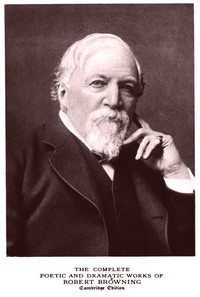
The Complete Poetic and Dramatic Works of Robert Browning - Cambridge Edition
by Browning, Robert
English
13979h 4m read
Letters of Samuel Taylor Coleridge, Vol. 2 (of 2)
by Coleridge, Samuel Taylor
English
2054h 44m read