The Project Gutenberg eBook of The Murder on the Links, by Agatha Christie
This eBook is for the use of anyone anywhere in the United States and
most other parts of the world at no cost and with almost no restrictions
whatsoever. You may copy it, give it away or re-use it under the terms
of the Project Gutenberg License included with this eBook or online at
www.gutenberg.org. If you are not located in the United States, you
will have to check the laws of the country where you are located before
using this eBook.
Title: The Murder on the Links
Author: Agatha Christie
Release Date: February 11, 2019 [eBook #58866]
[Most recently updated: November 30, 2022]
Language: English
Character set encoding: UTF-8
Produced by: Alex Cabal
*** START OF THE PROJECT GUTENBERG EBOOK THE MURDER ON THE LINKS ***
cover
The Murder on the Links
by Agatha Christie
TO MY HUSBAND
A fellow enthusiast for detective stories, and to whom I am indebted for much
helpful advice and criticism.
Contents
1 A Fellow Traveller
2 An Appeal for Help
3 At the Villa Geneviève
4 The Letter Signed “Bella”
5 Mrs. Renauld’s Story
6 The Scene of the Crime
7 The Mysterious Madame Daubreuil
8 An Unexpected Meeting
9 M. Giraud Finds Some Clues
10 Gabriel Stonor
11 Jack Renauld
12 Poirot Elucidates Certain Points
13 The Girl with the Anxious Eyes
14 The Second Body
15 A Photograph
16 The Beroldy Case
17 We Make Further Investigations
18 Giraud Acts
19 I Use My Grey Cells
20 An Amazing Statement
21 Hercule Poirot on the Case!
22 I Find Love
23 Difficulties Ahead
24 “Save Him!”
25 An Unexpected Dénouement
26 I Receive a Letter
27 Jack Renauld’s Story
28 Journey’s End
1 A Fellow Traveller
I believe that a well-known anecdote exists to the effect that a young
writer, determined to make the commencement of his story forcible and
original enough to catch and rivet the attention of the most blasé of
editors, penned the following sentence:
“‘Hell!’ said the Duchess.”
Strangely enough, this tale of mine opens in much the same fashion.
Only the lady who gave utterance to the exclamation was not a Duchess!
It was a day in early June. I had been transacting some business in
Paris and was returning by the morning service to London where I was
still sharing rooms with my old friend, the Belgian ex-detective,
Hercule Poirot.
The Calais express was singularly empty—in fact, my own compartment
held only one other traveller. I had made a somewhat hurried departure
from the hotel and was busy assuring myself that I had duly collected
all my traps when the train started. Up till then I had hardly noticed
my companion, but I was now violently recalled to the fact of her
existence. Jumping up from her seat, she let down the window and stuck
her head out, withdrawing it a moment later with the brief and forcible
ejaculation “Hell!”
Now I am old-fashioned. A woman, I consider, should be womanly. I have
no patience with the modern neurotic girl who jazzes from morning to
night, smokes like a chimney, and uses language which would make a
Billingsgate fishwoman blush!
I looked up now, frowning slightly, into a pretty, impudent face,
surmounted by a rakish little red hat. A thick cluster of black curls
hid each ear. I judged that she was little more than seventeen, but her
face was covered with powder, and her lips were quite impossibly
scarlet.
Nothing abashed, she returned my glance, and executed an expressive
grimace.
“Dear me, we’ve shocked the kind gentleman!” she observed to an
imaginary audience. “I apologize for my language! Most unladylike, and
all that, but Oh, Lord, there’s reason enough for it! Do you know I’ve
lost my only sister?”
“Really?” I said politely. “How unfortunate.”
“He disapproves!” remarked the lady. “He disapproves utterly—of me, and
my sister—which last is unfair, because he hasn’t seen her!”
I opened my mouth, but she forestalled me.
“Say no more! Nobody loves me! I shall go into the garden and eat
worms! Boohoo! I am crushed!”
She buried herself behind a large comic French paper. In a minute or
two I saw her eyes stealthily peeping at me over the top. In spite of
myself I could not help smiling, and in a minute she had tossed the
paper aside, and had burst into a merry peal of laughter.
“I knew you weren’t such a mutt as you looked,” she cried.
Her laughter was so infectious that I could not help joining in, though
I hardly cared for the word “mutt.” The girl was certainly all that I
most disliked, but that was no reason why I should make myself
ridiculous by my attitude. I prepared to unbend. After all, she was
decidedly pretty.…
“There! Now we’re friends!” declared the minx. “Say you’re sorry about
my sister—”
“I am desolated!”
“That’s a good boy!”
“Let me finish. I was going to add that, although I am desolated, I can
manage to put up with her absence very well.” I made a little bow.
But this most unaccountable of damsels frowned and shook her head.
“Cut it out. I prefer the ‘dignified disapproval’ stunt. Oh, your face!
‘Not one of us,’ it said. And you were right there—though, mind you,
it’s pretty hard to tell nowadays. It’s not every one who can
distinguish between a demi and a duchess. There now, I believe I’ve
shocked you again! You’ve been dug out of the backwoods, you have. Not
that I mind that. We could do with a few more of your sort. I just hate
a fellow who gets fresh. It makes me mad.”
She shook her head vigorously.
“What are you like when you’re mad?” I inquired with a smile.
“A regular little devil! Don’t care what I say, or what I do, either! I
nearly did a chap in once. Yes, really. He’d have deserved it too.
Italian blood I’ve got. I shall get into trouble one of these days.”
“Well,” I begged, “don’t get mad with me.”
“I shan’t. I like you—did the first moment I set eyes on you. But you
looked so disapproving that I never thought we should make friends.”
“Well, we have. Tell me something about yourself.”
“I’m an actress. No—not the kind you’re thinking of, lunching at the
Savoy covered with jewellery, and with their photograph in every paper
saying how much they love Madame So and So’s face cream. I’ve been on
the boards since I was a kid of six—tumbling.”
“I beg your pardon,” I said puzzled.
“Haven’t you seen child acrobats?”
“Oh, I understand.”
“I’m American born, but I’ve spent most of my life in England. We got a
new show now—”
“We?”
“My sister and I. Sort of song and dance, and a bit of patter, and a
dash of the old business thrown in. It’s quite a new idea, and it hits
them every time. There’s to be money in it—”
My new acquaintance leaned forward, and discoursed volubly, a great
many of her terms being quite unintelligible to me. Yet I found myself
evincing an increasing interest in her. She seemed such a curious
mixture of child and woman. Though perfectly worldly-wise, and able, as
she expressed it, to take care of herself, there was yet something
curiously ingenuous in her single-minded attitude towards life, and her
whole-hearted determination to “make good.” This glimpse of a world
unknown to me was not without its charm, and I enjoyed seeing her vivid
little face light up as she talked.
We passed through Amiens. The name awakened many memories. My companion
seemed to have an intuitive knowledge of what was in my mind.
“Thinking of the War?”
I nodded.
“You were through it, I suppose?”
“Pretty well. I was wounded once, and after the Somme they invalided me
out altogether. I had a half fledged Army job for a bit. I’m a sort of
private secretary now to an M. P.”
“My! That’s brainy!”
“No, it isn’t. There’s really awfully little to do. Usually a couple of
hours every day sees me through. It’s dull work too. In fact, I don’t
know what I should do if I hadn’t got something to fall back upon.”
“Don’t say you collect bugs!”
“No. I share rooms with a very interesting man. He’s a Belgian—an
ex-detective. He’s set up as a private detective in London, and he’s
doing extraordinarily well. He’s really a very marvellous little man.
Time and again he has proved to be right where the official police have
failed.”
My companion listened with widening eyes.
“Isn’t that interesting, now? I just adore crime. I go to all the
mysteries on the movies. And when there’s a murder on I just devour the
papers.”
“Do you remember the Styles Case?” I asked.
“Let me see, was that the old lady who was poisoned? Somewhere down in
Essex?”
I nodded.
“That was Poirot’s first big case. Undoubtedly, but for him, the
murderer would have escaped scot-free. It was a most wonderful bit of
detective work.”
Warming to my subject, I ran over the heads of the affair, working up
to the triumphant and unexpected dénouement. The girl listened
spellbound. In fact, we were so absorbed that the train drew into
Calais station before we realized it.
“My goodness gracious me!” cried my companion. “Where’s my
powder-puff?”
She proceeded to bedaub her face liberally, and then applied a stick of
lip salve to her lips, observing the effect in a small pocket glass,
and betraying not the faintest sign of self-consciousness.
“I say,” I hesitated. “I dare say it’s cheek on my part, but why do all
that sort of thing?”
The girl paused in her operations, and stared at me with undisguised
surprise.
“It isn’t as though you weren’t so pretty that you can afford to do
without it,” I said stammeringly.
“My dear boy! I’ve got to do it. All the girls do. Think I want to look
like a little frump up from the country?” She took one last look in the
mirror, smiled approval, and put it and her vanity-box away in her bag.
“That’s better. Keeping up appearances is a bit of a fag, I grant, but
if a girl respects herself it’s up to her not to let herself get
slack.”
To this essentially moral sentiment, I had no reply. A point of view
makes a great difference.
I secured a couple of porters, and we alighted on the platform. My
companion held out her hand.
“Good-bye, and I’ll mind my language better in future.”
“Oh, but surely you’ll let me look after you on the boat?”
“Mayn’t be on the boat. I’ve got to see whether that sister of mine got
aboard after all anywhere. But thanks all the same.”
“Oh, but we’re going to meet again, surely? I—” I hesitated. “I want to
meet your sister.”
We both laughed.
“That’s real nice of you. I’ll tell her what you say. But I don’t fancy
we’ll meet again. You’ve been very good to me on the journey,
especially after I cheeked you as I did. But what your face expressed
first thing is quite true. I’m not your kind. And that brings
trouble—_I___ know that well enough.…”
Her face changed. For the moment all the light-hearted gaiety died out
of it. It looked angry—revengeful.…
“So good-bye,” she finished, in a lighter tone.
“Aren’t you even going to tell me your name?” I cried, as she turned
away.
She looked over her shoulder. A dimple appeared in each cheek. She was
like a lovely picture by Greuze.
“Cinderella,” she said, and laughed.
But little did I think when and how I should see Cinderella again.
2 An Appeal for Help
It was five minutes past nine when I entered our joint sitting-room for
breakfast on the following morning.
My friend Poirot, exact to the minute as usual, was just tapping the
shell of his second egg.
He beamed upon me as I entered.
“You have slept well, yes? You have recovered from the crossing so
terrible? It is a marvel, almost you are exact this morning.
_Pardon___, but your tie is not symmetrical. Permit that I rearrange
him.”
Elsewhere, I have described Hercule Poirot. An extraordinary little
man! Height, five feet four inches, egg-shaped head carried a little to
one side, eyes that shone green when he was excited, stiff military
moustache, air of dignity immense! He was neat and dandified in
appearance. For neatness of any kind, he had an absolute passion. To
see an ornament set crooked, or a speck of dust, or a slight disarray
in one’s attire, was torture to the little man until he could ease his
feelings by remedying the matter. “Order” and “Method” were his gods.
He had a certain disdain for tangible evidence, such as footprints and
cigarette ash, and would maintain that, taken by themselves, they would
never enable a detective to solve a problem. Then he would tap his
egg-shaped head with absurd complacency, and remark with great
satisfaction: “The true work, it is done from _within___. _The little
grey cells___—remember always the little grey cells, _mon ami!___”
I slipped into my seat, and remarked idly, in answer to Poirot’s
greeting, that an hour’s sea passage from Calais to Dover could hardly
be dignified by the epithet “terrible.”
Poirot waved his egg-spoon in vigorous refutation of my remark.
“_Du tout!___ If for an hour one experiences sensations and emotions of
the most terrible, one has lived many hours! Does not one of your
English poets say that time is counted, not by hours, but by
heart-beats?”
“I fancy Browning was referring to something more romantic than sea
sickness, though.”
“Because he was an Englishman, an Islander to whom _la Manche___ was
nothing. Oh, you English! With _nous autres___ it is different. Figure
to yourself that a lady of my acquaintance at the beginning of the war
fled to Ostend. There she had a terrible crisis of the nerves.
Impossible to escape further except by crossing the sea! And she had a
horror—_mais une horreur!___—of the sea! What was she to do? Daily _les
Boches___ were drawing nearer. Imagine to yourself the terrible
situation!”
“What did she do?” I inquired curiously.
“Fortunately her husband was _homme pratique___. He was also very calm,
the crises of the nerves, they affected him not. _Il l’a emportée
simplement!___ Naturally when she reached England she was prostrate,
but she still breathed.”
Poirot shook his head seriously. I composed my face as best I could.
Suddenly he stiffened and pointed a dramatic finger at the toast rack.
“Ah, par exemple, c’est trop fort!” he cried.
“What is it?”
“This piece of toast. You remark him not?” He whipped the offender out
of the rack, and held it up for me to examine.
“Is it square? No. Is it a triangle? Again no. Is it even round? No. Is
it of any shape remotely pleasing to the eye? What symmetry have we
here? None.”
“It’s cut from a cottage loaf,” I explained soothingly.
Poirot threw me a withering glance.
“What an intelligence has my friend Hastings!” he exclaimed
sarcastically. “Comprehend you not that I have forbidden such a loaf—a
loaf haphazard and shapeless, that no baker should permit himself to
bake!”
I endeavoured to distract his mind.
“Anything interesting come by the post?”
Poirot shook his head with a dissatisfied air.
“I have not yet examined my letters, but nothing of interest arrives
nowadays. The great criminals, the criminals of method, they do not
exist. The cases I have been employed upon lately were _banal___ to the
last degree. In verity I am reduced to recovering lost lap-dogs for
fashionable ladies! The last problem that presented any interest was
that intricate little affair of the Yardly diamond, and that was—how
many months ago, my friend?”
He shook his head despondently, and I roared with laughter.
“Cheer up, Poirot, the luck will change. Open your letters. For all you
know, there may be a great Case looming on the horizon.”
Poirot smiled, and taking up the neat little letter opener with which
he opened his correspondence he slit the tops of the several envelopes
that lay by his plate.
“A bill. Another bill. It is that I grow extravagant in my old age.
Aha! a note from Japp.”
“Yes?” pricked up my ears. The Scotland Yard Inspector had more than
once introduced us to an interesting case.
“He merely thanks me (in his fashion) for a little point in the
Aberystwyth Case on which I was able to set him right. I am delighted
to have been of service to him.”
“How does he thank you?” I asked curiously, for I knew my Japp.
“He is kind enough to say that I am a wonderful sport for my age, and
that he was glad to have had the chance of letting me in on the case.”
This was so typical of Japp, that I could not forbear a chuckle. Poirot
continued to read his correspondence placidly.
“A suggestion that I should give a lecture to our local boy scouts. The
Countess of Forfanock will be obliged if I will call and see her.
Another lap-dog without doubt! And now for the last. Ah—”
I looked up, quick to notice the change of tone. Poirot was reading
attentively. In a minute he tossed the sheet over to me.
“This is out of the ordinary, _mon ami___. Read for yourself.”
The letter was written on a foreign type of paper, in a bold
characteristic hand:
“Villa Geneviève
Merlinville-sur-Mer
France
“_Dear Sir___,
“I am in need of the services of a detective and, for reasons which I
will give you later, do not wish to call in the official police. I have
heard of you from several quarters, and all reports go to show that you
are not only a man of decided ability, but one who also knows how to be
discreet. I do not wish to trust details to the post, but, on account
of a secret I possess, I go in daily fear of my life. I am convinced
that the danger is imminent, and therefore I beg that you will lose no
time in crossing to France. I will send a car to meet you at Calais, if
you will wire me when you are arriving. I shall be obliged if you will
drop all cases you have on hand, and devote yourself solely to my
interests. I am prepared to pay any compensation necessary. I shall
probably need your services for a considerable period of time, as it
may be necessary for you to go out to Santiago, where I spent several
years of my life. I shall be content for you to name your own fee.
“Assuring you once more that the matter is _urgent___,
“Yours faithfully
“P. T. RENAULD.”
Below the signature was a hastily scrawled line, almost illegible: “For
God’s sake, come!”
I handed the letter back with quickened pulses.
“At last!” I said. “Here is something distinctly out of the ordinary.”
“Yes, indeed,” said Poirot meditatively.
“You will go of course,” I continued.
Poirot nodded. He was thinking deeply. Finally he seemed to make up his
mind, and glanced up at the clock. His face was very grave.
“See you, my friend, there is no time to lose. The Continental express
leaves Victoria at 11 o’clock. Do not agitate yourself. There is plenty
of time. We can allow ten minutes for discussion. You accompany me,
_n’est-ce pas?___”
“Well—”
“You told me yourself that your employer needed you not for the next
few weeks.”
“Oh, that’s all right. But this Mr. Renauld hints strongly that his
business is private.”
“Ta-ta-ta. I will manage M. Renauld. By the way, I seem to know the
name?”
“There’s a well-known South American millionaire fellow. His name’s
Renauld. I don’t know whether it could be the same.”
“But without doubt. That explains the mention of Santiago. Santiago is
in Chile, and Chile it is in South America! Ah, but we progress
finely.”
“Dear me, Poirot,” I said, my excitement rising, “I smell some goodly
shekels in this. If we succeed, we shall make our fortunes!”
“Do not be too sure of that, my friend. A rich man and his money are
not so easily parted. Me, I have seen a well-known millionaire turn out
a tramful of people to seek for a dropped halfpenny.”
I acknowledged the wisdom of this.
“In any case,” continued Poirot, “it is not the money which attracts me
here. Certainly it will be pleasant to have _carte blanche___ in our
investigations; one can be sure that way of wasting no time, but it is
something a little bizarre in this problem which arouses my interest.
You remarked the postscript? How did it strike you?”
I considered.
“Clearly he wrote the letter keeping himself well in hand, but at the
end his self-control snapped and, on the impulse of the moment, he
scrawled those four desperate words.”
But my friend shook his head energetically.
“You are in error. See you not that while the ink of the signature is
nearly black, that of the postscript is quite pale?”
“Well?” I said puzzled.
“_Mon Dieu, mon ami___, but use your little grey cells! Is it not
obvious? M. Renauld wrote his letter. Without blotting it, he reread it
carefully. Then, not on impulse, but deliberately, he added those last
words, and blotted the sheet.”
“But why?”
“_Parbleu!___ so that it should produce the effect upon me that it has
upon you.”
“What?”
“_Mais, oui___—to make sure of my coming! He reread the letter and was
dissatisfied. It was not strong enough!”
He paused, and then added softly, his eyes shining with that green
light that always betokened inward excitement: “And so, _mon ami___,
since that postscript was added, not on impulse, but soberly, in cold
blood, the urgency is very great, and we must reach him as soon as
possible.”
“Merlinville,” I murmured thoughtfully. “I’ve heard of it, I think.”
Poirot nodded.
“It is a quiet little place—but chic! It lies about midway between
Bolougne and Calais. It is rapidly becoming the fashion. Rich English
people who wish to be quiet are taking it up. M. Renauld has a house in
England, I suppose?”
“Yes, in Rutland Gate, as far as I remember. Also a big place in the
country, somewhere in Hertfordshire. But I really know very little
about him, he doesn’t do much in a social way. I believe he has large
South American interests in the City, and has spent most of his life
out in Chile and the Argentino.”
“Well, we shall hear all details from the man himself. Come, let us
pack. A small suit-case each, and then a taxi to Victoria.”
“And the Countess?” I inquired with a smile.
“Ah! _je m’en fiche!___ Her case was certainly not interesting.”
“Why so sure of that?”
“Because in that case she would have come, not written. A woman cannot
wait—always remember that, Hastings.”
Eleven o’clock saw our departure from Victoria on our way to Dover.
Before starting Poirot had despatched a telegram to Mr. Renauld giving
the time of our arrival at Calais. “I’m surprised you haven’t invested
in a few bottles of some sea sick remedy, Poirot,” I observed
maliciously, as I recalled our conversation at breakfast.
My friend, who was anxiously scanning the weather, turned a reproachful
face upon me.
“Is it that you have forgotten the method most excellent of Laverguier?
His system, I practise it always. One balances oneself, if you
remember, turning the head from left to right, breathing in and out,
counting six between each breath.”
“H’m,” I demurred. “You’ll be rather tired of balancing yourself and
counting six by the time you get to Santiago, or Buenos Ayres, or
wherever it is you land.”
“_Quelle idée!___ You do not figure to yourself that I shall go to
Santiago?”
“Mr. Renauld suggests it in his letter.”
“He did not know the methods of Hercule Poirot. I do not run to and
fro, making journeys, and agitating myself. My work is done from
within—_here___—” he tapped his forehead significantly.
As usual, this remark roused my argumentative faculty.
“It’s all very well, Poirot, but I think you are falling into the habit
of despising certain things too much. A finger-print has led sometimes
to the arrest and conviction of a murderer.”
“And has, without doubt, hanged more than one innocent man,” remarked
Poirot dryly.
“But surely the study of finger-prints and footprints, cigarette ash,
different kinds of mud, and other clues that comprise the minute
observation of details—all these are of vital importance?”
“But certainly. I have never said otherwise. The trained observer, the
expert, without doubt he is useful! But the others, the Hercules
Poirots, they are above the experts! To them the experts bring the
facts, their business is the method of the crime, its logical
deduction, the proper sequence and order of the facts; above all, the
true psychology of the case. You have hunted the fox, yes?”
“I have hunted a bit, now and again,” I said, rather bewildered by this
abrupt change of subject. “Why?”
“_Eh bien___, this hunting of the fox, you need the dogs, no?”
“Hounds,” I corrected gently. “Yes, of course.”
“But yet,” Poirot wagged his finger at me. “You did not descend from
your horse and run along the ground smelling with your nose and
uttering loud Ow Ows?”
In spite of myself I laughed immoderately. Poirot nodded in a satisfied
manner.
“So. You leave the work of the d— hounds to the hounds. Yet you demand
that I, Hercule Poirot, should make myself ridiculous by lying down
(possibly on damp grass) to study hypothetical footprints, and should
scoop up cigarette ash when I do not know one kind from the other.
Remember the Plymouth Express mystery. The good Japp departed to make a
survey of the railway line. When he returned, I, without having moved
from my apartments, was able to tell him exactly what he had found.”
“So you are of the opinion that Japp wasted his time.”
“Not at all, since his evidence confirmed my theory. But _I___ should
have wasted my time if _I___ had gone. It is the same with so called
‘experts.’ Remember the handwriting testimony in the Cavendish Case.
One counsel’s questioning brings out testimony as to the resemblances,
the defence brings evidence to show dissimilarity. All the language is
very technical. And the result? What we all knew in the first place.
The writing was very like that of John Cavendish. And the psychological
mind is faced with the question ‘Why?’ Because it was actually his? Or
because some one wished us to think it was his? I answered that
question, _mon ami___, and answered it correctly.”
And Poirot, having effectually silenced, if not convinced me, leaned
back with a satisfied air.
On the boat, I knew better than to disturb my friend’s solitude. The
weather was gorgeous, and the sea as smooth as the proverbial
mill-pond, so I was hardly surprised to hear that Laverguier’s method
had once more justified itself when a smiling Poirot joined me on
disembarking at Calais. A disappointment was in store for us, as no car
had been sent to meet us, but Poirot put this down to his telegram
having been delayed in transit.
“Since it is _carte blanche___, we will hire a car,” he said
cheerfully. And a few minutes later saw us creaking and jolting along,
in the most ramshackle of automobiles that ever plied for hire, in the
direction of Merlinville.
My spirits were at their highest.
“What gorgeous air!” I exclaimed. “This promises to be a delightful
trip.”
“For you, yes. For me, I have work to do, remember, at our journey’s
end.”
“Bah!” I said cheerfully. “You will discover all, ensure this Mr.
Renauld’s safety, run the would-be assassins to earth, and all will
finish in a blaze of glory.”
“You are sanguine, my friend.”
“Yes, I feel absolutely assured of success. Are you not the one and
only Hercule Poirot?”
But my little friend did not rise to the bait. He was observing me
gravely.
“You are what the Scotch people call ‘fey,’ Hastings. It presages
disaster.”
“Nonsense. At any rate, you do not share my feelings.”
“No, but I am afraid.”
“Afraid of what?”
“I do not know. But I have a premonition—a _je ne sais quoi!___”
He spoke so gravely, that I was impressed in spite of myself.
“I have a feeling,” he said slowly, “that this is going to be a big
affair—a long, troublesome problem that will not be easy to work out.”
I would have questioned him further, but we were just coming into the
little town of Merlinville, and we slowed up to inquire the way to the
Villa Geneviève.
“Straight on, monsieur, through the town. The Villa Geneviève is about
half a mile the other side. You cannot miss it. A big Villa,
overlooking the sea.”
We thanked our informant, and drove on, leaving the town behind. A fork
in the road brought us to a second halt. A peasant was trudging towards
us, and we waited for him to come up to us in order to ask the way
again. There was a tiny Villa standing right by the road, but it was
too small and dilapidated to be the one we wanted. As we waited, the
gate of it swung open and a girl came out.
The peasant was passing us now, and the driver leaned forward from his
seat and asked for direction.
“The Villa Geneviève? Just a few steps up this road to the right,
monsieur. You could see it if it were not for the curve.”
The chauffeur thanked him, and started the car again. My eyes were
fascinated by the girl who still stood, with one hand on the gate,
watching us. I am an admirer of beauty, and here was one whom nobody
could have passed without remark. Very tall, with the proportions of a
young goddess, her uncovered golden head gleaming in the sunlight, I
swore to myself that she was one of the most beautiful girls I had ever
seen. As we swung up the rough road, I turned my head to look after
her.
“By Jove, Poirot,” I exclaimed, “did you see that young goddess.”
Poirot raised his eyebrows.
“_Ça commence!___” he murmured. “Already you have seen a goddess!”
“But, hang it all, wasn’t she?”
“Possibly. I did not remark the fact.”
“Surely you noticed her?”
“_Mon ami___, two people rarely see the same thing. You, for instance,
saw a goddess. I—” he hesitated.
“Yes?”
“I saw only a girl with anxious eyes,” said Poirot gravely.
But at that moment we drew up at a big green gate, and, simultaneously,
we both uttered an exclamation. Before it stood an imposing _sergent de
ville___. He held up his hand to bar our way.
“You cannot pass, monsieurs.”
“But we wish to see Mr. Renauld,” I cried. “We have an appointment.
This is his Villa, isn’t it?”
“Yes, monsieur, but—”
Poirot leaned forward.
“But what?”
“M. Renauld was murdered this morning.”
3 At the Villa Geneviève
In a moment Poirot had leapt from the car, his eyes blazing with
excitement. He caught the man by the shoulder.
“What is that you say? Murdered? When? How?”
The _sergent de ville___ drew himself up.
“I cannot answer any questions, monsieur.”
“True. I comprehend.” Poirot reflected for a minute. “The Commissary of
Police, he is without doubt within?”
“Yes, monsieur.”
Poirot took out a card, and scribbled a few words on it.
“_Voilà!___ Will you have the goodness to see that this card is sent in
to the commissary at once?”
The man took it and, turning his head over his shoulder, whistled. In a
few seconds a comrade joined him and was handed Poirot’s message. There
was a wait of some minutes, and then a short stout man with a huge
moustache came bustling down to the gate. The _sergent de ville___
saluted and stood aside.
“My dear M. Poirot,” cried the new-comer, “I am delighted to see you.
Your arrival is most opportune.”
Poirot’s face had lighted up.
“M. Bex! This is indeed a pleasure.” He turned to me. “This is an
English friend of mine, Captain Hastings—M. Lucien Bex.”
The commissary and I bowed to each other ceremoniously, then M. Bex
turned once more to Poirot.
“_Mon vieux___, I have not seen you since 1909, that time in Ostend. I
heard that you had left the Force?”
“So I have. I run a private business in London.”
“And you say you have information to give which may assist us?”
“Possibly you know it already. You were aware that I had been sent
for?”
“No. By whom?”
“The dead man. It seems he knew an attempt was going to be made on his
life. Unfortunately he sent for me too late.”
“_Sacri tonnerre!___” ejaculated the Frenchman. “So he foresaw his own
murder? That upsets our theories considerably! But come inside.”
He held the gate open, and we commenced walking towards the house. M.
Bex continued to talk:
“The examining magistrate, M. Hautet, must hear of this at once. He has
just finished examining the scene of the crime and is about to begin
his interrogations. A charming man. You will like him. Most
sympathetic. Original in his methods, but an excellent judge.”
“When was the crime committed?” asked Poirot.
“The body was discovered this morning about nine o’clock. Madame
Renauld’s evidence, and that of the doctors goes to show that the death
must have occurred about 2 a.m. But enter, I pray of you.”
We had arrived at the steps which led up to the front door of the
Villa. In the hall another _sergent de ville___ was sitting. He rose at
sight of the commissary.
“Where is M. Hautet now?” inquired the latter.
“In the _salon___, monsieur.”
M. Bex opened a door to the left of the hall, and we passed in. M.
Hautet and his clerk were sitting at a big round table. They looked up
as we entered. The commissary introduced us, and explained our
presence.
M. Hautet, the Juge d’Instruction, was a tall, gaunt man, with piercing
dark eyes, and a neatly cut grey beard, which he had a habit of
caressing as he talked. Standing by the mantelpiece was an elderly man,
with slightly stooping shoulders, who was introduced to us as Dr.
Durand.
“Most extraordinary,” remarked M. Hautet, as the commissary finished
speaking. “You have the letter here, monsieur?”
Poirot handed it to him, and the magistrate read it.
“H’m. He speaks of a secret. What a pity he was not more explicit. We
are much indebted to you, M. Poirot. I hope you will do us the honour
of assisting us in our investigations. Or are you obliged to return to
London?”
“M. le juge, I propose to remain. I did not arrive in time to prevent
my client’s death, but I feel myself bound in honour to discover the
assassin.”
The magistrate bowed.
“These sentiments do you honour. Also, without doubt, Madame Renauld
will wish to retain your services. We are expecting M. Giraud from the
Sûreté in Paris any moment, and I am sure that you and he will be able
to give each other mutual assistance in your investigations. In the
meantime, I hope that you will do me the honour to be present at my
interrogations, and I need hardly say that if there is any assistance
you require it is at your disposal.”
“I thank you, monsieur. You will comprehend that at present I am
completely in the dark. I know nothing whatever.”
M. Hautet nodded to the commissary, and the latter took up the tale:
“This morning, the old servant Françoise, on descending to start her
work, found the front door ajar. Feeling a momentary alarm as to
burglars, she looked into the dining-room, but seeing the silver was
safe she thought no more about it, concluding that her master had,
without doubt, risen early, and gone for a stroll.”
“Pardon, monsieur, for interrupting, but was that a common practice of
his?”
“No, it was not, but old Françoise has the common idea as regards the
English—that they are mad, and liable to do the most unaccountable
things at any moment! Going to call her mistress as usual, a younger
maid, Léonie, was horrified to discover her gagged and bound, and
almost at the same moment news was brought that M. Renauld’s body had
been discovered, stone dead, stabbed in the back.”
“Where?”
“That is one of the most extraordinary features of the case. M. Poirot,
the body was lying, face downwards, _in an open grave___.”
“What?”
“Yes. The pit was freshly dug—just a few yards outside the boundary of
the Villa grounds.”
“And he had been dead—how long?”
Dr. Durand answered this.
“I examined the body this morning at ten o’clock. Death must have taken
place at least seven, and possibly ten hours previously.”
“H’m, that fixes it at between midnight and 3 a.m.”
“Exactly, and Madame Renauld’s evidence places it at after 2 a.m. which
narrows the field still further. Death must have been instantaneous,
and naturally could not have been self-inflicted.”
Poirot nodded, and the commissary resumed:
“Madame Renauld was hastily freed from the cords that bound her by the
horrified servants. She was in a terrible condition of weakness, almost
unconscious from the pain of her bonds. It appears that two masked men
entered the bedroom, gagged and bound her, whilst forcibly abducting
her husband. This we know at second hand from the servants. On hearing
the tragic news, she fell at once into an alarming state of agitation.
On arrival, Dr. Durand immediately prescribed a sedative, and we have
not yet been able to question her. But without doubt she will awake
more calm, and be equal to bearing the strain of the interrogation.”
The commissary paused.
“And the inmates of the house, monsieur?”
“There is old Françoise, the housekeeper, she lived for many years with
the former owners of the Villa Geneviève. Then there are two young
girls, sisters, Denise and Léonie Oulard. Their home is in Merlinville,
and they come of the most respectable parents. Then there is the
chauffeur whom M. Renauld brought over from England with him, but he is
away on a holiday. Finally there are Madame Renauld and her son, M.
Jack Renauld. He, too, is away from home at present.”
Poirot bowed his head. M. Hautet spoke:
“Marchaud!”
The _sergent de ville___ appeared.
“Bring in the woman Françoise.”
The man saluted, and disappeared. In a moment or two, he returned,
escorting the frightened Françoise.
“You name is Françoise Arrichet?”
“Yes, monsieur.”
“You have been a long time in service at the Villa Geneviève?”
“Eleven years with Madame la Vicomtesse. Then when she sold the Villa
this spring, I consented to remain on with the English milor. Never did
I imagine—”
The magistrate cut her short.
“Without doubt, without doubt. Now, Françoise, in this matter of the
front door, whose business was it to fasten it at night?”
“Mine, monsieur. Always I saw to it myself.”
“And last night?”
“I fastened it as usual.”
“You are sure of that?”
“I swear it by the blessed saints, monsieur.”
“What time would that be?”
“The same time as usual, half-past ten, monsieur.”
“What about the rest of the household, had they gone up to bed?”
“Madame had retired some time before. Denise and Léonie went up with
me. Monsieur was still in his study.”
“Then, if any one unfastened the door afterwards, it must have been M.
Renauld himself?”
Françoise shrugged her broad shoulders.
“What should he do that for? With robbers and assassins passing every
minute! A nice idea! Monsieur was not an imbecile. It is not as though
he had had to let _cette dame___ out—”
The magistrate interrupted sharply:
“_Cette dame?___ What lady do you mean?”
“Why, the lady who came to see him.”
“Had a lady been to see him that evening?”
“But yes, monsieur—and many other evenings as well.”
“Who was she? Did you know her?”
A rather cunning look spread over the woman’s face. “How should I know
who it was?” she grumbled. “I did not let her in last night.”
“Aha!” roared the examining magistrate, bringing his hand down with a
bang on the table. “You would trifle with the police, would you? I
demand that you tell me at once the name of this woman who came to
visit M. Renauld in the evenings.”
“The police—the police,” grumbled Françoise. “Never did I think that I
should be mixed up with the police. But I know well enough who she was.
It was Madame Daubreuil.”
The commissary uttered an exclamation, and leaned forward as though in
utter astonishment.
“Madame Daubreuil—from the Villa Marguerite just down the road?”
“That is what I said, monsieur. Oh, she is a pretty one, _cellela!___”
The old woman tossed her head scornfully.
“Madame Daubreuil,” murmured the commissary. “Impossible.”
“_Voilà,___” grumbled Françoise. “That is all you get for telling the
truth.”
“Not at all,” said the examining magistrate soothingly. “We were
surprised, that is all. Madame Daubreuil then, and Monsieur Renauld,
they were—” he paused delicately. “Eh? It was that without doubt?”
“How should I know? But what will you? Monsieur, he was _milor
anglais___—_trés riche___—and Madame Daubreuil, she was poor, that
one—and _trés chic___ for all that she lives so quietly with her
daughter. Not a doubt of it, she has had her history! She is no longer
young, but _ma foi!___ I who speak to you have seen the men’s heads
turn after her as she goes down the street. Besides lately, she has had
more money to spend—all the town knows it. The little economies, they
are at an end.” And Françoise shook her head with an air of unalterable
certainty.
M. Hautet stroked his beard reflectively.
“And Madame Renauld?” he asked at length. “How did she take
this—friendship.”
Françoise shrugged her shoulders.
“She was always most amiable—most polite. One would say that she
suspected nothing. But all the same, is it not so, the heart suffers,
monsieur? Day by day, I have watched Madame grow paler and thinner. She
was not the same woman who arrived here a month ago. Monsieur, too, has
changed. He also has had his worries. One could see that he was on the
brink of a crisis of the nerves. And who could wonder, with an affair
conducted such a fashion? No reticence, no discretion. _Style
anglais___, without doubt!”
I bounded indignantly in my seat, but the examining magistrate was
continuing his questions, undistracted by side issues.
“You say that M. Renauld had not to let Madame Daubreuil out? Had she
left, then?”
“Yes, monsieur. I heard them come out of the study and go to the door.
Monsieur said good night, and shut the door after her.”
“What time was that?”
“About twenty-five minutes after ten, monsieur.”
“Do you know when M. Renauld went to bed?”
“I heard him come up about ten minutes after we did. The stair creaks
so that one hears every one who goes up and down.”
“And that is all? You heard no sound of disturbance during the night?”
“Nothing whatever, monsieur.”
“Which of the servants came down the first in the morning?”
“I did, monsieur. At once I saw the door swinging open.”
“What about the other downstairs windows, were they all fastened?”
“Every one of them. There was nothing suspicious or out of place
anywhere.”
“Good, Françoise, you can go.”
The old woman shuffled towards the door. On the threshold she looked
back.
“I will tell you one thing, monsieur. That Madame Daubreuil she is a
bad one! Oh, yes, one woman knows about another. She is a bad one,
remember that.” And, shaking her head sagely, Françoise left the room.
“Léonie Oulard,” called the magistrate.
Léonie appeared dissolved in tears, and inclined to be hysterical. M.
Hautet dealt with her adroitly. Her evidence was mainly concerned with
the discovery of her mistress gagged and bound, of which she gave
rather an exaggerated account. She, like Françoise, had heard nothing
during the night.
Her sister, Denise, succeeded her. She agreed that her master had
changed greatly of late.
“Every day he became more and more morose. He ate less. He was always
depressed.” But Denise had her own theory. “Without doubt it was the
Mafia he had on his track! Two masked men—who else could it be? A
terrible society that!”
“It is, of course, possible,” said the magistrate smoothly. “Now, my
girl, was it you who admitted Madame Daubreuil to the house last
night?”
“Not _last___ night, monsieur, the night before.”
“But Françoise has just told us that Madame Daubreuil was here last
night?”
“No, monsieur. A lady _did___ come to see M. Renauld last night, but it
was not Madame Daubreuil.”
Surprised, the magistrate insisted, but the girl held firm. She knew
Madame Daubreuil perfectly by sight. This lady was dark also, but
shorter, and much younger. Nothing could shake her statement.
“Had you ever seen this lady before?”
“Never, monsieur.” And then the girl added diffidently: “But I think
she was English.”
“English?”
“Yes, monsieur. She asked for M. Renauld in quite good French, but the
accent—one can always tell it, _n’est-ce pas?___ Besides when they came
out of the study they were speaking in English.”
“Did you hear what they said? Could you understand it, I mean?”
“Me, I speak the English very well,” said Denise with pride. “The lady
was speaking too fast for me to catch what she said, but I heard
Monsieur’s last words as he opened the door for her.” She paused, and
then repeated carefully and laboriously:
“‘Yeas—yeas—butt for Gaud’s saike go nauw!’”
“Yes, yes, but for God’s sake go now!” repeated the magistrate.
He dismissed Denise and, after a moment or two for consideration,
recalled Françoise. To her he propounded the question as to whether she
had not made a mistake in fixing the night of Madame Daubreuil’s visit.
Françoise, however, proved unexpectedly obstinate. It was last night
that Madame Daubreuil had come. Without a doubt it was she. Denise
wished to make herself interesting, _voilà tout!___ So she had cooked
up this fine tale about a strange lady. Airing her knowledge of English
too! Probably Monsieur had never spoken that sentence in English at
all, and even if he had, it proved nothing, for Madame Daubreuil spoke
English perfectly, and generally used that language when talking to M.
and Madame Renauld. “You see, M. Jack, the son of Monsieur, was usually
here, and he spoke the French very badly.”
The magistrate did not insist. Instead he inquired about the chauffeur,
and learned that only yesterday, M. Renauld had declared that he was
not likely to use the car, and that Masters might just as well take a
holiday.
A perplexed frown was beginning to gather between Poirot’s eyes.
“What is it?” I whispered.
He shook his head impatiently, and asked a question:
“Pardon, M. Bex, but without doubt M. Renauld could drive the car
himself?”
The commissary looked over at Françoise, and the old woman replied
promptly:
“No, Monsieur did not drive himself.”
Poirot’s frown deepened.
“I wish you would tell me what is worrying you,” I said impatiently.
“See you not? In his letter M. Renauld speaks of sending the car for me
to Calais.”
“Perhaps he meant a hired car,” I suggested.
“Doubtless that is so. But why hire a car when you have one of your
own. Why choose yesterday to send away the chauffeur on a
holiday—suddenly, at a moment’s notice? Was it that for some reason he
wanted him out of the way before we arrived?”
4 The Letter Signed “Bella”
Françoise had left the room. The magistrate was drumming thoughtfully
on the table.
“M. Bex,” he said at length, “here we have directly conflicting
testimony. Which are we to believe, Françoise or Denise?”
“Denise,” said the commissary decidedly. “It was she who let the
visitor in. Françoise is old and obstinate, and has evidently taken a
dislike to Madame Daubreuil. Besides, our own knowledge tends to show
that Renauld was entangled with another woman.”
“_Tiens!___” cried M. Hautet. “We have forgotten to inform M. Poirot of
that.” He searched amongst the papers on the table, and finally handed
the one he was in search of to my friend. “This letter, M. Poirot, we
found in the pocket of the dead man’s overcoat.”
Poirot took it and unfolded it. It was somewhat worn and crumbled, and
was written in English in a rather unformed hand:
“_My dearest one:___”
Why have you not written for so long? You do love me still, don’t you?
Your letters lately have been so different, cold and strange, and now
this long silence. It makes me afraid. If you were to stop loving me!
But that’s impossible—what a silly kid I am—always imagining things!
But if you _did___ stop loving me, I don’t know what I should do—kill
myself perhaps! I couldn’t live without you. Sometimes I fancy another
woman is coming between us. Let her look out, that’s all—and you too!
I’d as soon kill you as let her have you! I mean it.
“But there, I’m writing high-flown nonsense. You love me, and I
love you—yes, love you, love you, love you!
“Your own adoring
“BELLA.”
There was no address or date. Poirot handed it back with a grave face.
“And the assumption is, M. le juge—?”
The examining magistrate shrugged his shoulders.
“Obviously M. Renauld was entangled with this Englishwoman—Bella. He
comes over here, meets Madame Daubreuil, and starts an intrigue with
her. He cools off to the other, and she instantly suspects something.
This letter contains a distinct threat. M. Poirot, at first sight the
case seemed simplicity itself. Jealousy! The fact that M. Renauld was
stabbed in the back seemed to point distinctly to its being a woman’s
crime.”
Poirot nodded.
“The stab in the back, yes—but not the grave! That was laborious work,
hard work—no woman dug that grave, monsieur. That was a man’s doing.”
The commissary exclaimed excitedly: “Yes, yes, you are right. We did
not think of that.”
“As I said,” continued M. Hautet, “at first sight the case seemed
simple, but the masked men, and the letter you received from M. Renauld
complicate matters. Here we seem to have an entirely different set of
circumstances, with no relationship between the two. As regards the
letter written to yourself, do you think it is possible that it
referred in any way to this ‘Bella,’ and her threats?”
Poirot shook his head.
“Hardly. A man like M. Renauld, who has led an adventurous life in
out-of-the-way places, would not be likely to ask for protection
against a woman.”
The examining magistrate nodded his head emphatically.
“My view exactly. Then we must look for the explanation of the letter—”
“In Santiago,” finished the commissary. “I shall cable without delay to
the police in that city, requesting full details of the murdered man’s
life out there, his love affairs, his business transactions, his
friendships, and any enmities he may have incurred. It will be strange
if, after that, we do not hold a clue to his mysterious murder.”
The commissary looked round for approval.
“Excellent,” said Poirot appreciatively.
“His wife, too, may be able to give us a pointer,” added the
magistrate.
“You have found no other letters from this Bella amongst M. Renauld’s
effects?” asked Poirot.
“No. Of course one of our first proceedings was to search through his
private papers in the study. We found nothing of interest, however. All
seemed square and above-board. The only thing at all out of the
ordinary was his will. Here it is.”
Poirot ran through the document.
“So. A legacy of a thousand pounds to Mr. Stonor—who is he, by the
way?”
“M. Renauld’s secretary. He remained in England, but was over here once
or twice for a week-end.”
“And everything else left unconditionally to his beloved wife, Eloise.
Simply drawn up, but perfectly legal. Witnessed by the two servants,
Denise and Françoise. Nothing so very unusual about that.” He handed it
back.
“Perhaps,” began Bex, “you did not notice—”
“The date?” twinkled Poirot. “But yes, I noticed it. A fortnight ago.
Possibly it marks his first intimation of danger. Many rich men die
intestate through never considering the likelihood of their demise. But
it is dangerous to draw conclusions prematurely. It points, however, to
his having a real liking and fondness for his wife, in spite of his
amorous intrigues.”
“Yes,” said M. Hautet doubtfully. “But it is possibly a little unfair
on his son, since it leaves him entirely dependent on his mother. If
she were to marry again, and her second husband obtained an ascendancy
over her, this boy might never touch a penny of his father’s money.”
Poirot shrugged his shoulders.
“Man is a vain animal. M. Renauld figured to himself, without doubt,
that his widow would never marry again. As to the son, it may have been
a wise precaution to leave the money in his mother’s hands. The sons of
rich men are proverbially wild.”
“It may be as you say. Now, M. Poirot, you would without doubt like to
visit the scene of the crime. I am sorry that the body has been
removed, but of course photographs have been taken from every
conceivable angle, and will be at your disposal as soon as they are
available.”
“I thank you, monsieur, for all your courtesy.”
The commissary rose.
“Come with me, monsieurs.”
He opened the door, and bowed ceremoniously to Poirot to precede him.
Poirot, with equal politeness, drew back and bowed to the commissary.
“Monsieur.”
“Monsieur.”
At last they got out into the hall.
“That room there, it is the study, _hein?___” asked Poirot suddenly,
nodding towards the door opposite.
“Yes. You would like to see it?” He threw the door open as he spoke,
and we entered.
The room which M. Renauld had chosen for his own particular use was
small, but furnished with great taste and comfort. A businesslike
writing desk, with many pigeon holes, stood in the window. Two large
leather-covered armchairs faced the fireplace, and between them was a
round table covered with the latest books and magazines. Bookshelves
lined two of the walls, and at the end of the room opposite the window
there was a handsome oak sideboard with a tantalus on top. The curtains
and _portière___ were of a soft dull green, and the carpet matched them
in tone.
Poirot stood a moment taking in the room, then he stepped forward,
passed his hand lightly over the backs of the leather chairs, picked up
a magazine from the table, and drew a finger gingerly over the surface
of the oak sideboard. His face expressed complete approval.
“No dust?” I asked, with a smile.
He beamed on me, appreciative of my knowledge of his peculiarities.
“Not a particle, _mon ami!___ And for once, perhaps, it is a pity.”
His sharp, birdlike eyes darted here and there.
“Ah!” he remarked suddenly, with an intonation of relief. “The
hearth-rug is crooked,” and he bent down to straighten it.
Suddenly he uttered an exclamation and rose. In his hand he held a
small fragment of paper.
“In France, as in England,” he remarked, “the domestics omit to sweep
under the mats!”
Bex took the fragment from him, and I came closer to examine it.
“You recognize it—eh, Hastings?”
I shook my head, puzzled—and yet that particular shade of pink paper
was very familiar.
The commissary’s mental processes were quicker than mine.
“A fragment of a cheque,” he exclaimed.
The piece of paper was roughly about two inches square. On it was
written in ink the word “Duveen.”
“_Bien___,” said Bex. “This cheque was payable to, or drawn by, one
named Duveen.”
“The former, I fancy,” said Poirot, “for, if I am not mistaken, the
handwriting is that of M. Renauld.”
That was soon established, by comparing it with a memorandum from the
desk.
“Dear me,” murmured the commissary, with a crestfallen air, “I really
cannot imagine how I came to overlook this.”
Poirot laughed.
“The moral of that is, always look under the mats! My friend Hastings
here will tell you that anything in the least crooked is a torment to
me. As soon as I saw that the hearth-rug was out of the straight, I
said to myself: ‘_Tiens!___ The leg of the chair caught it in being
pushed back. Possibly there may be something beneath it which the good
Françoise overlooked.’”
“Françoise?”
“Or Denise, or Léonie. Whoever did this room. Since there is no dust,
the room _must___ have been done this morning. I reconstruct the
incident like this. Yesterday, possibly last night, M. Renauld drew a
cheque to the order of some one named Duveen. Afterwards it was torn
up, and scattered on the floor. This morning—” But M. Bex was already
pulling impatiently at the bell.
Françoise answered it. Yes, there had been a lot of pieces of paper on
the floor. What had she done with them? Put them in the kitchen stove
of course! What else?
With a gesture of despair, Bex dismissed her. Then, his face
lightening, he ran to the desk. In a minute he was hunting through the
dead man’s cheque book. Then he repeated his former gesture. The last
counterfoil was blank.
“Courage!” cried Poirot, clapping him on the back. “Without doubt,
Madame Renauld will be able to tell us all about this mysterious person
named Duveen.”
The commissary’s face cleared. “That is true. Let us proceed.”
As we turned to leave the room, Poirot remarked casually: “It was here
that M. Renauld received his guest last night, eh?”
“It was—but how did you know?”
“By _this___. I found it on the back of the leather chair.”
And he held up between his finger and thumb a long black hair—a woman’s
hair!
M. Bex took us out by the back of the house to where there was a small
shed leaning against the house. He produced a key from his pocket and
unlocked it.
“The body is here. We moved it from the scene of the crime just before
you arrived, as the photographers had done with it.”
He opened the door and we passed in. The murdered man lay on the
ground, with a sheet over him. M. Bex dexterously whipped off the
covering. Renauld was a man of medium height, slender and lithe in
figure. He looked about fifty years of age, and his dark hair was
plentifully streaked with grey. He was clean shaven with a long thin
nose, and eyes set rather close together, and his skin was deeply
bronzed, as that of a man who had spent most of his life beneath
tropical skies. His lips were drawn back from his teeth and an
expression of absolute amazement and terror was stamped on the livid
features.
“One can see by his face that he was stabbed in the back,” remarked
Poirot.
Very gently, he turned the dead man over. There, between the
shoulder-blades, staining the light fawn overcoat, was a round dark
patch. In the middle of it there was a slit in the cloth. Poirot
examined it narrowly.
“Have you any idea with what weapon the crime was committed?”
“It was left in the wound.” The commissary reached down a large glass
jar. In it was a small object that looked to me more like a paper-knife
than anything else. It had a black handle, and a narrow shining blade.
The whole thing was not more than ten inches long. Poirot tested the
discoloured point gingerly with his finger tip.
“_Ma foi!___ but it is sharp! A nice easy little tool for murder!”
“Unfortunately, we could find no trace of fingerprints on it,” remarked
Bex regretfully. “The murderer must have worn gloves.”
“Of course he did,” said Poirot contemptuously. “Even in Santiago they
know enough for that. The veriest amateur of an English Mees knows
it—thanks to the publicity the Bertillon system has been given in the
Press. All the same, it interests me very much that there were no
finger-prints. It is so amazingly simple to leave the finger-prints of
some one else! And then the police are happy.” He shook his head. “I
very much fear our criminal is not a man of method—either that or he
was pressed for time. But we shall see.”
He let the body fall back into its original position.
“He wore only underclothes under his overcoat, I see,” he remarked.
“Yes, the examining magistrate thinks that is rather a curious point.”
At this minute there was a tap on the door which Bex had closed after
him. He strode forward and opened it. Françoise was there. She
endeavoured to peep in with ghoulish curiosity.
“Well, what is it?” demanded Bex impatiently.
“Madame. She sends a message that she is much recovered, and is quite
ready to receive the examining magistrate.”
“Good,” said M. Bex briskly. “Tell M. Hautet and say that we will come
at once.”
Poirot lingered a moment, looking back towards the body. I thought for
a moment that he was going to apostrophize it, to declare aloud his
determination never to rest till he had discovered the murderer. But
when he spoke, it was tamely and awkwardly, and his comment was
ludicrously inappropriate to the solemnity of the moment.
“He wore his overcoat very long,” he said constrainedly.
5 Mrs. Renauld’s Story
We found M. Hautet awaiting us in the hall, and we all proceeded
upstairs together, Françoise marching ahead to show us the way. Poirot
went up in a zigzag fashion which puzzled me, until he whispered with a
grimace:
“No wonder the servants heard M. Renauld mounting the stairs; not a
board of them but creaks fit to wake the dead!”
At the head of the staircase, a small passage branched off.
“The servants’ quarters,” explained Bex.
We continued along a corridor, and Françoise tapped on the last door to
the right of it.
A faint voice bade us enter, and we passed into a large sunny apartment
looking out towards the sea, which showed blue and sparkling about a
quarter of a mile distant.
On a couch, propped up with cushions, and attended by Dr. Durand, lay a
tall, striking-looking woman. She was middle-aged, and her once dark
hair was now almost entirely silvered, but the intense vitality and
strength of her personality would have made itself felt anywhere. You
knew at once that you were in the presence of what the French call
“_une maitresse femme___.”
She greeted us with a dignified inclination of the head.
“Pray be seated, monsieurs.”
We took chairs, and the magistrate’s clerk established himself at a
round table.
“I hope, madame,” began M. Hautet, “that it will not distress you
unduly to relate to us what occurred last night?”
“Not at all, monsieur. I know the value of time, if these scoundrelly
assassins are to be caught and punished.”
“Very well, madame. It will fatigue you less, I think, if I ask you
questions and you confine yourself to answering them. At what time did
you go to bed last night?”
“At half-past nine, monsieur. I was tired.”
“And your husband?”
“About an hour later, I fancy.”
“Did he seem disturbed—upset in any way?”
“No, not more than usual.”
“What happened then?”
“We slept. I was awakened by a hand being pressed over my mouth. I
tried to scream out, but the hand prevented me. There were two men in
the room. They were both masked.”
“Can you describe them at all, madame?”
“One was very tall, and had a long black beard, the other was short and
stout. His beard was reddish. They both wore hats pulled down over
their eyes.”
“H’m,” said the magistrate thoughtfully, “too much beard, I fear.”
“You mean they were false?”
“Yes, madame. But continue your story.”
“It was the short man who was holding me. He forced a gag into my
mouth, and then bound me with rope hand and foot. The other man was
standing over my husband. He had caught up my little dagger paper-knife
from the dressing-table and was holding it with the point just over his
heart. When the short man had finished with me, he joined the other,
and they forced my husband to get up and accompany them into the
dressing-room next door. I was nearly fainting with terror,
nevertheless I listened desperately.
“They were speaking in too low a tone for me to hear what they said.
But I recognized the language, a bastard Spanish such as is spoken in
some parts of South America. They seemed to be demanding something from
my husband, and presently they grew angry, and their voices rose a
little. I think the tall man was speaking. ‘You know what we want!’ he
said. ‘_The secret!___ Where is it?’ I do not know what my husband
answered, but the other replied fiercely: ‘You lie! We know you have
it. Where are your keys?’
“Then I heard sounds of drawers being pulled out. There is a safe on
the wall of my husband’s dressing-room in which he always keeps a
fairly large amount of ready money. Léonie tells me this has been
rifled and the money taken, but evidently what they were looking for
was not there, for presently I heard the tall man, with an oath,
command my husband to dress himself. Soon after that, I think some
noise in the house must have disturbed them, for they hustled my
husband out into my room only half dressed.”
“_Pardon___,” interrupted Poirot, “but is there then no other egress
from the dressing-room?”
“No, monsieur, there is only the communicating door into my room. They
hurried my husband through, the short man in front, and the tall man
behind him with the dagger still in his hand. Paul tried to break away
to come to me. I saw his agonized eyes. He turned to his captors. ‘I
must speak to her,’ he said. Then, coming to the side of the bed, ‘It
is all right, Eloise,’ he said. ‘Do not be afraid. I shall return
before morning.’ But, although he tried to make his voice confident, I
could see the terror in his eyes. Then they hustled him out of the
door, the tall man saying: ‘One sound—and you are a dead man,
remember.’
“After that,” continued Mrs. Renauld, “I must have fainted. The next
thing I recollect is Léonie rubbing my wrists, and giving me brandy.”
“Madame Renauld,” said the magistrate, “had you any idea what it was
for which the assassins were searching?”
“None whatever, monsieur.”
“Had you any knowledge that your husband feared something?”
“Yes. I had seen the change in him.”
“How long ago was that?”
Mrs. Renauld reflected.
“Ten days perhaps.”
“Not longer?”
“Possibly. I only noticed it then.”
“Did you question your husband at all as to the cause?”
“Once. He put me off evasively. Nevertheless, I was convinced that he
was suffering some terrible anxiety. However, since he evidently wished
to conceal the fact from me, I tried to pretend that I had noticed
nothing.”
“Were you aware that he had called in the services of a detective?”
“A detective?” exclaimed Mrs. Renauld, very much surprised.
“Yes, this gentleman—M. Hercule Poirot.” Poirot bowed. “He arrived
today in response to a summons from your husband.” And taking the
letter written by M. Renauld from his pocket he handed it to the lady.
She read it with apparently genuine astonishment.
“I had no idea of this. Evidently he was fully cognizant of the
danger.”
“Now, madame, I will beg of you to be frank with me. Is there any
incident in your husband’s past life in South America which might throw
light on his murder?”
Mrs. Renauld reflected deeply, but at last shook her head.
“I can think of none. Certainly my husband had many enemies, people he
had got the better of in some way or another, but I can think of no one
distinctive case. I do not say there is no such incident—only that I am
not aware of it.”
The examining magistrate stroked his beard disconsolately.
“And you can fix the time of this outrage?”
“Yes, I distinctly remember hearing the clock on the mantelpiece strike
two.” She nodded towards an eight-day travelling clock in a leather
case which stood in the centre of the chimney-piece.
Poirot rose from his seat, scrutinized the clock carefully, and nodded,
satisfied.
“And here too,” exclaimed M. Bex, “is a wrist watch, knocked off the
dressing-table by the assassins, without doubt, and smashed to atoms.
Little did they know it would testify against them.”
Gently he picked away the fragments of broken glass. Suddenly his face
changed to one of utter stupefaction.
“_Mon Dieu!___” he ejaculated.
“What is it?”
“The hands of the watch point to seven o’clock!”
“What?” cried the examining magistrate, astonished.
But Poirot, deft as ever, took the broken trinket from the startled
commissary, and held it to his ear. Then he smiled.
“The glass is broken, yes, but the watch itself is still going.”
The explanation of the mystery was greeted with a relieved smile. But
the magistrate bethought him of another point.
“But surely it is not seven o’clock now?”
“No,” said Poirot gently, “it is a few minutes after five. Possibly the
watch gains, is that so, madame?”
Mrs. Renauld was frowning perplexedly.
“It does gain,” she admitted, “but I’ve never known it to gain quite so
much as that.”
With a gesture of impatience, the magistrate left the matter of the
watch and proceeded with his interrogatory.
“Madame, the front door was found ajar. It seems almost certain that
the murderers entered that way, yet it has not been forced at all. Can
you suggest any explanation?”
“Possibly my husband went out for a stroll the last thing, and forgot
to latch it when he came in.”
“Is that a likely thing to happen?”
“Very. My husband was the most absent-minded of men.”
There was a slight frown on her brow as she spoke, as though this trait
in the dead man’s character had at times vexed her.
“There is one inference I think we might draw,” remarked the commissary
suddenly. “Since the men insisted on M. Renauld dressing himself, it
looks as though the place they were taking him to, the place where ‘the
secret’ was concealed, lay some distance away.”
The magistrate nodded.
“Yes, far, and yet not too far, since he spoke of being back by
morning.”
“What times does the last train leave the station of Merlinville?”
asked Poirot.
“Eleven-fifty one way, and 12:17 the other, but it is more probable
that they had a motor waiting.”
“Of course,” agreed Poirot, looking somewhat crestfallen.
“Indeed, that might be one way of tracing them,” continued the
magistrate, brightening. “A motor containing two foreigners is quite
likely to have been noticed. That is an excellent point, M. Bex.”
He smiled to himself, and then, becoming grave once more, he said to
Mrs. Renauld:
“There is another question. Do you know any one of the name of
‘Duveen’?”
“Duveen?” Mrs. Renauld repeated, thoughtfully. “No, for the moment, I
cannot say I do.”
“You have never heard your husband mention any one of that name?”
“Never.”
“Do you know any one whose Christian name is Bella?”
He watched Mrs. Renauld narrowly as he spoke, seeking to surprise any
signs of anger or consciousness, but she merely shook her head in quite
a natural manner. He continued his questions.
“Are you aware that your husband had a visitor last night?”
Now he saw the red mount slightly in her cheeks, but she replied
composedly.
“No, who was that?”
“A lady.”
“Indeed?”
But for the moment the magistrate was content to say no more. It seemed
unlikely that Madame Daubreuil had any connection with the crime, and
he was anxious not to upset Mrs. Renauld more than necessary.
He made a sign to the commissary, and the latter replied with a nod.
Then rising, he went across the room, and returned with the glass jar
we had seen in the outhouse in his hand. From this, he took the dagger.
“Madame,” he said gently, “do you recognize this?”
She gave a little cry.
“Yes, that is my little dagger.” Then—she saw the stained point, and
she drew back, her eyes widening with horror. “Is that—blood?”
“Yes, madame. Your husband was killed with this weapon.” He removed it
hastily from sight. “You are quite sure about it’s being the one that
was on your dressing-table last night?”
“Oh, yes. It was a present from my son. He was in the Air Force during
the War. He gave his age as older than it was.” There was a touch of
the proud mother in her voice. “This was made from a streamline
aeroplane wire, and was given to me by my son as a souvenir of the
War.”
“I see, madame. That brings us to another matter. Your son, where is he
now? It is necessary that he should be telegraphed to without delay.”
“Jack? He is on his way to Buenos Ayres.”
“What?”
“Yes. My husband telegraphed to him yesterday. He had sent him on
business to Paris, but yesterday he discovered that it would be
necessary for him to proceed without delay to South America. There was
a boat leaving Cherbourg for Buenos Ayres last night, and he wired him
to catch it.”
“Have you any knowledge of what the business in Buenos Ayres was?”
“No, monsieur, I know nothing of its nature, but Buenos Ayres is not my
son’s final destination. He was going overland from there to Santiago.”
And, in unison, the magistrate and the commissary exclaimed:
“Santiago! Again Santiago!”
It was at this moment, when we were all stunned by the mention of that
word, that Poirot approached Mrs. Renauld. He had been standing by the
window like a man lost in a dream, and I doubt if he had fully taken in
what had passed. He paused by the lady’s side with a bow.
“_Pardon___, madame, but may I examine your wrists.”
Though slightly surprised at the request, Mrs. Renauld held them out to
him. Round each of them was a cruel red mark where the cords had bitten
into the flesh. As he examined them, I fancied that a momentary flicker
of excitement I had seen in his eyes disappeared.
“They must cause you great pain,” he said, and once more he looked
puzzled.
But the magistrate was speaking excitedly.
“Young M. Renauld must be communicated with at once by wireless. It is
vital that we should know anything he can tell us about this trip to
Santiago.” He hesitated. “I hoped he might have been near at hand, so
that we could have saved you pain, madame.” He paused.
“You mean,” she said in a low voice, “the identification of my
husband’s body?”
The magistrate bowed his head.
“I am a strong woman, monsieur. I can bear all that is required of me.
I am ready—now.”
“Oh, tomorrow will be quite soon enough, I assure you—”
“I prefer to get it over,” she said in a low tone, a spasm of pain
crossing her face. “If you will be so good as to give me your arm,
Doctor?”
The doctor hastened forward, a cloak was thrown over Mrs. Renauld’s
shoulders, and a slow procession went down the stairs. M. Bex hurried
on ahead to open the door of the shed. In a minute or two Mrs. Renauld
appeared in the doorway. She was very pale, but resolute. Behind her,
M. Hautet was clacking commiserations and apologies like an animated
hen.
She raised her hand to her face.
“A moment, messieurs, while I steel myself.”
She took her hand away and looked down at the dead man. Then the
marvellous self-control which had upheld her so far deserted her.
“Paul!” she cried. “Husband! Oh, God!” And pitching forward she fell
unconscious to the ground.
Instantly Poirot was beside her, he raised the lid of her eye, felt her
pulse. When he had satisfied himself that she had really fainted, he
drew aside. He caught me by the arm.
“I am an imbecile, my friend! If ever there was love and grief in a
woman’s voice, I heard it then. My little idea was all wrong. _Eh
bien!___ I must start again!”
6 The Scene of the Crime
Between them, the doctor and M. Hautet carried the unconscious woman
into the house. The commissary looked after them, shaking his head.
“_Pauvre femme___,” he murmured to himself. “The shock was too much for
her. Well, well, we can do nothing. Now, M. Poirot, shall we visit the
place where the crime was committed?”
“If you please, M. Bex.”
We passed through the house, and out by the front door. Poirot had
looked up at the staircase in passing, and shook his head in a
dissatisfied manner.
“It is to me incredible that the servants heard nothing. The creaking
of that staircase, with _three___ people descending it, would awaken
the dead!”
“It was the middle of the night, remember. They were sound asleep by
then.”
But Poirot continued to shake his head as though not fully accepting
the explanation. On the sweep of the drive, he paused, looking up at
the house.
“What moved them in the first place to try if the front door were open?
It was a most unlikely thing that it should be. It was far more
probable that they should at once try to force a window.”
“But all the windows on the ground floor are barred with iron
shutters,” objected the commissary.
Poirot pointed to a window on the first floor.
“That is the window of the bedroom we have just come from, is it not?
And see—there is a tree by which it would be the easiest thing in the
world to mount.”
“Possibly,” admitted the other. “But they could not have done so
without leaving footprints in the flower-bed.”
I saw the justice of his words. There were two large oval flower-beds
planted with scarlet geraniums, one each side of the steps leading up
to the front door. The tree in question had its roots actually at the
back of the bed itself, and it would have been impossible to reach it
without stepping on the bed.
“You see,” continued the commissary, “owing to the dry weather no
prints would show on the drive or paths; but, on the soft mould of the
flower-bed, it would have been a very different affair.”
Poirot went close to the bed and studied it attentively. As Bex had
said, the mould was perfectly smooth. There was not an indentation on
it anywhere.
Poirot nodded, as though convinced, and we turned away, but he suddenly
darted off and began examining the other flower-bed.
“M. Bex!” he called. “See here. Here are plenty of traces for you.”
The commissary joined him—and smiled.
“My dear M. Poirot, those are without doubt the footprints of the
gardener’s large hobnailed boots. In any case, it would have no
importance, since this side we have no tree, and consequently no means
of gaining access to the upper story.”
“True,” said Poirot, evidently crestfallen. “So you think these
footprints are of no importance?”
“Not the least in the world.”
Then, to my utter astonishment, Poirot pronounced these words:
“I do not agree with you. I have a little idea that these footprints
are the most important things we have seen yet.”
M. Bex said nothing, merely shrugged his shoulders. He was far too
courteous to utter his real opinion.
“Shall we proceed?” he asked instead.
“Certainly. I can investigate this matter of the footprints later,”
said Poirot cheerfully.
Instead of following the drive down to the gate, M. Bex turned up a
path that branched off at right angles. It led, up a slight incline,
round to the right of the house, and was bordered on either side by a
kind of shrubbery. Suddenly it emerged into a little clearing from
which one obtained a view of the sea. A seat had been placed here, and
not far from it was a rather ramshackle shed. A few steps further on, a
neat line of small bushes marked the boundary of the Villa grounds. M.
Bex pushed his way through these and we found ourselves on a wide
stretch of open downs. I looked round, and saw something that filled me
with astonishment.
“Why, this is a golf course,” I cried.
Bex nodded.
“The limits are not completed yet,” he explained. “It is hoped to be
able to open them sometime next month. It was some of the men working
on them who discovered the body early this morning.”
I gave a gasp. A little to my left, where for the moment I had
overlooked it, was a long narrow pit, and by it, face downwards, was
the body of a man! For a moment, my heart gave a terrible leap, and I
had a wild fancy that the tragedy had been duplicated. But the
commissary dispelled my illusion by moving forward with a sharp
exclamation of annoyance:
“What have my police been about? They had strict orders to allow no one
near the place without proper credentials!”
The man on the ground turned his head over his shoulder.
“But I have proper credentials,” he remarked, and rose slowly to his
feet.
“My dear M. Giraud,” cried the commissary. “I had no idea that you had
arrived, even. The examining magistrate has been awaiting you with the
utmost impatience.”
As he spoke, I was scanning the new-comer with the keenest curiosity.
The famous detective from the Paris Sûreté was familiar to me by name,
and I was extremely interested to see him in the flesh. He was very
tall, perhaps about thirty years of age, with auburn hair and
moustache, and a military carriage. There was a trace of arrogance in
his manner which showed that he was fully alive to his own importance.
Bex introduced us, presenting Poirot as a colleague. A flicker of
interest came into the detective’s eye.
“I know you by name, M. Poirot,” he said. “You cut quite a figure in
the old days, didn’t you? But methods are very different now.”
“Crimes, though, are very much the same,” remarked Poirot gently.
I saw at once that Giraud was prepared to be hostile. He resented the
other being associated with him, and I felt that if he came across any
clue of importance he would be more than likely to keep it to himself.
“The examining magistrate—” began Bex again. But Giraud interrupted him
rudely:
“A fig for the examining magistrate! The light is the important thing.
For all practical purposes it will be gone in another half-hour or so.
I know all about the case, and the people at the house will do very
well until tomorrow, but, if we’re going to find a clue to the
murderers, here is the spot we shall find it. Is it your police who
have been trampling all over the place? I thought they knew better
nowadays.”
“Assuredly they do. The marks you complain of were made by the workmen
who discovered the body.”
The other grunted disgustedly.
“I can see the tracks where the three of them came through the
hedge—but they were cunning. You can just recognize the centre
footmarks as those of M. Renauld, but those on either side have been
carefully obliterated. Not that there would really be much to see
anyway on this hard ground, but they weren’t taking any chances.”
“The external sign,” said Poirot. “That is what you seek, eh?”
The other detective stared.
“Of course.”
A very faint smile came to Poirot’s lips. He seemed about to speak, but
checked himself. He bent down to where a spade was lying.
“That’s what the grave was dug with, right enough,” said Giraud. “But
you’ll get nothing from it. It was Renauld’s own spade, and the man who
used it wore gloves. Here they are.” He gesticulated with his foot to
where two soiled earth-stained gloves were lying. “And they’re
Renauld’s too—or at least his gardener’s. I tell you, the men who
planned out this crime were taking no chances. The man was stabbed with
his own dagger, and would have been buried with his own spade. They
counted on leaving no traces! But I’ll beat them. There’s always
_something!___ And I mean to find it.”
But Poirot was now apparently interested in something else, a short
discoloured piece of lead-piping which lay beside the spade. He touched
it delicately with his finger.
“And does this, too, belong to the murdered man?” he asked, and I
thought I detected a subtle flavour of irony in the question.
Giraud shrugged his shoulders to indicate that he neither knew nor
cared.
“May have been lying around here for weeks. Anyway, it doesn’t interest
me.”
“I, on the contrary, find it very interesting,” said Poirot sweetly.
I guessed that he was merely bent on annoying the Paris detective and,
if so, he succeeded. The other turned away rudely, remarking that he
had no time to waste, and bending down he resumed his minute search of
the ground.
Meanwhile Poirot, as though struck by a sudden idea, stepped back over
the boundary, and tried the door of the little shed.
“That’s locked,” said Giraud over his shoulder. “But it’s only a place
where the gardener keeps his rubbish. The spade didn’t come from there,
but from the toolshed up by the house.”
“Marvellous,” murmured M. Bex, to me ecstatically. “He has been here
but half an hour, and he already knows everything! What a man!
Undoubtedly Giraud is the greatest detective alive today.”
Although I disliked the detective heartily, I nevertheless was secretly
impressed. Efficiency seemed to radiate from the man. I could not help
feeling that, so far, Poirot had not greatly distinguished himself, and
it vexed me. He seemed to be directing his attention to all sorts of
silly, puerile points that had nothing to do with the case. Indeed, at
this juncture, he suddenly asked:
“M. Bex, tell me, I pray you, the meaning of this whitewashed line that
extends all round the grave. Is it a device of the police?”
“No, M. Poirot, it is an affair of the golf course. It shows that there
is here to be a ‘bunkair,’ as you call it.”
“A bunkair?” Poirot turned to me. “That is the irregular hole filled
with sand and a bank at one side, is it not?”
I concurred.
“You do not play the golf, M. Poirot?” inquired Bex.
“I? Never! What a game!” He became excited. “Figure to yourself, each
hole it is of a different length. The obstacles, they are not arranged
mathematically. Even the greens are frequently up one side! There is
only one pleasing thing—the how do you call them?—tee boxes! They, at
least, are symmetrical.”
I could not refrain from a laugh at the way the game appeared to
Poirot, and my little friend smiled at me affectionately, bearing no
malice. Then he asked:
“But M. Renauld, without doubt he played the golf?”
“Yes, he was a keen golfer. It’s mainly owing to him, and to his large
subscriptions, that this work is being carried forward. He even had a
say in the designing of it.”
Poirot nodded thoughtfully.
Then he remarked:
“It was not a very good choice they made—of a spot to bury the body?
When the men began to dig up the ground, all would have been
discovered.”
“Exactly,” cried Giraud triumphantly. “And that _proves___ that they
were strangers to the place. It’s an excellent piece of indirect
evidence.”
“Yes,” said Poirot doubtfully. “No one who knew would bury a body
there—unless—unless—they _wanted___ it to be discovered. And that is
clearly absurd, is it not?”
Giraud did not even trouble to reply.
“Yes,” said Poirot, in a somewhat dissatisfied voice.
“Yes—undoubtedly—absurd!”
7 The Mysterious Madame Daubreuil
As we retraced our steps to the house, M. Bex excused himself for
leaving us, explaining that he must immediately acquaint the examining
magistrate with the fact of Giraud’s arrival. Giraud himself had been
obviously delighted when Poirot declared that he had seen all he
wanted. The last thing we observed, as we left the spot, was Giraud,
crawling about on all fours, with a thoroughness in his search that I
could not but admire. Poirot guessed my thoughts, for as soon as we
were alone he remarked ironically:
“At last you have seen the detective you admire—the human foxhound! Is
it not so, my friend?”
“At any rate, he’s _doing___ something,” I said, with asperity. “If
there’s anything to find, he’ll find it. Now you—”
“_Eh bien!___ I also have found something! A piece of lead-piping.”
“Nonsense, Poirot. You know very well that’s got nothing to do with it.
I meant _little___ things—traces that may lead us infallibly to the
murderers.”
“_Mon ami___, a clue of two feet long is every bit as valuable as one
measuring two millimetres! But it is the romantic idea that all
important clues must be infinitesimal! As to the piece of lead-piping
having nothing to do with the crime, you say that because Giraud told
you so. No”—as I was about to interpose a question—“we will say no
more. Leave Giraud to his search, and me to my ideas. The case seems
straightforward enough—and yet—and yet, _mon ami___, I am not
satisfied! And do you know why? Because of the wrist watch that is two
hours fast. And then there are several curious little points that do
not seem to fit in. For instance, if the object of the murderers was
revenge, why did they not stab Renauld in his sleep and have done with
it?”
“They wanted the ‘secret,’” I reminded him.
Poirot brushed a speck of dust from his sleeve with a dissatisfied air.
“Well, where is this ‘secret’? Presumably some distance away, since
they wish him to dress himself. Yet he is found murdered close at hand,
almost within ear-shot of the house. Then again, it is pure chance that
a weapon such as the dagger should be lying about casually, ready to
hand.”
He paused frowning, and then went on:
“Why did the servants hear nothing? Were they drugged? Was there an
accomplice and did that accomplice see to it that the front door should
remain open? I wonder if—”
He stopped abruptly. We had reached the drive in front of the house.
Suddenly he turned to me.
“My friend, I am about to surprise you—to please you! I have taken your
reproaches to heart! We will examine some footprints!”
“Where?”
“In that right-hand bed yonder. M. Bex says that they are the footmarks
of the gardener. Let us see if that is so. See, he approaches with his
wheelbarrow.”
Indeed an elderly man was just crossing the drive with a barrowful of
seedlings. Poirot called to him, and he set down the barrow and came
hobbling towards us.
“You are going to ask him for one of his boots to compare with the
footmarks?” I asked breathlessly. My faith in Poirot revived a little.
Since he said the footprints in this right-hand bed were important,
presumably they _were___.
“Exactly,” said Poirot.
“But won’t he think it very odd?”
“He will not think about it at all.”
We could say no more, for the old man had joined us.
“You want me for something, monsieur?”
“Yes. You have been gardener here a long time, haven’t you?”
“Twenty-four years, monsieur.”
“And your name is—?”
“Auguste, monsieur.”
“I was admiring these magnificent geraniums. They are truly superb.
They have been planted long?”
“Some time, monsieur. But of course, to keep the beds looking smart,
one must keep bedding out a few new plants, and remove those that are
over, besides keeping the old blooms well picked off.”
“You put in some new plants yesterday, didn’t you? Those in the middle
there, and in the other bed also?”
“Monsieur has a sharp eye. It takes always a day or so for them to
‘pick up.’ Yes, I put ten new plants in each bed last night. As
Monsieur doubtless knows, one should not put in plants when the sun is
hot.”
Auguste was charmed with Poirot’s interest, and was quite inclined to
be garrulous.
“That is a splendid specimen there,” said Poirot, pointing. “Might I
perhaps have a cutting of it?”
“But certainly, monsieur.” The old fellow stepped into the bed, and
carefully took a slip from the plant Poirot had admired.
Poirot was profuse in his thanks, and Auguste departed to his barrow.
“You see?” said Poirot with a smile, as he bent over the bed to examine
the indentation of the gardener’s hobnailed boot. “It is quite simple.”
“I did not realize—”
“That the foot would be inside the boot? You do not use your excellent
mental capacities sufficiently. Well, what of the footmark?”
I examined the bed carefully.
“All the footmarks in the bed were made by the same boot,” I said at
length after a careful study.
“You think so? _Eh bien___, I agree with you,” said Poirot.
He seemed quite uninterested, and as though he were thinking of
something else.
“At any rate,” I remarked, “you will have one bee less in your bonnet
now.”
“_Mon Dieu!___ But what an idiom! What does it mean?”
“What I meant was that now you will give up your interest in these
footmarks.”
But to my surprise Poirot shook his head.
“No, no, _mon ami___. At last I am on the right track. I am still in
the dark, but, as I hinted just now to M. Bex, these footmarks are the
most important and interesting things in the case! That poor Giraud—I
should not be surprised if he took no notice of them whatever.”
At that moment, the front door opened, and M. Hautet and the commissary
came down the steps.
“Ah, M. Poirot, we were coming to look for you,” said the magistrate.
“It is getting late, but I wish to pay a visit to Madame Daubreuil.
Without doubt she will be very much upset by M. Renauld’s death, and we
may be fortunate enough to get a clue from her. The secret that he did
not confide to his wife, it is possible that he may have told it to the
woman whose love held him enslaved. We know where our Samsons are weak,
don’t we?”
I admired the picturesqueness of M. Hautet’s language. I suspected that
the examining magistrate was by now thoroughly enjoying his part in the
mysterious drama.
“Is M. Giraud not going to accompany us?” asked Poirot.
“M. Giraud has shown clearly that he prefers to conduct the case in his
own way,” said M. Hautet dryly. One could see easily enough that
Giraud’s cavalier treatment of the examining magistrate had not
prejudiced the latter in his favour. We said no more, but fell into
line. Poirot walked with the examining magistrate, and the commissary
and I followed a few paces behind.
“There is no doubt that Françoise’s story is substantially correct,” he
remarked to me in a confidential tone. “I have been telephoning
headquarters. It seems that three times in the last six weeks—that is
to say since the arrival of M. Renauld at Merlinville—Madame Daubreuil
has paid a large sum in notes into her banking account. Altogether the
sum totals two hundred thousand francs!”
“Dear me,” I said, considering, “that must be something like four
thousand pounds!”
“Precisely. Yes, there can be no doubt that he was absolutely
infatuated. But it remains to be seen whether he confided his secret to
her. The examining magistrate is hopeful, but I hardly share his
views.”
During this conversation we were walking down the lane towards the fork
in the road where our car had halted earlier in the afternoon, and in
another moment I realized that the Villa Marguerite, the home of the
mysterious Madame Daubreuil, was the small house from which the
beautiful girl had emerged.
“She has lived here for many years,” said the commissary, nodding his
head towards the house. “Very quietly, very unobtrusively. She seems to
have no friends or relations other than the acquaintances she has made
in Merlinville. She never refers to the past, nor to her husband. One
does not even know if he is alive or dead. There is a mystery about
her, you comprehend.” I nodded, my interest growing.
“And—the daughter?” I ventured.
“A truly beautiful young girl—modest, devout, all that she should be.
One pities her, for, though she may know nothing of the past, a man who
wants to ask her hand in marriage must necessarily inform himself, and
then—” The commissary shrugged his shoulders cynically.
“But it would not be her fault!” I cried, with rising indignation.
“No. But what will you? A man is particular about his wife’s
antecedents.”
I was prevented from further argument by our arrival at the door. M.
Hautet rang the bell. A few minutes elapsed, and then we heard a
footfall within, and the door was opened. On the threshold stood my
young goddess of that afternoon. When she saw us, the colour left her
cheeks, leaving her deathly white, and her eyes widened with
apprehension. There was no doubt about it, she was afraid!
“Mademoiselle Daubreuil,” said M. Hautet, sweeping off his hat, “we
regret infinitely to disturb you, but the exigencies of the Law—you
comprehend? My compliments to Madame your mother, and will she have the
goodness to grant me a few moments’ interview.”
For a moment the girl stood motionless. Her left hand was pressed to
her side, as though to still the sudden unconquerable agitation of her
heart. But she mastered herself, and said in a low voice:
“I will go and see. Please come inside.”
She entered a room on the left of the hall, and we heard the low murmur
of her voice. And then another voice, much the same in timbre, but with
a slightly harder inflection behind its mellow roundness said:
“But certainly. Ask them to enter.”
In another minute we were face to face with the mysterious Madame
Daubreuil.
She was not nearly so tall as her daughter, and the rounded curves of
her figure had all the grace of full maturity. Her hair, again unlike
her daughter’s, was dark, and parted in the middle in the madonna
style. Her eyes, half hidden by the drooping lids, were blue. There was
a dimple in the round chin, and the half parted lips seemed always to
hover on the verge of a mysterious smile. There was something almost
exaggeratedly feminine about her, at once yielding and seductive.
Though very well preserved, she was certainly no longer young, but her
charm was of the quality which is independent of age.
Standing there, in her black dress with the fresh white collar and
cuffs, her hands clasped together, she looked subtly appealing and
helpless.
“You wished to see me, monsieur?” she asked.
“Yes, madame.” M. Hautet cleared his throat. “I am investigating the
death of M. Renauld. You have heard of it, no doubt?”
She bowed her head without speaking. Her expression did not change.
“We came to ask you whether you can—er—throw any light upon the
circumstances surrounding it?”
“I?” The surprise of her tone was excellent.
“Yes, madame. It would, perhaps, be better if we could speak to you
alone.” He looked meaningly in the direction of the girl.
Madame Daubreuil turned to her.
“Marthe, dear—”
But the girl shook her head.
“No, _maman___, I will not go. I am not a child. I am twenty-two. I
shall not go.”
Madame Daubreuil turned back to the examining magistrate.
“You see, monsieur.”
“I should prefer not to speak before Mademoiselle Daubreuil.”
“As my daughter says, she is not a child.”
For a moment the magistrate hesitated, baffled.
“Very well, madame,” he said at last. “Have it your own way. We have
reason to believe that you were in the habit of visiting the dead man
at his Villa in the evenings. Is that so?”
The colour rose in the lady’s pale cheeks, but she replied quietly:
“I deny your right to ask me such a question!”
“Madame, we are investigating a murder.”
“Well, what of it? I had nothing to do with the murder.”
“Madame, we do not say that for a moment. But you knew the dead man
well. Did he ever confide in you as to any danger that threatened him?”
“Never.”
“Did he ever mention his life in Santiago, and any enemies he may have
made there?”
“No.”
“Then you can give us no help at all?”
“I fear not. I really do not see why you should come to me. Cannot his
wife tell you what you want to know?” Her voice held a slender
inflection of irony.
“Madame Renauld has told us all she can.”
“Ah!” said Madame Daubreuil. “I wonder—”
“You wonder what, madame?”
“Nothing.”
The examining magistrate looked at her. He was aware that he was
fighting a duel, and that he had no mean antagonist.
“You persist in your statement that M. Renauld confided nothing in
you?”
“Why should you think it likely that he should confide in me?”
“Because, madame,” said M. Hautet, with calculated brutality. “A man
tells to his mistress what he does not always tell to his wife.”
“Ah!” she sprang forward. Her eyes flashed fire. “Monsieur, you insult
me! And before my daughter! I can tell you nothing. Have the goodness
to leave my house!”
The honours undoubtedly rested with the lady. We left the Villa
Marguerite like a shamefaced pack of schoolboys. The magistrate
muttered angry ejaculations to himself. Poirot seemed lost in thought.
Suddenly he came out of his reverie with a start, and inquired of M.
Hautet if there was a good hotel near at hand.
“There is a small place, the Hotel des Bains, on this side of town. A
few hundred yards down the road. It will be handy for your
investigations. We shall see you in the morning then, I presume?”
“Yes, I thank you, M. Hautet.”
With mutual civilities, we parted company, Poirot and I going towards
Merlinville, and the others returning to the Villa Geneviève.
“The French police system is very marvellous,” said Poirot, looking
after them. “The information they possess about every one’s life, down
to the most commonplace detail, is extraordinary. Though he has only
been here a little over six weeks, they are perfectly well acquainted
with M. Renauld’s tastes and pursuits, and at a moment’s notice they
can produce information as to Madame Daubreuil’s banking account, and
the sums that have lately been paid in! Undoubtedly the _dossier___ is
a great institution. But what is that?” He turned sharply.
A figure was running hatless, down the road after us. It was Marthe
Daubreuil.
“I beg your pardon,” she cried breathlessly, as she reached us. “I—I
should not do this, I know. You must not tell my mother. But is it
true, what the people say, that M. Renauld called in a detective before
he died, and—and that you are he?”
“Yes, mademoiselle,” said Poirot gently. “It is quite true. But how did
you learn it?”
“Françoise told our Amélie,” explained Marthe, with a blush.
Poirot made a grimace.
“The secrecy, it is impossible in an affair of this kind! Not that it
matters. Well, mademoiselle, what is it you want to know?”
The girl hesitated. She seemed longing, yet fearing, to speak. At last,
almost in a whisper, she asked:
“Is—any one suspected?”
Poirot eyed her keenly.
Then he replied evasively:
“Suspicion is in the air at present, mademoiselle.”
“Yes, I know—but—any one in particular?”
“Why do you want to know?”
The girl seemed frightened by the question. All at once Poirot’s words
about her earlier in the day recurred to me. The “girl with the anxious
eyes!”
“M. Renauld was always very kind to me,” she replied at last. “It is
natural that I should be interested.”
“I see,” said Poirot. “Well, mademoiselle, suspicion at present is
hovering round two persons.”
“Two?”
I could have sworn there was a note of surprise and relief in her
voice.
“Their names are unknown, but they are presumed to be Chilians from
Santiago. And now, mademoiselle, you see what comes of being young and
beautiful! I have betrayed professional secrets for you!”
The girl laughed merrily, and then, rather shyly, she thanked him.
“I must run back now. _Maman___ will miss me.”
And she turned and ran back up the road, looking like a modern
Atalanta. I stared after her.
“_Mon ami___,” said Poirot, in his gentle ironical voice, “is it that
we are to remain planted here all night—just because you have seen a
beautiful young woman, and your head is in a whirl?”
I laughed and apologized.
“But she _is___ beautiful, Poirot. Any one might be excused for being
bowled over by her.”
Poirot groaned.
“_Mon Dieu!___ But it is that you have the susceptible heart!”
“Poirot,” I said, “do you remember after the Styles Case when—”
“When you were in love with two charming women at once, and neither of
them were for you? Yes, I remember.”
“You consoled me by saying that perhaps some day we should hunt
together again, and that then—”
“_Eh bien?___”
“Well, we are hunting together again, and—” I paused, and laughed
rather self-consciously.
But to my surprise Poirot shook his head very earnestly.
“Ah, _mon ami___, do not set your heart on Marthe Daubreuil. She is not
for you, that one! Take it from Papa Poirot!”
“Why,” I cried, “the commissary assured me that she was as good as she
is beautiful! A perfect angel!”
“Some of the greatest criminals I have known had the faces of angels,”
remarked Poirot cheerfully. “A malformation of the grey cells may
coincide quite easily with the face of a madonna.”
“Poirot,” I cried, horrified, “you cannot mean that you suspect an
innocent child like this!”
“Ta-ta-ta! Do not excite yourself! I have not said that I suspected
her. But you must admit that her anxiety to know about the case is
somewhat unusual.”
“For once, I see further than you do,” I said. “Her anxiety is not for
herself—but for her mother.”
“My friend,” said Poirot, “as usual, you see nothing at all. Madame
Daubreuil is very well able to look after herself without her daughter
worrying about her. I admit I was teasing you just now, but all the
same I repeat what I said before. Do not set your heart on that girl.
She is not for you! I, Hercule Poirot, know it. _Sacré!___ if only I
could remember where I had seen that face!”
“What face?” I asked, surprised. “The daughter’s?”
“No. The mother’s.”
Noting my surprise, he nodded emphatically.
“But yes—it is as I tell you. It was a long time ago, when I was still
with the Police in Belgium. I have never actually seen the woman
before, but I have seen her picture—and in connection with some case. I
rather fancy—”
“Yes?”
“I may be mistaken, but I rather fancy that it was a murder case!”
8 An Unexpected Meeting
We were up at the Villa betimes next morning. The man on guard at the
gate did not bar our way this time. Instead, he respectfully saluted
us, and we passed on to the house. The maid Léonie was just coming down
the stairs, and seemed not averse to the prospect of a little
conversation.
Poirot inquired after the health of Mrs. Renauld.
Léonie shook her head.
“She is terribly upset, _la pauvre dame!___ She will eat nothing—but
nothing! And she is as pale as a ghost. It is heartrending to see her.
Ah, _par exemple___, it is not I who would grieve like that for a man
who had deceived me with another woman!”
Poirot nodded sympathetically.
“What you say is very just, but what will you? The heart of a woman who
loves will forgive many blows. Still, undoubtedly there must have been
many scenes of recrimination between them in the last few months?”
Again Léonie shook her head.
“Never, monsieur. Never have I heard Madame utter a word of protest—of
reproach, even! She had the temper and disposition of an angel—quite
different to Monsieur.”
“Monsieur Renauld had not the temper of an angel?”
“Far from it. When he enraged himself, the whole house knew of it. The
day that he quarrelled with M. Jack—_ma foi!___ they might have been
heard in the market place, they shouted so loud!”
“Indeed,” said Poirot. “And when did this quarrel take place?”
“Oh! it was just before M. Jack went to Paris. Almost he missed his
train. He came out of the library, and caught up his bag which he had
left in the hall. The automobile, it was being repaired, and he had to
run for the station. I was dusting the salon, and I saw him pass, and
his face was white—white—with two burning spots of red. Ah, but he was
angry!”
Léonie was enjoying her narrative thoroughly.
“And the dispute, what was it about?”
“Ah, that I do not know,” confessed Léonie. “It is true that they
shouted, but their voices were so loud and high, and they spoke so
fast, that only one well acquainted with English could have
comprehended. But Monsieur, he was like a thundercloud all day!
Impossible to please him!”
The sound of a door shutting upstairs cut short Léonie’s loquacity.
“And Françoise who awaits me!” she exclaimed, awakening to a tardy
remembrance of her duties. “That old one, she always scolds.”
“One moment, mademoiselle. The examining magistrate, where is he?”
“They have gone out to look at the automobile in the garage. Monsieur
the commissary had some idea that it might have been used on the night
of the murder.”
“_Quelle idée___,” murmured Poirot, as the girl disappeared.
“You will go out and join them?”
“No, I shall await their return in the _salon___. It is cool there on
this hot morning.”
This placid way of taking things did not quite commend itself to me.
“If you don’t mind—” I said, and hesitated.
“Not in the least. You wish to investigate on your own account, eh?”
“Well, I’d rather like to have a look at Giraud, if he’s anywhere
about, and see what he’s up to.”
“The human foxhound,” murmured Poirot, as he leaned back in a
comfortable chair, and closed his eyes. “By all means, my friend. Au
revoir.”
I strolled out of the front door. It was certainly hot. I turned up the
path we had taken the day before. I had a mind to study the scene of
the crime myself. I did not go directly to the spot, however, but
turned aside into the bushes, so as to come out on the links some
hundred yards or so further to the right. If Giraud were still on the
spot, I wanted to observe his methods before he knew of my presence.
But the shrubbery here was much denser, and I had quite a struggle to
force my way through. When I emerged at last on the course, it was
quite unexpectedly and with such vigour that I cannoned heavily into a
young lady who had been standing with her back to the plantation.
She not unnaturally gave a suppressed shriek, but I, too, uttered an
exclamation of surprise. For it was my friend of the train, Cinderella!
The surprise was mutual.
“You,” we both exclaimed simultaneously.
The young lady recovered herself first.
“My only Aunt!” she exclaimed. “What are you doing here?”
“For the matter of that, what are you?” I retorted.
“When last I saw you, the day before yesterday, you were trotting home
to England like a good little boy. Have they given you a season ticket
to and fro, on the strength of your M.P.?”
I ignored the end of the speech.
“When last I saw you,” I said, “you were trotting home with your
sister, like a good little girl. By the way, how is your sister?”
A flash of white teeth rewarded me.
“How kind of you to ask! My sister is well, I thank you.”
“She is here with you?”
“She remained in town,” said the minx with dignity.
“I don’t believe you’ve got a sister,” I laughed. “If you have, her
name is Harris!”
“Do you remember mine?” she asked, with a smile.
“Cinderella. But you’re going to tell me the real one now, aren’t you?”
She shook her head with a wicked look.
“Not even why you’re here?”
“Oh, that! I suppose you’ve heard of members of my profession
‘resting.’”
“At expensive French watering-places?”
“Dirt cheap if you know where to go.”
I eyed her keenly.
“Still, you’d no intention of coming here when I met you two days ago?”
“We all have our disappointments,” said Miss Cinderella sententiously.
“There now, I’ve told you quite as much as is good for you. Little boys
should not be inquisitive. You’ve not yet told me what you’re doing
here? Got the M.P. in tow, I suppose, doing the gay boy on the beach.”
I shook my head. “Guess again. You remember my telling you that my
great friend was a detective?”
“Yes?”
“And perhaps you’ve heard about this crime—at the Villa Geneviève—?”
She stared at me. Her breast heaved, and her eyes grew wide and round.
“You don’t mean—that you’re in on _that?___”
I nodded. There was no doubt that I had scored heavily. Her emotion, as
she regarded me, was only too evident. For some few seconds, she
remained silent, staring at me. Then she nodded her head emphatically.
“Well, if that doesn’t beat the band! Tote me round. I want to see all
the horrors.”
“What do you mean?”
“What I say. Bless the boy, didn’t I tell you I doted on crimes? What
do you think I’m imperilling my ankles for in high-heeled shoes over
this stubble? I’ve been nosing round for hours. Tried the front way in,
but that old stick-in-the-mud of a French gendarme wasn’t taking any. I
guess Helen of Troy, and Cleopatra, and Mary, Queen of Scots, rolled in
one wouldn’t cut ice with him! It’s a real piece of luck happening on
you this way. Come on, show me all the sights.”
“But look here—wait a minute—I can’t. Nobody’s allowed in. They’re
awfully strict.”
“Aren’t you and your friend the big bugs?”
I was loath to relinquish my position of importance.
“Why are you so keen?” I asked weakly. “And what is it you want to
see.”
“Oh, everything! The place where it happened, and the weapon, and the
body, and any finger-prints or interesting things like that. I’ve never
had a chance of being right in on a murder like this before. It’ll last
me all my life?”
I turned away, sickened. What were women coming to nowadays? The girl’s
ghoulish excitement nauseated me. I had read of the mobs of women who
besieged the law courts when some wretched man was being tried for his
life on the capital charge. I had sometimes wondered who these women
were. Now I knew. They were of the likeness of Cinderella, young, yet
obsessed with a yearning for morbid excitement, for sensation at any
price, without regard to any decency or good feeling. The vividness of
the girl’s beauty had attracted me in spite of myself, yet at heart I
retained my first impression of disapproval and dislike. I thought of
my mother, long since dead. What would she have said of this strange
modern product of girlhood? The pretty face with the paint and powder,
and the ghoulish mind behind!
“Come off your high horse,” said the lady suddenly. “And don’t give
yourself airs. When you got called to this job, did you put your nose
in the air and say it was a nasty business, and you wouldn’t be mixed
up in it?”
“No, but—”
“If you’d been here on a holiday, wouldn’t you be nosing round just the
same as I am? Of course you would.”
“I’m a man. You’re a woman.”
“Your idea of a woman is some one who gets on a chair and shrieks if
she sees a mouse. That’s all prehistoric. But you _will___ show me
round, won’t you? You see, it might make a big difference to me.”
“In what way?”
“They’re keeping all the reporters out. I might make a big scoop with
one of the papers. You don’t know how much they pay for a bit of inside
stuff.”
I hesitated. She slipped a small soft hand into mine.
“_Please___—there’s a dear.”
I capitulated. Secretly, I knew that I should rather enjoy the part of
showman. After all, the moral attitude displayed by the girl was none
of my business. I was a little nervous as to what the examining
magistrate might say, but I reassured myself by the reflection that no
harm could possibly be done.
We repaired first to the spot where the body had been discovered. A man
was on guard there, who saluted respectfully, knowing me by sight, and
raised no question as to my companion. Presumably he regarded her as
vouched for by me. I explained to Cinderella just how the discovery had
been made, and she listened attentively, sometimes putting an
intelligent question. Then we turned our steps in the direction of the
Villa. I proceeded rather cautiously, for, truth to tell, I was not at
all anxious to meet any one. I took the girl through the shrubbery
round to the back of the house where the small shed was. I recollected
that yesterday evening, after relocking the door, M. Bex had left the
key with the _sergent de ville___ Marchaud, “in case M. Giraud should
require it while we are upstairs.” I thought it quite likely that the
Sûreté detective, after using it, had returned it to Marchaud again.
Leaving the girl out of sight in the shrubbery, I entered the house.
Marchaud was on duty outside the door of the _salon___. From within
came the murmur of voices.
“Monsieur desires Hautet? He is within. He is again interrogating
Françoise.”
“No,” I said hastily, “I don’t want him. But I should very much like
the key of the shed outside if it is not against regulations.”
“But certainly, monsieur.” He produced it. “Here it is. M. le juge gave
orders that all facilities were to be placed at your disposal. You will
return it to me when you have finished out there, that is all.”
“Of course.”
I felt a thrill of satisfaction as I realized that in Marchaud’s eyes,
at least, I ranked equally in importance with Poirot. The girl was
waiting for me. She gave an exclamation of delight as she saw the key
in my hand.
“You’ve got it then?”
“Of course,” I said coolly. “All the same, you know, what I’m doing is
highly irregular.”
“You’ve been a perfect duck, and I shan’t forget it. Come along. They
can’t see us from the house, can they?”
“Wait a minute.” I arrested her eager advance. “I won’t stop you if you
really wish to go in. But do you? You’ve seen the grave, and the
grounds, and you’ve heard all the details of the affair. Isn’t that
enough for you? This is going to be gruesome, you know,
and—unpleasant.”
She looked at me for a moment with an expression that I could not quite
fathom. Then she laughed.
“Me for the horrors,” she said. “Come along.”
In silence we arrived at the door of the shed. I opened it and we
passed in. I walked over to the body, and gently pulled down the sheet
as M. Bex had done the preceding afternoon. A little gasping sound
escaped from the girl’s lips, and I turned and looked at her. There was
horror on her face now, and those debonair high spirits of hers were
quenched utterly. She had not chosen to listen to my advice, and she
was punished now for her disregard of it. I felt singularly merciless
towards her. She should go through with it now. I turned the corpse
gently over.
“You see,” I said, “he was stabbed in the back.”
Her voice was almost soundless.
“With what?”
I nodded towards the glass jar.
“That dagger.”
Suddenly the girl reeled, and then sank down in a heap. I sprang to her
assistance.
“You are faint. Come out of here. It has been too much for you.”
“Water,” she murmured. “Quick. Water.…”
I left her, and rushed into the house. Fortunately none of the servants
were about, and I was able to secure a glass of water unobserved and
add a few drops of brandy from a pocket flask. In a few minutes I was
back again. The girl was lying as I had left her, but a few sips of the
brandy and water revived her in a marvellous manner.
“Take me out of here—oh, quickly, quickly!” she cried, shuddering.
Supporting her with my arm I led her out into the air, and she pulled
the door to behind her. Then she drew a deep breath.
“That’s better. Oh, it was horrible! Why did you ever let me go in?”
I felt this to be so feminine that I could not forbear a smile.
Secretly, I was not dissatisfied with her collapse. It proved that she
was not quite so callous as I had thought her. After all she was little
more than a child, and her curiosity had probably been of the
unthinking order.
“I did my best to stop you, you know,” I said gently.
“I suppose you did. Well, good-bye.”
“Look here, you can’t start off like that—all alone. You’re not fit for
it. I insist on accompanying you back to Merlinville.”
“Nonsense. I’m quite all right now.”
“Supposing you felt faint again? No, I shall come with you.”
But this she combated with a good deal of energy. In the end, however,
I prevailed so far as to be allowed to accompany her to the outskirts
of the town. We retraced our steps over our former route, passing the
grave again, and making a detour on to the road. Where the first
straggling line of shops began, she stopped and held out her hand.
“Good-bye, and thank you ever so much for coming with me.”
“Are you sure you’re all right now?”
“Quite, thanks. I hope you won’t get into any trouble over showing me
things?”
I disclaimed the idea lightly.
“Well, good-bye.”
“Au revoir,” I corrected. “If you’re staying here, we shall meet
again.”
She flashed a smile at me.
“That’s so. Au revoir, then.”
“Wait a second, you haven’t told me your address?”
“Oh, I’m staying at the Hôtel du Phare. It’s a little place, but quite
good. Come and look me up tomorrow.”
“I will,” I said, with perhaps rather unnecessary _empressement___.
I watched her out of sight, then turned and retraced my steps to the
Villa. I remembered that I had not relocked the door of the shed.
Fortunately no one had noticed the oversight, and turning the key I
removed it and returned it to the _sergent de ville___. And, as I did
so, it came upon me suddenly that though Cinderella had given me her
address I still did not know her name.
9 M. Giraud Finds Some Clues
In the _Salon___ I found the examining magistrate busily interrogating
the old gardener Auguste. Poirot and the commissary, who were both
present, greeted me respectively with a smile and a polite bow. I
slipped quietly into a seat. M. Hautet was painstaking and meticulous
in the extreme, but did not succeed in eliciting anything of
importance.
The gardening gloves Auguste admitted to be his. He wore them when
handling a certain species of primula plant which was poisonous to some
people. He could not say when he had worn them last. Certainly he had
not missed them. Where were they kept? Sometimes in one place,
sometimes in another. The spade was usually to be found in the small
tool shed. Was it locked? Of course it was locked. Where was the key
kept? _Parbleu___, it was in the door of course! There was nothing of
value to steal. Who would have expected a party of bandits, of
assassins? Such things did not happen in Madame la Vicomtesse’s time.
M. Hautet signifying that he had finished with him, the old man
withdrew, grumbling to the last. Remembering Poirot’s unaccountable
insistence on the footprints in the flower beds, I scrutinized him
narrowly as he gave his evidence. Either he had nothing to do with the
crime or he was a consummate actor. Suddenly, just as he was going out
of the door, an idea struck me. “_Pardon___ M. Hautet,” I cried, “but
will you permit me to ask him one question?”
“But certainly, monsieur.”
Thus encouraged, I turned to Auguste.
“Where do you keep your boots?”
“_Sac à papier!___” growled the old man. “On my feet. Where else?”
“But when you go to bed at night?”
“Under my bed.”
“But who cleans them?”
“Nobody. Why should they be cleaned? Is it that I promenade myself on
the front like a young man? On Sunday I wear the Sunday boots, _bien
entendu___, but otherwise—!” he shrugged his shoulders.
I shook my head, discouraged.
“Well, well,” said the magistrate. “We do not advance very much.
Undoubtedly we are held up until we get the return cable from Santiago.
Has any one seen Giraud? In verity that one lacks politeness! I have a
very good mind to send for him and—”
“You will not have to send far, M. le juge.”
The quiet voice startled us. Giraud was standing outside looking in
through the open window.
He leaped lightly into the room, and advanced to the table.
“Here I am, M. le juge, at your service. Accept my excuses for not
presenting myself sooner.”
“Not at all. Not at all,” said the magistrate, rather confused.
“Of course I am only a detective,” continued the other. “I know nothing
of interrogatories. Were I conducting one, I should be inclined to do
so without an open window. Any one standing outside can so easily hear
all that passes.… But no matter.”
M. Hautet flushed angrily. There was evidently going to be no love lost
between the examining magistrate and the detective in charge of the
case. They had fallen foul of each other at the start. Perhaps in any
event it would have been much the same. To Giraud, all examining
magistrates were fools, and to M. Hautet who took himself seriously,
the casual manner of the Paris detective could not fail to give
offence.
“_Eh bien___, M. Giraud,” said the magistrate rather sharply. “Without
doubt you have been employing your time to a marvel? You have the names
of the assassins for us, have you not? And also the precise spot where
they find themselves now?”
Unmoved by this irony, Giraud replied:
“I know at least where they have come from.”
“_Comment?___”
Giraud took two small objects from his pocket and laid them down on the
table. We crowded round. The objects were very simple ones: the stub of
a cigarette, and an unlighted match. The detective wheeled round on
Poirot.
“What do you see there?” he asked.
There was something almost brutal in his tone. It made my cheeks flush.
But Poirot remained unmoved. He shrugged his shoulders.
“A cigarette end, and a match.”
“And what does that tell you?”
Poirot spread out his hands.
“It tells me—nothing.”
“Ah!” said Giraud, in a satisfied voice. “You haven’t made a study of
these things. That’s not an ordinary match—not in this country at
least. It’s common enough in South America. Luckily it’s unlighted. I
mightn’t have recognized it otherwise. Evidently one of the men threw
away his cigarette end, and lit another, spilling one match out of the
box as he did so.”
“And the other match?” asked Poirot.
“Which match?”
“The one he _did___ light his cigarette with. You have found that
also?”
“No.”
“Perhaps you didn’t search very thoroughly.”
“Not search thoroughly—” For a moment it seemed as though the detective
were going to break out angrily, but with an effort he controlled
himself. “I see you love a joke, M. Poirot. But in any case, match or
no match, the cigarette end would be sufficient. It is a South American
cigarette with liquorice pectoral paper.”
Poirot bowed. The commissary spoke:
“The cigarette end and match might have belonged to M. Renauld.
Remember, it is only two years since he returned from South America.”
“No,” replied the other confidently. “I have already searched among the
effects of M. Renauld. The cigarettes he smoked and the matches he used
are quite different.”
“You do not think it odd,” asked Poirot, “that these strangers should
come unprovided with a weapon, with gloves, with a spade, and that they
should so conveniently find all these things?”
Giraud smiled in a rather superior manner.
“Undoubtedly it is strange. Indeed, without the theory that I hold, it
would be inexplicable.”
“Aha!” said M. Hautet. “An accomplice. An accomplice within the house!”
“Or outside it,” said Giraud with a peculiar smile.
“But some one must have admitted them? We cannot allow that, by an
unparalleled piece of good fortune, they found the door ajar for them
to walk in?”
“_D’accord___, M. le juge. The door was opened for them, but it could
just as easily be opened from outside—by some one who possessed a key.”
“But who did possess a key?”
Giraud shrugged his shoulders.
“As for that, no one who possesses one is going to admit the fact if
they can help it. But several people _might___ have had one. M. Jack
Renauld, the son, for instance. It is true that he is on his way to
South America, but he might have lost the key or had it stolen from
him. Then there is the gardener—he has been here many years. One of the
younger servants may have a lover. It is easy to take an impression of
a key and have one cut. There are many possibilities. Then there is
another person who, I should judge, is exceedingly likely to have such
a thing in her keeping.”
“Who is that?”
“Madame Daubreuil,” said the detective dryly.
“Eh, eh!” said the magistrate, his face falling a little, “so you have
heard about that, have you?”
“I hear everything,” said Giraud imperturbably.
“There is one thing I could swear you have not heard,” said M. Hautet,
delighted to be able to show superior knowledge, and without more ado,
he retailed the story of the mysterious visitor the night before. He
also touched on the cheque made out to “Duveen,” and finally handed
Giraud the letter signed “Bella.”
Giraud listened in silence, studied the letter attentively, and then
handed it back.
“All very interesting, M. le juge. But my theory remains unaffected.”
“And your theory is?”
“For the moment I prefer not to say. Remember, I am only just beginning
my investigations.”
“Tell me one thing, M. Giraud,” said Poirot suddenly. “Your theory
allows for the door being opened. It does not explain why it was
_left___ open. When they departed, would it not have been natural for
them to close it behind them. If a _sergent de ville___ had chanced to
come up to the house, as is sometimes done to see that all is well,
they might have been discovered and overtaken almost at once.”
“Bah! They forgot it. A mistake, I grant you.”
Then, to my surprise, Poirot uttered almost the same words as he had
uttered to Bex the previous evening:
“_I do not agree with you.___ The door being left open was the result
of either design or necessity, and any theory that does not admit that
fact is bound to prove vain.”
We all regarded the little man with a good deal of astonishment. The
confession of ignorance drawn from him over the match end had, I
thought, been bound to humiliate him, but here he was self satisfied as
ever, laying down the law to the great Giraud without a tremor.
The detective twisted his moustache, eyeing my friend in a somewhat
bantering fashion.
“You don’t agree with me, eh? Well, what strikes you particularly about
the case. Let’s hear your views.”
“One thing presents itself to me as being significant. Tell me, M.
Giraud, does nothing strike you as familiar about this case? Is there
nothing it reminds you of?”
“Familiar? Reminds me of? I can’t say off-hand. I don’t think so,
though.”
“You are wrong,” said Poirot quietly. “A crime almost precisely similar
has been committed before.”
“When? And where?”
“Ah, that, unfortunately, I cannot for the moment remember—but I shall
do so. I had hoped you might be able to assist me.”
Giraud snorted incredulously.
“There have been many affairs of masked men! I cannot remember the
details of them all. These crimes all resemble each other more or
less.”
“There is such a thing as the individual touch.” Poirot suddenly
assumed his lecturing manner, and addressed us collectively. “I am
speaking to you now of the psychology of crime. M. Giraud knows quite
well that each criminal has his particular method, and that the police,
when called in to investigate—say a case of burglary—can often make a
shrewd guess at the offender, simply by the peculiar method he has
employed. (Japp would tell you the same, Hastings.) Man is an
unoriginal animal. Unoriginal within the law in his daily respectable
life, equally unoriginal outside the law. If a man commits a crime, any
other crime he commits will resemble it closely. The English murderer
who disposed of his wives in succession by drowning them in their baths
was a case in point. Had he varied his methods, he might have escaped
detection to this day. But he obeyed the common dictates of human
nature, arguing that what had once succeeded would succeed again, and
he paid the penalty of his lack of originality.”
“And the point of all this?” sneered Giraud.
“That when you have two crimes precisely similar in design and
execution, you find the same brain behind them both. I am looking for
that brain, M. Giraud—and I shall find it. Here we have a true clue—a
psychological clue. You may know all about cigarettes and match ends,
M. Giraud, but I, Hercule Poirot, know the mind of man!” And the
ridiculous little fellow tapped his forehead with emphasis.
Giraud remained singularly unimpressed.
“For your guidance,” continued Poirot, “I will also advise you of one
fact which might fail to be brought to your notice. The wrist watch of
Madame Renauld, on the day following the tragedy, had gained two hours.
It might interest you to examine it.”
Giraud stared.
“Perhaps it was in the habit of gaining?”
“As a matter of fact, I am told it did.”
“_Eh bien___, then!”
“All the same, two hours is a good deal,” said Poirot softly. “Then
there is the matter of the footprints in the flower-bed.”
He nodded his head towards the open window. Giraud took two eager
strides, and looked out.
“This bed here?”
“Yes.”
“But I see no footprints?”
“No,” said Poirot, straightening a little pile of books on a table.
“There are none.”
For a moment an almost murderous rage obscured Giraud’s face. He took
two strides towards his tormentor, but at that moment the _salon___
door was opened, and Marchaud announced.
“M. Stonor, the secretary, has just arrived from England. May he
enter?”
10 Gabriel Stonor
The man who entered the room was a striking figure. Very tall, with a
well knit athletic frame, and a deeply bronzed face and neck, he
dominated the assembly. Even Giraud seemed anaemic beside him. When I
knew him better I realized that Gabriel Stonor was quite an unusual
personality. English by birth, he had knocked about all over the world.
He had shot big game in Africa, travelled in Korea, ranched in
California, and traded in the South Sea Islands. He had been secretary
to a New York railway magnate, and had spent a year encamped in the
desert with a friendly tribe of Arabs.
His unerring eye picked out M. Hautet.
“The examining magistrate in charge of the case? Pleased to meet you,
M. le juge. This is a terrible business. How’s Mrs. Renauld? Is she
bearing up fairly well? It must have been an awful shock to her.”
“Terrible, terrible,” said M. Hautet. “Permit me to introduce M.
Bex—our commissary of police, M. Giraud of the Sûreté. This gentleman
is M. Hercule Poirot. M. Renauld sent for him, but he arrived too late
to do anything to avert the tragedy. A friend of M. Poirot’s, Captain
Hastings.”
Stonor looked at Poirot with some interest.
“Sent for you, did he?”
“You did not know, then, that M. Renauld contemplated calling in a
detective?” interposed M. Bex.
“No, I didn’t. But it doesn’t surprise me a bit.”
“Why?”
“Because the old man was rattled! I don’t know what it was all about.
He didn’t confide in me. We weren’t on those terms. But rattled he
was—and badly!”
“H’m!” said M. Hautet. “But you have no notion of the cause?”
“That’s what I said, sir.”
“You will pardon me, M. Stonor, but we must begin with a few
formalities. Your name?”
“Gabriel Stonor.”
“How long ago was it that you became secretary to M. Renauld?”
“About two years ago, when he first arrived from South America. I met
him through a mutual friend, and he offered me the post. A thundering
good boss he was too.”
“Did he talk to you much about his life in South America?”
“Yes, a good bit.”
“Do you know if he was ever in Santiago?”
“Several times, I believe.”
“He never mentioned any special incident that occurred there—anything
that might have provoked some vendetta against him?”
“Never.”
“Did he speak of any secret that he had acquired whilst sojourning
there?”
“No.”
“Did he ever say anything at all about a secret?”
“Not that I can remember. But, for all that, there _was___ a mystery
about him. I’ve never heard him speak of his boyhood for instance, or
of any incident prior to his arrival in South America. He was a French
Canadian by birth, I believe, but I’ve never heard him speak of his
life in Canada. He could shut up like a clam if he liked.”
“So, as far as you know, he had no enemies, and you can give us no clue
as to any secret to obtain possession of which he might have been
murdered?”
“That’s so.”
“M. Stonor, have you ever heard the name of Duveen in connection with
M. Renauld?”
“Duveen. Duveen.” He tried the name over thoughtfully. “I don’t think I
have. And yet it seems familiar.”
“Do you know a lady, a friend of M. Renauld’s whose Christian name is
Bella?”
Again Mr. Stonor shook his head.
“Bella Duveen? Is that the full name? It’s curious! I’m sure I know it.
But for the moment I can’t remember in what connection.”
The magistrate coughed.
“You understand, M. Stonor—the case is like this. _There must be no
reservations.___ You might, perhaps, through a feeling of consideration
for Madame Renauld—for whom, I gather, you have a great esteem and
affection, you might—_enfin!___” said M. Hautet getting rather tied up
in his sentence, “there must absolutely be no reservations.”
Stonor stared at him, a dawning light of comprehension in his eyes.
“I don’t quite get you,” he said gently. “Where does Mrs. Renauld come
in? I’ve an immense respect and affection for that lady; she’s a very
wonderful and unusual type, but I don’t quite see how my reservations,
or otherwise, could affect her?”
“Not if this Bella Duveen should prove to have been something more than
a friend to her husband?”
“Ah!” said Stonor. “I get you now. But I’ll bet my bottom dollar that
you’re wrong. The old man never so much as looked at a petticoat. He
just adored his own wife. They were the most devoted couple I know.”
M. Hautet shook his head gently.
“M. Stonor, we hold absolute proof—a love letter written by this Bella
to M. Renauld, accusing him of having tired of her. Moreover, we have
further proof that, at the time of his death, he was carrying on an
intrigue with a Frenchwoman, a Madame Daubreuil, who rents the
adjoining Villa. And this is the man who, according to you, never
looked at a petticoat!”
The secretary’s eyes narrowed.
“Hold on, M. le juge. You’re barking up the wrong tree. I knew Paul
Renauld. What you’ve just been saying is utterly impossible. There’s
some other explanation.”
The magistrate shrugged his shoulders.
“What other explanation could there be?”
“What leads you to think it was a love affair?”
“Madame Daubreuil was in the habit of visiting him here in the
evenings. Also, since M. Renauld came to the Villa Geneviève, Madame
Daubreuil has paid large sums of money into the bank in notes. In all,
the amount totals four thousand pounds of your English money.”
“I guess that’s right,” said Stonor quietly. “I transmitted him those
sums at his request. But it wasn’t an intrigue.”
“Eh! _mon Dieu!___ What else could it be?”
“_Blackmail___,” said Stonor sharply, bringing down his hand with a
slam on the table. “That’s what it was.”
“Ah! Voilà une idée!” cried the magistrate, shaken in spite of himself.
“Blackmail,” repeated Stonor. “The old man was being bled—and at a good
rate too. Four thousand in a couple of months. Whew! I told you just
now there was a mystery about Renauld. Evidently this Madame Daubreuil
knew enough of it to put the screws on.”
“It is possible,” the commissary cried excitedly. “Decidedly, it is
possible.”
“Possible?” roared Stonor. “It’s certain! Tell me, have you asked Mrs.
Renauld about this love affair stunt of yours?”
“No, monsieur. We did not wish to occasion her any distress if it could
reasonably be avoided.”
“Distress? Why, she’d laugh in your face. I tell you, she and Renauld
were a couple in a hundred.”
“Ah, that reminds me of another point,” said M. Hautet. “Did M. Renauld
take you into his confidence at all as to the dispositions of his
will?”
“I know all about it—took it to the lawyer for him after he’d drawn it
out. I can give you the name of his solicitors if you want to see it.
They’ve got it there. Quite simple. Half in trust to his wife for her
lifetime, the other half to his son. A few legacies. I rather think he
left me a thousand.”
“When was this will drawn up?”
“Oh, about a year and a half ago.”
“Would it surprise you very much, M. Stonor, to hear that M. Renauld
had made another will, less than a fortnight ago?”
Stonor was obviously very much surprised.
“I’d no idea of it. What’s it like?”
“The whole of his vast fortune is left unreservedly to his wife. There
is no mention of his son.”
Mr. Stonor gave vent to a prolonged whistle.
“I call that rather rough on the lad. His mother adores him, of course,
but to the world at large it looks rather like a want of confidence on
his father’s part. It will be rather galling to his pride. Still, it
all goes to prove what I told you, that Renauld and his wife were on
first rate terms.”
“Quite so, quite so,” said M. Hautet. “It is possible we shall have to
revise our ideas on several points. We have, of course, cabled to
Santiago, and are expecting a reply from there any minute. In all
possibility, everything will then be perfectly clear and
straightforward. On the other hand, if your suggestion of blackmail is
true, Madame Daubreuil ought to be able to give us valuable
information.”
Poirot interjected a remark:
“M. Stonor, the English chauffeur, Masters, had he been long with M.
Renauld?”
“Over a year?”
“Have you any idea whether he has ever been in South America?”
“I’m quite sure he hasn’t. Before coming to Mr. Renauld, he had been
for many years with some people in Gloucestershire whom I know well.”
“In fact, you can answer for him as being above suspicion?”
“Absolutely.”
Poirot seemed somewhat crest-fallen.
Meanwhile the magistrate had summoned Marchaud.
“My compliments to Madame Renauld, and I should be glad to speak to her
for a few minutes. Beg her not to disturb herself. I will wait upon her
upstairs.”
Marchaud saluted and disappeared.
We waited some minutes, and then, to our surprise, the door opened, and
Mrs. Renauld, deathly pale in her heavy mourning, entered the room.
M. Hautet brought forward a chair, uttering vigorous protestations, and
she thanked him with a smile. Stonor was holding one hand of hers in
his with an eloquent sympathy. Words evidently failed him. Mrs. Renauld
turned to M. Hautet.
“You wished to ask me something, M. le juge.”
“With your permission, madame. I understand your husband was a French
Canadian by birth. Can you tell me anything of his youth, or
upbringing?”
She shook her head.
“My husband was always very reticent about himself, monsieur. He came
from the North West, I know, but I fancy that he had an unhappy
childhood, for he never cared to speak of that time. Our life was lived
entirely in the present and the future.”
“Was there any mystery in his past life?”
Mrs. Renauld smiled a little, and shook her head.
“Nothing so romantic, I am sure, M. le juge.”
M. Hautet also smiled.
“True, we must not permit ourselves to get melodramatic. There is one
thing more—” he hesitated.
Stonor broke in impetuously:
“They’ve got an extraordinary idea into their heads Mrs. Renauld. They
actually fancy that Mr. Renauld was carrying on an intrigue with a
Madame Daubreuil who, it seems, lives next door.”
The scarlet colour flamed into Mrs. Renauld’s cheeks. She flung her
head up, then bit her lip, her face quivering. Stonor stood looking at
her in astonishment, but M. Bex leaned forward and said gently: “We
regret to cause you pain, madame, but have you any reason to believe
that Madame Daubreuil was your husband’s mistress?”
With a sob of anguish, Mrs. Renauld buried her face in her hands. Her
shoulders heaved convulsively. At last she lifted her head, and said
brokenly:
“She may have been.”
Never, in all my life, have I seen anything to equal the blank
amazement on Stonor’s face. He was thoroughly taken aback.
11 Jack Renauld
What the next development of the conversation would have been, I cannot
say, for at that moment the door was thrown violently open, and a tall
young man strode into the room.
Just for a moment I had the uncanny sensation that the dead man had
come to life again. Then I realized that this dark head was untouched
with grey, and that, in point of fact, it was a mere boy who now burst
in among us with so little ceremony. He went straight to Mrs. Renauld
with an impetuosity that took no heed of the presence of others.
“Mother!”
“Jack!” With a cry she folded him in her arms. “My dearest! But what
brings you here? You were to sail on the _Anzora___ from Cherbourg two
days ago?” Then, suddenly recalling to herself the presence of others,
she turned with a certain dignity, “My son, messieurs.”
“Aha!” said M. Hautet, acknowledging the young man’s bow. “So you did
not sail on the _Anzora?___”
“No, monsieur. As I was about to explain, the _Anzora___ was detained
twenty-four hours through engine trouble. I should have sailed last
night instead of the night before, but, happening to buy an evening
paper, I saw in it an account of the—the awful tragedy that had
befallen us—” His voice broke and the tears came into his eyes. “My
poor father—my poor, poor, father.”
Staring at him like one in a dream, Mrs. Renauld repeated: “So you did
not sail?” And then, with a gesture of infinite weariness, she murmured
as though to herself, “After all, it does not matter—now.”
“Sit down, M. Renauld, I beg of you,” said M. Hautet, indicating a
chair. “My sympathy for you is profound. It must have been a terrible
shock to you to learn the news as you did. However, it is most
fortunate that you were prevented from sailing. I am in hopes that you
may be able to give us just the information we need to clear up this
mystery.”
“I am at your disposal, M. le juge. Ask me any questions you please.”
“To begin with, I understand that this journey was being undertaken at
your father’s request?”
“Quite so, M. le juge. I received a telegram bidding me to proceed
without delay to Buenos Ayres, and from thence via the Andes to
Valparaiso and on to Santiago.”
“Ah. And the object of this journey?”
“I have no idea, M. le juge.”
“What?”
“No. See, here is the telegram.”
The magistrate took it and read it aloud.
“‘Proceed immediately Cherbourg embark _Anzora___ sailing tonight
Buenos Ayres. Ultimate destination Santiago. Further instructions will
await you Buenos Ayres. Do not fail. Matter is of utmost importance.
Renauld.’ And there had been no previous correspondence on the matter?”
Jack Renauld shook his head.
“That is the only intimation of any kind. I knew, of course, that my
father, having lived so long out there, had necessarily many interests
in South America. But he had never mooted any suggestion of sending me
out.”
“You have, of course, been a good deal in South America, M. Renauld?”
“I was there as a child. But I was educated in England, and spent most
of my holidays in that country, so I really know far less of South
America than might be supposed. You see, the war broke out when I was
seventeen.”
“You served in the English Flying Corps, did you not?”
“Yes, M. le juge.”
M. Hautet nodded his head, and proceeded with his inquiries along the,
by now, well-known lines. In response, Jack Renauld declared definitely
that he knew nothing of any enmity his father might have incurred in
the city of Santiago, or elsewhere in the South American continent,
that he had noticed no change in his father’s manner of late, and that
he had never heard him refer to a secret. He had regarded the mission
to South America as connected with business interests.
As M. Hautet paused for a minute, the quiet voice of Giraud broke in.
“I should like to put a few questions on my own account, M. le juge.”
“By all means, M. Giraud, if you wish,” said the magistrate coldly.
Giraud edged his chair a little nearer to the table.
“Were you on good terms with your father, M. Renauld?”
“Certainly I was,” returned the lad haughtily.
“You assert that positively?”
“Yes.”
“No little disputes, eh?”
Jack shrugged his shoulders. “Every one may have a difference of
opinion now and then.”
“Quite so, quite so. But if any one were to assert that you had a
violent quarrel with your father on the eve of your departure for
Paris, that person, without doubt, would be lying?”
I could not but admire the ingenuity of Giraud. His boast “I know
everything” had been no idle one. Jack Renauld was clearly disconcerted
by the question.
“We—we did have an argument,” he admitted.
“Ah, an argument! In the course of that argument did you use this
phrase: ‘When you are dead, I can do as I please?’”
“I may have done,” muttered the other. “I don’t know.”
“In response to that, did your father say: ‘But I am not dead yet!’ To
which you responded: ‘I wish you were!’”
The boy made no answer. His hands fiddled nervously with the things on
the table in front of him.
“I must request an answer, please, M. Renauld,” said Giraud sharply.
With an angry exclamation, the boy swept a heavy paper-knife on to the
floor.
“What does it matter? You might as well know. Yes, I did quarrel with
my father. I dare say I said all those things—I was so angry I cannot
even remember what I said! I was furious—I could almost have killed him
at that moment—there, make the most of that!” He leant back in his
chair, flushed and defiant.
Giraud smiled, then, moving his chair back a little, said:
“That is all. You would, without doubt, prefer to continue the
interrogatory, M. le juge.”
“Ah, yes, exactly,” said M. Hautet. “And what was the subject of your
quarrel?”
“I decline to state.”
M. Hautet sat up in his chair.
“M. Renauld, it is not permitted to trifle with the law!” he thundered.
“What was the subject of the quarrel?”
Young Renauld remained silent, his boyish face sullen and overcast. But
another voice spoke, imperturbable and calm, the voice of Hercule
Poirot.
“I will inform you, if you like, M. le juge.”
“You know?”
“Certainly I know. The subject of the quarrel was Mademoiselle Marthe
Daubreuil.”
Renauld sprang round, startled. The magistrate leaned forward.
“Is this so, monsieur.”
Jack Renauld bowed his head.
“Yes,” he admitted. “I love Mademoiselle Daubreuil, and I wish to marry
her. When I informed my father of the fact, he flew at once into a
violent rage. Naturally I could not stand hearing the girl I loved
insulted, and I, too, lost my temper.”
M. Hautet looked across at Mrs. Renauld.
“You were aware of this—attachment, madame.”
“I feared it,” she replied simply.
“Mother,” cried the boy. “You too! Marthe is as good as she is
beautiful. What can you have against her?”
“I have nothing against Mademoiselle Daubreuil in any way. But I should
prefer you to marry an Englishwoman, or if a Frenchwoman not one who
has a mother of doubtful antecedents!”
Her rancour against the older woman showed plainly in her voice, and I
could well understand that it must have been a bitter blow to her when
her only son showed signs of falling in love with the daughter of her
rival.
Mrs. Renauld continued, addressing the magistrate:
“I ought, perhaps, to have spoken to my husband on the subject, but I
hoped that it was only a boy and girl flirtation which would blow over
all the quicker if no notice was taken of it. I blame myself now for my
silence, but my husband, as I told you, had seemed so anxious and
care-worn, different altogether from his normal self, that I was
chiefly concerned not to give him any additional worry.”
M. Hautet nodded.
“When you informed your father of your intentions towards Mademoiselle
Daubreuil,” he resumed, “he was surprised?”
“He seemed completely taken aback. Then he ordered me peremptorily to
dismiss any such idea from my mind. He would never give his consent to
such a marriage. Nettled, I demanded what he had against Mademoiselle
Daubreuil. To that he could give no satisfactory reply, but spoke in
slighting terms of the mystery surrounding the lives of the mother and
daughter. I answered that I was marrying Marthe, and not her
antecedents, but he shouted me down with a peremptory refusal to
discuss the matter in any way. The whole thing must be given up. The
injustice and high-handedness of it all maddened me—especially since he
himself always seemed to go out of his way to be attentive to the
Daubreuils and was always suggesting that they should be asked to the
house. I lost my head, and we quarrelled in earnest. My father reminded
me that I was entirely dependent on him, and it must have been in
answer to that that I made the remark about doing as I pleased after
his death—”
Poirot interrupted with a quick question.
“You were aware, then, of the terms of your father’s will?”
“I knew that he had left half his fortune to me, the other half in
trust for my mother to come to me at her death,” replied the lad.
“Proceed with your story,” said the magistrate.
“After that we shouted at each other in sheer rage, until I suddenly
realized that I was in danger of missing my train to Paris. I had to
run for the station, still in a white heat of fury. However, once well
away, I calmed down. I wrote to Marthe, telling her what had happened,
and her reply soothed me still further. She pointed out to me that we
had only to be steadfast, and any opposition was bound to give way at
last. Our affection for each other must be tried and proved, and when
my parents realized that it was no light infatuation on my part they
would doubtless relent towards us. Of course, to her, I had not dwelt
on my father’s principal objection to the match. I soon saw that I
should do my cause no good by violence. My father wrote me several
letters to Paris, affectionate in tone, and which did not refer to our
disagreement or its cause, and I replied in the same strain.”
“You can produce those letters, eh?” said Giraud.
“I did not keep them.”
“No matter,” said the detective.
Renauld looked at him for a moment, but the magistrate was continuing
his questions.
“To pass to another matter, are you acquainted with the name of Duveen,
M. Renauld?”
“Duveen?” said Jack. “Duveen?” He leant forward, and slowly picked up
the paper-knife he had swept from the table. As he lifted his head, his
eyes met the watching ones of Giraud. “Duveen? No, I can’t say I am.”
“Will you read this letter, M. Renauld? And tell me if you have any
idea as to who the person was who addressed it to your father?”
Jack Renauld took the letter, and read it through, the colour mounting
in his face as he did so.
“Addressed to my father?” The emotion and indignation in his tones were
evident.
“Yes. We found it in the pocket of his coat.”
“Does—” He hesitated, throwing the merest fraction of a glance towards
his mother. The magistrate understood.
“As yet—no. Can you give us any clue as to the writer?”
“I have no idea whatsoever.”
M. Hautet sighed.
“A most mysterious case. Ah, well, I suppose we can now rule out the
letter altogether. What do you think, M. Giraud? It does not seem to
lead us anywhere.”
“It certainly does not,” agreed the detective with emphasis.
“And yet,” sighed the magistrate, “it promised at the beginning to be
such a beautiful and simple case!” He caught Mrs. Renauld’s eye, and
blushed in immediate confusion. “Ah, yes,” he coughed, turning over the
papers on the table. “Let me see, where were we? Oh, the weapon. I fear
this may give you pain, M. Renauld. I understand it was a present from
you to your mother. Very sad—very distressing—”
Jack Renauld leaned forward. His face, which had flushed during the
perusal of the letter, was now deadly white.
“Do you mean—that it was with an aeroplane wire paper cutter that my
father was—was killed? But it’s impossible! A little thing like that!”
“Alas, M. Renauld, it is only too true! An ideal little tool, I fear.
Sharp and easy to handle.”
“Where is it? Can I see it? Is it still in the—the body?”
“Oh, no, it had been removed. You would like to see it? To make sure?
It would be as well, perhaps, though madame has already identified it.
Still—M. Bex, might I trouble you?”
“Certainly, M. le juge. I will fetch it immediately.”
“Would it not be better to take M. Renauld to the shed?” suggested
Giraud smoothly. “Without doubt he would wish to see his father’s
body.”
The boy made a shivering gesture of negation, and the magistrate,
always disposed to cross Giraud whenever possible, replied.
“But no—not at present. M. Bex will be so kind as to bring it to us
here.”
The commissary left the room. Stonor crossed to Jack, and wrung him by
the hand. Poirot had risen and was adjusting a pair of candlesticks
that struck his trained eye as being a shade askew. The magistrate was
reading the mysterious love-letter through a last time, clinging
desperately to his first theory of jealousy and a stab in the back.
Suddenly the door burst open and the commissary rushed in.
“M. le juge! M. le juge!”
“But yes. What is it?”
“The dagger! It is gone!”
“_Comment___—gone?”
“Vanished. Disappeared. The glass jar that contained it is empty!”
“What?” I cried. “Impossible. Why, only this morning I saw—” The words
died on my tongue.
But the attention of the entire room was diverted to me.
“What is that you say?” cried the commissary. “This morning?”
“I saw it there this morning,” I said slowly. “About an hour and a half
ago, to be accurate.”
“You went to the shed, then? How did you get the key?”
“I asked the _sergent de ville___ for it.”
“And you went there? Why?”
I hesitated, but in the end I decided that the only thing to do was to
make a clean breast of it.
“M. le juge,” I said. “I have committed a grave fault, for which I must
crave your indulgence.”
“_Eh bien!___ Proceed, monsieur.”
“The fact of the matter is,” I said, wishing myself anywhere else than
where I was, “that I met a young lady, an acquaintance of mine. She
displayed a great desire to see everything that was to be seen, and
I—well, in short, I took the key to show her the body.”
“Ah, _par exemple___,” cried the magistrate indignantly. “But it is a
grave fault you have committed there, Captain Hastings. It is
altogether most irregular. You should not have permitted yourself this
folly.”
“I know,” I said meekly. “Nothing that you can say could be too severe,
M. le juge.”
“You did not invite this lady to come here?”
“Certainly not. I met her quite by accident. She is an English lady who
happens to be staying in Merlinville, though I was not aware of that
until my unexpected meeting with her.”
“Well, well,” said the magistrate, softening. “It was most irregular,
but the lady is without doubt young and beautiful, _n’est-ce pas?___
What it is to be young! _O jeunesse, jeunesse!___” And he sighed
sentimentally.
But the commissary, less romantic, and more practical, took up the
tale:
“But did not you reclose and lock the door when you departed.”
“That’s just it,” I said slowly. “That’s what I blame myself for so
terribly. My friend was upset at the sight. She nearly fainted. I got
her some brandy and water, and afterwards insisted on accompanying her
back to town. In the excitement, I forgot to relock the door. I only
did so when I got back to the Villa.”
“Then for twenty minutes at least—” said the commissary slowly. He
stopped.
“Exactly,” I said.
“Twenty minutes,” mused the commissary.
“It is deplorable,” said M. Hautet, his sternness of manner returning.
“Without precedent.”
Suddenly another voice spoke.
“You find it deplorable, M. le juge?” asked Giraud.
“Certainly I do.”
“_Eh bien!___ I find it admirable,” said the other imperturbably.
This unexpected ally quite bewildered me.
“Admirable, M. Giraud?” asked the magistrate, studying him cautiously
out of the corner of his eye.
“Precisely.”
“And why?”
“Because we know now that the assassin, or an accomplice of the
assassin, has been near the Villa only an hour ago. It will be strange
if, with that knowledge, we do not shortly lay hands upon him.” There
was a note of menace in his voice. He continued: “He risked a good deal
to gain possession of that dagger. Perhaps he feared that finger-prints
might be discovered on it.”
Poirot turned to Bex.
“You said there were none?”
Giraud shrugged his shoulders.
“Perhaps he could not be sure.”
Poirot looked at him.
“You are wrong, M. Giraud. The assassin wore gloves. So he must have
been sure.”
“I do not say it was the assassin himself. It may have been an
accomplice who was not aware of that fact.”
“_Ils sont mal renseignés, les accomplices!___” muttered Poirot, but he
said no more.
The magistrate’s clerk was gathering up the papers on the table. M.
Hautet addressed us:
“Our work here is finished. Perhaps, M. Renauld, you will listen whilst
your evidence is read over to you. I have purposely kept all the
proceedings as informal as possible. I have been called original in my
methods, but I maintain that there is much to be said for originality.
The case is now in the clever hands of the renowned M. Giraud. He will
without doubt distinguish himself. Indeed, I wonder that he has not
already laid his hands upon the murderers! Madame, again let me assure
you of my heart-felt sympathy. Messieurs, I wish you all good day.”
And, accompanied by his clerk and the commissary, he took his
departure.
Poirot tugged out that large turnip of a watch of his, and observed the
time.
“Let us return to the hotel for lunch, my friend,” he said. “And you
shall recount to me in full the indiscretions of this morning. No one
is observing us. We need make no adieux.”
We went quietly out of the room. The examining magistrate had just
driven off in his car. I was going down the steps when Poirot’s voice
arrested me:
“One little moment, my friend.” Dexterously, he whipped out his yard
measure, and proceeded, quite solemnly, to measure an overcoat hanging
in the hall from the collar to the hem. I had not seen it hanging there
before, and guessed that it belonged to either Mr. Stonor, or Jack
Renauld.
Then, with a little satisfied grunt, Poirot returned the measure to his
pocket, and followed me out into the open air.
12 Poirot Elucidates Certain Points
“Why did you measure that overcoat?” I asked, with some curiosity, as
we walked down the hot white road at a leisurely pace.
“_Parbleu!___ to see how long it was,” replied my friend imperturbably.
I was vexed. Poirot’s incurable habit of making a mystery out of
nothing never failed to irritate me. I relapsed into silence, and
followed a train of thought of my own. Although I had not noticed them
specially at the time, certain words Mrs. Renauld had addressed to her
son now recurred to me, fraught with a new significance. “So you did
not sail?” she had said, and then had added: “_After all, it does not
matter—now.___”
What had she meant by that? The words were enigmatical—significant. Was
it possible that she knew more than we supposed? She had denied all
knowledge of the mysterious mission with which her husband was to have
entrusted his son. But was she really less ignorant than she pretended?
Could she enlighten us if she chose, and was her silence part of a
carefully thought out and preconceived plan?
The more I thought about it, the more I was convinced that I was right.
Mrs. Renauld knew more than she chose to tell. In her surprise at
seeing her son, she had momentarily betrayed herself. I felt convinced
that she knew, if not the assassins, at least the motive for the
assassination. But some very powerful considerations must keep her
silent.
“You think profoundly, my friend,” remarked Poirot, breaking in upon my
reflections. “What is it that intrigues you so?”
I told him, sure of my ground, though feeling expectant that he would
ridicule my suspicions. But to my surprise he nodded thoughtfully.
“You are quite right, Hastings. From the beginning I have been sure
that she was keeping something back. At first I suspected her, if not
of inspiring, at least of conniving at the crime.”
“You suspected _her?___” I cried.
“But certainly! She benefits enormously—in fact, by this new will, she
is the only person to benefit. So, from the start, she was singled out
for attention. You may have noticed that I took an early opportunity of
examining her wrists. I wished to see whether there was any possibility
that she had gagged and bound herself. _Eh bien___, I saw at once that
there was no fake, the cords had actually been drawn so tight as to cut
into the flesh. That ruled out the possibility of her having committed
the crime single-handed. But it was still possible for her to have
connived at it, or to have been the instigator with an accomplice.
Moreover, the story, as she told it, was singularly familiar to me—the
masked men that she could not recognize, the mention of ‘the secret’—I
had heard, or read, all these things before. Another little detail
confirmed my belief that she was not speaking the truth. _The wrist
watch, Hastings, the wrist watch!___”
Again that wrist watch! Poirot was eyeing me curiously.
“You see, _mon ami?___ You comprehend?”
“No,” I replied with some ill humour. “I neither see nor comprehend.
You make all these confounded mysteries, and it’s useless asking you to
explain. You always like keeping everything up your sleeve to the last
minute.”
“Do not enrage yourself, my friend,” said Poirot with a smile. “I will
explain if you wish. But not a word to Giraud, _c’est entendu?___ He
treats me as an old one of no importance! _We shall see!___ In common
fairness I gave him a hint. If he does not choose to act upon it, that
is his own look out.”
I assured Poirot that he could rely upon my discretion.
“_C’est bien!___ Let us then employ our little grey cells. Tell me, my
friend, at what time, according to you, did the tragedy take place?”
“Why, at two o’clock or thereabouts,” I said, astonished. “You
remember, Mrs. Renauld told us that she heard the clock strike while
the men were in the room.”
“Exactly, and on the strength of that, you, the examining magistrate,
Bex, and every one else, accept the time without further question. But
I, Hercule Poirot, say that Madame Renauld lied. _The crime took place
at least two hours earlier.___”
“But the doctors—”
“They declared, after examination of the body, that death had taken
place between ten and seven hours previously. _Mon ami___, for some
reason, it was imperative that the crime should seem to have taken
place later than it actually did. You have read of a smashed watch or
clock recording the exact hour of a crime? So that the time should not
rest on Mrs. Renauld’s testimony alone, some one moved on the hands of
that wrist watch to two o’clock, and then dashed it violently to the
ground. But, as is often the case, they defeated their own object. The
glass was smashed, but the mechanism of the watch was uninjured. It was
a most disastrous manoeuvre on their part, for it at once drew my
attention to two points—first, that Madame Renauld was lying: secondly,
that there must be some vital reason for the postponement of the time.”
“But what reason could there be?”
“Ah, that is the question! There we have the whole mystery. As yet, I
cannot explain it. There is only one idea that presents itself to me as
having a possible connection.”
“And that is?”
“The last train left Merlinville at seventeen minutes past twelve.”
I followed it out slowly.
“So that, the crime apparently taking place some two hours later, any
one leaving by that train would have an unimpeachable alibi!”
“Perfect, Hastings! You have it!”
I sprang up.
“But we must inquire at the station. Surely they cannot have failed to
notice two foreigners who left by that train! We must go there at
once!”
“You think so, Hastings?”
“Of course. Let us go there now.”
Poirot restrained my ardour with a light touch upon the arm.
“Go by all means if you wish, _mon ami___—but if you go, I should not
ask for particulars of two foreigners.”
I stared, and he said rather impatiently:
“Là, là, you do not believe all that rigmarole, do you? The masked men
and all the rest of _cette histoire-là!___”
His words took me so much aback that I hardly knew how to respond. He
went on serenely:
“You heard me say to Giraud, did you not, that all the details of this
crime were familiar to me? _Eh bien___, that presupposes one of two
things, either the brain that planned the first crime also planned this
one, or else an account read of a _cause célèbre___ unconsciously
remained in our assassin’s memory and prompted the details. I shall be
able to pronounce definitely on that after—” he broke off.
I was revolving sundry matters in my mind.
“But Mr. Renauld’s letter? It distinctly mentions a secret and
Santiago?”
“Undoubtedly there was a secret in M. Renauld’s life—there can be no
doubt of that. On the other hand, the word Santiago, to my mind, is a
red herring, dragged continually across the track to put us off the
scent. It is possible that it was used in the same way on M. Renauld,
to keep him from directing his suspicions into a quarter nearer at
hand. Oh, be assured, Hastings, the danger that threatened him was not
in Santiago, it was near at hand, in France.”
He spoke so gravely, and with such assurance, that I could not fail to
be convinced. But I essayed one final objection:
“And the match and cigarette end found near the body? What of them.”
A light of pure enjoyment lit up Poirot’s face.
“Planted! Deliberately planted there for Giraud or one of his tribe to
find! Ah, he is smart, Giraud, he can do his tricks! So can a good
retriever dog. He comes in so pleased with himself. For hours he has
crawled on his stomach. ‘See what I have found,’ he says. And then
again to me: ‘What do you see here?’ Me, I answer, with profound and
deep truth, ‘Nothing.’ And Giraud, the great Giraud, he laughs, he
thinks to himself, ‘Oh, that he is imbecile, this old one!’ _But we
shall see.…___”
But my mind had reverted to the main facts.
“Then all this story of the masked men—?”
“Is false.”
“What really happened?”
Poirot shrugged his shoulders.
“One person could tell us—Madame Renauld. But she will not speak.
Threats and entreaties would not move her. A remarkable woman that,
Hastings. I recognized as soon as I saw her that I had to deal with a
woman of unusual character. At first, as I told you, I was inclined to
suspect her of being concerned in the crime. Afterwards I altered my
opinion.”
“What made you do that?”
“Her spontaneous and genuine grief at the sight of her husband’s body.
I could swear that the agony in that cry of hers was genuine.”
“Yes,” I said thoughtfully, “one cannot mistake these things.”
“I beg your pardon, my friend—one can always be mistaken. Regard a
great actress, does not her acting of grief carry you away and impress
you with its reality? No, however strong my own impression and belief,
I needed other evidence before I allowed myself to be satisfied. The
great criminal can be a great actor. I base my certainty in this case,
not upon my own impression, but upon the undeniable fact that Mrs.
Renauld actually fainted. I turned up her eyelids and felt her pulse.
There was no deception—the swoon was genuine. Therefore I was satisfied
that her anguish was real and not assumed. Besides, a small additional
point not without interest, it was unnecessary for Mrs. Renauld to
exhibit unrestrained grief. She had had one paroxysm on learning of her
husband’s death, and there would be no need for her to simulate another
such a violent one on beholding his body. No, Mrs. Renauld was not her
husband’s murderess. But why has she lied? She lied about the wrist
watch, she lied about the masked men—she lied about a third thing. Tell
me, Hastings, what is your explanation of the open door?”
“Well,” I said, rather embarrassed, “I suppose it was an oversight.
They forgot to shut it.”
Poirot shook his head, and sighed.
“That is the explanation of Giraud. It does not satisfy me. There is a
meaning behind that open door which for a moment I cannot fathom.”
“I have an idea,” I cried suddenly.
“_A la bonne heure!___ Let us hear it.”
“Listen. We are agreed that Mrs. Renauld’s story is a fabrication. Is
it not possible, then, that Mr. Renauld left the house to keep an
appointment—possibly with the murderer—leaving the front door open for
his return. But he did not return, and the next morning he is found,
stabbed in the back.”
“An admirable theory, Hastings, but for two facts which you have
characteristically overlooked. In the first place, who gagged and bound
Madame Renauld? And why on earth should they return to the house to do
so? In the second place, no man on earth would go out to keep an
appointment wearing his underclothes and an overcoat. There are
circumstances in which a man might wear pajamas and an overcoat—but the
other, never!”
“True,” I said, rather crest-fallen.
“No,” continued Poirot, “we must look elsewhere for a solution of the
open door mystery. One thing I am fairly sure of—they did not leave
through the door. They left by the window.”
“What?”
“Precisely.”
“But there were no footmarks in the flower bed underneath.”
“No—_and there ought to have been.___ Listen, Hastings. The gardener,
Auguste, as you heard him say, planted both those beds the preceding
afternoon. In the one there are plentiful impressions of his big
hobnailed boots—in the other, _none!___ You see? Some one had passed
that way, some one who, to obliterate their footprints, smoothed over
the surface of the bed with a rake.”
“Where did they get a rake?”
“Where they got the spade and the gardening gloves,” said Poirot
impatiently. “There is no difficulty about that.”
“What makes you think that they left that way, though? Surely it is
more probable that they entered by the window, and left by the door.”
“That is possible of course. Yet I have a strong idea that they left by
the window.”
“I think you are wrong.”
“Perhaps, _mon ami___.”
I mused, thinking over the new field of conjecture that Poirot’s
deductions had opened up to me. I recalled my wonder at his cryptic
allusions to the flower bed and the wrist watch. His remarks had seemed
so meaningless at the moment and now, for the first time, I realized
how remarkably, from a few slight incidents, he had unravelled much of
the mystery that surrounded the case. I paid a belated homage to my
friend. As though he read my thoughts, he nodded sagely.
“Method, you comprehend! Method! Arrange your facts. Arrange your
ideas. And if some little fact will not fit in—do not reject it but
consider it closely. Though its significance escapes you, be sure that
it is significant.”
“In the meantime,” I said, considering, “although we know a great deal
more than we did, we are no nearer to solving the mystery of who killed
Mr. Renauld.”
“No,” said Poirot cheerfully. “In fact we are a great deal further
off.”
The fact seemed to afford him such peculiar satisfaction that I gazed
at him in wonder. He met my eye and smiled.
“But yes, it is better so. Before, there was at all events a clear
theory as to how and by whose hands he met his death. Now that is all
gone. We are in darkness. A hundred conflicting points confuse and
worry us. That is well. That is excellent. Out of confusion comes forth
order. But if you find order to start with, if a crime seems simple and
above-board, _eh bien, méfiez vous!___ It is, how do you say
it?—_cooked!___ The great criminal is simple—but very few criminals
_are___ great. In trying to cover up their tracks, they invariably
betray themselves. Ah, _mon ami___, I would that some day I could meet
a really great criminal—one who commits his crime, and then—does
nothing! Even I, Hercule Poirot, might fail to catch such a one.”
But I had not followed his words. A light had burst upon me.
“Poirot! Mrs. Renauld! I see it now. She must be shielding somebody.”
From the quietness with which Poirot received my remark, I could see
that the idea had already occurred to him.
“Yes,” he said thoughtfully. “Shielding some one—or screening some one.
One of the two.”
I saw very little difference between the two words, but I developed my
theme with a good deal of earnestness. Poirot maintained a strictly
non-committal attitude, repeating:
“It may be—yes, it may be. But as yet I do not know! There is something
very deep underneath all this. You will see. Something very deep.”
Then, as we entered our hotel, he enjoined silence on me with a
gesture.
13 The Girl with the Anxious Eyes
We lunched with an excellent appetite. I understood well enough that
Poirot did not wish to discuss the tragedy where we could so easily be
overheard. But, as is usual when one topic fills the mind to the
exclusion of everything else, no other subject of interest seemed to
present itself. For a while we ate in silence, and then Poirot observed
maliciously:
“_Eh bien!___ And your indiscretions! You recount them not?”
I felt myself blushing.
“Oh, you mean this morning?” I endeavoured to adopt a tone of absolute
nonchalance.
But I was no match for Poirot. In a very few minutes he had extracted
the whole story from me, his eyes twinkling as he did so.
“_Tiens!___ A story of the most romantic. What is her name, this
charming young lady?”
I had to confess that I did not know.
“Still more romantic! The first _rencontre___ in the train from Paris,
the second here. Journeys end in lovers’ meetings, is not that the
saying?”
“Don’t be an ass, Poirot.”
“Yesterday it was Mademoiselle Daubreuil, today it is
Mademoiselle—Cinderella! Decidedly you have the heart of a Turk,
Hastings! You should establish a harem!”
“It’s all very well to rag me. Mademoiselle Daubreuil is a very
beautiful girl, and I do admire her immensely—I don’t mind admitting
it. The other’s nothing—don’t suppose I shall ever see her again. She
was quite amusing to talk to just for a railway journey, but she’s not
the kind of girl I should ever get keen on.”
“Why?”
“Well—it sounds snobbish perhaps—but she’s not a lady, not in any sense
of the word.”
Poirot nodded thoughtfully. There was less raillery in his voice as he
asked:
“You believe, then, in birth and breeding?”
“I may be old-fashioned, but I certainly don’t believe in marrying out
of one’s class. It never answers.”
“I agree with you, _mon ami___. Ninety-nine times out of a hundred, it
is as you say. But there is always the hundredth time! Still, that does
not arise, as you do not propose to see the lady again.”
His last words were almost a question, and I was aware of the sharpness
with which he darted a glance at me. And before my eyes, writ large in
letters of fire, I saw the words “Hôtel du Phare,” and I heard again
her voice saying “Come and look me up” and my own answering with
_empressement___: “I will.”
Well, what of it? I had meant to go at the time. But since then, I had
had time to reflect. I did not like the girl. Thinking it over in cold
blood, I came definitely to the conclusion that I disliked her
intensely. I had got hauled over the coals for foolishly gratifying her
morbid curiosity, and I had not the least wish to see her again.
I answered Poirot lightly enough.
“She asked me to look her up, but of course I shan’t.”
“Why ‘of course’?”
“Well—I don’t want to.”
“I see.” He studied me attentively for some minutes. “Yes. I see very
well. And you are wise. Stick to what you have said.”
“That seems to be your invariable advice,” I remarked, rather piqued.
“Ah, my friend, have faith in Papa Poirot. Some day, if you permit, I
will arrange you a marriage of great suitability.”
“Thank you,” I said laughing, “but the prospect leaves me cold.”
Poirot sighed and shook his head.
“_Les Anglais!___” he murmured. “No method—absolutely none whatever.
They leave all to chance!” He frowned, and altered the position of the
salt cellar.
“Mademoiselle Cinderella is staying at the Hôtel d’Angleterre you told
me, did you not?”
“No. Hôtel du Phare.”
“True, I forgot.”
A moment’s misgiving shot across my mind. Surely I had never mentioned
any hotel to Poirot. I looked across at him, and felt reassured. He was
cutting his bread into neat little squares, completely absorbed in his
task. He must have fancied I had told him where the girl was staying.
We had coffee outside facing the sea. Poirot smoked one of his tiny
cigarettes, and then drew his watch from his pocket.
“The train to Paris leaves at 2:25,” he observed. “I should be
starting.”
“Paris?” I cried.
“That is what I said, _mon ami___.”
“You are going to Paris? But why?”
He replied very seriously.
“To look for the murderer of M. Renauld.”
“You think he is in Paris?”
“I am quite certain that he is not. Nevertheless, it is there that I
must look for him. You do not understand, but I will explain it all to
you in good time. Believe me, this journey to Paris is necessary. I
shall not be away long. In all probability I shall return tomorrow. I
do not propose that you should accompany me. Remain here and keep an
eye on Giraud. Also cultivate the society of M. Renauld _fils___. And
thirdly, if you wish, endeavour to cut him out with Mademoiselle
Marthe. But I fear you will not have great success.”
I did not quite relish the last remark.
“That reminds me,” I said. “I meant to ask you how you knew about those
two?”
“_Mon ami___—I know human nature. Throw together a boy young Renauld
and a beautiful girl like Mademoiselle Marthe, and the result is almost
inevitable. Then, the quarrel! It was money or a woman and, remembering
Léonie’s description of the lad’s anger, I decided on the latter. So I
made my guess—and I was right.”
“And that was why you warned me against setting my heart on the lady?
You already suspected that she loved young Renauld?”
Poirot smiled.
“At any rate—_I saw that she had anxious eyes.___ That is how always
think of Mademoiselle Daubreuil _as the girl with the anxious
eyes.…___”
His voice was so grave that it impressed me uncomfortably.
“What do you mean by that, Poirot?”
“I fancy, my friend, that we shall see before very long. But I must
start.”
“You’ve oceans of time.”
“Perhaps—perhaps. But I like plenty of leisure at the station. I do not
wish to rush, to hurry, to excite myself.”
“At all events,” I said, rising, “I will come and see you off.”
“You will do nothing of the sort. I forbid it.”
He was so peremptory that I stared at him in surprise. He nodded
emphatically.
“I mean it, _mon ami___. Au revoir! You permit that I embrace you? Ah,
no, I forget that it is not the English custom. Une poignee de main,
alors.”
I felt rather at a loose end after Poirot had left me. I strolled down
the beach, and watched the bathers, without feeling energetic enough to
join them. I rather fancied that Cinderella might be disporting herself
amongst them in some wonderful costume, but I saw no signs of her. I
strolled aimlessly along the sands towards the further end of the town.
It occurred to me that, after all, it would only be decent feeling on
my part to inquire after the girl. And it would save trouble in the
end. The matter would then be finished with. There would be no need for
me to trouble about her any further. But, if I did not go at all, she
might quite possibly come and look me up at the Villa. And that would
be annoying in every way. Decidedly it would be better to pay a short
call, in the course of which I could make it quite clear that I could
do nothing further for her in my capacity of showman.
Accordingly I left the beach, and walked inland. I soon found the Hôtel
du Phare, a very unpretentious building. It was annoying in the extreme
not to know the lady’s name and, to save my dignity, I decided to
stroll inside and look around. Probably I should find her in the
lounge. Merlinville was a small place, you left your hotel to go to the
beach, and you left the beach to return to the hotel. There were no
other attractions. There was a Casino being built, but it was not yet
completed.
I had walked the length of the beach without seeing her, therefore she
must be in the hotel. I went in. Several people were sitting in the
tiny lounge, but my quarry was not amongst them. I looked into some
other rooms, but there was no sign of her. I waited for some time, till
my impatience got the better of me. I took the concierge aside, and
slipped five francs into his hand.
“I wish to see a lady who is staying here. A young English lady, small
and dark. I am not sure of her name.”
The man shook his head, and seemed to be suppressing a grin.
“There is no such lady as you describe staying here.”
“She is American possibly,” I suggested. These fellows are so stupid.
But the man continued to shake his head.
“No, monsieur. There are only six or seven English and American ladies
altogether, and they are all much older than the lady you are seeking.
It is not here that you will find her, monsieur.”
He was so positive that I felt doubts.
“But the lady told me she was staying here.”
“Monsieur must have made a mistake—or it is more likely the lady did,
since there has been another gentleman here inquiring for her.”
“What is that you say?” I cried, surprised.
“But yes, monsieur. A gentleman who described her just as you have
done.”
“What was he like?”
“He was a small gentleman, well dressed, very neat, very spotless, the
moustache very stiff, the head of a peculiar shape, and the eyes
green.”
Poirot! So that was why he refused to let me accompany him to the
station. The impertinence of it! I would thank him not to meddle in my
concerns. Did he fancy I needed a nurse to look after me? Thanking the
man, I departed, somewhat at a loss, and still much incensed with my
meddlesome friend. I regretted that he was, for the moment, out of
reach. I should have enjoyed telling him what I thought of his
unwarranted interference. Had I not distinctly told him that I had no
intention of seeing the girl? Decidedly, one’s friends can be too
zealous!
But where was the lady? I set aside my wrath, and tried to puzzle it
out. Evidently, through inadvertence, she had named the wrong hotel.
Then another thought struck me. Was it inadvertence? Or had she
deliberately withheld her name and given me the wrong address? The more
I thought about it, the more I felt convinced that this last surmise of
mine was right. For some reason or other she did not wish to let the
acquaintance ripen into friendship. And though half an hour earlier
this had been precisely my own view, I did not enjoy having the tables
turned upon me. The whole affair was profoundly unsatisfactory, and I
went up to the Villa Geneviève in a condition of distinct ill humour. I
did not go to the house, but went up the path to the little bench by
the shed, and sat there moodily enough.
I was distracted from my thoughts by the sound of voices close at hand.
In a second or two I realized that they came, not from the garden I was
in, but from the adjoining garden of the Villa Marguerite, and that
they were approaching rapidly. A girl’s voice was speaking, a voice
that I recognized as that of the beautiful Marthe.
“_Chéri___,” she was saying, “is it really true? Are all our troubles
over.”
“You know it, Marthe,” Jack Renauld replied. “Nothing can part us now,
beloved. The last obstacle to our union is removed. Nothing can take
you from me.”
“Nothing?” the girl murmured. “Oh, Jack, Jack—I am afraid.”
I had moved to depart, realizing that I was quite unintentionally
eavesdropping. As I rose to my feet, I caught sight of them through a
gap in the hedge. They stood together facing me, the man’s arm round
the girl, his eyes looking into hers. They were a splendid looking
couple, the dark, well-knit boy, and the fair young goddess. They
seemed made for each other as they stood there, happy in spite of the
terrible tragedy that overshadowed their young lives.
But the girl’s face was troubled, and Jack Renauld seemed to recognize
it, as he held her closer to him and asked:
“But what are you afraid of, darling? What is there to fear—now?”
And then I saw the look in her eyes, the look Poirot had spoken of, as
she murmured, so that I almost guessed at the words.
“I am afraid—for _you___.…”
I did not hear young Renauld’s answer, for my attention was distracted
by an unusual appearance a little further down the hedge. There
appeared to be a brown bush there, which seemed odd, to say the least
of it, so early in the summer. I stepped along to investigate, but, at
my advance, the brown bush withdrew itself precipitately, and faced me
with a finger to its lips. It was Giraud.
Enjoining caution, he led the way round the shed until we were out of
ear-shot.
“What were you doing there?” I asked.
“Exactly what you were doing—listening.”
“But I was not there on purpose!”
“Ah!” said Giraud. “I was.”
As always, I admired the man whilst disliking him. He looked me up and
down with a sort of contemptuous disfavour.
“You didn’t help matters by butting in. I might have heard something
useful in a minute. What have you done with your old fossil?”
“M. Poirot has gone to Paris,” I replied coldly.
“And I can tell you, M. Giraud, that he is anything but an old fossil.
He has solved many cases that have completely baffled the English
police.”
“Bah! The English police!” Giraud snapped his fingers disdainfully.
“They must be on a level with our examining magistrates. So he has gone
to Paris, has he? Well, a good thing. The longer he stays there, the
better. But what does he think he will find there?”
I thought I read in the question a tinge of uneasiness. I drew myself
up.
“That I am not at liberty to say,” I said quietly.
Giraud subjected me to a piercing stare.
“He has probably enough sense not to tell _you___,” he remarked rudely.
“Good afternoon. I’m busy.”
And with that, he turned on his heel, and left me without ceremony.
Matters seemed at a standstill at the Villa Geneviève. Giraud evidently
did not desire my company and, from what I had seen, it seemed fairly
certain that Jack Renauld did not either.
I went back to the town, had an enjoyable bath and returned to the
hotel. I turned in early, wondering whether the following day would
bring forth anything of interest.
I was wholly unprepared for what it did bring forth. I was eating my
petit déjeuner in the dining-room, when the waiter, who had been
talking to some one outside, came back in obvious excitement. He
hesitated for a minute, fidgeting with his napkin, and then burst out.
“Monsieur will pardon me, but he is connected, is he not, with the
affair at the Villa Geneviève?’
“Yes,” I said eagerly. “Why?”
“Monsieur has not heard the news, though?”
“What news?”
“That there has been another murder there last night!”
“_What?___”
Leaving my breakfast, I caught up my hat and ran as fast as I could.
Another murder—and Poirot away! What fatality. But who had been
murdered?
I dashed in at the gate. A group of the servants was in the drive,
talking and gesticulating. I caught hold of Françoise.
“What has happened?”
“Oh, monsieur! monsieur! Another death! It is terrible. There is a
curse upon the house. But yes, I say it, a curse! They should send for
M. le curé to bring some holy water. Never will I sleep another night
under that roof. It might be my turn, who knows?”
She crossed herself.
“Yes,” I cried, “but who has been killed?”
“Do I know—me? A man—a stranger. They found him up there—in the
shed—not a hundred yards from where they found poor Monsieur. And that
is not all. He is stabbed—stabbed to the heart _with the same
dagger!___”
14 The Second Body
Waiting for no more, I turned and ran up the path to the shed. The two
men on guard there stood aside to let me pass and, filled with
excitement, I entered.
The light was dim, the place was a mere rough wooden erection to keep
old pots and tools in. I had entered impetuously, but on the threshold
I checked myself, fascinated by the spectacle before me.
Giraud was on his hands and knees, a pocket torch in his hand with
which he was examining every inch of the ground. He looked up with a
frown at my entrance, then his face relaxed a little in a sort of
good-humoured contempt.
“Ah, _c’est l’Anglais!___ Enter then. Let us see what you can make of
this affair.”
Rather stung by his tone, I stooped my head, and passed in.
“There he is,” said Giraud, flashing his torch to the far corner.
I stepped across.
The dead man lay straight upon his back. He was of medium height,
swarthy of complexion, and possibly about fifty years of age. He was
neatly dressed in a dark blue suit, well cut and probably made by an
expensive tailor, but not new. His face was terribly convulsed, and on
his left side, just over the heart, the hilt of a dagger stood up,
black and shining. I recognized it. It was the same dagger I had seen
reposing in the glass jar the preceding morning!
“I’m expecting the doctor any minute,” explained Giraud. “Although we
hardly need him. There’s no doubt what the man died of. He was stabbed
to the heart, and death must have been pretty well instantaneous.”
“When was it done? Last night?”
Giraud shook his head.
“Hardly. I don’t lay down the law on medical evidence, but the man’s
been dead well over twelve hours. When do you say you last saw that
dagger?”
“About ten o’clock yesterday morning.”
“Then I should be inclined to fix the crime as being done not long
after that.”
“But people were passing and repassing this shed continually.”
Giraud laughed disagreeably.
“You progress to a marvel! Who told you he was killed in this shed?”
“Well—” I felt flustered. “I—I assumed it.”
“Oh, what a fine detective! Look at him, _mon petit___—does a man
stabbed to the heart fall like that—neatly with his feet together, and
his arms to his side? No. Again does a man lie down on his back and
permit himself to be stabbed without raising a hand to defend himself?
It is absurd, is it not? But see here—and here—” He flashed the torch
along the ground. I saw curious irregular marks in the soft dirt. “He
was dragged here after he was dead. Half dragged, half carried by two
people. Their tracks do not show on the hard ground outside, and here
they have been careful to obliterate them—but one of the two was a
woman, my young friend.”
“A woman?”
“Yes.”
“But if the tracks are obliterated, how do you know?”
“Because, blurred as they are, the prints of the woman’s shoe are
unmistakable. Also, by _this___—” And, leaning forward, he drew
something from the handle of the dagger and held it up for me to see.
It was a woman’s long black hair—similar to the one Poirot had taken
from the arm-chair in the library.
With a slightly ironic smile he wound it round the dagger again.
“We will leave things as they are as much as possible,” he explained.
“It pleases the examining magistrate. _Eh bien___, do you notice
anything else?”
I was forced to shake my head.
“Look at his hands.”
I did. The nails were broken and discoloured, and the skin was hard. It
hardly enlightened me as much as I should have liked it to have done. I
looked up at Giraud.
“They are not the hands of a gentleman,” he said, answering my look.
“On the contrary his clothes are those of a well-to-do man. That is
curious, is it not?”
“Very curious,” I agreed.
“And none of his clothing is marked. What do we learn from that? This
man was trying to pass himself off as other than he was. He was
masquerading. Why? Did he fear something? Was he trying to escape by
disguising himself? As yet we do not know, but one thing we do know—he
was as anxious to conceal his identity as we are to discover it.”
He looked down at the body again.
“As before there are no finger-prints on the handle of the dagger. The
murderer again wore gloves.”
“You think, then, that the murderer was the same in both cases?” I
asked eagerly.
Giraud became inscrutable.
“Never mind what I think. We shall see. Marchaud!”
The _sergent de ville___ appeared at the doorway.
“Monsieur?”
“Why is Madame Renauld not here? I sent for her a quarter of an hour
ago?”
“She is coming up the path now, monsieur, and her son with her.”
“Good. I only want one at a time, though.”
Marchaud saluted and disappeared again. A moment later he reappeared
with Mrs. Renauld.
“Here is Madame.”
Giraud came forward with a curt bow.
“This way, madame.” He led her across, and then, standing suddenly
aside. “Here is the man. Do you know him?”
And as he spoke, his eyes, gimlet-like, bored into her face, seeking to
read her mind, noting every indication of her manner.
But Mrs. Renauld remained perfectly calm—too calm, I felt. She looked
down at the corpse almost without interest, certainly without any sign
of agitation or recognition.
“No,” she said. “I have never seen him in my life. He is quite a
stranger to me.”
“You are sure?”
“Quite sure.”
“You do not recognize in him one of your assailants, for instance?”
“No,” she seemed to hesitate, as though struck by the idea. “No, I do
not think so. Of course they wore beards—false ones the examining
magistrate thought, but still—no.” Now she seemed to make her mind up
definitely. “I am sure neither of the two was this man.”
“Very well, madame. That is all, then.”
She stepped out with head erect, the sun flashing on the silver threads
in her hair. Jack Renauld succeeded her. He, too, failed to identify
the man, in a completely natural manner.
Giraud merely grunted. Whether he was pleased or chagrined I could not
tell. He merely called to Marchaud:
“You have got the other there?”
“Yes, monsieur.”
“Bring her in then.”
“The other” was Madame Daubreuil. She came indignantly, protesting with
vehemence.
“I object, monsieur! This is an outrage! What have I to do with all
this?”
“Madame,” said Giraud brutally, “I am investigating not one murder, but
two murders! For all I know you may have committed them both.”
“How dare you?” she cried. “How dare you insult me by such a wild
accusation! It is infamous.”
“Infamous, is it? What about this?” Stooping, he again detached the
hair, and held it up. “Do you see this, madame?” He advanced towards
her. “You permit that I see whether it matches?”
With a cry she started backwards, white to the lips.
“It is false—I swear it. I know nothing of the crime—of either crime.
Any one who says I do lies! Ah! _mon Dieu___, what shall I do?”
“Calm yourself, madame,” said Giraud coldly. “No one has accused you as
yet. But you will do well to answer my questions without more ado.”
“Anything you wish, monsieur.”
“Look at the dead man. Have you ever seen him before?”
Drawing nearer, a little of the colour creeping back to her face,
Madame Daubreuil looked down at the victim with a certain amount of
interest and curiosity. Then she shook her head.
“I do not know him.”
It seemed impossible to doubt her, the words came so naturally. Giraud
dismissed her with a nod of the head. “You are letting her go?” I asked
in a low voice. “Is that wise? Surely that black hair is from her
head.”
“I do not need teaching my business,” said Giraud dryly. “She is under
surveillance. I have no wish to arrest her as yet.”
Then, frowning, he gazed down at the body.
“Should you say that was a Spanish type at all?” he asked suddenly.
I considered the face carefully.
“No,” I said at last. “I should put him down as a Frenchman most
decidedly.”
Giraud gave a grunt of dissatisfaction.
“Same here.”
He stood there for a moment, then with an imperative gesture he waved
me aside, and once more, on hands and knees, he continued his search of
the floor of the shed. He was marvellous. Nothing escaped him. Inch by
inch he went over the floor, turning over pots, examining old sacks. He
pounced on a bundle by the door, but it proved to be only a ragged coat
and trousers, and he flung it down again with a snarl. Two pairs of old
gloves interested him, but in the end he shook his head and laid them
aside. Then he went back to the pots, methodically turning them over
one by one. In the end, he rose to his feet, and shook his head
thoughtfully. He seemed baffled and perplexed. I think he had forgotten
my presence.
But, at that moment, a stir and bustle was heard outside, and our old
friend, the examining magistrate, accompanied by his clerk and M. Bex,
with the doctor behind him, came bustling in.
“But this is extraordinary, Mr. Giraud,” cried M. Hautet. “Another
crime! Ah, we have not got to the bottom of this case. There is some
deep mystery here. But who is the victim this time?”
“That is just what nobody can tell us, M. le juge. He has not been
identified.”
“Where is the body?” asked the doctor.
Giraud moved aside a little.
“There in the corner. He has been stabbed to the heart, as you see. And
with the dagger that was stolen yesterday morning. I fancy that the
murder followed hard upon the theft—but that is for you to say. You can
handle the dagger freely—there are no finger-prints on it.”
The doctor knelt down by the dead man, and Giraud turned to the
examining magistrate.
“A pretty little problem, is it not? But I shall solve it.”
“And so no one can identify him,” mused the magistrate. “Could it
possibly be one of the assassins? They may have fallen out among
themselves.”
Giraud shook his head.
“The man is a Frenchman—I would take my oath of that—”
But at that moment they were interrupted by the doctor who was sitting
back on his heels with a perplexed expression.
“You say he was killed yesterday morning?”
“I fix it by the theft of the dagger,” explained Giraud. “He may, of
course, have been killed later in the day.”
“Later in the day? Fiddlesticks! This man has been dead at least
forty-eight hours, and probably longer.”
We stared at each other in blank amazement.
15 A Photograph
The doctor’s words were so surprising that we were all momentarily
taken aback. Here was a man stabbed with a dagger which we knew to have
been stolen only twenty-four hours previously, and yet Dr. Durand
asserted positively that he had been dead at least forty-eight hours!
The whole thing was fantastic to the last extreme.
We were still recovering from the surprise of the doctor’s
announcement, when a telegram was brought to me. It had been sent up
from the hotel to the Villa. I tore it open. It was from Poirot, and
announced his return by the train arriving at Merlinville at 12:28.
I looked at my watch and saw that I had just time to get comfortably to
the station and meet him there. I felt that it was of the utmost
importance that he should know at once of the new and startling
developments in the case.
Evidently, I reflected, Poirot had had no difficulty in finding what he
wanted in Paris. The quickness of his return proved that. Very few
hours had sufficed. I wondered how he would take the exciting news I
had to impart.
The train was some minutes late, and I strolled aimlessly up and down
the platform, until it occurred to me that I might pass the time by
asking a few questions as to who had left Merlinville by the last train
on the evening of the tragedy.
I approached the chief porter, an intelligent looking man, and had
little difficulty in persuading him to enter upon the subject. It was a
disgrace to the Police, he hotly affirmed, that such brigands of
assassins should be allowed to go about unpunished. I hinted that there
was some possibility they might have left by the midnight train, but he
negatived the idea decidedly. He would have noticed two foreigners—he
was sure of it. Only about twenty people had left by the train, and he
could not have failed to observe them.
I do not know what put the idea into my head—possibly it was the deep
anxiety underlying Marthe Daubreuil’s tones—but I asked suddenly:
“Young M. Renauld—he did not leave by that train, did he?”
“Ah, no, monsieur. To arrive and start off again within half an hour,
it would not be amusing, that!”
I stared at the man, the significance of his words almost escaping me.
Then I saw.…
“You mean,” I said, my heart beating a little, “that M. Jack Renauld
arrived at Merlinville that evening?”
“But yes, monsieur. By the last train arriving the other way, the
11:40.”
My brain whirled. That, then, was the reason of Marthe’s poignant
anxiety. Jack Renauld had been in Merlinville on the night of the
crime! But why had he not said so? Why, on the contrary, had he led us
to believe that he had remained in Cherbourg? Remembering his frank
boyish countenance, I could hardly bring myself to believe that he had
any connection with the crime. Yet why this silence on his part about
so vital a matter? One thing was certain, Marthe had known all along.
Hence her anxiety, and her eager questioning of Poirot to know whether
any one were suspected.
My cogitations were interrupted by the arrival of the train, and in
another moment I was greeting Poirot. The little man was radiant. He
beamed and vociferated and, forgetting my English reluctance, embraced
me warmly on the platform.
“_Mon cher ami___, I have succeeded—but succeeded to a marvel!”
“Indeed? I’m delighted to hear it. Have you heard the latest here?”
“How would you that I should hear anything? There have been some
developments, eh? The brave Giraud, he has made an arrest? Or even
arrests perhaps? Ah, but I will make him look foolish, that one! But
where are you taking me, my friend? Do we not go to the hotel? It is
necessary that I attend to my moustaches—they are deplorably limp from
the heat of travelling. Also, without doubt, there is dust on my coat.
And my tie, that I must rearrange.”
I cut short his remonstrances.
“My dear Poirot—never mind all that. We must go to the Villa at once.
_There has been another murder!___”
I have frequently been disappointed when fancying that I was giving
news of importance to my friend. Either he has known it already or he
has dismissed it as irrelevant to the main issue—and in the latter case
events have usually proved him justified. But this time I could not
complain of missing my effect. Never have I seen a man so
flabbergasted. His jaw dropped. All the jauntiness went out of his
bearing. He stared at me open-mouthed.
“What is that you say? Another murder? Ah, then, I am all wrong. I have
failed. Giraud may mock himself at me—he will have reason!”
“You did not expect it, then?”
“I? Not the least in the world. It demolishes my theory—it ruins
everything—it—ah, no!” He stopped dead, thumping himself on the chest.
“It is impossible. I _cannot___ be wrong! The facts, taken methodically
and in their proper order admit of only one explanation. I must be
right! I _am___ right!”
“But then—”
He interrupted me.
“Wait, my friend. I must be right, therefore this new murder is
impossible unless—unless—oh, wait, I implore you. Say no word—”
He was silent for a moment or two, then, resuming his normal manner, he
said in a quiet assured voice: “The victim is a man of middle-age. His
body was found in the locked shed near the scene of the crime and had
been dead at least forty-eight hours. And it is most probable that he
was stabbed in a similar manner to M. Renauld, though not necessarily
in the back.”
It was my turn to gape—and gape I did. In all my knowledge of Poirot he
had never done anything so amazing as this. And, almost inevitably, a
doubt crossed my mind.
“Poirot,” I cried, “you’re pulling my leg. You’ve heard all about it
already.”
He turned his earnest gaze upon me reproachfully.
“Would I do such a thing? I assure you that I have heard nothing
whatsoever. Did you not observe the shock your news was to me?”
“But how on earth could you know all that?”
“I was right then? But I knew it. The little grey cells, my friend, the
little grey cells! They told me. Thus, and in no other way, could there
have been a second death. Now tell me all. If we go round to the left
here, we can take a short cut across the golf links which will bring us
to the back of the Villa Geneviève much more quickly.”
As we walked, taking the way he had indicated, I recounted all I knew.
Poirot listened attentively.
“The dagger was in the wound, you say? That is curious. You are sure it
was the same one?”
“Absolutely certain. That’s what make it so impossible.”
“Nothing is impossible. There may have been two daggers.”
I raised my eyebrows.
“Surely that is in the highest degree unlikely? It would be a most
extraordinary coincidence.”
“You speak as usual, without reflection, Hastings. In some cases two
identical weapons _would___ be highly improbable. But not here. This
particular weapon was a war souvenir which was made to Jack Renauld’s
orders. It is really highly unlikely, when you come to think of it,
that he should have had only one made. Very probably he would have
another for his own use.”
“But nobody has mentioned such a thing,” I objected.
A hint of the lecturer crept into Poirot’s tone. “My friend, in working
upon a case, one does not take into account only the things that are
‘mentioned.’ There is no reason to mention many things which may be
important. Equally, there is often an excellent reason for _not___
mentioning them. You can take your choice of the two motives.”
I was silent, impressed in spite of myself. Another few minutes brought
us to the famous shed. We found all our friends there and, after an
interchange of polite amenities, Poirot began his task.
Having watched Giraud at work, I was keenly interested. Poirot bestowed
but a cursory glance on the surroundings. The only thing he examined
was the ragged coat and trousers by the door. A disdainful smile rose
to Giraud’s lips, and, as though noting it, Poirot flung the bundle
down again.
“Old clothes of the gardener’s?” he queried.
“Exactly,” said Giraud.
Poirot knelt down by the body. His fingers were rapid but methodical.
He examined the texture of the clothes, and satisfied himself that
there were no marks on them. The boots he subjected to special care,
also the dirty and broken finger-nails. Whilst examining the latter he
threw a quick question at Giraud.
“You saw these?”
“Yes, I saw them,” replied the other. His face remained inscrutable.
Suddenly Poirot stiffened.
“Dr. Durand!”
“Yes?” The doctor came forward.
“There is foam on the lips. You observed it?”
“I didn’t notice it, I must admit.”
“But you observe it now?”
“Oh, certainly.”
Poirot again shot a question at Giraud.
“You noticed it without doubt?”
The other did not reply. Poirot proceeded. The dagger had been
withdrawn from the wound. It reposed in a glass jar by the side of the
body. Poirot examined it, then he studied the wound closely. When he
looked up, his eyes were excited, and shone with the green light I knew
so well.
“It is a strange wound, this! It has not bled. There is no stain on the
clothes. The blade of the dagger is slightly discoloured, that is all.
What do you think, M. le docteur?”
“I can only say that it is most abnormal.”
“It is not abnormal at all. It is most simple. The man was stabbed
_after he was dead___.” And, stilling the clamour of voices that arose
with a wave of his hand, Poirot turned to Giraud and added, “M. Giraud
agrees with me, do you not, monsieur?”
Whatever Giraud’s real belief, he accepted the position without moving
a muscle. Calmly and almost scornfully he replied:
“Certainly I agree.”
The murmur of surprise and interest broke out again.
“But what an idea!” cried M. Hautet. “To stab a man after he is dead!
Barbaric! Unheard of! Some unappeasable hate, perhaps.”
“No, M. le juge,” said Poirot. “I should fancy it was done quite
cold-bloodedly—to create an impression.”
“What impression?”
“The impression it nearly did create,” returned Poirot oracularly.
M. Bex had been thinking.
“How, then, was the man killed?”
“He was not killed. He died. He died, M. le juge, if I am not much
mistaken, of an epileptic fit!”
This statement of Poirot’s again aroused considerable excitement. Dr.
Durand knelt down again, and made a searching examination. At last he
rose to his feet.
“Well, M. le docteur?”
“M. Poirot, I am inclined to believe that you are correct in your
assertion. I was misled to begin with. The incontrovertible fact that
the man had been stabbed distracted my attention from any other
indications.”
Poirot was the hero of the hour. The examining magistrate was profuse
in compliments. Poirot responded gracefully, and then excused himself
on the pretext that neither he nor I had yet lunched, and that he
wished to repair the ravages of the journey. As we were about to leave
the shed, Giraud approached us.
“One more thing, M. Poirot,” he said, in his suave mocking voice. “We
found this coiled round the handle of the dagger. A woman’s hair.”
“Ah!” said Poirot. “A woman’s hair? What woman’s, I wonder?”
“I wonder also,” said Giraud. Then, with a bow, he left us.
“He was insistent, the good Giraud,” said Poirot thoughtfully, as we
walked towards the hotel. “I wonder in what direction he hopes to
mislead me? A woman’s hair—h’m!”
We lunched heartily, but I found Poirot somewhat distrait and
inattentive. Afterwards we went up to our sitting-room and there I
begged him to tell me something of his mysterious journey to Paris.
“Willingly, my friend. I went to Paris to find _this___.”
He took from his pocket a small faded newspaper cutting. It was the
reproduction of a woman’s photograph. He handed it to me. I uttered an
exclamation.
“You recognize it, my friend?”
I nodded. Although the photo obviously dated from very many years back,
and the hair was dressed in a different style, the likeness was
unmistakable.
“Madame Daubreuil!” I exclaimed.
Poirot shook his head with a smile.
“Not quite correct, my friend. She did not call herself by that name in
those days. That is a picture of the notorious Madame Beroldy!”
Madame Beroldy! In a flash the whole thing came back to me. The murder
trial that had evoked such world-wide interest.
_The Beroldy Case.___
16 The Beroldy Case
Some twenty years or so before the opening of the present story,
Monsieur Arnold Beroldy, a native of Lyons, arrived in Paris
accompanied by his pretty wife and their little daughter, a mere babe.
Monsieur Beroldy was a junior partner in a firm of wine merchants, a
stout middle-aged man, fond of the good things of life, devoted to his
charming wife, and altogether unremarkable in every way. The firm in
which Monsieur Beroldy was a partner was a small one, and although
doing well, it did not yield a large income to the junior partner. The
Beroldys had a small apartment and lived in a very modest fashion to
begin with.
But unremarkable though Monsieur Beroldy might be, his wife was
plentifully gilded with the brush of Romance. Young and good looking,
and gifted withal with a singular charm of manner, Madame Beroldy at
once created a stir in the quarter, especially when it began to be
whispered that some interesting mystery surrounded her birth. It was
rumoured that she was the illegitimate daughter of a Russian Grand
Duke. Others asserted that it was an Austrian Archduke, and that the
union was legal, though morganatic. But all stories agreed upon one
point, that Jeanne Beroldy was the centre of an interesting mystery.
Questioned by the curious, Madame Beroldy did not deny these rumours.
On the other hand she let it be clearly understood that, though her
“lips” were “sealed,” all these stories had a foundation in fact. To
intimate friends she unburdened herself further, spoke of political
intrigues, of “papers,” of obscure dangers that threatened her. There
was also much talk of Crown jewels that were to be sold secretly, with
herself acting as the go-between.
Amongst the friends and acquaintances of the Beroldys was a young
lawyer, Georges Conneau. It was soon evident that the fascinating
Jeanne had completely enslaved his heart. Madame Beroldy encouraged the
young man in a discreet fashion, but being always careful to affirm her
complete devotion to her middle-aged husband. Nevertheless, many
spiteful persons did not hesitate to declare that young Conneau was her
lover—and not the only one!
When the Beroldys had been in Paris about three months, another
personage came upon the scene. This was Mr. Hiram P. Trapp, a native of
the United States, and extremely wealthy. Introduced to the charming
and mysterious Madame Beroldy, he fell a prompt victim to her
fascinations. His admiration was obvious, though strictly respectful.
About this time, Madame Beroldy became more outspoken in her
confidences. To several friends, she declared herself greatly worried
on her husband’s behalf. She explained that he had been drawn into
several schemes of a political nature, and also referred to some
important papers that had been entrusted to him for safekeeping and
which concerned a “secret” of far reaching European importance. They
had been entrusted to his custody to throw pursuers off the track, but
Madame Beroldy was nervous, having recognized several important members
of the Revolutionary Circle in Paris.
On the 28th day of November, the blow fell. The woman who came daily to
clean and cook for the Beroldys was surprised to find the door of the
apartment standing wide open. Hearing faint moans issuing from the
bedroom, she went in. A terrible sight met her eyes. Madame Beroldy lay
on the floor, bound hand and foot, uttering feeble moans, having
managed to free her mouth from a gag. On the bed was Monsieur Beroldy,
lying in a pool of blood, with a knife driven through his heart.
Madame Beroldy’s story was clear enough. Suddenly awakened from sleep,
she had discerned two masked men bending over her. Stifling her cries,
they had bound and gagged her. They had then demanded of Monsieur
Beroldy the famous “secret.”
But the intrepid wine merchant refused point-blank to accede to their
request. Angered by his refusal, one of the men incontinently stabbed
him through the heart. With the dead man’s keys, they had opened the
safe in the corner, and had carried away with them a mass of papers.
Both men were heavily bearded, and had worn masks, but Madame Beroldy
declared positively that they were Russians.
The affair created an immense sensation. It was referred to variously
as “the Nihilist Atrocity,” “Revolutionaries in Paris,” and the
“Russian Mystery.” Time went on, and the mysterious bearded men were
never traced. And then, just as public interest was beginning to die
down, a startling development occurred. Madame Beroldy was arrested and
charged with the murder of her husband.
The trial, when it came on, aroused widespread interest. The youth and
beauty of the accused, and her mysterious history, were sufficient to
make of it a _cause célèbre___. People ranged themselves wildly for or
against the prisoner. But her partisans received several severe checks
to their enthusiasm. The romantic past of Madame Beroldy, her royal
blood, and the mysterious intrigues in which she had her being were
shown to be mere fantasies of the imagination.
It was proved beyond doubt that Jeanne Beroldy’s parents were a highly
respectable and prosaic couple, fruit merchants, who lived on the
outskirts of Lyons. The Russian Grand Duke, the court intrigues, and
the political schemes—all the stories current were traced back to—the
lady herself! From her brain had emanated these ingenious myths, and
she was proved to have raised a considerable sum of money from various
credulous persons by her fiction of the “Crown jewels”—the jewels in
question being found to be mere paste imitations. Remorselessly the
whole story of her life was laid bare. The motive for the murder was
found in Mr. Hiram P. Trapp. Mr. Trapp did his best, but relentlessly
and agilely cross-questioned he was forced to admit that he loved the
lady, and that, had she been free, he would have asked her to be his
wife. The fact that the relations between them were admittedly platonic
strengthened the case against the accused. Debarred from becoming his
mistress by the simple honourable nature of the man, Jeanne Beroldy had
conceived the monstrous project of ridding herself of her elderly
undistinguished husband, and becoming the wife of the rich American.
Throughout, Madame Beroldy confronted her accusers with complete sang
froid and self possession. Her story never varied. She continued to
declare strenuously that she was of royal birth, and that she had been
substituted for the daughter of the fruit seller at an early age.
Absurd and completely unsubstantiated as these statements were, a great
number of people believed implicitly in their truth.
But the prosecution was implacable. It denounced the masked “Russians”
as a myth, and asserted that the crime had been committed by Madame
Beroldy and her lover, Georges Conneau. A warrant was issued for the
arrest of the latter, but he had wisely disappeared. Evidence showed
that the bonds which secured Madame Beroldy were so loose that she
could easily have freed herself.
And then, towards the close of the trial, a letter, posted in Paris,
was sent to the Public Prosecutor. It was from Georges Conneau and,
without revealing his whereabouts, it contained a full confession of
the crime. He declared that he had indeed struck the fatal blow at
Madame Beroldy’s instigation. The crime had been planned between them.
Believing that her husband ill-treated her, and maddened by his own
passion for her, a passion which he believed her to return, he had
planned the crime and struck the fatal blow that should free the woman
he loved from a hateful bondage. Now, for the first time, he learnt of
Mr. Hiram P. Trapp, and realized that the woman he loved had betrayed
him! Not for his sake did she wish to be free—but in order to marry the
wealthy American. She had used him as a cat’s-paw, and now, in his
jealous rage, he turned and denounced her, declaring that throughout he
had acted at her instigation.
And then Madame Beroldy proved herself the remarkable woman she
undoubtedly was. Without hesitation, she dropped her previous defence,
and admitted that the “Russians” were a pure invention on her part. The
real murderer was Georges Conneau. Maddened by passion, he had
committed the crime, vowing that if she did not keep silence he would
enact a terrible vengeance from her. Terrified by his threats, she had
consented—also fearing it likely that if she told the truth she might
be accused of conniving at the crime. But she had steadfastly refused
to have anything more to do with her husband’s murderer, and it was in
revenge for this attitude on her part that he had written this letter
accusing her. She swore solemnly that she had had nothing to do with
the planning of the crime, that she had awoke on that memorable night
to find Georges Conneau standing over her, the blood-stained knife in
his hand.
It was a touch and go affair. Madame Beroldy’s story was hardly
credible. But this woman, whose fairy tales of royal intrigues had been
so easily accepted, had the supreme art of making herself believed. Her
address to the jury was a masterpiece. The tears streaming down her
face, she spoke of her child, of her woman’s honour—of her desire to
keep her reputation untarnished for the child’s sake. She admitted
that, Georges Conneau having been her lover, she might perhaps be held
morally responsible for the crime—but, before God, nothing more! She
knew that she had committed a grave fault in not denouncing Conneau to
the law, but she declared in a broken voice that that was a thing no
woman could have done.… She had loved him! Could she let her hand be
the one to send him to the Guillotine? She had been guilty of much, but
she was innocent of the terrible crime imputed to her.
However that may have been, her eloquence and personality won the day.
Madame Beroldy, amidst a scene of unparalleled excitement, was
acquitted. Despite the utmost endeavours of the police, Georges Conneau
was never traced. As for Madame Beroldy, nothing more was heard of her.
Taking the child with her, she left Paris to begin a new life.
17 We Make Further Investigations
I have set down the Beroldy case in full. Of course all the details did
not present themselves to my memory as I have recounted them here.
Nevertheless, I recalled the case fairly accurately. It had attracted a
great deal of interest at the time, and had been fully reported by the
English papers, so that it did not need much effort of memory on my
part to recollect the salient details.
Just for the moment, in my excitement, it seemed to clear up the whole
matter. I admit that I am impulsive, and Poirot deplores my custom of
jumping to conclusions, but I think I had some excuse in this instance.
The remarkable way in which this discovery justified Poirot’s point of
view struck me at once.
“Poirot,” I said, “I congratulate you. I see everything now.”
“If that is indeed the truth, _I___ congratulate _you___, _mon ami___.
For as a rule you are not famous for seeing—eh, is it not so?”
I felt a little annoyed.
“Come now, don’t rub it in. You’ve been so confoundedly mysterious all
along with your hints and your insignificant details that any one might
fail to see what you were driving at.”
Poirot lit one of his little cigarettes with his usual precision. Then
he looked up.
“And since you see everything now, _mon ami___, what exactly is it that
you see?”
“Why, that it was Madame Daubreuil—Beroldy, who murdered Mr. Renauld.
The similarity of the two cases proves that beyond a doubt.”
“Then you consider that Madame Beroldy was wrongly acquitted? That in
actual fact she was guilty of connivance in her husband’s murder?”
I opened my eyes wide.
“But of course! Don’t you?”
Poirot walked to the end of the room, absentmindedly straightened a
chair, and then said thoughtfully.
“Yes, that is my opinion. But there is no ‘of course’ about it, my
friend. Technically speaking, Madame Beroldy is innocent.”
“Of that crime, perhaps. But not of this.”
Poirot sat down again, and regarded me, his thoughtful air more marked
than ever.
“So it is definitely your opinion, Hastings, that Madame Daubreuil
murdered M. Renauld?”
“Yes.”
“Why?”
He shot the question at me with such suddenness that I was taken aback.
“Why?” I stammered. “Why? Oh, because—” I came to a stop.
Poirot nodded his head at me.
“You see, you come to a stumbling-block at once. Why should Madame
Daubreuil (I shall call her that for clearness sake) murder M. Renauld?
We can find no shadow of a motive. She does not benefit by his death;
considered as either mistress or blackmailer she stands to lose. You
cannot have a murder without a motive. The first crime was different,
there we had a rich lover waiting to step into her husband’s shoes.”
“Money is not the only motive for murder,” I objected.
“True,” agreed Poirot placidly. “There are two others, the _crime
passionnel___ is one. And there is the third rare motive, murder for an
idea which implies some form of mental derangement on the part of the
murderer. Homicidal mania, and religious fanaticism belong to that
class. We can rule it out here.”
“But what about the _crime passionnel?___ Can you rule that out? If
Madame Daubreuil was Renauld’s mistress, if she found that his
affection was cooling, or if her jealousy was aroused in any way, might
she not have struck him down in a moment of anger?”
Poirot shook his head.
“If—I say _if___, you note—Madame Daubreuil was Renauld’s mistress, he
had not had time to tire of her. And in any case you mistake her
character. She is a woman who can simulate great emotional stress. She
is a magnificent actress. But, looked at dispassionately, her life
disproves her appearance. Throughout, if we examine it, she had been
cold-blooded and calculating in her motives and actions. It was not to
link her life with that of her young lover that she connived at her
husband’s murder. The rich American, for whom she probably did not care
a button, was her objective. If she committed a crime, she would always
do so for gain. Here there was no gain. Besides, how do you account for
the digging of the grave? That was a man’s work.”
“She might have had an accomplice,” I suggested, unwilling to
relinquish my belief.
“I pass to another objection. You have spoken of the similarity between
the two crimes. Wherein does that lie, my friend?”
I stared at him in astonishment.
“Why, Poirot, it was you who remarked on that! The story of the masked
men, the ‘secret,’ the papers!”
Poirot smiled a little.
“Do not be so indignant, I beg of you. I repudiate nothing. The
similarity of the two stories links the two cases together inevitably.
But reflect now on something very curious. It is not Madame Daubreuil
who tells us this tale—if it were all would indeed be plain sailing—it
is Madame Renauld. Is she then in league with the other?”
“I can’t believe that,” I said slowly. “If it is so, she must be the
most consummate actress the world has ever known.”
“Ta-ta-ta,” said Poirot impatiently. “Again you have the sentiment, and
not the logic! If it is necessary for a criminal to be a consummate
actress, then by all means assume her to be one. But is it necessary? I
do not believe Madame Renauld to be in league with Madame Daubreuil for
several reasons, some of which I have already enumerated to you. The
others are self-evident. Therefore, that possibility eliminated, we
draw very near to the truth which is, as always, very curious and
interesting.”
“Poirot,” I cried, “what more do you know?”
“_Mon ami___, you must make your own deductions. You have ‘access to
the facts!’ Concentrate your grey cells. Reason—not like Giraud—but
like Hercule Poirot.”
“But are you _sure?___”
“My friend, in many ways I have been an imbecile. But at last I see
clearly.”
“You know everything?”
“I have discovered what M. Renauld sent for me to discover.”
“And you know the murderer?”
“I know one murderer.”
“What do you mean?”
“We talk a little at cross-purposes. There are here not one crime, but
two. The first I have solved, the second—_eh bien___, I will confess, I
am not sure!”
“But, Poirot, I thought you said the man in the shed had died a natural
death?”
“Ta-ta-ta.” Poirot made his favourite ejaculation of impatience. “Still
you do not understand. One may have a crime without a murderer, but for
two crimes it is essential to have two bodies.”
His remark struck me as so peculiarly lacking in lucidity that I looked
at him in some anxiety. But he appeared perfectly normal. Suddenly he
rose and strolled to the window.
“Here he is,” he observed.
“Who?”
“M. Jack Renauld. I sent a note up to the Villa to ask him to come
here.”
That changed the course of my ideas, and I asked Poirot if he knew that
Jack Renauld had been in Merlinville on the night of the crime. I had
hoped to catch my astute little friend napping, but as usual, he was
omniscient. He, too, had inquired at the station.
“And without doubt we are not original in the idea, Hastings. The
excellent Giraud, he also has probably made his inquiries.”
“You don’t think—” I said, and then stopped. “Ah, no, it would be too
horrible!”
Poirot looked inquiringly at me, but I said no more. It had just
occurred to me that though there were seven women directly or
indirectly connected with the case Mrs. Renauld, Madame Daubreuil and
her daughter, the mysterious visitor, and the three servants—there was,
with the exception of old Auguste who could hardly count, only one
man—Jack Renauld. _And a man must have dug a grave.…___
I had no time to develop further the appalling idea that had occurred
to me, for Jack Renauld was ushered into the room.
Poirot greeted him in a business-like manner.
“Take a seat, monsieur. I regret infinitely to derange you, but you
will perhaps understand that the atmosphere of the Villa is not too
congenial to me. M. Giraud and I do not see eye to eye about
everything. His politeness to me has not been striking and you will
comprehend that I do not intend any little discoveries I may make to
benefit him in any way.”
“Exactly, M. Poirot,” said the lad. “That fellow Giraud is an
ill-conditioned brute, and I’d be delighted to see some one score at
his expense.”
“Then I may ask a little favour of you?”
“Certainly.”
“I will ask you to go to the railway station and take a train to the
next station along the line, Abbalac. Ask there at the cloak-room
whether two foreigners deposited a valise there on the night of the
murder. It is a small station, and they are almost certain to remember.
Will you do this?”
“Of course I will,” said the boy, mystified, though ready for the task.
“I and my friend, you comprehend, have business elsewhere,” explained
Poirot. “There is a train in a quarter of an hour, and I will ask you
not to return to the Villa, as I have no wish for Giraud to get an
inkling of your errand.”
“Very well, I will go straight to the station.”
He rose to his feet. Poirot’s voice stopped him.
“One moment, M. Renauld, there is one little matter that puzzles me.
Why did you not mention to M. Hautet this morning that you were in
Merlinville on the night of the crime?”
Jack Renauld’s face went crimson. With an effort he controlled himself.
“You have made a mistake. I was in Cherbourg, as I told the examining
magistrate this morning.”
Poirot looked at him, his eyes narrowed, cat-like, until they only
showed a gleam of green.
“Then it is a singular mistake that I have made there—for it is shared
by the station staff. They say you arrived by the 11:40 train.”
For a moment Jack Renauld hesitated, then he made up his mind.
“And if I did? I suppose you do not mean to accuse me of participating
in my father’s murder?” He asked the question haughtily, his head
thrown back.
“I should like an explanation of the reason that brought you here.”
“That is simple enough. I came to see my fiancée, Mademoiselle
Daubreuil. I was on the eve of a long voyage, uncertain as to when I
should return. I wished to see her before I went, to assure her of my
unchanging devotion.”
“And you did see her?” Poirot’s eyes never left the other’s face.
There was an appreciable pause before Renauld replied. Then he said:
“Yes.”
“And afterwards?”
“I found I had missed the last train. I walked to St. Beauvais where I
knocked up a garage and got a car to take me back to Cherbourg.”
“St. Beauvais? That is fifteen kilometres. A long walk, M. Renauld.”
“I—I felt like walking.”
Poirot bowed his head as a sign that he accepted the explanation. Jack
Renauld took up his hat and cane and departed. In a trice Poirot jumped
to his feet.
“Quick, Hastings. We will go after him.”
Keeping a discreet distance behind our quarry, we followed him through
the streets of Merlinville. But when Poirot saw that he took the
turning to the station, he checked himself.
“All is well. He has taken the bait. He will go to Abbalac, and will
inquire for the mythical valise left by the mythical foreigners. Yes,
_mon ami___, all that was a little invention of my own.”
“You wanted him out of the way!” I exclaimed.
“Your penetration is amazing, Hastings! Now, if you please, we will go
up to the Villa Geneviève.”
18 Giraud Acts
“By the way, Poirot,” I said, as we walked along the hot white road,
“I’ve got a bone to pick with you. I dare say you meant well, but
really it was no business of yours to go mouching round to the Hôtel du
Phare without letting me know.”
Poirot shot a quick sidelong glance at me.
“And how did you know I had been there?” he inquired.
Much to my annoyance I felt the colour rising in my cheeks.
“I happened to look in in passing,” I explained with as much dignity as
I could muster.
I rather feared Poirot’s banter, but to my relief, and somewhat to my
surprise, he only shook his head with a rather unusual gravity.
“If I have offended your susceptibilities in any way, I demand pardon
of you. You will understand better soon. But, believe me, I have
striven to concentrate all my energies on the case.”
“Oh, it’s all right,” I said, mollified by the apology. “I know it’s
only that you have my interests at heart. But I can take care of myself
all right.”
Poirot seemed to be about to say something further, but checked
himself.
Arrived at the Villa, Poirot led the way up to the shed where the
second body had been discovered. He did not, however, go in, but paused
by the bench which I have mentioned before as being set some few yards
away from it. After contemplating it for a moment or two, he paced
carefully from it to the hedge which marked the boundary between the
Villa Geneviève and the Villa Marguerite. Then he paced back again,
nodding his head as he did so. Returning again to the hedge, he parted
the bushes with his hands.
“With good fortune,” he remarked to me over his shoulder, “Mademoiselle
Marthe may find herself in the garden. I desire to speak to her and
would prefer not to call formally at the Villa Marguerite. Ah, all is
well, there she is. Pst, mademoiselle! Pst! _Un moment, s’il vous
plaît.___”
I joined him at the moment that Marthe Daubreuil, looking slightly
startled, came running up to the hedge at his call.
“A little word with you, mademoiselle, if it is permitted?”
“Certainly, Monsieur Poirot.”
Despite her acquiescence, her eyes looked troubled and afraid.
“Mademoiselle, do you remember running after me on the road the day
that I came to your house with the examining magistrate? You asked me
if any one were suspected of the crime.”
“And you told me two Chilians.” Her voice sounded rather breathless,
and her left hand stole to her breast.
“Will you ask me the same question again, mademoiselle?”
“What do you mean?”
“This. If you were to ask me that question again, I should give you a
different answer. Some one is suspected—but not a Chilian.”
“Who?” The word came faintly between her parted lips.
“M. Jack Renauld.”
“What?” It was a cry. “Jack? Impossible. Who dares to suspect him?”
“Giraud.”
“Giraud!” The girl’s face was ashy. “I am afraid of that man. He is
cruel. He will—he will—” She broke off. There was courage gathering in
her face, and determination. I realized in that moment that she was a
fighter. Poirot, too, watched her intently.
“You know, of course, that he was here on the night of the murder?” he
asked.
“Yes,” she replied mechanically. “He told me.”
“It was unwise to have tried to conceal the fact,” ventured Poirot.
“Yes, yes,” she replied impatiently. “But we cannot waste time on
regrets. We must find something to save him. He is innocent, of course,
but that will not help him with a man like Giraud who has his
reputation to think of. He must arrest some one, and that some one will
be Jack.”
“The facts will tell against him,” said Poirot. “You realize that?”
She faced him squarely, and used the words I had heard her say in her
mother’s drawing-room.
“I am not a child, monsieur. I can be brave and look facts in the face.
He is innocent, and we must save him.”
She spoke with a kind of desperate energy, then was silent, frowning as
she thought.
“Mademoiselle,” said Poirot observing her keenly, “is there not
something that you are keeping back that you could tell us?”
She nodded perplexedly.
“Yes, there is something, but I hardly know whether you will believe
it—it seems so absurd.”
“At any rate, tell us, mademoiselle.”
“It is this. M. Giraud sent for me, as an afterthought, to see if I
could identify the man in there.” She signed with her head towards the
shed. “I could not. At least I could not at the moment. But since I
have been thinking—”
“Well?”
“It seems so queer, and yet I am almost sure. I will tell you. On the
morning of the day M. Renauld was murdered, I was walking in the garden
here, when I heard a sound of men’s voices quarrelling. I pushed aside
the bushes and looked through. One of the men was M. Renauld and the
other was a tramp, a dreadful looking creature in filthy rags. He was
alternately whining and threatening. I gathered he was asking for
money, but at that moment _maman___ called me from the house, and I had
to go. That is all, only—I am almost sure that the tramp and the dead
man in the shed are one and the same.”
Poirot uttered an exclamation.
“But why did you not say so at the time, mademoiselle?”
“Because at first it only struck me that the face was vaguely familiar
in some way. The man was differently dressed, and apparently belonged
to a superior station in life. But tell me, Monsieur Poirot, is it not
possible that this tramp might have attacked and killed M. Renauld, and
taken his clothes and money?”
“It is an idea, mademoiselle,” said Poirot slowly. “It leaves a lot
unexplained, but it is certainly an idea. I will think of it.”
A voice called from the house.
“_Maman___,” whispered Marthe, “I must go.” And she slipped away
through the trees.
“Come,” said Poirot, and taking my arm, turned in the direction of the
Villa.
“What do you really think?” I asked, in some curiosity. “Was that story
true, or did the girl make it up in order to divert suspicion from her
lover?”
“It is a curious tale,” said Poirot, “but I believe it to be the
absolute truth. Unwittingly, Mademoiselle Marthe told us the truth on
another point—and incidentally gave Jack Renauld the lie. Did you
notice his hesitation when I asked him if he saw Marthe Daubreuil on
the night of the crime? He paused and then said ‘Yes.’ I suspected that
he was lying. It was necessary for me to see Mademoiselle Marthe before
he could put her on her guard. Three little words gave me the
information I wanted. When I asked her if she knew that Jack Renauld
was here that night, she answered ‘He _told___ me.’ Now, Hastings, what
was Jack Renauld doing here on that eventful evening, and if he did not
see Mademoiselle Marthe whom did he see?”
“Surely, Poirot,” I cried, aghast, “you cannot believe that a boy like
that would murder his own father.”
“_Mon ami___,” said Poirot, “you continue to be of a sentimentality
unbelievable! I have seen mothers who murdered their little children
for the sake of the insurance money! After that, one can believe
anything.”
“And the motive?”
“Money of course. Remember that Jack Renauld thought that he would come
in to half his father’s fortune at the latter’s death.”
“But the tramp. Where does he come in?”
Poirot shrugged his shoulders.
“Giraud would say that he was an accomplice—an apache who helped young
Renauld to commit the crime, and who was conveniently put out of the
way afterwards.”
“But the hair round the dagger? The woman’s hair?”
“Ah,” said Poirot, smiling broadly. “That is the cream of Giraud’s
little jest. According to him, it is not a woman’s hair at all.
Remember that the youths of today wear their hair brushed straight back
from the forehead with pomade or hairwash to make it lie flat.
Consequently some of the hairs are of considerable length.”
“And you believe that too?”
“No,” said Poirot with a curious smile. “For I know it to be the hair
of a woman—and more, which woman!”
“Madame Daubreuil,” I announced positively.
“Perhaps,” said Poirot, regarding me quizzically.
But I refused to allow myself to get annoyed.
“What are we going to do now?” I asked, as we entered the hall of the
Villa Geneviève.
“I wish to make a search amongst the effects of M. Jack Renauld. That
is why I had to get him out of the way for a few hours.”
“But will not Giraud have searched already?” I asked doubtfully.
“Of course. He builds a case, as a beaver builds a dam, with a
fatiguing industry. But he will not have looked for the things that I
am seeking—in all probability he would not have seen their importance
if they stared him in the face. Let us begin.”
Neatly and methodically, Poirot opened each drawer in turn, examined
the contents, and returned them exactly to their places. It was a
singularly dull and uninteresting proceeding. Poirot waded on through
collars, pajamas and socks. A purring noise outside drew me to the
window. Instantly I became galvanized into life.
“Poirot!” I cried. “A car has just driven up. Giraud is in it, and Jack
Renauld, and two gendarmes.”
“_Sacré tonnerre!___” growled Poirot. “That animal of a Giraud, could
he not wait? I shall not be able to replace the things in this last
drawer with the proper method. Let us be quick.”
Unceremoniously he tumbled out the things on the floor, mostly ties and
handkerchiefs. Suddenly with a cry of triumph Poirot pounced on
something, a small square cardboard, evidently a photograph. Thrusting
it into his pocket, he returned the things pell-mell to the drawer, and
seizing me by the arm dragged me out of the room and down the stairs.
In the hall stood Giraud, contemplating his prisoner.
“Good afternoon, M. Giraud,” said Poirot. “What have we here?”
Giraud nodded his head towards Jack.
“He was trying to make a getaway, but I was too sharp for him. He is
under arrest for the murder of his father, M. Paul Renauld.”
Poirot wheeled to confront the boy who leaned limply against the door,
his face ashy pale.
“What do you say to that, _jeune homme?___”
Jack Renauld stared at him stonily.
“Nothing,” he said.
19 I Use My Grey Cells
I was dumbfounded. Up to the last, I had not been able bring myself to
believe Jack Renauld guilty. I had expected a ringing proclamation of
his innocence when Poirot challenged him. But now, watching him as he
stood, white and limp against the wall, and hearing the damning
admission fall from his lips, I doubted no longer.
But Poirot had turned to Giraud.
“What are your grounds for arresting him?”
“Do you expect me to give them to you?”
“As a matter of courtesy, yes.”
Giraud looked at him doubtfully. He was torn between a desire to refuse
rudely and the pleasure of triumphing over his adversary.
“You think I have made a mistake, I suppose?” he sneered.
“It would not surprise me,” replied Poirot, with a soupçon of malice.
Giraud’s face took on a deeper tinge of red.
“_Eh bien___, come in here. You shall judge for yourself.” He flung
open the door of the _salon___, and we passed in, leaving Jack Renauld
in the care of the two other men.
“Now, M. Poirot,” said Giraud laying his hat on the table, and speaking
with the utmost sarcasm, “I will treat you to a little lecture on
detective work. I will show you how we moderns work.”
“_Bien!___” said Poirot, composing himself to listen. “I will show you
how admirably the Old Guard can listen,” and he leaned back and closed
his eyes, opening them for a moment to remark. “Do not fear that I
shall sleep. I will attend most carefully.”
“Of course,” began Giraud, “I soon saw through all that Chilian
tomfoolery. Two men were in it—but they were not mysterious foreigners!
All that was a blind.”
“Very creditable so far, my dear Giraud,” murmured Poirot. “Especially
after that clever trick of theirs with the match and cigarette end.”
Giraud glared, but continued:
“A man must have been connected with the case, in order to dig the
grave. There is no man who actually benefits by the crime, but there
was a man who thought he would benefit. I heard of Jack Renauld’s
quarrel with his father, and of the threats that he had used. The
motive was established. Now as to means. Jack Renauld was in
Merlinville that night. He concealed the fact—which turned suspicion
into certainty. Then we found a second victim—_stabbed with the same
dagger___. We know when that dagger was stolen. Captain Hastings here
can fix the time. Jack Renauld, arriving from Cherbourg, was the only
person who could have taken it. I have accounted for all the other
members of the household.”
Poirot interrupted:
“You are wrong. There is one other person who could have taken the
dagger.”
“You refer to M. Stonor? He arrived at the front door, in an automobile
which had brought him straight from Calais. Ah, believe me, I have
looked into everything. M. Jack Renauld arrived by train. An hour
elapsed between his arrival, and the moment he presented himself at the
house. Without doubt, he saw Captain Hastings and his companion leave
the shed, slipped in himself and took the dagger, stabbed his
accomplice in the shed—”
“Who was already dead!”
Giraud shrugged his shoulders.
“Possibly he did not observe that. He may have judged him to be
sleeping. Without doubt they had a rendezvous. In any case he knew this
apparent second murder would greatly complicate the case. It did.”
“But it could not deceive M. Giraud,” murmured Poirot.
“You mock yourself at me. But I will give you one last irrefutable
proof. Madame Renauld’s story was false—a fabrication from beginning to
end. We believe Madame Renauld to have loved her husband—_yet she lied
to shield his murderer___. For whom will a woman lie? Sometimes for
herself, usually for the man she loves, _always___ for her children.
That is the last—the irrefutable proof. You cannot get round it.”
Giraud paused, flushed and triumphant. Poirot regarded him steadily.
“That is my case,” said Giraud. “What have you to say to it?”
“Only that there is one thing you have failed to take into account.”
“What is that?”
“Jack Renauld was presumably acquainted with the planning out of the
golf course. He knew that the body would be discovered almost at once,
when they started to dig the bunker.”
Giraud laughed out loud.
“But it is idiotic what you say there! He wanted the body to be found!
Until it was found, he could not presume death, and would have been
unable to enter into his inheritance.”
I saw a quick flash of green in Poirot’s eyes as he rose to his feet.
“Then why bury it?” he asked softly. “Reflect, Giraud. Since it was to
Jack Renauld’s advantage that the body should be found without delay,
_why dig a grave at all?___”
Giraud did not reply. The question found him unprepared. He shrugged
his shoulders as though to intimate that it was of no importance.
Poirot moved towards the door. I followed him.
“There is one more thing that you have failed to take into account,” he
said over his shoulder.
“What is that?”
“The piece of lead piping,” said Poirot, and left the room.
Jack Renauld still stood in the hall, with a white dumb face, but as we
came out of the _salon___, he looked up sharply. At the same moment
there was the sound of a footfall on the staircase. Mrs. Renauld was
descending it. At the sight of her son, standing between the two
myrmidons of the law, she stopped as though petrified.
“Jack,” she faltered. “Jack, what is this?”
He looked up at her, his face set.
“They have arrested me, mother.”
“What?”
She uttered a piercing cry, and before any one could get to her swayed
and fell heavily. We both ran to her and lifted her up. In a minute
Poirot stood up again.
“She has cut her head badly, on the corner of the stairs. I fancy there
is a slight concussion also. If Giraud wants a statement from her, he
will have to wait. She will probably be unconscious for at least a
week.”
Denise and Françoise had run to their mistress, and leaving her in
their charge Poirot left the house. He walked with his head bent down,
frowning thoughtfully at the ground. For some time I did not speak, but
at last I ventured to put a question to him.
“Do you believe then, in spite of all appearances to the contrary, that
Jack Renauld may not be guilty?”
Poirot did not answer at once, but after a long wait he said gravely:
“I do not know, Hastings. There is just a chance of it. Of course
Giraud is all wrong—wrong from beginning to end. If Jack Renauld is
guilty, it is in spite of Giraud’s arguments, not _because___ of them.
And the gravest indictment against him is known only to me.”
“What is that?” I asked, impressed.
“If you would use your grey cells, and see the whole case clearly as I
do, you too would perceive it, my friend.”
This was what I called one of Poirot’s irritating answers. He went on,
without waiting for me to speak.
“Let us walk this way to the sea. We will sit on that little mound
there, overlooking the beach, and review the case. You shall know all
that I know, but I would prefer that you should come at the truth by
your own efforts—not by my leading you by the hand.”
We established ourselves on the grassy knoll as Poirot had suggested,
looking out to sea. From farther along the sand, the cries of the
bathers reached us faintly. The sea was of the palest blue, and the
halcyon calm reminded me of the day we had arrived at Merlinville, my
own good spirits, and Poirot’s suggestion that I was “fey.” What a long
time seemed to have elapsed since then. And in reality it was only
three days!
“Think, my friend,” said Poirot’s voice encouragingly. “Arrange your
ideas. Be methodical. Be orderly. There is the secret of success.”
I endeavoured to obey him, casting my mind back over all the details of
the case. And reluctantly it seemed to me that the only clear and
possible solution was that of Giraud—which Poirot despised. I reflected
anew. If there was daylight anywhere it was in the direction of Madame
Daubreuil. Giraud was ignorant of her connection with the Beroldy Case.
Poirot had declared the Beroldy Case to be all important. It was there
I must seek. I was on the right track now. And suddenly I started as an
idea of bewildering luminosity shot into my brain. Trembling I built up
my hypothesis.
“You have a little idea, I see, _mon ami!___ Capital. We progress.”
I sat up, and lit a pipe.
“Poirot,” I said, “it seems to me we have been strangely remiss. I say
we—although I dare say _I___ would be nearer the mark. But you must pay
the penalty of your determined secrecy. So I say again we have been
strangely remiss. There is some one we have forgotten.”
“And who is that?” inquired Poirot, with twinkling eyes.
“Georges Conneau!”
20 An Amazing Statement
The next moment Poirot embraced me warmly. “_Enfin!___ You have
arrived. And all by yourself. It is superb! Continue your reasoning.
You are right. Decidedly we have done wrong to forget Georges Conneau.”
I was so flattered by the little man’s approval that I could hardly
continue. But at last I collected my thoughts and went on.
“Georges Conneau disappeared twenty years ago, but we have no reason to
believe that he is dead.”
“_Aucunement___,” agreed Poirot. “Proceed.”
“Therefore we will assume that he is alive.”
“Exactly.”
“Or that he was alive until recently.”
“_De mieux en mieux!___”
“We will presume,” I continued, my enthusiasm rising, “that he has
fallen on evil days. He has become a criminal, an apache, a tramp—a
what you will. He chances to come to Merlinville. There he finds the
woman he has never ceased to love.”
“Eh eh! The sentimentality,” warned Poirot.
“Where one hates one also loves,” I quoted or misquoted. “At any rate
he finds her there, living under an assumed name. But she has a new
lover, the Englishman, Renauld. Georges Conneau, the memory of old
wrongs rising in him, quarrels with this Renauld. He lies in wait for
him as he comes to visit his mistress, and stabs him in the back. Then,
terrified at what he has done, he starts to dig a grave. I imagine it
likely that Madame Daubreuil comes out to look for her lover. She and
Conneau have a terrible scene. He drags her into the shed, and there
suddenly falls down in an epileptic fit. Now supposing Jack Renauld to
appear. Madame Daubreuil tells him all, points out to him the dreadful
consequences to her daughter if this scandal of the past is revived.
His father’s murderer is dead—let them do their best to hush it up.
Jack Renauld consents—goes to the house and has an interview with his
mother, winning her over to his point of view. Primed with the story
that Madame Daubreuil has suggested to him, she permits herself to be
gagged and bound. There, Poirot, what do you think of that?” I leaned
back, flushed with the pride of successful reconstruction.
Poirot looked at me thoughtfully.
“I think that you should write for the Kinema, _mon ami___,” he
remarked at last.
“You mean—?”
“It would make a good film, the story that you have recounted to me
there—but it bears no sort of resemblance to everyday life.”
“I admit that I haven’t gone into all the details, but—”
“You have gone further—you have ignored them magnificently. What about
the way the two men were dressed? Do you suggest that after stabbing
his victim, Conneau removed his suit of clothes, donned it himself, and
replaced the dagger?”
“I don’t see that that matters,” I objected rather huffily. “He may
have obtained clothes and money from Madame Daubreuil by threats
earlier in the day.”
“By threats—eh? You seriously advance that supposition?”
“Certainly. He could have threatened to reveal her identity to the
Renaulds, which would probably have put an end to all hopes of her
daughter’s marriage.”
“You are wrong, Hastings. He could not blackmail her, for she had the
whip hand. Georges Conneau, remember, is still wanted for murder. A
word from her and he is in danger of the guillotine.”
I was forced, rather reluctantly, to admit the truth of this.
“_Your___ theory,” I remarked acidly, “is doubtless correct as to all
the details?”
“My theory is the truth,” said Poirot quietly. “And the truth is
necessarily correct. In your theory you made a fundamental error. You
permitted your imagination to lead you astray with midnight
assignations and passionate love scenes. But in investigating crime we
must take our stand upon the commonplace. Shall I demonstrate my
methods to you?”
“Oh, by all means let us have a demonstration!”
Poirot sat very upright and began, wagging his forefinger emphatically
to emphasize his points.
“I will start as you started from the basic fact of Georges Conneau.
Now the story told by Madame Beroldy in court as to the ‘Russians’ was
admittedly a fabrication. If she was innocent of connivance in the
crime, it was concocted by her, and by her only as she stated. If, on
the other hand, she was not innocent, it might have been invented by
either her or Georges Conneau.
“Now in this case we are investigating, we meet the same tale. As I
pointed out to you, the facts render it very unlikely that Madame
Daubreuil inspired it. So we turn to the hypothesis that the story had
its origin in the brain of Georges Conneau. Very good. Georges Conneau,
therefore, planned the crime with Madame Renauld as his accomplice. She
is in the limelight, and behind her is a shadowy figure whose alias is
unknown to us.
“Now let us go carefully over the Renauld Case from the beginning,
setting down each significant point in its chronological order. You
have a notebook and pencil? Good. Now what is the earliest point to
note down?”
“The letter to you?”
“That was the first we knew of it, but it is not the proper beginning
of the case. The first point of any significance, I should say, is the
change that came over M. Renauld shortly after arriving in Merlinville,
and which is attested to by several witnesses. We have also to consider
his friendship with Madame Daubreuil, and the large sums of money paid
over to her. From thence we can come directly to the 23rd May.”
Poirot paused, cleared his throat, and signed to me to write.
“_23rd May.___ M. Renauld quarrels with his son over latter’s wish to
marry Marthe Daubreuil. Son leaves for Paris.
“_24th May.___ M. Renauld alters his will, leaving entire control of
his fortune in his wife’s hands.
“_7th June.___ Quarrel with tramp in garden, witnessed by Marthe
Daubreuil.
“Letter written to M. Hercule Poirot, imploring assistance.
“Telegram sent to Jack Renauld, bidding him proceed by the _Anzora___
to Buenos Ayres.
“Chauffeur, Masters, sent off on a holiday.
“Visit of a lady, that evening. As he is seeing her out, his words are
‘Yes, yes—but for God’s sake go now.…’”
Poirot paused.
“There, Hastings, take each of those facts one by one, consider them
carefully by themselves and in relation to the whole, and see if you do
not get new light on the matter.”
I endeavoured conscientiously to do as he had said. After a moment or
two, I said rather doubtfully:
“As to the first points, the question seems to be whether we adopt the
theory of blackmail, or of an infatuation for this woman.”
“Blackmail, decidedly. You heard what Stonor said as to his character
and habits.”
“Mrs. Renauld did not confirm his view,” I argued.
“We have already seen that Madame Renauld’s testimony cannot be relied
upon in any way. We must trust to Stonor on that point.”
“Still, if Renauld had an affair with a woman called Bella, there seems
no inherent improbability in his having another with Madame Daubreuil.”
“None whatever, I grant you, Hastings. But did he?”
“The letter, Poirot. You forget the letter.”
“No, I do not forget. But what makes you think that letter was written
to M. Renauld?”
“Why it was found in his pocket and—and—”
“And that is all!” cut in Poirot. “There was no mention of any name to
show to whom the letter was addressed. We assumed it was to the dead
man because it was in the pocket of his overcoat. Now, _mon ami___,
something about that overcoat struck me as unusual. I measured it, and
made the remark that he wore his overcoat very long. That remark should
have given you to think.”
“I thought you were just saying it for the sake of saying something,” I
confessed.
“Ah, _quelle idée!___ Later you observed me measuring the overcoat of
M. Jack Renauld. _Eh bien___, M. Jack Renauld wears his overcoat very
short. Put those two facts together with a third, namely that M. Jack
Renauld flung out of the house in a hurry on his departure for Paris,
and tell me what you make of it!”
“I see,” I said slowly, as the meaning of Poirot’s remarks bore in upon
me. “That letter was written to Jack Renauld—not to his father. He
caught up the wrong overcoat in his haste and agitation.”
Poirot nodded.
“_Précisement!___ We can return to this point later. For the moment let
us content ourselves with accepting the letter as having nothing to do
with M. Renauld _père___, and pass to the next chronological event.”
“May 23rd,” I read, “M. Renauld quarrels with his son over latter’s
wish to marry Marthe Daubreuil. Son leaves for Paris. I don’t see
anything much to remark upon there, and the altering of the will the
following day seems straightforward enough. It was the direct result of
the quarrel.”
“We agree, _mon ami___—at least as to the cause. But what exact motive
underlay this procedure of M. Renauld’s?”
I opened my eyes in surprise.
“Anger against his son of course.”
“Yet he wrote him affectionate letters to Paris?”
“So Jack Renauld says, but he cannot produce them.”
“Well, let us pass from that.”
“Now we come to the day of the tragedy. You have placed the events of
the morning in a certain order. Have you any justification for that?”
“I have ascertained that the letter to me was posted at the same time
as the telegram was despatched. Masters was informed he could take a
holiday shortly afterwards. In my opinion the quarrel with the tramp
took place anterior to these happenings.”
“I do not see that you can fix that definitely—unless you question
Mademoiselle Dabreuil again.”
“There is no need. I am sure of it. And if you do not see that, you see
nothing, Hastings!”
I looked at him for a moment.
“Of course! I am an idiot. If the tramp was Georges Conneau, it was
after the stormy interview with him that Mr. Renauld apprehended
danger. He sent away the chauffeur, Masters, whom he suspected of being
in the other’s pay, he wired to his son, and sent for you.”
A faint smile crossed Poirot’s lips.
“You do not think it strange that he should use exactly the same
expressions in his letter as Madame Renauld used later in her story? If
the mention of Santiago was a blind, why should Renauld speak of it,
and—what is more—send his son there?”
“It is puzzling, I admit, but perhaps we shall find some explanation
later. We come now to the evening, and the visit of the mysterious
lady. I confess that that fairly baffles me, unless it was Madame
Daubreuil, as Françoise all along maintained.”
Poirot shook his head.
“My friend, my friend, where are your wits wandering? Remember the
fragment of cheque, and the fact that the name Bella Duveen was faintly
familiar to Stonor, and I think we may take it for granted that Bella
Duveen is the full name of Jack’s unknown correspondent, and that it
was she who came to the Villa Geneviève that night. Whether she
intended to see Jack, or whether she meant all along to appeal to his
father we cannot be certain, but I think we may assume that this is
what occurred. She produced her claim upon Jack, probably showed
letters that he had written her, and the older man tried to buy her off
by writing a cheque. This she indignantly tore up. The terms of her
letter are those of a woman genuinely in love, and she would probably
deeply resent being offered money. In the end he got rid of her, and
here the words that he used are significant.”
“‘Yes, yes, but for God’s sake go now,’” I repeated. “They seem to me
a little vehement, perhaps, that is all.”
“That is enough. He was desperately anxious for the girl to go. Why?
Not only because the interview was unpleasant. No, it was the time that
was slipping by, and for some reason time was precious.”
“Why should it be?” I asked, bewildered.
“That is what we ask ourselves. Why should it be? But later we have the
incident of the wrist watch—which again shows us that time plays a very
important part in the crime. We are now fast approaching the actual
drama. It is half-past ten when Bella Duveen leaves, and by the
evidence of the wrist watch we know that the crime was committed, or at
any rate that it was staged, before twelve o’clock. We have reviewed
all the events anterior to the murder, there remains only one unplaced.
By the doctor’s evidence, the tramp, when found, had been dead at least
forty-eight hours—with a possible margin of twenty-four hours more.
Now, with no other facts to help me than those we have discussed, I
place the death as having occurred on the morning of June 7th.”
I stared at him, stupefied.
“But how? Why? How can you possibly know?”
“Because only in that way can the sequence of events be logically
explained. _Mon ami___, I have taken you step by step along the way. Do
you not now see what is so glaringly plain?”
“My dear Poirot, I can’t see anything glaring about it. I did think I
was beginning to see my way before, but I’m now hopelessly fogged.”
Poirot looked at me sadly, and shook his head. “_Mon Dieu!___ But it is
_triste!___ A good intelligence—and so deplorably lacking in method.
There is an exercise most excellent for the development of the little
grey cells. I will impart it to you—”
“For Heaven’s sake, not now! You really are the most irritating of
fellows, Poirot. For goodness’ sake, get on and tell me who killed M.
Renauld.”
“That is just what I am not sure of as yet.”
“But you said it was glaringly clear?”
“We talk at cross-purposes, my friend. Remember, it is two crimes we
are investigating—for which, as I pointed out to you, we have the
necessary two bodies. There, there, _ne vous impatientez pas!___ I
explain all. To begin with, we apply our psychology. We find three
points at which M. Renauld displays a distinct change of view and
action—three psychological points therefore. The first occurs
immediately after arriving in Merlinville, the second after quarrelling
with his son on a certain subject, the third on the morning of June
7th. Now for the three causes. We can attribute No. 1 to meeting Madame
Daubreuil. No. 2 is indirectly connected with her since it concerns a
marriage between M. Renauld’s son and her daughter. But the cause of
No. 3 is hidden from us. We have to deduce it. Now, _mon ami___, let me
ask you a question; who do we believe to have planned this crime?”
“Georges Conneau,” I said doubtfully, eyeing Poirot warily.
“Exactly. Now Giraud laid it down as an axiom that a woman lies to save
herself, the man she loves, and her child. Since we are satisfied that
was Georges Conneau who dictated the lie to her, and as Georges Conneau
is not Jack Renauld, follows that the third case is put out of court.
And, still attributing the crime to Georges Conneau, the first is
equally so. So we are forced to the second—that Madame Renauld lied for
the sake of the man she loved—or in other words, for the sake of
Georges Conneau. You agree to that.”
“Yes,” I admitted. “It seems logical enough.”
“_Bien!___ Madame Renauld loves Georges Conneau. Who, then, is Georges
Conneau?”
“The tramp.”
“Have we any evidence to show that Madame Renauld loved the tramp?”
“No, but—”
“Very well then. Do not cling to theories where facts no longer support
them. Ask yourself instead who Madame Renauld _did___ love.”
I shook my head perplexed.
“_Mais, oui___, you know perfectly. Who did Madame Renauld love so
dearly that when she saw his dead body, she fell down in a swoon?”
I stared dumbfounded.
“Her husband?” I gasped.
Poirot nodded.
“Her husband—or Georges Conneau, whichever you like to call him.”
I rallied myself.
“But it’s impossible.”
“How ‘impossible?’ Did we not agree just now that Madame Daubreuil was
in a position to blackmail Georges Conneau?”
“Yes, but—”
“And did she not very effectively blackmail M. Renauld?”
“That may be true enough, but—”
“And is it not a fact that we know nothing of M. Renauld’s youth and
upbringing? That he springs suddenly into existence as a French
Canadian exactly twenty-two years ago?”
“All that is so,” I said more firmly, “but you seem to me to be
overlooking one salient point.”
“What is it, my friend?”
“Why, we have admitted Georges Conneau planned the crime. That brings
us to the ridiculous statement that he planned his own murder!”
“_Eh bien, mon ami___,” said Poirot placidly, “that is just what he did
do!”
21 Hercule Poirot on the Case!
In a measured voice, Poirot began his exposition.
“It seems strange to you, _mon ami___, that a man should plan his own
death? So strange, that you prefer to reject the truth as fantastic,
and to revert to a story that is in reality ten times more impossible.
Yes, M. Renauld planned his own death, but there is one detail that
perhaps escapes you—he did not intend to die.”
I shook my head, bewildered.
“But no, it is all most simple really,” said Poirot kindly. “For the
crime that M. Renauld proposed a murderer was not necessary, as I told
you, but a body was. Let us reconstruct, seeing events this time from a
different angle.
“Georges Conneau flies from justice—to Canada. There, under an assumed
name he marries, and finally acquires a vast fortune in South America.
But there is a nostalgia upon him for his own country. Twenty years
have elapsed, he is considerably changed in appearance, besides being a
man of such eminence that no one is likely to connect him with a
fugitive from justice many years ago. He deems it quite safe to return.
He takes up his headquarters in England, but intends to spend the
summers in France. And ill fortune, that obscure justice which shapes
men’s ends, and will not allow them to evade the consequences of their
acts, takes him to Merlinville. There, in the whole of France, is the
one person who is capable of recognizing him. It is, of course, a gold
mine to Madame Daubreuil, and a gold mine of which she is not slow to
take advantage. He is helpless, absolutely in her power. And she bleeds
him heavily.
“And then the inevitable happens. Jack Renauld falls in love with the
beautiful girl he sees almost daily, and wishes to marry her. That
rouses his father. At all costs, he will prevent his son marrying the
daughter of this evil woman. Jack Renauld knows nothing of his father’s
past, but Madame Renauld knows everything. She is a woman of great
force of character, and passionately devoted to her husband. They take
counsel together. Renauld sees only one way of escape—death. He must
appear to die, in reality escaping to another country where he will
start again under an assumed name, and where Madame Renauld, having
played the widow’s part for a while, can join him. It is essential that
she should have control of the money, so he alters his will. How they
meant to manage the body business originally, I do not know—possibly an
art student’s skeleton—and a fire or something of the kind, but long
before their plans have matured an event occurs which plays into their
hands. A rough tramp, violent and abusive, finds his way into the
garden. There is a struggle, M. Renauld seeks to eject him, and
suddenly the tramp, an epileptic, falls down in a fit. He is dead. M.
Renauld calls his wife. Together they drag him into the shed—as we
know, the event had occurred just outside—and they realize the
marvellous opportunity that has been vouchsafed them. The man bears no
resemblance to M. Renauld, but he is middle-aged, of a usual French
type. That is sufficient.
“I rather fancy that they sat on the bench up there, out of earshot
from the house, discussing matters. Their plan was quickly made. The
identification must rest solely on Madame Renauld’s evidence. Jack
Renauld and the chauffeur (who had been with his master two years) must
be got out of the way. It was unlikely that the French women servants
would go near the body, and in any case Renauld intended to take
measures to deceive any one not likely to appreciate details. Masters
was sent off, a telegram despatched to Jack, Buenos Ayres being
selected to give credence to the story that Renauld had decided upon.
Having heard of me, as a rather obscure elderly detective, he wrote his
appeal for help knowing that, when I arrived, the production of the
letter would have a profound effect upon the examining
magistrate—which, of course, it did.
“They dressed the body of the tramp in a suit of M. Renauld’s and left
his ragged coat and trousers by the door of the shed, not daring to
take them into the house. And then, to give credence to the tale Madame
Renauld was to tell, they drove the aeroplane dagger through his heart.
That night, M. Renauld will first bind and gag his wife, and then,
taking a spade, will dig a grave in that particular spot of ground
where he knows a—how do you call it? bunkair?—is to be made. It is
essential that the body should be found—Madame Daubreuil must have no
suspicions. On the other hand, if a little time elapses, any dangers as
to identity will be greatly lessened. Then, M. Renauld will don the
tramp’s rags, and shuffle off to the station, where he will leave,
unnoticed, by the 12:10 train. Since the crime will be supposed to have
taken place two hours later, no suspicion can possibly attach to him.
“You see now his annoyance at the inopportune visit of the girl Bella.
Every moment of delay is fatal to his plans. He gets rid of her as soon
as he can, however. Then, to work! He leaves the front door slightly
ajar to create the impression that the assassins left that way. He
binds and gags Madame Renauld, correcting his mistake of twenty-two
years ago, when the looseness of the bonds caused suspicion to fall
upon his accomplice, but leaving her primed with essentially the same
story as he had invented before, proving the unconscious recoil of the
mind against originality. The night is chilly, and he slips on an
overcoat over his underclothing, intending to cast it into the grave
with the dead man. He goes out by the window, smoothing over the flower
bed carefully, and thereby furnishing the most positive evidence
against himself. He goes out on to the lonely golf links, and he
digs—and then—”
“Yes?”
“And then,” said Poirot gravely, “the justice that he has so long
eluded overtakes him. An unknown hand stabs him in the back.… Now,
Hastings, you understand what I mean when I talk of _two___ crimes. The
first crime, the crime that M. Renauld, in his arrogance, asked us to
investigate (ah, but he made a famous mistake there! He misjudged
Hercule Poirot!) is solved. But behind it lies a deeper riddle. And to
solve that will be difficult—since the criminal in his wisdom, has been
content to avail himself of the devices prepared by M. Renauld. It has
been a particularly perplexing and baffling mystery to solve. A young
hand, like Giraud, who does not place any reliance on the psychology,
is almost certain to fail.”
“You’re marvellous, Poirot,” I said, with admiration. “Absolutely
marvellous. No one on earth but you could have done it!”
I think my praise pleased him. For once in his life, he looked almost
embarrassed.
“Ah, then you no longer despise poor old Papa Poirot? You shift your
allegiance back from the human foxhound?”
His term for Giraud never failed to make me smile.
“Rather. You’ve scored over him handsomely.”
“That poor Giraud,” said Poirot, trying unsuccessfully to look modest.
“Without doubt it is not all stupidity. He has had _la mauvaise
chance___ once or twice. That dark hair coiled round the dagger, for
instance. To say the least, it was misleading.”
“To tell you the truth, Poirot,” I said slowly, “even now I don’t quite
see—whose hair was it?”
“Madame Renauld’s of course. That is where _la mauvaise chance___ came
in. Her hair, dark originally, is almost completely silvered. It might
just as easily have been a grey hair—and then, by no conceivable effort
could Giraud have persuaded himself it came from the head of Jack
Renauld! But it is all of a piece. Always the facts must be twisted to
fit the theory! Did not Giraud find the traces of two persons, a man
and a woman, in the shed? And how does that fit in with his
reconstruction of the case? I will tell you—it does not fit in, and so
we shall hear no more of them! I ask you, is that a methodical way of
working? The great Giraud! The great Giraud is nothing but a toy
balloon—swollen with its own importance. But I, Hercule Poirot, whom he
despises, will be the little pin that pricks the big balloon—_comme
ça!___” And he made an expressive gesture. Then, calming down, he
resumed:
“Without doubt, when Madame Renauld recovers, she will speak. The
possibility of her son being accused of the murder never occurred to
her. How should it, when she believed him safely at sea on board the
_Anzora?___ _Ah! voilà une femme___, Hastings! What force, what
self-command! She only made one slip. On his unexpected return: ‘It
does not matter—_now___.’ And no one noticed—no one realized the
significance of those words. What a terrible part she has had to play,
poor woman. Imagine the shock when she goes to identify the body and,
instead of what she expects, sees the actual lifeless form of the
husband she has believed miles away by now. No wonder she fainted! But
since then, despite her grief and her despair, how resolutely she has
played her part, and how the anguish of it must wring her. She cannot
say a word to set us on the track of the real murderers. For her son’s
sake, no one must know that Paul Renauld was Georges Conneau, the
criminal. Final and most bitter blow, she has admitted publicly that
Madame Daubreuil was her husband’s mistress—for a hint of blackmail
might be fatal to her secret. How cleverly she dealt with the examining
magistrate when he asked her if there was any mystery in her husband’s
past life. ‘Nothing so romantic, I am sure, M. le juge.’ It was
perfect, the indulgent tone, the _soupçon___ of sad mockery. At once M.
Hautet felt himself foolish and melodramatic. Yes, she is a great
woman! If she loved a criminal, she loved him royally!”
Poirot lost himself in contemplation.
“One thing more, Poirot, what about the piece of lead piping?”
“You do not see? To disfigure the victim’s face so that it would be
unrecognizable. It was that which first set me on the right track. And
that imbecile of a Giraud, swarming all over it to look for match ends!
Did I not tell you that a clue of two feet long was quite as good as a
clue of two inches?”
“Well, Giraud will sing small now,” I observed hastily, to lead the
conversation away from my own shortcomings.
“As I said before, will he? If he has arrived at the right person by
the wrong method, he will not permit that to worry him.”
“But surely—” I paused as I saw the new trend of things.
“You see, Hastings, we must now start again. Who killed M. Renauld?
Some one who was near the Villa just before twelve o’clock that night,
some one who would benefit by his death—the description fits Jack
Renauld only too well. The crime need not have been premeditated. And
then the dagger!”
I started, I had not realized that point.
“Of course,” I said. “The second dagger we found in the tramp was Mrs.
Renauld’s. There _were___ two, then.”
“Certainly, and, since they were duplicates, it stands to reason that
Jack Renauld was the owner. But that would not trouble me so much. In
fact I have a little idea as to that. No, the worst indictment against
him is again psychological—heredity, _mon ami___, heredity! Like
father, like son—Jack Renauld, when all is said or done, is the son of
Georges Conneau.”
His tone was grave and earnest, and I was impressed in spite of myself.
“What is your little idea that you mentioned just now?” I asked.
For answer, Poirot consulted his turnip-faced watch, and then asked:
“What time is the afternoon boat from Calais?”
“About five, I believe.”
“That will do very well. We shall just have time.”
“You are going to England?”
“Yes, my friend.”
“Why?”
“To find a possible—witness.”
“Who?”
With a rather peculiar smile upon his face, Poirot replied:
“Miss Bella Duveen.”
“But how will you find her—what do you know about her?”
“I know nothing about her—but I can guess a good deal. We may take it
for granted that her name _is___ Bella Duveen, and since that name was
faintly familiar to M. Stonor, though evidently not in connection with
the Renauld family, it is probable that she is on the stage. Jack
Renauld was a young man with plenty of money, and twenty years of age.
The stage is sure to have been the home of his first love. It tallies,
too, with M. Renauld’s attempt to placate her with a cheque. I think I
shall find her all right—especially with the help of _this___.”
And he brought out the photograph I had seen him take from Jack
Renauld’s drawer. “With love from Bella,” was scrawled across the
corner, but it was not that which held my eyes fascinated. The likeness
was not first rate—but for all that it was unmistakable to me. I felt a
cold sinking, as though some unutterable calamity had befallen me.
It was the face of Cinderella.
22 I Find Love
For a moment or two I sat as though frozen, the photograph still in my
hand. Then, summoning all my courage to appear unmoved, I handed it
back. At the same time, I stole a quick glance at Poirot. Had he
noticed anything? But to my relief he did not seem to be observing me.
Anything unusual in my manner had certainly escaped him.
He rose briskly to his feet.
“We have no time to lose. We must make our departure with all despatch.
All is well—the sea it will be calm!”
In the bustle of departure, I had no time for thinking, but once on
board the boat, secure from Poirot’s observation (he, as usual, was
“practising the method most excellent of Laverguier”) I pulled myself
together, and attacked the facts dispassionately. How much did Poirot
know? Was he aware that my acquaintance of the train and Bella Duveen
were one and the same? Why had he gone to the Hôtel du Phare? On my
behalf as I had believed? Or had I only fatuously thought so, and was
this visit undertaken with a deeper and more sinister purpose?
But in any case, why was he bent on finding this girl? Did he suspect
her of having seen Jack Renauld commit the crime? Or did he suspect—but
that was impossible! The girl had no grudge against the elder Renauld,
no possible motive for wishing his death. What had brought her back to
the scene of the murder? I went over the facts carefully. She must have
left the train at Calais where I parted from her that day. No wonder I
had been unable to find her on the boat. If she had dined in Calais,
and then taken a train out to Merlinville, she would have arrived at
the Villa Geneviève just about the time that Françoise said. What had
she done when she left the house just after ten? Presumably either gone
to an hotel, or returned to Calais. And then? The crime had been
committed on Tuesday night. On Thursday morning, she was once more in
Merlinville. Had she ever left France at all? I doubted it very much.
What kept her there—the hope of seeing Jack Renauld? I had told her (as
at the time we believed) that he was on the high seas _en route___ to
Buenos Ayres. Possibly she was aware that the _Anzora___ had not
sailed. But to know that she must have seen Jack. Was that what Poirot
was after? Had Jack Renauld, returning to see Marthe Daubreuil, come
face to face instead with Bella Duveen, the girl he had heartlessly
thrown over?
I began to see daylight. If that were indeed the case, it might furnish
Jack with the alibi he needed. Yet under those circumstances his
silence seemed difficult to explain. Why could he not have spoken out
boldly? Did he fear for this former entanglement of his to come to the
ears of Marthe Daubreuil? I shook my head, dissatisfied. The thing had
been harmless enough, a foolish boy and girl affair, and I reflected
cynically that the son of a millionaire was not likely to be thrown
over by a penniless French girl, who moreover loved him devotedly,
without a much graver cause.
Altogether I found the affair puzzling and unsatisfactory. I disliked
intensely being associated with Poirot in hunting this girl down, but I
could not see any way of avoiding it, without revealing everything to
him, and this, for some reason, I was loath to do.
Poirot reappeared brisk and smiling at Dover, and our journey to London
was uneventful. It was past nine o’clock when we arrived, and I
supposed that we should return straight away to our rooms and do
nothing till the morning. But Poirot had other plans.
“We must lose no time, _mon ami___. The news of the arrest will not be
in the English papers until the day after tomorrow, but still we must
lose no time.”
I did not quite follow his reasoning, but I merely asked how he
proposed to find the girl.
“You remember Joseph Aarons, the theatrical agent? No? I assisted him
in a little matter of a Japanese wrestler. A pretty little problem, I
must recount it to you one day. He, without doubt, will be able to put
us in the way of finding out what we want to know.”
It took us some time to run Mr. Aarons to earth, and it was after
midnight when we finally managed it. He greeted Poirot with every
evidence of warmth, and professed himself ready to be of service to us
in any way.
“There’s not much about the profession I don’t know,” he said, beaming
genially.
“_Eh bien___, M. Aarons, I desire to find a young girl called Bella
Duveen.”
“Bella Duveen. I know the name, but for the moment I can’t place it.
What’s her line?”
“That I do not know—but here is her photograph.”
Mr. Aarons studied it for a moment, then his face lighted.
“Got it!” He slapped his thigh. “The Dulcibella Kids, by the Lord!”
“The Dulcibella Kids?”
“That’s it. They’re sisters. Acrobats, dancers and singers. Give quite
a good little turn. They’re in the provinces somewhere, I believe—if
they’re not resting. They’ve been on in Paris for the last two or three
weeks.”
“Can you find out for me exactly where they are?”
“Easy as a bird. You go home, and I’ll send you round the dope in the
morning.”
With this promise we took leave of him. He was as good as his word.
About eleven o’clock the following day, a scribbled note reached us.
“The Dulcibella Sisters are on at the Palace in Coventry. Good luck to
you.”
Without more ado, we started for Coventry. Poirot made no inquiries at
the theatre, but contented himself with booking stalls for the variety
performance that evening.
The show was wearisome beyond words—or perhaps it was only my mood that
made it seem so. Japanese families balanced themselves precariously,
would-be fashionable men, in greenish evening dress and exquisitely
slicked hair, reeled off society patter and danced marvellously, stout
prima donnas sang at the top of the human register, a comic comedian
endeavoured to be Mr. George Robey and failed signally.
At last the number went up which announced the Dulcibella Kids. My
heart beat sickeningly. There she was—there they both were, the pair of
them, one flaxen haired, one dark, matching as to size, with short
fluffy skirts and immense buster brown bows. They looked a pair of
extremely piquant children. They began to sing. Their voices were fresh
and true, rather thin and music-hally, but attractive.
It was quite a pretty little turn. They danced neatly, and did some
clever little acrobatic feats. The words of their songs were crisp and
catchy. When the curtain fell, there was a full meed of applause.
Evidently the Dulcibella Kids were a success.
Suddenly I felt that I could remain no longer. I must get out into the
air. I suggested leaving to Poirot.
“Go by all means, _mon ami___. I amuse myself, and will stay to the
end. I will rejoin you later.”
It was only a few steps from the theatre to the hotel. I went up to the
sitting-room, ordered a whisky and soda, and sat drinking it, staring
meditatively into the empty grate. I heard the door open, and turned my
head, thinking it was Poirot. Then I jumped to my feet. It was
Cinderella who stood in the doorway. She spoke haltingly, her breath
coming in little gasps.
“I saw you in front. You and your friend. When you got up to go, I was
waiting outside and followed you. Why are you here—in Coventry? What
were you doing there to-night? Is the man who was with you the—the
detective?”
She stood there, the cloak she had wrapped round her stage dress
slipping from her shoulders. I saw the whiteness of her cheeks under
the rouge, and heard the terror in her voice. And in that moment I
understood everything—understood why Poirot was seeking her, and what
she feared, and understood at last my own heart.…
“Yes,” I said gently.
“Is he looking for—me?” she half whispered.
Then, as I did not answer for a moment, she slipped down by the big
chair, and burst into violent, bitter weeping.
I knelt down by her, holding her in my arms, and smoothing the hair
back from her face.
“Don’t cry, child, don’t cry, for God’s sake. You’re safe here. I’ll
take care of you. Don’t cry, darling. Don’t cry. I know—I know
everything.”
“Oh, but you don’t!”
“I think I do.” And after a moment, as her sobs grew quieter, I asked:
“It was you who took the dagger, wasn’t it?”
“Yes.”
“That was why you wanted me to show you round? And why you pretended to
faint?”
Again she nodded. It was a strange thought to come to me at the moment,
but it shot into my mind that I was glad her motive was what it had
been—rather than the idle and morbid curiosity I had accused her of at
the time. How gallantly she had played her part that day, inwardly
racked with fear and trepidation as she must have been. Poor little
soul, bearing the burden of a moment’s impetuous action.
“Why did you take the dagger?” I asked presently.
She replied as simply as a child:
“I was afraid there might be finger-marks on it.”
“But didn’t you remember that you had worn gloves?”
She shook her head as though bewildered, and then said slowly:
“Are you going to give me up to—to the Police?”
“Good God! no.”
Her eyes sought mine long and earnestly, and then she asked in a little
quiet voice that sounded afraid of itself:
“Why not?”
It seemed a strange place and a strange time for a declaration of
love—and God knows, in all my imagining, I had never pictured love
coming to me in such a guise. But I answered simply and naturally
enough:
“Because I love you, Cinderella.”
She bent her head down, as though ashamed, and muttered in a broken
voice:
“You can’t—you can’t—not if you knew—” And then, as though rallying
herself, she faced me squarely, and asked:
“What do you know, then?”
“I know that you came to see Mr. Renauld that night. He offered you a
cheque and you tore it up indignantly. Then you left the house—” I
paused.
“Go on—what next?”
“I don’t know whether you knew that Jack Renauld would be coming that
night, or whether you just waited about on the chance of seeing him,
but you did wait about. Perhaps you were just miserable, and walked
aimlessly—but at any rate just before twelve you were still near there,
and you saw a man on the golf links—”
Again I paused. I had leapt to the truth in a flash as she entered the
room, but now the picture rose before me even more convincingly. I saw
vividly the peculiar pattern of the overcoat on the dead body of Mr.
Renauld, and I remembered the amazing likeness that had startled me
into believing for one instant that the dead man had risen from the
dead when his son burst into our conclave in the _salon___.
“Go on,” repeated the girl steadily.
“I fancy his back was to you—but you recognized him, or thought you
recognized him. The gait and the carriage were familiar to you, and the
pattern of his overcoat.” I paused. “You told me in the train on the
way from Paris that you had Italian blood in your veins, and that you
had nearly got into trouble once with it. You used a threat in one of
your letters to Jack Renauld. When you saw him there, your anger and
jealousy drove you mad—and you struck! I don’t believe for a minute
that you meant to kill him. But you did kill him, Cinderella.”
She had flung up her hands to cover her face, and in a choked voice she
said:
“You’re right… you’re right… I can see it all as you tell it.” Then
she turned on me almost savagely. “And you love me? Knowing what you
do, how can you love me?”
“I don’t know,” I said a little wearily. “I think love is like that—a
thing one cannot help. I have tried, I know—ever since the first day I
met you. And love has been too strong for me.”
And then suddenly, when I least expected it, she broke down again,
casting herself down on the floor and sobbing wildly.
“Oh, I can’t!” she cried. “I don’t know what to do. I don’t know which
way to turn. Oh, pity me, pity me, some one, and tell me what to do!”
Again I knelt by her, soothing her as best I could.
“Don’t be afraid of me, Bella. For God’s sake don’t be afraid of me. I
love you, that’s true—but I don’t want anything in return. Only let me
help you. Love him still if you have to, but let me help you as he
can’t.”
It was as though she had been turned to stone by my words. She raised
her head from her hands and stared at me.
“You think that?” she whispered. “You think that I love Jack Renauld?”
Then, half laughing, half crying, she flung her arms passionately round
my neck, and pressed her sweet wet face to mine.
“Not as I love you,” she whispered. “Never as I love you!”
Her lips brushed my cheek, and then, seeking my mouth, kissed me again
and again with a sweetness and fire beyond belief. The wildness of
it—and the wonder, I shall not forget—no, not as long as I live!
It was a sound in the doorway that made us look up. Poirot was standing
there looking at us.
I did not hesitate. With a bound I reached him and pinioned his arms to
his sides.
“Quick,” I said to the girl. “Get out of here. As fast as you can. I’ll
hold him.”
With one look at me, she fled out of the room past us. I held Poirot in
a grip of iron.
“_Mon ami___,” observed the latter mildly, “you do this sort of thing
very well. The strong man holds me in his grasp and I am helpless as a
child. But all this is uncomfortable and slightly ridiculous. Let us
sit down and be calm.”
“You won’t pursue her?”
“_Mon Dieu!___ no. Am I Giraud? Release me, my friend.”
Keeping a suspicious eye upon him, for I paid Poirot the compliment of
knowing that I was no match for him in astuteness, I relaxed my grip,
and he sank into an arm-chair, feeling his arms tenderly.
“It is that you have the strength of a bull when you are roused,
Hastings! _Eh bien___, and do you think you have behaved well to your
old friend? I show you the girl’s photograph and you recognize it, but
you never say a word.”
“There was no need if you knew that I recognized it,” I said rather
bitterly. So Poirot had known all along! I had not deceived him for an
instant.
“Ta-ta! You did not know that I knew that. And tonight you help the
girl to escape when we have found her with so much trouble! _Eh
bien!___ it comes to this—are you going to work with me or against me,
Hastings?”
For a moment or two I did not answer. To break with my old friend gave
me great pain. Yet I must definitely range myself against him. Would he
ever forgive me, I wondered? He had been strangely calm so far, but I
knew him to possess marvellous self-command.
“Poirot,” I said, “I’m sorry. I admit I’ve behaved badly to you over
this. But sometimes one has no choice. And in future I must take my own
line.”
Poirot nodded his head several times.
“I understand,” he said. The mocking light had quite died out of his
eyes, and he spoke with a sincerity and kindness that surprised me. “It
is that, my friend, is it not? It is love that has come—not as you
imagined it, all cock a hoop with fine feathers, but sadly, with
bleeding feet. Well, well—I warned you. When I realized that this girl
must have taken the dagger, I warned you. Perhaps you remember. But
already it was too late. But, tell me, how much do you know?”
I met his eyes squarely.
“Nothing that you could tell me would be any surprise to me, Poirot.
Understand that. But in case you think of resuming your search for Miss
Duveen, I should like you to know one thing clearly. If you have any
idea that she was concerned in the crime, or was the mysterious lady
who called upon Mr. Renauld that night, you are wrong. I travelled home
from France with her that day, and parted from her at Victoria that
evening so that it is clearly impossible for her to have been in
Merlinville.”
“Ah!” Poirot looked at me thoughtfully. “And you would swear to that in
a court of law?”
“Most certainly I would.”
Poirot rose and bowed.
“_Mon ami! Vive l’amour!___ It can perform miracles. It is decidedly
ingenious what you have thought of there. It defeats even Hercule
Poirot!”
23 Difficulties Ahead
After a moment of stress, such as I have just described, reaction is
bound to set in. I retired to rest that night on a note of triumph, but
I awoke to realize that I was by no means out of the wood. True, I
could see no flaw in the alibi I had so suddenly conceived. I had but
to stick to my story, and I failed to see how Bella could be convicted
in face of it. It was not as though there was any old friendship
between us that could be raked up, and which might lead them to suspect
that I was committing perjury. It could be proved that in actual fact I
had only seen the girl on three occasions. No, I was still satisfied
with my idea—had not even Poirot admitted that it defeated him?
But there I felt the need of treading warily. All very well for my
little friend to admit himself momentarily nonplussed. I had far too
much respect for his abilities to conceive of him as being content to
remain in that position. I had a very humble opinion of my wits when it
came to matching them against his. Poirot would not take defeat lying
down. Somehow or other, he would endeavour to turn the tables on me,
and that in the way, and at the moment, when I least expected it.
We met at breakfast the following morning as though nothing had
happened. Poirot’s good temper was imperturbable, yet I thought I
detected a film of reserve in his manner which was new. After
breakfast, I announced my intention of going out for a stroll. A
malicious gleam shot through Poirot’s eyes.
“If it is information you seek, you need not be at the pains of
deranging yourself. I can tell you all you wish to know. The Dulcibella
Sisters have cancelled their contract, and have left Coventry for an
unknown destination.”
“Is that really so, Poirot?”
“You can take it from me, Hastings. I made inquiries the first thing
this morning. After all, what else did you expect?”
True enough, nothing else could be expected under the circumstances.
Cinderella had profited by the slight start I had been able to assure
her, and would certainly not lose a moment in removing herself from the
reach of the pursuer. It was what I had intended and planned.
Nevertheless, I was aware of being plunged into a network of fresh
difficulties.
I had absolutely no means of communicating with the girl, and it was
vital that she should know the line of defence that had occurred to me,
and which I was prepared to carry out. Of course it was possible that
she might try to send word to me in some way or another, but I hardly
thought it likely. She would know the risk she ran of a message being
intercepted by Poirot, thus setting him on her track once more. Clearly
her only course was to disappear utterly for the time being.
But, in the meantime, what was Poirot doing? I studied him attentively.
He was wearing his most innocent air, and staring meditatively into the
far distance. He looked altogether too placid and supine to give me
reassurance. I had learned, with Poirot, that the less dangerous he
looked, the more dangerous he was. His quiescence alarmed me. Observing
a troubled quality in my glance, he smiled benignantly.
“You are puzzled, Hastings? You ask yourself why I do not launch myself
in pursuit?”
“Well—something of the kind.”
“It is what you would do, were you in my place. I understand that. But
I am not of those who enjoy rushing up and down a country seeking a
needle in a haystack, as you English say. No—let Mademoiselle Bella
Duveen go. Without doubt, I shall be able to find her when the time
comes. Until then, I am content to wait.”
I stared at him doubtfully. Was he seeking to mislead me? I had an
irritating feeling that, even now, he was master of the situation. My
sense of superiority was gradually waning. I had contrived the girl’s
escape, and evolved a brilliant scheme for saving her from the
consequences of her rash act—but I could not rest easy in my mind.
Poirot’s perfect calm awakened a thousand apprehensions.
“I suppose, Poirot,” I said rather diffidently, “I mustn’t ask what
your plans are? I’ve forfeited the right.”
“But not at all. There is no secret about them. We return to France
without delay.”
“_We?___”
“Precisely—‘_we!___’ You know very well that you cannot afford to let
Papa Poirot out of your sight. Eh, is it not so, my friend? But remain
in England by all means if you wish—”
I shook my head. He had hit the nail on the head. I could not afford to
let him out of my sight. Although I could not expect his confidence
after what had happened, I could still check his actions. The only
danger to Bella lay with him. Giraud and the French police were
indifferent to her existence. At all costs I must keep near Poirot.
Poirot observed me attentively as these reflections passed through my
mind, and gave a nod of satisfaction.
“I am right, am I not? And as you are quite capable of trying to follow
me, disguised with some absurdity such as a false beard—which every one
would perceive, _bien entendu___—I much prefer that we should voyage
together. It would annoy me greatly that any one should mock themselves
at you.”
“Very well, then. But it’s only fair to warn you—”
“I know—I know all. You are my enemy! Be my enemy then. It does not
worry me at all.”
“So long as it’s all fair and above-board, I don’t mind.”
“You have to the full the English passion for ‘fair-play!’ Now your
scruples are satisfied, let us depart immediately. There is no time to
be lost. Our stay in England has been short but sufficient. I know—what
I wanted to know.”
The tone was light, but I read a veiled menace into the words.
“Still—” I began, and stopped.
“Still—as you say! Without doubt you are satisfied with the part you
are playing. Me, I preoccupy myself with Jack Renauld.”
Jack Renauld! The words gave me a start. I had completely forgotten
that aspect of the case. Jack Renauld, in prison, with the shadow of
the guillotine looming over him! I saw the part I was playing in a more
sinister light. I could save Bella—yes, but in doing so I ran the risk
of sending an innocent man to his death.
I pushed the thought from me with horror. It could not be. He would be
acquitted. Certainly he would be acquitted! But the cold fear came
back. Suppose he were not? What then? Could I have it on my
conscience—horrible thought! Would it come to that in the end? A
decision. Bella or Jack Renauld? The promptings of my heart were to
save the girl I loved at any cost to myself. But, if the cost were to
another, the problem was altered.
What would the girl herself say? I remembered that no word of Jack
Renauld’s arrest had passed my lips. As yet she was in total ignorance
of the fact that her former lover was in prison charged with a hideous
crime which he had not committed. When she knew, how would she act?
Would she permit her life to be saved at the expense of his? Certainly
she must do nothing rash. Jack Renauld might, and probably would, be
acquitted without any intervention on her part. If so, good. But if he
was not.… That was the terrible, the unanswerable problem. I fancied
that she ran no risk of the extreme penalty. The circumstances of the
crime were quite different in her case. She could plead jealousy and
extreme provocation, and her youth and beauty would go for much. The
fact that by a tragic mistake it was old Mr. Renauld, and not his son,
who paid the penalty would not alter the motive of the crime. But in
any case, however lenient the sentence of the Court, it must mean a
long term of imprisonment.
No, Bella must be protected. And, at the same time, Jack Renauld must
be saved. How this was to be accomplished I did not see clearly. But I
pinned my faith to Poirot. He knew. Come what might, he would manage to
save an innocent man. He must find some pretext other than the real
one. It might be difficult, but he would manage it somehow. And with
Bella unsuspected, and Jack Renauld acquitted, all would end
satisfactorily.
So I told myself repeatedly, but at the bottom of my heart there still
remained a cold fear.
24 “Save Him!”
We crossed from England by the evening boat, and the following morning
saw us in Saint-Omer, whither Jack Renauld had been taken. Poirot lost
no time in visiting M. Hautet. As he did not seem disposed to make any
objections to my accompanying him, I bore him company.
After various formalities and preliminaries, we were conducted to the
examining magistrate’s room. He greeted us cordially.
“I was told that you had returned to England, M. Poirot. I am glad to
find that such is not the case.”
“It is true that I went there, M. le juge, but it was only for a flying
visit. A side issue, but one that I fancied might repay investigation.”
“And it did—eh?”
Poirot shrugged his shoulders. M. Hautet nodded, sighing.
“We must resign ourselves, I fear. That animal Giraud, his manners are
abominable, but he is undoubtedly clever! Not much chance of that one
making a mistake.”
“You think not, M. le juge?”
It was the examining magistrate’s turn to shrug his shoulders.
“_Eh bien___, speaking frankly—in confidence, _c’est entendu___—can you
come to any other conclusion?”
“Frankly, M. le juge, there seem to me to be many points that are
obscure.”
“Such as—?”
But Poirot was not to be drawn.
“I have not yet tabulated them,” he remarked. “It was a general
reflection that I was making. I liked the young man, and should be
sorry to believe him guilty of such a hideous crime. By the way, what
has he to say for himself on the matter?”
The magistrate frowned.
“I cannot understand him. He seems incapable of putting up any sort of
defence. It has been most difficult to get him to answer questions. He
contents himself with a general denial, and beyond that takes refuge in
a most obstinate silence. I am interrogating him again tomorrow;
perhaps you would like to be present?”
We accepted the invitation with _empressement___.
“A distressing case,” said the magistrate with a sigh. “My sympathy for
Madame Renauld is profound.”
“How is Madame Renauld?”
“She has not yet recovered consciousness. It is merciful in a way, poor
woman, she is being spared much. The doctors say that there is no
danger, but that when she comes to herself she must be kept as quiet as
possible. It was, I understand, quite as much the shock as the fall
which caused her present state. It would be terrible if her brain
became unhinged; but I should not wonder at all—no, really, not at
all.”
M. Hautet leaned back, shaking his head, with a sort of mournful
enjoyment, as he envisaged the gloomy prospect.
He roused himself at length, and observed with a start.
“That reminds me. I have here a letter for you, M. Poirot. Let me see,
where did I put it?”
He proceeded to rummage amongst his papers. At last he found the
missive, and handed it to Poirot.
“It was sent under cover to me in order that I might forward it to
you,” he explained. “But as you left no address I could not do so.”
Poirot studied the letter curiously. It was addressed in a long,
sloping, foreign hand, and the writing was decidedly a woman’s. Poirot
did not open it. Instead he put it in his pocket and rose to his feet.
“_A demain___ then, M. le juge. Many thanks for your courtesy and
amiability.”
“But not at all. I am always at your service. These young detectives of
the school of Giraud, they are all alike—rude, sneering fellows. They
do not realize that an examining magistrate of my—er—experience is
bound to have a certain discernment, a certain—_flair___. _Enfin!___
the politeness of the old school is infinitely more to my taste.
Therefore, my dear friend, command me in any way you will. We know a
thing or two, you and I—eh?”
And laughing heartily, enchanted with himself and with us, M. Hautet
bade us adieu. I am sorry to have to record that Poirot’s first remark
to me as we traversed the corridor was:
“A famous old imbecile, that one! Of a stupidity to make pity!”
We were just leaving the building when we came face to face with
Giraud, looking more dandified than ever, and thoroughly pleased with
himself.
“Aha! M. Poirot,” he cried airily. “You have returned from England
then?”
“As you see,” said Poirot.
“The end of the case is not far off now, I fancy.”
“I agree with you, M. Giraud.”
Poirot spoke in a subdued tone. His crest-fallen manner seemed to
delight the other.
“Of all the milk and water criminals! Not an idea of defending himself.
It is extraordinary!”
“So extraordinary that it gives one to think, does it not?” suggested
Poirot mildly.
But Giraud was not even listening. He twirled his cane amicably.
“Well, good day, M. Poirot. I am glad you’re satisfied of young
Renauld’s guilt at last.”
“_Pardon!___ But I am not in the least satisfied. Jack Renauld is
innocent.”
Giraud stared for a moment—then burst out laughing, tapping his head
significantly with the brief remark: “_Toqué!___”
Poirot drew himself up. A dangerous light showed in his eyes.
“M. Giraud, throughout the case your manner to me has been deliberately
insulting! You need teaching a lesson. I am prepared to wager you 500
francs that I find the murderer of M. Renauld before you do. Is it
agreed?”
Giraud stared helplessly at him, and murmured again:
“_Toqué!___”
“Come now,” urged Poirot, “is it agreed?”
“I have no wish to take your money from you.”
“Make your mind easy—you will not!”
“Oh, well then, I agree! You speak of my manner to you being insulting.
_Eh bien___, once or twice, _your___ manner has annoyed _me___.”
“I am enchanted to hear it,” said Poirot. “Good morning, M. Giraud.
Come, Hastings.”
I said no word as we walked along the street. My heart was heavy.
Poirot had displayed his intentions only too plainly. I doubted more
than ever my powers of saving Bella from the consequences of her act.
This unlucky encounter with Giraud had roused Poirot and put him on his
mettle.
Suddenly I felt a hand laid on my shoulder, and turned to face Gabriel
Stonor. We stopped and greeted him, and he proposed strolling with us
back to our hotel.
“And what are you doing here, M. Stonor?” inquired Poirot.
“One must stand by one’s friends,” replied the other dryly. “Especially
when they are unjustly accused.”
“Then you do not believe that Jack Renauld committed the crime?” I
asked eagerly.
“Certainly I don’t. I know the lad. I admit that there have been one or
two things in this business that have staggered me completely, but none
the less, in spite of his fool way of taking it, I’ll never believe
that Jack Renauld is a murderer.”
My heart warmed to the secretary. His words seemed to lift a secret
weight from my heart.
“I have no doubt that many people feel as you do,” I exclaimed. “There
is really absurdly little evidence against him. I should say that there
was no doubt of his acquittal—no doubt whatever.”
But Stonor hardly responded as I could have wished.
“I’d give a lot to think as you do,” he said gravely. He turned to
Poirot. “What’s your opinion, monsieur?”
“I think that things look very black against him,” said Poirot quietly.
“You believe him guilty?” said Stonor sharply.
“No. But I think he will find it hard to prove his innocence.”
“He’s behaving so damned queerly,” muttered Stonor. “Of course I
realize that there’s a lot more in this affair than meets the eye.
Giraud’s not wise to that because he’s an outsider, but the whole thing
has been damned odd. As to that, least said soonest mended. If Mrs.
Renauld wants to hush anything up, I’ll take my cue from her. It’s her
show, and I’ve too much respect for her judgment to shove my oar in,
but I can’t get behind this attitude of Jack’s. Any one would think he
_wanted___ to be thought guilty.”
“But it’s absurd,” I cried, bursting in. “For one thing, the dagger—” I
paused, uncertain as to how much Poirot would wish me to reveal. I
continued, choosing my words carefully, “We know that the dagger could
not have been in Jack Renauld’s possession that evening. Mrs. Renauld
knows that.”
“True,” said Stonor. “When she recovers, she will doubtless say all
this and more. Well, I must be leaving you.”
“One moment.” Poirot’s hand arrested his departure. “Can you arrange
for word to be sent to me at once should Madame Renauld recover
consciousness?”
“Certainly. That’s easily done.”
“That point about the dagger is good, Poirot,” I urged as we went
upstairs. “I couldn’t speak very plainly before Stonor.”
“That was quite right of you. We might as well keep the knowledge to
ourselves as long as we can. As to the dagger, your point hardly helps
Jack Renauld. You remember that I was absent for an hour this morning,
before we started from London?”
“Yes?”
“Well, I was employed in trying to find the firm Jack Renauld employed
to convert his souvenirs. It was not very difficult. _Eh bien___,
Hastings, they made to his order not _two___ paper-knives, but
_three___.”
“So that—?”
“So that, after giving one to his mother, and one to Bella Duveen,
there was a third which he doubtless retained for his own use. No,
Hastings, I fear the dagger question will not help us to save him from
the guillotine.”
“It won’t come to that,” I cried, stung.
Poirot shook his head uncertainly.
“You will save him,” I cried positively.
Poirot glanced at me dryly.
“Have you not rendered it impossible, _mon ami?___”
“Some other way,” I muttered.
“Ah! _Sapristi!___ But it is miracles you ask from me. No—say no more.
Let us instead see what is in this letter.”
And he drew out the envelope from his breast pocket.
His face contracted as he read, then he handed the one flimsy sheet to
me.
“There are other women in the world who suffer, Hastings.”
The writing was blurred and the note had evidently been written in
great agitation:
“_Dear M. Poirot:___
“If you get this, I beg of you to come to my aid. I have no one to turn
to, and at all costs Jack must be saved. I implore of you on my knees
to help us.
“MARTHE DAUBREUIL.”
I handed it back, moved.
“You will go?”
“At once. We will command an auto.”
Half an hour later saw us at the Villa Marguerite. Marthe was at the
door to meet us, and led Poirot in, clinging with both hands to one of
his.
“Ah, you have come—it is good of you. I have been in despair, not
knowing what to do. They will not let me go to see him in prison even.
I suffer horribly, I am nearly mad. Is it true what they say, that he
does not deny the crime? But that is madness. It is impossible that he
should have done it! Never for one minute will I believe it.”
“Neither do I believe it, mademoiselle,” said Poirot gently.
“But then why does he not speak? I do not understand.”
“Perhaps because he is screening some one,” suggested Poirot, watching
her.
Marthe frowned.
“Screening some one? Do you mean his mother? Ah, from the beginning I
have suspected her. Who inherits all that vast fortune? She does. It is
easy to wear widow’s weeds and play the hypocrite. And they say that
when he was arrested she fell down—like _that___.” She made a dramatic
gesture. “And without doubt, M. Stonor, the secretary, he helped her.
They are thick as thieves, those two. It is true she is older than
he—but what do men care—if a woman is rich!”
There was a hint of bitterness in her tone.
“Stonor was in England,” I put in.
“He says so—but who knows?”
“Mademoiselle,” said Poirot quietly, “if we are to work together, you
and I, we must have things clear. First, I will ask you a question.”
“Yes, monsieur?”
“Are you aware of your mother’s real name?”
Marthe looked at him for a minute, then, letting her head fall forward
on her arms, she burst into tears.
“There, there,” said Poirot, patting her on the shoulder. “Calm
yourself, _petite___, I see that you know. Now a second question, did
you know who M. Renauld was?”
“M. Renauld,” she raised her head from her hands and gazed at him
wonderingly.
“Ah, I see you do not know that. Now listen to me carefully.”
Step by step, he went over the case, much as he had done to me on the
day of our departure for England. Marthe listened spellbound. When he
had finished, she drew a long breath.
“But you are wonderful—magnificent! You are the greatest detective in
the world.”
With a swift gesture she slipped off her chair and knelt before him
with an abandonment that was wholly French.
“Save him, monsieur,” she cried. “I love him so. Oh, save him, save
him—save him!”
25 An Unexpected Dénouement
We were present the following morning at the examination of Jack
Renauld. Short as the time had been, I was shocked at the change that
had taken place in the young prisoner. His cheeks had fallen in, there
were deep black circles round his eyes, and he looked haggard and
distraught, as one who had wooed sleep in vain for several nights. He
betrayed no emotion at seeing us.
The prisoner and his counsel, Maître Grosíer, were accommodated with
chairs. A formidable guard with resplendent sabre stood before the
door. The patient _greffier___ sat at his desk. The examination began.
“Renauld,” began the magistrate, “do you deny that you were in
Merlinville on the night of the crime?”
Jack did not reply at once, then he said with a hesitancy of manner
which was piteous:
“I—I—told you that I was in Cherbourg.”
Maître Grosíer frowned and sighed. I realized at once that Jack Renauld
was obstinately bent on conducting his own case as he wished, to the
despair of his legal representative.
The magistrate turned sharply.
“Send in the station witnesses.”
In a moment or two the door opened to admit a man whom I recognized as
being a porter at Merlinville station.
“You were on duty on the night of June 7th?”
“Yes, monsieur.”
“You witnessed the arrival of the 11:40 train?”
“Yes, monsieur.”
“Look at the prisoner. Do you recognize him as having been one of the
passengers to alight?”
“Yes, Monsieur le juge.”
“There is no possibility of your being mistaken?”
“No, monsieur. I knew M. Jack Renauld well.”
“Nor of your being mistaken as to the date?”
“No, monsieur. Because it was the following morning, June 8th, that we
heard of the murder.”
Another railway official was brought in, and confirmed the first one’s
evidence. The magistrate looked at Jack Renauld.
“These men have identified you positively. What have you to say?”
Jack shrugged his shoulders.
“Nothing.”
M. Hautet exchanged a glance with the _greffier___, as the scratching
of the latter’s pen recorded the answer.
“Renauld,” continued the magistrate, “do you recognize this?”
He took something from the table by his side, and held it out to the
prisoner. I shuddered as I recognized the aeroplane dagger.
“Pardon,” cried Maître Grosíer. “I demand to speak to my client before
he answers that question.”
But Jack Renauld had no consideration for the feelings of the wretched
Grosíer. He waved him aside, and replied quietly:
“Certainly I recognize it. It is a present given by me to my mother, as
a souvenir of the War.”
“Is there, as far as you know, any duplicate of that dagger in
existence?”
Again Maître Grosíer burst out, and again Jack overrode him.
“Not that I know of. The setting was my own design.”
Even the magistrate almost gasped at the boldness of the reply. It did,
in very truth, seem as though Jack was rushing on his fate. I realized,
of course, the vital necessity he was under of concealing, for Bella’s
sake, the fact that there was a duplicate dagger in the case. So long
as there was supposed to be only one weapon, no suspicion was likely to
attach to the girl who had had the second paper-knife in her
possession. He was valiantly shielding the woman he had once loved—but
at what a cost to himself! I began to realize the magnitude of the task
I had so lightly set Poirot. It would not be easy to secure the
acquittal of Jack Renauld, by anything short of the truth.
M. Hautet spoke again, with a peculiarly biting inflection:
“Madame Renauld told us that this dagger was on her dressing table on
the night of the crime. But Madame Renauld is a mother! It will
doubtless astonish you, Renauld, but I consider it highly likely that
Madame Renauld was mistaken, and that, by inadvertence perhaps, you had
taken it with you to Paris. Doubtless you will contradict me—”
I saw the lad’s handcuffed hands clench themselves. The perspiration
stood out in beads upon his brow, as with a supreme effort he
interrupted M. Hautet in a hoarse voice:
“I shall not contradict you. It is possible.”
It was a stupefying moment. Maître Grosíer rose to his feet,
protesting:
“My client has undergone a considerable nervous strain. I should wish
it put on record that I do not consider him answerable for what he
says.”
The magistrate quelled him angrily. For a moment a doubt seemed to
arise in his own mind. Jack Renauld had almost overdone his part. He
leaned forward, and gazed at the prisoner searchingly.
“Do you fully understand, Renauld, that on the answers you have given
me I shall have no alternative but to commit you for trial?”
Jack’s pale face flushed. He looked steadily back.
“M. Hautet, I swear that I did not kill my father.”
But the magistrate’s brief moment of doubt was over. He laughed a
short, unpleasant laugh.
“Without doubt, without doubt—they are always innocent, our prisoners!
By your own mouth you are condemned. You can offer no defence, no
alibi—only a mere assertion which would not deceive a babe!—that you
are not guilty. You killed your father, Renauld—cruel and cowardly
murder—for the sake of money which you believed would come to you at
his death. Your mother was an accessory after the fact. Doubtless, in
view of the fact that she acted as a mother, the courts will extend an
indulgence to her that they will not accord to you. And rightly so!
Your crime was a horrible one—to be held in abhorrence by gods and
men!” M. Hautet was enjoying himself, working up his period, steeped in
the solemnity of the moment, and his own role as representative of
justice. “You killed—and you must pay the consequences of your action.
I speak to you, not as a man, but as Justice, eternal Justice, which—”
M. Hautet was interrupted—to his intense annoyance. The door was pushed
open.
“M. le juge, M. le juge,” stammered the attendant, “there is a lady who
says—who says—”
“Who says what?” cried the justly incensed magistrate. “This is highly
irregular. I forbid it—I absolutely forbid it.”
But a slender figure pushed the stammering gendarme aside. Dressed all
in black, with a long veil that hid her face, she advanced into the
room.
My heart gave a sickening throb. She had come then! All my efforts were
in vain. Yet I could not but admire the courage that had led her to
take this step so unfalteringly.
She raised her veil—and I gasped. For, though as like her as two peas,
this girl was not Cinderella! On the other hand, now that I saw her
without the fair wig she had worn on the stage, I recognized her as the
girl of the photograph in Jack Renauld’s room.
“You are the Juge d’Instruction, M. Hautet?” she queried.
“Yes, but I forbid—”
“My name is Bella Duveen. I wish to give myself up for the murder of
Mr. Renauld.”
26 I Receive a Letter
“_My Friend:___
“You will know all when you get this. Nothing that I can say will
move Bella. She has gone out to give herself up. I am tired out
with struggling.
“You will know now that I deceived you, that where you gave me
trust I repaid you with lies. It will seem, perhaps, indefensible
to you, but I should like, before I go out of your life for ever,
to show you just how it all came about. If I knew that you forgave
me, it would make life easier for me. It wasn’t for myself I did
it—that’s the only thing I can put forward to say for myself.
“I’ll begin from the day I met you in the boat train from Paris. I
was uneasy then about Bella. She was just desperate about Jack
Renauld, she’d have lain down on the ground for him to walk on, and
when he began to change, and to stop writing so often, she began
getting in a state. She got it into her head that he was keen on
another girl—and of course, as it turned out afterwards, she was
quite right there. She’d made up her mind to go to their Villa at
Merlinville, and try and see Jack. She knew I was against it, and
tried to give me the slip. I found she was not on the train at
Calais, and determined I would not go on to England without her.
I’d an uneasy feeling that something awful was going to happen if I
couldn’t prevent it.
“I met the next train from Paris. She was on it, and set upon going
out then and there to Merlinville. I argued with her for all I was
worth, but it wasn’t any good. She was all strung up and set upon
having her own way. Well, I washed my hands of it. I’d done all I
could! It was getting late. I went to an hotel, and Bella started
for Merlinville. I still couldn’t shake off my feeling of what the
books call ‘impending disaster.’
“The next day came—but no Bella. She’d made a date with me to meet
at the hotel, but she didn’t keep it. No sign of her all day. I got
more and more anxious. Then came an evening paper with the news.
“It was awful! I couldn’t be sure, of course—but I was terribly
afraid. I figured it out that Bella had met Papa Renauld and told
him about her and Jack, and that he’d insulted her or something
like that. We’ve both got terribly quick tempers.
“Then all the masked foreigner business came out, and I began to
feel more at ease. But it still worried me that Bella hadn’t kept
her date with me.
“By the next morning, I was so rattled that I’d just got to go and
see what I could. First thing, I ran up against you. You know all
that… When I saw the dead man, looking so like Jack, and wearing
Jack’s fancy overcoat, I knew! And there was the identical
paper-knife—wicked little thing!—that Jack had given Bella! Ten to
one it had her finger-marks on it. I can’t hope to explain to you
the sort of helpless horror of that moment. I only saw one thing
clearly—I must get hold of that dagger, and get right away with it
before they found out it was gone. I pretended to faint, and whilst
you were away getting water I took the thing and hid it away in my
dress.
“I told you that I was staying at the Hôtel du Phare, but of course
really I made a bee line back to Calais, and then on to England by
the first boat. When we were in mid-Channel, I dropped that little
devil of a dagger into the sea. Then I felt I could breathe again.
“Bella was at our digs in London. She looked like nothing on God’s
earth. I told her what I’d done, and that she was pretty safe for
the time being. She stared at me, and then began laughing…
laughing… laughing… it was horrible to hear her! I felt that the
best thing to do was to keep busy. She’d go mad if she had time to
brood on what she’d done. Luckily we got an engagement at once.
“And then, I saw you and your friend, watching us that night… I
was frantic. You must suspect, or you wouldn’t have tracked us
down. I had to know the worst, so I followed you. I was desperate.
And then, before I’d had time to say anything, I tumbled to it that
it was _me___ you suspected, not Bella! Or at least that you
thought I _was___ Bella since I’d stolen the dagger.
“I wish, honey, that you could see back into my mind at that
moment… you’d forgive me, perhaps… I was so frightened, and
muddled, and desperate.… All I could get clearly was that you
would try and save me. I didn’t know whether you’d be willing to
save her… I thought very likely not—it wasn’t the same thing! And
I couldn’t risk it! Bella’s my twin—I’d got to do the best for her.
So I went on lying.… I felt mean—I feel mean still.… That’s
all—enough too, you’ll say, I expect. I ought to have trusted
you.… If I had—
“As soon as the news was in the paper that Jack Renauld had been
arrested, it was all up. Bella wouldn’t even wait to see how things
went.…
“I’m very tired.… I can’t write any more.…”
She had begun to sign herself Cinderella, but had crossed that out and
written instead “Dulcie Duveen.”
It was an ill-written, blurred epistle but I have kept it to this day.
Poirot was with me when I read it. The sheets fell from my hand, and I
looked across at him.
“Did you know all the time that it was—the other?”
“Yes, my friend.”
“Why did you not tell me?”
“To begin with, I could hardly believe it conceivable that you could
make such a mistake. You had seen the photograph. The sisters are very
alike, but by no means incapable of distinguishment.”
“But the fair hair?”
“A wig, worn for the sake of a piquant contrast on the stage. Is it
conceivable that with twins one should be fair and one dark?”
“Why didn’t you tell me that night at the hotel in Coventry?”
“You were rather high-handed in your methods, _mon ami___,” said Poirot
dryly. “You did not give me a chance.”
“But afterwards?”
“Ah, afterwards! Well, to begin with, I was hurt at your want of faith
in me. And then, I wanted to see whether your—feelings would stand the
test of time. In fact, whether it was love, or a flash in the pan, with
you. I should not have left you long in your error.”
I nodded. His tone was too affectionate for me to bear resentment. I
looked down on the sheets of the letter. Suddenly I picked them up from
the floor, and pushed them across to him.
“Read that,” I said. “I’d like you to.”
He read it through in silence, then he looked up at me.
“What is it that worries you, Hastings?”
This was quite a new mood in Poirot. His mocking manner seemed laid
quite aside. I was able to say what I wanted without too much
difficulty.
“She doesn’t say—she doesn’t say—well, not whether she cares for me or
not!”
Poirot turned back the pages.
“I think you are mistaken, Hastings.”
“Where?” I cried, leaning forward eagerly.
Poirot smiled.
“She tells you that in every line of the letter, _mon ami___.”
“But where am I to find her? There’s no address on the letter. There’s
a French stamp, that’s all.”
“Excite yourself not! Leave it to Papa Poirot. I can find her for you
as soon as I have five little minutes!”
27 Jack Renauld’s Story
“Congratulations, M. Jack,” said Poirot, wringing the lad warmly by the
hand.
Young Renauld had come to us as soon as he was liberated—before
starting for Merlinville to rejoin Marthe and his mother. Stonor
accompanied him. His heartiness was in strong contrast to the lad’s wan
looks. It was plain that the boy was on the verge of a nervous
breakdown. Although delivered from the immediate peril that was hanging
over him, the circumstances of his release were too painful to let him
feel full relief. He smiled mournfully at Poirot, and said in a low
voice:
“I went through it to protect her, and now it’s all no use!”
“You could hardly expect the girl to accept the price of your life,”
remarked Stonor dryly. “She was bound to come forward when she saw you
heading straight for the guillotine.”
“_Eh ma foi!___ and you were heading for it too!” added Poirot, with a
slight twinkle. “You would have had Maître Grosíer’s death from rage on
your conscience if you had gone on.”
“He was a well meaning ass, I suppose,” said Jack. “But he worried me
horribly. You see, I couldn’t very well take him into my confidence.
But, my God! what’s going to happen about Bella?”
“If I were you,” said Poirot frankly, “I should not distress myself
unduly. The French Courts are very lenient to youth and beauty, and the
_crime passionnel___. A clever lawyer will make out a great case of
extenuating circumstances. It will not be pleasant for you—”
“I don’t care about that. You see, M. Poirot, in a way I _do___ feel
guilty of my father’s murder. But for me, and my entanglement with this
girl, he would be alive and well today. And then my cursed carelessness
in taking away the wrong overcoat. I can’t help feeling responsible for
his death. It will haunt me for ever!”
“No, no,” I said soothingly.
“Of course it’s horrible to me to think that Bella killed my father,”
resumed Jack, “but I’d treated her shamefully. After I met Marthe, and
realized I’d made a mistake, I ought to have written and told her so
honestly. But I was so terrified of a row, and of its coming to
Marthe’s ears, and her thinking there was more in it than there ever
had been, that—well, I was a coward, and went on hoping the thing would
die down of itself. I just drifted, in fact—not realizing that I was
driving the poor kid desperate. If she’d really knifed me, as she meant
to, I should have got no more than my deserts. And the way she’s come
forward now is downright plucky. I’d have stood the racket, you know—up
to the end.”
He was silent for a moment or two, and then burst out on another tack:
“What gets me is why the Governor should be wandering about in
underclothes and my overcoat at that time of night. I suppose he’d just
given the foreign johnnies the slip, and my mother must have made a
mistake about its being 2 o’clock when they came. Or—or, it wasn’t all
a frame up, was it? I mean, my mother didn’t think—couldn’t
think—that—that it was _me?___”
Poirot reassured him quickly.
“No, no, M. Jack. Have no fears on that score. As for the rest, I will
explain it to you one of these days. It is rather curious. But will you
recount to us exactly what did occur on that terrible evening?”
“There’s very little to tell. I came from Cherbourg, as I told you, in
order to see Marthe before going to the other end of the world. The
train was late, and I decided to take the short cut across the golf
links. I could easily get into the grounds of the Villa Marguerite from
there. I had nearly reached the place when—”
He paused and swallowed.
“Yes?”
“I heard a terrible cry. It wasn’t loud—a sort of choke and gasp—but it
frightened me. For a moment I stood rooted to the spot. Then I came
round the corner of a bush. There was moonlight. I saw the grave, and a
figure lying face downwards, with a dagger sticking in the back. And
then—and then—I looked up and saw _her___. She was looking at me as
though she saw a ghost—it’s what she must have thought me at first—all
expression seemed frozen out of her face by horror. And then she gave a
cry, and turned and ran.”
He stopped, trying to master his emotion.
“And afterwards?” asked Poirot gently.
“I really don’t know. I stayed there for a time, dazed. And then I
realized I’d better get away as fast as I could. It didn’t occur to me
that they would suspect me, but I was afraid of being called upon to
give evidence against her. I walked to St. Beauvais as I told you, and
got a car from there back to Cherbourg.”
A knock came at the door, and a page entered with a telegram which he
delivered to Stonor. He tore it open. Then he got up from his seat.
“Mrs. Renauld has regained consciousness,” he said.
“Ah!” Poirot sprang to his feet. “Let us all go to Merlinville at
once!”
A hurried departure was made forthwith. Stonor, at Jack’s instance,
agreed to stay behind and do all that could be done for Bella Duveen.
Poirot, Jack Renauld and I set off in the Renauld car.
The run took just over forty minutes. As we approached the doorway of
the Villa Marguerite, Jack Renauld shot a questioning glance at Poirot.
“How would it be if you went on first—to break the news to my mother
that I am free—”
“While you break it in person to Mademoiselle Marthe, eh?” finished
Poirot, with a twinkle. “But yes, by all means, I was about to propose
such an arrangement myself.”
Jack Renauld did not wait for more. Stopping the car, he swung himself
out, and ran up the path to the front door. We went on in the car to
the Villa Geneviève.
“Poirot,” I said, “do you remember how we arrived here that first day?
And were met by the news of M. Renauld’s murder?”
“Ah! yes, truly. Not so long ago, either. But what a lot of things have
happened since then—especially for you, _mon ami!___”
“Poirot, what have you done about finding Bel—I mean Dulcie?”
“Calm yourself, Hastings. I arrange everything.”
“You’re being a precious long time about it,” I grumbled.
Poirot changed the subject.
“Then the beginning, now the end,” he moralized, as we rang the bell.
“And, considered as a case, the end is profoundly unsatisfactory.”
“Yes, indeed,” I sighed.
“You are regarding it from the sentimental standpoint, Hastings. That
was not my meaning. We will hope that Mademoiselle Bella will be dealt
with leniently, and after all Jack Renauld cannot marry both the girls.
I spoke from a professional standpoint. This is not a crime well
ordered and regular, such as a detective delights in. The _mise en
scène___ designed by Georges Conneau, that indeed is perfect, but the
_dénouement___—ah, no! A man killed by accident in a girl’s fit of
anger—ah, indeed, what order or method is there in that?”
And in the midst of a fit of laughter on my part at Poirot’s
peculiarities, the door was opened by Françoise.
Poirot explained that he must see Mrs. Renauld at once, and the old
woman conducted him upstairs. I remained in the _salon___. It was some
time before Poirot reappeared. He was looking unusually grave.
“_Vous voilà___, Hastings! _Sacré tonnerre___, but there are squalls
ahead!”
“What do you mean?” I cried.
“I would hardly have credited it,” said Poirot thoughtfully, “but women
are very unexpected.”
“Here are Jack and Marthe Daubreuil,” I exclaimed, looking out of the
window.
Poirot bounded out of the room, and met the young couple on the steps
outside.
“Do not enter. It is better not. Your mother is very upset.”
“I know, I know,” said Jack Renauld. “I must go up to her at once.”
“But no, I tell you. It is better not.”
“But Marthe and I—”
“In any case, do not take Mademoiselle with you. Mount, if you must,
but you would be wise to be guided by me.”
A voice on the stairs behind made us all start.
“I thank you for your good offices, M. Poirot, but I will make my own
wishes clear.”
We stared in astonishment. Descending the stairs, leaning upon Léonie’s
arm, was Mrs. Renauld, her head still bandaged. The French girl was
weeping, and imploring her mistress to return to bed.
“Madame will kill herself. It is contrary to all the doctor’s orders!”
But Mrs. Renauld came on.
“Mother,” cried Jack, starting forward. But with a gesture she drove
him back.
“I am no mother of yours! You are no son of mine! From this day and
hour I renounce you.”
“Mother,” cried the lad, stupefied.
For a moment she seemed to waver, to falter before the anguish in his
voice. Poirot made a mediating gesture, but instantly she regained
command of herself.
“Your father’s blood is on your head. You are morally guilty of his
death. You thwarted and defied him over this girl, and by your
heartless treatment of another girl, you brought about his death. Go
out from my house. Tomorrow I intend to take such steps as shall make
it certain that you shall never touch a penny of his money. Make your
way in the world as best you can with the help of the girl who is the
daughter of your father’s bitterest enemy!”
And slowly, painfully, she retraced her way upstairs.
We were all dumbfounded—totally unprepared for such a demonstration.
Jack Renauld, worn out with all he had already gone through, swayed and
nearly fell. Poirot and I went quickly to his assistance.
“He is overdone,” murmured Poirot to Marthe. “Where can we take him?”
“But home! To the Villa Marguerite. We will nurse him, my mother and I.
My poor Jack!”
We got the lad to the Villa, where he dropped limply on to a chair in a
semi-dazed condition. Poirot felt his head and hands.
“He has fever. The long strain begins to tell. And now this shock on
top of it. Get him to bed, and Hastings and I will summon a doctor.”
A doctor was soon procured. After examining the patient, he gave it as
his opinion that it was simply a case of nerve strain. With perfect
rest and quiet, the lad might be almost restored by the next day, but,
if excited, there was a chance of brain fever. It would be advisable
for some one to sit up all night with him.
Finally, having done all we could, we left him in the charge of Marthe
and her mother, and set out for the town. It was past our usual hour of
dining, and we were both famished. The first restaurant we came to
assuaged the pangs of hunger with an excellent _omelette___, and an
equally excellent _entrecôte___ to follow.
“And now for quarters for the night,” said Poirot, when at length _café
noir___ had completed the meal. “Shall we try our old friend, the Hôtel
des Bains?”
We traced our steps there without more ado. Yes, Messieurs could be
accommodated with two good rooms overlooking the sea. Then Poirot asked
a question which surprised me.
“Has an English lady, Miss Robinson, arrived?”
“Yes, monsieur. She is in the little _salon___.”
“Ah!”
“Poirot,” I cried, keeping pace with him as he walked along the
corridor, “who on earth is Miss Robinson?”
Poirot beamed kindly on me.
“It is that I have arranged you a marriage, Hastings.”
“But, I say—”
“Bah!” said Poirot, giving me a friendly push over the threshold of the
door. “Do you think I wish to trumpet aloud in Merlinville the name of
Duveen?”
It was indeed Cinderella who rose to greet us. I took her hands in both
of mine. My eyes said the rest.
Poirot cleared his throat.
“_Mes enfants___,” he said, “for the moment we have no time for
sentiment. There is work ahead of us. Mademoiselle, were you able to do
what I asked you?”
In response, Cinderella took from her bag an object wrapped up in
paper, and handed it silently to Poirot. The latter unwrapped it. I
gave a start—for it was the aeroplane dagger which I understood she had
cast into the sea. Strange, how reluctant women always are to destroy
the most compromising of objects and documents!
“_Très bien, mon enfant___,” said Poirot. “I am pleased with you. Go
now and rest yourself. Hastings here and I have work to do. You shall
see him tomorrow.”
“Where are you going?” asked the girl, her eyes widening.
“You shall hear all about it tomorrow.”
“Because wherever you’re going, I’m coming too.”
“But mademoiselle—”
“I’m coming too, I tell you.”
Poirot realized that it was futile to argue further. He gave in.
“Come then, mademoiselle. But it will not be amusing. In all
probability nothing will happen.”
The girl made no reply.
Twenty minutes later we set forth. It was quite dark now, a close,
oppressive evening. Poirot led the way out of the town in the direction
of the Villa Geneviève. But when he reached the Villa Marguerite he
paused.
“I should like to assure myself that all goes well with Jack Renauld.
Come with me, Hastings. Mademoiselle will perhaps remain outside.
Madame Daubreuil might say something which would wound her.”
We unlatched the gate, and walked up the path. As we went round to the
side of the house, I drew Poirot’s attention to a window on the first
floor. Thrown sharply on the blind was the profile of Marthe Daubreuil.
“Ah!” said Poirot. “I figure to myself that that is the room where we
shall find Jack Renauld.”
Madame Daubreuil opened the door to us. She explained that Jack was
much the same, but perhaps we would like to see for ourselves. She led
us upstairs and into the bedroom. Marthe Daubreuil was embroidering by
a table with a lamp on it. She put her finger to her lips as we
entered.
Jack Renauld was sleeping an uneasy fitful sleep, his head turning from
side to side, and his face still unduly flushed.
“Is the doctor coming again?” asked Poirot in a whisper.
“Not unless we send. He is sleeping—that is the great thing. _Maman___
made him a tisane.”
She sat down again with her embroidery as we left the room. Madame
Daubreuil accompanied us down the stairs. Since I had learned of her
past history, I viewed this woman with increased interest. She stood
there with her eyes cast down, the same very faint enigmatical smile
that I remembered on her lips. And suddenly I felt afraid of her, as
one might feel afraid of a beautiful poisonous snake.
“I hope we have not deranged you, madame,” said Poirot politely as she
opened the door for us to pass out.
“Not at all, monsieur.”
“By the way,” said Poirot, as though struck by an afterthought, “M.
Stonor has not been in Merlinville today, has he?”
I could not at all fathom the point of this question which I well knew
to be meaningless as far as Poirot was concerned.
Madame Daubreuil replied quite composedly:
“Not that I know of.”
“He has not had an interview with Mrs. Renauld?”
“How should I know that, monsieur?”
“True,” said Poirot. “I thought you might have seen him coming or
going, that is all. Good night, madame.”
“Why—” I began.
“No ‘_whys___,’ Hastings. There will be time for that later.”
We rejoined Cinderella and made our way rapidly in the direction of the
Villa Geneviève. Poirot looked over his shoulder once at the lighted
window and the profile of Marthe as she bent over her work.
“He is being guarded at all events,” he muttered.
Arrived at the Villa Geneviève, Poirot took up his stand behind some
bushes to the left of the drive, where, whilst enjoying a good view
ourselves, we were completely hidden from sight. The Villa itself was
in total darkness, everybody was without doubt in bed and asleep. We
were almost immediately under the window of Mrs. Renauld’s bedroom,
which window, I noticed, was open. It seemed to me that it was upon
this spot that Poirot’s eyes were fixed.
“What are we going to do?” I whispered.
“Watch.”
“But—”
“I do not expect anything to happen for at least an hour, probably two
hours, but the—”
But his words were interrupted by a long thin drawn cry:
“Help!”
A light flashed up in the second floor room on the right hand side of
the house. The cry came from there. And even as we watched there came a
shadow on the blind as of two people struggling.
“_Mille tonnerres!___” cried Poirot. “She must have changed her room!”
Dashing forward, he battered wildly on the front door. Then rushing to
the tree in the flower-bed, he swarmed up it with the agility of a cat.
I followed him, as with a bound he sprang in through the open window.
Looking over my shoulder, I saw Dulcie reaching the branch behind me.
“Take care,” I exclaimed.
“Take care of your grandmother!” retorted the girl. “This is child’s
play to me.”
Poirot had rushed through the empty room and was pounding on the door
leading into the corridor.
“Locked and bolted on the outside,” he growled. “And it will take time
to burst it open.”
The cries for help were getting noticeably fainter. I saw despair in
Poirot’s eyes. He and I together put our shoulders to the door.
Cinderella’s voice, calm and dispassionate, came from the window:
“You’ll be too late, I guess I’m the only one who can do anything.”
Before I could move a hand to stop her, she appeared to leap upward
into space. I rushed and looked out. To my horror, I saw her hanging by
her hands from the roof, propelling herself along by jerks in the
direction of the lighted window.
“Good heavens! She’ll be killed,” I cried.
“You forget. She’s a professional acrobat, Hastings. It was the
providence of the good God that made her insist on coming with us
tonight. I only pray that she may be in time. Ah!”
A cry of absolute terror floated out on to the night as the girl
disappeared through the right-hand window; then in Cinderella’s clear
tones came the words:
“No, you don’t! I’ve got you—and my wrists are just like steel.”
At the same moment the door of our prison was opened cautiously by
Françoise. Poirot brushed her aside unceremoniously and rushed down the
passage to where the other maids were grouped round the further door.
“It’s locked on the inside, monsieur.”
There was the sound of a heavy fall within. After a moment or two the
key turned and the door swung slowly open. Cinderella, very pale,
beckoned us in.
“She is safe?” demanded Poirot.
“Yes, I was just in time. She was exhausted.”
Mrs. Renauld was half sitting, half lying on the bed. She was gasping
for breath.
“Nearly strangled me,” she murmured painfully. The girl picked up
something from the floor and handed it to Poirot. It was a rolled up
ladder of silk rope, very fine but quite strong.
“A getaway,” said Poirot. “By the window, whilst we were battering at
the door. Where is—the other?”
The girl stood aside a little and pointed. On the ground lay a figure
wrapped in some dark material a fold of which hid the face.
“Dead?”
She nodded.
“I think so.”
“Head must have struck the marble fender.”
“But who is it?” I cried.
“The murderer of M. Renauld, Hastings. And the would-be murderer of
Madame Renauld.”
Puzzled and uncomprehending, I knelt down, and lifting the fold of
cloth, looked into the dead beautiful face of Marthe Daubreuil!
28 Journey’s End
I have confused memories of the further events of that night. Poirot
seemed deaf to my repeated questions. He was engaged in overwhelming
Françoise with reproaches for not having told him of Mrs. Renauld’s
change of sleeping quarters.
I caught him by the shoulder, determined to attract his attention, and
make myself heard.
“But you _must___ have known,” I expostulated. “You were taken up to
see her this afternoon.”
Poirot deigned to attend to me for a brief moment.
“She had been wheeled on a sofa into the middle room—her boudoir,” he
explained.
“But, monsieur,” cried Françoise, “Madame changed her room almost
immediately after the crime! The associations—they were too
distressing!”
“Then why was I not told,” vociferated Poirot, striking the table, and
working himself into a first-class passion. “I demand
you—why—was—I—not—told? You are an old woman completely imbecile! And
Léonie and Denise are no better. All of you are triple idiots! Your
stupidity has nearly caused the death of your mistress. But for this
courageous child—”
He broke off, and, darting across the room to where the girl was
bending over ministering to Mrs. Renauld, he embraced her with Gallic
fervour—slightly to my annoyance.
I was aroused from my condition of mental fog by a sharp command from
Poirot to fetch the doctor immediately on Mrs. Renauld’s behalf. After
that, I might summon the police. And he added, to complete my dudgeon:
“It will hardly be worth your while to return here. I shall be too busy
to attend to you, and of Mademoiselle here I make a _garde-malad___.”
I retired with what dignity I could command. Having done my errands, I
returned to the hotel. I understood next to nothing of what had
occurred. The events of the night seemed fantastic and impossible.
Nobody would answer my questions. Nobody had seemed to hear them.
Angrily, I flung myself into bed, and slept the sleep of the bewildered
and utterly exhausted.
I awoke to find the sun pouring in through the open windows and Poirot,
neat and smiling, sitting beside the bed.
“_Enfin___ you wake! But it is that you are a famous sleeper, Hastings!
Do you know that it is nearly eleven o’clock?”
I groaned and put a hand to my head.
“I must have been dreaming,” I said. “Do you know, I actually dreamt
that we found Marthe Daubreuil’s body in Mrs. Renauld’s room, and that
you declared her to have murdered Mr. Renauld?”
“You were not dreaming. All that is quite true.”
“But Bella Duveen killed Mr. Renauld?”
“Oh, no, Hastings, she did not! She said she did—yes—but that was to
save the man she loved from the guillotine.”
“What?”
“Remember Jack Renauld’s story. They both arrived on the scene at the
same instant, and each took the other to be the perpetrator of the
crime. The girl stares at him in horror, and then with a cry rushes
away. But, when she hears that the crime has been brought home to him,
she cannot bear it, and comes forward to accuse herself and save him
from certain death.”
Poirot leaned back in his chair, and brought the tips of his fingers
together in familiar style.
“The case was not quite satisfactory to me,” he observed judicially.
“All along I was strongly under the impression that we were dealing
with a cold-blooded and premeditated crime committed by some one who
had been contented (very cleverly) with using M. Renauld’s own plans
for throwing the police off the track. The great criminal (as you may
remember my remarking to you once) is always supremely simple.”
I nodded.
“Now, to support this theory, the criminal must have been fully
cognizant of Mr. Renauld’s plans. That leads us to Madame Renauld. But
facts fail to support any theory of her guilt. Is there any one else
who might have known of them? Yes. From Marthe Daubreuil’s own lips we
have the admission that she overheard M. Renauld’s quarrel with the
tramp. If she could overhear that, there is no reason why she should
not have heard everything else, especially if M. and Madame Renauld
were imprudent enough to discuss their plans sitting on the bench.
Remember how easily you overheard Marthe’s conversation with Jack
Renauld from that spot.”
“But what possible motive could Marthe have for murdering Mr. Renauld?”
I argued.
“What motive? Money! M. Renauld was a millionaire several times over,
and at his death (or so she and Jack believed) half that vast fortune
would pass to his son. Let us reconstruct the scene from the standpoint
of Marthe Daubreuil.
“Marthe Daubreuil overhears what passes between Renauld and his wife.
So far he has been a nice little source of income to the Daubreuil
mother and daughter, but now he proposes to escape from their toils. At
first, possibly, her idea is to prevent that escape. But a bolder idea
takes its place, and one that fails to horrify the daughter of Jeanne
Beroldy! At present M. Renauld stands inexorably in the way of her
marriage with Jack. If the latter defies his father, he will be a
pauper—which is not at all to the mind of Mademoiselle Marthe. In fact,
I doubt if she has ever cared a straw for Jack Renauld. She can
simulate emotion, but in reality she is of the same cold, calculating
type as her mother. I doubt, too, whether she was really very sure of
her hold over the boy’s affections. She had dazzled and captivated him,
but separated from her, as his father could so easily manage to
separate him, she might lose him. But with M. Renauld dead, and Jack
the heir to half his millions, the marriage can take place at once, and
at a stroke she will attain wealth—not the beggarly thousands that have
been extracted from him so far. And her clever brain takes in the
simplicity of the thing. It is all so easy. M. Renauld is planning all
the circumstances of his death—she has only to step in at the right
moment and turn the farce into a grim reality. And here comes in the
second point which led me infallibly to Marthe Daubreuil—the dagger!
Jack Renauld had _three___ souvenirs made. One he gave to his mother,
one to Bella Duveen; was it not highly probable that he had given the
third one to Marthe Daubreuil?
“So then, to sum up, there were four points of note against Marthe
Daubreuil:
“(1) Marthe Daubreuil could have overheard M. Renauld’s plans.
“(2) Marthe Daubreuil had a direct interest in causing M. Renauld’s
death.
“(3) Marthe Daubreuil was the daughter of the notorious Madame Beroldy
who in my opinion was morally and virtually the murderess of her
husband, although it may have been Georges Conneau’s hand which struck
the actual blow.
“(4) Marthe Daubreuil was the only person, besides Jack Renauld, likely
to have the third dagger in her possession.”
Poirot paused and cleared his throat.
“Of course, when I learned of the existence of the other girl, Bella
Duveen, I realized that it was quite possible that _she___ might have
killed M. Renauld. The solution did not commend itself to me, because,
as I pointed out to you, Hastings, an expert, such as I am, likes to
meet a foeman worthy of his steel. Still one must take crimes as one
finds them, not as one would like them to be. It did not seem very
likely that Bella Duveen would be wandering about carrying a souvenir
paper-knife in her hand, but of course she might have had some idea all
the time of revenging herself on Jack Renauld. When she actually came
forward and confessed to the murder, it seemed that all was over. And
yet—I was not satisfied, _mon ami___. _I was not satisfied.…___
“I went over the case again minutely, and I came to the same conclusion
as before. If it was _not___ Bella Duveen, the only other person who
could have committed the crime was Marthe Daubreuil. But I had not one
single proof against her!
“And then you showed me that letter from Mademoiselle Dulcie, and I saw
a chance of settling the matter once for all. The original dagger was
stolen by Dulcie Duveen and thrown into the sea—since, as she thought,
it belonged to her sister. But if, by any chance, it was _not___ her
sister’s, but the one given by Jack to Marthe Daubreuil—why then, Bella
Duveen’s dagger would be still intact! I said no word to you, Hastings
(it was no time for romance) but I sought out Mademoiselle Dulcie, told
her as much as I deemed needful, and set her to search amongst the
effects of her sister. Imagine my elation, when she sought me out
(according to my instructions) as Miss Robinson with the precious
souvenir in her possession!
“In the meantime I had taken steps to force Mademoiselle Marthe into
the open. By my orders, Mrs. Renauld repulsed her son, and declared her
intention of making a will on the morrow which should cut him off from
ever enjoying even a portion of his father’s fortune. It was a
desperate step, but a necessary one, and Madame Renauld was fully
prepared to take the risk—though unfortunately she also never thought
of mentioning her change of room. I suppose she took it for granted
that I knew. All happened as I thought. Marthe Daubreuil made a last
bold bid for the Renauld millions—and failed!”
“What absolutely bewilders me,” I said, “is how she ever got into the
house without our seeing her. It seems an absolute miracle. We left her
behind at the Villa Marguerite, we go straight to the Villa
Geneviève—and yet she is there before us!”
“Ah, but we did not leave her behind. She was out of the Villa
Marguerite by the back way whilst we were talking to her mother in the
hall. That is where, as the Americans say, she ‘put it over’ on Hercule
Poirot!”
“But the shadow on the blind? We saw it from the road.”
“_Eh bien___, when we looked up, Madame Daubreuil had just had time to
run upstairs and take her place.”
“Madame Daubreuil?”
“Yes. One is old, and one is young, one dark, and one fair, but, for
the purpose of a silhouette on a blind, their profiles are singularly
alike. Even I did not suspect—triple imbecile that I was! I thought I
had plenty of time before me—that she would not try to gain admission
to the Villa until much later. She had brains, that beautiful
Mademoiselle Marthe.”
“And her object was to murder Mrs. Renauld?”
“Yes. The whole fortune would then pass to her son. But it would have
been suicide, _mon ami!___ On the floor by Marthe Daubreuil’s body, I
found a pad and a little bottle of chloroform and a hypodermic syringe
containing a fatal dose of morphine. You understand? The chloroform
first—then when the victim is unconscious the prick of the needle. By
the morning the smell of the chloroform has quite disappeared, and the
syringe lies where it has fallen from Madame Renauld’s hand. What would
he say, the excellent M. Hautet? ‘Poor woman! What did I tell you? The
shock of joy, it was too much on top of the rest! Did I not say that I
should not be surprised if her brain became unhinged. Altogether a most
tragic case, the Renauld Case!’
“However, Hastings, things did not go quite as Mademoiselle Marthe had
planned. To begin with, Madame Renauld was awake and waiting for her.
There is a struggle. But Madame Renauld is terribly weak still. There
is a last chance for Marthe Daubreuil. The idea of suicide is at an
end, but if she can silence Madame Renauld with her strong hands, make
a getaway with her little silk ladder whilst we are still battering on
the inside of the further door, and be back at the Villa Marguerite
before we return there, it will be hard to prove anything against her.
But she was checkmated—not by Hercule Poirot—but by _la petite
acrobate___ with her wrists of steel.”
I mused over the whole story.
“When did you first begin to suspect Marthe Daubreuil, Poirot? When she
told us she had overheard the quarrel in the garden?”
Poirot smiled.
“My friend, do you remember when we drove into Merlinville that first
day? And the beautiful girl we saw standing at the gate? You asked me
if I had not noticed a young goddess, and I replied to you that I had
seen only a girl with anxious eyes. That is how I have thought of
Marthe Daubreuil from the beginning. _The girl with the anxious
eyes!___ Why was she anxious? Not on Jack Renauld’s behalf, for she did
not know then that he had been in Merlinville the previous evening.”
“By the way,” I exclaimed, “how is Jack Renauld?”
“Much better. He is still at the Villa Marguerite. But Madame Daubreuil
has disappeared. The police are looking for her.”
“Was she in with her daughter, do you think?”
“We shall never know. Madame is a lady who can keep her secrets. And I
doubt very much if the police will ever find her.”
“Has Jack Renauld been—told?”
“Not yet.”
“It will be a terrible shock to him.”
“Naturally. And yet, do you know, Hastings, I doubt if his heart was
ever seriously engaged. So far we have looked upon Bella Duveen as a
siren, and Marthe Daubreuil as the girl he really loved. But I think
that if we reversed the terms we should come nearer to the truth.
Marthe Daubreuil was very beautiful. She set herself to fascinate Jack,
and she succeeded, but remember his curious reluctance to break with
the other girl. And see how he was willing to go to the guillotine
rather than implicate her. I have a little idea that when he learns the
truth he will be horrified—revolted, and his false love will wither
away.”
“What about Giraud?”
“He has a _crise___ of the nerves, that one! He has been obliged to
return to Paris.”
We both smiled.
Poirot proved a fairly true prophet. When at length the doctor
pronounced Jack Renauld strong enough to hear the truth, it was Poirot
who broke it to him. The shock was indeed terrific. Yet Jack rallied
better than I could have supposed possible. His mother’s devotion
helped him to live through those difficult days. The mother and son
were inseparable now.
There was a further revelation to come. Poirot had acquainted Mrs.
Renauld with the fact that he knew her secret, and had represented to
her that Jack should not be left in ignorance of his father’s past.
“To hide the truth, never does it avail, madame! Be brave and tell him
everything.”
With a heavy heart Mrs. Renauld consented, and her son learned that the
father he had loved had been in actual fact a fugitive from justice. A
halting question was promptly answered by Poirot.
“Reassure yourself, M. Jack. The world knows nothing. As far as I can
see, there is no obligation for me to take the police into my
confidence. Throughout the case I have acted, not for them, but for
your father. Justice overtook him at last, but no one need ever know
that he and Georges Conneau were one and the same.”
There were, of course, various points in the case that remained
puzzling to the police, but Poirot explained things in so plausible a
fashion that all query about them was gradually stilled.
Shortly after we got back to London, I noticed a magnificent model of a
foxhound adorning Poirot’s mantelpiece. In answer to my inquiring
glance, Poirot nodded.
“_Mais, oui!___ I got my 500 francs! Is he not a splendid fellow? I
call him Giraud!”
A few days later Jack Renauld came to see us with a resolute expression
on his face.
“M. Poirot, I’ve come to say good-bye. I’m sailing for South America
almost immediately. My father had large interests over the continent,
and I mean to start a new life out there.”
“You go alone, M. Jack?”
“My mother comes with me—and I shall keep Stonor on as my secretary. He
likes out of-the-way parts of the world.”
“No one else goes with you?”
Jack flushed.
“You mean—?”
“A girl who loves you very dearly—who has been willing to lay down her
life for you.”
“How could I ask her?” muttered the boy. “After all that has happened,
could I go to her and—oh, what sort of a lame story could I tell?”
“_Les femmes___—they have a wonderful genius for manufacturing crutches
for stories like that.”
“Yes, but—I’ve been such a damned fool!”
“So have all of us, at one time and another,” observed Poirot
philosophically.
But Jack’s face had hardened.
“There’s something else. I’m my father’s son. Would any one marry me,
knowing that?”
“You are your father’s son, you say. Hastings here will tell you that I
believe in heredity—”
“Well, then—”
“Wait. I know a woman, a woman of courage and endurance, capable of
great love, of supreme self-sacrifice—”
The boy looked up. His eyes softened.
“My mother!”
“Yes. You are your mother’s son as well as your father’s. Go then to
Mademoiselle Bella. Tell her everything. Keep nothing back—and see what
she will say!”
Jack looked irresolute.
“Go to her as a boy no longer, but a man—a man bowed by the fate of the
Past, and the fate of Today, but looking forward to a new and wonderful
life. Ask her to share it with you. You may not realize it, but your
love for each other has been tested in the fire and not found wanting.
You have both been willing to lay down your lives for each other.”
And what of Captain Arthur Hastings, humble chronicler of these pages?
There is some talk of his joining the Renaulds on a ranch across the
seas, but for the end of this story I prefer to go back to a morning in
the garden of the Villa Geneviève.
“I can’t call you Bella,” I said, “since it isn’t your name. And Dulcie
seems so unfamiliar. So it’s got to be Cinderella. Cinderella married
the Prince, you remember. I’m not a Prince, but—”
She interrupted me.
“Cinderella warned him, I’m sure! You see, she couldn’t promise to turn
into a princess. She was only a little scullion after all—”
“It’s the Prince’s turn to interrupt,” I interpolated. “Do you know
what he said?”
“No?”
“‘Hell!’ said the Prince—and kissed her!”
And I suited the action to the word.
*** END OF THE PROJECT GUTENBERG EBOOK THE MURDER ON THE LINKS ***
Updated editions will replace the previous one--the old editions will
be renamed.
Creating the works from print editions not protected by U.S. copyright
law means that no one owns a United States copyright in these works,
so the Foundation (and you!) can copy and distribute it in the
United States without permission and without paying copyright
royalties. Special rules, set forth in the General Terms of Use part
of this license, apply to copying and distributing Project
Gutenberg-tm electronic works to protect the PROJECT GUTENBERG-tm
concept and trademark. Project Gutenberg is a registered trademark,
and may not be used if you charge for an eBook, except by following
the terms of the trademark license, including paying royalties for use
of the Project Gutenberg trademark. If you do not charge anything for
copies of this eBook, complying with the trademark license is very
easy. You may use this eBook for nearly any purpose such as creation
of derivative works, reports, performances and research. Project
Gutenberg eBooks may be modified and printed and given away--you may
do practically ANYTHING in the United States with eBooks not protected
by U.S. copyright law. Redistribution is subject to the trademark
license, especially commercial redistribution.
START: FULL LICENSE
THE FULL PROJECT GUTENBERG LICENSE
PLEASE READ THIS BEFORE YOU DISTRIBUTE OR USE THIS WORK
To protect the Project Gutenberg-tm mission of promoting the free
distribution of electronic works, by using or distributing this work
(or any other work associated in any way with the phrase "Project
Gutenberg"), you agree to comply with all the terms of the Full
Project Gutenberg-tm License available with this file or online at
www.gutenberg.org/license.
Section 1. General Terms of Use and Redistributing Project
Gutenberg-tm electronic works
1.A. By reading or using any part of this Project Gutenberg-tm
electronic work, you indicate that you have read, understand, agree to
and accept all the terms of this license and intellectual property
(trademark/copyright) agreement. If you do not agree to abide by all
the terms of this agreement, you must cease using and return or
destroy all copies of Project Gutenberg-tm electronic works in your
possession. If you paid a fee for obtaining a copy of or access to a
Project Gutenberg-tm electronic work and you do not agree to be bound
by the terms of this agreement, you may obtain a refund from the
person or entity to whom you paid the fee as set forth in paragraph
1.E.8.
1.B. "Project Gutenberg" is a registered trademark. It may only be
used on or associated in any way with an electronic work by people who
agree to be bound by the terms of this agreement. There are a few
things that you can do with most Project Gutenberg-tm electronic works
even without complying with the full terms of this agreement. See
paragraph 1.C below. There are a lot of things you can do with Project
Gutenberg-tm electronic works if you follow the terms of this
agreement and help preserve free future access to Project Gutenberg-tm
electronic works. See paragraph 1.E below.
1.C. The Project Gutenberg Literary Archive Foundation ("the
Foundation" or PGLAF), owns a compilation copyright in the collection
of Project Gutenberg-tm electronic works. Nearly all the individual
works in the collection are in the public domain in the United
States. If an individual work is unprotected by copyright law in the
United States and you are located in the United States, we do not
claim a right to prevent you from copying, distributing, performing,
displaying or creating derivative works based on the work as long as
all references to Project Gutenberg are removed. Of course, we hope
that you will support the Project Gutenberg-tm mission of promoting
free access to electronic works by freely sharing Project Gutenberg-tm
works in compliance with the terms of this agreement for keeping the
Project Gutenberg-tm name associated with the work. You can easily
comply with the terms of this agreement by keeping this work in the
same format with its attached full Project Gutenberg-tm License when
you share it without charge with others.
1.D. The copyright laws of the place where you are located also govern
what you can do with this work. Copyright laws in most countries are
in a constant state of change. If you are outside the United States,
check the laws of your country in addition to the terms of this
agreement before downloading, copying, displaying, performing,
distributing or creating derivative works based on this work or any
other Project Gutenberg-tm work. The Foundation makes no
representations concerning the copyright status of any work in any
country other than the United States.
1.E. Unless you have removed all references to Project Gutenberg:
1.E.1. The following sentence, with active links to, or other
immediate access to, the full Project Gutenberg-tm License must appear
prominently whenever any copy of a Project Gutenberg-tm work (any work
on which the phrase "Project Gutenberg" appears, or with which the
phrase "Project Gutenberg" is associated) is accessed, displayed,
performed, viewed, copied or distributed:
This eBook is for the use of anyone anywhere in the United States and
most other parts of the world at no cost and with almost no
restrictions whatsoever. You may copy it, give it away or re-use it
under the terms of the Project Gutenberg License included with this
eBook or online at www.gutenberg.org. If you are not located in the
United States, you will have to check the laws of the country where
you are located before using this eBook.
1.E.2. If an individual Project Gutenberg-tm electronic work is
derived from texts not protected by U.S. copyright law (does not
contain a notice indicating that it is posted with permission of the
copyright holder), the work can be copied and distributed to anyone in
the United States without paying any fees or charges. If you are
redistributing or providing access to a work with the phrase "Project
Gutenberg" associated with or appearing on the work, you must comply
either with the requirements of paragraphs 1.E.1 through 1.E.7 or
obtain permission for the use of the work and the Project Gutenberg-tm
trademark as set forth in paragraphs 1.E.8 or 1.E.9.
1.E.3. If an individual Project Gutenberg-tm electronic work is posted
with the permission of the copyright holder, your use and distribution
must comply with both paragraphs 1.E.1 through 1.E.7 and any
additional terms imposed by the copyright holder. Additional terms
will be linked to the Project Gutenberg-tm License for all works
posted with the permission of the copyright holder found at the
beginning of this work.
1.E.4. Do not unlink or detach or remove the full Project Gutenberg-tm
License terms from this work, or any files containing a part of this
work or any other work associated with Project Gutenberg-tm.
1.E.5. Do not copy, display, perform, distribute or redistribute this
electronic work, or any part of this electronic work, without
prominently displaying the sentence set forth in paragraph 1.E.1 with
active links or immediate access to the full terms of the Project
Gutenberg-tm License.
1.E.6. You may convert to and distribute this work in any binary,
compressed, marked up, nonproprietary or proprietary form, including
any word processing or hypertext form. However, if you provide access
to or distribute copies of a Project Gutenberg-tm work in a format
other than "Plain Vanilla ASCII" or other format used in the official
version posted on the official Project Gutenberg-tm website
(www.gutenberg.org), you must, at no additional cost, fee or expense
to the user, provide a copy, a means of exporting a copy, or a means
of obtaining a copy upon request, of the work in its original "Plain
Vanilla ASCII" or other form. Any alternate format must include the
full Project Gutenberg-tm License as specified in paragraph 1.E.1.
1.E.7. Do not charge a fee for access to, viewing, displaying,
performing, copying or distributing any Project Gutenberg-tm works
unless you comply with paragraph 1.E.8 or 1.E.9.
1.E.8. You may charge a reasonable fee for copies of or providing
access to or distributing Project Gutenberg-tm electronic works
provided that:
* You pay a royalty fee of 20% of the gross profits you derive from
the use of Project Gutenberg-tm works calculated using the method
you already use to calculate your applicable taxes. The fee is owed
to the owner of the Project Gutenberg-tm trademark, but he has
agreed to donate royalties under this paragraph to the Project
Gutenberg Literary Archive Foundation. Royalty payments must be paid
within 60 days following each date on which you prepare (or are
legally required to prepare) your periodic tax returns. Royalty
payments should be clearly marked as such and sent to the Project
Gutenberg Literary Archive Foundation at the address specified in
Section 4, "Information about donations to the Project Gutenberg
Literary Archive Foundation."
* You provide a full refund of any money paid by a user who notifies
you in writing (or by e-mail) within 30 days of receipt that s/he
does not agree to the terms of the full Project Gutenberg-tm
License. You must require such a user to return or destroy all
copies of the works possessed in a physical medium and discontinue
all use of and all access to other copies of Project Gutenberg-tm
works.
* You provide, in accordance with paragraph 1.F.3, a full refund of
any money paid for a work or a replacement copy, if a defect in the
electronic work is discovered and reported to you within 90 days of
receipt of the work.
* You comply with all other terms of this agreement for free
distribution of Project Gutenberg-tm works.
1.E.9. If you wish to charge a fee or distribute a Project
Gutenberg-tm electronic work or group of works on different terms than
are set forth in this agreement, you must obtain permission in writing
from the Project Gutenberg Literary Archive Foundation, the manager of
the Project Gutenberg-tm trademark. Contact the Foundation as set
forth in Section 3 below.
1.F.
1.F.1. Project Gutenberg volunteers and employees expend considerable
effort to identify, do copyright research on, transcribe and proofread
works not protected by U.S. copyright law in creating the Project
Gutenberg-tm collection. Despite these efforts, Project Gutenberg-tm
electronic works, and the medium on which they may be stored, may
contain "Defects," such as, but not limited to, incomplete, inaccurate
or corrupt data, transcription errors, a copyright or other
intellectual property infringement, a defective or damaged disk or
other medium, a computer virus, or computer codes that damage or
cannot be read by your equipment.
1.F.2. LIMITED WARRANTY, DISCLAIMER OF DAMAGES - Except for the "Right
of Replacement or Refund" described in paragraph 1.F.3, the Project
Gutenberg Literary Archive Foundation, the owner of the Project
Gutenberg-tm trademark, and any other party distributing a Project
Gutenberg-tm electronic work under this agreement, disclaim all
liability to you for damages, costs and expenses, including legal
fees. YOU AGREE THAT YOU HAVE NO REMEDIES FOR NEGLIGENCE, STRICT
LIABILITY, BREACH OF WARRANTY OR BREACH OF CONTRACT EXCEPT THOSE
PROVIDED IN PARAGRAPH 1.F.3. YOU AGREE THAT THE FOUNDATION, THE
TRADEMARK OWNER, AND ANY DISTRIBUTOR UNDER THIS AGREEMENT WILL NOT BE
LIABLE TO YOU FOR ACTUAL, DIRECT, INDIRECT, CONSEQUENTIAL, PUNITIVE OR
INCIDENTAL DAMAGES EVEN IF YOU GIVE NOTICE OF THE POSSIBILITY OF SUCH
DAMAGE.
1.F.3. LIMITED RIGHT OF REPLACEMENT OR REFUND - If you discover a
defect in this electronic work within 90 days of receiving it, you can
receive a refund of the money (if any) you paid for it by sending a
written explanation to the person you received the work from. If you
received the work on a physical medium, you must return the medium
with your written explanation. The person or entity that provided you
with the defective work may elect to provide a replacement copy in
lieu of a refund. If you received the work electronically, the person
or entity providing it to you may choose to give you a second
opportunity to receive the work electronically in lieu of a refund. If
the second copy is also defective, you may demand a refund in writing
without further opportunities to fix the problem.
1.F.4. Except for the limited right of replacement or refund set forth
in paragraph 1.F.3, this work is provided to you 'AS-IS', WITH NO
OTHER WARRANTIES OF ANY KIND, EXPRESS OR IMPLIED, INCLUDING BUT NOT
LIMITED TO WARRANTIES OF MERCHANTABILITY OR FITNESS FOR ANY PURPOSE.
1.F.5. Some states do not allow disclaimers of certain implied
warranties or the exclusion or limitation of certain types of
damages. If any disclaimer or limitation set forth in this agreement
violates the law of the state applicable to this agreement, the
agreement shall be interpreted to make the maximum disclaimer or
limitation permitted by the applicable state law. The invalidity or
unenforceability of any provision of this agreement shall not void the
remaining provisions.
1.F.6. INDEMNITY - You agree to indemnify and hold the Foundation, the
trademark owner, any agent or employee of the Foundation, anyone
providing copies of Project Gutenberg-tm electronic works in
accordance with this agreement, and any volunteers associated with the
production, promotion and distribution of Project Gutenberg-tm
electronic works, harmless from all liability, costs and expenses,
including legal fees, that arise directly or indirectly from any of
the following which you do or cause to occur: (a) distribution of this
or any Project Gutenberg-tm work, (b) alteration, modification, or
additions or deletions to any Project Gutenberg-tm work, and (c) any
Defect you cause.
Section 2. Information about the Mission of Project Gutenberg-tm
Project Gutenberg-tm is synonymous with the free distribution of
electronic works in formats readable by the widest variety of
computers including obsolete, old, middle-aged and new computers. It
exists because of the efforts of hundreds of volunteers and donations
from people in all walks of life.
Volunteers and financial support to provide volunteers with the
assistance they need are critical to reaching Project Gutenberg-tm's
goals and ensuring that the Project Gutenberg-tm collection will
remain freely available for generations to come. In 2001, the Project
Gutenberg Literary Archive Foundation was created to provide a secure
and permanent future for Project Gutenberg-tm and future
generations. To learn more about the Project Gutenberg Literary
Archive Foundation and how your efforts and donations can help, see
Sections 3 and 4 and the Foundation information page at
www.gutenberg.org
Section 3. Information about the Project Gutenberg Literary
Archive Foundation
The Project Gutenberg Literary Archive Foundation is a non-profit
501(c)(3) educational corporation organized under the laws of the
state of Mississippi and granted tax exempt status by the Internal
Revenue Service. The Foundation's EIN or federal tax identification
number is 64-6221541. Contributions to the Project Gutenberg Literary
Archive Foundation are tax deductible to the full extent permitted by
U.S. federal laws and your state's laws.
The Foundation's business office is located at 809 North 1500 West,
Salt Lake City, UT 84116, (801) 596-1887. Email contact links and up
to date contact information can be found at the Foundation's website
and official page at www.gutenberg.org/contact
Section 4. Information about Donations to the Project Gutenberg
Literary Archive Foundation
Project Gutenberg-tm depends upon and cannot survive without
widespread public support and donations to carry out its mission of
increasing the number of public domain and licensed works that can be
freely distributed in machine-readable form accessible by the widest
array of equipment including outdated equipment. Many small donations
($1 to $5,000) are particularly important to maintaining tax exempt
status with the IRS.
The Foundation is committed to complying with the laws regulating
charities and charitable donations in all 50 states of the United
States. Compliance requirements are not uniform and it takes a
considerable effort, much paperwork and many fees to meet and keep up
with these requirements. We do not solicit donations in locations
where we have not received written confirmation of compliance. To SEND
DONATIONS or determine the status of compliance for any particular
state visit www.gutenberg.org/donate
While we cannot and do not solicit contributions from states where we
have not met the solicitation requirements, we know of no prohibition
against accepting unsolicited donations from donors in such states who
approach us with offers to donate.
International donations are gratefully accepted, but we cannot make
any statements concerning tax treatment of donations received from
outside the United States. U.S. laws alone swamp our small staff.
Please check the Project Gutenberg web pages for current donation
methods and addresses. Donations are accepted in a number of other
ways including checks, online payments and credit card donations. To
donate, please visit: www.gutenberg.org/donate
Section 5. General Information About Project Gutenberg-tm electronic works
Professor Michael S. Hart was the originator of the Project
Gutenberg-tm concept of a library of electronic works that could be
freely shared with anyone. For forty years, he produced and
distributed Project Gutenberg-tm eBooks with only a loose network of
volunteer support.
Project Gutenberg-tm eBooks are often created from several printed
editions, all of which are confirmed as not protected by copyright in
the U.S. unless a copyright notice is included. Thus, we do not
necessarily keep eBooks in compliance with any particular paper
edition.
Most people start at our website which has the main PG search
facility: www.gutenberg.org
This website includes information about Project Gutenberg-tm,
including how to make donations to the Project Gutenberg Literary
Archive Foundation, how to help produce our new eBooks, and how to
subscribe to our email newsletter to hear about new eBooks.
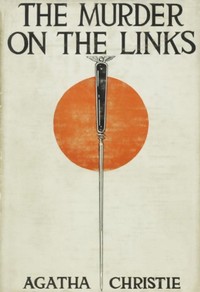
The Murder on the Links
Subjects:
Download Formats:
Excerpt
The Project Gutenberg eBook of The Murder on the Links, by Agatha Christie
This eBook is for the use of anyone anywhere in the United States and
most other parts of the world at no cost and with almost no restrictions
whatsoever. You may copy it, give it away or re-use it under the terms
of the Project Gutenberg License included with this eBook or online at
www.gutenberg.org. If you are not located in the United States, you
will have to check the laws of the country where you are located...
Read the Full Text
— End of The Murder on the Links —
Book Information
- Title
- The Murder on the Links
- Author(s)
- Christie, Agatha
- Language
- English
- Type
- Text
- Release Date
- February 11, 2019
- Word Count
- 68,916 words
- Library of Congress Classification
- PR
- Bookshelves
- Detective Fiction, Browsing: Crime/Mystery, Browsing: Literature, Browsing: Fiction
- Rights
- Public domain in the USA.
Related Books

The Assassination Bureau, Ltd.
by London, Jack, 1876-1916, Fish, Robert L., 1912-1981
English
839h 5m read
The purple sickle murders
by Crofts, Freeman Wills
English
1177h 52m read

The poisoned chocolates case
by Berkeley, Anthony
English
1127h 45m read

The Desert Moon mystery
by Strahan, Kay Cleaver
English
1486h 49m read

Tragedy at Ravensthorpe
by Connington, J. J.
English
1228h 13m read
The patient in Room 18
by Eberhart, Mignon G. (Mignon Good)
English
1379h 49m read